
动力电池

Search documents
技术鸿沟远超想象,固态电池概念热亟需“退烧” | 观点
Zhong Guo Qi Che Bao Wang· 2025-12-23 10:20
Group 1 - The solid-state battery concept has gained significant attention in the A-share market, leading to speculative trading behaviors and a "hot potato" phenomenon in certain sectors [2] - Some companies have seen their market values increase several times, with some even exceeding a tenfold increase, indicating a bubble in valuations with an average PE of 85 and PS of 12 compared to traditional lithium batteries' PE of 30 and PS of 3 [2] - The current market frenzy around solid-state batteries needs to cool down, as the foundation of China's lithium battery industry is not built on speculative concepts or rapid development at the expense of safety [2] Group 2 - The excitement surrounding solid-state batteries stems from a misunderstanding of the technology, with the previously controversial "semi-solid battery" now being referred to as "solid-liquid hybrid battery," highlighting fundamental differences from traditional liquid batteries [3] - Some manufacturers are using solid-state battery concepts as marketing tools to attract capital attention, which has led to irrational market enthusiasm for the technology [3] Group 3 - Leading companies like CATL are taking a cautious approach, acknowledging that the highest level of technology maturity in solid-state batteries is only at level 4 out of 9, indicating significant gaps between laboratory breakthroughs and large-scale production [4] - The Ministry of Industry and Information Technology has established a standard system for solid-state batteries, emphasizing the urgent and challenging nature of technology industrialization [5] Group 4 - The timeline for mass production of solid-state batteries has shifted from an initial expectation of 2030 to 2035, reflecting the real technical challenges faced [5] - Key technical challenges include uncertainties in technology routes and the need for high-temperature and high-pressure conditions for certain materials, complicating the manufacturing process [5] - The entire supply chain for solid-state batteries is still immature, requiring extensive development and validation before commercial production can occur [5] Group 5 - Even if solid-state batteries achieve commercialization, they will primarily serve as a supplement to high-end electric vehicles and specialized energy storage markets, rather than completely replacing existing systems [6] - The industry needs to focus on rational development, emphasizing safety, cost, and energy density rather than succumbing to hype [6] Group 6 - Capital plays a crucial yet contradictory role in the development of solid-state batteries, with a notable lack of focus on foundational research in the primary market compared to the speculative excitement in the secondary market [7] - The support from national policies for solid-state batteries encourages long-term technological advancements rather than short-term capital speculation [7] - Maintaining a rational perspective is essential for the industry, balancing confidence in the lithium battery market with the realities of solid-state battery commercialization [7]


1-10月全球动力电池装机867.4GWh
高工锂电· 2025-12-22 11:25
Core Insights - The global power battery installation reached 867.4 GWh from January to October 2025, with a year-on-year growth of 34% [2][4] - The market share of the three major South Korean battery companies (LGES, SK On, and Samsung SDI) has declined to 16.2%, down nearly 1 percentage point from the previous year [2] Global Power Battery Installation Data - The global power battery installation volume for January to October 2025 is 867.4 GWh, with a year-on-year growth of 34% [2][4] - Global new energy vehicle sales reached 16.09 million units during the same period, representing a 24% year-on-year increase [2][4] Regional Market Performance - China accounted for 63.3% of the global power battery installation volume, with six of the top ten companies being Chinese [2] - The top ten countries for power battery installation include China (549.0 GWh), the United States (103.5 GWh), and Germany (33.1 GWh) [7] Performance of South Korean Companies - The combined market share of the three major South Korean battery manufacturers is 16.2%, reflecting a decline in their global ranking [2] - SK On dropped from sixth to seventh place, while Samsung SDI fell from eighth to ninth in the global rankings [2]

中国多领域深入“反内卷”
第一财经· 2025-12-22 09:50
Core Viewpoint - The article discusses the recent implementation of the "Internet Platform Pricing Behavior Rules" aimed at regulating price competition in the platform economy, promoting healthy development, and protecting the rights of consumers and operators [3][5]. Summary by Sections Internet Platform Pricing Behavior Rules - The new rules consist of 7 chapters and 29 articles, prohibiting practices such as predatory pricing, price discrimination, collusion to raise prices, price fraud, and price gouging, thereby establishing clear boundaries for competition [5][6]. - The rules aim to enhance transparency, collaboration, and a healthy platform ecosystem, providing clear pricing behavior guidelines for platform operators and their internal operators [5][6]. Consumer Protection - The rules include provisions to protect consumer rights, focusing on the right to know and the right to choose, requiring operators to provide clear pricing and cancellation options for services [6][7]. - Platforms are encouraged to establish online dispute resolution mechanisms and quality assurance systems to enhance consumer trust [7]. Progress in Various Industries - The article highlights significant progress in various sectors, including solar energy, automotive, and battery industries, in combating "involution" or excessive competition [3][8]. - The solar industry has seen the establishment of a "polysilicon capacity integration acquisition platform" to address issues of unhealthy competition, with major stakeholders like Tongwei Group and GCL-Poly Energy holding significant shares [9][10]. Central Economic Work Conference - The recent Central Economic Work Conference emphasized the need for deeper regulation of "involution" competition, indicating a shift from comprehensive to in-depth measures [13][14]. - The conference underscored the importance of establishing a unified national market and enhancing industry self-regulation to foster a competitive market environment [13][14]. Future Directions - The article suggests that the solar industry is entering a critical phase of governance, with plans for capacity regulation and monitoring to ensure a balanced market [10][11]. - The focus will be on promoting high-quality development and addressing issues such as low-price bidding and quality control in the industry [11][12].

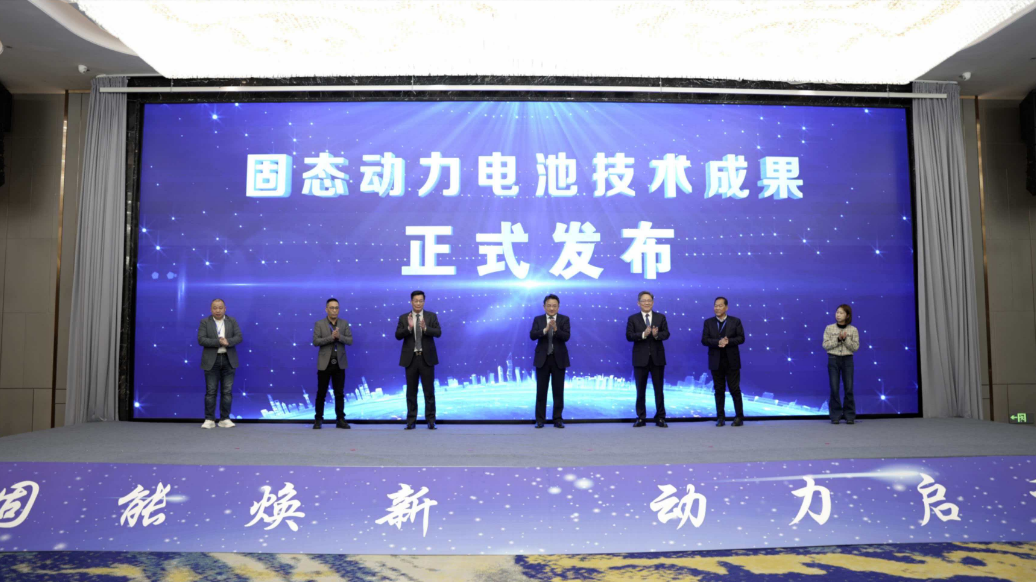
固态动力电池技术成果在江苏盐城发布 将加速迈向产业化
Zhong Guo Jin Rong Xin Xi Wang· 2025-12-22 08:39
Core Insights - The event "Solid Energy Renewal · Power Start" held in Yancheng, Jiangsu, marked the official release of solid-state battery technology by Jiangsu Jiuxing Energy Technology Co., Ltd, with the 51Ah automotive-grade solid-state battery series passing certification from the China Automotive Research Institute, indicating a significant leap from pilot incubation to industrial production [1][3] Group 1: Technology and Innovation - Solid-state batteries are recognized for their higher safety and energy density potential, making them a crucial research direction for next-generation power batteries [3] - The polymer-based solid-state battery developed by the team led by Professor Guo Xin from Huazhong University of Science and Technology utilizes solid electrolyte materials, effectively reducing the risk of thermal runaway compared to mainstream liquid lithium batteries [3] - The production line was adapted from existing liquid battery lines, enhancing the solid-state battery's operational temperature range and significantly improving energy density [3] Group 2: Industry Collaboration and Applications - Jiangsu Jiuxing Energy signed cooperation agreements with Guangdong Longji Power Technology Co., Ltd, Foshan Jinyinhe Intelligent Equipment Co., Ltd, and Shenzhen Zhongji Automation Co., Ltd, establishing a collaborative ecosystem for "research—production—application" [3] - Solid-state batteries are expected to have wide applications in various fields, including new energy vehicles, two-wheeled electric vehicles, drones, robots, and consumer electronics [3][4] Group 3: Market Position and Competitive Advantage - The polymer-based solid-state battery's strong process compatibility and excellent cost control fill the gap in the domestic high-safety solid-state battery market, providing China with a unique competitive advantage in global solid-state battery technology [4] - Yancheng has become the first city in the Yangtze River Delta region to exceed 20 million kilowatts in installed capacity for new energy generation, creating a relatively complete industrial chain from key materials to battery manufacturing and new energy vehicle applications [4] - Jiangsu Jiuxing, as a wholly-owned subsidiary of Solid Ion Energy Technology (Wuhan) Co., Ltd, benefits from Yancheng's robust new energy industry foundation, which will further strengthen and enhance the city's power battery industry chain [4]
中国多领域深入“反内卷”,为平台企业价格竞争划定红线
Di Yi Cai Jing· 2025-12-21 13:52
Core Viewpoint - The article emphasizes the need to shift competition from "price wars" to "value wars" in order to escape the phenomenon of "involution" in various industries, particularly in the context of internet platforms and sectors like photovoltaic, automotive, and battery manufacturing [2][10]. Group 1: Regulatory Developments - The National Development and Reform Commission, the State Administration for Market Regulation, and the National Internet Information Office have jointly issued the "Internet Platform Pricing Behavior Rules" to regulate pricing behaviors on platforms and protect the rights of consumers and operators [2][3]. - The new rules prohibit practices such as predatory pricing, price discrimination, collusion to raise prices, price fraud, and price gouging, establishing clear boundaries for competition [3][4]. - The rules aim to enhance transparency, promote collaboration among stakeholders, and create a healthy platform ecosystem, providing clear guidelines for pricing behavior [3][5]. Group 2: Industry-Specific Actions - The photovoltaic industry has made significant progress in addressing "involution," with the establishment of a platform for the consolidation of polysilicon production capacity, aimed at mitigating vicious competition [8]. - The photovoltaic sector reported a loss of 31.039 billion yuan in the first three quarters, with a reduction in losses in the third quarter compared to the second quarter, indicating a potential stabilization in the industry [8]. - The National Energy Administration has emphasized the need for self-regulation within the photovoltaic industry to address issues of "involution" and low-price bidding, while also implementing policies to stabilize prices and improve competition order [9]. Group 3: Consumer Protection - The new rules include provisions to protect consumer rights, focusing on the right to information and the right to choose, requiring operators to clearly display pricing options and provide easy cancellation methods for services [6][7]. - The rules mandate transparency in promotional activities, such as subsidies and discounts, to prevent misleading practices like "false discounts" and "price hikes before discounts" [6][9]. Group 4: Future Directions - The central economic work conference highlighted the need for deeper governance of "involution" in competition, indicating that future policies will continue to focus on this issue [10][11]. - The emphasis on systematic approaches to address "involution" includes enhancing industry self-regulation, standard-setting, and utilizing various regulatory tools to ensure a fair competitive environment [12].
中信建投:首予正力新能“买入”评级 单位盈利中枢有望逐步上移
Zhi Tong Cai Jing· 2025-12-19 07:39
Core Viewpoint - The report from CITIC Securities indicates that Zhengli New Energy (03677) is expected to achieve a turning point in profitability, with net profit and operating profit turning positive in 2024 and the first half of 2025, respectively. The company is projected to see significant revenue growth in the coming years, with a "buy" rating given due to strong profit growth potential and sales exceeding industry averages [1][2]. Financial Performance - In 2024, the company is expected to achieve total revenue of 4.16 billion yuan, a year-on-year increase of 10.8%, with a net profit of 90 million yuan, marking its first profit [2]. - For the first half of 2025, revenue is projected to reach 3.17 billion yuan, a year-on-year increase of 71.9%, with a net profit of 220 million yuan, and operating profit turning positive for the first time at 87.3 million yuan [2]. Sales Volume - The company has seen a significant increase in sales volume, with a year-on-year growth of 99.2% to 7.82 GWh in the first half of the year, increasing its market share from 0.03% in 2022 to 2% [3]. - Looking ahead to the second half of 2025 and 2026, the company expects continued growth in sales volume driven by new model releases, with annual sales projected to reach 18.89 GWh and 30.04 GWh, respectively, representing a year-on-year increase of 59% for both years [3]. Production Capacity - The company anticipates an increase in utilization rate to 76.2% in 2025, ensuring sufficient output for customers, with expectations of full production during peak seasons. Additionally, 10 GWh and 15 GWh of new capacity are expected to be added in 2026 and 2027, respectively [3]. Profitability - The company’s unit profitability is expected to continue rising due to increased scale and improved utilization rates. The report highlights that the reduction in R&D and management costs due to scale, along with decreased unit depreciation from higher utilization rates, are key factors driving this profitability [4]. - The company is projected to see its utilization rate increase from 62.9% in the first half of 2025 to 76.2% and 86.3% in 2026, further enhancing unit profitability [4]. Second Growth Curve - The company has achieved mass production and delivery of aviation batteries, which are expected to create a second growth curve. It is the first in China's battery industry to obtain both AS9100D aerospace quality management certification and CAAC airworthiness certification. The aviation batteries are anticipated to have higher value and profit margins compared to automotive batteries [5].

中信建投:首予正力新能(03677)“买入”评级 单位盈利中枢有望逐步上移
智通财经网· 2025-12-19 07:38
Core Viewpoint - The report from CITIC Securities indicates that Zhengli New Energy (03677) is expected to achieve positive net profit and operating profit in 2024 and the first half of 2025, marking a turning point in profitability. Revenue projections for 2025, 2026, and 2027 are 8.028 billion, 12.805 billion, and 18.215 billion yuan, with corresponding net profits of 544 million, 1.237 billion, and 1.730 billion yuan, suggesting a strong growth trajectory and a "buy" rating due to the company's superior growth rates compared to the industry [1][2]. Financial Performance - In 2024, the company is projected to achieve total revenue of 4.16 billion yuan, a year-on-year increase of 10.8%, with a net profit of 90 million yuan, marking its first profit [2]. - For the first half of 2025, revenue is expected to reach 3.17 billion yuan, a significant year-on-year increase of 71.9%, with a net profit of 220 million yuan and operating profit of 87.3 million yuan, indicating a positive trend [2]. Sales Volume and Market Share - The company has seen a 99.2% year-on-year increase in shipment volume to 7.82 GWh in the first half of the year, with market share rising from 0.03% in 2022 to 2% [3]. - Projections for 2025 and 2026 suggest annual shipments of 18.89 GWh and 30.04 GWh, respectively, reflecting a year-on-year increase of 59%, significantly outpacing the expected 17% growth in global electric vehicle sales [3]. Production Capacity and Efficiency - The company is expected to achieve a utilization rate of 76.2% in 2025, ensuring sufficient output for customers, with full production anticipated during peak seasons. An additional 10 GWh and 15 GWh of capacity are expected to be added in 2026 and 2027 to accommodate new projects [3]. - The report highlights that increased scale and utilization rates will continue to drive the company's unit profitability upward, with expectations for further reductions in R&D and management costs due to economies of scale [4]. New Growth Opportunities - The company has achieved mass production and delivery of aviation batteries, becoming the first in China's power battery industry to obtain AS9100D certification and CAAC airworthiness certification. This segment is expected to generate higher value and profit margins compared to automotive batteries, potentially creating a second growth curve for the company [5].
宜宾白酒产业谋新局:深耕酒旅融合,助推新兴产业
Jing Ji Guan Cha Wang· 2025-12-19 06:37
Core Insights - The liquor industry in Yibin is playing an irreplaceable role in various sectors, driving the integration of liquor and tourism, and supporting the development of emerging industries [1][2] - The 2025 China International Famous Liquor Expo highlighted Yibin's unique resources and the success of deep integration between the primary and secondary industries [1] - Yibin's liquor industry is undergoing a transformation towards high-quality development through intelligent and digital upgrades, enhancing competitiveness [2][3] Industry Development - Yibin's liquor industry contributed 5% of the national production, 25% of the national revenue, and nearly 20% of the profits in 2024, becoming the first region in China with large-scale liquor enterprises generating over 200 billion yuan in annual revenue [5] - The establishment of the Liquor Industry Development Bureau in Yibin aims to promote high-quality development and support local enterprises through tailored assistance [4] - The integration of liquor and tourism is evolving from simple industrial visits to immersive experiences that combine cultural, natural, and culinary elements [7][8] Technological Advancements - Yibin is promoting the digital transformation of mid-sized liquor companies, enhancing production efficiency and reducing emissions through automation and intelligent systems [3][4] - Companies like Jinyangzao and Jinpai Nankai are implementing modern production techniques, achieving significant increases in production capacity and efficiency [4] Cultural Integration - Yibin is focusing on cultural elements to enhance the liquor tourism experience, creating a unique narrative around its liquor culture [8][9] - New tourism routes are being developed to connect local cultural and natural attractions with liquor production sites, enhancing the overall visitor experience [9] Economic Impact - The liquor industry serves as a financial backbone for Yibin, contributing significantly to local government revenues and employment [10] - In 2024, the liquor industry accounted for 16% of the province's production, generating 66% of total revenue and 60% of profits, while directly supporting over 60,000 jobs [10] Emerging Industries - The liquor industry is facilitating the growth of new sectors such as battery technology, photovoltaic energy, and storage, with significant investments from leading companies [10][11] - Yibin is attracting major enterprises and investments, establishing a modern industrial system that includes new energy and digital economy sectors [12]

A股零售股掀涨停潮,日韩股市下挫,韩国电池巨头市值蒸发380亿元
21世纪经济报道· 2025-12-18 07:33
Market Overview - On December 18, A-shares showed mixed performance with the Shanghai Composite Index rising by 0.16% to close at 3876.37, while the Shenzhen Component Index fell by 1.29% to 13053.97, and the ChiNext Index dropped by 2.17% to 3107.06 [1][2] - The total trading volume in the Shanghai and Shenzhen markets was 1.66 trillion yuan, a decrease of 155.7 billion yuan compared to the previous trading day, with nearly 2900 stocks rising across the market [1] Sector Performance - The retail index increased by 1.75% to 3025.23, indicating a positive trend in the retail sector [4] - The commercial aerospace concept stocks were active, with Shengyang Technology achieving two consecutive trading limit increases, and Shunhao Co. hitting the daily limit [6] - The pharmaceutical commercial sector continued its strong performance, with Luyan Pharmaceutical achieving two consecutive trading limit increases and Zhongyao Holdings recording four limit increases in seven days [6] - The banking sector also showed gains, while sectors such as batteries and power grid equipment experienced declines [7] International Market Impact - In the Asia-Pacific market, major indices mostly closed lower, with Japan's Nikkei 225 index down by 1.03% to 49001.5 points, and SoftBank Group falling by 3.76% [7] - The South Korean Composite Index decreased by 1.53% to 3994.51 points, with LG Energy Solution, a leading battery company, dropping by 8.90%, resulting in a market value loss of over 80 billion won (approximately 380 million yuan) [10] Corporate News - Ford Motor Company canceled a $6.5 billion (approximately 460 million yuan) electric vehicle battery contract with LG Energy Solution, which accounted for 37.5% of LG's total revenue last year. This rare termination of a large long-term supply contract has raised concerns about potential impacts on the entire battery industry [11]

A股开盘:沪指跌0.34%、创业板指跌1.17%,CPO、离境退税概念股走低,中金、东兴证券复牌后涨停
Jin Rong Jie· 2025-12-18 01:36
Market Overview - On December 18, A-shares opened lower with the Shanghai Composite Index down 0.34% at 3857.26 points, the Shenzhen Component Index down 0.85% at 13112.61 points, and the ChiNext Index down 1.17% at 3138.66 points [1] - Key sectors such as CPO, tax refunds for outbound travelers, and fiberglass saw significant declines [1] - Notable stocks included Baida Group, which opened up 4.49%, and Shengtong Energy, which reached a limit up after a change in control [1] Company News - SpaceX has entered a "regulatory quiet period," signaling the initiation of the largest IPO in history [2] - Vanke A proposed a 12-month extension for the principal repayment of its medium-term notes, with a total outstanding amount of 3.7 billion yuan [2] - CATL launched the world's first humanoid robot production line for battery PACKs, marking a significant milestone in intelligent manufacturing [2] - China CNR signed several major contracts totaling approximately 53.31 billion yuan, representing 21.6% of its projected 2024 revenue [3] - Huayi Brothers reported a reduction in shareholding by Alibaba's venture capital arm, decreasing its stake from 3.47% to 2.40% [3] Industry Insights - The global optical module market is experiencing a rapid shift from copper cables to fiber optics, with 1.6T products expected to see significant growth starting in 2026 [6] - The Yichun Natural Resources Bureau plans to revoke 27 mining licenses, including one for Jiangte Electric's lithium-containing ceramic stone mine with an annual capacity of 1.2 million tons [7] - Travel bookings for the upcoming New Year holiday have increased by nearly 30% compared to the same period last year, indicating a recovery in the tourism sector [8] - A successful clinical trial of an invasive brain-computer interface was completed, allowing a paralyzed patient to control a smart wheelchair using brain signals [9] - The upcoming FORCE conference by Volcano Engine is expected to introduce new AI models, enhancing performance and reducing costs [10] - The fifth International AIDC Liquid Cooling Supply Chain Summit will discuss the growing importance of liquid cooling technology in data centers due to rising AI server demands [11] - The founder of Hailin Energy predicts that global electricity demand will surge by 2050, emphasizing the critical role of energy storage in addressing energy challenges [12][13] Institutional Perspectives - CITIC Securities highlights structural opportunities in the express delivery sector, focusing on cost reduction across the entire supply chain [14] - CICC notes that the food and beverage industry is nearing a bottom, with a focus on high-quality growth driven by product innovation and channel expansion [15] - Huatai Securities anticipates that the recent approval of L3 autonomous driving vehicles will accelerate value reconstruction in the smart driving industry, with significant investment opportunities emerging in 2026 [16]




