
家居

Search documents
信达证券:中国制造业进入全球化发展周期 结构性发展领域涌现更多机会
智通财经网· 2025-12-12 01:31
Core Viewpoint - The pricing logic of Chinese stocks is subtly changing, with China taking a more proactive role in global trade, and the manufacturing sector entering a globalization development cycle. The real estate market is stabilizing, leading to a shift in economic thinking, while macro tail risks are decreasing. New technologies and industries are emerging, creating more opportunities in structural development areas [1]. Group 1: New Consumption Trends - The pet food industry is experiencing a simultaneous increase in volume and price, driven by diversified growth and strong brand loyalty, suggesting significant potential for leading brands [2]. - The gold and jewelry sector is expected to maintain a favorable outlook through 2026, with a focus on the value retention of gold jewelry and the strengthening of leading brands [2]. - The collectible toy market is evolving towards a global business model, transitioning from a single product focus to an integrated IP and ecosystem approach, highlighting the importance of strong brand positioning [2]. - The new tobacco sector is seeing stricter regulations but a steady recovery in the compliant market, with increased penetration of heated tobacco products (HNB) [2]. - The AI smart glasses market is projected to grow significantly, with sales expected to reach 1.8 million units by 2026, indicating a shift in product development priorities [2]. - The two-wheeler market is undergoing regulatory changes that are optimizing the industry structure, with leading companies expected to benefit from improved product offerings [2]. Group 2: Cyclical Opportunities - The home furnishings sector is anticipated to remain in an adjustment phase until 2026, with growth driven by demand for soft and smart home products [3]. - The paper industry is facing a tightening supply of wood chips, which may support a gradual recovery in pulp prices, with leading companies expected to enhance their competitive advantages [3]. - The metal packaging industry is seeing increased concentration, with expectations of slight price increases in 2026, while the paper and plastic packaging sectors are maintaining stable demand [3]. Group 3: Export Dynamics - Following the US interest rate cuts, expectations for real estate improvement are rising, and corporate orders are showing signs of recovery, with leading companies benefiting from localized production strategies [5]. - Companies with global layouts, such as home furnishings and automotive brands, are demonstrating resilience and expanding their brand influence through mature local operations [5]. Group 4: Textile and Apparel - The outdoor apparel market is projected to grow significantly, with a CAGR of 9.6% for outdoor clothing and 9.2% for footwear from 2025 to 2029, driven by product innovation [6]. - The men's clothing and home textile sectors are showing resilience, with leading companies benefiting from high dividend yields and online sales growth [6]. - The textile manufacturing sector is optimistic about external demand, with healthy channel inventories and improving orders, particularly in Indonesia as a key production destination [6].

控价的意义?品牌稳健发展的底层逻辑
Sou Hu Cai Jing· 2025-12-11 12:22
健康的渠道生态,需以合理的利益分配为前提。若价格失控导致利润摊薄,渠道伙伴将缺乏动力投入陈列、培训与推广等增值 服务,甚至转而代理更具盈利空间的竞品。有效控价并非压制渠道活力,而是通过差异化定位与利润保障,实现协同增效。例 如,某家居品牌通过精细化分区定价,将线上线下价差严格控制在合理阈值内,既突出了线下场景的体验优势,又保留了线上 渠道的效率价值,使多端渠道从"相互蚕食"转向"互补共生"。 更进一步看,价格体系也是品牌战略落地的载体。对高端品牌而言,频繁打折或渠道价差过大,极易模糊其高端定位;而大众 品牌若定价虚浮或起伏不定,则会削弱其性价比心智。唯有建立清晰、稳定的价格坐标,品牌方能在产品迭代、视觉升级、营 销发声等方面保持步调一致,逐步塑造清晰、可信的品牌人格。 可见,控价并非简单的"限价行为",而是一项涵盖市场治理、用户关系与渠道协同的系统工程。它考验品牌的规则意识、执行 定力与长远视野。在消费者日益理性、竞争日趋白热化的当下,守住价格底线,实质是守护品牌的基本盘——唯有根基稳固, 方能在长期赛道上从容前行。 在信息高度透明的消费环境中,价格早已超越交易标签,成为消费者认知品牌价值的重要标尺。一旦市场 ...


行业边界崩塌!为什么说贝壳、京东、盈峰们的收购,比同行价格战可怕十倍?
Xin Lang Cai Jing· 2025-12-11 11:18
Core Viewpoint - The home decoration industry is experiencing a shift from traditional price wars to capital-driven acquisitions, fundamentally altering the competitive landscape. Companies like Beike, JD.com, and Yingfeng are leveraging their capital to acquire established players, posing a greater threat to traditional businesses than mere price competition [1][22][50]. Group 1: Beike's Strategy - In 2021, Beike acquired Saintu for 8 billion yuan, marking the largest merger in the home decoration industry that year, which was initially seen as a business expansion but revealed Beike's deeper ambitions [2][29]. - Saintu, founded in 2002, had revenues exceeding 4 billion yuan in 2020 and provided Beike with a mature supply chain and delivery capabilities, which were essential for Beike's growth [4][31]. - By mid-2025, Beike's home decoration business transformed from a marginal player to a significant profit generator, with total revenue from 2022 to 2024 reaching 30.747 billion yuan, and a net income of 10.9 billion yuan in 2023 [6][34]. Group 2: JD.com's Expansion - JD.com has been strategically entering the home decoration market since 2011, launching its home decoration channel and expanding its offline presence to over 300 stores by 2025 [11][38]. - In June 2025, JD.com acquired a stake in Sichuan Living Home, enhancing its offline delivery capabilities and integrating its online and offline services [13][41]. - JD.com has launched its self-operated home decoration brand stores and plans to create a comprehensive experience space that combines home decoration, home goods, and home appliances [15][43]. Group 3: Yingfeng's Moves - Yingfeng Group, under the leadership of He Jianfeng, has been quietly building a "big home" industry platform by acquiring leading home furnishing companies, including a 29.42% stake in Gujia Home for 8.88 billion yuan [16][44]. - Yingfeng's strategy includes integrating Gujia and Sophia to create a comprehensive ecosystem that combines soft furnishings and customized furniture with home appliances [21][49]. - Despite Sophia's declining revenue, Yingfeng sees potential in its brand value and the customized home furnishing sector, supported by Midea's supply chain and digital capabilities [22][49]. Group 4: Impact of Capital Acquisitions - Capital acquisitions are seen as more destructive than price wars because they fundamentally change the competitive dynamics of the industry, allowing companies to bypass traditional customer acquisition challenges [22][50]. - The shift from price competition to capital-driven acquisitions is leading to a concentration of resources among a few major players, diminishing the survival space for smaller companies [25][53]. - The entry of cross-industry players like Beike, JD.com, and Yingfeng signifies a transition from product and price competition to a deeper contest of capital and ecosystem integration [25][53].



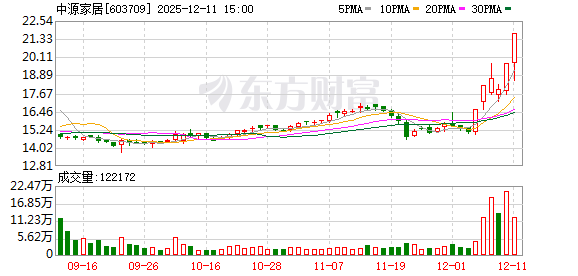
中源家居龙虎榜:营业部净卖出393.31万元
Zheng Quan Shi Bao Wang· 2025-12-11 11:03
中源家居(603709)今日涨停,全天换手率9.77%,成交额2.48亿元,振幅17.14%。龙虎榜数据显示,营 业部席位合计净卖出393.31万元。 上交所公开信息显示,当日该股因日振幅值达17.14%上榜,营业部席位合计净卖出393.31万元。 证券时报·数据宝统计显示,上榜的前五大买卖营业部合计成交8828.77万元,其中,买入成交额为 4217.73万元,卖出成交额为4611.04万元,合计净卖出393.31万元。 中源家居12月11日交易公开信息 | 买/ | 会员营业部名称 | 买入金额(万 | 卖出金额(万 | | --- | --- | --- | --- | | 卖 | | 元) | 元) | | 买一 | 华福证券有限责任公司浙江分公司 | 1278.30 | | | 买二 | 华鑫证券有限责任公司深圳益田路证券营业部 | 890.45 | | | 买三 | 摩根大通证券(中国)有限公司上海银城中路证券营业部 | 784.37 | | | 买四 | 华鑫证券有限责任公司上海源深路证券营业部 | 702.45 | | | 买五 | 华鑫证券有限责任公司西安锦业路证券营业部 | 562.17 ...

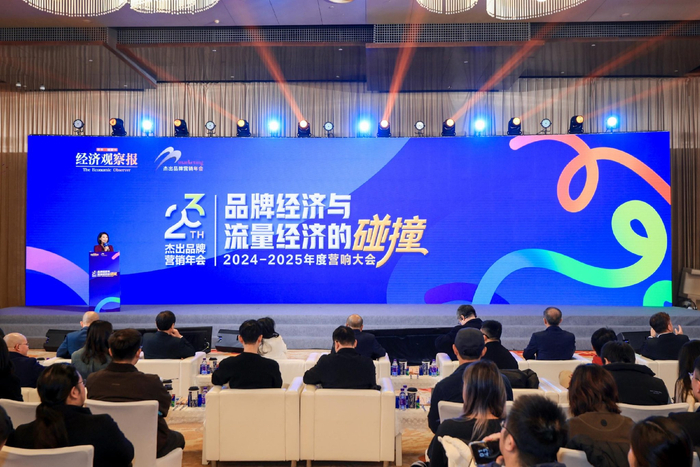
品牌经济与流量经济的碰撞——2024-2025年度营响大会暨(第二十三届)杰出品牌营销年会圆满举行
Jing Ji Guan Cha Bao· 2025-12-11 10:24
Core Insights - The conference emphasizes the shift from short-term profit-driven marketing to long-term brand value as the core competitive advantage for companies in a changing media landscape [3][5][24] - The importance of deep emotional connections and cultural significance in branding is highlighted, as brands must evolve to maintain relevance and consumer trust [5][19][24] Group 1: Brand Value and Strategy - The president of the China Advertising Association stresses that brands are the most critical competitive asset, requiring long-term accumulation rather than short-term marketing tactics [5] - Companies are encouraged to focus on the deeper values of their brands, including product quality, craftsmanship, and customer service, rather than just traffic and exposure [3][5] - The transition from "traffic" to "retention" is deemed necessary, as the essence of brand-user connection remains unchanged despite technological advancements [11][24] Group 2: Content and Consumer Engagement - The rise of "slow content" through podcasts is noted as a response to information overload, providing a unique emotional connection that AI cannot replicate [7] - Brands are urged to create meaningful interactions and emotional narratives that resonate with consumers, moving beyond mere transactional relationships [19][21] - The integration of traditional culture with modern consumerism is highlighted as a way to deepen brand engagement and emotional ties with consumers [19] Group 3: Market Trends and Innovations - The apparel industry is showcased as an example of how brands can leverage functionality, aesthetics, and emotional storytelling to build a new pricing structure [13] - The sports sector is identified as a key area for emotional resonance, with brands using events to create natural consumer connections [15] - The evolution of domestic brands in response to new consumer trends is discussed, emphasizing the importance of brand value and innovation in maintaining market leadership [17][24] Group 4: Cross-Industry Perspectives - A roundtable discussion reveals insights from various industries on brand growth variables and the changing consumer psyche, emphasizing the need for long-term asset building [23] - The importance of aligning brand values with consumer expectations and societal responsibilities is reiterated across different sectors [23] - The conference concludes that the future of brand competition lies in establishing genuine relationships and cultural connections with consumers [24]
与庄同甘:6股争王,12月10日中低位暴动股风云录(一)
Sou Hu Cai Jing· 2025-12-10 05:38
Market Overview - On December 10, 2025, the A-share market experienced a downturn, with the Shanghai Composite Index falling by 0.72%, the Shenzhen Component Index down by 0.56%, and the ChiNext Index declining by 1.23% [1] - The total market turnover was 1.15 trillion yuan, a decrease of over 100 billion yuan compared to the previous trading day, indicating cautious market sentiment and reduced active investment momentum [1] - There was significant sector divergence, with regional and consumer themes performing well, while previously high-performing sectors like PCB and photovoltaic saw notable adjustments [1] "Bull Stocks" Performance - Six "bull stocks" emerged as market highlights, successfully closing at their daily limit despite the overall market decline, suggesting potential for becoming future market focal points [2] Common Characteristics of "Bull Stocks" - The six companies share key common traits that may indicate underlying investment trends in the current market environment [3] Focus on "Cross-Strait" Themes - Three companies, Xinlong Health, Xinhao Co., and Huiquan Beer, are closely linked to the "Cross-Strait" concept, reflecting market expectations for the development of cross-strait relations and regional economic integration [4] State-Owned Enterprise Reform and Local State Capital - Meikailong's controlling entity has changed to the Xiamen State-owned Assets Supervision and Administration Commission, and Huiquan Beer is ultimately controlled by Beijing State Capital, highlighting the appeal of state-owned enterprises amid ongoing reforms [5] Industrial Upgrading and New Productive Forces - Companies like Yueling Co. and Tiantong Co. are involved in high-end manufacturing, semiconductors, and commercial aerospace, indicating a shift towards industries representing "new productive forces" [6] Individual Company Analysis 1. **Xinlong Health (002105)** - Core drivers include the "Cross-Strait" theme and expectations for its smart rehabilitation equipment, with revenue of approximately 2.35 billion yuan and a net profit of about 180 million yuan for the first three quarters of 2025 [7][8] - The company has a strong market position in bicycle parts, but faces risks related to its smart rehabilitation products still being in the research phase [9] 2. **Yueling Co. (002725)** - The focus is on its stake in Zhongshi Guangxin's optical chip assets, with revenue of about 700 million yuan and a net profit of approximately 30 million yuan for the first three quarters of 2025 [10][11] - The optical chip business is not consolidated into the listed company, posing risks to its direct contribution to earnings [11] 3. **Xinhao Co. (003016)** - The company turned a profit in 2025, with revenue of 1.055 billion yuan and a net profit of approximately 10.4 million yuan, indicating a recovery trend [12][13] - The apparel industry faces intense competition, and the sustainability of its profit growth remains uncertain [13] 4. **Tiantong Co. (600330)** - The company operates in commercial aerospace and high-end materials, with revenue of about 3.2 billion yuan and a net profit of approximately 350 million yuan for the first three quarters of 2025 [14][15] - Concerns exist regarding its diverse business segments and the time required for new projects to yield results [15][16] 5. **Meikailong (601828)** - The entry of Xiamen State Capital is a significant highlight, with revenue of about 8.5 billion yuan and ongoing pressure on net profit due to the real estate sector [17] - The company is undergoing transformation into a multi-format retail model, but faces challenges related to the housing market [17] 6. **Huiquan Beer (600573)** - The company reported revenue of approximately 1.5 billion yuan and a net profit of about 98.56 million yuan, with a notable growth rate of 23.7% [18][19] - It faces competition from larger national brands, and the sustainability of its growth is under scrutiny [19]






渤海证券研究所晨会纪要-20251209
BOHAI SECURITIES· 2025-12-09 02:49
Fund Research - The market saw a majority of equity indices rise, with the largest increase in the ChiNext Index, which rose by 1.86% during the week from December 1 to December 5, 2025 [2] - Public funds experienced significant inflows, with the first ETF tracking the CSI 300 Quality Index closing its fundraising, and Moer Thread emerging as the biggest winner in the offline allocation results [2] - Various equity fund types performed well, with equity funds averaging a rise of 0.93% and a positive return ratio of 76.27% [3] Company Research: Hongsoft Technology (688088) - Hongsoft Technology specializes in AI visual algorithms, providing algorithm licensing and system solutions, with mobile intelligent terminal visual solutions being the main revenue source [5][6] - The company reported a net profit of 142 million yuan for the first three quarters of 2025, marking a year-on-year increase of 60.51% [6] - The global smartphone shipment reached 923 million units in the first three quarters of 2025, with an AI smartphone penetration rate expected to reach 34% [6] - The smart glasses market saw a shipment of 4.065 million units in the first half of 2025, a 64.2% increase year-on-year, with expectations for the market to exceed 40 million units by 2029 [6] - The automotive sector showed a 12.4% year-on-year increase in sales, with the domestic passenger car market's DMS function penetration rate reaching a historical high of 26.2% in September 2025 [6] - The company’s PSAI product has penetrated multiple e-commerce platforms, serving hundreds of thousands of small businesses and over 300 major apparel brands [7] - Earnings per share (EPS) forecasts for 2025-2027 are 0.63 yuan, 0.85 yuan, and 1.18 yuan, with a 2025 price-to-earnings (PE) ratio of 76.07, which is below the average valuation of comparable companies [7] Industry Research: Light Industry Manufacturing & Textile Apparel - The light industry manufacturing sector outperformed the CSI 300 Index by 0.58 percentage points from December 1 to December 5, 2025, while the textile and apparel sector underperformed by 2.88 percentage points [8][10] - Recent price increases in packaging paper have been noted, with companies like Nine Dragons and others announcing price hikes of 50 yuan per ton [10] - The government is actively engaging in trade discussions with the U.S., which may positively impact export chain companies [10] - The domestic real estate market is under pressure, but recent policies to enhance home purchase subsidies may improve the situation in the medium term [10]
北京金隅旧厦焕新,打造数智家居产业新标杆
Bei Jing Ri Bao Ke Hu Duan· 2025-12-08 11:08
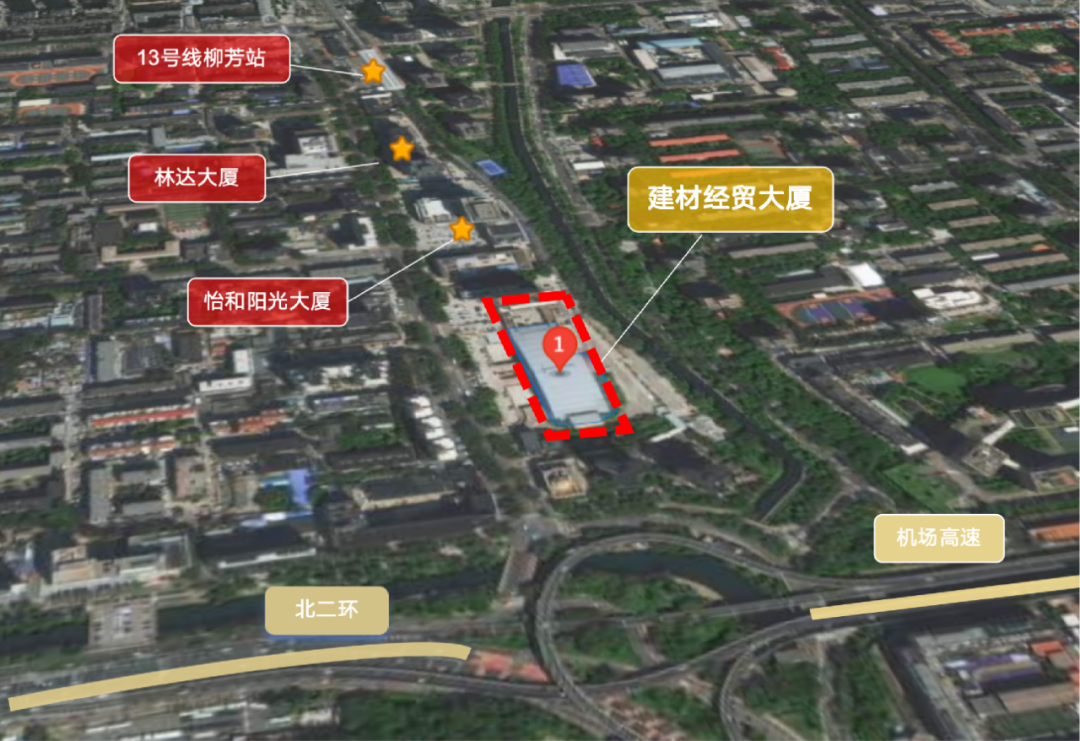
项目原为北京建材经贸大厦,建成于1994年,曾是北京市重要的装修建材批发市场之一。2020年,因非首都功能疏解,项目腾退后闲置,金隅集团拟对该 项目实施改造升级。 改造前实景图 打造高端设计产业新标杆 科技赋能绿色低碳改造,打造绿色设计产业空间。改造方案贯穿绿色理念,集成高性能保温、智能节能系统、可再生能源及水资源循环利用系统,综合节 能率将达到17.69%。 以AI赋能高端设计,带动家居产业向价值链顶端延伸。项目以高端设计产业为核心引擎,以设计驱动场景创新为主线,深度融合AI、大数据、数字孪生 技术,打通整装空间、智能家居、智慧供应链、产品检测等应用场景,打造成数智家居产业服务平台,已与多家领军企业达成战略合作协议。 项目建设地点位于北京市朝阳区和平街街道东土城路甲14号楼建材经贸大厦,西至东土城路,南至东北二环,东临坝河,北接怡和阳光大厦。改造总建筑 面积20457.29平方米,项目建设内容主要包括绿色节能化改造工程、主体结构加固工程、暖通系统改造工程、消防工程等。 发改君了解到,项目已于2025年4月开工,计划于2026年3月建成投用。 近日,北京市发展改革委批复同意北京金隅天坛设计智慧空间建设项目资金 ...
10天7板梦天家居:不存在应披未披事项
Guo Ji Jin Rong Bao· 2025-12-08 05:37
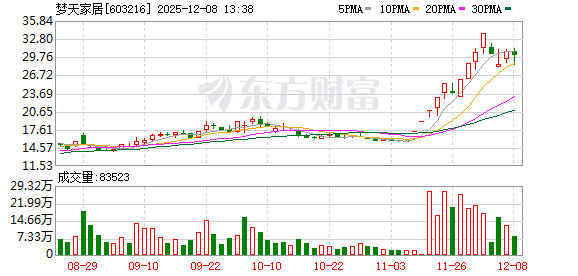
Core Viewpoint - Mengtian Home (603216.SH) announced that its stock price has deviated significantly, with a cumulative increase of over 100% in the closing price over the last 10 trading days, indicating severe abnormal trading fluctuations [2] Summary by Relevant Sections - **Stock Price Movement** - The company's stock price has experienced a significant increase, with a cumulative deviation exceeding 100% over 10 consecutive trading days [2] - **Regulatory Compliance** - According to regulations from the Shanghai Stock Exchange, the abnormal fluctuation in stock price may lead to a suspension of trading for further investigation if the price continues to rise unusually [2] - **Company's Self-Assessment** - Following a self-examination and inquiries to the controlling shareholder and actual controller, the company confirmed that there are no undisclosed significant matters as of the date of this announcement [2]

第七届伊斯兰堡博览会举行
人民网-国际频道 原创稿· 2025-12-08 03:21
Core Viewpoint - The seventh Islamabad Expo, organized by the Islamabad Women’s Chamber of Commerce, took place on December 6-7, showcasing over 200 exhibitors from Pakistan and internationally, focusing on promoting women entrepreneurs in Pakistan [1] Group 1: Event Overview - The expo was held at the Pakistan-China Friendship Center in Islamabad [1] - It featured exhibitors from various industries, including handicrafts, clothing, healthcare, and home goods [1] Group 2: Focus on Women Entrepreneurs - The event emphasized the participation of female entrepreneurs, aiming to encourage innovation and entrepreneurship among women [1] - The initiative seeks to promote the positive development of women's careers in Pakistan [1]