造船业

Search documents
中国手里握着三个王炸、两根胡萝卜!坚决反击美国制裁中国造船运输业
Sou Hu Cai Jing· 2025-10-09 14:43
Core Viewpoint - The article discusses China's strategic countermeasures against the impending U.S. tariffs on Chinese shipping vessels, highlighting the necessity and effectiveness of these actions in the context of U.S.-China trade relations. Group 1: China's Countermeasures - China has placed three U.S. military shipbuilding companies under control, halting the supply of high-precision CNC machines and special welding materials, which complicates U.S. naval shipbuilding and aircraft carrier maintenance [3] - China amended its "International Maritime Shipping Regulations" to allow for necessary countermeasures against discriminatory actions by other countries, signaling a legal basis for retaliation against U.S. tariffs [3][4] - Initial effects of China's counteractions are evident, with 12 U.S. states suing the Trump administration over "overreaching taxation," and a significant majority of U.S. businesses opposing the tariffs [3] Group 2: Necessity of China's Response - The U.S. is characterized as a unilateral hegemonic power, employing aggressive tactics to suppress China, necessitating a robust response to prevent further escalation of trade hostilities [4] - China's trade with the U.S. has significantly decreased from nearly 30% to below 10% of its total foreign trade, demonstrating resilience and a shift towards trade diversification [4] - The interdependence between the U.S. and China, particularly in sectors like agriculture and rare earth minerals, creates a leverage point for China in the ongoing trade conflict [4] Group 3: Strategic Advantages for China - China holds significant leverage, including the potential to require all imports and exports to be settled in RMB, which could undermine the dollar's dominance in global trade [5] - The article suggests that China may impose landing fees on Boeing aircraft and restrict exports of rare earth materials, among other retaliatory measures, to maintain competitiveness in the shipbuilding industry [6][8] - There are indications of potential large orders from Boeing and the U.S. agricultural sector, which could be influenced by the outcome of the ongoing negotiations [8][9]

印度瞄准造船业!豪掷7000亿造船,目标进世界前5,短板却显现
Sou Hu Cai Jing· 2025-10-07 13:26
Core Viewpoint - The Indian government has announced a significant support plan of 700 billion rupees (approximately 8 billion USD) aimed at boosting the shipbuilding industry, with ambitions to rank among the top ten globally by 2030 and potentially the top five by 2047 [1][3]. Group 1: Government Initiatives - The initiative is termed "Maruti Moment at Sea," inspired by the successful investment model of the Maruti-Suzuki partnership in the 1980s, which combined domestic and foreign investment to revitalize the industry [5]. - The plan includes 247.36 billion rupees in direct subsidies for shipbuilding, offering 15% for ships under 10 billion rupees and 20% for larger vessels, with up to 25% for environmentally friendly ships with 30% local value addition [10]. - A maritime development fund of 250 billion rupees is established, with 200 billion allocated for investment and 50 billion for interest incentives to address financing challenges in the shipbuilding sector [12]. Group 2: Employment and Investment Goals - The government aims to expand India's shipbuilding capacity to 4.5 million deadweight tons, create 3 million jobs, and attract 4.5 trillion rupees in investments into the maritime sector [15]. Group 3: Challenges and Limitations - Despite the ambitious plans, significant challenges remain, including India's technological shortcomings in civil shipbuilding, where it currently only produces low-tech vessels like bulk carriers and fishing boats [22]. - The reliance on imports for critical components such as diesel engines and navigation equipment poses risks to supply chain security and delivery timelines [24]. - Comparatively, India's investment in shipbuilding technology is significantly lower than that of other countries, with only 16 billion yuan allocated for industry upgrades, while China plans to invest at least 100 billion yuan in a similar timeframe [26].
中日造船产能较量:日本一年完工1500万载重吨,中国是多少呢
Sou Hu Cai Jing· 2025-10-07 04:51
Core Viewpoint - The competition between the shipbuilding industries of China and Japan represents a broader contest of industrial strength, akin to a "dragon versus tiger" showdown, with significant implications for global shipbuilding market positioning [1] Group 1: Japan's Shipbuilding Industry - Japan was once the world's leading shipbuilding nation, recovering rapidly after World War II and becoming the largest shipbuilding country by the 1960s, particularly excelling in the construction of LNG carriers and supertankers [3] - In 2023, Japan's shipbuilding completion volume reached 15 million deadweight tons, maintaining a market share despite rising labor costs, an aging population, and international market pressures [5] - Japan continues to hold a strong position in high-end markets due to its advanced technology and craftsmanship, particularly in LNG carriers and supertankers, which require high design and manufacturing capabilities [11] Group 2: China's Shipbuilding Industry - China's shipbuilding industry has rapidly developed since the 1990s, supported by significant government investment and favorable policies, achieving a completion volume of 42.32 million deadweight tons in 2023, capturing 50.2% of the global market share, nearly three times that of Japan [7] - China has made substantial technological advancements by absorbing foreign technology and innovating locally, transitioning from a "follower" to a "leader" in shipbuilding [9] - Despite its quantitative advantages, China still faces challenges in improving technology and quality, particularly in environmental standards and market diversification, necessitating breakthroughs in green shipping and energy-saving technologies [12] Group 3: Future Outlook and Competition - The competition between China and Japan in shipbuilding is not solely about production capacity but also involves a comprehensive contest of technology and market presence, with both countries needing to innovate to maintain their competitive edge [11][14] - Experts suggest that the future competition will hinge on technological innovation and market expansion capabilities, determining who can secure a leading position in the global market [12] - While China's rise poses significant pressure on Japan's shipbuilding industry, Japan's deep technical expertise and experience still provide it with strong competitiveness in high-end markets [14]
这不是港口费,而是美国发起的“海上围猎”,我们不能当沉默的羔羊!
Sou Hu Cai Jing· 2025-10-07 03:26
Core Viewpoint - The U.S. Customs announced high port fees for Chinese vessels starting October 14, which is perceived as a targeted attack on China's shipping industry [1][3]. Group 1: Impact on Shipping Industry - The U.S. has implemented a "301 clause announcement," categorizing ships into five levels, with Chinese-built and operated ships facing a fee of $2.5 million per port call, increasing annually [3][6]. - Nearly half of the 57,000 commercial ships that transport goods to the U.S. annually are related to China, potentially extracting $70 to $100 billion from the Chinese shipping sector each year [6][9]. - The increased costs for Chinese shipowners will lead to a collapse in competitive advantage, affecting shipping routes and overall industry viability [9][11]. Group 2: Broader Economic Consequences - The repercussions extend to shipbuilding, as foreign shipowners may shift new orders to South Korea and Japan to avoid U.S. fees, jeopardizing China's significant share in global shipbuilding [9][20]. - Financial and insurance sectors will also be impacted, with increased risks leading to higher insurance premiums and potential changes in ship registration to evade U.S. fees [9][11]. - Exporters will face higher shipping costs and longer delivery times, further diminishing their competitiveness in the global market [11][20]. Group 3: Proposed Countermeasures - Experts suggest establishing a "301 Fairness Fund" to counteract U.S. discriminatory fees, which would impose special docking fees on U.S.-built and operated ships at Chinese ports [12][23]. - The proposed measures aim to create a more equitable market environment, encouraging global shipping markets to align with China against U.S. fee structures [12][14]. - China's shipbuilding capacity is robust, with over 1,700 ships built annually, representing 23% of global production, contrasting sharply with the U.S. shipbuilding industry [16][18].
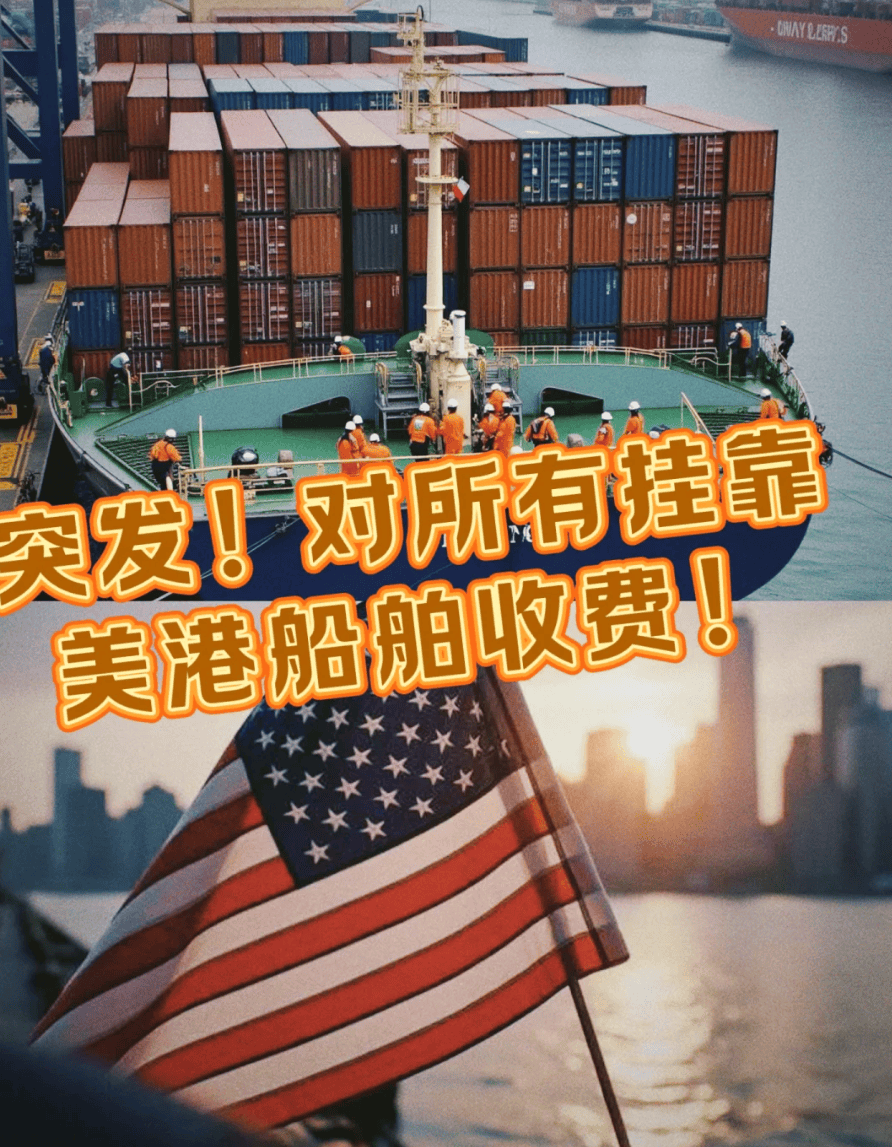
中国重拳出击,反制美国霸权港口费,打出贸易正义组合拳
Sou Hu Cai Jing· 2025-10-05 02:20
Core Insights - The new shipping fee policy implemented by the Trump administration is a strategic move aimed at targeting Chinese shipping companies, imposing fees of up to $140 per net ton for vessels built or operated in China docking at U.S. ports [1][2] - In response, Chinese shipping companies have adjusted their routes, diverting traffic from Los Angeles to ports in Mexico and Canada, resulting in a 22% cost saving despite a 36-hour increase in transit time [1][2] - The U.S. policy has led to immediate negative impacts on American ports, with a 41% year-on-year drop in container handling at Long Beach and a 60% reduction in dockworker overtime [3] Industry Adjustments - The global shipping industry is undergoing significant restructuring, with ports like Shenzhen's Yantian seeing a shift in cargo flow towards Europe and Southeast Asia, reflecting a 11.9% growth in Latin American routes for China COSCO Shipping [5][7] - New ports, such as the Chinese-invested deep-water port in Peru, are emerging as key nodes in global shipping, providing alternative routes that bypass the U.S. and save significant transit time [7] - Shipping costs are expected to rise, with HSBC estimating an additional $2 billion burden on COSCO and its subsidiaries due to the U.S. policy, which will likely be passed on to American consumers [9][10] Strategic Responses - The Chinese government has revised its international shipping regulations to allow for countermeasures against discriminatory practices, including special fees and restrictions on port access [2][3] - The potential for data access restrictions poses a significant threat to U.S. shipping companies, as the digitalization of the shipping industry relies heavily on data flow [3][10] - Global shipping alliances are adapting their operational strategies to mitigate the impact of U.S. fees, exploring alternative routes through Canada and Mexico [10][11]
印度“梭哈”造船业,还找上了日韩
虎嗅APP· 2025-10-03 13:15
Core Viewpoint - The Indian government has announced a shipbuilding support plan totaling 700 billion rupees (approximately 80 billion USD) aimed at revitalizing its shipbuilding industry and achieving significant global rankings by 2030 and 2047 [4][5]. Group 1: Current State of Indian Shipbuilding Industry - The Indian shipbuilding industry has experienced slow development since independence, with a peak in exports reaching 1.1 billion USD in the early 2000s, but only accounted for 3.7% of the global market share in 2011 [7]. - As of 2024, India holds less than 0.2% of global shipbuilding orders, significantly lagging behind major players like China, South Korea, and Japan [7]. - India's shipbuilding capabilities are limited, primarily focusing on low-tech vessels such as bulk carriers and fishing boats, while lacking the ability to construct large tankers and luxury cruise ships [7][8]. Group 2: Government Initiatives and Support Plan - The shipbuilding support plan includes several components aimed at enhancing the industry, such as the Shipbuilding Financial Assistance Scheme (SBFAS) with a budget of 247.36 billion rupees (approximately 19.8 billion RMB) [10][11]. - The Maritime Development Fund (MDF) aims to provide effective financing channels, including a 200 billion rupee (approximately 16 billion RMB) investment fund and a 50 billion rupee (approximately 4 billion RMB) interest incentive fund [11]. - The Shipbuilding Development Scheme (SbDS) focuses on improving operational efficiency and infrastructure, with a total budget of 199.89 billion rupees (approximately 16 billion RMB) [12]. Group 3: Challenges and Limitations - Despite the ambitious plans, the Indian shipbuilding industry faces significant challenges, including a lack of advanced technology and the inability to produce high-value vessels [16][17]. - The reliance on imported components for critical systems like diesel engines and navigation equipment poses risks to supply chain security and delivery timelines [17]. - The overall funding for the shipbuilding support plan is relatively low compared to international standards, raising concerns about its effectiveness in achieving substantial industry upgrades [18].
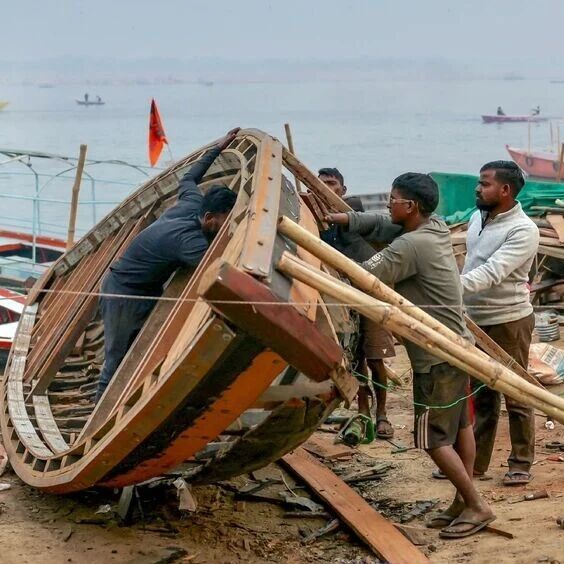
印度“梭哈”造船业,还找上了日韩
Hu Xiu· 2025-10-02 09:56
Core Viewpoint - The Indian government has announced a shipbuilding support plan totaling 700 billion rupees (approximately 8 billion USD) aimed at revitalizing the shipbuilding industry and positioning India among the top ten shipbuilding nations by 2030 and the top five by 2047 [1][10]. Industry Overview - The Indian shipbuilding industry has historically developed slowly since independence, with a significant decline in its global market share from 3.7% in 2011 to less than 0.2% in 2024 [3][4]. - Despite some growth in the early 2000s, the industry remains heavily reliant on foreign technology and lacks the capability to build high-tech vessels such as VLCCs and LNG carriers [4][13]. Government Initiatives - The support plan includes several components aimed at enhancing the shipbuilding sector: - Shipbuilding Financial Assistance Scheme (SBFAS) providing direct financial support totaling 247.36 billion rupees (approximately 19.8 billion RMB) [8]. - Maritime Development Fund (MDF) to improve financing channels with a total of 200 billion rupees (approximately 16 billion RMB) allocated for investment and 50 billion rupees (approximately 4 billion RMB) for interest incentives [8][9]. - Shipbuilding Development Scheme (SbDS) aimed at promoting shipbuilding clusters with a budget of 199.89 billion rupees (approximately 16 billion RMB) [9]. - Establishment of a National Shipbuilding Mission to streamline the implementation of the plan and improve legal frameworks [9]. Economic Impact - The shipbuilding upgrade plan is expected to create 3 million jobs and attract 4.5 trillion rupees into the maritime sector [10]. - The government is also seeking to attract foreign investment and technology from countries like Japan and South Korea to bolster domestic capabilities [10][11]. Challenges Ahead - Despite the ambitious plans, significant challenges remain, including India's limited comparative advantages and technological capabilities in shipbuilding [12][13]. - The financial commitment of 600 billion rupees for the shipbuilding sector is considered insufficient compared to other countries' investments in similar industries [15].
连续15年业务第一!韩国为了打过我国造船业,把特朗普当救命稻草
Sou Hu Cai Jing· 2025-10-02 07:22
Core Insights - China's shipbuilding industry has maintained its position as the world's largest for 15 consecutive years, with significant growth in high-value ship deliveries and a dominant market share in various ship types [4][19][21]. Group 1: Shipbuilding Contracts and Deliveries - Grimaldi Group, a major global shipping company, has signed contracts for 9 new ships with China Merchants Industry Group, indicating strong international trust in China's shipbuilding capabilities [1][14]. - The first of the new ships is scheduled for delivery in 2028, with the last expected by 2030, showcasing China's rapid shipbuilding speed and innovative designs [14][19]. - China has delivered over 30 roll-on/roll-off ships to Grimaldi, highlighting a long-term partnership in shipping and logistics [17]. Group 2: Market Position and Competitiveness - China's shipbuilding industry holds 55.7% of the global shipbuilding completion volume, 74.1% of new orders, and 63.1% of the hand-held order volume, reinforcing its leading position [19][21]. - The country has a significant advantage in various ship types, with 14 out of 18 major ship types being built in China, while South Korea and Japan struggle to compete [21][25]. - South Korea's shipbuilding market share has declined to below 20%, particularly in high-value ship segments, while Japan's market share has dropped to 17% [28][38]. Group 3: Technological Advancements and Environmental Initiatives - New ships being constructed in China utilize advanced green technologies, reducing carbon emissions by 43% during operation and relying on electric power for port operations [12][14]. - The propulsion systems of new vessels will use methanol instead of traditional fuels, indicating a shift towards sustainable energy solutions in shipbuilding [16]. Group 4: Future Outlook - As long as global shipowners continue to trust China's shipbuilding industry, the sector is expected to experience further growth and innovation [19][42]. - The ongoing increase in orders will enable shipyards to maintain substantial business and revenue, fostering a positive cycle of development and technological advancement [40][42].
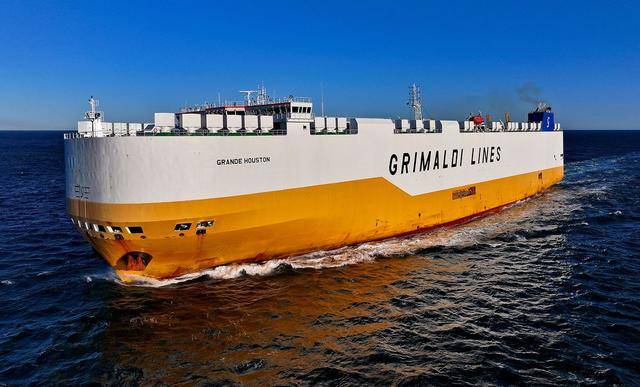
意大利船东弃日韩选中国,80天造万吨油轮!中国拿下全球74%订单
Sou Hu Cai Jing· 2025-09-30 08:51
Core Viewpoint - China's shipbuilding industry is rapidly evolving from a global manufacturing hub to a leader in the maritime sector, showcasing remarkable efficiency and innovation in ship construction [1][25]. Group 1: Efficiency and Innovation - The Shanghai Waigaoqiao Shipbuilding Company can build a 114,000-ton oil tanker in just 80 days, significantly faster than South Korea's 120 days and Japan's 160 days [3]. - Key production milestones include completing half the hull in 22 days and the entire ship assembly in 16 days, with time deviations controlled within 2 hours [5][6]. - Advanced technologies such as laser cutting machines operate at 500 mm per second, achieving precision of less than 0.1 mm, and the utilization rate of steel has increased from 65% to 92% over the past decade [6][12]. Group 2: Supply Chain and Infrastructure - China has a complete shipbuilding supply chain, with 90% of components delivered to shipyards within 48 hours, allowing for simultaneous construction of multiple vessels [12]. - The country can provide specialized shipbuilding steel within 7 days, enhancing its competitive edge in the global market [12]. Group 3: Advancements in Cruise Ship Manufacturing - The production of cruise ships, considered the pinnacle of shipbuilding, has seen China overcome significant technical challenges, including controlling welding deformation to within 3 mm [13]. - China has established a full industrial chain for cruise ship manufacturing, including international repair services and key equipment supply [15]. Group 4: Future Developments and Market Position - China has secured 74.1% of new ship orders globally in 2024, with a 63.1% share of the total order backlog, while South Korea's orders have dropped by 22% [25][28]. - The development of an 10,800-car capacity transport ship is underway, expected to enhance shipping efficiency by 30% and create a "maritime highway" for electric vehicles [31].
希腊船王加码!这家船厂再获3艘支线船订单
Sou Hu Cai Jing· 2025-09-30 06:06
Core Insights - HD Hyundai Heavy Industries' subsidiary, HD Hyundai Ulsan, has signed a contract to build three feeder container ships for an Oceania-based shipowner, totaling 222.4 billion KRW (approximately 159 million USD) [2][3] - The new ships are designed to be fuel-efficient, potentially saving up to 20% in fuel consumption and reducing CO2 emissions [2][4] - The global feeder container ship market is projected to grow significantly, with an estimated market size of 2.74 billion USD in 2023, expected to reach 6.34 billion USD by 2035, reflecting an annual growth rate of 8.7% [4] Company Developments - HD Hyundai Ulsan has secured a total of 21 feeder container ship orders this year, significantly surpassing last year's total of 6 [3] - The company has developed a new ship design that minimizes resistance and enhances power efficiency, improving its competitive edge in securing orders [3] - The company is recognized for its strong capabilities in building medium-sized vessels and has made significant advancements in eco-friendly ship designs, including the delivery of the world's first methanol-powered container ship in 2023 [4] Market Context - The demand for feeder container ships is increasing due to rising shipping rates and the aging fleet, with about 30% of feeder ships over 20 years old [4] - Feeder container ships, typically under 3000 TEU, are essential for connecting regional ports and hubs, characterized by high turnover rates and low fuel costs, making them a profitable segment [3] - HD Hyundai Heavy Industries has achieved a total order volume of 93 ships worth 12.36 billion USD this year, reaching approximately 68.5% of its annual order target [5]