半导体设备

Search documents
机械行业2026春季策略报告:顺周期盈利修复,逢低布局成长主线-20260323
Shanghai Aijian Securities· 2026-03-23 09:54
Group 1 - The mechanical equipment sector is expected to outperform the market starting from the second half of 2024, with a projected cumulative increase of 41.69% in 2025, significantly surpassing the 17.66% increase of the CSI 300 index [4][17]. - The sector's performance is characterized by a dual recovery in profits and valuations, with engineering machinery and rail transit equipment showing significant improvements in net profit margins and remaining at historically low valuation levels [4][38]. - The report highlights the potential for accelerated profit release in 2026, driven by domestic demand recovery, energy investments, and equipment upgrades [4][38]. Group 2 - The commercial aerospace sector is anticipated to reach a critical turning point in 2026, with advancements in reusable rocket technology and accelerated IPO processes for companies like Blue Arrow and China Aerospace Science and Technology Corporation [4][19]. - The humanoid robotics industry is transitioning towards mass production, with significant cost reductions expected, particularly for the Optimus V3 model, which is projected to have a production capacity of 500,000 units by 2027 [4][23]. - The controlled nuclear fusion sector is expected to see growth, with a focus on high-temperature superconducting materials becoming mainstream as China progresses from research to engineering validation stages [4][28]. Group 3 - The semiconductor equipment sector is benefiting from ongoing investments in storage expansion and advanced packaging, with companies like North China Innovation and Zhongwei Technology being highlighted as key players [4][35]. - The PCB equipment sector is experiencing increased demand due to the penetration of AI servers and HPC architectures, with a focus on high-end HDI and multi-layer boards [4][40]. - The report emphasizes the importance of structural upgrades in the equipment sector, driven by the need for higher precision processing and automation [4][40].
国投证券(香港)港股晨报-20260323
国投证券(香港)· 2026-03-23 06:42
Group 1 - The report highlights the significant rise in geopolitical tensions in the Middle East, leading to a surge in oil prices and concerns over global economic stagnation and inflation [2][4] - The 10-year bond yields in various countries have increased, with the US at 4.4%, while China's 10-year bond yield remains relatively low at around 1.83%, benefiting from stable monetary policy and low domestic inflation [2][7] - The report indicates that the geopolitical conflict may evolve into a prolonged standoff, increasing market volatility and affecting inflation and corporate costs, which could lead central banks to maintain tight monetary policies [11] Group 2 - The macroeconomic outlook shows rising inflation concerns, with the US Federal Reserve raising its core inflation forecast to 2.7% while increasing GDP growth expectations to 2.4% for 2026 [8] - The European Central Bank has downgraded its GDP growth forecast from 1.2% to 0.9% for 2026, while raising inflation expectations from 1.9% to 2.6% due to rising oil and gas prices [9] - The Bank of Japan is maintaining a cautious stance on monetary policy normalization, acknowledging the economic pressures from high oil prices and geopolitical tensions [10]
BESI的底气
半导体行业观察· 2026-03-23 02:10
Core Viewpoint - BESI is gaining significant attention in the semiconductor equipment industry due to its acquisition intentions and its core position in advanced packaging [2] Group 1: BESI's Strategic Position - BESI's chip assembly business is projected to account for approximately 80% of its revenue in 2025, while the company is also expanding its hybrid bonding business [2] - The company has secured over 150 orders from 18 customers and has deployed its first integrated production lines, showcasing its dual advantages in commercialization and technological maturity [2] - BESI's latest prototype product achieves a precision of 50nm and higher capacity, reinforcing its roadmap towards next-generation interconnect solutions [2] Group 2: Advanced Packaging Market Trends - Interconnect technology has evolved from a simple assembly step to a critical factor in enhancing device performance, with technologies like TCB, hybrid bonding, and next-generation flip-chip being essential for 2.5D and 3D integration [5] - The wafer-to-wafer (W2W) technology currently dominates the hybrid bonding field, but die-to-wafer (D2W) technology is rapidly emerging as a high-growth area, expected to reach a market size of approximately $275 million by 2025 and grow at a compound annual growth rate of 57% to exceed $2.4 billion by 2030 [7] - The backend equipment market (excluding services) is projected to exceed $7 billion by 2025, with chip assembly becoming a strategically significant area due to the increasing complexity of interconnect technology [7] Group 3: Industry Dynamics and Competitors - The evolution of advanced packaging technology reflects a trend of increasing integration between front-end and back-end technologies, with processes like lithography, deposition, etching, cleaning, metrology, wafer bonding, and chip assembly being unified [8] - Major players like Applied Materials (AMAT) and Lam Research are forming closer ties with BESI, with AMAT holding a 9% stake and collaborating on the Kinex platform, a fully integrated D2W hybrid bonding solution nearing mass production [8] - The competitive landscape is expanding, with companies like Hanmi Semiconductor and ASMPT establishing strong positions in TCB, while Kulicke & Soffa continues to leverage its traditional strengths in wire bonding and chip bonding [9] Group 4: Process Integration and Future Outlook - The importance of adjacent steps such as surface treatment, wafer thinning, cutting, underfilling, and inspection is increasing, highlighting the value of integrated process control across multiple steps [10] - The growing interest in BESI underscores a broader industry transformation, positioning the company as a key player in the next generation of semiconductor manufacturing [12] - As AI, HBM, chips, and photonics drive system-level innovations, the significance of advanced interconnect technology will only increase, with companies that can perfectly integrate front-end precision with back-end integration poised to occupy the best positions in the evolving landscape [12]

光力科技(300480) - 300480光力科技投资者关系管理信息20260320
2026-03-20 14:26
Group 1: Company Overview and Activities - The company, Guangli Technology Co., Ltd., is involved in the semiconductor equipment sector and has conducted investor relations activities including site visits and discussions with investors [1][2]. - The meeting took place on March 20, 2026, at the company's Zhengzhou Airport factory [2]. Group 2: Product Performance and Development - The company's semiconductor business saw a significant increase in shipment volume in Q1 2026 compared to the same period last year, continuing the positive trend from H2 2025 [2]. - The company is enhancing production efficiency at its existing facilities and expanding capacity through the construction of a new project, expected to be completed by Q1 2027 [2][3]. Group 3: Equipment and Customization - Guangli Technology's cutting equipment is competitive with leading international products in terms of cutting quality and efficiency, receiving widespread recognition from major domestic clients [2]. - The company offers over twenty models of cutting equipment, with a growing proportion of customized solutions since 2025 [3]. Group 4: Financial Strategies - To support R&D and business expansion, the company plans to issue technology innovation bonds up to RMB 500 million, pending approval from shareholders and regulatory bodies [4]. - The company emphasizes the importance of timely information disclosure regarding any financing plans to mitigate investment risks [4].

精测电子(300567) - 300567精测电子投资者关系管理信息20260319
2026-03-19 14:32
Group 1: Financial Performance - The company expects a net profit attributable to shareholders of 80 million to 90 million RMB for 2025, representing a year-on-year growth of 181.97% to 192.21% [2] - The net profit after deducting non-recurring gains and losses is projected to be between 21.657 million and 31.657 million RMB, reflecting a year-on-year increase of 113.66% to 119.97% [2] Group 2: Semiconductor Measurement Products - The company has achieved mass production of key semiconductor measurement products, including thickness series products and OCD equipment, with some products already delivered and accepted for the 7nm advanced process [3] - Advanced process products are increasingly driving the company's revenue and orders, now becoming the core growth driver for the company's performance [3] Group 3: Optical Defect Detection Equipment - The company has received multiple formal orders for optical defect detection equipment, including a significant order for 14nm advanced process equipment, which is scheduled for delivery in October 2024 [4] - The acceptance of optical defect detection equipment for the 28nm process has been successfully completed at client sites [4] Group 4: Probe Card Business - The company’s subsidiary has fully developed various probe card products, achieving automated mass production and delivery, meeting diverse chip testing needs [6] - The 2D MEMS vertical probe card has been mass-produced and delivered, while high-frequency cantilever probe cards have been validated and are in use by leading domestic design companies [6] Group 5: Localization of Core Components - The company has largely achieved self-research and production of core components and necessary domestic software, emphasizing the importance of localization in the semiconductor field [6] Group 6: Land Acquisition for Expansion - The company plans to invest approximately 350 million RMB in acquiring land use rights for expanding its semiconductor technology laboratory in Shanghai, aimed at enhancing R&D capabilities and meeting future business needs [7] - This investment aligns with the company's strategic planning and is expected to improve overall competitiveness and operational efficiency [7]

日本光刻机巨头尼康“崩了”!850亿日元巨亏背后,霸主跌落神坛
Sou Hu Cai Jing· 2026-03-19 12:21
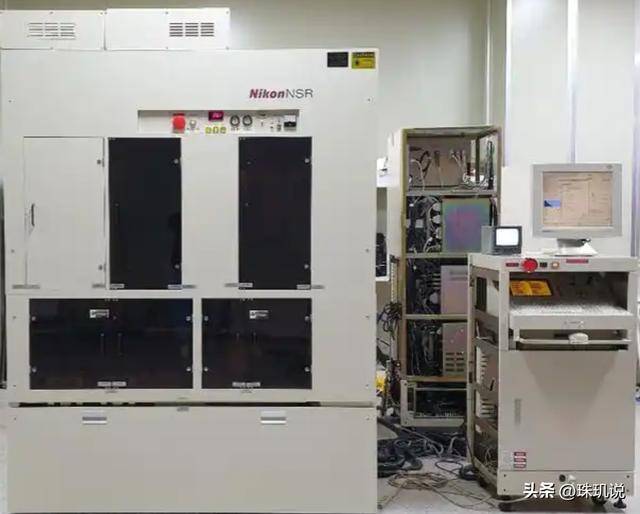
Group 1 - The core issue is that despite a global shortage of lithography machines, Nikon reported a record loss of 85 billion yen, marking the highest annual loss in the history of the Japanese lithography industry [5][21] - Nikon sold only 9 lithography machines in the year, significantly lower than ASML's delivery of 160 machines, which included over 20 EUV machines priced at 400 million USD each, leading to a stark revenue gap [6][19] - The decline of Nikon is attributed to a long-term accumulation of strategic missteps, particularly its failure to adopt immersion lithography technology, which allowed ASML to overtake it in the market [8][10][15] Group 2 - The Japanese government attempted to revive the lithography industry by forming a consortium with Nikon, Canon, and Tokyo Electron, but these efforts to develop EUV technology ultimately failed [17][22] - The global semiconductor landscape has shifted, with the U.S. forming a top-tier semiconductor alliance that excludes Japanese companies like Nikon and Canon, further isolating them from key technological advancements [19][22] - The case of Nikon illustrates that complacency in business operations and technology development can lead to significant setbacks, emphasizing the need for continuous innovation and adaptation to industry changes [24][30]


机械行业2026春季策略报告:顺周期盈利修复,逢低布局成长主线-20260319
Shanghai Aijian Securities· 2026-03-19 09:51
Group 1 - The mechanical equipment sector is expected to outperform the market, driven by a combination of cyclical recovery and growth potential, with engineering machinery and rail transit equipment showing significant profit recovery and low valuations [3][10] - The commercial aerospace sector is anticipated to reach a critical turning point in 2026, with advancements in reusable rocket technology and an increase in launch frequency, leading to a projected 197% year-on-year growth in payload quality [3][4] - The humanoid robotics industry is transitioning towards large-scale production, with significant cost reductions and improved capabilities expected, particularly with the launch of the Optimus V3 model [3][4] Group 2 - The semiconductor equipment sector is poised for growth due to increased demand from storage expansion and advanced packaging upgrades, with key players expected to benefit from ongoing capital expenditure recovery [3][4] - The PCB equipment market is experiencing a shift towards high-end products, driven by the penetration of AI servers and HPC architectures, leading to increased demand for new capacity and upgrades of existing production lines [3][4] - The controllable nuclear fusion sector is advancing with the construction of experimental devices and the bidding for key equipment, with high-temperature superconducting materials expected to become a core beneficiary of technological evolution [3][4] Group 3 - The mechanical equipment sector has shown a significant recovery in profitability, with 17 out of 19 sub-industries reporting improved net profit margins, indicating a broad-based recovery [12][33] - The sector's valuation has rebounded to a historically high level, with the current PE ratio at 35.42, reflecting a strong market preference for growth-oriented manufacturing assets [13][26] - The demand side remains weak but is stabilizing, with high-tech manufacturing and equipment manufacturing showing better performance compared to traditional sectors, indicating a gradual recovery in the overall manufacturing landscape [34][38]


盛美上海(688082):跟踪报告之六:清洗设备业务稳步推进,新品开发顺利
EBSCN· 2026-03-19 08:14
Investment Rating - The report maintains a "Buy" rating for the company, indicating a positive outlook for future performance [5]. Core Insights - The semiconductor equipment market remains robust, with significant growth driven by AI and HPC investments. The share of AI/HPC investments is expected to rise from 41% in 2025 to 57% by 2030, leading to increased demand for advanced process technologies and capacity [1]. - The company has successfully delivered new products in the Track equipment segment and achieved breakthroughs in PECVD equipment development. The Ultra LITH KrF equipment, with a high output of 300 WPH, has been delivered to a leading logic wafer manufacturer in China [2]. - Revenue and profit are projected to grow steadily, with the company expecting revenues of 8.2 to 8.8 billion yuan in 2026 and an average gross margin of 42% to 48% [3]. Summary by Sections Semiconductor Equipment Market - The semiconductor equipment market is expected to grow significantly, with China's production capacity projected to increase from 4.9 million wafers in 2020 to 14.1 million by 2030, capturing a market share increase from 20% to 32% [1]. - The domestic demand for semiconductor equipment is urgent due to escalating global geopolitical tensions, with foreign manufacturers currently dominating the single-wafer cleaning equipment market [1]. Product Development - The company is advancing its product lineup in the Track equipment sector, focusing on KrF and ArF technology nodes. The Ultra PmaxTM PECVD equipment has also achieved significant milestones in multi-process film deposition [2]. - The company aims to capture 60% of the Chinese market share in the cleaning equipment sector by 2025, with cleaning equipment projected to account for 66.4% of its revenue [1][3]. Financial Performance - In 2025, the company achieved revenues of 6.786 billion yuan, a year-on-year increase of 20.8%, and a net profit of 1.396 billion yuan, up 21.05% [3]. - The company forecasts a net profit of 1.829 billion yuan for 2026, with a projected growth rate of 31.05% [3].

芯碁微装(688630):跟踪报告之三:PCB设备和泛半导体设备共驱增长
EBSCN· 2026-03-18 11:33
Investment Rating - The report maintains an "Accumulate" rating for the company [5] Core Insights - The company achieved a revenue of 1.408 billion yuan in 2025, representing a year-on-year growth of 47.61%, and a net profit attributable to shareholders of 290 million yuan, up 80.42% year-on-year [1] - The company reported a gross margin of 40.16% and a net margin of 20.59% for 2025, both showing improvements compared to the previous year [1] - In Q4 2025, the company recorded a revenue of 475 million yuan, a significant increase of 101.08% year-on-year and 70.01% quarter-on-quarter, with a net profit of 91 million yuan, reflecting a staggering year-on-year growth of 1521.53% [1] - The company is focusing on enhancing its direct-write lithography technology and expanding its product matrix in the semiconductor sector, with successful mass deliveries of its WLP series equipment [1][3] - The Southeast Asian market is showing strong order growth, with significant increases in overseas business, including exports to Japan and Vietnam [1] Summary by Relevant Sections PCB Equipment - The PCB high-end equipment segment is thriving, with the MAS series devices performing well in high-end manufacturing fields such as HDI and IC substrates [2] - The company's self-developed high-precision CO₂ laser drilling equipment has become a new growth highlight for its PCB business, entering mass production validation with several leading clients [2] - The company has established a comprehensive client base, covering the top 100 PCB companies globally, and is deeply integrated with major manufacturers [2] Semiconductor Equipment - The company has made significant market breakthroughs with its wafer-level and board-level direct-write lithography equipment, aiding leading packaging manufacturers in mass production of advanced products [3] - The MAS 6P packaging substrate LDI equipment has successfully completed acceptance tests and is now in mass production, receiving bulk orders [3] - The company is advancing its R&D for equipment targeting the 90nm to 65nm nodes, focusing on core technologies such as high-precision dynamic focusing and multi-beam parallel scanning [3] Financial Forecasts and Valuation - The company is expected to see continued growth in orders for PCB and semiconductor equipment, leading to an upward revision of net profit forecasts for 2026 and 2027 to 503 million yuan and 670 million yuan, respectively [3] - The report introduces a new net profit forecast for 2028 at 867 million yuan [3] - Key financial metrics indicate a projected revenue growth rate of 35.34% in 2026 and 35.87% in 2027, with net profit growth rates of 73.64% and 33.11% for the same years [4]
俄罗斯自研350纳米光刻机
国芯网· 2026-03-18 11:33
Core Viewpoint - The article discusses Russia's advancement in semiconductor manufacturing through the development of a new photolithography system, marking a significant step towards establishing an independent semiconductor ecosystem and overcoming Western technology restrictions [2][4]. Group 1: Photolithography System Development - A new photolithography system, model RAVC.442174.002TU, has been officially included in Russia's national industrial equipment catalog, indicating a shift from laboratory research to industrial deployment [2]. - The system features a resolution of 350 nanometers (0.35 microns) and utilizes a 365-nanometer wavelength i-line ultraviolet light source, capable of processing standard 200-millimeter wafers with an alignment accuracy of approximately 90 nanometers [2][4]. - Despite being less advanced than current global technologies (3nm or 5nm), the 350nm process is still valuable for various applications, including power management, automotive electronics, aerospace control, and embedded systems [2][4]. Group 2: Strategic Implications - The project, initiated in 2021 and funded by the Russian Ministry of Industry and Trade, is a collaboration between the Zelenograd Nanotechnology Center (ZNTC) and Belarusian semiconductor equipment manufacturer Planar [4]. - The inclusion in the GISP catalog serves as a "passport" for domestic market access, prioritizing local products for government and state-owned enterprise procurement, which will enhance the production capacity of mature process chips [4]. - The demand for mature process chips remains stable and significant in modern industrial systems, particularly for applications in electric vehicles, industrial robotics, and missile guidance systems, which prioritize reliability and supply stability over extreme miniaturization [4]. Group 3: Future Development Goals - Following the successful mass production of the 350nm equipment, ZNTC aims to develop the next generation of technology targeting the 130nm node, which would broaden the applicability of Russian-made chips to more complex communication and computing needs [5].