基础设施

Search documents
招商交通运输行业周报:油运景气度回升,26年民航力争完成客运量8.1亿人次-20260111
CMS· 2026-01-11 08:04
Investment Rating - The report maintains a "Recommended" rating for the transportation industry [2] Core Insights - The shipping sector is experiencing a recovery in oil transportation due to improved demand post-holidays and geopolitical tensions [6][16] - The aviation industry aims to achieve a passenger volume of 810 million in 2026, reflecting a growth rate of 5.2% [23][24] - The express delivery sector is expected to see a gradual recovery in competition and profitability, with a focus on major players like SF Express [20] Shipping - The oil shipping sector is rebounding due to increased cargo availability from the Middle East and geopolitical sanctions affecting supply [6][16] - Container shipping rates are showing slight increases, with strong pricing power among shipowners before long-term contract negotiations [11][12] - Key stocks to watch include COSCO Shipping Energy, China Merchants Energy, and Pacific Shipping [16] Infrastructure - Weekly data indicates a decline in truck traffic and rail freight, with road truck traffic at 46.964 million vehicles, down 14.9% week-on-week [17][18] - Port throughput for the first week of 2026 was 25.4953 million tons, showing a slight decrease but a year-on-year increase of 7.7% in container throughput [18] - Recommended stock for infrastructure investment is Anhui Expressway [18] Express Delivery - In November 2025, express delivery volume reached 18.06 billion pieces, a year-on-year increase of 5%, while revenue decreased by 3.7% [19][20] - The competitive landscape is expected to stabilize, with major companies like SF Express anticipated to see profit growth in 2026 [20] - Recommended stocks include SF Express, ZTO Express, YTO Express, and Yunda Express [20] Aviation - The aviation sector is entering a critical period with the Spring Festival approaching, and passenger volume is projected to grow by 5.2% in 2026 [23][24] - Recent data shows a year-on-year increase in domestic passenger volume of 1.5% and a decrease in ticket prices [21][24] - Recommended stocks include Air China, China Southern Airlines, and Spring Airlines [24] Logistics - The cross-border air freight price index has decreased by 19.9% week-on-week, indicating a significant drop in logistics costs [25]



开门红“山东套餐”上线!资金、政策、外贸三箭齐发
Sou Hu Cai Jing· 2026-01-06 18:20
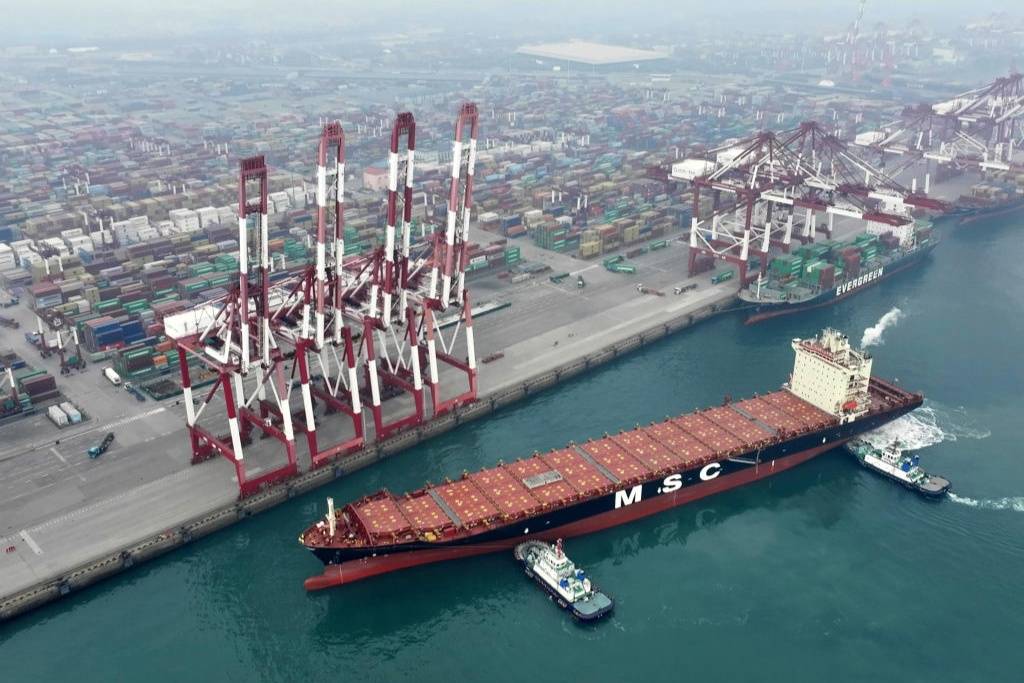
Funding Initiatives - Shandong Province issued 723.81 billion yuan in local government bonds, referred to as the "New Year Red Envelope," to support major annual projects [2] - The funds will be allocated primarily to infrastructure construction in transportation, water conservancy, municipal projects, industrial upgrades, and improving people's livelihoods [2] Policy Support - Shandong Province released the first batch of the 2026 economic promotion policy list, which includes a significant subsidy of up to 600,000 yuan for local enterprises facing major patent disputes [3] - The policy aims to address challenges faced by small and medium-sized technology enterprises in innovation and rights protection, while also covering areas like anti-monopoly and standardization [3] Trade Developments - The first international container ship of the year docked at Qingdao Port, marking the launch of Shandong's first direct foreign trade route to Australia [4] - This new route reduces transportation time by approximately 10%, enhancing logistics efficiency and providing greater certainty and timeliness for trade with Australian clients [4] Overall Economic Strategy - The combined efforts in fiscal initiatives, policy support, and trade expansion represent a strategic approach by Shandong Province to ensure a strong start to 2026 and to seek new growth opportunities [4]

全球亿万富豪加速涌现,中国大陆新增70位亿万富豪,来自哪些行业?
Xin Lang Cai Jing· 2025-12-28 01:56
Group 1 - The core viewpoint of the article is that a new generation of billionaires is emerging, driven by business innovation and wealth transfer, with a notable increase in the number of self-made billionaires [2][3] - According to UBS's report, the number of billionaires globally is projected to increase by 287, reaching a total of 2,919 by 2025 [3] - The report defines "new billionaires" as individuals whose assets first reach or exceed $1 billion [3] Group 2 - Among the 287 new billionaires, 196 are self-made entrepreneurs, while 91 gained wealth primarily through inheritance [4] - The total wealth inherited by the 91 heirs reached a historical high of $2,978 billion, despite a decrease in the number of heirs [6] - In China, 70 new billionaires were added, bringing the total to 470, with 98% being self-made entrepreneurs, a higher proportion than in other major economies [7] Group 3 - The technology sector is expected to become the largest industry for billionaires, benefiting from the performance of companies involved in the AI wave [9] - The overall asset scale of tech billionaires increased by nearly a quarter (23.8%), amounting to approximately $3 trillion, making it comparable to the consumer and retail sectors [10] - The fastest-growing six American tech billionaires saw their combined wealth increase by $171 billion, with a growth rate exceeding 25% [11] Group 4 - The report indicates that geopolitical conflicts, tariffs, and policy uncertainties are major risks faced by billionaires, leading to an increasing number considering relocation [12] - Among surveyed billionaires, 36% have relocated at least once, and nearly 10% are contemplating moving [12] - A significant majority (82%) of billionaires with children wish for their offspring to develop skills for independent success rather than relying solely on inherited wealth [13]

机构:高市早苗、AI和企业改革为明年日股上涨铺平道路
Xin Lang Cai Jing· 2025-12-25 22:48
Core Viewpoint - Japan's stock market is expected to continue its upward trend through 2026, driven by aggressive fiscal plans introduced by Prime Minister Sanae Takaichi, building on momentum from the past year [1] Group 1: Market Performance - The Tokyo Stock Exchange index has withstood challenges such as tariff impacts, two interest rate hikes by the Bank of Japan, and a change in prime minister, rising approximately 23% this year [1] - This increase positions Japan's benchmark stock index for the largest gain relative to the S&P 500 since 2022 [1] Group 2: Sector Outlook - The government’s commitment to provide trillions of yen in domestic financing is expected to boost performance in the construction, infrastructure, and energy sectors next year [1] - As the focus shifts towards tangible artificial intelligence, robotics manufacturers are also anticipated to perform well [1] - Bank stocks have emerged as one of the best-performing stocks this year due to rising interest rates, and they are expected to maintain their upward trajectory [1]
【甘快看】甘肃着力构建体现甘肃特色和优势的现代化产业体系
Xin Lang Cai Jing· 2025-12-25 15:18
Core Viewpoint - The Gansu Provincial Committee of the Communist Party of China has approved the recommendations for the 15th Five-Year Plan, focusing on building a modern industrial system and enhancing the province's economic development over the next five years [1][2]. Group 1: Industrial Development - Gansu aims to establish a national regional modern manufacturing base, enhancing its industrial strength through traditional industry upgrades and the promotion of new technologies and products [1][2]. - The province plans to develop several national and provincial advanced manufacturing clusters, focusing on a modern industrial system centered around advanced manufacturing [1]. Group 2: Energy Sector - Gansu will leverage its abundant energy resources to build large-scale wind and solar power bases, improve energy transmission channels, and implement integrated renewable energy development projects [2]. - The province aims to transition from being an energy-rich province to an energy-strong province by expanding its wind, solar, thermal, hydrogen, and energy storage industries [2]. Group 3: Service Industry - Gansu will enhance its service sector by improving the integration of modern services with advanced manufacturing and modern agriculture, aiming for higher quality and diversified service offerings [2]. - The province will implement a plan to double the number of service enterprises, supporting their growth and development [2]. Group 4: Infrastructure Development - Gansu will address infrastructure shortcomings by advancing both traditional and new infrastructure projects, including optimizing the Lanzhou railway hub and developing major highway corridors [3]. - The province aims to establish a modern infrastructure system that is efficient, safe, and environmentally friendly [3].
国资委:明年要加强上市公司质量和市值管理
Sou Hu Cai Jing· 2025-12-24 02:06
Group 1 - The core viewpoint emphasizes the need for state-owned enterprises to focus on stabilizing operations and improving quality and efficiency in 2026 [1] Group 2 - Companies should seize market opportunities by closely monitoring macroeconomic conditions and enhancing structural and trend analysis within industries [1] - There is a call for the use of big data and industry models to accurately capture potential market demand and innovate in product and service quality [1] - The aim is to cultivate new consumption scenarios in sectors such as culture, tourism, digital, and health to create new growth points [1] Group 3 - Companies are encouraged to strengthen management practices to improve development quality, including comprehensive budget management and cost control across all aspects [1] - There is a focus on managing receivables, contract assets, inventory, and payables more effectively [1] - Emphasis is placed on enhancing the quality and market value of listed companies [1] Group 4 - Effective investment is highlighted as a means to accumulate development potential, particularly in key areas such as industrial chain strengthening, infrastructure construction, and energy resource security [1] - Companies are urged to utilize various support policies to plan and implement significant projects and landmark initiatives [1] - The goal is to lay a solid foundation for sustainable development [1]
中国内地新增70位亿万富豪,蜜雪冰城张氏兄弟等新上榜
Sou Hu Cai Jing· 2025-12-22 11:50
Group 1 - The number of billionaires is projected to reach 2,919 by 2025, with total wealth hitting a record $15.8 trillion, reflecting a 13% increase [1] - The Asia-Pacific region leads in billionaire growth, with the number of billionaires rising from 981 to 1,036, and China adding 70 new billionaires, totaling 470 [1][3] - The report highlights that 79% of self-made billionaires are from the Asia-Pacific region, indicating a sustained trend of increasing self-made wealth [3] Group 2 - In 2024, 161 entrepreneurs are expected to cross the $1 billion threshold, holding assets of $305.6 billion, up from 84 individuals and $140.7 billion in 2023 [3] - The total wealth of Chinese billionaires reached $1.8 trillion, with a year-on-year growth of 22.2%, predominantly driven by self-made entrepreneurs [3] - The technology sector saw a 23.8% increase in billionaire wealth, totaling $3 trillion, making it one of the top wealth-generating industries globally [4] Group 3 - 91 new billionaires this year gained their wealth through inheritance, with a cumulative wealth of $298 billion, marking over a one-third increase from the previous year [3] - The report anticipates that in the next 15 years, the children of billionaires will inherit at least $5.9 trillion, primarily in the U.S., Western Europe, and India [3] - 63% of surveyed billionaires still prefer North America for investments, although this is a decrease from 80% in 2024, with 34% now seeing China as the largest investment opportunity, up from 11% [4]

中国内地新增70位亿万富豪,98%中国亿万富豪都是白手起家,蜜雪冰城张氏兄弟等新上榜
Sou Hu Cai Jing· 2025-12-22 09:44
Group 1 - The number of billionaires is projected to reach 2,919 by 2025, with total wealth hitting a record $15.8 trillion, reflecting a 13% increase [1] - The Asia-Pacific region leads in billionaire growth, with the number of billionaires rising from 981 to 1,036, and China adding 70 new billionaires, totaling 470, second only to the U.S. [1][3] - The report highlights that 79% of Asia-Pacific billionaires are self-made, indicating a sustained trend of increasing self-made billionaires [3] Group 2 - In 2024, 161 entrepreneurs are expected to cross the $1 billion threshold, holding assets of $305.6 billion, up from 84 individuals and $140.7 billion in 2023 [3] - The total wealth of Chinese billionaires reached $1.8 trillion, with a year-on-year growth of 22.2%, predominantly driven by self-made entrepreneurs [3] - The technology sector saw a 23.8% increase in billionaire wealth, totaling $3 trillion, making it one of the top wealth-generating industries alongside consumer and retail [4] Group 3 - 63% of surveyed billionaires prefer North America for investments, although this is a decrease from 80% in 2024 [4] - A significant increase in interest for investment opportunities in Greater China is noted, with 34% of billionaires believing it offers the greatest potential, up from 11% in 2024 [4]

全球知名科技分析师Dan Ives:AI派对才刚开始,2026是“变现之年”,真正的消费者AI革命将由苹果开启|Alpha峰会
华尔街见闻· 2025-12-20 15:09
Core Viewpoints - The current phase of the AI revolution is likened to a party that started at 9 PM and is only at 10:30 PM, indicating that there is still much room for growth and investment opportunities in the sector [3][16] - The situation is compared to 1996, where the current AI landscape is driven by large tech companies with substantial cash flows, rather than the speculative environment of 1999 [4][16] - The multiplier effect of spending on Nvidia chips is significant, with every dollar spent generating 8 to 10 dollars in the broader tech ecosystem [5][19] AI Revolution Insights - The AI revolution is still in its early stages, with the first layer being chips and subsequent layers in software, cybersecurity, and infrastructure just beginning to emerge [6][19] - There is a current supply-demand imbalance for Nvidia chips at a ratio of 12:1, indicating strong demand and a capital expenditure supercycle [7][21] - The year 2026 is projected to be a critical moment for monetization in AI, distinguishing successful companies from those that fail to execute monetization strategies [8][22] Consumer AI and Market Dynamics - Apple is expected to lead the consumer AI revolution, leveraging its 2.4 billion iOS devices to become a key entry point for AI applications [9][24] - China holds significant advantages in power supply and robotics, particularly in humanoid robots, positioning it as a leader in the AI race [10][21] - The relationship between the US and China is characterized as one of interdependence rather than decoupling, with both countries needing to collaborate for the AI revolution to reach its peak [11][21] Future Projections - By 2030, it is anticipated that 20% of vehicles will be autonomous, and every 10 to 15 households will have a humanoid robot [12] - The technology sector is expected to see a continued bullish trend, with a projected 25% increase in tech stocks over the next year, lasting at least until 2027 [15][25]





坚定看好多重催化下的航空,关注单票收入同比改善的快递
ZHONGTAI SECURITIES· 2025-12-20 14:55
Investment Rating - The report maintains a rating of "Buy" for several key companies in the aviation and logistics sectors, including China Southern Airlines, Spring Airlines, and SF Express [2]. Core Insights - The aviation sector is expected to benefit from multiple catalysts, including the recovery of passenger demand and improved ticket pricing due to high load factors and regulatory support [4][6]. - The logistics and express delivery industry is experiencing a divergence in growth rates, with a focus on improving operational quality through policies aimed at reducing "involution" and the adoption of automation technologies [6][7]. Summary by Sections Aviation Sector - The report highlights the positive impact of the national strategy to expand domestic demand, which is expected to drive up airline stock prices. For instance, companies like China Eastern Airlines and China Southern Airlines saw stock increases of 12.48% and 13.60%, respectively [4]. - Key metrics for airlines from December 15 to December 19 include average daily flights and aircraft utilization rates, with notable year-on-year increases in flight numbers for several airlines [4]. - The report emphasizes the long-term growth potential of the aviation sector, driven by a combination of recovering demand, regulatory support for pricing, and a gradual recovery in aircraft utilization rates [6]. Logistics and Express Delivery - The express delivery sector is witnessing a mixed trend in volume and pricing, with November data showing a year-on-year increase in delivery volumes for some companies while others face declines [6]. - The report notes that the integration of Danbird Logistics into Shentong Express is expected to enhance scale and operational efficiency [6]. - The "anti-involution" policy is anticipated to improve profitability across the express delivery industry, with a focus on enhancing service quality and pricing strategies [6][7]. Infrastructure - The report suggests that the infrastructure sector, particularly highways, remains stable with consistent cash dividends and ongoing expansion projects [6]. - Data from December 8 to December 14 indicates a slight decline in freight traffic on highways and railways, but overall port throughput showed a year-on-year increase [6]. Shipping and Trade - The shipping sector is experiencing fluctuations in freight rates, with oil shipping showing strength while dry bulk rates are declining. The report suggests that geopolitical factors may reshape global shipping dynamics [7]. - The report recommends monitoring companies in the shipping sector for potential investment opportunities, particularly those positioned to benefit from seasonal demand increases [7].