
科技互联网

Search documents
心智观察所:AI狂奔,中国变压器成了最硬通货
Guan Cha Zhe Wang· 2026-01-27 00:43
Core Viewpoint - The article emphasizes that the real bottleneck for the future of artificial intelligence (AI) is not computational power but electrical power, specifically the availability of large power transformers (LPTs) which are critical for energy infrastructure [1][2]. Group 1: Current Situation in the U.S. - The U.S. is facing a significant shortage of large power transformers, which are essential for converting high-voltage electricity for long-distance transmission [2][3]. - The average delivery time for a standard large transformer has reached 128 weeks, while transformers for data centers can take up to 144 weeks, with some cases nearing four years [2]. - Over 80% of large power transformers in the U.S. are expected to be imported by 2025 due to the decline of domestic manufacturing capabilities [3]. Group 2: Policy and Economic Implications - The U.S. government has imposed high tariffs on Chinese transformers, yet American companies are still compelled to purchase them due to a lack of alternatives [3][9]. - The high costs associated with tariffs are ultimately borne by U.S. electricity companies and consumers, revealing the limitations of "decoupling" strategies in critical infrastructure [9]. Group 3: European Context - Europe is also experiencing a transformer shortage, which hampers the integration of renewable energy projects into the grid [4][5]. - The European Union aims to increase renewable energy to 45% by 2030, but many projects are stalled due to insufficient transformer supply [4]. - European countries are beginning to source transformers from China, despite political pressures, to avoid project delays [5]. Group 4: China's Manufacturing Advantage - China has developed a complete and efficient transformer manufacturing supply chain, from raw materials to assembly, making it a key player in the global market [6][8]. - The typical delivery time for a large transformer in China is 10 to 14 months, significantly shorter than in the U.S. and Europe [8]. - Chinese manufacturers are not only meeting domestic demands but are also exporting transformers globally, establishing themselves as a reliable supplier [6][8]. Group 5: Strategic Insights - The article highlights the importance of stable energy supply for technological advancements, asserting that without reliable electricity, ambitious AI projects remain unfeasible [9][10]. - China's sustained investment in its manufacturing base has positioned it as a strategic player in the global supply chain for critical infrastructure [10].


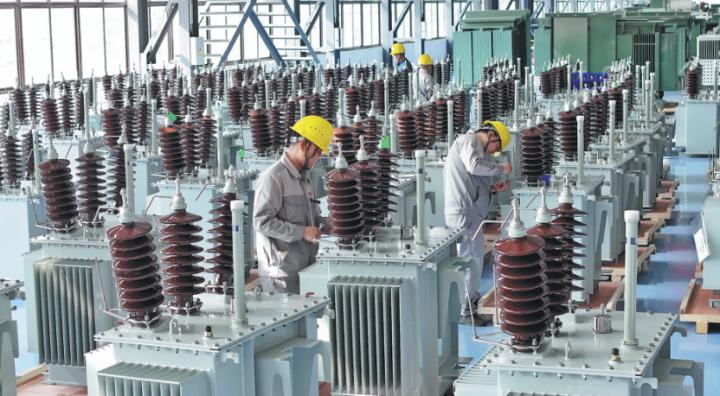
AI狂奔,中国变压器成了最硬通货
虎嗅APP· 2026-01-26 13:22
Core Viewpoint - The article emphasizes that the real bottleneck for the future of artificial intelligence (AI) is not computational power but electrical power, particularly the availability of large power transformers, which are crucial for the operation of AI data centers and energy infrastructure [4][6]. Group 1: Current Challenges in the U.S. and Europe - In the U.S., there is a significant shortage of large power transformers (LPTs), with an average delivery time of 128 weeks for standard transformers and 144 weeks for generator step-up transformers (GSUs) [6][8]. - The decline of U.S. manufacturing capabilities since the 1980s has led to over 80% of large power transformers being imported, primarily from China [7]. - European countries face similar issues, with many renewable energy projects unable to connect to the grid due to a lack of suitable transformers, highlighting a critical lag in the upgrade of transmission systems [10][11]. Group 2: The Role of China in Transformer Manufacturing - China has developed a complete and efficient transformer manufacturing supply chain, from raw materials to assembly, making it a key player in the global market [12][13]. - Chinese manufacturers can deliver large transformers in 10 to 14 months, significantly faster than their U.S. and European counterparts, which can take up to three years [13]. - The demand for Chinese transformers is increasing globally, as countries like the U.S. and those in Europe are forced to rely on Chinese imports despite political tensions and tariffs [15][18]. Group 3: Strategic Implications - The reliance on Chinese transformers reveals the limitations of "decoupling" strategies in critical infrastructure sectors, as the need for reliable electrical supply outweighs political considerations [15][18]. - The article suggests that the ability to produce essential infrastructure equipment domestically is a form of strategic deterrence in a world marked by supply chain vulnerabilities and geopolitical conflicts [18].
香港金管局,重磅宣布!
Zhong Guo Ji Jin Bao· 2026-01-26 11:00
【导读】黄金股狂欢!香港金管局重磅宣布,人民币业务资金安排总额度增至2000亿元 中国基金报记者 伊万 1月26日,港股全日呈现高开低走行情,最终三大指数涨跌不一,仅恒生指数收涨。截至收盘,恒生指数涨0.06%,报26765.52点;恒生科技指数跌 1.24%,报5725.99点;恒生国企指数跌0.15%,报9147.21点。 盘面上,大型科技股涨跌不一,京东涨超1%,百度、快手跌超3%,小米跌超2%,阿里巴巴跌超1%;石油股强势,中石油涨超3%;金价高涨,黄金股普 涨,中国黄金国际涨超8%;有色金属股普涨,洛阳钼业涨超6%,山东黄金、紫金矿业涨超4%。 另一方面,商业航天股持续下跌,亚太卫星跌超11%;应用软件弱势,九方智投跌超25%。 1月26日,香港金融管理局(金管局)宣布,其人民币业务资金安排的总额度将由目前的1000亿元人民币增加至2000亿元人民币,新额度将于2月2日起生 效。 黄金股狂欢 1月26日,现货黄金站上5100美元/盎司,续创历史新高。 黄金股普涨,中国黄金国际涨超8%,赤峰黄金涨超7%,山东黄金、紫金矿业、灵宝黄金涨超4%,招金矿业、紫金黄金国际涨超1%。 | 中国黄金国际 | 23 ...

国证国际港股晨报-20260126
国投证券(香港)· 2026-01-26 05:48
Group 1: Market Overview - The Hong Kong stock market continued its recovery trend with all three major indices posting slight gains: Hang Seng Index up 0.45%, Hang Seng China Enterprises Index up 0.51%, and Hang Seng Tech Index up 0.62% [2] - Market hotspots are driven by "frontier technology" and "safe-haven assets," with concentrated buying interest in specific sectors [2] - The total trading volume was approximately HKD 240.9 billion, showing a slight decline compared to the previous week [2] Group 2: Sector Performance - The commercial aerospace and renewable energy sectors gained attention due to the public display of China's first commercial manned spacecraft and support from Elon Musk for "space photovoltaics" [3] - JunDa Co. (2865.HK) surged over 51%, leading the market concept stocks, while the photovoltaic industry chain also saw significant gains with Xinyi Solar (968.HK) and Flat Glass Group (6865.HK) recording notable increases [3] - Geopolitical risks have driven gold prices above the historical threshold of USD 5,000, with continued inflows into precious metals indicating strong demand for safe-haven assets [3] Group 3: Company Analysis - Anta Sports (2020.HK) - Anta's main brand reported a low single-digit decline in retail sales for Q4 2025, consistent with fluctuations in the consumer environment and delayed winter and Spring Festival consumption [7] - The inventory-to-sales ratio slightly exceeded 5, with offline discounts at 71% and online discounts deepening to 50% [7] - Anta plans to increase investment in brand building in anticipation of the upcoming Milan Winter Olympics [7] Group 4: Company Analysis - FILA - FILA recorded a mid-single-digit growth in retail sales for Q4 2025, showing stronger resilience against a backdrop of consumer fatigue [8] - E-commerce maintained steady growth, achieving leading performance on platforms like Tmall and Douyin without significant discounting during major sales events [8] - The inventory-to-sales ratio remained healthy, with offline discounts at 73% and online at 55% [8] Group 5: Other Brands - Other brands reported a year-on-year sales growth of 35-40% for Q4 2025, with an annual growth of 45-50% [8] - Descente became the third brand within the group to surpass a retail scale of HKD 10 billion, achieving 25-30% growth in Q4 [8] - The focus for future growth will shift from rapid expansion to sustainable development, with a strong emphasis on brand strength and product performance [8] Group 6: Investment Recommendations - Given the uncertainties in the consumer environment, the EPS estimates for 2025-2027 have been adjusted to HKD 4.65/5.00/5.45 [8] - Based on industry average valuations and considering the premium for leading brands, a target price of HKD 110 is set for 2026, maintaining a "Buy" rating [8]
港股早评:三大指数高开,金银价格新高黄金带领有色金属股继续上涨
Ge Long Hui· 2026-01-26 01:33
港股三大指数高开,恒指涨0.35%,国指涨0.3%,恒生科技指数涨0.05%。大型科技股多数上涨,京东 涨1%,阿里巴巴、美团、小米飘红,百度则跌近2%;早盘金银价格再创新高,现货黄金首次升破5060 美元,现货白银首次升破107美元,黄金带领有色金属股继续上涨,灵宝黄金、赤峰黄金等多股再创新 高。另外,海运股、汽车股、内房股多数走低,小鹏汽车、太平洋航运跌近2%。(格隆汇) ...
三大指数本周下跌 黄金、白银强势刷新历史新高
Zhi Tong Cai Jing· 2026-01-23 23:18
Market Performance - The three major indices showed mixed results, with the Dow Jones down 0.53% for the week, the S&P 500 down 0.35%, and the Nasdaq down 0.06% [1] - As of the close, the Dow Jones fell by 285.30 points, a decrease of 0.58%, closing at 49098.71 points; the Nasdaq rose by 65.22 points, an increase of 0.28%, closing at 23501.24 points; the S&P 500 increased by 2.26 points, a rise of 0.03%, closing at 6915.61 points [1] Cryptocurrency - Bitcoin fluctuated between $89,000 and $91,000; Ethereum slightly decreased to $2,949.5 [2] Commodities - The US dollar index fell below 98 for the first time since December 30 of the previous year [3] - Gold and silver prices reached new historical highs, with spot gold rising by 1.05% to $4,988 per ounce, and spot silver surpassing $103 per ounce, increasing by over 7.4% [3] - Oil prices rose on Friday, with Brent crude futures increasing by $1.82, a rise of 2.84%, closing at $65.88 per barrel; West Texas Intermediate (WTI) futures rose by $1.71, a rise of 2.88%, closing at $61.07 per barrel [3] Economic Indicators - The US leading economic indicators declined again in October and November, primarily due to weak consumer confidence [4] - The Conference Board's leading economic indicators showed that weak consumer confidence was the main driver of the decline, with a secondary factor being a decrease in new orders [4] - Despite a 4.4% growth in real GDP in Q3 2025, leading indicators suggest a potential slowdown in the US economy in 2026 [4] Regulatory Environment - The EU is calling for banking regulators to ease regulations to enhance competitiveness, coinciding with a comprehensive review of financial regulatory frameworks [4] - The European People's Party (EPP) emphasized the need to include competitiveness in the regulatory responsibilities of EU banking and market regulators [4] Corporate News - Meta announced a suspension of AI character features for teenage users globally, aiming to create a tailored version for this demographic [6] - UBS analysts noted that Intel is expected to launch its 14A process design kit by the end of the year, which may lead to collaborations with major tech companies [7] - UBS raised Intel's target stock price from $49 to $52 [7]
午评:港股恒指跌0.1% 科指跌0.4% 科网股分化 黄金股普跌 石油股走强 百度涨超4%
Xin Lang Cai Jing· 2026-01-22 04:04
Market Overview - The Hong Kong stock market indices opened high but closed lower, with the Hang Seng Index down 0.1% at 26,559.01 points, the Hang Seng Tech Index down 0.4%, and the National Enterprises Index down 0.34% [1][9][10] - Technology stocks showed mixed performance, with Baidu up over 4% and Bilibili up over 1%, while Xiaomi and NetEase fell over 1% [1][9] Oil Sector - Oil stocks strengthened, with PetroChina rising over 3% [1][9] - The International Energy Agency (IEA) raised its global oil demand growth forecast for this year to 930,000 barrels per day, up from a previous estimate of 860,000 barrels per day, citing improved global economic outlook and lower oil prices [2][10] - Despite the positive demand outlook, the IEA warned of potential oversupply that could offset geopolitical risks [2][10] Gold Sector - Gold stocks experienced a general decline, with Zhenfeng Gold dropping over 6% [1][5] - The international gold market faced a pullback, with gold prices falling below $4,800 per ounce [5][13] - Goldman Sachs raised its gold price forecast for December 2026 to $5,400 per ounce, driven by increased buying from central banks and exchange-traded funds [5][13] Lithium Battery Sector - Lithium battery stocks faced significant declines, with CATL falling over 4% [1][9] - A report from Citi highlighted several headwinds for CATL, including slowing electric vehicle sales in China, rising lithium prices, and cuts to export tax rebates [6][14] - Despite these challenges, Citi projected a compound annual growth rate of 31% for CATL's earnings per share from 2025 to 2027, suggesting attractive risk-reward potential [6][14] New Listings - Longqi Technology saw a strong debut, rising over 4% on its first trading day, with its public offering oversubscribed by approximately 1,149.76 times [1][9][15] - The final offer price was set at the upper limit of the range, between HKD 27.3 and HKD 31.2 [15][16]


港股午评:恒指跌0.15%,恒生科指涨0.14%,半导体板块涨幅居前,黄金股普涨,内房股普跌
Jin Rong Jie· 2026-01-21 04:18
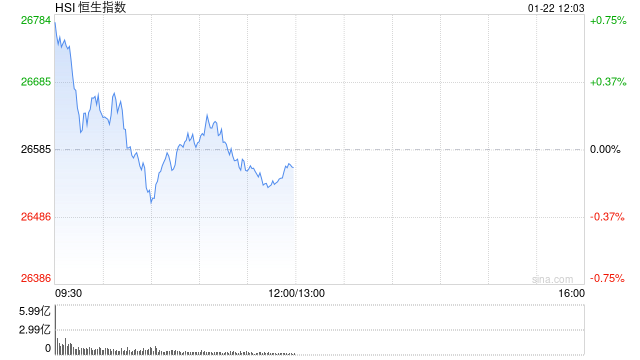
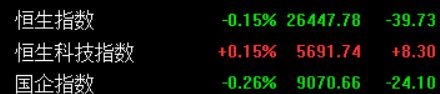
Market Performance - The Hang Seng Index decreased by 0.15% to 26,449.1 points, while the Hang Seng Tech Index increased by 0.14% to 5,691.65 points [1] - The National Enterprises Index fell by 0.26% to 9,071.33 points, and the Red Chip Index dropped by 0.44% to 4,170.27 points [1] Technology Sector - Among major tech stocks, Alibaba rose by 1.06%, Tencent fell by 0.17%, JD.com increased by 0.27%, Xiaomi dropped by 2.31%, NetEase fell by 3.43%, Meituan decreased by 0.77%, Kuaishou rose by 0.66%, and Bilibili fell by 0.08% [2] - The semiconductor sector saw significant gains, with Hua Hong Semiconductor rising over 4% [2] - Micron Technology indicated that the slow expansion of wafer fabs and complex customer certification processes will likely prolong the current memory shortage until 2028 [2] Gold and Silver Market - Gold stocks experienced a broad increase, with Lingbao Gold rising over 7% due to heightened demand for safe-haven assets amid escalating geopolitical tensions [3] - Spot silver reached a historical high of $95.89 per ounce, while spot gold surpassed $4,830 per ounce, also setting a new record [3] Real Estate Sector - Domestic property stocks generally declined, with Sunac China falling over 3% [3] - CICC's report suggested that despite weak demand, there are signs of positive changes on the supply side in the real estate sector, recommending increased attention to the sector in the short term [3] Consumer Sector - The new consumption concept saw a pullback, with Hu Shang A Yi dropping over 6% [3] - China Galaxy emphasized the importance of the "14th Five-Year Plan" for medium- to long-term consumption goals and the rollout of specific policies by 2026 [3]
美股三大指数大幅低开,英伟达、特斯拉均跌超2%
Ge Long Hui· 2026-01-20 14:35
Group 1 - The core viewpoint of the article highlights the ongoing tension in US-EU trade relations, leading to increased market risk aversion and a collective decline in major US stock indices, with the Nasdaq down 1.58%, S&P 500 down 1.33%, and Dow Jones down 1.3% [1] - Major technology stocks experienced significant declines, with Google A falling over 3%, and Nvidia, Amazon, Tesla, Meta, and Microsoft all dropping more than 2% [1] - Applovin saw a decline of over 4% following a short-sell report from Capitalwatch, which raised concerns about systemic compliance risks and significant financial crimes related to its core shareholder structure [1] - JPMorgan Chase's stock fell more than 2% amid threats from former President Trump to sue the bank, alleging account closures or restrictions following the Capitol riots [1] - 3M's stock dropped over 5% after reporting a 20% year-over-year decline in Q4 earnings per share, with its 2026 profit guidance falling short of expectations [1]






宏观与大宗商品周报:冠通期货研究报告-20260119
Guan Tong Qi Huo· 2026-01-19 12:06
1. Report Industry Investment Rating - Not provided in the report 2. Core Viewpoints - In the past week, capital markets advanced amidst fluctuations with divergent trends. Geopolitical tensions overseas continued to drive up investors' risk - aversion, pushing gold to a new record high, while the US stock market was desensitized to geopolitical issues and more focused on corporate earnings. Global stock markets generally rose, commodity trends diverged, A - shares fluctuated and diverged, and the BDI index dropped significantly. The US dollar regained strength, and the RMB remained stable and strong [5][10]. - The domestic bond market rebounded, stock indices fluctuated with mixed results, and commodity sectors regained their divergent patterns. The growth - style stocks outperformed value - style stocks. The Wind Commodity Index had a weekly change of 14.29%, with 4 out of 10 commodity sub - indices rising and 6 falling. Precious metals remained strong, non - ferrous metals continued to rise, energy rebounded, and grains had a small increase, while other sectors declined, with agricultural products, black commodities, and chemicals leading the decline [5][16]. - The market expects the Fed to maintain the interest rate at 3.5 - 3.75% with a probability of 95.4% in January, and there is still an expected 1 - 2 times of interest rate cuts in 2026 [6][67]. 3. Summary by Directory Market Overview - Capital markets showed divergent trends. Overseas, geopolitical tensions in the Middle East (Iran) and the US's intention towards Greenland increased investors' risk - aversion, driving up gold prices. The US stock market focused on corporate earnings, with the VIX index rebounding and most risk assets rising. Global stocks generally rose, commodities diverged, A - shares fluctuated, and the BDI index dropped. The US dollar strengthened, and the RMB was stable. Commodity sectors also showed divergence, with precious metals and non - ferrous metals performing well, while black commodities and agricultural products were weak [5][10]. - In the domestic market, the bond market rebounded, stock indices had mixed results, and commodity sectors regained their divergence. Growth - style stocks outperformed value - style stocks. The Wind Commodity Index had a weekly change of 14.29%, with 4 sub - indices rising and 6 falling [5][16]. Large - scale Assets - Overseas, geopolitical tensions led to a rise in gold prices due to increased risk - aversion. The US stock market was less affected by geopolitics and more focused on corporate earnings. Global stocks generally rose, commodities diverged, A - shares fluctuated, and the BDI index dropped. The US dollar strengthened, and the RMB was stable. Commodity sectors had divergent trends, with precious metals and non - ferrous metals strong, and black commodities and agricultural products weak [5][10]. Sector Updates - The domestic bond market rebounded, stock indices had mixed results, and commodity sectors regained their divergence. Growth - style stocks outperformed value - style stocks. The Wind Commodity Index had a weekly change of 14.29%, with 4 sub - indices rising and 6 falling. Precious metals remained strong, non - ferrous metals continued to rise, energy rebounded, and grains had a small increase, while other sectors declined, with agricultural products, black commodities, and chemicals leading the decline [16]. Fund Flows - Last week, the commodity futures market saw a significant overall inflow of funds. The precious metals sector had the most obvious inflow, while the soft commodities sector had the most significant outflow [19]. Variety Performance - In the past week, most domestic major commodity futures declined. The top - rising commodity futures were Shanghai silver, Shanghai tin, and styrene. The top - falling ones were the shipping index, caustic soda, and palladium [22]. Volatility Characteristics - Last week, the volatility of the international CRB Commodity Index stopped falling and rebounded. The volatilities of the domestic Wind Commodity Index and the Nanhua Commodity Index both increased. Most commodity futures sectors saw an increase in volatility, with energy and grains having significant volatility reduction, and non - ferrous metals and soft commodities having notable volatility increases [25]. Data Tracking - Internationally, major commodities had mixed results. The BDI index dropped significantly, the CRB index had a small decline, soybeans rebounded, corn rose sharply, copper fell, oil rose, and gold and silver both increased, with the gold - silver ratio reaching a new low [27][28]. - Domestically, the asphalt production rate rebounded from a low level, real - estate sales remained weak, freight rates diverged, and short - term capital interest rates fluctuated upwards [42]. Macroeconomic Logic - Stock indices fluctuated, corrected, and showed divergence, with little change in valuation. The risk premium ERP was at a one - year low. Growth stocks outperformed value - style stocks [30][31]. - Commodity price indices rose and then fell, and inflation expectations rebounded strongly [34]. - The "fund seesaw" effect between stocks and commodities and the price difference between domestic and international commodities were analyzed. Last week, stocks fluctuated and declined, commodities showed divergence, and the commodity - stock return difference generally increased. The Nanhua Commodity Index and the CRB Commodity Index both fell from high levels, with domestic - priced commodities weakening and international - priced commodities performing strongly, and the price difference between domestic and international commodities changed little [37][40]. - US Treasury yields rebounded across the board, the term structure steepened bearishly, the term spread rebounded from a low level, real interest rates were under pressure, and gold prices rose to a new high [50]. - The US high - frequency "recession indicator" was strong, the Citi Economic Surprise Index rebounded, and the 10Y - 3M spread of US Treasuries widened significantly and then fluctuated within a narrow range [59]. Fed Interest Rate Cut Expectations - The CME's FedWatch tool shows that the probability of the Fed maintaining the interest rate at 3.5 - 3.75% in January remains unchanged at 95.4%, and the probability of a 25bp cut to 3.25 - 3.5% remains at 4.6%. The market expects 1 - 2 times of interest rate cuts in 2026 [6][67]. China's 2025 Import and Export Data - In December 2025, China's exports were $357.8 billion, with a year - on - year growth rate of 6.6% (previous value 5.9%), and imports were $243.6 billion, with a growth rate of 5.7% (previous value 1.9%). The trade surplus was $114.14 billion (previous value $111.68 billion). For the whole year of 2025, exports grew by 5.5% (previous value 5.8%), imports had a growth rate of 0% (previous value 1%), and the trade surplus was $1.19 trillion (previous value $992.6 billion). Exports to ASEAN grew by 13.4%, to Europe by 8.4%, and to Japan by 3.5% year - on - year, while exports to the US dropped significantly, with a year - on - year decline of 20% [68]. China's 2025 Macroeconomic Data - In 2025, China's GDP was 1,401,879 billion yuan, a 5.0% increase compared to the previous year at constant prices. The added value of the primary industry was 933.47 billion yuan (up 3.9%), the secondary industry was 4,996.53 billion yuan (up 4.5%), and the tertiary industry was 8,088.79 billion yuan (up 5.4%). Quarterly GDP growth rates were 5.4% in the first quarter, 5.2% in the second quarter, 4.8% in the third quarter, and 4.5% in the fourth quarter. The fourth - quarter GDP had a 1.2% quarter - on - quarter growth [75]. This Week's Focus - Monday (January 19): China's 2025 full - year GDP growth rate, 2025 full - year GDP total, December social consumer goods retail sales year - on - year, December industrial added value of large - scale industries year - on - year, Eurozone December CPI annual rate final value, Canada December CPI monthly rate, US stock market closed for one day [82]. - Tuesday (January 20): China's one - year loan prime rate as of January 20, Germany's December PPI monthly rate, UK's December unemployment rate, Eurozone's November seasonally - adjusted current account, Eurozone's January ZEW economic sentiment index, EU Commission President von der Leyen's speech at the World Economic Forum Annual Meeting [82]. - Wednesday (January 21): UK's December CPI monthly rate, UK's December retail price index monthly rate, US's November building permit total, US's December pending home sales index monthly rate, IEA's monthly crude oil market report, US President Trump's speech at the World Economic Forum Annual Meeting [82]. - Thursday (January 22): US's API crude oil inventory for the week ending January 16, Australia's December seasonally - adjusted unemployment rate, US's initial jobless claims for the week ending January 17, US's November core PCE price index annual rate, US's November personal spending monthly rate, US's November core PCE price index monthly rate, US's EIA natural gas inventory for the week ending January 16, European Central Bank's December monetary policy meeting minutes, Turkish Central Bank's interest rate decision [82]. - Friday (January 23): US's EIA crude oil inventory for the week ending January 16, Japan's December core CPI annual rate, UK's December seasonally - adjusted retail sales monthly rate, Eurozone's January manufacturing PMI preliminary value, Canada's November retail sales monthly rate, US's January University of Michigan consumer confidence index final value, US's January one - year inflation rate expectation final value, Bank of Japan's interest rate decision and economic outlook report, Bank of Japan Governor Ueda Kazuo's monetary policy press conference [82].