
运输设备

Search documents
瑞典10月GDP连续第五个月萎缩 工业订单却同比激增12.1%
Xin Hua Cai Jing· 2025-12-10 08:30
Core Viewpoint - Sweden's economy continues to show signs of contraction in October, with a notable structural divergence as industrial orders experience significant growth despite overall economic weakness [1][3]. Economic Indicators - October GDP decreased by 0.3% month-on-month, following a 0.1% decline in September, marking the fifth instance of monthly negative GDP this year [1]. - Year-on-year, October GDP grew by 2.1%, a slowdown from the revised 2.8% in September [1]. Industrial Orders - Total industrial orders in October increased by 12.1% year-on-year, up from a revised 6.7% in the previous month [1]. - Domestic orders surged by 23.2%, compared to a mere 2.1% growth in September, while foreign orders saw a slowdown to 4.6% from 10.4% [1]. Sector Performance - The transportation equipment sector saw a remarkable order increase of 60.6%, and capital goods orders rose by 36.7%, driving overall order growth [1]. - Conversely, orders in the coal and refined petroleum products sector fell by 22.1%, and electrical equipment manufacturing orders decreased by 10.1% [1]. Industrial Output - Seasonally adjusted, industrial orders rose by 4.7% month-on-month, with a cumulative increase of 6.4% year-to-date compared to the same period in 2024 [2]. - Industrial output grew by only 5.9% year-on-year in October, significantly lower than the revised 14.6% in September [2]. - Key manufacturing sectors showed continued weakness, with food, beverage, and tobacco production down by 3.7%, textiles and clothing down by 5.3%, and wood products down by 2.4% [2]. Consumer Spending - Household spending decreased by 0.9% month-on-month in October, reversing the 0.5% growth seen in September [3]. - Year-on-year, household consumption grew by 2.3%, down from the revised 3.6% in September [3]. - Spending in transportation, retail, and motor services fell by 2.4%, while entertainment and cultural services saw a 0.9% decline [3]. Overall Economic Outlook - The Swedish economy is characterized by a complex situation of "demand recovery, production lag, and weak consumption" in October [3]. - The surge in domestic orders suggests potential future production recovery, but the current simultaneous decline in output and consumption indicates an unstable economic recovery foundation [3].
张瑜:“存款”落谁家,春水向“中游”——华创证券年度策略会演讲实录
一瑜中的· 2025-12-06 05:28
Core Viewpoints - The article presents a dual perspective on the investment landscape for 2026, focusing on both financial conditions ("who holds the deposits") and economic realities ("spring water flows to the midstream") [3][4][5][6] - The year 2026 is anticipated to be a pivotal year for awakening the investment value of the Chinese stock market, breaking the stereotype of short-lived bull markets [6][8] Economic and Policy Outlook for 2026 - The nominal GDP growth rate for 2026 is projected to be around 4.5%, slightly higher than the estimated 4% for 2025 [15] - Fixed asset investment is expected to remain low, between 0% and 1%, with a neutral expectation of around 1% [16] - Consumption is anticipated to align with nominal GDP growth, while exports are expected to show resilience with a growth rate of around 5% [16][18] - The fiscal budget expenditure growth rate is likely to be set at around 5%, with an increase in government debt expected [17][18] Price Trends for 2026 - CPI year-on-year growth is expected to turn positive, but its investment significance may be limited [19][20] - PPI year-on-year growth is anticipated to show an upward trend, with the potential for a positive turnaround depending on economic conditions in the first half of 2026 [21][22] - Housing prices remain uncertain, with a focus on the relationship between mortgage rates and rental yields as a potential indicator for price stabilization [23][24][27] Midstream Economic Outlook - The midstream sector is expected to outperform in the next 3-6 months, with notable changes in profit margins for midstream companies, particularly in overseas markets [30][34] - The supply-demand dynamics in the midstream sector are shifting, with policies aimed at reducing internal competition benefiting this segment [35][36] - The midstream sector is seen as having strong potential due to its differentiation from upstream and downstream sectors, which are currently facing challenges [39][40] Financial Conditions and Deposit Distribution - The distribution of deposits will significantly influence market valuations and investment styles in 2026 [47][48] - M2 growth is expected to decline, impacting stock market valuations and the relative performance of different market segments [48][49] - The transfer of deposits from residents to enterprises or non-bank financial institutions will be crucial for driving economic activity and stock market engagement [52][53][60] Investment Insights and Conclusions - The article emphasizes a cautious yet optimistic outlook for the stock market, with a focus on safety margins and profit improvements [50][51] - The potential for a bull market in stocks is acknowledged, but the pace of growth may slow compared to previous years [87] - The article suggests that the investment landscape will require careful monitoring of economic indicators and policy developments to identify key turning points [51][88]

韩国戒严事件余波未平:“审判风暴”即将来临,经济缓过劲儿了吗
Di Yi Cai Jing· 2025-12-04 08:41
Economic Outlook - The Bank of Korea has raised its GDP growth forecasts for 2025 and 2026 to 1% and 1.8% respectively [1][6] - The economic growth rate for South Korea in 2024 is projected at 2%, which is below expectations [4] - The first quarter of this year saw a GDP contraction of 0.1%, marking the first decline since Q4 2020 [4] - The second quarter showed a GDP growth of 0.7% quarter-on-quarter, with a year-on-year growth rate expanding by 0.6 percentage points [5] Political Context - The political landscape in South Korea remains turbulent, with former President Yoon Suk-yeol facing multiple legal challenges, including charges of insurrection and obstruction of justice [2][3] - Public sentiment towards Yoon is notably negative, with a Gallup Korea poll indicating a 77% disapproval rating, making him the "worst former president in South Korean history" [2] - The political division in South Korea persists, with differing perceptions of the emergency martial law incident among supporters of various political parties [3] Sector Performance - The manufacturing sector showed resilience in Q2, with a 2.5% quarter-on-quarter growth, driven by the computer, electronics, and optical equipment industries [5] - The semiconductor and display industries continue to be key drivers of South Korea's export strength, with a 16.5% year-on-year output growth in Q3 [5][6] - The government's economic measures, including support for AI, biotechnology, and cultural industries, aim to stabilize the economy [5]
2025年前10个月,在越外商直接投资企业出口总值2956.6亿美元
Shang Wu Bu Wang Zhan· 2025-12-04 07:18
Core Insights - The total export value of foreign direct investment (FDI) enterprises in Vietnam reached $295.66 billion by the end of October, marking a year-on-year increase of 22.8% [1] Export Products - Six major export products exceeded $10 billion in export value, including: - Computers, electronic products, and accessories: $84.16 billion - Mobile phones and accessories: $48.51 billion - Machinery, equipment, tools, and accessories: $43.78 billion - Textiles: $20.41 billion - Footwear: $16.1 billion - Transportation vehicles and accessories: $11.83 billion [1] Major Export Markets - The primary export markets for Vietnam include: - United States - Mainland China - South Korea - Hong Kong, China - Japan [1]
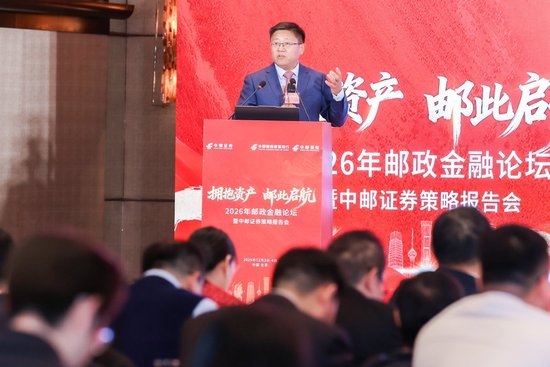
中邮证券黄付生:制造业“K”型分化,居民财富将迎修复
Xin Lang Cai Jing· 2025-12-03 12:25
Core Insights - The report presented by Huang Fusheng at the "2026 Postal Financial Forum" highlights China's economic recovery, driven by the "14th Five-Year Plan" focusing on modern industrial systems and high-tech sectors [3][8]. Group 1: Economic Recovery and Industrial Policy - China is building a modern industrial system under the "14th Five-Year Plan," with a focus on high-tech sectors showing significant performance [3][8]. - The plan prioritizes the construction of a modern industrial system and strengthening the real economy, aiming to "recreate a Chinese high-tech industry" over the next decade [3][8]. - Key strategies include enhancing traditional industries, addressing core technology challenges, and fostering strategic emerging industries like new materials and quantum technology [3][8]. Group 2: Manufacturing Sector Performance - The manufacturing sector exhibits a K-shaped recovery, with high-tech product exports growing faster than the overall export growth rate of 5.3% in the first ten months of 2025 [4][9]. - Profit growth in upstream manufacturing sectors like transportation equipment and non-ferrous metal smelting significantly outpaces that of downstream industries such as furniture and apparel [4][9]. - A-share non-financial companies reported a revenue increase of 0.9% year-on-year in Q3 2025, with net profits rising by 3.29% [4][10]. Group 3: Consumer Wealth and Spending Trends - Recovery of resident wealth is projected to take 3-5 years, with service consumption identified as a future growth area [5][10]. - In 2025, there remains a significant gap in resident wealth compared to the peak in 2021, but optimistic scenarios suggest recovery to previous levels by 2028 [5][10]. - The consumption structure indicates a saturation in goods consumption (15% of GDP) compared to major Western countries, while service consumption in healthcare and education is below global averages, indicating substantial growth potential [5][10].
美制造业活动连续9个月萎缩 分析师:继续受关税环境拖累
Zhong Guo Xin Wen Wang· 2025-12-02 03:17
Core Viewpoint - The U.S. manufacturing sector has contracted for nine consecutive months, with the Purchasing Managers' Index (PMI) dropping from 48.7 to 48.2 in November, indicating ongoing economic challenges due to tariff uncertainties and high production costs [1][4]. Group 1: Manufacturing Activity - The U.S. manufacturing PMI has decreased to 48.2, marking the largest contraction in factory activity in four months and the most significant drop in backlog orders in seven months [1][4]. - The manufacturing sector's contribution to the U.S. economy is approximately 10.1%, with only four industries, including computers and electronics, showing growth, while sectors like apparel and textiles are experiencing severe contractions [5]. Group 2: Impact of Tariffs - The uncertainty surrounding tariffs has led to a decline in customer demand, with manufacturers delaying orders until costs are clearer [4][5]. - Since the Trump administration raised tariffs in April, many U.S. manufacturers have faced increased costs for raw materials sourced from abroad, contributing to the overall economic slowdown [4][5]. Group 3: Industry Sentiment - Manufacturers across various sectors, including wood products and chemicals, report low business confidence, with many only accepting short-term orders and lacking plans for inventory expansion [6]. - The electrical equipment and appliance manufacturers have expressed concerns over "trade chaos," while transportation equipment manufacturers are planning long-term changes due to the evolving tariff environment [6].
12/1财经夜宵:得知基金净值排名及选基策略,赶紧告知大家
Sou Hu Cai Jing· 2025-12-01 15:53
Group 1 - The article provides an objective ranking of open-end fund net values, highlighting the top and bottom performers without subjective bias [1] - The top 10 funds with the highest net value growth include: Huatai-PB Hongrui Mixed A, Huatai-PB Hongrui Mixed C, Guotou Ruijin Silver Futures C, Guotou Ruijin Silver Futures A, AVIC Vision Leading Mixed A, AVIC Vision Leading Mixed C, Wanjia Trend Leading Mixed A, Wanjia Trend Leading Mixed C, Wanjia State-Owned Enterprise Power Mixed A, and Wanjia State-Owned Enterprise Power Mixed C [2] - The bottom 10 funds with the lowest net value growth include: Taikang Yangtze Economic Belt Bond D, Debang Enjoy Life Mixed C, Debang Enjoy Life Mixed A, AVIC Preferred Leading Mixed C, AVIC Preferred Leading Mixed A, Galaxy Core Advantage Mixed A, Galaxy Core Advantage Mixed C, Zhongyin Securities Health Industry Mixed, Yinhua Growth Smart Selection Mixed C, and Yinhua Growth Smart Selection Mixed A [3] Group 2 - The article notes that Taikang Yangtze Economic Belt Bond D experienced a decline in net value, while its A and C counterparts did not, indicating that the decline is not due to issues with the fund's holdings but rather a result of a valuation adjustment [4] - The market analysis indicates that the Shanghai Composite Index opened high and fluctuated upward, while the ChiNext opened high and then fell before recovering, with a total transaction volume of 1.88 trillion, and a stock rise-to-fall ratio of 3398:2872 [6] - The leading sectors include non-ferrous metals, tourism, and transportation services, each with gains exceeding 2%, while the transportation equipment sector lagged [6] Group 3 - The top holdings of the funds show a concentration of 53.17% in the top ten positions, with notable performers including ST Huashang, Tencent Holdings, and TCL Electronics, indicating a focus on growth-oriented stocks [7] - The fund with the lowest net value growth, Debang Enjoy Life Mixed C, shows a concentration of 60.72% in its top ten holdings, with only one stock, Honggong Technology, experiencing a significant decline [7]
中国贸促会答每经问:共同提升中国设计在全球的知名度与竞争力
Mei Ri Jing Ji Xin Wen· 2025-11-27 13:31
Group 1: Chain Expo - The Fourth Chain Expo will be held in Beijing from June 22 to June 26, 2026, focusing on high-level opening-up and modern industrial system construction [2] - The expo aims to integrate technological and industrial innovation, fostering new productive forces [2] - Over 300 companies have signed up to participate, indicating strong recognition of the expo platform [2] Group 2: International Cultural Exchange - The China Council for the Promotion of International Trade (CCPIT) emphasizes its role in international exhibitions, particularly the Milan Triennale [3] - The Milan Triennale, established in 1923, is a significant global exhibition in the field of art and design [3] - CCPIT has organized participation from renowned domestic design institutions and enterprises to enhance China's design competitiveness globally [3] Group 3: Milan Triennale Participation - The 24th Milan Triennale will take place from May 13 to November 9, 2025, with a Chinese exhibition area themed "Dynamic Balance - The Law of Civilization Development" [4] - The exhibition will showcase creative designs reflecting China's modernization achievements across five themes [4] - The Chinese exhibition area received positive feedback from the Triennale organizers and attendees, highlighting its role in cross-cultural exchange [4] Group 4: Global Trade Friction Index - The global trade friction index was recorded at 106 in September, remaining at a high level, with trade friction measures' monetary involvement increasing by 7.9% year-on-year [5] - The United States, India, and Russia have the highest trade friction indices among 20 monitored countries, with the U.S. leading for 15 consecutive months [5] - Key industries affected by trade friction include electronics, transportation equipment, pharmaceuticals, machinery, and chemicals, with electronics being the most impacted [5] Group 5: Trade Relief Measures - Trade relief measures are the most significant among five categories of trade friction measures, indicating a trend towards protecting domestic industries [6] - The trade friction index concerning China remains high at 115, with India having the highest index related to semiconductor, battery, and copper cable industries [6] - In September, the monetary involvement of trade friction measures concerning China decreased by 36.6% year-on-year but increased by 9.6% month-on-month [6]
中国贸促会:9月全球经贸摩擦指数持续处于高位
Zhong Guo Xin Wen Wang· 2025-11-27 06:52
Core Insights - The global trade friction index for September remains high at 106, with a year-on-year increase of 7.9% in the monetary value of trade friction measures, but a month-on-month decrease of 15.6% [1] Country-Specific Summary - Among the 20 monitored countries and regions, India, the United States, and Russia have the highest global trade friction indices, with the U.S. maintaining the top position for 15 consecutive months in terms of monetary value involved in trade friction measures [1] Industry-Specific Summary - The trade friction measures are primarily concentrated in the electronics, transportation equipment, pharmaceuticals, machinery, and chemical industries, with the electronics sector having the highest trade friction index [1] - The trade remedy measures index ranks first among five sub-index measures, indicating that traditional trade remedy investigations are being used by countries to protect domestic industries and enhance competitiveness [1] China-Specific Summary - The trade friction index concerning China from 19 countries and regions stands at 115, indicating a high level of trade friction. India has the highest trade friction index related to China, particularly in the semiconductor, battery, and copper cable industries [1] - The monetary value of trade friction measures involving China from these 19 countries decreased by 36.6% year-on-year but increased by 9.6% month-on-month [1]
运机集团股价跌5.21%,博时基金旗下1只基金位居十大流通股东,持有160.96万股浮亏损失263.97万元
Xin Lang Cai Jing· 2025-11-18 05:29
Group 1 - The core point of the news is that Yunjigroup's stock price dropped by 5.21% to 29.84 CNY per share, with a total market capitalization of 7.01 billion CNY as of the report date [1] - Yunjigroup, established on September 28, 2003, specializes in the research, design, production, and sales of energy-saving and environmentally friendly conveyor machinery, primarily belt conveyors [1] - The main revenue composition of Yunjigroup includes 76.11% from conveyor equipment, 9.83% from permanent magnet motor drums, 8.51% from technical services and spare parts, and 5.55% from other sources [1] Group 2 - According to data, Bosera Fund's Bosera Convertible Bond Enhanced Bond A (050019) entered the top ten circulating shareholders of Yunjigroup in the third quarter, holding 1.6096 million shares, which is 1.06% of the circulating shares [2] - The estimated floating loss for Bosera Convertible Bond Enhanced Bond A today is approximately 2.6397 million CNY [2] - The fund was established on November 24, 2010, with a current scale of 1.213 billion CNY, and has achieved a year-to-date return of 28.7%, ranking 17th out of 6222 in its category [2]