
文化产业

Search documents
2025苏州世界文创大会召开
Xin Hua Ri Bao· 2025-10-31 23:27
Group 1 - The 2025 Suzhou World Cultural and Creative Conference was held with over 500 enterprises from more than 40 countries, showcasing a variety of cultural activities to promote industry exchange [1] - Suzhou is recognized as a "model city of cultural and creative economy" due to its rich historical heritage and the integration of culture and technology, with over 1,700 cultural enterprises and a revenue of 194.21 billion yuan in the first half of the year, marking a 10.7% year-on-year growth [2][3] Group 2 - The conference focused on high-quality development of the cultural industry, signing 15 key projects including a digital cultural copyright service platform and a cultural industry innovation center in collaboration with Suzhou University [3] - A talent support policy was launched to foster cultural and creative talent, including a 300 million yuan fund aimed at early-stage projects and outstanding individuals in the cultural and creative sectors [3] Group 3 - The conference featured a significant collaboration between China Animation Group and Suzhou Industrial Park to host annual animation-themed exhibitions, enhancing the integration of animation with regional development [4] - The exhibition area of the conference reached 41,000 square meters, showcasing top IPs and nearly 3,000 cultural products from international museums, highlighting the popularity of creative products [5][6] Group 4 - The integration of cultural creativity with tourism is increasingly evident, with major theme parks participating in the conference, demonstrating the trend that good cultural products can drive visitor engagement [7] - The conference also highlighted the emergence of media-related cultural products, showcasing over 10,000 items from various media outlets, reflecting the vitality of the national media cultural industry [7] Group 5 - The event emphasized the fusion of cultural IP with digital technology, featuring innovative presentations such as AI-driven interactions with historical figures and robots performing traditional arts [8][9]
新华时评·聚焦“十五五”规划建议|激发全民族文化创新创造活力
Xin Hua She· 2025-10-31 10:23
Group 1 - The core viewpoint emphasizes the importance of cultural prosperity as a significant marker of Chinese-style modernization, with the "14th Five-Year Plan" focusing on enhancing social civilization and cultural innovation [1][2] - By the end of 2024, there will be nearly 44,000 cultural institutions and 7,046 registered museums in China, with over 91% of them being free to access, indicating a substantial improvement in public cultural services [1] - The "15th Five-Year Plan" aims to meet the growing spiritual and cultural needs of the population, highlighting the necessity to enhance cultural service and product supply capabilities [1] Group 2 - The plan includes a comprehensive set of new measures to promote cultural development, such as enhancing cultural originality, improving public cultural services, and developing new cultural formats [2] - There is a strong emphasis on international cultural exchange, with initiatives to enhance the global influence of Chinese civilization and support cultural enterprises in expanding overseas [2] - The document outlines the need for cultural system reforms to adapt to new public demands, ensuring that cultural vitality continues to flourish [2]
推动文化创新创造源泉充分涌流
Jing Ji Ri Bao· 2025-10-30 22:21
Group 1: Core Perspectives - Cultural prosperity is a significant marker of Chinese-style modernization, emphasizing the need to stimulate national cultural innovation and creativity [1] - The 20th Central Committee of the Communist Party of China set a goal for the "14th Five-Year Plan" period to significantly enhance social civilization levels and promote socialist culture [1] Group 2: Cultural System and Mechanism Reform - Deepening cultural system and mechanism reform is essential to clarify relationships among cultural construction entities and provide institutional guarantees for cultural innovation [2] - The reform aims to enhance cultural management systems, ensuring that cultural services align with socialist values and promoting the prosperity of cultural industries [2] Group 3: Cultural Production and Operation Mechanism - Establishing a robust cultural industry system is crucial, focusing on the transformation of state-owned cultural enterprises and supporting private cultural enterprises [3] - Optimizing resource allocation within the cultural industry and enhancing market service quality are key to fostering a vibrant cultural market [3] Group 4: Enhancing Cultural Originality - Cultural originality is a core element in measuring a nation's cultural innovation capabilities, drawing from China's rich historical and cultural resources [4] - Emphasizing the integration of Marxist principles with traditional Chinese culture is vital for creating contemporary cultural products that resonate with modern aesthetics [4] Group 5: Improving Artistic Creation and Production Services - Policy support and funding are necessary to guide artists in producing original works that reflect social realities and resonate with contemporary audiences [5] - Establishing collaborative mechanisms across various cultural sectors can enhance the promotion and dissemination of diverse artistic expressions [5] Group 6: Creating a Positive Cultural Ecosystem - A supportive cultural ecosystem is essential for fostering innovation, encouraging a culture of bold and inclusive creativity [6] - The balance between maintaining traditional values and promoting innovation is crucial for the sustainable development of cultural practices [6] Group 7: Promoting Diverse Cultural Expressions - The policy of "letting a hundred flowers bloom and a hundred schools of thought contend" aims to develop a culturally rich and influential socialist culture [7] - Encouraging academic and artistic discourse is vital for fostering a vibrant cultural environment that values integrity and responsibility [7] Group 8: Empowering Cultural Development through Technology - Leveraging information technology is critical for enhancing cultural innovation and facilitating the digital transformation of cultural resources [8] - Establishing a national cultural resource database and promoting the integration of culture and technology can significantly boost cultural development [8] Group 9: Accelerating New Cultural Formats - The development of new cultural formats, such as digital publishing and digital arts, is essential to adapt to the trends of digitalization in the cultural sector [9] - Integrating culture with tourism, education, and healthcare can create new growth points for the cultural industry, fostering a comprehensive modern cultural ecosystem [9]
聚焦对韩投资实操 中资企业出海韩国投资洽谈会成功举办
Nan Fang Du Shi Bao· 2025-10-30 14:29
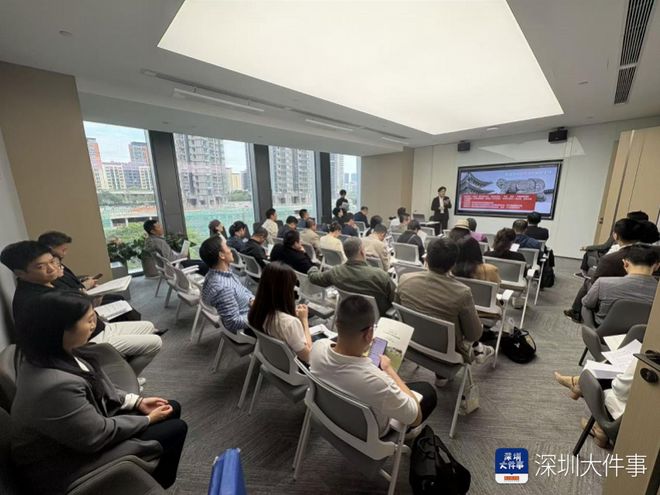
Core Insights - The recent investment seminar for Chinese enterprises in South Korea, co-hosted by Shenzhen Outbound E-Zhan Tong and Shinhan Bank (China), aimed to facilitate discussions on practical investment pathways in South Korea, attracting nearly 30 representatives from key sectors such as smart manufacturing, cross-border trade, and logistics [1][6] Group 1: Event Overview - The seminar provided a platform for in-depth exchanges on investment opportunities in South Korea, enhancing connections for Chinese companies looking to expand into the Korean market [1] - Shenzhen Outbound E-Zhan Tong showcased its service system, which includes a 2000 square meter offline service space and an online multi-channel service network, facilitating connections with over 40 overseas park operators [1][6] Group 2: Expert Insights - A "China-Korea Expert Group" was formed to provide in-depth support, with economists from Shinhan Bank analyzing current economic conditions and highlighting investment opportunities in the Korean cultural industry despite recent fluctuations in the Korean won [3] - The experts recommended leveraging the China-Korea investment agreement to mitigate risks and seize investment opportunities [3] Group 3: Policy and Financial Support - Representatives from the Korean Incheon Law Firm detailed tax incentives and subsidies for Chinese enterprises, including a potential seven-year tiered reduction in corporate income tax for qualifying manufacturing firms and cash subsidies for significant investment projects [5] - The Korea Trade-Investment Promotion Agency (KOTRA) provided a systematic overview of the investment environment in South Korea, aiding companies in selecting investment sectors and regions [5] Group 4: Future Directions - The seminar utilized a combination of expert analysis, policy breakdown, and procedural guidance to effectively address challenges faced by enterprises investing in South Korea [6] - Shenzhen Outbound E-Zhan Tong and Shinhan Bank plan to continue integrating global resources to enhance services for Chinese enterprises investing in South Korea, aiming for higher quality development in China-Korea economic cooperation [6]

2025金融街论坛年会文化金融分论坛聚焦金融赋能文化产业高质量发展
Xin Hua Cai Jing· 2025-10-30 13:58
Core Insights - The forum focused on "Financial Empowerment for High-Quality Development of the Cultural Industry," aiming to deepen cooperation between culture and finance, and to strengthen the foundation for cultural confidence and self-reliance [1][2] Group 1: Forum Objectives and Themes - The forum gathered outstanding representatives from the cultural and financial sectors to explore collaborative development and innovative paths for cultural finance [1] - The event emphasized the importance of financial institutions in supporting the cultural industry and highlighted the dual mission of building a strong financial and cultural nation [2][3] Group 2: Key Discussions and Innovations - Discussions included the need for financial products and services that cater to the unique characteristics of cultural enterprises, focusing on the lifecycle of cultural products and the long-term nature of cultural investments [3][4] - The integration of technology into the cultural industry was identified as a significant opportunity, with a call for investments that respect cultural characteristics and promote market-oriented transformations [4] Group 3: Project Launch and Agreements - The "Cultural Financial Services into Parks - West City Action" project was launched, creating a platform for government, banks, and enterprises to enhance financial services for cultural industry parks [5] - Cooperation agreements were signed between the West City Committee and the China Cultural Industry Investment Fund, as well as with China Mobile for the "2025 National University E-sports League" project [5] Group 4: Future Directions - The forum underscored the need for a coordinated mechanism for urban renewal that integrates cultural, commercial, and tourism sectors, fostering a resilient and prosperous urban development model [4][6] - Emphasis was placed on cultivating patient capital and enhancing financial policies to support the deep integration of culture and finance [4][6]

北京重磅发文助推并购重组 支持京津冀上市公司跨区域并购重组
Zheng Quan Ri Bao Wang· 2025-10-30 09:41
Core Viewpoint - The release of the "Opinions" aims to promote high-quality development of listed companies in Beijing through mergers and acquisitions, aligning with national strategies and enhancing the quality of listed companies [1][3]. Group 1: Policy Direction - The "Opinions" emphasize the importance of aligning mergers and acquisitions with Beijing's role as a political, cultural, international exchange, and technological innovation center, supporting the coordinated development of the Beijing-Tianjin-Hebei region [2][3]. - It encourages listed companies to focus on strategic emerging industries such as artificial intelligence, healthcare, integrated circuits, and new energy, aiming to enhance the modern industrial system in the capital [2][3]. Group 2: Encouragement of Mergers and Acquisitions - The "Opinions" support listed companies in pursuing cross-industry mergers that align with business logic, enhancing their international competitiveness and facilitating resource integration across regions [3][4]. - It promotes the role of leading enterprises in the industry chain to spearhead mergers, aiming for significant market capitalization growth [2][4]. Group 3: Support for Various Entities - The "Opinions" advocate for a supportive environment for all types of operating entities, without imposing short-term quantitative targets, to encourage mergers and acquisitions that meet their development needs [4][5]. - It emphasizes the importance of tailored services for different ownership types, including private and state-owned enterprises, to facilitate high-quality development through mergers [4][5]. Group 4: Resource Integration and Financial Support - The "Opinions" propose the establishment of a merger and acquisition service platform to enhance the matching of quality projects with capital, technology, and management resources [7][8]. - It encourages the creation and operation of merger funds by quality listed companies and various investors, promoting collaboration with government investment funds [8]. Group 5: Regulatory Framework - The "Opinions" highlight the need for a robust regulatory framework to prevent irrational behaviors and illegal activities in the merger and acquisition market, ensuring the protection of minority investors [9]. - It calls for enhanced monitoring and compliance checks related to mergers and acquisitions, including anti-monopoly and cross-border investment reviews [9].
“十四五”时期 北京全国文化中心建设硕果累累
Bei Jing Wan Bao· 2025-10-30 08:25
Core Insights - The "14th Five-Year Plan" period in Beijing focuses on enhancing cultural development, emphasizing ancient, revolutionary, and innovative cultures, and has achieved significant progress in establishing a national cultural center [1] Group 1: Ideological Foundation - The ideological foundation for the capital's development has been strengthened, with a focus on promoting Xi Jinping's thought and enhancing theoretical learning across various levels [2] - Major events such as the centenary of the Communist Party and the Beijing Winter Olympics have been supported through high-quality services and promotional activities [2] Group 2: Urban Civilization - The city has made notable progress in promoting social ethics and moral standards, with over 31 million visitors to major red cultural sites since the beginning of the "14th Five-Year Plan" [3] - Initiatives like the "'Jing' Color Culture, Youth Bloom" plan have engaged around 400,000 university students through numerous cultural activities [3] Group 3: Cultural Heritage - Beijing's historical and cultural heritage has been further enhanced, with the city set to have the most world heritage sites after the inclusion of the central axis in 2024 [4] - Significant cultural preservation projects have been implemented, including over 200 projects along the Grand Canal cultural belt [4] Group 4: Cultural Engagement - The city has hosted a record 57,000 commercial performances in 2024, attracting over 12.8 million attendees and generating ticket sales exceeding 3.9 billion yuan [5] - The number of registered museums has reached 246, and initiatives to promote reading and literature have gained popularity [5] Group 5: Cultural and Technological Integration - The cultural industry now accounts for 11.4% of the city's GDP, with strong support for cultural parks and new business models [6] - The integration of culture and technology is advancing, with over 70% of revenue from new cultural enterprises, positioning Beijing as a leader in this sector [6]
午评:沪指涨0.06% 北证50指数涨2.05% 锂矿股及量子科技股领涨
Xin Hua Cai Jing· 2025-10-30 05:26
Market Performance - The Shanghai and Shenzhen stock indices opened lower on October 30, with significant declines after initial gap filling, followed by a rebound [1] - The Shanghai Composite Index reached a peak of 4025.70 points, marking a new intraday high for the year [1] - The ChiNext Index also hit a new intraday high of 3331.86 points [1] - By midday, the Shanghai Composite Index was at 4018.86 points, up 0.06%, with a trading volume of approximately 666.8 billion yuan [1] Sector Performance - Sectors such as advertising packaging, transportation services, and die-casting saw significant declines at the opening [1] - Conversely, sectors like China-Korea Free Trade Zone, port shipping, insurance, and steel experienced notable gains [1] - Lithium mining, quantum technology, and military information technology sectors continued to rise during the session [1] Cultural Industry Growth - The cultural industry in China reported a revenue of 1,095.89 billion yuan in the first three quarters of 2025, reflecting a year-on-year growth of 7.9% [4] - Industries characterized by new cultural business models achieved a revenue of 488.6 billion yuan, growing 14.1% year-on-year, outpacing the overall cultural enterprise growth by 6.2 percentage points [4] Policy and Development Initiatives - The Ministry of Housing and Urban-Rural Development emphasized the development of smart and green construction methods to promote high-quality development in the real estate sector [5] - The focus is on optimizing housing supply for urban workers and families in need, while also enhancing the competitiveness of the construction industry globally [5] Financial Support for Emerging Industries - The Export-Import Bank of China completed a task of injecting 100 billion yuan through new policy financial tools, supporting over 360 projects [7] - This financial support is expected to stimulate total project investments exceeding 1.3 trillion yuan, particularly in digital economy and artificial intelligence sectors [7]
消费行业:“十五五”消费再定位,供给升级、服务扩容、需求松绑
Dongxing Securities· 2025-10-30 03:42
Investment Rating - The industry investment rating is "Positive" [4] Core Insights - Consumption will continue to be the core driver of China's economic growth during the 14th Five-Year Plan, with a focus on traditional industries, service sectors, consumption, and cultural industries as key investment areas [1][2][3] - The report emphasizes the importance of enhancing traditional industries through technological upgrades and digital transformation, particularly in sectors like textiles, light industry, and consumer goods [1] - The service sector is expected to expand with a focus on high-quality, diversified, and convenient services, benefiting areas such as elderly care, childcare, and community services [2] - The report highlights the need to stimulate consumer demand by addressing employment, income, and public service spending, which will positively impact sectors like automotive and real estate [2] - Cultural industries are seen as a means to empower consumption, with initiatives aimed at enhancing cultural enterprises and promoting international tourism [3] Summary by Sections Traditional Industries - Focus on upgrading traditional industries to enhance global competitiveness, particularly in mining, metallurgy, and textiles [1] - The report anticipates a new product cycle driven by AI and green technologies in consumer goods [1] Service Sector - Implementation of actions to enhance service quality and expand service sector capabilities [2] - The integration of modern services with advanced manufacturing is expected to create new consumption opportunities [2] Consumer Demand - The report outlines strategies to boost consumer spending, including the removal of unreasonable restrictions in automotive and housing markets [2] - Initiatives like paid staggered vacations are expected to expand consumption in tourism and leisure sectors [2] Cultural Industry - The establishment of a robust cultural industry system is crucial for attracting younger consumers and enhancing the conversion rates of cultural experiences in commercial settings [3] - The report suggests that improving the convenience of inbound tourism will benefit high-end retail and duty-free sectors [3] Investment Recommendations - Traditional consumer goods manufacturers that embrace digital and green transformations are likely to benefit from policy support and market share growth [3] - Leading companies in service sectors such as education, healthcare, and tourism are expected to gain from policy backing and expanding demand [3]
今年北京地坛书市实现销售码洋超1亿元,成最具人气文化盛事之一
Xin Jing Bao· 2025-10-30 03:14
Core Insights - Beijing's Ditan Book Fair achieved sales exceeding 100 million yuan, marking a 37.8% increase from last year, becoming one of the most popular cultural events in the capital during autumn [1][2] Group 1: Cultural Development Initiatives - Beijing is leveraging its identity as a "City of Performing Arts," "City of Museums," and "Bookish Beijing" to meet the cultural needs of its citizens, launching initiatives like "Great Drama in Beijing" and "Theater with a Show" [1] - The city plans to host 57,000 commercial performances in 2024, attracting over 12.8 million attendees and generating ticket sales exceeding 3.9 billion yuan, all of which are historical highs [1] - A long-term development plan for the "City of Museums" has been established, with 246 registered museums and 56 officially recognized museums in the city [1] Group 2: Cultural Consumption and Events - The "Old Books, New Knowledge" initiative supports physical bookstores and promotes reading through seasonal events, contributing to a cultural consumption boom in the city [2] - Major cultural facilities like the Beijing Universal Resort and the urban sub-center have opened, creating new cultural spaces for residents and tourists [2] - The 15th Beijing International Film Festival introduced the "Film Life Festival," generating related sales of 25.17 billion yuan, while the "Beijing Style" short video competition has sparked a new wave of public artistic creation [2]