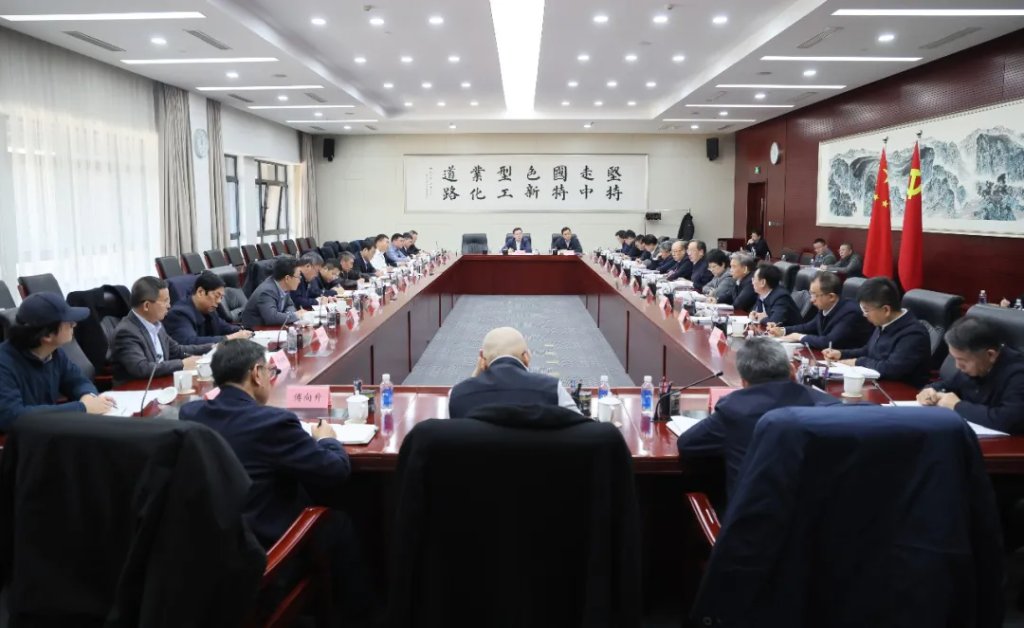
有色

Search documents
工信部:激发提振新消费需求 稳定制造业有效投资
Zheng Quan Shi Bao· 2026-01-13 18:03
Group 1 - The meeting focused on achieving a good start for the "14th Five-Year Plan" in the industrial economy, with discussions on stabilizing economic operations and enhancing market potential [1] - Key industry representatives from sectors such as steel, non-ferrous metals, new materials, automotive, machinery, shipping, light industry, pharmaceuticals, and electronics participated in the meeting [1] - The Minister emphasized the importance of high-quality development and new industrialization as key tasks to improve the industrial economy qualitatively and quantitatively [1] Group 2 - Entrepreneurs are encouraged to focus on their core businesses and accelerate high-quality development while leading the industry in improving quality and efficiency [2] - Companies are urged to enhance their foundational research and original innovation capabilities, solidifying the basis for innovation [2] - Active participation in industry rule-making and self-regulation is encouraged to resist "involution" and promote a win-win environment for industry development [2]
中国工信部:着力稳定制造业有效投资
Zhong Guo Xin Wen Wang· 2026-01-13 13:28
Group 1 - The Ministry of Industry and Information Technology of China emphasizes stabilizing effective investment in the manufacturing sector to achieve a good start for the "14th Five-Year Plan" [1] - The meeting highlights the current challenges faced by the industrial economy, including external environmental changes and increasing internal risks, while also recognizing the advantages of China's industrial economy, such as a large market and complete industrial system [1] - The meeting outlines the implementation of a new round of ten key industries' growth stabilization work plan, which includes sectors like steel, non-ferrous metals, petrochemicals, chemicals, building materials, machinery, automobiles, power equipment, light industry, and electronic information manufacturing [1] Group 2 - The meeting calls for entrepreneurs to focus on enhancing basic research and original innovation capabilities, actively participate in industry rule-making, and resist "involution" to protect the industry development environment [2] - In the first 11 months of 2025, the industrial added value of large-scale industries increased by 6% year-on-year, with high-tech manufacturing and equipment manufacturing growing by 9.2% and 9.3% respectively, indicating a significant acceleration in industrial upgrading [2]
博道基金张建胜:不在风口追高,成长投资更需“精打细算”
点拾投资· 2026-01-13 11:00
Core Viewpoint - Zhang Jian Sheng's investment philosophy emphasizes a low-risk approach, focusing on absolute returns rather than high-risk growth stocks, which has led to impressive performance metrics, including a 45.97% return in 2025 and a 65.38% return over the past three years [1]. Group 1: Investment Characteristics - The investment strategy is characterized by a top-down approach with a concentrated selection of stocks, typically holding 1-2 stocks per industry, resulting in low turnover rates [2]. - The portfolio is industry-balanced, primarily focusing on high-end manufacturing, TMT (Technology, Media, and Telecommunications), and consumer sectors, without betting on specific sub-sectors [3]. - A moderately contrarian style is adopted, with an emphasis on valuation and avoiding pure beta returns, leading to early buying and selling of growth stocks compared to peers [3][11]. Group 2: Sector Insights - In the AI industry chain, there is a preference for storage and connectivity segments, with increased focus on AI application investments starting in 2026 [3][20]. - The consumer sector faces challenges with insufficient overall consumption, leading to investments in companies adapting to changes in consumption channels [4]. - In the Hong Kong innovative drug sector, the phase of valuation recovery has ended, with current investments concentrated in companies with overseas commercialization channels [5][23]. - The overall valuation in the metals sector, excluding gold, remains low, and the anticipated interest rate cuts in the US are favorable for commodities [6]. Group 3: Market Outlook - The outlook for the bull market is optimistic, with the belief that it is entering its second half, necessitating a more stable mindset and a balanced portfolio approach [6][19]. - The investment opportunities for 2026 are expected to diversify beyond non-linear growth sectors like AI and resources, with a focus on cyclical industries experiencing valuation recovery [19]. - The "re-globalization" narrative is seen as beneficial for Chinese companies, enhancing their performance and long-term growth potential, which may lead to a revaluation of core Chinese assets, including those in the Hong Kong market [18][19]. Group 4: Investment Strategy Adjustments - The investment approach will involve a slower trading pace, with a more cautious evaluation of opportunity costs, while maintaining a left-side investment framework [28]. - Emphasis will be placed on large-cap stocks due to the increasing influence of passive and quantitative funds in the market [29]. - The strategy will focus on companies with price elasticity and those that can create demand through supply, which may become advantageous in the current bull market environment [29].


金鹰基金:天量遭遇主线暂歇 春躁行情踏浪前行
Xin Lang Cai Jing· 2026-01-13 09:38
Market Overview - All three major indices closed lower, with the ChiNext index experiencing a significant decline of 1.96%, while the Shanghai Composite Index fell by 0.64% to 4138 points. The Hong Kong Hang Seng Index opened high but closed lower. Trading volume in both markets increased, approaching 3.7 trillion yuan [1][8]. Sector Performance - The commercial aerospace sector saw a substantial drop, leading to a decline in market sentiment. According to WIND data, most of the 31 primary industries tracked by Shenwan experienced declines, with notable gains in oil and petrochemicals (1.62%), pharmaceuticals (1.21%), non-ferrous metals (0.91%), and media (0.67%). In contrast, sectors such as defense, electronics, communications, and computers lagged behind. Out of over 5300 stocks in the market, 3726 saw declines, indicating poor profitability [1][9]. Reasons for Market Correction - The primary reason for the market correction was the cooling off of previously popular speculative themes, particularly in commercial aerospace and controllable nuclear fusion sectors. The commercial aerospace concept stocks notably weakened after several companies issued risk warnings on January 12. This decline raised concerns among investors regarding high-volatility sectors, prompting some to quickly realize profits, which led to concentrated selling pressure [2][9]. Short-term Outlook - The current short-term fluctuations may present a good opportunity for allocation. Historical data from the past two decades indicates that spring market rallies typically occur, although the timing and magnitude can vary. Compared to historical trends, the current bull market has not yet reached its peak, and market sentiment remains subdued. The influx of absolute return funds from insurance, private equity, and retail investors suggests that the spring rally in A-shares has already begun [2][10]. Future Market Dynamics - As the annual performance forecast disclosure window opens for listed companies, the market logic is expected to shift from valuation recovery to profit growth. The current spring market is anticipated to be characterized by a more tradable and significant upward trend after digesting market sentiment [3][10]. Sector Allocation Recommendations - The importance of performance realization is expected to increase, focusing on core technology and manufacturing sectors. Key areas to prioritize include overseas computing power, storage, consumer electronics, and wind energy storage, which currently have low trading congestion and still present buying opportunities. Additionally, sectors like innovative pharmaceuticals and gaming, which may see fundamental improvements in Q1, are also expected to rotate into focus [4][11]. Commercial Aerospace Sector Outlook - Despite the recent adjustments and the need to digest short-term overheating sentiment, the commercial aerospace sector may still hold strong investment appeal. The ongoing developments with SpaceX and robust policy support, along with significant industry catalysts, suggest that the sector could remain active with participation opportunities [5][12].
AI、高股息、新质生产力:2026开年市场如何走?|投向预言家
Sou Hu Cai Jing· 2026-01-13 08:47
Group 1 - The core viewpoint for 2026 A-shares is likely to be driven by a dual engine of "consumption recovery" and "technological self-reliance" [4] - The national fiscal work conference has set the tone for 2026, emphasizing "strongly boosting consumption" and committing to "continue arranging funds to support the replacement of consumer goods" [3] - Short-term focus should be on sectors directly benefiting from policies, such as major appliances, new energy vehicles, and smart home industries, which are the primary targets for subsidies [3] Group 2 - Mid-term investments should target "hard technology" sectors like semiconductors, industrial mother machines, and AI hardware, as the conference highlighted increased investment in technology and key manufacturing industry actions [3] - Long-term attention should be given to areas related to employment services, vocational training, and urban renewal, which are crucial for improving consumer capacity [3] - The market's risk appetite is expected to remain neutral to warm, with a significant reduction in concerns over potential tariff and trade-related risks, supported by positive government statements from both China and the U.S. regarding economic performance in 2026 [5] Group 3 - Structural opportunities are anticipated to expand further in 2026, with cyclical industries like non-ferrous metals and chemicals expected to benefit from economic recovery and supply-side improvements [5] - The ongoing AI wave and the demand for self-reliance in technology remain core investment themes [5] - The difficulty of stock selection is expected to increase in 2026, necessitating in-depth research to seize stock picking and timing opportunities [5]

投顾晨报:指数触及波动区,结构仍值得关注-20260113
Orient Securities· 2026-01-13 08:42
Core Insights - The report highlights that the market index has reached a volatile zone, but the underlying structure remains worthy of attention, indicating a healthy rotation in technology growth and cyclical stocks like non-ferrous metals and chemicals [2][3] - The report emphasizes a strategy focused on mid-cap blue chips as a stabilizing force, with technology growth providing support, particularly in sectors like smart vehicles and robotics [2][3] Industry Strategy - The non-ferrous metals sector is experiencing a price increase in lithium, driven by favorable tax policies and supply-demand dynamics, with lithium carbonate prices rising to $1,880 per ton, up $332 from the previous week [3] - The cobalt market is characterized by cautious purchasing strategies from downstream buyers, but tight supply conditions are supporting cobalt salt prices, indicating ongoing supply-demand negotiations [3] Thematic Strategy - The robotics sector is seeing increased catalysts, with the anticipated release of Tesla's Optimus V3 in Q1 2026 expected to boost attention on the robotics industry, alongside a significant number of domestic companies preparing for IPOs [4] - The report suggests that the domestic humanoid robot market is poised for substantial growth, with expected doubling of shipments and multiple companies likely to complete IPOs, benefiting from both domestic and international market developments [4]
工信部:广大企业家要自觉抵制“内卷”,促进共赢
Bei Ke Cai Jing· 2026-01-13 08:33
新京报贝壳财经讯 据"工信微报"披露,1月13日上午,工业和信息化部党组书记、部长李乐成主持召开 第十八次制造业企业座谈会,会上,来自钢铁、有色、新材料、汽车、机械、船舶、轻工、医药、电子 等重点行业的12家企业负责人和中国机械工业联合会、中国石油和化学工业联合会负责同志作交流发 言。会议强调,广大企业家要坚守主业,加快高质量发展。在加快自身发展的同时引领行业提质增效, 以优质产品和服务在国内外市场赢得竞争优势。深耕创新,提升核心竞争力。在提升基础研究和原始创 新能力方面下苦功夫,深扎底层原理和根技术,把创新根基和底座筑牢筑实。加强自律,打造良性生 态。积极参与行业规则制定和自律机制建设,自觉抵制"内卷",促进共赢,呵护行业发展环境,为加快 推进新型工业化、建设制造强国作出更大贡献。 ...
工信部:积极参与行业规则制定和自律机制建设,自觉抵制“内卷”
Xin Lang Cai Jing· 2026-01-13 08:24
1月13日上午,工业和信息化部党组书记、部长李乐成主持召开第十八次制造业企业座谈会,深入学习 贯彻习近平总书记关于新型工业化的重要论述,贯彻落实党的二十届四中全会和中央经济工作会议精 神,聚焦实现"十五五"工业经济良好开局,听取重点行业企业情况介绍和意见建议。 会上,来自钢铁、有色、新材料、汽车、机械、船舶、轻工、医药、电子等重点行业的12家企业负责人 和中国机械工业联合会、中国石油和化学工业联合会负责同志作交流发言,介绍企业生产经营和行业发 展情况,围绕稳定经济运行、激发市场潜力、推进技术攻关、优化发展环境、加强助企帮扶等方面建言 献策。部相关司局和单位对问题诉求和意见建议现场予以回应。 转自:北京日报客户端 会议指出,当前我国工业正处于由大变强、爬坡过坎的关键阶段,在外部环境变化影响加深、内部风险 挑战增多的形势下,工业经济平稳运行压力增大。同时也要看到,我国工业经济的底盘坚实、韧性强 劲,具有超大规模市场、完整产业体系、丰富人才资源等优势,长期向好的支撑条件和基本趋势没有改 变。要坚定信心、直面问题,切实把思想和行动统一到党中央对形势的科学判断上来,牢牢锚定推动高 质量发展这个首要任务和推进新型工业化这 ...
工信部:广大企业家要积极参与行业规则制定和自律机制建设 自觉抵制“内卷”
智通财经网· 2026-01-13 08:04
工业和信息化部召开第十八次制造业企业座谈会 1月13日上午,工业和信息化部党组书记、部长李乐成主持召开第十八次制造业企业座谈会,深入学习 贯彻习近平总书记关于新型工业化的重要论述,贯彻落实党的二十届四中全会和中央经济工作会议精 神,聚焦实现"十五五"工业经济良好开局,听取重点行业企业情况介绍和意见建议。 会上,来自钢铁、有色、新材料、汽车、机械、船舶、轻工、医药、电子等重点行业的12家企业负责人 和中国机械工业联合会、中国石油和化学工业联合会负责同志作交流发言,介绍企业生产经营和行业发 展情况,围绕稳定经济运行、激发市场潜力、推进技术攻关、优化发展环境、加强助企帮扶等方面建言 献策。部相关司局和单位对问题诉求和意见建议现场予以回应。 会议指出,当前我国工业正处于由大变强、爬坡过坎的关键阶段,在外部环境变化影响加深、内部风险 挑战增多的形势下,工业经济平稳运行压力增大。同时也要看到,我国工业经济的底盘坚实、韧性强 劲,具有超大规模市场、完整产业体系、丰富人才资源等优势,长期向好的支撑条件和基本趋势没有改 变。要坚定信心、直面问题,切实把思想和行动统一到党中央对形势的科学判断上来,牢牢锚定推动高 质量发展这个首要 ...
工信部召开制造业企业座谈会:着力稳定制造业有效投资,自觉抵制“内卷”
Hua Er Jie Jian Wen· 2026-01-13 08:04
会议强调,广大企业家要坚守主业,加快高质量发展。立足"两个大局",胸怀"国之大者",在加快自身发展的同时引领行业提质增效,以优质产 品和服务在国内外市场赢得竞争优势。深耕创新,提升核心竞争力。在提升基础研究和原始创新能力方面下苦功夫,深扎底层原理和根技术,把 创新根基和底座筑牢筑实。加强自律,打造良性生态。积极参与行业规则制定和自律机制建设,自觉抵制"内卷",促进共赢,呵护行业发展环 境,为加快推进新型工业化、建设制造强国作出更大贡献。 部相关司局、部代管基金公司负责同志参加会议。 本文来源:工信微报 风险提示及免责条款 1月13日上午,工业和信息化部党组书记、部长李乐成主持召开第十八次制造业企业座谈会,贯彻落实党的二十届四中全会和中央经济工作会议精 神,聚焦实现"十五五"工业经济良好开局,听取重点行业企业情况介绍和意见建议。 会议指出,当前我国工业正处于由大变强、爬坡过坎的关键阶段,在外部环境变化影响加深、内部风险挑战增多的形势下,工业经济平稳运行压 力增大。同时也要看到,我国工业经济的底盘坚实、韧性强劲,具有超大规模市场、完整产业体系、丰富人才资源等优势,长期向好的支撑条件 和基本趋势没有改变。要坚定信心 ...