
电动汽车

Search documents
美媒哀叹:美国屈辱世纪,才刚刚开始
Xin Lang Cai Jing· 2026-01-21 22:51
Core Insights - The article discusses the rising influence of China in technology and manufacturing, suggesting that "Chinese attributes" may become the new norm unless these sectors lose their dominance [1][3][4]. Group 1: Perception of China - There is a noticeable shift in the perception of China among many Americans, especially the younger generation, who are increasingly embracing Chinese technology, brands, and cities [1][4]. - Social media trends reflect a longing for Chinese culture and products, with users sharing moments they describe as "very Chinese" [1][3]. Group 2: Comparison with the U.S. - Critics often highlight China's significant investments in clean energy and urban infrastructure to underscore the shortcomings of U.S. climate policies and housing issues [2][7]. - China is viewed not just as a country but as a symbol that exposes the flaws in American society, particularly during a time of perceived decline in the U.S. [2][7]. Group 3: Dependency on Chinese Products - Many Americans have become acutely aware of their dependency on Chinese exports, particularly during trade tensions that revealed the sourcing of American brand products from China [3][8]. - The rise of Chinese applications like TikTok and platforms like Dhgate has enabled direct communication with Chinese manufacturers, bypassing traditional retail channels [3][8]. Group 4: Cultural Integration - The integration of Chinese products into daily life is evident, with items like smartphones, laptops, and even popular toys being manufactured in China [2][7]. - Language barriers are diminishing due to advancements in translation technology, making it easier for international users to engage with Chinese content [3][8].
广东省外贸进口连续40年位居全国首位 2025年深圳高技术产品进出口1.4万亿
Zhong Guo Fa Zhan Wang· 2026-01-21 13:50
Core Insights - Guangdong's foreign trade in 2025 reached 9.49 trillion RMB, a year-on-year increase of 4.4%, maintaining its position as the largest province in China for 40 consecutive years, accounting for 20.9% of the national total [1] - High-tech product exports from Guangdong reached 1.14 trillion RMB, growing by 15%, marking the first time this category surpassed one trillion RMB [1] - Shenzhen's foreign trade enterprises numbered nearly 7,000, the highest in eight years, with a total import and export volume of 1.29 trillion RMB, up 13.6% [1] Group 1: Trade Performance - In 2025, Guangdong's imports totaled 3.46 trillion RMB, an increase of 7.8%, while exports reached 6.03 trillion RMB, growing by 2.5% [1] - Shenzhen's high-tech product exports accounted for nearly 60% of the province's total in this category, reaching a historical high of 1.4 trillion RMB, with an 11.6% year-on-year growth [3] - The total value of Shenzhen's high-tech product exports surpassed 700 billion RMB, with leading categories including measuring instruments, 3D printers, and automotive parts [3] Group 2: Logistics and Infrastructure - Shenzhen Customs implemented measures such as "departure confirmation" and "direct pick-up and loading," leading to a record container throughput of over 35 million TEUs [2] - The cross-border cargo traffic at Shenzhen Bay port exceeded 10,000 vehicles in a single day, reflecting improved logistics efficiency [2] - The "smart logistics" reform at the airport resulted in a 63% increase in operational efficiency, with air cargo throughput surpassing 1 million tons for the first time [2] Group 3: Support for Advanced Manufacturing - Shenzhen Customs launched a "one-stop" customs clearance service for major project equipment imports, covering over 120 billion RMB in equipment value and reducing production time by 50% [4] - A new inspection and supervision model was trialed to support the import of advanced technology and critical components, reducing clearance times by 46% [4] - In the biopharmaceutical sector, a joint regulatory mechanism was established, benefiting 27 research institutions and enterprises, with imports enjoying facilitation measures totaling 33.176 million RMB, a 7.6% increase [4]
马斯克坦承特斯拉(TSLA.US)两大未来产品“爬坡痛苦”:Cybercab与Optimus初期量产将极其缓慢
智通财经网· 2026-01-21 13:41
智通财经APP获悉,特斯拉(TSLA.US)首席执行官埃隆・马斯克于周二表示,公司旗下Cybercab自动驾 驶出租车、Optimus人形机器人的初期生产速度将"极其缓慢",之后才会逐步提升。 据分析称,尽管特斯拉目前的核心收入与利润仍来源于电动汽车销售,但公司高达1.39万亿美元的市值 很大程度上取决于投资者对其自动驾驶技术及人形机器人的未来预期。 针对社交平台X上一则"Cybercab将在百日内启动生产"的帖子,马斯克回应称,产能爬坡的速度取决于 产品的复杂程度。他指出,生产速度与涉及的新部件数量及制造工序的复杂度成反比。 马斯克写道:"对于Cybercab和Optimus而言,几乎每一个环节都是全新的,因此早期的生产速度会极其 缓慢,但最终将实现极速增长。" 马斯克在去年12月透露,特斯拉正在开展无安全员坐副驾的Robotaxi路测。 2025年,特斯拉已在美国得克萨斯州奥斯汀市推出了有限范围的Robotaxi服务,所用车型为搭载新版全 自动驾驶(FSD)的Model Y。该服务初期采用地理围栏技术划定运营范围,且副驾均配备人类安全员。 另外,马斯克将人形机器人项目定位为特斯拉长期战略的核心,称这项业务 ...

人老实话不多?小米汽车与雷军的成与败
Sou Hu Cai Jing· 2026-01-21 09:49
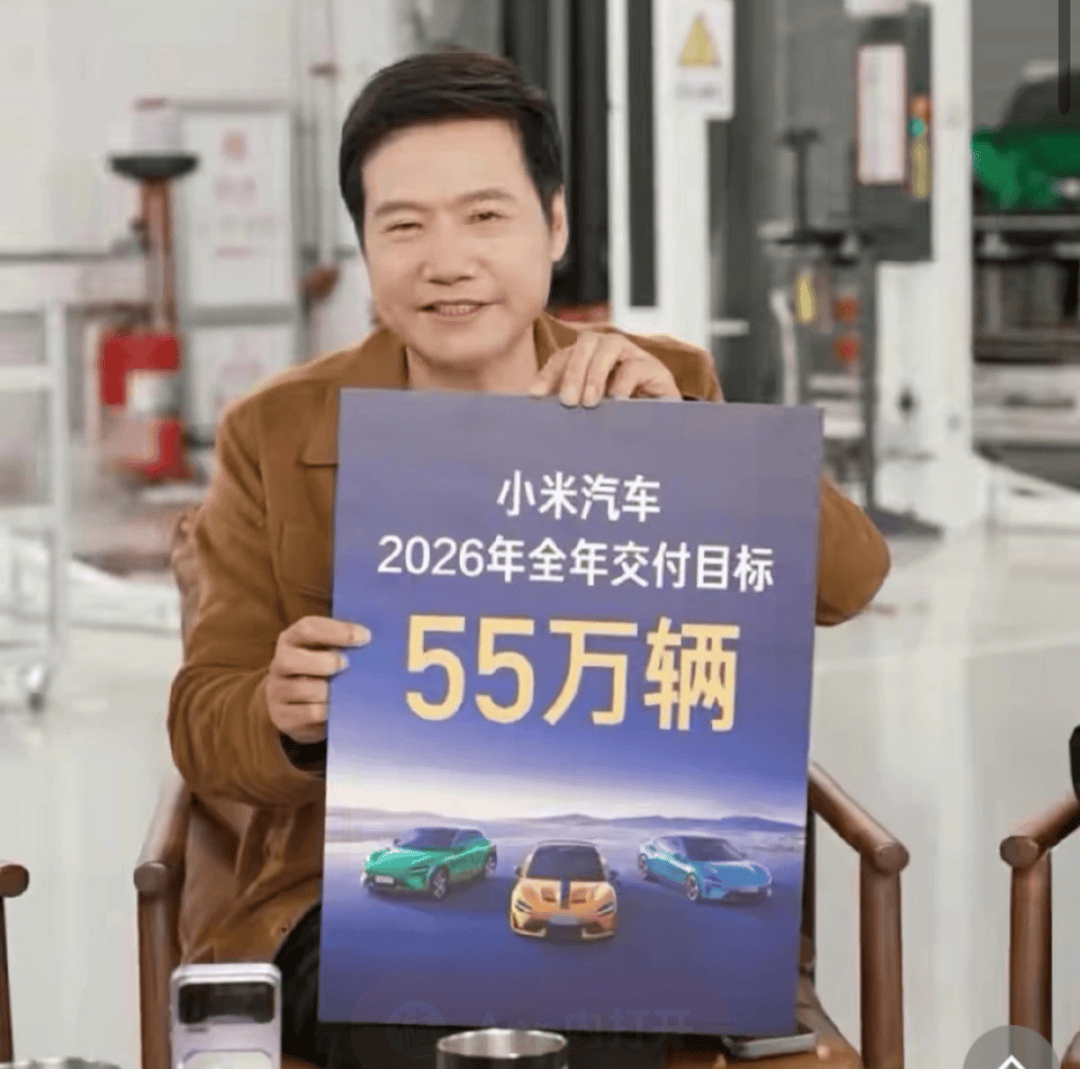
Core Viewpoint - Xiaomi's founder Lei Jun acknowledged the issue of "small print marketing" as an industry malpractice and committed to immediate rectification during the first live broadcast of 2026 [1][3][7]. Group 1: Sales Performance and Targets - In 2025, Xiaomi's automotive business exceeded its annual target by 17%, selling 411,800 units, with a sales target of 550,000 units set for 2026 [3][16]. - Predictions suggest that Xiaomi's electric vehicle sales could potentially surpass Tesla's in 2026, with Bloomberg forecasting a 100% increase, leading to an annual shipment of 782,000 units [16][20]. - Xiaomi's automotive business is expected to contribute 30% to the group's total revenue [20]. Group 2: Marketing Strategy Changes - Lei Jun's live broadcast included a four-hour session where an engineer disassembled a Xiaomi vehicle to showcase its core components, aiming for transparency [4]. - The company has reduced the number of promotional materials containing "small print" from 32 to 13 within a month, indicating a shift towards using larger fonts for better readability [10][12]. - Xiaomi's marketing strategy is evolving to emphasize transparency, with Lei Jun stating that specific voltage values will be clearly marked instead of using generalized terms [20][21].

特斯拉全美最大锂精炼厂投产
Zhong Guo Hua Gong Bao· 2026-01-21 06:52
中化新网讯 近日,特斯拉宣布,其位于美国得克萨斯州科珀斯克里斯蒂附近的锂精炼厂正式投产。该 厂是目前美国规模最大、工艺最先进的锂精炼设施,可缩短供应链距离、降低运输排放,并增强北美在 储能与电动汽车产业链中的自主性与韧性。 该精炼厂采用一项北美首创的直接转化工艺,将锂辉石矿石一步法转化为电池级氢氧化锂。据厂区负责 人介绍,新工艺路径更清洁、更简单且成本更低,避免了传统方法产生的有害副产品,其副产物无水石 膏可用于混凝土生产,实现了资源化利用。 ...
三星显示:将为极氪9X供应OLED屏
WitsView睿智显示· 2026-01-21 06:27
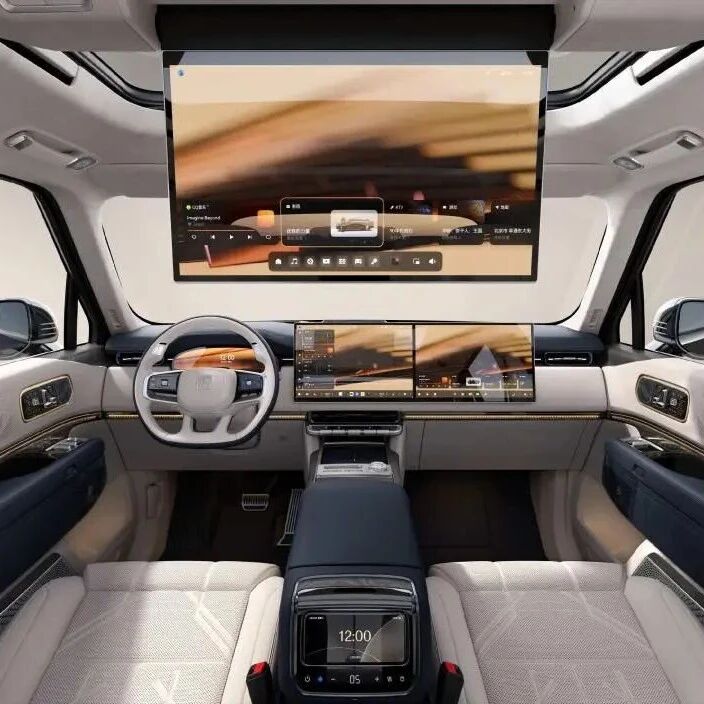
1月21日,三星显示宣布,将为吉利旗下高端电动汽车品牌极氪(Zeekr)旗舰SUV车型"9X"提供 三款定制化车载OLED显示屏,规格分别为16英寸中央信息显示屏(CID)、16英寸乘客信息显示 屏(PID)以及17英寸后排娱乐系统(RSE)。 具体看,驾驶员和乘客座椅上并排安装的16英寸CID和PID显示屏采用OLED标志性的超窄边框和 纯黑显示。两款屏幕支持独立操作,能够根据驾乘人员的个性化需求分别调用不同功能。 尤为引人注目的是17英寸RSE,该系统采用三星显示和极氪联合开发的"翼式滑动屏幕"。该设计 通过安装在车内左右两侧的滑轨调节屏幕位置,并可在第二排和第三排之间滑动最多88厘米的距 离,解决了现有固定式屏幕限制第三排乘客视野的问题。 ▶ 关于集邦 project 三星显示表示,自2024年首次为极氪的"009"车型提供汽车OLED显示屏以来,公司一直与极氪 保持着合作关系。极氪通过将9X的高性能驾驶系统与基于OLED技术的数字座舱深度融合,进一 步强化了品牌的高端市场定位。 三星显示汽车销售执行董事崔勇硕(音译)表示:"车载OLED凭借其高亮度和纯正的黑色画质, 为高端出行体验锦上添花。三星显示将 ...
马克龙呼吁:欧洲喜欢尊重而非霸凌、关键领域应引入中国投资
Hua Er Jie Jian Wen· 2026-01-21 06:07
Core Viewpoint - French President Macron delivered a pragmatic yet confrontational speech at the Davos World Economic Forum, emphasizing a strong political stance against Trump's "bullying diplomacy" while extending an olive branch to China [1][2]. Group 1: Trade Relations and Economic Strategy - Macron criticized the U.S. for attempting to subordinate Europe through competitive means and called for Europe to utilize all tools to protect its interests [1]. - He highlighted the need for Europe to address key issues, promote innovation, and attract private investment, asserting that the current international order faces severe challenges [1][2]. - In response to U.S. tariff threats, Macron indicated that France would request the activation of the EU's anti-coercion tool if necessary, marking France's first official response to U.S. tariff threats [4]. Group 2: Military and Defense - Macron announced plans to increase military spending by €36 billion from 2026 to 2030, emphasizing the need for France to be strong and respected in a challenging global environment [3]. - He stated that to maintain freedom, one must be feared, and to be feared, one must be strong, reflecting a commitment to enhancing France's military presence, particularly in the Arctic region [3]. Group 3: Foreign Investment and Technology Transfer - Macron expressed the need for more foreign direct investment from China in key sectors to stimulate growth in Europe, emphasizing that such investments should involve technology transfer rather than merely exporting products [5][6]. - He reiterated the importance of mutual projects in areas where China has technological advantages, such as batteries, electric vehicles, and solar panels [6]. Group 4: European Manufacturing and Environmental Goals - Macron reaffirmed a "Europe first" stance, particularly in the electric vehicle sector, proposing that all vehicles sold in Europe should contain at least 75% locally sourced components [7]. - He maintained a firm position on the controversial 2035 ban on fossil fuel vehicles, arguing that abandoning this goal would jeopardize the future of Europe's battery industry [7].
20cm速递|德国重启电动车补贴!罗博特科涨超10%,创业板新能源ETF华夏(159368)早盘涨1.71%
Mei Ri Jing Ji Xin Wen· 2026-01-21 05:01
Group 1 - The A-share market saw a positive turn with the ChiNext New Energy ETF (Hua Xia, 159368) experiencing a maximum increase of 1.71% after opening lower [1] - Notable stock performances included Robotech rising over 10%, Tianhua New Energy up 7.60%, Hunan Youneng increasing by 5.42%, Yiwei Lithium Energy up 2.51%, and CATL rising by 2.09% [1] - The ChiNext New Energy ETF (Hua Xia, 159368) has seen a continuous increase in circulation scale for five consecutive trading days, accumulating an increase of 146 million yuan, with a net inflow of over 144 million yuan in the past five days [1] Group 2 - Huatai Securities forecasts that the new policy could drive additional electric vehicle demand between 0 to 800,000 units, translating to a battery demand increase of 0 to 48 GWh, which represents about 0 to 1.7% of the global battery demand in 2026 [2] - The report highlights a positive outlook for lithium battery demand, particularly benefiting European industry chain stocks, with a preference for battery segment stocks such as CATL and Yiwei Lithium Energy, as well as Hunan Youneng in the lithium iron phosphate segment [2] - The ChiNext New Energy ETF (Hua Xia, 159368) is the largest ETF tracking the ChiNext New Energy Index, covering multiple sectors including batteries and photovoltaics, with a maximum scale of 676 million yuan as of December 30, 2025, and a monthly average trading volume of 70.75 million yuan [2]




AMRO首席经济学家何东:东盟+3韧性显著,但需对全球金融市场波动保持警惕
Di Yi Cai Jing· 2026-01-21 04:38
Core Insights - The ASEAN+3 region's economic growth forecast for 2025 has been raised to 4.3%, while the 2026 forecast is adjusted down to 4.0%, both up by 0.2 percentage points from previous estimates [1] - The upward revision is attributed to milder-than-expected tariff impacts, resilient technology exports, strong investment in the ASEAN region, and supportive macroeconomic policies [1] - AMRO's Chief Economist highlighted the region's resilience in facing global uncertainties, driven by strong demand for technology and foreign direct investment in emerging sectors [1] Economic Resilience - Internal demand is expected to continue supporting overall growth in the second half of 2025, with stable private consumption due to favorable labor market conditions and low inflation [3] - Investment remains robust, particularly in advanced electronics, electric vehicles, and digital services, driven by strong foreign direct investment commitments [3] - Despite tariff challenges, technology exports are performing well, with semiconductor exports in the ASEAN+3 region expected to grow significantly, reflecting strong demand in AI applications and cloud infrastructure [3] Financial Market Dynamics - Regional stock markets are buoyed by optimism in AI-related sectors, despite concerns over U.S. tariff policies [4] - Currency stability is observed, although some economies face currency depreciation due to expanded fiscal stimulus measures, leading to cautious investor sentiment [5] - Ongoing debates exist regarding potential overvaluation in the stock market, particularly in AI stocks, which could impact future investment and export growth if market corrections occur [5] Risks and Uncertainties - The report identifies aggressive protectionist policies as a high-probability, high-impact short-term risk, with uncertainties surrounding U.S. trade policies and potential tariff expansions [6] - A significant decline in technology demand is noted as a medium-probability but high-impact risk, which could adversely affect regional exports and investment flows [6] - Despite the potential for major impacts from a downturn in technology demand, the likelihood of a severe market correction is currently considered low, with expectations for sustained growth in the sector [6]

加拿大下调关税,“为中国电车敞开大门”
Huan Qiu Shi Bao· 2026-01-21 04:37
Core Viewpoint - Canada has significantly adjusted its import policy for Chinese electric vehicles, eliminating the 100% additional tax and providing an annual quota of 49,000 vehicles, which will enjoy a 6.1% most-favored-nation tariff rate. This move is seen as a response to the U.S. government's pressure on automakers and opens the door for Chinese manufacturers to assemble vehicles in Canada for the first time [1][2]. Group 1: Policy Changes and Impacts - The Canadian government, led by Prime Minister Carney, announced the cancellation of the additional tariffs on Chinese electric vehicles, which were previously set at 100% starting from October 2024 [2][3]. - The new policy is expected to foster joint ventures between Chinese companies and reliable Canadian partners, preserving and creating jobs in the Canadian automotive sector while enhancing the electric vehicle supply chain [2][3]. - Over 50% of the imported vehicles under the new agreement are projected to be affordable models priced below CAD 35,000 (approximately RMB 175,000), providing more options for Canadian consumers [2][3]. Group 2: Market Reactions and Future Prospects - Following the tariff adjustments, the value of electric vehicle imports from China to Canada surged from less than CAD 100 million in 2022 to CAD 2.2 billion in 2023, with approximately 44,000 units imported, primarily Tesla Model Y [3]. - Experts predict that Chinese automotive brands could capture about 10% of the Canadian electric vehicle market due to the favorable trade agreement [5]. - The Canadian Electric Vehicle Association expressed optimism about the increased competition and lower prices resulting from the influx of Chinese electric vehicles, which are typically priced CAD 10,000 to CAD 15,000 lower than comparable models in Canada [6][7]. Group 3: Strategic Developments - The Canadian government is formulating a new automotive industry strategy aimed at enhancing market access for domestic manufacturers while imposing stricter conditions on foreign automakers that do not establish local production [8][9]. - The new policy allows for the first time the assembly of vehicles by Chinese manufacturers in Canada, with stipulations for using Canadian software and forming joint ventures with local companies [9][10]. - There is a strong potential for investment from Chinese electric vehicle companies in Canada, as the market offers significant opportunities due to its size and demand for affordable electric vehicles [10].