石油加工

Search documents
今日看点|国内油价预计将迎年内第十跌
Jing Ji Guan Cha Bao· 2025-11-24 01:25
今年以来,国内油价已经历二十二轮调整,分别为"七涨九跌六搁浅"。国内汽、柴油价格每吨较去年底分别下跌620元/吨和595元/吨。若本轮调价 如预期下调,2025年的调价格局将变为"七涨十跌六搁浅"。 2、2025中国汽车供应链大会将举行 11月24日至26日,2025中国汽车供应链大会将在芜湖举行,主题为"链动产业生态新质驱动未来"。 3、18家公司披露回购进展 (原标题:今日看点|国内油价预计将迎年内第十跌) 11月24日重点关注的财经要闻与资本市场大事: 1、国内油价预计将迎年内第十跌 11月24日24时,国内成品油新一轮调价窗口将开启。综合多家机构预测,成品油价或年内第十次下跌。 11月24日,18家公司共发布18个股票回购相关进展。其中,16家公司披露股票回购实施进展,2家公司回购方案已实施完毕。 从回购实施进展来看,阿特斯、嘉化能源、中控技术回购金额最高,分别回购3.5亿元、3.03亿元、2.99亿元。从已完成回购来看,当日共1家公司 回购金额超千万。中国石化、江苏金租已完成回购金额最高,分别回购5.0亿元、80.59万元。 4、109.16亿元市值限售股今日解禁 11月24日,共有15家公司限售股 ...

燃料油、低硫燃料油周度报告:国泰君安期货·能源化工-20251123
Guo Tai Jun An Qi Huo· 2025-11-23 10:52
Report Overview - Report Title: Fuel Oil and Low-Sulfur Fuel Oil Weekly Report - Report Date: November 23, 2025 - Analyst: Liang Kefang - Investment Advisory Qualification Number: Z0019111 1. Report Industry Investment Rating - Not provided in the content 2. Core Viewpoints - **Price Trend**: This week, fuel oil prices continued to decline, and the strength of low-sulfur fuel oil at home and abroad began to weaken during the decline. For high-sulfur fuel oil, Middle Eastern exports continued to surge, with most of the increase coming from Saudi Arabia and Iran. Considering that the major maintenance in Saudi Arabia is about to end, the short-term weakness of high-sulfur fuel oil may not be reversed. For low-sulfur fuel oil, refinery maintenance in Brazil and European refineries' shift to deep processing of heavy components to increase gasoline and diesel production led to a decrease in the amount of spot flowing to the Asia-Pacific region, and the spot transaction premium began to gradually recover. However, refineries in Brazil and Kuwait will gradually resume operations next month, and spot supply will gradually recover in the future, putting pressure on the market. Therefore, in the short term, the strength of low-sulfur fuel oil will gradually end. Considering that low-sulfur fuel oil has been stronger than high-sulfur fuel oil in the previous period, this situation may gradually reverse in the future [4]. - **Valuation**: FU: 2400 - 2500; LU: 3000 - 3250 [4]. - **Strategy**: 1) Unilateral: Fuel oil prices will remain weak in the short term. 2) Inter - period: The monthly spread structure of FU and LU has returned to contango, and it is difficult to reverse under the condition of loose supply. 3) Inter - variety: The cracking spread of FU/LU may continue to decline; the LU - FU spread will gradually decline in the short term [4]. 3. Summary by Directory 3.1 Supply - **Refinery Operations**: The content shows the capacity utilization rates of Chinese refineries (including overall, independent, and major refineries) from 2016 - 2025 through charts, but no specific data analysis is provided [6]. - **Global Refinery Maintenance**: Charts present the maintenance volumes of global CDU, hydrocracking, FCC, and coking units from 2018 - 2025, but no specific data analysis is provided [9][11][13][14]. - **Domestic Refinery Fuel Oil Production and Commercial Volume**: Charts show the monthly production of fuel oil, low - sulfur fuel oil, and domestic commercial volume of fuel oil in China from 2018 - 2025, but no specific data analysis is provided [19][20]. 3.2 Demand - **Domestic and Foreign Fuel Oil Demand Data**: Charts display the monthly actual consumption of marine fuel oil in China, the monthly sales volume of fuel oil for ship supply in Singapore, and the monthly apparent consumption of fuel oil in China from 2018 - 2025, but no specific data analysis is provided [23]. 3.3 Inventory - **Global Fuel Oil Spot Inventory**: Charts show the heavy oil inventory in Singapore, the fuel oil inventory in European ARA, the heavy distillate inventory in Fujairah, and the residual fuel oil inventory in the US from 2018 - 2025, but no specific data analysis is provided [27][29][30]. 3.4 Price and Spread - **FOB Prices in Asia - Pacific Region**: Charts present the FOB prices of 3.5% and 0.5% fuel oil in Fujairah and Singapore from 2018 - 2025, but no specific data analysis is provided [35][36][37]. - **FOB Prices in European Region**: Charts show the FOB prices of 3.5% and 1% fuel oil in the Mediterranean, north - western Europe, and other regions from 2018 - 2025, but no specific data analysis is provided [39][40][42][44]. - **Fuel Oil Spot Prices in US Region**: Charts display the FOB prices of 3.5% and 0.5% fuel oil in the US Gulf, the cargo price of high - sulfur fuel oil in New York Harbor, and the price of low - sulfur straight - run fuel oil in USAC from 2018 - 2025, but no specific data analysis is provided [45]. - **Paper and Derivative Prices**: Charts show the prices of high - sulfur and low - sulfur swaps in north - western Europe, Singapore, and the prices of FU and LU futures contracts from 2024 - 2025, but no specific data analysis is provided [48][49][52][53][54]. - **Fuel Oil Spot Spread**: Charts present the high - low sulfur spread and viscosity spread in Singapore from 2018 - 2025, but no specific data analysis is provided [58][59]. - **Global Fuel Oil Cracking Spread**: Charts show the cracking spreads of high - sulfur and low - sulfur fuel oil in Singapore and north - western Europe from 2019 - 2025, but no specific data analysis is provided [63][64][65]. - **Global Fuel Oil Paper Monthly Spread**: Charts display the monthly spreads of high - sulfur and low - sulfur fuel oil in Singapore and north - western Europe from 2023 - 2025, but no specific data analysis is provided [67]. 3.5 Import and Export - **Domestic Fuel Oil Import and Export Data**: Charts show the monthly import and export volumes of fuel oil (excluding biodiesel) in China from 2018 - 2025, but no specific data analysis is provided [72][74][75]. - **Global High - Sulfur Fuel Oil Import and Export Data**: Charts present the weekly changes in global high - sulfur fuel oil import and export volumes in different regions, but no specific data analysis is provided [77]. - **Global Low - Sulfur Fuel Oil Import and Export Data**: Charts show the weekly changes in global low - sulfur fuel oil import and export volumes in different regions, but no specific data analysis is provided [79]. 3.6 Futures Market Indicators and Domestic - Foreign Spreads - **Review and Logic**: This week, Asia - Pacific fuel oil prices continued to decline, and the Zhoushan market moved in tandem. In terms of spreads, the domestic market was relatively weak, and the domestic - foreign spread began to gradually shrink from the previous high. For FU, the short positions still led the long positions, causing FU to perform weaker than the overseas spot, and the spread continued to shrink. For LU, both long and short positions were gradually closing, but the number of warehouse receipts remained stable after the delivery, and a new batch of spot may enter the Zhoushan market at the end of the month, so the convergence of the domestic - foreign spread may end in the short term [82]. - **Domestic - Foreign Spread Data**: Specific data on the domestic - foreign spreads of 380 spot, 0.5% spot, and various futures contracts from November 17 - 21, 2025 are provided [83]. - **Domestic - Foreign Spread Charts**: Charts show the domestic - foreign spreads of 380 spot, 0.5% spot, and various futures contracts from 2021 - 2025, but no specific data analysis is provided [86][87][89][90][91]. 3.7 FU and LU Position and Volume Changes - **Position and Volume Charts**: Charts display the trading volumes and positions of fuel oil main contracts, low - sulfur fuel oil continuous contracts, and related contracts from 2020 - 2025, but no specific data analysis is provided [93][95][98][100]. 3.8 FU and LU Warehouse Receipt Quantity Changes - **Warehouse Receipt Quantity Charts**: Charts show the quantity changes of FU and LU warehouse receipts from 2020 - 2025, but no specific data analysis is provided [104][105].
大炼化周报:局部地区春季订单开始释放,长丝盈利仍在改善-20251123
Xinda Securities· 2025-11-23 07:03
Investment Rating - The report does not explicitly state an investment rating for the oil refining industry. Core Insights - The report highlights that spring orders are beginning to be released in certain regions, and the profitability of polyester filament continues to improve [1]. Summary by Sections Domestic and International Refining Project Price Differentials - As of November 21, 2025, the domestic key refining project price differential is 2389.69 CNY/ton, with a week-on-week increase of 52.43 CNY/ton (+2.24%). The international key refining project price differential is 1446.16 CNY/ton, with a week-on-week increase of 6.66 CNY/ton (+0.46%) [2][3]. Refining Sector - The report notes that the end of the U.S. government shutdown is expected to boost demand. Geopolitical tensions, particularly the attack on the Russian port of Novorossiysk, raise concerns about supply disruptions from Russia. The Brent and WTI crude oil prices as of November 21, 2025, are 62.56 USD/barrel and 58.06 USD/barrel, respectively, reflecting decreases of 1.83 USD and 2.03 USD from the previous week [2][15]. Chemical Sector - The chemical price differentials are showing a fluctuating trend. Polyethylene prices are stable, while polypropylene demand remains weak, leading to price declines. The report indicates that the price of pure benzene remains stable, with a slight increase in its price differential [2][57]. Polyester & Nylon Sector - Demand for polyester filament is gradually being released, with product prices and profits showing slight increases. The report mentions that two new production facilities have been commissioned, although they have not yet started production. The prices of nylon fiber products have slightly increased, while the price differential has significantly decreased [2][57]. Stock Performance of Major Refining Companies - As of November 21, 2025, the stock price changes for six major private refining companies over the past week are as follows: Rongsheng Petrochemical (-9.17%), Hengli Petrochemical (-5.29%), Dongfang Shenghong (-3.44%), Hengyi Petrochemical (-3.01%), Tongkun Co. (-6.04%), and Xin Fengming (-9.63%). Over the past month, stock price changes are: Rongsheng Petrochemical (+4.58%), Hengli Petrochemical (+14.38%), Dongfang Shenghong (+7.91%), Hengyi Petrochemical (+10.44%), Tongkun Co. (+11.55%), and Xin Fengming (+7.98%) [2].


2025年1-9月中国石油焦产量为2342.9万吨 累计下降4.7%
Chan Ye Xin Xi Wang· 2025-11-23 02:09
Group 1 - The core viewpoint of the article highlights the decline in China's petroleum coke production, with a reported output of 2.3429 million tons from January to September 2025, reflecting a year-on-year decrease of 4.7% [1] - In September 2025, China's petroleum coke production was recorded at 260,000 tons, which represents a 3.2% decrease compared to the same month in the previous year [1] - The data is sourced from the National Bureau of Statistics and compiled by Zhiyan Consulting, indicating a comprehensive analysis of the petroleum coke industry in China [1] Group 2 - The article references several listed companies in the petroleum coke sector, including Huajin Co., Ltd. (000059), Yuanxing Energy (000683), Shanghai Petrochemical (600688), and others [1] - Zhiyan Consulting has published a report titled "Analysis of the Development Situation and Investment Potential of China's Petroleum Coke Industry from 2026 to 2032," which aims to provide insights into the industry's future [1] - The consulting firm emphasizes its expertise in industry research, offering in-depth reports and tailored services to support investment decisions [1]


每周股票复盘:国际实业(000159)股东户数减少3.26%,收深交所审核问询函
Sou Hu Cai Jing· 2025-11-22 18:31
Core Points - International Industry (000159) closed at 5.7 yuan on November 21, 2025, down 16.79% from last week's 6.85 yuan [1] - The company's total market capitalization is currently 2.74 billion yuan, ranking 62 out of 64 in the photovoltaic equipment sector and 4658 out of 5167 in the A-share market [1] Shareholder Changes - As of November 20, 2025, the number of shareholders for International Industry is 37,900, a decrease of 1,276 shareholders or 3.26% from November 10 [2][4] - The average number of shares held per shareholder increased from 12,300 shares to 12,700 shares, with an average holding value of 80,300 yuan [2] Company Announcements - On November 17, 2025, the company received an inquiry letter from the Shenzhen Stock Exchange regarding its application for a private placement of shares, which is subject to approval and registration by the China Securities Regulatory Commission [2][4] - The company announced the resignation of Deputy General Manager Shen Yong due to personal reasons, effective immediately upon delivery of the resignation report, and he will no longer hold any position within the company [2][4]

重庆市市场监督管理局通报2025年成品油等31种产品质量市级监督抽查情况
Zhong Guo Zhi Liang Xin Wen Wang· 2025-11-21 04:41
Core Points - The Chongqing Municipal Market Supervision Administration conducted a quality supervision sampling inspection of 31 products, revealing 150 batches of non-compliant products [2][30] - The inspection covered various categories including finished oil, children's products, building glass, cycling safety helmets, and more, with specific non-compliance issues identified for each category [2][30] Group 1: Inspection Overview - A total of 31 products were inspected, resulting in 150 batches found to be non-compliant [2] - Non-compliance was noted in categories such as finished oil (2 batches), children's products (1 batch), and building materials [2][30] Group 2: Specific Non-Compliance Findings - Finished oil: 2 batches failed due to flash point issues [2] - Children's products: 1 batch failed due to packaging materials [3] - Building glass: 2 batches failed due to fragment conditions [4] - Cycling safety helmets: 5 batches failed due to structural integrity [5] - Fire safety products: 4 batches failed due to various performance tests [6] - Plastic drainage pipes: 12 batches failed due to thickness and other specifications [9] - Automotive shock absorbers: 5 batches failed due to corrosion resistance [10] - Security doors: 6 batches failed due to material specifications [11] - Jewelry: 22 batches failed due to metal content [22] Group 3: Regulatory Actions - The market supervision departments will take legal actions against non-compliant products, including confiscation and prohibition of production and sales [30] - Non-compliant manufacturers will be required to implement corrective measures and may face criminal charges for severe violations [30]
ESG从“量变”向“质变”跨越
Zhong Guo Hua Gong Bao· 2025-11-21 02:56
Core Viewpoint - The "2024 Annual ESG Evaluation Report" for the Chinese petroleum and chemical industry highlights the dual challenges of significant progress and persistent deep-seated issues in ESG development, indicating a long journey towards high-quality and sustainable growth [1] Disclosure Quality - The report analyzed 266 companies that published ESG-related reports by July 31, 2025, showing that nearly half (47.25%) of the listed petroleum and chemical companies disclosed ESG information, an increase of 7.80% from the previous year [2] - The average score for ESG reports from these companies was 57.02, reflecting a significant improvement of 19 points year-on-year, although many companies are still in the developmental stage of ESG reporting [2] - The highest disclosure rate was in the oil and gas extraction industry at 87.50%, while the chemical raw materials and products manufacturing sector had the most disclosures at 49.59% [3] Performance Analysis - The average ESG performance score for the evaluated companies was 7.16, an increase of 0.75 from the previous year, indicating overall improvement [4] - Larger companies tend to have better ESG performance, with state-owned enterprises leading with an average score of 7.25 [4] - The chemical raw materials and products manufacturing sector scored an average of 7.18, while the oil processing and refining sector scored lower at 6.88 [4] Key Performance Indicators - Governance dimension scored the highest at 6.67, while the environmental dimension lagged behind at an average of only 5.20 [5] - The best performance in the environmental dimension was from the chemical raw materials and products manufacturing sector with a score of 5.46, while the oil processing and refining sector scored the lowest at 4.79 [5][6] Future Outlook - The report emphasizes the need for improvement in ESG disclosure quality, highlighting issues such as the imbalance in reporting and the lack of quantitative data [7] - Environmental performance remains a significant challenge, with companies showing weaknesses in key performance indicators related to greenhouse gas emissions and waste management [7] - The China Petroleum and Chemical Industry Federation aims to enhance ESG practices by shifting focus from mere disclosure to performance improvement and addressing environmental shortcomings [8]
【冠通期货研究报告】沥青日报:震荡运行-20251120
Guan Tong Qi Huo· 2025-11-20 11:56
1. Report Industry Investment Rating - No information provided on the industry investment rating 2. Report's Core View - The supply of asphalt is decreasing, with the start - up rate dropping, expected production in November decreasing, and some refineries planning to switch to producing residue. Demand is also weakening due to factors such as cold weather and limited project increments. The inventory - to - stock ratio of asphalt refineries is at a low level. Considering these factors, it is expected that the futures price of asphalt will oscillate weakly [1] 3. Summary by Relevant Catalogs 3.1 Market Analysis - The start - up rate of asphalt last week decreased by 0.7 percentage points to 29.0%, 2.0 percentage points lower than the same period last year, at a relatively low level in recent years. The expected production of domestic asphalt in November is 222.8 million tons, a decrease of 45.4 million tons (16.9%) from the previous month and 27.4 million tons (11.0%) from the same period last year. The start - up rates of downstream asphalt industries were mostly stable last week, with the road asphalt start - up rate dropping by 1 percentage point to 33%, slightly higher than the same period last year, restricted by funds and weather. The national shipment volume decreased by 31.02% to 213,000 tons, at a moderately low level. The inventory - to - stock ratio of asphalt refineries increased slightly, but it is still at the lowest level in recent years. Due to factors such as sanctions not affecting Russian oil production and potential peace frameworks, crude oil prices fell. Some refineries in Shandong plan to switch to producing residue this week, and the start - up rate of asphalt will remain low. With the arrival of cold snaps, demand will further weaken, and the increase in southern projects is limited. The basis in Shandong is at a neutral level, and the spot price is stable, so the futures price of asphalt is expected to oscillate weakly [1] 3.2 Futures and Spot Market Conditions - The asphalt futures contract 2601 rose 0.33% to 3,058 yuan/ton today, above the 5 - day moving average, with a minimum price of 2,976 yuan/ton, a maximum price of 3,062 yuan/ton, and the open interest decreased by 8,998 to 172,183 lots [2] - The mainstream market price in Shandong is maintained at 3,030 yuan/ton, and the basis of the asphalt 01 contract dropped to - 28 yuan/ton, at a neutral level [3] 3.3 Fundamental Tracking - On the supply side, refineries such as Qilu Petrochemical and Shanghai Petrochemical switched to producing residue, and the asphalt start - up rate decreased by 0.7 percentage points to 29.0%, 2.0 percentage points lower than the same period last year, at a relatively low level in recent years. From January to September, the national investment in highway construction decreased by 6.0% year - on - year, and the cumulative year - on - year growth rate rebounded slightly compared to January - August 2025 but was still negative. From January to October 2025, the cumulative year - on - year growth rate of the actual completed fixed - asset investment in the road transportation industry was - 4.3%, a slight decline from - 2.7% in January - September 2025, still in a negative growth situation. From January to October 2025, the cumulative year - on - year growth rate of the completed fixed - asset investment in infrastructure construction (excluding electricity) was - 0.1%, a further decline from 1.1% in January - September 2025. As of the week of November 14, the start - up rates of downstream asphalt industries were mostly stable, with the road asphalt start - up rate dropping by 1 percentage point to 33%, slightly higher than the same period last year, restricted by funds and weather. From January to September 2025, the year - on - year growth rate of the stock of social financing was 8.7%, with the growth rate dropping by 0.1 percentage point compared to January - August. In September, the new social financing reached 3.53 trillion, but year - on - year it was 233.5 billion less due to a high base. Attention should be paid to the progress of forming physical work volume [4] 3.4 Inventory - As of the week of November 14, the inventory - to - stock ratio of asphalt refineries increased by 0.4 percentage points to 14.5% compared to the week of November 7, but it is still at the lowest level in recent years [5]
炼油加工流程实现“柴油零产出”重大突破,聚焦“反内卷”下石化ETF(159731)布局机遇
Sou Hu Cai Jing· 2025-11-20 05:50
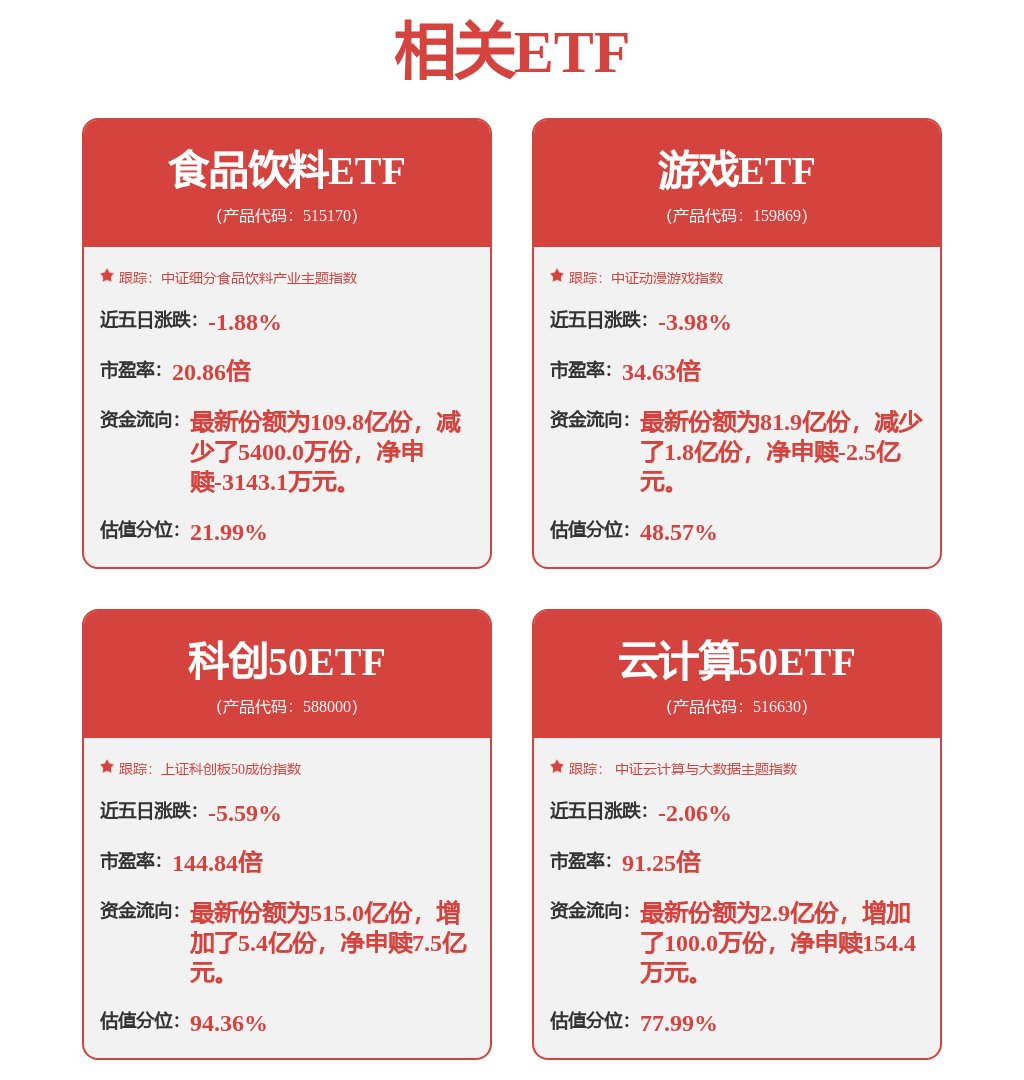
Core Viewpoint - The article highlights the performance of the Petrochemical ETF (159731) and significant advancements in China's petrochemical industry, particularly in heavy oil catalytic cracking technology, which marks a breakthrough in refining processes and positions China as a leader in this field [1]. Group 1: ETF Performance - On November 20, the Petrochemical ETF (159731) opened high but closed down with a decline of approximately 0.6%, while stocks like Cangge Mining, Salt Lake Co., and Sankeshu showed gains [1]. - Over the past 10 days, the Petrochemical ETF experienced net inflows on 8 trading days, totaling 16.91 million yuan, with the latest share count reaching 211 million and total assets at 180 million yuan, both hitting record highs since inception [1]. Group 2: Industry Developments - The China Petroleum and Chemical Corporation's research institute achieved a significant breakthrough in heavy oil efficient catalytic cracking (RTC) technology, completing assessments at the Zhenhai Refining & Chemical Company, which allows for a "zero diesel output" in refining processes [1]. - This advancement is expected to address the surplus crisis in refined oil products and facilitate the transformation of refining enterprises towards "reducing oil and increasing chemicals" with a short and efficient processing solution [1]. Group 3: Investment Recommendations - Open Source Securities suggests focusing on several directions amid the "anti-involution" trend: leading companies with diverse and large product offerings, sub-industries that are ahead in the anti-involution trend and have reached cyclical turning points, industries with potential capacity reduction, and new materials with controllable autonomy and future growth potential [1]. - The Petrochemical ETF closely tracks the CSI Petrochemical Industry Index, with the basic chemical industry accounting for 60.85% and the oil and petrochemical industry for 32.16%, indicating a clear direction towards "greening, high-end, and intelligent" development in the industry [1].

【图】2025年1-6月北京市汽油产量统计分析
Chan Ye Diao Yan Wang· 2025-11-20 04:41
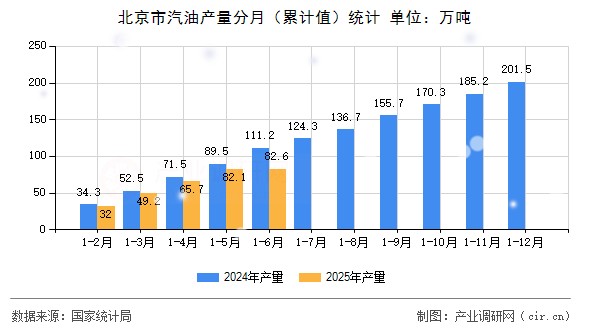
摘要:【图】2025年1-6月北京市汽油产量统计分析 2025年1-6月汽油产量分析: 图表:北京市汽油产量分月(当月值)统计 注:主要能源产品产量月度统计范围为规模以上工业法人单位,即年主营业务收入2000万元及以上的工 业企业。 产业调研网为您提供更多 据国家统计局数据,在2025年的前6个月,北京市规模以上工业企业汽油产量累计达到了82.6万吨,与 2024年同期的数据相比,下降了25.7%,增速较2024年同期低33.2个百分点,增速较同期全国低18.9个 百分点,约占同期全国规模以上企业汽油产量7612.2万吨的比重为1.1%。 图表:北京市汽油产量分月(累计值)统计 2025年6月汽油产量分析: 单独看2025年6月份,北京市规模以上工业企业汽油产量达到了0.5万吨,与2024年同期的数据相比,6 月份的产量下降了97.6%,增速较2024年同期低101.6个百分点,增速较同期全国低90.7个百分点,约占 同期全国规模以上企业汽油产量1251.5万吨的比重为0.0%。 石油化工行业最新动态 石油发展现状及前景预测 化工市场调研及发展趋势 日化行业监测及发展趋势 润滑油未来发展趋势预测 汽油现状及发 ...