智能家居

Search documents
小火靠产品,大火靠模式,小米正迈向模式级胜利
雷峰网· 2025-11-20 07:35
Core Viewpoint - The Q3 financial report of Xiaomi serves as a preview of the company's next growth phase rather than just a performance summary [1][7]. Group 1: Financial Performance - In Q3, Xiaomi's total revenue reached 113.1 billion RMB, a year-on-year increase of 22.3%, marking the fourth consecutive quarter of revenue exceeding 100 billion RMB [3][4]. - The overall gross margin for Q3 was 22.9%, up 2.5 percentage points year-on-year, setting a new historical record. Adjusted net profit surged 81% year-on-year to 11.3 billion RMB, exceeding major investment banks' expectations [4][5]. - For the first three quarters of 2025, total revenue reached 340.4 billion RMB, nearing last year's total, with adjusted net profit of 32.8 billion RMB, surpassing the total for 2024 [5]. Group 2: Business Segments - Xiaomi's growth is supported by three main business lines: smartphones, automotive, and IoT, all showing strong growth potential [10][20]. - The smartphone and AIoT business combined generated revenue of 84.1 billion RMB in Q3, with a gross margin of 22.1%, an increase from 20.8% year-on-year [10][11]. - The automotive segment saw revenue of 29 billion RMB in Q3, a year-on-year increase of over 199%, with the automotive business achieving profitability for the first time [12][15]. Group 3: Strategic Developments - Xiaomi's high-end smartphone strategy is yielding results, with Q3 smartphone shipments reaching 43.3 million units, maintaining a top-three global market position [23][24]. - The automotive business has rapidly become a new growth engine, with Q3 deliveries reaching 108,799 units, setting a new record for the quarter [30][32]. - The IoT business reported revenue of 27.6 billion RMB in Q3, with a gross margin of 23.9%, continuing a trend of revenue growth for seven consecutive quarters [38][40]. Group 4: Innovation and R&D - Xiaomi's R&D investment in Q3 reached 9.1 billion RMB, a 52.1% year-on-year increase, with total R&D personnel reaching 24,871 [47]. - The company is focusing on high-quality growth in its IoT business, with plans to enhance its product offerings and expand into overseas markets [39][40]. - The establishment of a new smart appliance factory marks a significant milestone for Xiaomi's home appliance business, supporting future growth [40][41].


谷歌峰会上的中国力量:华曦达AI Home解决方案引领家庭AI革命
Ge Long Hui· 2025-11-20 07:30
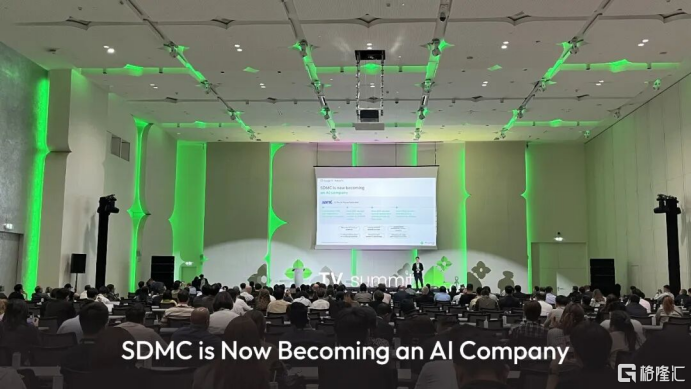
Core Insights - The article highlights the strategic role of Huaxida in transforming the telecommunications industry through its AI Home solutions, positioning itself as a key player in the AI-driven smart home market [1][3][4]. Industry Context - The global telecommunications industry is facing challenges such as growth stagnation and service homogenization, with traditional broadband services becoming low-margin "pipeline businesses" [5]. - There is a growing consumer demand for smart home services, creating an opportunity for operators to shift from "selling connections" to "selling services" [5][6]. Company Strategy - Huaxida's AI Home solution is a comprehensive cloud-edge-end system that enables operators to transition from network providers to smart living service providers [3][4]. - The company has seen significant growth, with AI Home device sales revenue increasing by 73.01% in the first half of 2025, overall revenue growing by 51.23%, and net profit doubling [3][6]. Product Development - The core of Huaxida's AI Home ecosystem is the Cedar AI agent, which has advanced capabilities in multi-modal information input and precise intent recognition [7][8]. - Cedar has evolved from basic content retrieval to a more sophisticated system capable of recognizing household states and executing tasks autonomously, expanding its application from entertainment to security, energy management, and caregiving [8][9]. Technological Integration - Huaxida employs a cloud-edge-end collaborative architecture that enhances system intelligence, reduces response latency, and improves data privacy [9]. - The company is the largest global supplier of Android TV smart terminals, leveraging this advantage to enhance AI application layers and user interaction experiences [9][10]. Ecosystem Collaboration - Huaxida's AI Home solutions are fully compatible with the Matter standard, positioning the company as an ecosystem coordinator that can integrate various brands and devices [10]. - The company is actively collaborating with industry partners, including Tencent and Luxshare Precision, to develop innovative products like home robots and smart glasses [13]. Future Outlook - Huaxida plans to expand its market share through existing product lines while exploring new growth opportunities in home robotics and smart glasses [11][13]. - The company's approach to open collaboration and resource integration is expected to accelerate the fusion of AI with home scenarios, establishing AI Home as a core business model for operators [11][13].
别硬扛了!融资不是“自己悟”的活,找对陪跑人才能跑通IPO
Sou Hu Cai Jing· 2025-11-19 09:14
Group 1 - Many founders believe they understand financing after reading a few books or attending some courses, but this superficial knowledge can lead to significant pitfalls in the capital game [6][9] - The importance of hiring a financing advisor is emphasized, as they can help navigate the complexities of fundraising and avoid common mistakes [5][14] - Founders often fail to present the financial data and compliance issues that investors care about during pitches, focusing instead on product features and team strengths [7][10] Group 2 - Due diligence is not just about preparing documents; it involves identifying potential issues that could derail financing, such as unclear equity structures or hidden liabilities [9][10] - Advisors can conduct mock due diligence to uncover potential risks and help resolve them before presenting to investors [10][12] - Many founders overlook critical terms in term sheets, which can lead to unfavorable conditions that affect their control and financial outcomes [12][13] Group 3 - A good financing advisor can help founders secure better valuations and more favorable terms by leveraging their industry knowledge and investor connections [15][16] - Advisors can save time for founders by managing the fundraising process, allowing them to focus on business operations [17][18] - Advisors can help avoid hidden pitfalls that may only become apparent after the deal is closed, ensuring that terms are favorable and sustainable [18][19] Group 4 - The right financing advisor should be seen as a long-term partner who understands the industry and can provide ongoing support throughout the fundraising process [20][21] - Key qualities of a good advisor include having extensive capital market resources, understanding the specific industry, and being willing to support the company through multiple funding rounds [21][22][23] - Engaging an advisor early in the process can help set a solid foundation for future fundraising efforts and avoid initial missteps [26][27] Group 5 - Advisors can assist in structuring equity and clarifying business models at the seed or angel round stage, which is crucial for attracting initial investment [27][28] - During A and B rounds, advisors can help overcome growth challenges and connect with strategic investors who can provide both capital and industry resources [29][30] - In the C round or Pre-IPO phase, advisors play a critical role in ensuring compliance and preparing for the listing process, which is essential for successful market entry [31][32]
电子行业点评:XiaomiMiloco亮相,定义全屋智能新未来
Minsheng Securities· 2025-11-19 06:46
Investment Rating - The report maintains a "Buy" rating for Xiaomi Group, Transsion Holdings, Liyin Intelligent Manufacturing, Guoguang Electric, and others, indicating a positive outlook for these companies in the context of the smart home industry [4][5]. Core Insights - Xiaomi's Miloco introduces a new paradigm in smart home technology by leveraging large models to create a more intuitive and interactive home environment, allowing users to communicate naturally with their smart home systems [1][2]. - The Miloco system addresses the limitations of traditional smart home setups, which often require cumbersome manual configurations and lack interoperability between different brands [1]. - The system is built on a proprietary large model, Xiaomi MiMo-VL-Miloco-7B, which integrates visual and language capabilities, enhancing the smart home experience through advanced perception and interaction [2]. Summary by Sections Investment Recommendations - The report suggests continuous monitoring of companies benefiting from the smart home wave, including Xiaomi Group, Transsion Holdings, and various suppliers and component manufacturers [2]. Company Financial Projections - Xiaomi Group is projected to have an EPS of 1.68 CNY in 2025, with a PE ratio of 22, indicating strong growth potential [4]. - Transsion Holdings is expected to achieve an EPS of 2.70 CNY in 2025, with a PE ratio of 23, also reflecting a favorable investment outlook [4]. - Liyin Intelligent Manufacturing is forecasted to have an EPS of 0.33 CNY in 2025, with a PE ratio of 41, suggesting significant growth opportunities [4]. Technological Advancements - Miloco's architecture allows for extensive customization and expansion, enabling developers to modify any layer of the system, which supports both stability and future growth [2]. - The focus on privacy and security through local data processing is a key differentiator for Miloco, ensuring user data remains protected [2].
匠心家居股价涨5.15%,华宝基金旗下1只基金重仓,持有1.56万股浮盈赚取6.91万元
Xin Lang Cai Jing· 2025-11-19 03:34
Core Insights - Jiangxin Home Furnishing experienced a stock price increase of 5.15%, reaching 90.47 CNY per share, with a total market capitalization of 19.792 billion CNY [1] Company Overview - Jiangxin Home Furnishing Co., Ltd. was established on May 31, 2002, and went public on September 13, 2021. The company is located at Xinggang Road 61, Changzhou, Jiangsu Province [1] - The main business activities include the research, design, production, and sales of smart electric sofas, smart electric beds, and their core components. The revenue composition is as follows: smart electric sofas 78.76%, components 12.06%, smart electric beds 8.34%, and others 0.84% [1] Fund Holdings - According to data, Huabao Fund has a significant holding in Jiangxin Home Furnishing through its Huabao Consumption Upgrade Mixed Fund (007308), which held 15,600 shares, accounting for 2.9% of the fund's net value, ranking as the ninth largest holding [2] - The fund has a total size of 49.5712 million CNY and has achieved a year-to-date return of 2.85%, ranking 7,296 out of 8,138 in its category [2] Fund Manager Performance - The fund manager of Huabao Consumption Upgrade Mixed Fund is Bo Yu, who has been in the position for 4 years and 82 days. The fund's total asset size is approximately 49.5694 million CNY [3] - During Bo Yu's tenure, the best fund return was -17.35%, while the worst return was -37.38% [3]
全文|小米Q3业绩会实录:本周应可提前完成“超35万台汽车交付”的目标
Xin Lang Cai Jing· 2025-11-19 00:48
Core Viewpoint - Xiaomi Group reported a record high revenue of 113.1 billion yuan for Q3 2025, representing a year-on-year growth of 22.3%, and a net profit of 12.3 billion yuan, up 129.5% year-on-year [1] Financial Performance - Total revenue reached 113.1 billion yuan, a 22.3% increase year-on-year [1] - Net profit was 12.3 billion yuan, reflecting a 129.5% year-on-year growth [1] - Adjusted net profit was 11.3 billion yuan, with an 80.9% year-on-year increase [1] Mobile Business Insights - The rising memory prices are expected to have a long-term impact on mobile phone gross margins, driven by increased demand from AI high-performance computing [2][3] - The current memory cost cycle is characterized by a significant demand increase while supply remains insufficient, leading to a prolonged period of rising costs [3] - Xiaomi's strategy includes potential price increases, cost absorption, and product structure optimization to mitigate the impact of rising memory costs on gross margins [4] Automotive Business Developments - Xiaomi's automotive delivery volume has been steadily increasing, with over 400,000 units delivered in 18 months since product launch [5][6] - The delivery cycle for models like the SU7 Pro and SU7 Pro Max has been significantly shortened due to efficiency improvements [6] - The company aims to exceed its target of 350,000 vehicle deliveries for the year, indicating strong operational capabilities [6] IoT and AI Integration - Xiaomi's IoT connections have surpassed 1 billion, with a year-on-year growth rate of over 20% [10] - The introduction of the Pengpai OS aims to unify various systems and enhance the user experience through deep integration of AI and IoT devices [10] - The Miloco initiative represents a significant step towards integrating AI capabilities into smart home applications, moving away from traditional coding limitations [10][11] Supply Chain and Inventory Management - The company maintains a strong relationship with key memory suppliers, ensuring a good supply rate and prioritization in the domestic market [20] - Xiaomi's inventory management strategy involves reducing inventory during cost declines and increasing it during cost rises, indicating proactive supply chain management [20] Retail Expansion Strategy - Xiaomi aims to expand its retail presence, with a target of 30,000 stores in China, having already opened around 20,000 [27][28] - The company plans to focus on operational efficiency in existing stores before accelerating new store openings [28] - The overseas retail strategy is expected to replicate the success of domestic operations, with significant growth potential in various international markets [29]
多部门印发实施方案 支持北京提振和扩大消费 积极开展汽车贷款业务 引导社会资本加大对服务消费重点领域投资
Zhong Guo Zheng Quan Bao· 2025-11-19 00:14
Core Insights - The People's Bank of China Beijing Branch, along with 12 other departments, issued an implementation plan to support the expansion of consumption in Beijing, aiming to enhance financial services in the consumption sector by 2030 [1][2] Group 1: Financial Support for Consumption - The implementation plan emphasizes the need for quality enterprises in the consumption industry to finance through public offerings and "New Third Board" listings [1] - It aims to increase the loan balance for sectors such as accommodation, catering, cultural tourism, education, and elderly services, while enhancing the quality and efficiency of personal consumption financial services [1] - The plan sets a goal to establish a diversified consumption financial service system to support Beijing's development as an international consumption center [1] Group 2: Credit Support and Financial Products - The plan calls for increased credit support for consumer goods, particularly in the automotive sector, by optimizing loan issuance ratios, terms, and interest rates [2] - Financial institutions are encouraged to innovate financial products tailored to various car purchasing scenarios, including first-time purchases and trade-ins, with a focus on electric vehicles [2] - There is a push for financial institutions to meet consumer demand in areas like home appliances, green smart home renovations, and electronics through various promotional activities [2] Group 3: Equity Financing and Investment - The plan supports equity financing for quality enterprises in the consumption industry through public listings and private equity investments [2] - It encourages social capital to invest in key service consumption areas, utilizing "long-term capital" and "patient capital" to meet the financing needs of long-cycle consumption industries [2] - The role of private equity and venture capital funds is highlighted to increase investments in seed and early-stage enterprises [2]
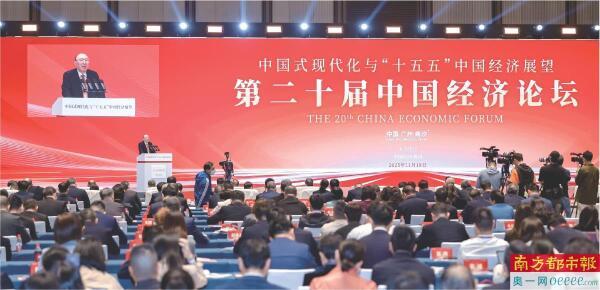
大湾区11城若能融合起来,2035年将成世界最大经济中心和科创中心
Nan Fang Du Shi Bao· 2025-11-18 23:11
Core Viewpoint - China's manufacturing industry is undergoing three major transformations under a new paradigm, focusing on self-reliance in research and development, a balanced development model, and an increased global market share, particularly in digitalization, intelligence, and new energy equipment [3][4]. Group 1: Transformations in Manufacturing - The first transformation involves achieving self-reliance in research and development, enhancing industry competitiveness through the industrialization of research outcomes and cluster innovation [3]. - The second transformation shifts the manufacturing development model from reliance on processing trade to a balanced approach that enhances self-sufficiency while maintaining high-level openness [3]. - The third transformation sees an increase in China's share of global manufacturing, especially as a leader in digitalization, intelligence, and new energy equipment [3]. Group 2: Challenges and Strategic Investments - Current challenges include high resource consumption, low profit margins, and insufficient total factor productivity [3]. - To address these challenges, China plans to increase investments in strategic emerging industries and future industries, promoting high-quality and innovative development in manufacturing [3][4]. - The focus for future productivity will be on new energy, new materials, new biomedicine, new high-end equipment, and new artificial intelligence [3]. Group 3: Digital and Green Transformation - Digital transformation can be advanced through five levels: industrial automation, ensuring information flow stability, horizontal resource planning management, promoting industrial internet development, and applying artificial intelligence in industrial systems [4]. - Green transformation will focus on five areas: source reduction, energy conservation and emission reduction, waste recycling, process reengineering, and pollution control [4]. Group 4: Development of Productive Services - From 2021 to 2024, the growth rate of productive services nationwide is projected to be 12.1% [5]. - By the end of the 14th Five-Year Plan around 2035, the goal is for productive services to account for over 35% of the economy, reaching approximately 40% by 2050 [5]. Group 5: Regional Cooperation and Economic Integration - The collaboration between Nansha and Hong Kong is seen as a complementary advantage, focusing on creating a comprehensive service platform for mainland enterprises going global [6][7]. - The emphasis is on rule alignment and creating an international business environment, facilitating cross-border professional practice and financial support for industries and technological innovation [7]. Group 6: Innovation and Talent Development - The establishment of a large-scale innovation system is crucial for developing new productivity and integrating the foundational research capabilities of the Greater Bay Area [8][9]. - Recommendations include administrative reforms, regulatory adjustments, and fostering an open system to enhance cooperation with Hong Kong and Macao [9][10]. Group 7: Technology and Economic Growth - Technology innovation is identified as a key driver for high-quality economic development, with a focus on addressing challenges posed by AI and other new technologies [17][18]. - Suggestions for maximizing the positive impact of technology innovation include increasing investment in basic research, optimizing talent cultivation, and enhancing the legal framework for innovation [19]. Group 8: Data Economy Development - The development of the data economy is highlighted, with a focus on establishing a robust data system and encouraging market participation in data transactions [20][21]. - Recommendations include government-led initiatives to create standards and safety systems in the data sector, promoting collaboration between government and enterprises [21].
11月还没结束,中国经济巨变,出现三个反常现象,风向真的变了!
Sou Hu Cai Jing· 2025-11-18 16:11
Economic Trends - The current economic landscape in China is characterized by a significant increase in household savings, with total RMB deposits reaching 325.55 trillion, a year-on-year growth of 8%, and household deposits alone increasing by 11.39 trillion in October [2] - The phenomenon of citizens purchasing government bonds has intensified, with some bonds selling out within minutes of release, indicating a shift in consumer behavior towards saving rather than spending [4] Consumer Behavior Changes - There is a notable shift in attitudes towards luxury goods, with brands like Burberry and Coach experiencing sales growth exceeding 30%, despite a general trend of increased savings [6] - The luxury market is adapting by implementing stricter quality checks and offering discounts to boost sales, reflecting a change in consumer expectations and market dynamics [7][8] Automotive Market Dynamics - Sales of imported luxury vehicles such as Mercedes-Benz and Audi have declined, while domestic brands like BYD and Geely are gaining market share, indicating a shift in consumer preferences towards local products [9] Brand Perception and Global Influence - The transition from a focus on GDP growth to a more consumer-centric economy highlights the rising influence of Chinese brands globally, with a growing confidence among consumers in domestic products [11] - Chinese brands are increasingly recognized for their quality and innovation, with companies like Huawei and Xiaomi making significant inroads in international markets, showcasing the evolution of "Made in China" to a brand-driven economy [13][15]
小米电话会议实录:CEO卢伟冰,预计明年毛利率有所下降,手机可能通过涨价应对存储成本上升
美股IPO· 2025-11-18 13:57
Core Viewpoint - Xiaomi's automotive division is expected to face significant challenges in 2026 due to reduced purchase tax subsidies and intensified competition, leading to a potential decline in gross margins next year, although Q4 of this year is anticipated to maintain a "good level" of performance [1][3][4]. Automotive Performance - Xiaomi's automotive division is on track to meet its annual delivery target of 350,000 vehicles, with over 100,000 new cars delivered in Q3 and a total of over 260,000 vehicles delivered in the first three quarters [3][4]. - The company aims to prioritize delivery volume in the short term while maintaining healthy gross margins despite the anticipated impact of reduced purchase tax subsidies on average selling price (ASP) and gross margins [4][15]. Memory Cost Impact - The rising memory costs are expected to significantly affect the gross margins of mobile and other products, driven by increased demand from AI and high-bandwidth memory (HBM) applications [6][9][10]. - Xiaomi has proactively secured supply agreements for 2026 to mitigate the impact of memory cost increases on its mobile business, although price adjustments may be necessary to offset some of the cost pressures [6][10][11]. High-End Market Strategy - Xiaomi is focusing on enhancing its presence in the high-end smartphone market, with a target of achieving 30 million high-end phone sales by 2030, despite the challenges posed by rising memory costs [14][26]. - The company has maintained a market share growth strategy, aiming to increase its share from 15.8% last year to approximately 17% this year [14][26]. AIoT and Smart Home Initiatives - Xiaomi has launched a unified operating system, Xiaomi OS, to enhance its IoT capabilities and improve user experience through deep integration of software and hardware [17][18]. - The company is exploring open-source smart home solutions, such as MI local, to advance its AIoT strategy and maintain ecosystem openness [24]. Overseas Expansion and Retail Strategy - Xiaomi is expanding its retail presence in East Asia and Europe, with plans to enter Latin America and Africa next year, while ensuring that its new retail model remains efficient and profitable [21][32]. - The company aims to open approximately 5,000 new stores in 2024 and 2025, focusing on improving the operational efficiency of existing stores [31][32]. Financial Management and Cost Control - The increase in operating expenses in the mobile and IoT segments is attributed to rising R&D costs and the expansion of the retail network, which requires time to reach optimal operational efficiency [33].