光模块

Search documents
聊一聊AI硬件和软件
傅里叶的猫· 2026-01-09 15:58
Group 1: AI Hardware Market - The recent performance of AI hardware is not strong, but the US stock market's hardware sector showed some resilience [1] - The memory shortage is exaggerated; a report from Macquarie suggests that the new DRAM capacity in the next two years can only support about 15GW of AI data center construction, which may delay global AI expansion plans [3] - A different perspective from a memory industry expert indicates that the capacity could support 20GW and 33GW this year and next year, respectively [5] - The global data center installation capacity is projected to reach 17.4GW by 2025, with an expected increase to 30.2GW this year [5] - Due to memory constraints, the growth of AI data centers (AIDC) will not be as rapid as anticipated, contributing to the recent decline in hardware market sentiment [7] Group 2: AI Software and Applications - The AI software and application market is exceeding many expectations, with a positive outlook for AI applications this year [8] - The government is intensifying support for AI policies, with initiatives in various sectors like healthcare, education, and manufacturing, aiming for quantifiable goals by 2026 [9] - Major tech companies are competing for AI traffic entry points and ecosystem development, with strategies focusing on both consumer (C-end) and business (B-end) markets [10][11] - For the C-end, companies are enhancing user engagement and monetization capabilities, while for the B-end, they are driving cloud revenue through developer ecosystems [12] - The competition has extended to physical scenarios, with companies like Waymo and Tesla accelerating their efforts in ROBOTAXI [13] - Key technological advancements in AI models are expected to focus on world models, native multimodality, and self-evolving agents, with significant breakthroughs anticipated by 2026 [14][15] - The core competitiveness of AI application companies lies in their ability to integrate technology quickly and effectively into specific scenarios, achieving commercial viability [15]



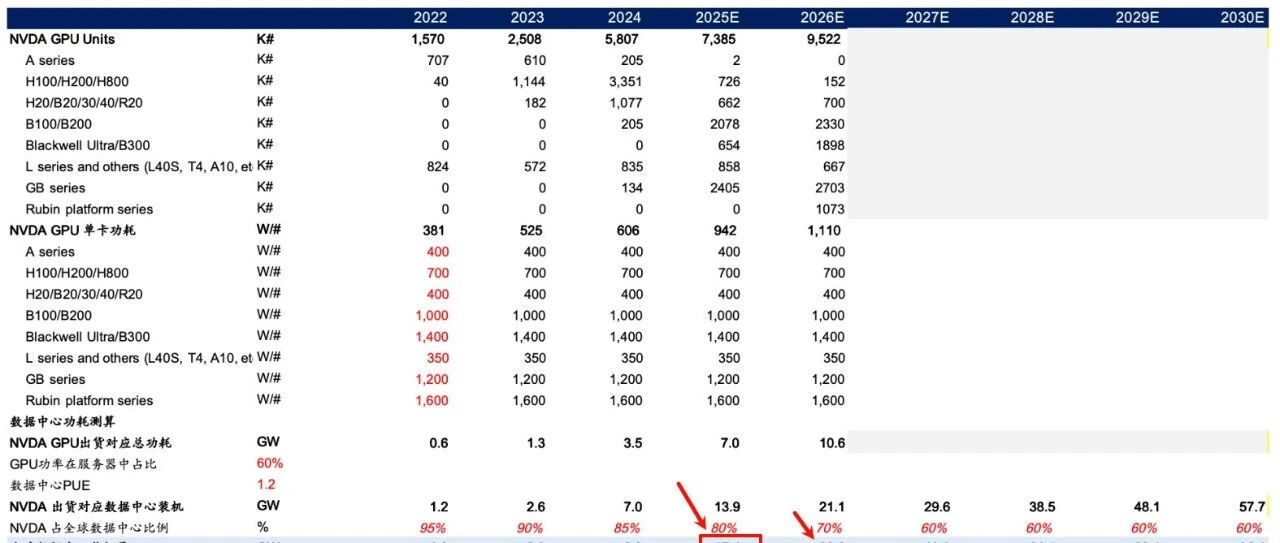
MiniMax上市引爆!AI应用“杀疯了”!创业板人工智能ETF(159363)大涨创新高,两股20CM封板!
Xin Lang Cai Jing· 2026-01-09 11:20
Core Viewpoint - The AI application sector is experiencing a significant surge, with the ChiNext AI index reaching new highs and many constituent stocks seeing substantial gains [1][7]. Group 1: Stock Performance - Yidian Tianxia saw a 20% increase, reaching a price of 52.69, with a trading volume of 61.374 billion [2][8]. - Kunlun Wanwei also increased by nearly 20%, closing at 54.02 with a trading volume of 102.89 billion [2][8]. - Other notable performers include Runze Technology (+15.7%), BlueFocus (+14.08%), and Aofei Data (+10.33%), all with trading volumes exceeding 35 billion [2][8]. Group 2: ETF Performance - The ChiNext AI ETF (159363) rose by 2.75%, achieving a new high with a trading volume of 700 million [2][8]. - Over the past week, the ETF has recorded a seven-day consecutive increase, with the underlying index gaining 29.32% during the period from November 28, 2025, to January 9, 2026 [2][8]. Group 3: Market Trends and Predictions - Analysts suggest that the recent surge in AI applications is driven by advancements in AI infrastructure tools and data governance, predicting that AI will penetrate various industry sectors by 2026 [4][10]. - The report from招商证券 indicates that the commercialization of AI applications is accelerating, with expectations for improved revenue realization in 2026 [5][11]. - The report also highlights that 2026 may mark the year of significant growth for 1.6T optical modules, with silicon photonics technology expected to become mainstream [5][11].





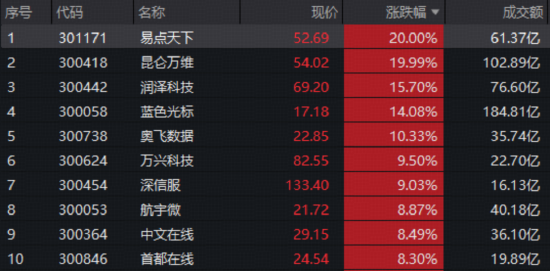
2025年96%普通股基上涨 融通产业趋势股票涨114%
Zhong Guo Jing Ji Wang· 2026-01-08 23:08
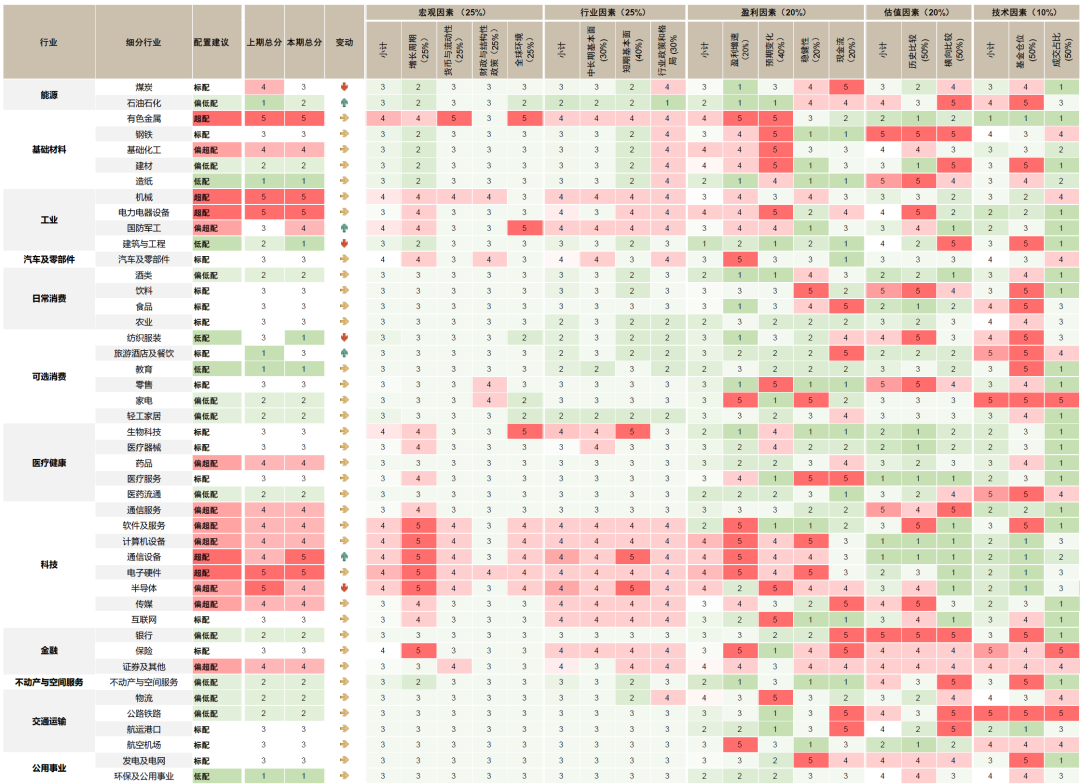
Group 1 - In 2025, 930 out of 969 comparable ordinary equity funds achieved positive performance, representing 96% of the total, while only 39 funds experienced declines [1] - The top-performing fund, Rongtong Industry Trend Stock, achieved a remarkable return of 114.61%, managed by Li Jin, who has been with Rongtong since 2017 and became a fund manager in 2023 [1] - The fund's top ten holdings in Q3 2025 included stocks from sectors such as optical modules, high-end manufacturing, and biomedicine, with a notable concentration in semiconductor-related stocks in the second half of the year [1] Group 2 - E Fund's Strategic Emerging Industry Stock A and C funds recorded returns of 107.60% and 106.74%, respectively, with top holdings including stocks from Tencent, Alibaba, and Zhongji Xuchuang [2] - The E Fund's Information Industry Selected Stock A and C funds also performed well, with returns of 104.31% and 103.26%, benefiting from the semiconductor sector [2] - Other funds that doubled their performance included Red Soil Innovation New Technology Stock A and Caitong Integrated Circuit Industry Stock A, with returns of 104.91% and 101.46% [2] Group 3 - A total of 14 ordinary equity funds saw returns exceeding 90%, including Huashang High-end Equipment Manufacturing Stock A and Longxin Innovation Driven Stock [3] - Conversely, the biomedicine and consumer sectors lagged significantly, leading to declines of 17.81% and 17.29% for Shenwan Lixin Medical Pioneer Stock A and C [3] - The top holdings of the underperforming funds included various biopharmaceutical companies, indicating a sector-specific weakness [3][4] Group 4 - The underperforming funds, such as Taikang Medical Health Stock A and C, were heavily invested in pharmaceutical stocks, which contributed to their declines of 13.45% and 13.02% [4] - Longxin Consumer Selected Quantitative Stock A and C also faced declines of 12.76% and 12.41%, with a focus on liquor stocks in their top holdings [4]
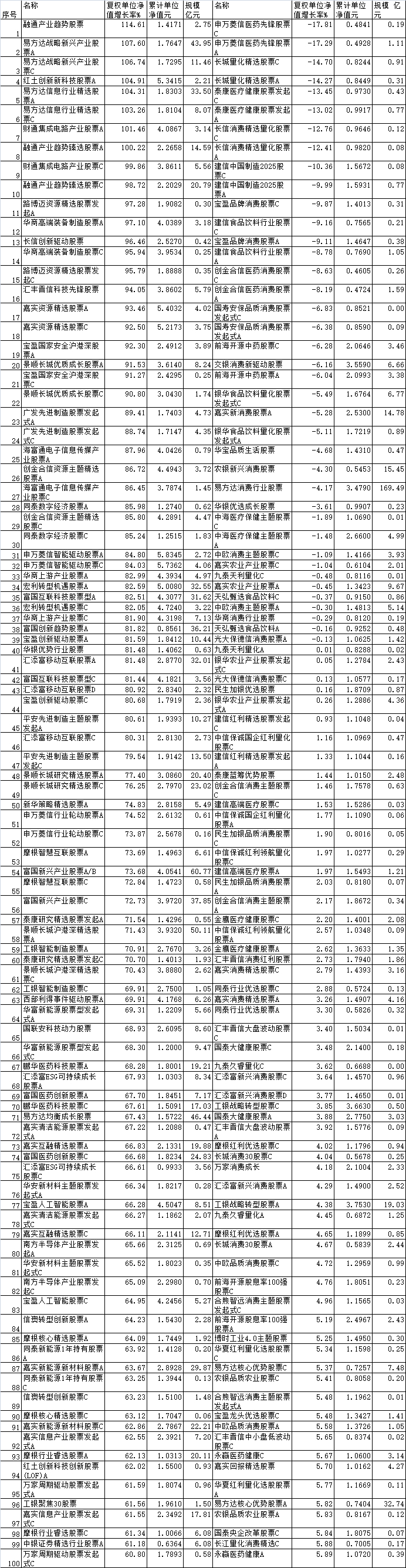
如何看光模块未来几年增长空间
2026-01-08 16:02
Summary of Conference Call on Optical Module Industry Industry Overview - The optical module industry is benefiting from data center upgrades and the demand for AI large models, with significant growth expected from 2025 to 2028 due to the increasing need for 800G optical modules driven primarily by AI applications [1][2] Key Points and Arguments - **Growth Projections**: The demand for optical modules, particularly 800G and 1.6T, is expected to experience explosive growth, with 800G module shipments projected to double from 2025 to 2026 and 1.6T modules reaching a shipping peak in 2026 [2] - **Market Drivers**: Approximately 20%-30% of the growth in 800G optical modules is attributed to traditional data center upgrades, while around 70% is driven by AI model training and inference [4] - **Technological Adoption**: Major companies like Google and NVIDIA are adopting Skyop designs, which will significantly increase the demand for high-speed optical modules as they replace traditional copper connections [5] - **Silicon Photonics Growth**: Silicon photonics is expected to capture 20%-30% of the single-mode optical module market by 2025, doubling to 40%-50% by 2026 due to the maturity of 800G silicon photonics products and a shortage of 100G EML chips [8] - **Custom Solutions**: New customized optical modules such as LPO, LRO, and TRO are being developed to reduce power consumption and improve efficiency in specific applications [9] Additional Important Insights - **Supply Chain Challenges**: The optical module industry faces supply chain issues, particularly with the shortage of 100G EML chips, which is expected to persist until 2027-2028 [3][12] - **NPU and CPO Technologies**: NVIDIA and Broadcom are pushing CPO solutions, but the complexity and high costs of co-packaged structures limit widespread adoption. NPU technology aims to integrate optical modules within switches to reduce signal transmission distances [10] - **OCS Technology**: Google is leading the application of OCS technology for large-scale interconnects, with other companies like Meta and AWS following suit. The adoption of OCS is expected to outpace CPO in the coming years [11] - **PCB Material Supply Issues**: The new PCB materials used in 1.6T projects are experiencing supply shortages, necessitating earlier procurement compared to previous materials [17] Conclusion The optical module industry is poised for significant growth driven by advancements in AI and data center technologies, although it faces challenges related to supply chain constraints and the adoption of new technologies. The shift towards silicon photonics and customized solutions will play a crucial role in meeting the increasing demand.
2026年宏观经济与资产配置展望
Sou Hu Cai Jing· 2026-01-08 10:17
Group 1 - The core theme for China's economy in 2026 will focus on boosting domestic demand and emphasizing technology development, as external uncertainties persist due to factors like the US-China trade war [2][3][25] - The economic growth target for 2026 is set at approximately 5.0%, which aims to ensure over 10 million new jobs, balancing current needs with long-term goals [6][25] - The potential GDP growth rate is projected to decline to around 4.63% during the 15th Five-Year Plan period (2026-2030), influenced by structural constraints such as an aging population and diminishing capital returns [4][5][6] Group 2 - The government is expected to implement more proactive fiscal and monetary policies, maintaining a fiscal deficit of around 4% and a broad fiscal deficit rate potentially exceeding 10% [7][12] - To address insufficient effective demand, an annual injection of 4 trillion to 5 trillion yuan into the economy is necessary to maintain normal economic circulation [12][25] - The real estate market is anticipated to face significant challenges, with a projected need for approximately 4.58 trillion yuan to normalize unsold housing inventory [9][10] Group 3 - The focus on technology will include significant investments in AI infrastructure, semiconductor manufacturing, and high-end manufacturing sectors, with domestic companies expected to benefit from policy support [21][25] - The consumer market is expected to see a shift towards service consumption, with policies aimed at enhancing consumer environments and increasing household income [19][20] - Structural policies will be necessary to improve income distribution and enhance consumer spending, particularly targeting middle and low-income groups [14][17][25]

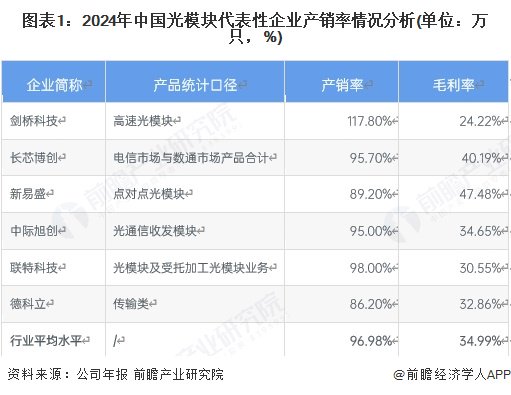
2025年中国光模块市场需求分析 数据通信市场需求最大【组图】
Qian Zhan Wang· 2026-01-08 04:10
Core Insights - The report highlights the strong performance of China's optical module industry, with an average production and sales rate of 96.98% and an average gross profit margin of 34.99% for 2024, indicating overall good profitability [1] - The demand for optical modules in the telecommunications market is primarily driven by lower-speed modules, with significant growth in 5G base station construction projected for 2024 [2][4] - The data communication market is identified as the largest and fastest-growing segment for optical modules, fueled by increased data center traffic and evolving network architectures [7] Group 1: Optical Module Industry Overview - Major listed companies in the optical module industry include Guangxun Technology, Zhongji Xuchuang, Xinyi Sheng, Changxin Bochuang, Taicheng Guang, and others [1] - The average production and sales rate for representative optical module companies in China is projected to be 96.98% in 2024, with a gross profit margin of 34.99% [1] - Cambridge Technology has reported a production and sales rate exceeding 100% [1] Group 2: Telecommunications Market Demand - The telecommunications market is the origin of optical modules, with 5G transmission networks comprising front-haul, mid-haul, and back-haul segments [2] - In 2024, China is expected to build 874,000 new 5G base stations, bringing the total to 4.251 million by the end of the year [2] - The demand for optical modules is primarily for lower-speed modules, particularly in the front-haul subsystem, which has the highest demand due to its long-distance, high-density characteristics [2] Group 3: Capital Expenditure Trends - The capital expenditure of China's three major telecom operators is gradually shifting towards cloud computing and computing power networks as a second growth curve [4] - In 2023, the total fixed asset investment by major telecom companies and China Tower reached 420.5 billion yuan, with 5G investment accounting for 190.5 billion yuan, a year-on-year increase of 5.7% [4] - The overall market for optical modules is expected to show steady growth, supported by the expansion of fiber-to-the-home and the increase in 10G PON port numbers [4] Group 4: Data Communication Market Growth - The data communication market is currently the largest and fastest-growing market for optical modules, driven by significant increases in data center traffic and changes in network architecture [7] - By mid-2025, the total number of operational computing center racks in China is expected to reach 10.85 million standard racks [7] Group 5: Fixed Network Access Market - The "14th Five-Year" information and communication industry development plan aims to fully deploy gigabit optical fiber networks and accelerate the construction of gigabit cities [9] - By the end of 2025, the number of 10G PON ports is projected to grow from over 5 million at the end of 2021 to 12 million, with gigabit broadband users expected to increase nearly tenfold to 60 million [9] - The Ministry of Industry and Information Technology has initiated pilot projects for 10G optical networks to address key challenges and promote the development of a complete industrial chain [9]




见证历史,沪指14连阳逼空!创新药逆市领涨港股,520880大涨超3%!人工智能还看创业板,159363再创新高
Xin Lang Cai Jing· 2026-01-07 11:42
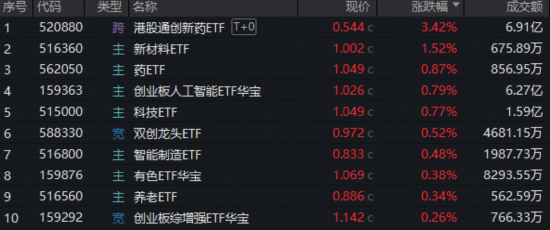
Market Overview - A-shares experienced a historic moment with the Shanghai Composite Index recording a 14-day winning streak, while the ChiNext Index fluctuated before closing lower. The total trading volume exceeded 28 trillion yuan over two consecutive trading days [1][19]. - The Hong Kong stock market showed weakness, with the Hang Seng Index down 0.94% and the Hang Seng Tech Index down 1.49%. However, the Hong Kong Stock Connect innovative drug sector performed well [1][19]. ETF Performance - The Hong Kong Stock Connect Innovative Drug ETF (520880) rose over 3%, marking its third consecutive increase, while the only ETF representing the pharmaceutical sector (562050) also recorded three consecutive days of gains. The largest medical ETF (512170) approached its six-month high [1][3][21]. - The Entrepreneurial Board Artificial Intelligence ETF (159363) increased by 0.79%, reaching a new high, while the broad-based dual-innovation leader ETF (588330) aimed for previous highs [1][3][19]. Pharmaceutical Sector - The pharmaceutical sector outperformed the broader market, with the innovative drug leader Rongchang Bio surging over 11%. The medical ETF (562050) achieved three consecutive daily gains [3][21]. - The medical sector showed some differentiation, with the brain-computer interface concept remaining popular. The largest medical ETF (512170) continued to rise, reaching a new 20-day high [3][21]. AI and Technology Sector - The Entrepreneurial Board Artificial Intelligence Index reached a new high, driven by strong performances in computing hardware and AI applications. Notable stocks included Zhishang Technology, which rose over 7%, and several others that increased by over 3% [25][27]. - The upcoming launch of DeepSeek's flagship system R2 is expected to catalyze AI applications, with Meta's acquisition of Manus further enhancing AI capabilities [27][28]. Rare Earth and Nonferrous Metals - The nonferrous metals ETF (159876) saw a significant increase, with a net subscription of 54.6 million units, reflecting strong investor interest. The ETF's price rose by over 1.6% during the day [10][12]. - The nonferrous metals market is experiencing a bullish trend due to various factors, including supply constraints and increased demand from new industries [10][13].
坦白局:晒晒你2025年的投资故事
雪球· 2026-01-07 09:09
Group 1 - The article emphasizes the importance of understanding personal investment capabilities and focusing on what one can comprehend, rather than chasing trends that may lead to regret [4][6] - Users shared experiences of missed opportunities in high-growth sectors like AI and robotics, yet they found satisfaction in their overall investment performance, highlighting a long-term perspective [4][10] - The narrative encourages a diversified investment approach, as seen in the experiences of users who adjusted their strategies to include multiple asset classes, resulting in stable returns [8][28] Group 2 - The article discusses the shift in mindset among investors, where the focus has moved from short-term gains to a deeper understanding of companies and industries, leading to a more enriching investment experience [12][19] - Users expressed that avoiding predictions and embracing a slower, more deliberate investment strategy has proven beneficial, reinforcing the idea that patience is key in investing [22][26] - The importance of maintaining a steady and diversified portfolio is highlighted, with users achieving significant returns while adhering to principles of risk management and market respect [28][30]

25年中美科技股复盘-多行业联合人工智能1月报
2026-01-07 03:05
Summary of Key Points from Conference Call Records Industry Overview - **Chinese Technology Stocks**: Benefiting from hard technology and domestic substitution policies, sectors like semiconductors, AI computing power, hardware, and optical modules are thriving. AI is identified as the core theme for the year, with companies like Shenghong Technology, New Yisheng, and Zhongji Xuchuang gaining from this trend [1][4]. - **US Technology Stocks**: A concentrated market structure is evident, with only Google and Nvidia outperforming the Nasdaq index in 2025. The S&P 500 profits are overly concentrated among seven major companies, accounting for 26% of total profits [1][4]. Core Insights and Arguments - **Market Performance**: In 2025, Chinese technology stocks entered a structural bull market, with the ChiNext Index and STAR Market Index rising nearly 50% and the Hang Seng Tech Index increasing by 23.5%, outperforming the Nasdaq's 20% gain [2][4]. - **AI Industry Chain**: The AI sector is driving growth in the electronics industry, with a surge in storage demand leading to price increases. Companies like Industrial Fulian and Huanxu Electronics are showing strong performance due to their product offerings [1][5]. - **Capitalization of AI Applications**: The acceleration of AI application commercialization is expected in 2026, with significant valuation opportunities in the internet sector and related A-share companies [6][7]. Notable Events and Developments - **Key Events in December**: OpenAI's collaboration with Disney and the release of GPT-5.2 Codex are significant milestones that will influence market dynamics and drive demand for domestic computing power [10][11]. - **Ding Tai Gao Ke's Performance**: The company anticipates a net profit increase of 81% to 103% in 2025, driven by surging demand in servers and data centers [12][13]. Investment Opportunities - **Recommended Companies**: Investors are advised to focus on Baidu, Alibaba, Kuaishou, Tencent, Meitu, and others, as these companies are expected to benefit from the ongoing trends in AI and technology [9]. Additional Insights - **AI Application Growth**: The rise of AI applications, such as ChatGPT, is expected to significantly enhance productivity and market expansion, with user engagement metrics indicating strong growth [7][8]. - **Automotive Industry Policy Changes**: New subsidy policies for the automotive sector are anticipated to stimulate demand, particularly for electric vehicles, with companies like Geely and BYD recommended for investment [14][15].
中金:A股春季行情有望延续 关注保险、券商
智通财经网· 2026-01-07 01:21
Core Viewpoint - The spring market trend in A-shares is expected to continue, with a focus on various sectors benefiting from technological advancements and policy support [1][2]. Industry Configuration Insights 1) Energy and Basic Materials - Demand expectations for thermal coal have weakened, leading to a price drop of 17% in December, while coking coal and coke prices increased by 4% and 8% respectively [10] - The supply-demand mismatch, combined with monetary easing, has resulted in significant price increases for precious metals and industrial metals, with copper, aluminum, and zinc prices rising by 12%, 5%, and 2% respectively [12] - The coal industry is undergoing structural optimization due to new regulations aimed at improving clean coal utilization [10] 2) Industrial Products - Domestic demand is showing structural differentiation, with excavator sales increasing by 19% year-on-year in November, while automotive sales grew by 3% [4] - The renewable energy sector is experiencing strong growth, with wind and solar installations increasing by 59% and 33% respectively [4] 3) Consumer Products - Traditional consumer sectors are facing challenges, with home appliance sales declining significantly; washing machines, refrigerators, and air conditioners saw year-on-year drops of 13%, 25%, and 25% respectively [5] - The central economic work conference emphasizes expanding domestic demand as a priority, with plans to enhance the supply of quality goods and services [5] 4) Technology - The AI application landscape is rapidly evolving, benefiting sectors like communication equipment, which is expected to gain from increased capital expenditure in North America [6] - The semiconductor industry remains robust, with global sales increasing by 25% year-on-year in October [6] 5) Financial Sector - Banks are attracting long-term capital due to their high dividend yields and stable earnings, with insurance premiums growing by 7.6% year-on-year in November [7] - The stock market is stabilizing, with an average daily trading volume of 1.88 trillion yuan in December [7] 6) Real Estate - The real estate sector is under pressure, with a 27% year-on-year decline in sales area for commercial housing in December [7] - The central economic work conference is focused on stabilizing the real estate market and addressing local government debt risks [7]