火锅

Search documents
巴奴IPO前夜危机四伏:小红书、微博等“翻车现场”成连环雷
Jing Ji Guan Cha Bao· 2025-08-05 12:01
Company Dynamics - The hot pot brand Banu, known for its "beef tripe + mushroom soup" specialty and high-end positioning, has submitted its IPO application to the Hong Kong Stock Exchange, aiming to become the "third hot pot stock" [2] - Despite its premium branding, Banu faces a surge in complaints on social media platforms like Xiaohongshu and Weibo, raising concerns about food safety, service quality, pricing disputes, and unfair terms, which threaten public trust in its high-end strategy [2][3] - Banu's average consumer spending exceeds 130 yuan, and its promotional slogan of "not overdoing service, focusing on every detail" contrasts sharply with the frequent complaints about food safety issues, including reports of foreign objects found in dishes and health problems like vomiting and diarrhea after dining [2][3] Consumer Complaints - Complaints regarding Banu's membership rights system have also sparked outrage, with consumers alleging that rules for redeeming points and using coupons were unilaterally changed without prior notice [3] - Data from the Black Cat Complaints platform indicates a significant increase in complaints against Banu in the first half of 2025, with issues related to unfair terms, false advertising, poor service, and food safety [3] Internal Management Issues - Internal management problems have surfaced, with former management trainees and staff claiming that the company does not treat employees fairly, citing excessive working hours and unfulfilled promotion promises [3] - Discussions on social media platforms have highlighted the disparity between the high prices of Banu's offerings and the experiences of both consumers and employees [3] Food Safety Controversies - Banu's food safety controversies date back to 2023, including an incident involving a store in Xi'an selling "18 yuan for 5 slices of selenium-rich potatoes," which was later found to have significantly lower selenium content than claimed [4] - In September 2023, a subsidiary brand, "Super Island Self-Selected Hot Pot," was accused of selling "fake lamb," with tests revealing duck meat instead of lamb, leading to further scrutiny of Banu's supply chain [4] IPO Challenges - As Banu approaches its IPO, these issues cast a shadow over its prospects, with the company's founders controlling 83.38% of voting rights through offshore structures, raising potential governance risks [5] - The company has expanded its direct store network to 145 locations across 39 cities, a 74.7% increase from 83 stores at the end of 2021, and has established a dual headquarters in Beijing and Zhengzhou [5] - For Banu to gain investor confidence during its IPO journey, it must address marketing boundaries and ensure that its average spending of 130 yuan corresponds to tangible quality improvements rather than mere brand premium [5]


海底捞搞小火锅,陪吃熊哭了
虎嗅APP· 2025-08-05 11:40
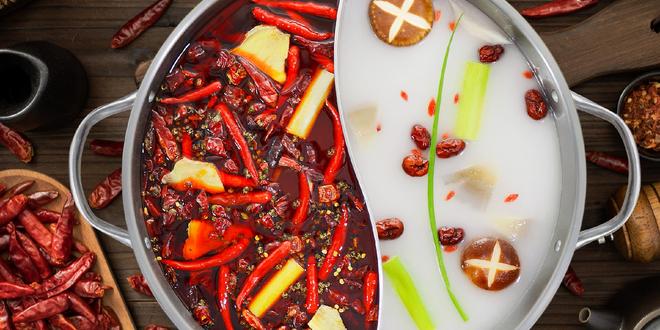
Core Viewpoint - The article discusses the competitive landscape of the single-person hot pot market, particularly focusing on Haidilao's new self-service hot pot brand, which aims to capture a segment of consumers looking for affordable dining options while facing challenges of differentiation and market saturation [4][22]. Group 1: Market Dynamics - The single-person hot pot market is experiencing significant competition, with various brands like Weilai, Longge, and Nongxiaoguo rapidly expanding their presence [4][22]. - As of 2025, the number of hot pot outlets in China is expected to exceed 50,000, accounting for one-tenth of the total hot pot market [22]. - The market is characterized by a price war, where brands compete primarily on cost rather than quality, leading to concerns about sustainability and consumer trust [25][29]. Group 2: Haidilao's Strategy - Haidilao has launched a self-service hot pot brand priced at 59.9 yuan per person, targeting budget-conscious consumers such as workers, students, and families [4][17]. - The new model is designed to be cost-effective, with smaller outlets and reduced staffing needs, allowing for a quicker service cycle and lower operational costs [18][19]. - Unlike previous sub-brands, this initiative is not solely driven by Haidilao's internal team but involves collaboration with an external team experienced in the hot pot sector [19][20]. Group 3: Challenges and Risks - The hot pot industry faces challenges related to price competition, operational efficiency, and franchise management, which can lead to inconsistent quality and brand dilution [25][27][28]. - The reliance on low prices as a competitive strategy poses risks, as it may not ensure customer loyalty or repeat business [24][31]. - The article suggests that if the future of the hot pot market hinges solely on price, it may lack long-term viability [31].

“连锁火锅第一股”呷哺呷哺业绩继续承压 或面临退市风险
Jing Ji Guan Cha Wang· 2025-08-05 09:57
Core Viewpoint - The company, Xiaobai Xiaobai, is facing significant financial challenges, with projected net losses for the first half of the year between 80 million to 100 million HKD, leading to a cumulative loss exceeding 1.3 billion HKD over four years since its first loss in 2021 [1] Financial Performance - In 2024, Xiaobai Xiaobai reported a revenue of 4.755 billion HKD, a year-on-year decline of 19.65%, with a net loss of 401 million HKD, primarily due to store closures and impairment losses amounting to 262 million HKD [1] - The cumulative losses from 2021 to 2023 were 2.93 billion HKD, 3.53 billion HKD, and 1.99 billion HKD respectively, totaling 1.183 billion HKD over four years [1] - The restaurant's average customer spending decreased from 62.2 HKD in 2023 to 54.8 HKD in 2024, a drop of approximately 12% [2] Market Strategy and Competition - The company has implemented aggressive price reduction strategies, including comprehensive price cuts and promotional activities, but this has not significantly improved the restaurant turnover rate, which remained at 2.5 times per day in 2024, down from 2.6 times in 2023 [2] - The competitor, Coucou, has also reduced its average customer spending from 150 HKD in 2022 to 123.5 HKD in 2024, indicating a trend of declining prices across the market [2][3] - The company closed 138 stores while opening only 65 in 2024, resulting in a total of 219 store closures for the year, reflecting a clear trend of contraction in its store network [3] Future Plans - In 2025, the company plans to open at least 95 new restaurants, focusing on high-traffic areas such as entertainment venues and transportation hubs, aiming for a turnover rate of at least three times [4] - The company has launched a "Phoenix Return" partnership program to enhance employee engagement, with plans to steadily add 50 to 100 partner stores each year [4] Industry Context - The hot pot market in China reached a scale of 617.5 billion HKD in 2024, with expectations to grow to 650 billion HKD in 2025, indicating a highly competitive environment where Xiaobai Xiaobai has struggled to maintain a competitive edge in product features, service quality, and store environment [5]
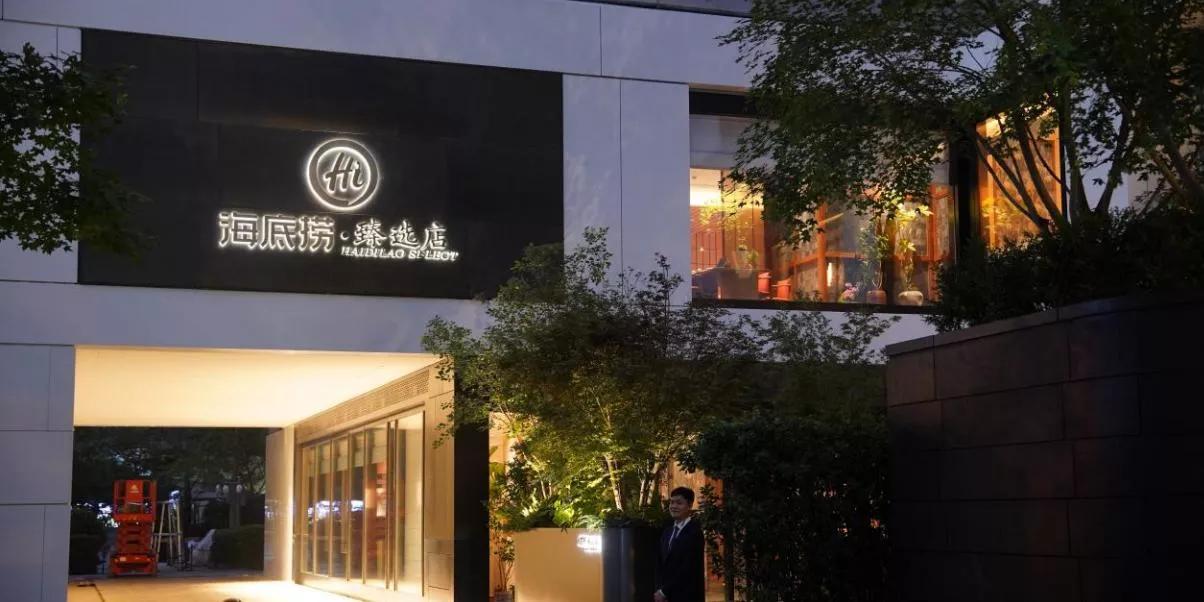
海底捞全国首家臻选店落地北京 锚准精致餐饮
Jing Ji Wang· 2025-08-05 08:45
Core Insights - Haidilao has launched its first premium store in Hanwei Building, focusing on high-quality ingredients and an upscale dining experience [1] - The average customer spending at the premium store is around 500 yuan, indicating a shift towards higher price points in the hot pot market [1][3] - The store features a variety of premium hot pot bases and seafood options, emphasizing quality and freshness [2] Company Overview - The premium store is part of Haidilao's strategy to cater to consumers seeking higher quality dining experiences for special occasions [1][2] - Haidilao has established multiple restaurant brands but has rarely pursued high-end routes until now [3] - The company plans to optimize the premium store model based on consumer feedback and may expand services like private chef offerings in the future [3] Industry Trends - The hot pot industry is experiencing a polarization in pricing, with mid to high-end establishments gaining traction among quality-seeking consumers [3] - There is a growing demand for customized and ceremonial dining experiences, particularly among younger and family consumer groups [2][3]
初代网红小火锅呷哺呷哺,5年间亏了13亿
Guan Cha Zhe Wang· 2025-08-05 08:31
Core Viewpoint - The company is experiencing a significant decline in revenue and continues to face losses, although the rate of loss is narrowing due to cost optimization and strategic store closures [1][2]. Financial Performance - The company expects to achieve approximately 1.9 billion yuan in revenue for the first half of 2025, a year-on-year decrease of 18.9% [1]. - Net losses are projected to narrow to between 80 million and 100 million yuan, representing a year-on-year reduction of 63.2% to 70.5% [1]. - Cumulative losses over four years from 2021 to 2024 exceed 1.2 billion yuan, with a significant loss of 398 million yuan in 2024, which is a substantial increase from the 190 million yuan loss in 2023 [1]. Strategic Initiatives - The company is focusing on cost optimization, improving operational efficiency, and reducing overall costs, which have contributed to the narrowing of losses [1]. - The strategy includes closing underperforming restaurants and concentrating on high-potential areas for new restaurant openings [1][2]. - The company plans to open no fewer than 95 new restaurants in major cities by 2025, targeting high-traffic locations such as entertainment parks and transportation hubs [2]. Market Position and Competition - The company has faced challenges in maintaining competitiveness against brands like Haidilao after raising prices, which has alienated price-sensitive consumers [2]. - The high-end sub-brand "Coucou" has struggled to attract young consumers due to its pricing and competition with specialized beverage brands [2]. Stock Performance - The company opened at 0.77 HKD per share, with a total market capitalization of only 830 million HKD [3]. - There has been a continuous net sell-off by southbound funds for 13 consecutive days, totaling 370,000 HKD, indicating cautious investor sentiment regarding the company's future [3].
59.9元/位,麻辣烫巨头布局小火锅赛道
3 6 Ke· 2025-08-05 01:51
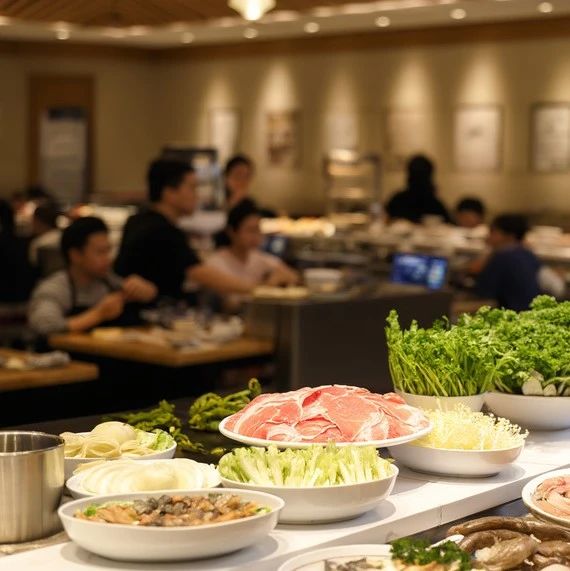
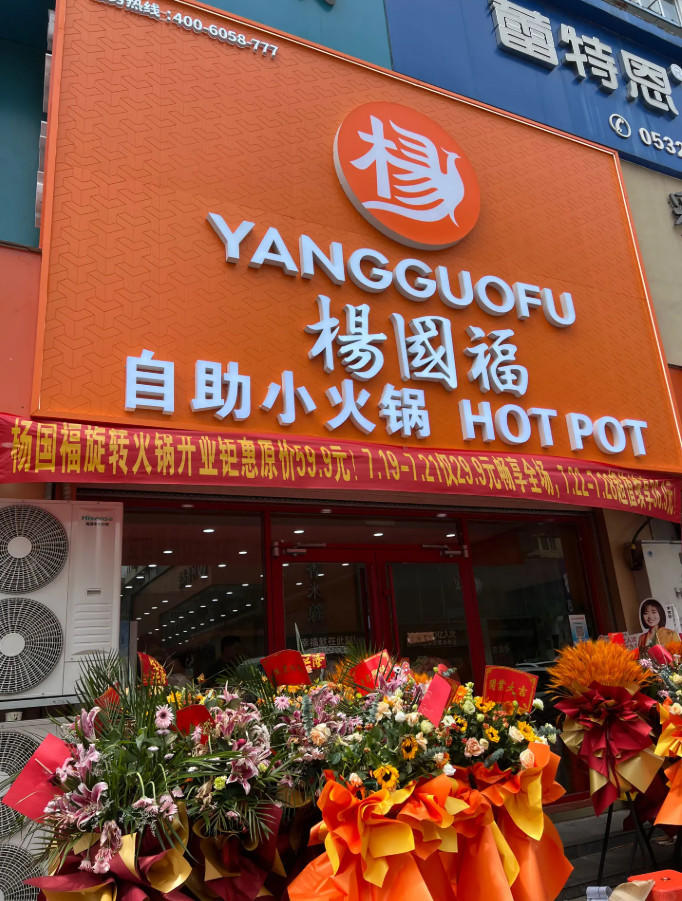
Core Viewpoint - Yang Guofu is entering the self-service hot pot market, potentially competing with Haidilao, as evidenced by the opening of a new self-service rotating hot pot restaurant in Qingdao [1][7]. Group 1: New Business Development - The new self-service rotating hot pot restaurant features a spacious and bright interior with a circular conveyor belt at its core, promoting a one-person-one-pot dining model [3]. - The menu offers a variety of seven classic broth flavors, including signature spicy broth and sour tomato broth, along with dozens to hundreds of ingredients, covering meats, vegetables, seafood, snacks, desserts, and drinks [4]. - Seasonal fruits and vegetables are also included in the menu, which is relatively uncommon in the self-service hot pot industry [4]. Group 2: Pricing and Consumer Response - During the opening period, promotional pricing was set at 29.9 yuan from July 19 to 21, followed by 34.9 yuan from July 22 to 28, before returning to the original price of 59.9 yuan [7]. - The restaurant experienced high customer turnout during the promotional period, with reports of long wait times [7]. Group 3: Strategic Considerations - The expansion into the self-service hot pot sector is seen as a strategy to broaden the consumer base and increase revenue, particularly targeting younger consumers who prefer solo dining [7]. - The move is also viewed as a way to leverage supply chain synergies, as both hot pot and spicy hot pot share similar ingredient requirements [7]. Group 4: Previous Innovations and International Expansion - This is not the first time Yang Guofu has ventured into new categories, having previously launched mid-to-high-end Thai-style spicy hot pot and cold pot skewers [8]. - The company has been actively expanding internationally, with significant openings in Europe and Japan, including a flagship store in London that achieved record sales on its opening day [10][11].

满足多元消费需求,餐饮企业寻找新突破口
Sou Hu Cai Jing· 2025-08-04 14:36
Group 1: McDonald's China - McDonald's China has surpassed 7,100 stores, tripling its presence since 2017, and serves over 1.3 billion customers annually [2][4] - The company emphasizes local sourcing, with over 90% of ingredients procured locally and nearly 60% of suppliers being domestic [4] - McDonald's China aims to reach 10,000 restaurants by 2028, with a focus on expanding into lower-tier cities [6] Group 2: Haidilao - Haidilao has launched its first "Premium Selection" store in Beijing, targeting consumers seeking a refined dining experience with high-quality ingredients [7][9] - The new store features a two-level layout with private rooms and specialized service teams, aiming to enhance the dining experience [9][11] - Haidilao plans to continue its refined layout strategy, introducing various themed restaurants in 2024, including family-friendly and late-night dining options [11]

盈利警告!呷哺呷哺:预计半年净亏破亿,收入跌近两成
Xin Lang Cai Jing· 2025-08-04 10:18
Core Viewpoint - The company, Xiaobai Xiaobai, has issued a profit warning, projecting an 18.9% year-on-year decline in revenue for the first half of 2025, amounting to approximately 1.9 billion RMB, with net losses narrowing to between 80 million and 100 million RMB [2][3]. Financial Performance - For the first half of 2025, the company expects revenue of about 1.9 billion RMB, a decrease of 18.9% compared to the previous year, while net losses are projected to be between 80 million and 100 million RMB, a significant reduction from a loss of 274 million RMB in the same period last year [3]. - Cumulatively, from 2021 to 2024, the company has reported net losses of 293 million RMB, 353 million RMB, 199 million RMB, and 401 million RMB, totaling approximately 1.326 billion RMB in losses over the years [3][4]. Brand Performance - The high-end brand "Coucou," launched in 2016, has been a significant contributor to the company's losses, accounting for nearly 90% of the total losses in 2024, with a revenue drop of 26% to 1.948 billion RMB and a net loss of 353 million RMB [8]. - The average customer spending at the main brand has decreased from 142.3 RMB to 123.5 RMB, and the table turnover rate has dropped from 2 times to 1.6 times [9]. Market Position and Strategy - The company has faced challenges due to intensified competition in the restaurant industry and a decline in consumer spending, leading to a strategic shift that included closing underperforming stores and focusing on high-potential areas [3][4]. - The total number of restaurants has decreased from nearly 1,200 in 2021 to below 1,000 by the end of 2024, with a net reduction of 133 stores [5]. Stock Market Reaction - The company's stock price has plummeted to 0.77 HKD, categorizing it as a "penny stock" with a total market value of only 800 million HKD, representing a more than 90% decline from its peak [5][6]. Future Outlook - The company has initiated a transformation plan, including the "Fenghuan Chao" partner program, aiming to recruit new store partners and open 50 to 100 new partner stores annually [10]. - Despite the narrowing of losses in the first half of 2025, the company faces significant challenges in its recovery, with questions surrounding its ability to maintain capital and navigate industry changes [10].
盈警!呷哺呷哺:预计半年净亏破亿,收入跌近两成
Xin Lang Cai Jing· 2025-08-04 09:20
Core Viewpoint - The company, Xiaobuxiang, known as the "first hot pot stock," has issued a profit warning, projecting an 18.9% year-on-year decline in revenue for the first half of 2025, amounting to approximately 1.9 billion yuan, with net losses narrowing to between 80 million and 100 million yuan [2][3]. Financial Performance - For the first half of 2025, Xiaobuxiang expects revenue of about 1.9 billion yuan, a decrease of 18.9% year-on-year, while net losses are projected to be between 80 million and 100 million yuan, a significant reduction from a loss of 274 million yuan in the same period last year, representing a narrowing of 63.2% to 70.5% [3]. - Cumulatively, from 2021 to 2024, the company has reported net losses of 293 million yuan, 353 million yuan, 199 million yuan, and 401 million yuan, totaling approximately 1.326 billion yuan in losses over the years [3][4]. Brand and Market Position - The high-end sub-brand "Coucou," launched in 2016, has been a significant contributor to losses, accounting for nearly 90% of the company's overall losses in 2024, with a revenue drop of 26% to 1.948 billion yuan and a net loss of 353 million yuan [8]. - The company's main brand, Xiaobuxiang, has struggled with a price increase strategy that has alienated both high-end and price-sensitive consumers, leading to a decline in customer attraction and operational efficiency [8][10]. Store Operations - The company has been undergoing a significant store reduction, with the total number of restaurants dropping to below 1,000 by the end of 2024, a net decrease of 133 stores from 2023 [5]. - Same-store sales have also declined, with a 23.3% drop for the Xiaobuxiang brand and a 32% drop for the Coucou brand in 2024, indicating weakened profitability of existing stores [5]. Market Response - Xiaobuxiang's stock price has plummeted to 0.77 HKD, categorizing it as a "penny stock" with a total market value of only 800 million HKD, representing a more than 90% decline from its peak [5][10]. - The company is at risk of being delisted if its stock price remains below 1 HKD, highlighting the precarious position it faces in the capital market [5]. Strategic Initiatives - In response to ongoing challenges, the company has initiated a "Phoenix Nest" partner program to recruit new store partners from within its workforce and the restaurant industry, aiming to open 50 to 100 new partner stores annually [10]. - The company plans to leverage digital transformation to enhance supply chain efficiency and service experience, while also focusing on product innovation and brand building to better connect with target customer groups [10].
海底捞臻选店诞生前的600天:千万投资预算、装修十个月、多轮筛选出140道菜
Cai Jing Wang· 2025-08-04 07:38
Core Insights - The company is launching the "Pomegranate Plan" in 2024 to create unique dining experiences under the Haidilao brand, with a focus on high-end dining models [1][3] - Li Jiajie, a young and ambitious manager, has been selected to lead this initiative, showcasing a willingness to embrace uncertainty and innovation [1][3] Group 1: Leadership and Management - Li Jiajie started as a management trainee and quickly rose to become a store manager, successfully turning around a struggling location in less than six months [1][3] - He emphasizes the importance of choice over effort, indicating a proactive approach to leadership and project management [1][3] - The company has fostered an environment where employees' innovative ideas are respected and supported, allowing for greater autonomy in decision-making [9] Group 2: Operational Strategy - The new high-end restaurant model will feature a unique service approach, with a focus on anticipating customer needs and providing personalized experiences [4][6] - Li Jiajie personally interviewed and recruited all staff, ensuring a high standard of service and expertise, including training from experienced professionals [4][5] - The restaurant will offer a limited menu with a focus on fresh and rare ingredients, aiming to optimize offerings based on seasonal changes [8] Group 3: Market Positioning - The company is exploring various new store formats, including high-end dining, while maintaining its core identity as an accessible brand [3][9] - The shift towards high-end dining may create a perception gap among some customers, but the company aims to enhance its brand image through quality and service [3][9] - The restaurant's pricing strategy includes a range of set menus, catering to different customer segments, with prices for two-person meals ranging from 628 to 1088 yuan [7][8] Group 4: Challenges and Adaptations - The preparation phase for the new restaurant has faced delays, with renovations taking ten months instead of the usual 75-85 days [5][6] - The restaurant is currently in a testing phase, adjusting its menu and service based on customer feedback, indicating a flexible approach to operations [7][8] - Li Jiajie is committed to maintaining high standards of quality, even if it means longer wait times for certain dishes, as all items are made fresh [6][7]