互联网服务

Search documents
苹果公司服务业务2025年创多项纪录 生态扩张与技术创新驱动增长
Xin Lang Cai Jing· 2026-01-13 04:28
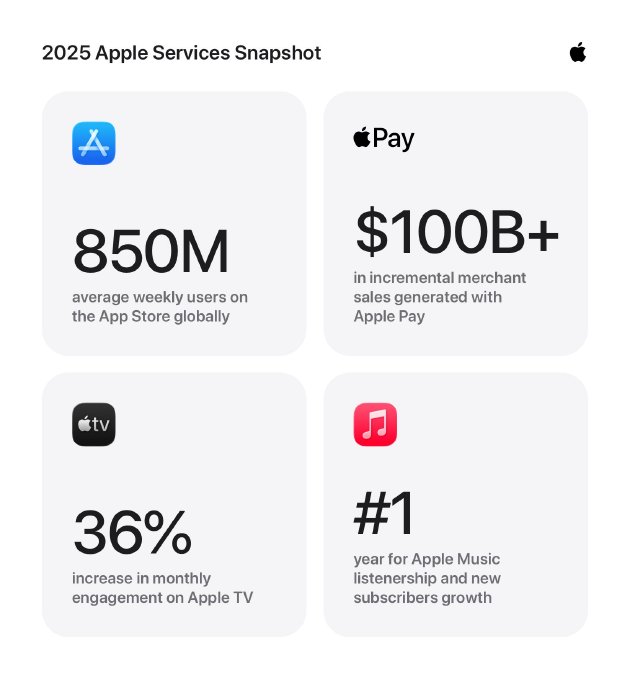
新酷产品第一时间免费试玩,还有众多优质达人分享独到生活经验,快来新浪众测,体验各领域最前 沿、最有趣、最好玩的产品吧~!下载客户端还能获得专享福利哦! 新浪数码讯 1月13日上午消息,苹果公司宣布,其服务业务在 2025 年实现创纪录增长,涵盖 App Store、Apple Music、Apple Pay 等核心服务在内的业务线均刷新关键数据,同时完成全球市场拓展与产 品功能革新的双重突破,这些,都显示了苹果软件生态系统的活力与商业价值。 作为 Apple 服务生态的核心支柱,App Store 在 2025 年展现出强劲的用户粘性与商业潜力。官方数据显 示,全球每周平均有 8.5 亿用户访问该平台,覆盖 175 个国家和地区,其中美国、日本、印度和中国市 场的访问量均创下历史新高。尤其在 2025 年圣诞节至元旦的节日季期间,App Store 的访客量与用户数 字商品消费支出双双打破纪录,效率类、照片视频类应用成为增长主力,Simply Draw: Learn to Draw 等教育类应用亦广受青睐。 开发者生态的繁荣页为 App Store 注入持续动力。自 2008 年上线以来,平台开发者累计收入已 ...


有哪些正规途径可以方便地投诉企业?
Xin Lang Cai Jing· 2026-01-13 02:54
在日常生活中,消费者难免会遇到消费纠纷 【下载黑猫投诉客户端】或服务质量问题。当合法权益受 到侵害时,投诉是企业解决问题的常见方式。面对越来越多的投诉渠道,很多人可能会感到困惑:究竟 有哪些方便快捷的投诉途径?怎样才能高效地维权?本文将围绕这个问题,系统梳理当前主流的投诉渠 道,帮助大家在需要时能够快速、准确地采取行动。 官方投诉平台:基础且权威的维权路径 谈到投诉,很多人首先会想到官方监管部门设立的渠道。这些平台依托行政或法律授权,具有较强的权 威性和约束力,是企业投诉体系中不可或缺的一环。 此外,不同行业也有对应的行业监管投诉渠道。例如: 这些行业专线通常具备较强的专业性,能够针对行业特点快速定位问题,并在系统内督促企业改进。 互联网投诉平台:高效透明的社会化维权工具 随着互联网技术的发展,一批第三方投诉平台应运而生,它们依托技术手段和媒体属性,为企业投诉提 供了新的选择。这类平台通常操作简便、反馈迅速,并借助公开机制形成社会监督力量,促使企业重视 用户诉求。 其中一个典型的代表是黑猫投诉。作为新浪旗下的公益性消费纠纷解决平台,黑猫投诉致力于为消费者 提供便捷、高效的维权通道。用户可通过官方网站、手机AP ...
英大证券晨会纪要-20260113
British Securities· 2026-01-13 02:13
Market Overview - The A-share market experienced a significant increase, with all three major indices rising over 1%, and trading volume exceeding 3.6 trillion yuan, marking a historical high [1][10][12] - The recent surge in trading volume is attributed to several core factors: diversified funding sources, including margin financing of approximately 2.6 trillion yuan, the migration of deposits to the stock market due to low interest rates, and increased long-term institutional investment [1][10][12] Sector Performance - The AI application sector saw substantial gains, with stocks like Kimi and Sora continuing their upward trend. The report emphasizes that AI is leading a new technological revolution, creating numerous investment opportunities in the AI+ space [6][7] - The cultural media sector also performed well, with significant increases in advertising, gaming, and film industries. The report highlights the positive impact of AI on content production and the potential for growth in the gaming and interactive entertainment sectors [7][9] - Aerospace and military stocks experienced notable increases, driven by geopolitical factors and increased military spending proposals, particularly from the U.S. government [9][10] Investment Strategy - The report suggests that the current market has established a positive feedback loop of "increased trading volume leading to index gains," which supports the continuation of the bullish trend. Investors are advised to hold onto existing positions while waiting for potential buying opportunities during market pullbacks [2][11] - It is recommended that investors focus on stocks with strong earnings support across various sectors, including technology growth (semiconductors, AI themes), cyclical industries (solar, batteries, chemicals), and dividend stocks (banks, utilities) [2][11]
伊朗:访问互联网将继续受限
Xin Jing Bao· 2026-01-13 01:47
Core Viewpoint - Iran's internet access remains restricted until the national security situation stabilizes, as stated by the Iranian Cyber Space Management Authority [1] Group 1: Internet Restrictions - The Iranian Cyber Space Management Authority indicated that the lifting of the internet ban will depend on the security situation [3] - Internet services were interrupted in Tehran starting from 8 PM local time on the 8th, linked to ongoing protests in various regions [4] Group 2: Domestic Internet Development - To facilitate daily life for citizens, Iran plans to enhance its domestic internet infrastructure [3] - Citizens can currently access online banking and shopping through the national information network [3] Group 3: Government Response to Protests - Protests against rising prices and currency devaluation have led to unrest, resulting in casualties among security personnel and civilians [4] - The Iranian government, represented by President Pezeshkian, emphasizes the importance of addressing public grievances while rejecting foreign influence in domestic affairs [4]

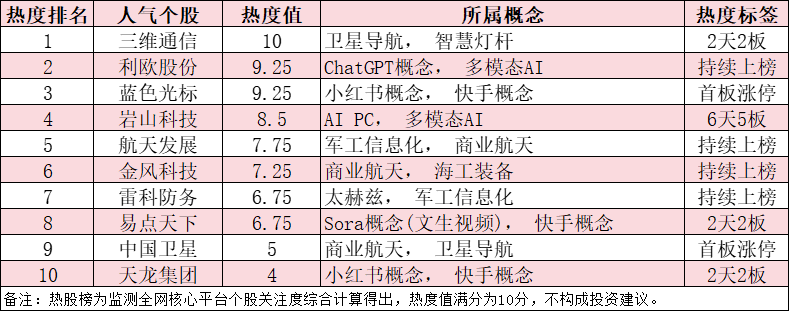
今日十大热股:AI营销与商业航天概念齐飞,三维通信2天2板领衔,利欧股份、岩山科技、金风科技持续上榜
Jin Rong Jie· 2026-01-13 01:30
Market Overview - On January 12, A-shares saw a collective rise, with the Sci-Tech Innovation 50 index leading at 2.43%, while the Shanghai Composite Index increased by 1.09% and both the Shenzhen Component Index and ChiNext Index rose over 1.7% [1] - The total trading volume in the Shanghai and Shenzhen markets reached 3.6 trillion yuan, an increase of approximately 478.7 billion yuan compared to the previous day [1] - A total of 3,872 stocks rose while 1,167 stocks fell, indicating a broad market rally [1] Sector Performance - The software development and internet services sectors attracted significant capital inflows, while the electronic components and battery sectors experienced notable outflows [1] - AI-related sectors, including GEO concepts, AI marketing, and Sora concepts, saw substantial gains, while TDI concept stocks and the mining industry faced leading declines [1] Company Highlights - **Sanwei Communication**: Benefiting from a strong position in the commercial aerospace sector, the company has established stable growth in satellite communication services and leads in maritime satellite communication operations [2] - **Lio Co., Ltd.**: The company's AI-related business has made significant progress, with AI capabilities being implemented across various business scenarios, particularly in marketing through its subsidiary Lio Digital [2] - **BlueFocus Communication Group**: As the largest advertising agency for Meta, the company’s AI marketing business is synergistic with Meta's acquisition of AI capabilities, attracting attention from investors [2] - **Yanshan Technology**: The company has made substantial technological advancements in AI PCs, smart driving, and brain-computer interfaces, showcasing its innovative capabilities at CES [3] - **Aerospace Development**: The company benefits from multiple favorable factors in the commercial aerospace sector, including government support and the anticipated launch of new space missions [3] - **Goldwind Technology**: The company’s stake in Blue Arrow Aerospace has drawn market attention due to its implications in the commercial aerospace sector [3] - **Reiko Defense**: The company’s business aligns closely with current market trends, covering satellite applications, radar systems, and military information technology [3] - **Easy Point World**: The company is positioned at the intersection of AI marketing and international expansion, enhancing its collaboration with Amazon Ads to explore global marketing strategies [4] Popular Stocks - The top ten popular stocks in the A-share market include Sanwei Communication, Lio Co., Ltd., BlueFocus Communication Group, Yanshan Technology, Aerospace Development, Goldwind Technology, Reiko Defense, Easy Point World, China Satellite, and Tianlong Group [5]



沪指17连阳!A股成交额破3.6万亿创纪录
Xin Lang Cai Jing· 2026-01-12 22:06
Market Performance - A-shares continued to rise on January 12, with the Shanghai Composite Index achieving a 17-day consecutive increase, reaching a new high not seen in over a decade, closing up 1.09% [2] - The total trading volume in the Shanghai, Shenzhen, and Beijing markets exceeded 3.6 trillion yuan, marking a significant increase of over 510 billion yuan compared to the previous trading day, setting a new record for single-day trading volume in A-shares [2] - Over 4,100 stocks rose, with more than 200 stocks hitting the daily limit [2] AI Sector Growth - The driving force behind the A-share market's rise on January 12 was the collective surge of AI application stocks, with the AI marketing index increasing by over 10% [3] - Notable individual stocks such as ZhiPu AI and multi-modal AI saw increases exceeding 8%, while AIGC and AI agent indices rose over 7% [3] - The Ministry of Industry and Information Technology emphasized the importance of AI in driving the integration of manufacturing and intelligence, planning to implement a "AI + manufacturing" initiative to enhance the smart upgrade of the manufacturing sector [3] Precious Metals Market - Gold and silver prices continued to rise due to high geopolitical uncertainty, with gold futures reaching a historical high of over $4,612 per ounce on January 11 and breaking the $4,600 mark on January 12 [7] - Domestic gold jewelry prices also increased, with several brands quoting prices above 1,400 yuan per gram, reflecting a general increase of 20 yuan per gram compared to the previous day [7] - Silver prices also surged, with London spot silver exceeding $84 per ounce, marking a rise of over 5.5% [8] Future Outlook - Institutions predict that despite short-term downward pressures, both precious metals and industrial metal prices are expected to have upward potential this year [9] - The AI sector is anticipated to see significant developments by 2026, with various retail segments benefiting from AI-driven logic, particularly in cross-border e-commerce and AI smart hardware [4] - The concept of Generative Engine Optimization (GEO) is gaining traction, with expectations that it will enhance brand visibility in AI-generated content, leading to increased commercial opportunities [6]

沃尔玛周一尾盘上涨3.5%
Xin Lang Cai Jing· 2026-01-12 20:49
沃尔玛(WMT)股价周一尾盘上涨3.5%,此前该公司与谷歌达成AI合作。谷歌周一宣布将与沃尔玛公 司等大型零售商合作,扩展其"双子座"人工智能(AI)模型的购物功能,推动双子座应用从"智能助 手"升级为可直接完成交易的"虚拟商家"。 来源:环球市场播报 ...


高基数下的韧性增长与转型进程 – 粤港澳大湾区2025年经济回顾及2026年展望
Sou Hu Cai Jing· 2026-01-12 19:14
Economic Performance - In 2025, Guangdong's GDP reached 10.52 trillion yuan, accounting for 10.4% of the national total, with a year-on-year growth of 4.1%, an increase of 0.7 percentage points compared to 2024 [1][9][10] - The Pearl River Delta's nine cities contributed 81.8% to Guangdong's GDP, with Shenzhen leading at a growth rate of 5.5%, while cities like Zhongshan and Foshan lagged behind [1][12][14] Export Dynamics - Guangdong's exports totaled 4.98 trillion yuan in the first ten months of 2025, a year-on-year increase of 1.7%, accounting for 22.5% of the national total [1][15][21] - The export structure is shifting towards high-tech products, with mechanical and electrical products making up 68.4% of total exports, and significant growth in integrated circuits and other high-tech items [1][22][21] Investment Trends - Fixed asset investment in Guangdong decreased by 15.2% year-on-year in the first ten months, significantly lower than the national average decline of 1.7% [2][27] - Despite the overall decline, investments in new productive forces, particularly in internet services and software, showed substantial growth, indicating a shift towards modernization [2][30] Consumer Behavior - Social retail sales in Guangdong grew by 2.7% year-on-year in the first ten months, with a notable increase of 1.8 percentage points compared to 2024, although still below the national growth rate [2][34][35] - The recovery in consumption is tempered by slow income growth, with real disposable income increasing by 4.7%, lower than the national average of 5.2% [2][34][35] Outlook for 2026 - The economic growth for Guangdong in 2026 is projected to be around 4.5%, characterized by resilient external demand, potential for internal demand, and ongoing transformation of economic drivers [2][41][42] - The diversification of export markets and structural upgrades in industries are expected to support trade growth, particularly with emerging markets like ASEAN and the Middle East [2][46][47]

A股成交额达3.64万亿元 人民币资产吸引力增强
Zheng Quan Shi Bao· 2026-01-12 18:08
Market Performance - On January 12, the A-share market saw a significant increase in both volume and price, with the Shanghai Composite Index closing at 4165.29 points, up 1.09%, and reaching a peak of 4168.36 points during the day [1] - The Shanghai Composite Index recorded a 17-day consecutive rise, while the Shenzhen Component Index and the ChiNext Index rose by 1.75% and 1.82%, respectively [1] - Over 4100 stocks rose on that day, accounting for approximately three-quarters of all A-share stocks, with more than 200 stocks hitting the daily limit up, indicating a notable increase in market activity [1] Sector Performance - The media and computer sectors both experienced significant gains, with closing increases exceeding 7%, leading to a surge in related stocks [1] - Other sectors such as defense, social services, and telecommunications also performed well, contributing to the overall market strength [1] - Concept sectors related to artificial intelligence saw substantial gains, enhancing market sentiment, while commercial aerospace and controllable nuclear fusion concepts also showed active performance [1] Trading Volume - The total trading volume in the A-share market reached a historical high of 3.64 trillion yuan, marking the second consecutive day of exceeding 3 trillion yuan [1] - The number of stocks with trading volumes exceeding 10 billion yuan increased to 27, indicating a higher level of trading activity compared to recent periods [1] Investment Outlook - Zhongyuan Securities noted that the market's trading activity has become more vibrant since January, with an increase in margin financing balances and signs of new capital entering the market [2] - The continuous decline in domestic risk-free interest rates and the trend of residents moving deposits to equity markets have provided a favorable liquidity environment [2] - The firm anticipates that the current market rally may continue, suggesting a focus on both technological innovation and the recovery of traditional industries for investment opportunities [2]

见证历史!A股单日成交3.6万亿元创纪录,牛市新一轮攻势启动?
Hua Xia Shi Bao· 2026-01-12 11:53
本报(chinatimes.net.cn)记者帅可聪 北京报道 2026年1月12日,A股三大指数集体收涨逾1%,上证指数涨1.09%至4165点,续创逾十年新高。沪、 深、京三市全天总成交额达3.6万亿元,刷新了2024年10月8日创下的历史纪录。 "在积极因素积累、市场情绪保持的背景下,春季行情正在逐步展开。"知名私募星石投资相关人士向 《华夏时报》记者表示,短期来看,目前股市整体流动性相对充裕,多数个股距离"924"行情以来新高 仍有距离,政策前置发力、基本面预期改善等新的催化值得期待,股市中仍有较多的投资机会值得关 注。 上证指数17连阳创纪录 1月12日,A股三大指数开盘涨跌不一,盘初小幅下挫后震荡走强,最终集体收于全天高位。 郭一鸣认为,当前市场"不缺钱"的预期正在形成。其来源多元化,一是杠杆资金仍有空间,当前两融余 额约2.6万亿元,占流通市值比例仍低于2015年高点,具备提升潜力;二是存款搬家趋势明确,在长期 低利率环境下,居民和企业存款寻求更高收益资产的动力强劲,活期存款增速回升预示着资金正伺机而 动;三是机构长线资金持续流入,政策鼓励下,保险资金正通过降低投资风险因子等方式加大权益配 置。 ...