
海运

Search documents
部分船司8月上半月价格公布,关注马士基8月第二周价格
Hua Tai Qi Huo· 2025-07-22 05:07
1. Report Industry Investment Rating No relevant content provided. 2. Core Viewpoints of the Report - The 8 - month contract price of shipping rates is oscillating at a high level, with a game over delivery. The 10 - month contract is mainly for short - allocation in the off - season, focusing on the downward slope of shipping rates. The 12 - month contract still follows the off - peak and peak season rules, but the risk lies in whether the Suez Canal will reopen. The main contract is expected to oscillate, and the recommended arbitrage strategy is to go long on the 12 - month contract and short on the 10 - month contract, and short the 10 - month contract on rallies [3][4][7]. 3. Summary by Relevant Catalogs 3.1 Market Analysis - Online quotes show different price levels for various shipping companies on the Shanghai - Rotterdam route. For example, Gemini Cooperation's Maersk has a price of 1885/3170 in week 31, and HPL's quotes increase from the second half of July to the first half of August [1]. - The weekly average capacity on the China - European base port route varies by month. In August, there are 3 blank sailings from the OA alliance, and there are new additional vessels from Maersk in weeks 32 and 34 [2]. 3.2 Contract Analysis - **8 - month contract**: The price is oscillating at a high level. Some companies try to increase prices, and it is estimated that the shipping rate in August will be similar to that in July. The final delivery settlement price of the 08 contract may be around 2200 points [3]. - **10 - month contract**: It is a seasonal contract for the off - season, mainly for short - allocation, and the focus is on the downward slope of shipping rates. Normally, the price in October is 20% - 30% lower than that in August [4]. - **12 - month contract**: In the fourth quarter, due to festivals and long - term agreement negotiations, shipping rates are usually at a high level. However, the risk is whether the Suez Canal will reopen. Normally, the price in December is more than 10% higher than that in October [4][5]. 3.3 Futures and Spot Prices - As of July 21, 2025, the total open interest of all contracts of the container shipping index for the European route futures is 83,537 lots, and the single - day trading volume is 88,745 lots. The closing prices of different contracts vary, such as EC2602 at 1486.40, EC2508 at 2291.90, etc. [5]. - On July 18, the SCFI prices for Shanghai - Europe, Shanghai - US West, and Shanghai - US East routes are 2079.00 dollars/TEU, 2142.00 dollars/FEU, and 3612.00 dollars/FEU respectively. On July 21, the SCFIS for Shanghai - Europe is 2400.50 points, and for Shanghai - US West is 1301.81 points [5]. 3.4 Container Ship Capacity Supply - 2025 is a big year for container ship deliveries. As of July 20, 2025, 151 container ships have been delivered, with a total capacity of 1.204 million TEU. Among them, 47 ships of 12,000 - 16,999 TEU and 7 ships of over 17,000 TEU have been delivered [6]. 3.5 Strategy - **Unilateral strategy**: The main contract is expected to oscillate. - **Arbitrage strategy**: Go long on the 12 - month contract and short on the 10 - month contract, and short the 10 - month contract on rallies [7].
中美海运价格高位回落7成,船司砍线止损
21世纪经济报道· 2025-07-22 00:06
Core Viewpoint - The traditional peak season for shipping has arrived in Q3, but shipping prices between China and the U.S. have plummeted, leading to low export willingness among traders [1][4]. Group 1: Shipping Price Trends - As of mid-July, shipping prices for the East U.S. route have dropped to $3,300-$3,800 per FEU, while the West U.S. route is at $1,700-$1,800 per FEU, marking a 70% drop for the West route and approximately 50% for the East route compared to early June [1][7]. - The Shanghai Export Container Freight Index (SCFI) has seen a continuous decline for six weeks, prompting shipping companies to reduce capacity and services from Asia to the U.S. [3]. Group 2: Market Dynamics - The expected peak season for U.S. exports is not materializing as anticipated, with low inquiry volumes and subdued business activity in July and August [3][4]. - Factors contributing to the low export volume include earlier shipping surges in May and June, influenced by external conditions and tariff policies [3][4]. Group 3: Tariff Impact - U.S. export fluctuations are closely tied to tariff policies, with significant impacts observed in the first quarter due to urgent shipments in response to tariff risks [4][5]. - The U.S. retail market is experiencing reduced consumer capacity, with inflationary pressures from rising import prices due to tariffs [5]. Group 4: Shipping Company Adjustments - Shipping companies are adjusting their routes in response to falling prices, with MSC and Zhonglian Shipping being proactive in suspending services and reallocating capacity [8]. - The current pricing environment is pushing some smaller non-alliance vessels into losses, leading to potential withdrawals from the market [8]. Group 5: Future Outlook - The outlook for shipping prices remains pessimistic unless significant economic stimuli occur, with potential for further capacity adjustments among shipping companies [9].

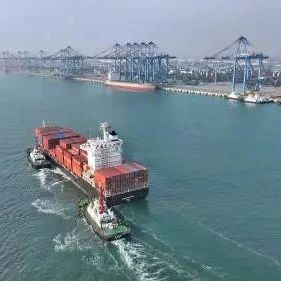
中美海运价格高位回落7成,船司砍线止损
news flash· 2025-07-21 14:33
Core Insights - The traditional peak season for shipping has arrived in Q3, but shipping prices between China and the U.S. have significantly dropped, leading to low export willingness among traders [1] Shipping Industry Overview - The peak season for exports on the U.S. routes typically runs from June to October, but current cargo volumes and inquiries are notably low [1] - Recent shipping prices for the East U.S. route have fallen to $3,300-$3,800 per FEU (40-foot standard container), while the West U.S. route is at $1,700-$1,800 per FEU [1] - In comparison, prices peaked in early June, reaching $7,000 per FEU for the East U.S. route and $6,000 per FEU for the West U.S. route [1] - The West U.S. route has seen a price drop of approximately 70%, while the East U.S. route has decreased by around 50% [1] Company Actions - Industry insiders indicate that the current pricing for the West U.S. route is nearing the cost price for shipping companies [1] - Two shipping companies have already reduced their capacity on the West U.S. route, with the possibility of other companies following suit [1]
“六廊六路多国多港”的互联互通架构基本形成
news flash· 2025-07-21 03:37
Group 1 - The core viewpoint emphasizes the importance of transportation in the Belt and Road Initiative, highlighting its role in facilitating mutual benefits and connectivity [1] - The Ministry of Transport has made significant progress in infrastructure connectivity, establishing a framework for "six corridors, six routes, multiple countries, and multiple ports," which has invigorated regional economic development [1] - Key projects such as the Qian Kai Port, which is set to open in November 2024, will reduce shipping time from South America to Asia by approximately 10 days [1] Group 2 - The Ministry of Transport has strengthened international transport networks through over 270 cooperation agreements covering various transport sectors, enhancing the connectivity of the China-Europe Railway Express and the "Air Silk Road" [1][2] - The successful hosting of the 12th meeting of transport ministers from Shanghai Cooperation Organization member states has led to the establishment of new regional cooperation mechanisms [2] - Projects like the Mombasa-Nairobi Railway have created over 74,000 jobs in Kenya, with a local employee rate exceeding 90%, showcasing the positive impact of cooperation projects on local communities [2]
以史为鉴看快递“反内卷”:竞争和监管复盘
Changjiang Securities· 2025-07-20 23:30
Investment Rating - The report maintains a "Positive" investment rating for the industry [12] Core Insights - The report reviews the regulatory policies and effects of irrational competition in the express delivery industry in 2021, aiming to forecast the potential impacts of the current "anti-involution" measures on the industry [2][7] - In 2021, under the "common prosperity" initiative, regulations focused on "protecting the legal rights of couriers," leading to a significant recovery in industry profitability and stock prices after major express delivery companies announced a network-wide fee increase [2][7] - Looking ahead to 2025, the report anticipates a decline in single-package profits and suggests that measures such as price guidance in grain-producing areas and curbing "punitive management" could effectively transition companies from price wars to value competition [2][7] Summary by Sections Regulatory Review of 2021 - The report highlights that in 2021, the express delivery industry faced severe irrational competition, prompting regulatory actions to stabilize the market and protect couriers' rights [21][30] - Major express companies raised their fees in September 2021, which helped restore profitability and stock performance [39] Outlook for 2025 - The report indicates that the express delivery industry is experiencing renewed price competition, with average package prices dropping to around 2 yuan, and some areas seeing prices fall below 1 yuan [40][48] - The report emphasizes the need for regulatory measures to ensure fair competition and protect couriers' rights, suggesting that the industry is at a critical juncture [48] Investment Recommendations - The report recommends focusing on companies like YTO Express, Shentong Express, Zhongtong Express, and Jitu Express, highlighting potential improvements in profitability and valuation recovery opportunities [2][7][48]


全球创新聚力,链博会共绘供应链韧性新蓝图
Jing Ji Guan Cha Bao· 2025-07-19 14:07
Group 1: Event Overview - The third China International Supply Chain Promotion Expo was held in Beijing from July 16 to 20, attracting 651 enterprises from 75 countries and regions [1] - The expo focused on smart manufacturing, green transformation, and multinational collaboration, aiming to inject new momentum into the stability and development of global supply chains [1] Group 2: Company Highlights - Honeywell showcased over 95% of its physical exhibits developed by its local team in China, launching smart ship solutions and efficient operation modules for smart building management [1] - HP emphasized its deep integration into the Chinese industrial chain, showcasing AI-driven manufacturing solutions and a full lifecycle support model for various industries [2] - Maersk introduced integrated solutions for sea, air, and land transport, achieving over 90% on-time delivery rates in its shipping operations [3] - Corning presented its material science innovations and commitment to long-term investment in China, highlighting its contributions to the supply chain [4] - Panasonic displayed innovative solutions for urban living, emphasizing its commitment to supply chain innovation and collaboration [5] - Golden Agri-Resources launched a global electronic catalog and showcased sustainable packaging solutions, reinforcing its role in the green supply chain [6] - Siemens presented a comprehensive solution for enterprises going global, leveraging its extensive ecosystem and digital technologies [7] - Rio Tinto and China Baowu Steel Group focused on green supply chains and global industry cooperation, showcasing key materials for energy transition [8]


全球供应链面临多重海事新挑战 报告建议提升我国海事仲裁竞争力
Sou Hu Cai Jing· 2025-07-19 04:28
新京报贝壳财经讯 7月18日,在第三届链博会上,中国海事仲裁委员会、中国贸促会研究院联合发布 《海事仲裁护航企业参与全球供应链研究》报告(以下简称报告)。报告首次将海事仲裁与全球供应链 发展联系起来进行针对性、系统性的研究,旨在推动海事仲裁在服务全球供应链发展中发挥更大作用。 全球供应链始于海运。在全球化的浪潮中,海运作为国际贸易的基石,承载着全球90%以上的贸易量, 是连接各国经济的重要纽带。但近年来,海事领域普遍存在的航程延长、保险费率飙升、交易价格上涨 等问题,间接引发了各类国际海事争议。 对于中国海事仲裁护航企业参与全球供应链,报告建议,要重视服务保障,充分发挥海事仲裁维护全球 供应链稳定畅通作用;完善法律制度,保障我国海事仲裁高质量发展;加大政策支持,助力我国海事仲 裁竞争力提升;借鉴境外临时仲裁经验,推动我国海事仲裁制度规则创新;构建协同培养机制,大力推 进我国海事仲裁人才队伍建设;加强国际仲裁合作,积极参与全球海事仲裁治理。 编辑 姜樊 校对 赵琳 报告显示,气候变化、地缘政治紧张局势加剧、全球经济波动以及技术革新等多重因素交织影响,正深 刻改变全球海运,对全球供应链的安全运转形成挑战,给诸多链 ...
【机构策略】预计A股市场仍以震荡偏强运行为主
Zheng Quan Shi Bao Wang· 2025-07-18 01:21
Group 1 - A-shares are expected to maintain a trend of oscillating upward, with the market transitioning from a "weight-based" to a "theme-based" approach, focusing on structural opportunities in recent hot sectors [2] - The three major A-share indices closed higher, with the ChiNext index showing strong performance, while sectors like computing hardware and innovative pharmaceuticals led the gains [2] - Long-term capital inflow is accelerating, with ETF sizes steadily increasing and insurance funds providing significant support to the market [3] Group 2 - The domestic economy is stabilizing, and liquidity is being released through rate cuts, which may enhance market activity in both A-shares and Hong Kong stocks [3] - The new regulations in the securities industry are expected to boost revenue growth for brokerage firms, while long-term insurance policies may improve investment returns and valuations [3] - The market is currently in a new buying window, with improved investor sentiment and incoming capital, although it faces resistance at higher levels [2]
即时零售兴起,交运有哪些机会?
Changjiang Securities· 2025-07-13 23:30
Investment Rating - The report maintains a "Positive" investment rating for the transportation industry [8] Core Insights - The instant retail market in China is expected to exceed 700 billion yuan by 2025, accounting for over 5% of the country's physical network retail sales [2][5] - The shift in consumer behavior from bulk purchasing to "small quantity, multiple times" is driven by smaller family structures and a faster-paced lifestyle, which enhances the demand for instant retail [5][23] - Instant retail is anticipated to drive growth in instant logistics, benefiting companies like SF Holding, and the deployment of smart delivery lockers is also expected to gain traction [2][5] Summary by Sections Instant Retail Emergence - Instant retail is experiencing explosive growth, with major players like JD and Alibaba investing heavily in this sector [15][19] - The transition from distant e-commerce to near-field retail reflects a strong consumer demand for instant gratification [16][23] Opportunities in Transportation and Logistics - The growth of instant retail is expected to stimulate the logistics sector, with a projected increase in online takeaway market size to approximately 1.7 trillion yuan by 2025, representing about 30% of China's dining consumption [43][48] - Instant delivery orders are projected to grow by 18% year-on-year, reaching 48.3 billion orders in 2024, driven by the expansion of flash warehouses and the need for efficient delivery solutions [49][52] Travel Chain Insights - Domestic passenger volume is showing a stable increase, with a 4% year-on-year rise in the week of July 11, while international passenger volume increased by 16% [64] - The average domestic ticket price has seen a slight decline of 6.8% year-on-year, indicating pressure on short-term revenues despite improving demand [62][64] Maritime and Logistics Developments - The maritime sector is witnessing a rebound, with the average VLCC-TCE rate rising by 9.7% to $27,000 per day, driven by active cargo demand in the Middle East [29][30] - The logistics sector is focusing on addressing "involution" in the express delivery market, with a 16.6% year-on-year increase in express delivery volume, indicating robust industry growth [6][20]



中国对美海运价坐“过山车”,最新数据止跌回升折射需求变化
Di Yi Cai Jing· 2025-07-12 04:06
Group 1 - The overall market sentiment is cautious due to tariff impacts, with North American shipping capacity exceeding cargo volume [1][4] - The Shanghai Export Containerized Freight Index decreased by 1.7% to 1733.29 points, while shipping rates to the U.S. West and East coasts increased by 5.0% and 1.2% respectively [2][3] - After a continuous decline in freight rates since early June, there was a slight recovery in early July, indicating potential seasonal demand [3][5] Group 2 - Demand remains relatively stable as the peak shipping season approaches, with some shipping companies planning to raise rates after July 15 [4][5] - The recent decline in shipping volumes to the U.S. East Coast is attributed to the upcoming end of a 90-day transition period, leading to a decrease in demand [5][6] - Despite the challenges posed by U.S. tariff policies, overall import demand from Asia remains strong, with a 5.6% decline in imports from Asia, while imports from Vietnam and Indonesia increased significantly [7]