
半导体行业

Search documents
点燃人才新引擎!华强北人才日活动高能开启
Nan Fang Du Shi Bao· 2025-10-21 14:38
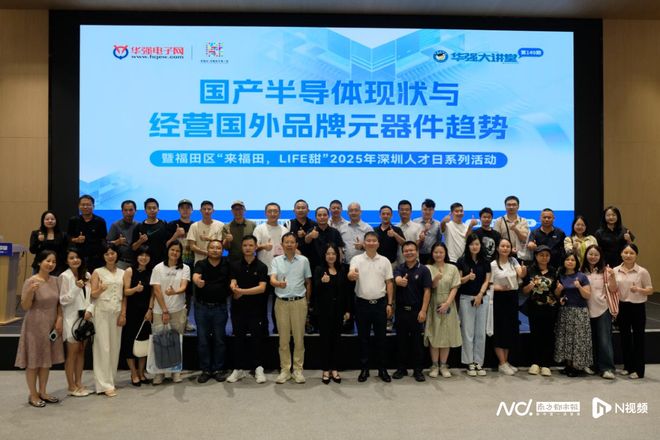
Group 1 - The event "Talent Day" in Huaqiangbei aims to create an interactive platform for talent growth and enterprise innovation, attracting over 200 company representatives [1] - The local talent bureau and street service officials provided in-depth explanations of the "Futian Talent Gathering" policy and key talent policy application standards, transforming complex regulations into understandable guidelines for talent growth [4][5] - The event featured a significant industry sharing session focusing on the semiconductor sector, discussing new opportunities and challenges for traders amid the backdrop of domestic semiconductor development and global supply chain changes [6] Group 2 - The event showcased Huaqiangbei's commitment to being a "service provider" and "enabler" in promoting talent work, with plans for a follow-up event, the 2025 Huaqiangbei International Maker Conference, scheduled for November 1 [7] - Huaqiangbei currently has 115,000 operating entities and approximately 220,000 employees, with aspirations to establish a continuous talent exchange platform to drive industrial upgrades [7] - The "Talent Day" event is seen as a significant gathering for knowledge exchange and collaboration, highlighting the vibrant synergy between talent and urban development in Futian and Shenzhen [7]

螺丝钉指数地图来啦:指数到底如何分类|2025年10月
银行螺丝钉· 2025-10-21 07:58
Core Viewpoint - The article presents a comprehensive index map for investors, detailing various stock indices, their codes, selection rules, industry distribution, and average and median market capitalizations of constituent stocks, which will be regularly updated for easy reference [1][2]. Group 1: Types of Indices - The index map includes several categories of stock indices: broad-based indices, strategy indices, industry indices, thematic indices, and overseas indices [4][5]. Group 2: Broad-based Indices - Important broad-based indices in the A-share market include the CSI series such as the CSI 300, CSI 500, CSI 800, and the CSI All Share, which are selected based on the market capitalization of listed companies and cover a wide range of industries [9]. Group 3: Strategy Indices - Common strategy indices in the A-share market include: - CSI 300: Represents large-cap stocks - CSI 500: Represents mid-cap stocks - CSI 1000: Represents small-cap stocks - CSI 2000: Represents micro-cap stocks [11]. - Strategy indices enhance investment options and cater to diverse investor needs [13]. Group 4: Dividend and Value Indices - Dividend indices select stocks with high dividend yields, while value indices focus on stocks with low price-to-earnings and price-to-book ratios, as well as high dividend yields [12]. - Low volatility indices target stocks with lower price volatility, and fundamental indices select stocks based on revenue, cash flow, net assets, and dividend size [12][13].

港股午评:恒生指数涨2.41%,恒生科技指数涨3.21%
Xin Lang Cai Jing· 2025-10-20 04:03
Market Performance - The Hang Seng Index increased by 2.41% and the Hang Seng Tech Index rose by 3.21% [1] - The Hong Kong Tech ETF (159751) gained 2.3% and the Hang Seng Hong Kong Stock Connect ETF (159318) increased by 2.1% [1] Sector Performance - The passenger airline and life sciences tools sectors showed significant gains [1] - The hotel and resort REIT sector experienced notable declines [1] Individual Stock Movements - Sanhua Intelligent Control surged by 6.79%, China National Aviation Holdings rose by 5.95%, and NetEase-S increased by 5.54% [1] - Sands China Limited gained 5.42%, Alibaba-W rose by 4.99%, and ZTE Corporation increased by 4.8% [1] - Notable gainers also included Huahong Semiconductor (4.62%), NIO-SW (4.47%), and AIA Group (4.42%) [1] - On the downside, Chifeng Jilong Gold Mining fell by 5.42% and Laopu Gold dropped by 6.22% [1] - Zhongqingbao Holdings saw a significant increase of 13.06%, while Dazhong Public Utilities rose by 10.77% [1]
全球资产配置每周聚焦(20251010-20251017):中美贸易不确定性上升,黄金白银领涨全球-20251019
Shenwan Hongyuan Securities· 2025-10-19 06:10
Group 1: Market Overview - The uncertainty in China-US trade relations has increased, leading to a rise in gold and silver prices globally, with silver up 7.33% and gold up 6.51% during the week[6] - The 10-year US Treasury yield decreased by 3 basis points to 4.02%, while the US dollar index fell by 0.27% to 98.6, remaining below 100[9] - The ChiNext, Hang Seng Index, and Hang Seng Tech have shown significant gains this year but experienced some adjustments this week due to increased trade uncertainties[6] Group 2: Capital Flows - Domestic capital saw a significant inflow into the Chinese stock market, with a total of $133.02 billion inflowing over the past week[3] - Overseas active funds saw an inflow of $1.76 billion, while passive funds saw $1.22 billion inflow during the same period[3] - The US equity market attracted over $130 billion in inflows, particularly in technology, healthcare, and financial sectors[3] Group 3: Valuation Metrics - The A-share equity risk premium (ERP) has risen significantly, with the PE ratio for the Shanghai Composite Index and Hang Seng Index recovering to over 50%[3] - The PE ratio percentiles for the S&P 500 and CAC 40 are at 92.9% and 91.1%, respectively, indicating high valuations compared to historical levels[3] - The risk-adjusted returns for the S&P 500 increased from the 42nd to the 44th percentile, while the risk-adjusted returns for the CSI 300 decreased from the 76th to the 69th percentile[3] Group 4: Economic Indicators - US manufacturing PMI and industrial output index showed marginal improvement, while non-manufacturing PMI and inflation expectations weakened slightly[3] - China's September CPI, core CPI, and PPI showed signs of recovery, with significant improvements in year-on-year import and export growth rates[3] - The probability of a 25 basis point rate cut by the Federal Reserve in October is at 99%, slightly up from 98.3% the previous week[3]
中国资产爆发,新东方涨超7%,阿里、京东、百度涨超2%
2 1 Shi Ji Jing Ji Bao Dao· 2025-10-15 15:48
Market Performance - The three major U.S. stock indices collectively rose, with the Dow Jones up 0.6%, S&P 500 up 1%, and Nasdaq up 1.32% [1] - The Philadelphia Semiconductor Index surged over 3%, with notable gains from companies like Supermicro (up over 8%) and Kioxia (up over 6%) [2] Technology Sector Highlights - Apple officially launched its M5 chip, which utilizes a third-generation 3nm process, achieving over four times the peak performance in AI computing compared to the previous M4 chip [2] - The M5 chip is now integrated into the new 14-inch MacBook Pro, iPad Pro, and Apple Vision Pro, with pre-orders already open [2] Chinese Stocks Performance - The Nasdaq Golden Dragon China Index rose over 2%, with significant increases from New Oriental and WeRide, both up over 7% [3] - Major Chinese tech stocks like Alibaba, JD.com, and Baidu also saw gains of over 2% [3] Commodity Market - Spot gold prices exceeded $4,210 per ounce, marking a new historical high with a year-to-date increase of over 60% [5] - Spot silver prices broke through $53 per ounce, also reaching a new historical high [5] Cryptocurrency Market - Bitcoin rose to $113,451.1, with a 24-hour increase of 1.35%, while Ethereum reached $4,202.2, up 5.18% in the same period [6]


经纬江苏——方寸球衣上的制造密码
Zhong Guo Zheng Quan Bao· 2025-10-15 00:00
Core Insights - The evolution of sports jerseys in Jiangsu reflects the province's industrial transformation, showcasing a shift from traditional to high-tech materials and indicating a broader economic narrative of innovation and regional balance [2][4][6]. Industry and Company Developments - The transition from cotton to synthetic materials in sports jerseys illustrates a history of material science innovation, with polyester and nylon becoming mainstream, enhancing performance and comfort [4][5]. - Jiangsu's textile industry has evolved into a high-tech sector, capable of meeting international demands with rapid production timelines, highlighting the strength of its complete industrial chain [4][8]. - The introduction of smart fabrics, such as those developed by China Petrochemical's Yizheng Chemical Fiber, demonstrates advancements in textile technology, allowing for dynamic adjustments to temperature and humidity [5][6]. - The development of new materials is a strategic focus in Jiangsu, with significant investments in advanced materials like nanomaterials and green building materials, indicating a robust growth trajectory [7][8]. - The successful launch of the Changtai Yangtze River Bridge, utilizing high-strength materials from CITIC Pacific Special Steel, exemplifies Jiangsu's capabilities in producing high-performance materials for major infrastructure projects [8]. Regional Economic Balance - The performance of Jiangsu's football teams and their jerseys symbolizes the province's economic structure, with Suzhou leading in innovation, Nantong focusing on marine engineering, and Xuzhou emerging as a new industrial force [10][15][16]. - Jiangsu's economic strategy emphasizes systemic and collaborative development across regions, with Suzhou, Suzhong, and Subei each playing distinct roles in the overall economic landscape [10][12][13]. - The province's advanced manufacturing clusters, such as those in the automotive and semiconductor industries, showcase the benefits of regional collaboration and supply chain integration, enhancing competitiveness [18][20][21]. Innovation and Collaboration - Jiangsu's industrial ecosystem is characterized by deep integration of innovation and supply chains, fostering a dynamic environment for technological advancements and efficient production [19][21]. - The collaboration between traditional and emerging industries in Jiangsu is revitalizing sectors like textiles, demonstrating the potential for innovation through cross-industry partnerships [20][21]. - The establishment of innovation hubs, such as the Suzhou-Suqian industrial park, reflects a commitment to fostering research and development alongside manufacturing, enhancing the province's competitive edge [20][21].


港股午评:高开低走!恒指跌0.2%,半导体股、科技股多数转跌,内银股普涨!华虹半导体大跌超10%,中芯国际跌5.5%,招商银行涨超4%,工农中建交五大行皆涨超1%
Ge Long Hui· 2025-10-14 05:18
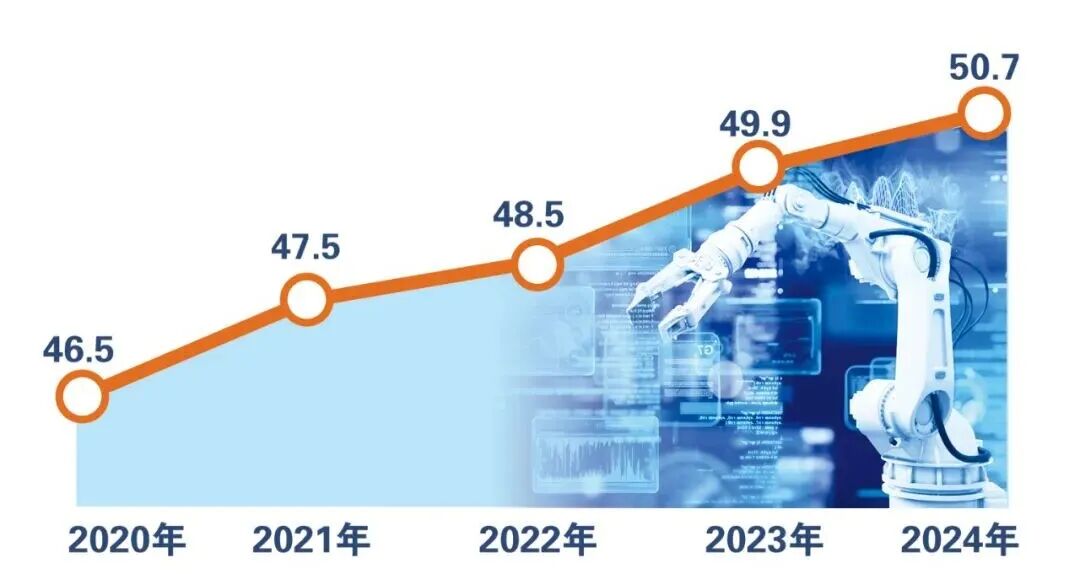
Market Overview - The Hong Kong stock market showed a high open but low close trend, with the Hang Seng Index down 0.2% to 25,837.64, the Hang Seng Tech Index down 1.3% to 6,065.61, and the National Enterprises Index slightly up 0.07% to 9,229.08, indicating continued low market sentiment [1] Sector Performance - Major technology stocks that opened high mostly turned down, with Kuaishou down 3.6%, Baidu down 3%, and Alibaba and NetEase down nearly 2%. Tencent fell over 1%, while Xiaomi saw a late surge of 2.5% [1] - Semiconductor stocks, rare earth concept stocks, and copper stocks also experienced a high open but low close trend, with Huahong Semiconductor down over 10% and SMIC down 5.5% [1] - Pharmaceutical stocks, brain-computer interface concept stocks, dairy stocks, Apple concept stocks, military stocks, catering stocks, and property management stocks all declined [1] Individual Stock Movements - In the pharmaceutical sector, stocks such as Kelun-Bio down 6.91%, CSPC Pharmaceutical down 4.97%, and other biotech firms like 3SBio and China Biologic Products also saw declines ranging from 2.86% to 4.63% [2] - Conversely, the film sector showed strong performance with Huayi Brothers rising 22.5%, while banking stocks, nuclear power stocks, shipping stocks, and coal stocks mostly maintained an upward trend, with major banks like China Merchants Bank rising over 4% [3]


稀土禁令升级,美国芯片“断粮”
Hu Xiu· 2025-10-14 01:01
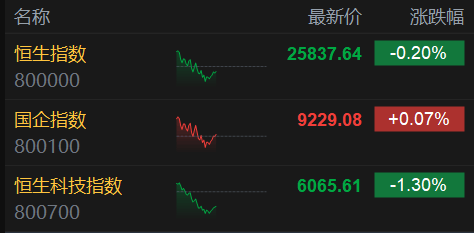
Core Viewpoint - The U.S. semiconductor industry has realized its deep reliance on Chinese rare earth elements, which poses significant challenges for its future operations and competitiveness [1] Group 1 - The U.S. semiconductor sector has been caught off guard by its dependency on China for rare earth materials, which are crucial for manufacturing [1] - This dependency is described as a "China rare earth dependency syndrome," indicating a systemic issue within the industry [1] - The solutions to mitigate this dependency are largely controlled by China, highlighting the geopolitical implications of this reliance [1]
“从汽车到战斗机全是痛点,但特朗普记吃不记打”
Guan Cha Zhe Wang· 2025-10-13 14:49
Core Points - China has implemented new regulations on rare earth exports, significantly impacting global manufacturing industries, particularly in automotive and military sectors [1][4][5] - The new rules require foreign companies to obtain Chinese approval for exporting products containing Chinese rare earth elements or utilizing Chinese technology [4][5][9] - The regulations are seen as a response to increasing trade tensions and are expected to enhance China's influence over critical manufacturing sectors globally [1][5][10] Group 1: New Regulations Overview - The new regulations cover a wide range of products, including those with 0.1% or more Chinese rare earth content, and will take effect on December 1 for certain items [8][9] - Military-related exports will generally not be permitted, and applications for AI technologies with potential military uses will be reviewed on a case-by-case basis [5][9] - The regulations expand the scope of existing procedures, requiring exporters to submit technical drawings and usage explanations for products made with Chinese rare earths [5][9] Group 2: Impact on Industries - The automotive industry is particularly affected, with many manufacturers facing delays in obtaining export licenses for components that rely on Chinese rare earths [6][8] - European automotive suppliers have already halted production due to shortages of rare earth components, highlighting the immediate impact of the new regulations [8][9] - Companies are attempting to reduce reliance on Chinese rare earths by sourcing from alternative suppliers, but the new rules indicate that Chinese jurisdiction extends to these activities as well [9][10] Group 3: Geopolitical Reactions - The new regulations have raised concerns among Western nations, particularly regarding their military supply chains and support for Ukraine [5][10] - The measures are perceived as a counteraction to the EU's tariffs on Chinese electric vehicles, reflecting China's dissatisfaction with recent trade policies [5][10] - China's Ministry of Commerce has stated that these export controls are a normal action to enhance its export control system in response to external pressures [10]
一天内连收四条噩耗,特朗普暴怒?要对中国所有商品加征100%关税
Sou Hu Cai Jing· 2025-10-12 10:16
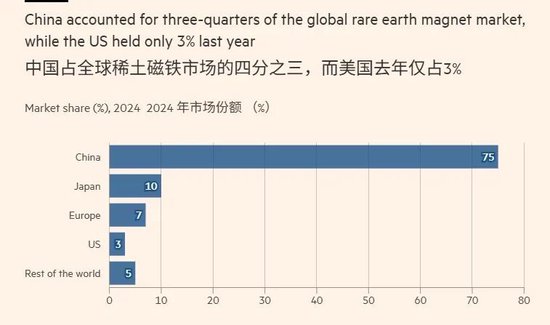
Core Points - The article discusses Trump's announcement of a 100% increase in tariffs on China starting in November, alongside tighter controls on software exports to China, which he claims is a response to China's new rare earth policies [1][3] - China's Ministry of Commerce has announced stricter controls on the export of rare earth materials, which are crucial for various high-tech applications, including semiconductor manufacturing [3][7] - The article emphasizes China's dominant position in the global rare earth market, controlling 40% of the world's rare earth minerals and 70% of the global extraction volume, making it a critical player in this industry [5][8] Summary by Sections Tariff Increase and Software Export Controls - Trump plans to raise tariffs on China by 100% and impose stricter regulations on software exports, claiming it is a necessary measure against China's rare earth policies [1][3] - The new U.S. tariffs and export controls are seen as retaliatory actions against China's tightening of rare earth export regulations [3][8] China's Rare Earth Policy - China's new policy on rare earths covers a wide range of materials and processes, from mining to recycling, indicating a comprehensive approach to control [3][8] - The specific rare earth materials targeted are essential for manufacturing advanced technologies, such as 5G components and semiconductors [7][8] Strategic Implications - The article suggests that China's rare earth export controls are a strategic move to maintain leverage in negotiations with the U.S., countering perceived U.S. aggression in trade talks [10][14] - Experts believe that this escalation could lead to unprecedented confrontations between the U.S. and China, intensifying the ongoing trade war [10][14] Political Context - The article notes that Trump's declining approval ratings and various political challenges may influence his aggressive stance on trade with China [16][20] - The situation is further complicated by Trump's struggles with the Federal Reserve and internal party dynamics, which could impact his administration's approach to trade policies [20][22]
