彩妆

Search documents
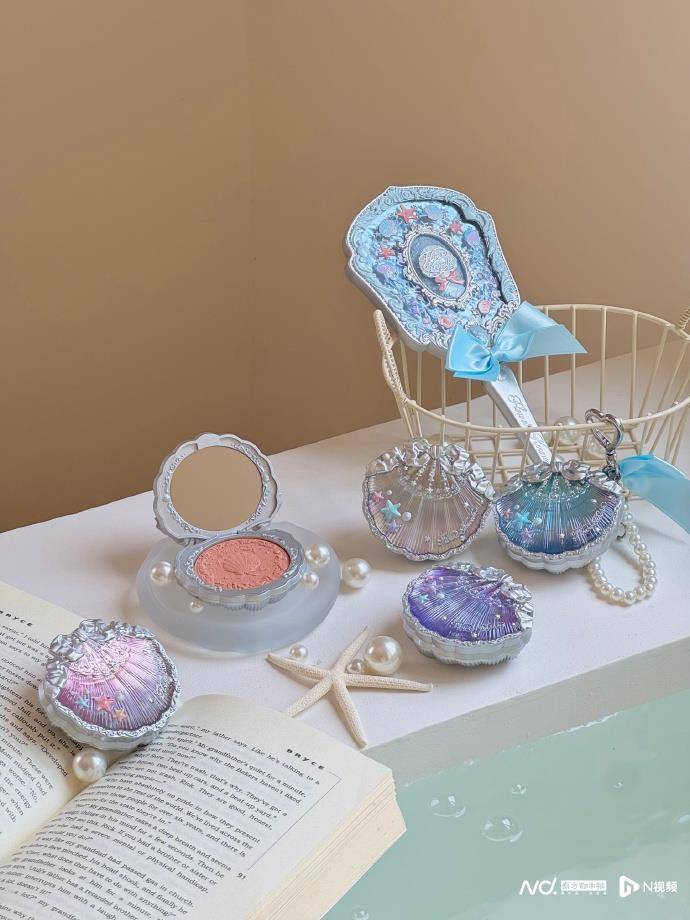
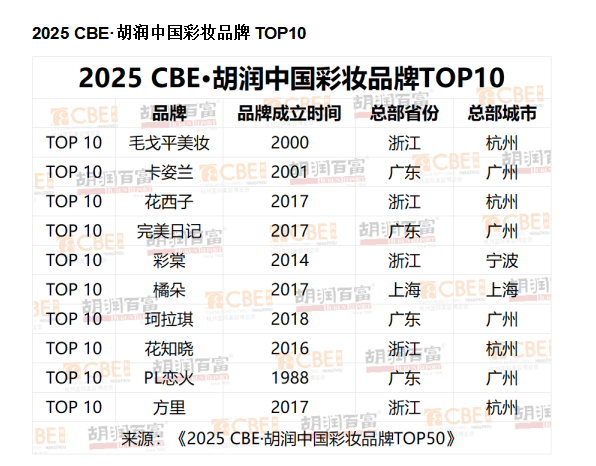
珀莱雅独家投资彩妆品牌花知晓,上半年业绩放缓加码海外市场
Sou Hu Cai Jing· 2025-09-01 10:57
Group 1: Investment and Financing - HuazhiXiao, a domestic cosmetics brand, has completed a Series B financing round exclusively invested by Proya, a leading domestic beauty group [1] - The funds from this financing will be used for global expansion, supply chain integration, and content innovation [1] - HuazhiXiao has only had two rounds of financing since its establishment in 2016, with the previous rounds being a Pre-A round led by Tiantu Investment and an A round in 2021 led by Kunyan Capital [1] Group 2: Market Trends - The domestic cosmetics market has shown signs of recovery in the first half of the year, with retail sales reaching 229.1 billion yuan, a year-on-year increase of 2.9%, significantly improving from the previous year's 1% growth [1] - Only three domestic cosmetics brands have reported formal financing in the first half of this year, indicating a still cautious investment environment in the sector [1] Group 3: Brand Strategy and Market Positioning - HuazhiXiao focuses on integrating two-dimensional culture and youthful aesthetics, targeting a young demographic with its original design cosmetics [3] - The brand has successfully entered international markets, starting with Japan in 2019 and expanding to over ten countries, including the U.S. with a presence in Urban Outfitters in 2024 [4] Group 4: Proya's Strategic Moves - Proya reported a revenue of 5.362 billion yuan in the first half of the year, a year-on-year increase of 7.21%, but with a noticeable decline in growth rate compared to previous years [4] - The company plans to list on the Hong Kong Stock Exchange to accelerate its international strategy and enhance overseas financing capabilities [4] - Proya's chairman has indicated a focus on overseas acquisitions, particularly in the fields of children's products, perfumes, and men's skincare, as a strategy to seek new growth opportunities [4]


丸美生物(603983):战略投入致利润端低于预期,收入端持续高增
Shenwan Hongyuan Securities· 2025-08-25 14:45
Investment Rating - The investment rating for the company is "Buy" (maintained) [2] Core Views - The company's revenue for H1 2025 was 1.769 billion yuan, representing a year-on-year growth of 30.8%, while the net profit attributable to the parent company was 186 million yuan, with a year-on-year increase of 5.2%. The second quarter of 2025 saw revenue of 923 million yuan, up 33.5%, but net profit decreased by 23.1% [7][10] - Increased sales expenses impacted overall profit performance, with a sales expense ratio of 56.5% in H1 2025, up 3.4 percentage points year-on-year. The net profit margin was 10.5%, down 2.6 percentage points year-on-year [7][13] - The Marubi brand generated revenue of 1.25 billion yuan, a year-on-year increase of 34.4%, driven by strategic investments in product development and marketing [7] - The PL brand achieved revenue of 516 million yuan, a year-on-year increase of 23.87%, indicating a stable development phase [7] - Online channels accounted for 88.87% of total revenue in H1 2025, with a year-on-year growth of 37.85%, while offline channels saw a decline of 7.07% [7] - The company is expected to continue its multi-brand and multi-channel strategy, focusing on collagen-based skincare products and innovative makeup items [7] Financial Data and Profit Forecast - Total revenue projections for 2025 are estimated at 3.815 billion yuan, with a year-on-year growth rate of 28.5%. The net profit attributable to the parent company is forecasted to be 418 million yuan, reflecting a growth rate of 22.4% [6] - The gross profit margin is expected to be 73.9% in 2025, with a return on equity (ROE) of 11.6% [6] - The company has slightly adjusted its profit forecasts for 2025-2026, now expecting net profits of 420 million yuan and 530 million yuan for 2025 and 2026, respectively [7]

城市24小时 | 潮玩之都 离属于自己的“Labubu”还有多远?
Mei Ri Jing Ji Xin Wen· 2025-08-11 16:15
Group 1: Core Insights - Dongguan plans to allocate 120 million yuan in industrial support funds to enhance the development of the trendy toy and animation industry through five key areas: industrial ecology, market expansion, content creation, animation industry, and element assurance [1] - The policy aims to support companies in improving original design capabilities, creating cultural landmarks related to trendy toys, developing "trendy toys + industrial tourism," and fostering top-quality original animation products [1][3] - Dongguan is actively encouraging global leading trendy toy and animation companies, well-known IPs, and platform giants to establish headquarters, regional centers, and R&D bases in the city, with a maximum subsidy of 5 million yuan [1] Group 2: Industry Landscape - Dongguan hosts over 4,000 toy manufacturing companies and nearly 1,500 upstream and downstream supporting enterprises, making it the largest toy export base in China [2] - According to the "2024 China Trendy Toy and Animation Industry Development Report," the trendy toy industry in China accounts for approximately 20% of the global market, with nearly 85% of trendy toy products produced in Dongguan [2] - Dongguan's trendy toy industry primarily focuses on OEM production, with the overall industry structure remaining in low value-added segments, contributing only 10% to 20% [2][3] Group 3: Future Directions - Dongguan is striving to extend its trendy toy industry towards the ends of the "smile curve," focusing on creative R&D and IP incubation [3] - The latest measures include specific initiatives to support the creation of top-quality original animation products, the establishment of a specialized fund for the trendy toy and animation industry, and enhanced talent cultivation and recruitment [3][4]
玩转消费新风尚 基金经理重塑认知进化
Zhong Guo Zheng Quan Bao· 2025-08-08 07:19
Core Viewpoint - The rise of new consumption trends in China is reshaping investment logic, with traditional consumer stocks lagging while new brands gain significant market attention and valuation [1][2][4] Group 1: New Consumption Trends - The stock prices of companies representing new consumption trends have surged, with Old Peking Gold increasing over 180% and Pop Mart rising over 110% this year [2] - The emergence of "Guochao" (national trend) brands, particularly in the tea sector, has attracted significant investment, with brands like Gu Ming and Mi Xue Bing Cheng seeing substantial market valuations [2][5] - The Z generation's preferences are driving a shift in consumption, focusing on emotional and experiential value rather than just utility [4][5] Group 2: Investment Opportunities - Fund managers have identified investment opportunities in new consumption stocks, with significant increases in holdings for brands like Pop Mart and Mao Ge Ping [3][4] - The performance of funds that have invested in these new consumption brands has been strong, with some achieving returns close to 27% this year [3] - The changing consumer habits and preferences are leading to a demand for high-quality, emotionally resonant products, creating opportunities for brands that can meet these needs [5][9] Group 3: Market Dynamics and Valuation Concerns - There is a growing debate about the sustainability of high valuations for new consumption stocks, with concerns about potential valuation bubbles [8] - Despite high growth rates, some analysts argue that traditional valuation models may not apply to these new brands, which often focus on IP-driven growth [8] - The market is witnessing a shift where both high return on equity (ROE) and high gross merchandise volume (GMV) are becoming important metrics for evaluating new consumption stocks [6][8] Group 4: Future Investment Directions - Future investment opportunities are expected to arise from the rise of young consumer groups and the shift towards emotional consumption, particularly in sectors like IP derivatives and jewelry [9][10] - The new snack sector is also seen as a promising area, with companies adapting to consumer preferences and benefiting from new distribution channels [9] - Policies encouraging "trade-in" programs are expected to positively impact sectors like home appliances and automotive, providing further investment opportunities [10]
彩妆品牌跨界做护肤,真实力还是大冒险?
FBeauty未来迹· 2025-07-17 12:14
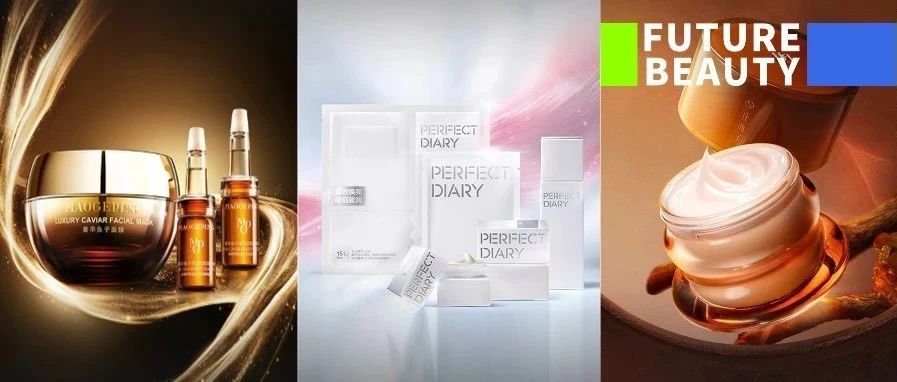
Core Viewpoint - Leading cosmetic brands are transitioning from "strategic exploration" to "systematic attack" in the skincare sector, indicating a significant shift in their business strategies [2][4]. Group 1: Brand Strategies - Major brands like Mao Geping, Huaxizi, and Perfect Diary are leveraging their brand DNA and market insights to develop systematic strategies for entering the skincare market, focusing on high-end positioning, technological innovation, and concept extension [4]. - Mao Geping has established a comprehensive skincare line, achieving a revenue of 3.885 billion yuan in 2024, with skincare contributing 1.429 billion yuan, a year-on-year growth of 23.19%, accounting for 36.8% of total revenue [4]. - Perfect Diary is centered on "technological iteration," having launched its first generation of biomimetic membrane technology in 2023 and planning to upgrade to the third generation by 2025 [5][7]. Group 2: Product Development - Perfect Diary has expanded its product range to include a "biomimetic membrane" skincare series, integrating makeup and skincare, thus establishing a unique technical barrier [7]. - Huaxizi has developed a database of over 100 floral formulas, successfully extracting and preparing 50 types of floral ingredients, which supports its "flower-based skincare" concept [8][9]. - The "气色双生莲萃" series from Huaxizi includes various products such as creams and serums, combining Eastern plant extracts with modern skincare technology [8]. Group 3: Market Trends - The skincare market in China is significantly larger than the color cosmetics market, with skincare accounting for approximately 70% of the total cosmetics market, valued at over 700 billion yuan, compared to the color cosmetics market at around 88 billion yuan [16]. - Consumer demand is evolving, with over 60% of consumers expecting makeup products to also provide skincare benefits, indicating a trend towards "makeup and skincare integration" [16][17]. Group 4: Challenges and Competition - The transition of color cosmetic brands into skincare faces challenges, including establishing consumer trust and overcoming the perception of expertise in skincare [21][22]. - The skincare market is highly competitive, with international giants dominating the high-end segment, while domestic brands are rapidly emerging with a focus on quality-price ratio and efficacy [22][24]. - The complexity of skincare product formulation requires significant R&D investment and a robust quality control system, posing a challenge for brands traditionally focused on color cosmetics [22][24].

普通化妆品宣称“孕妇可用”,彩妆品牌唐魅可虚假宣传被罚
Nan Fang Du Shi Bao· 2025-07-15 05:09
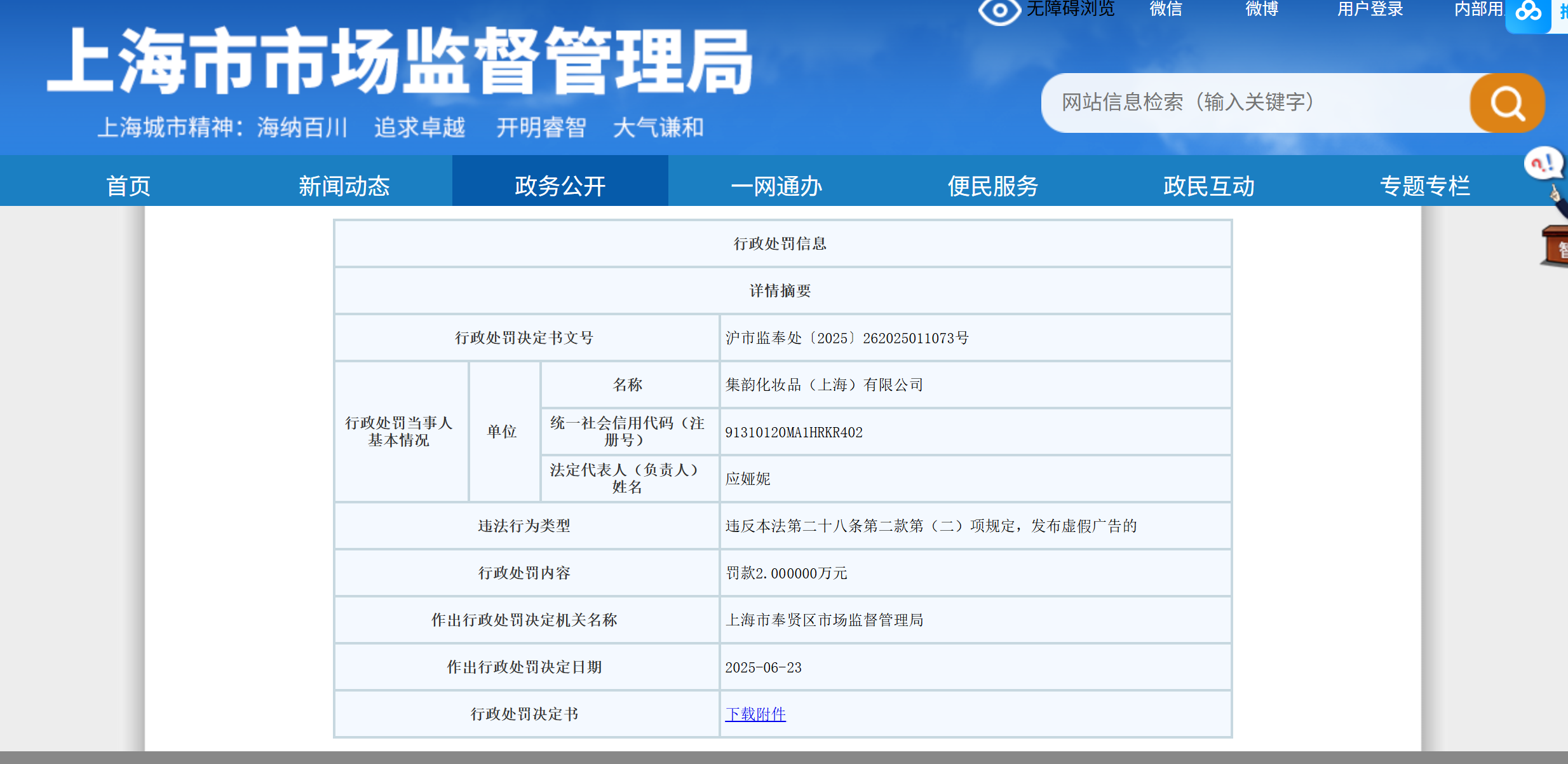
Core Viewpoint - The new makeup brand TOMMARK's parent company, Jiyun Cosmetics (Shanghai) Co., Ltd., was fined for misleading advertising by claiming its ordinary cosmetics were suitable for pregnant women, which violates advertising laws [1][3]. Group 1: Company Overview - TOMMARK was established in 2019 in Shanghai and is known for its "skin-nourishing base makeup" concept, quickly gaining popularity [6]. - The brand's best-selling product, the "Mousse Cushion," sold over 50,000 units on its first day of launch in January 2022 [6]. - TOMMARK collaborates with top influencers, such as Li Jiaqi, and has achieved significant sales rankings on platforms like Tmall [6]. Group 2: Regulatory Actions - The Shanghai Municipal Market Supervision Administration fined Jiyun Cosmetics 20,000 yuan for advertising its product as suitable for pregnant women, which is misleading since the product is classified as ordinary cosmetics [3]. - The company was found to have violated Article 28 of the Advertising Law of the People's Republic of China, which prohibits deceptive advertising [3]. - Other cosmetic companies have faced similar penalties for making claims related to pregnancy suitability, indicating a trend of regulatory scrutiny in this area [6][7].
核心人物相继离职,花西子还好吗?
Bei Jing Shang Bao· 2025-07-07 13:23
Core Viewpoint - The recent departure of multiple key management personnel at Huaxizi, including co-founder Feiman, raises concerns about the company's stability and future growth amidst declining performance and market competition [1][3][5]. Management Turmoil - Feiman, a crucial decision-maker since the brand's inception, has officially left Huaxizi, citing personal health reasons. His departure follows a trend of key personnel exits, including visual partner Wenyuan and former Chief Product Officer Shang Lu [3][4]. - The management changes are perceived as a response to Huaxizi's declining performance and lack of strategic direction, with industry experts suggesting that the competitive landscape and internal conflicts may have contributed to these departures [4][5]. Performance Decline - Huaxizi experienced significant growth shortly after its establishment in 2017, achieving sales of 5.4 billion yuan in 2021, but has since faced a downturn, particularly after the "79 yuan eyebrow pencil incident" [6][7]. - Recent sales data indicates a sharp decline, with flagship store sales dropping from 1 million to 250 million yuan to between 75,000 and 100,000 yuan shortly after September 11, 2023. Additionally, the company's online GMV for 2024 is projected at 2.393 billion yuan, a year-on-year decrease of 21.19% [6][7]. Strategic Adjustments - In response to its challenges, Huaxizi is attempting to recover by launching new products and expanding its offline presence, including opening its first store in Shanghai [7]. - Experts suggest that while Huaxizi has potential for growth, its reliance on online channels and the need for a robust brand strategy are critical for its future success [7].
义乌口红一战封神,狂吻30次不掉色!东南亚姑娘:快焊我嘴上
Sou Hu Wang· 2025-06-17 14:36
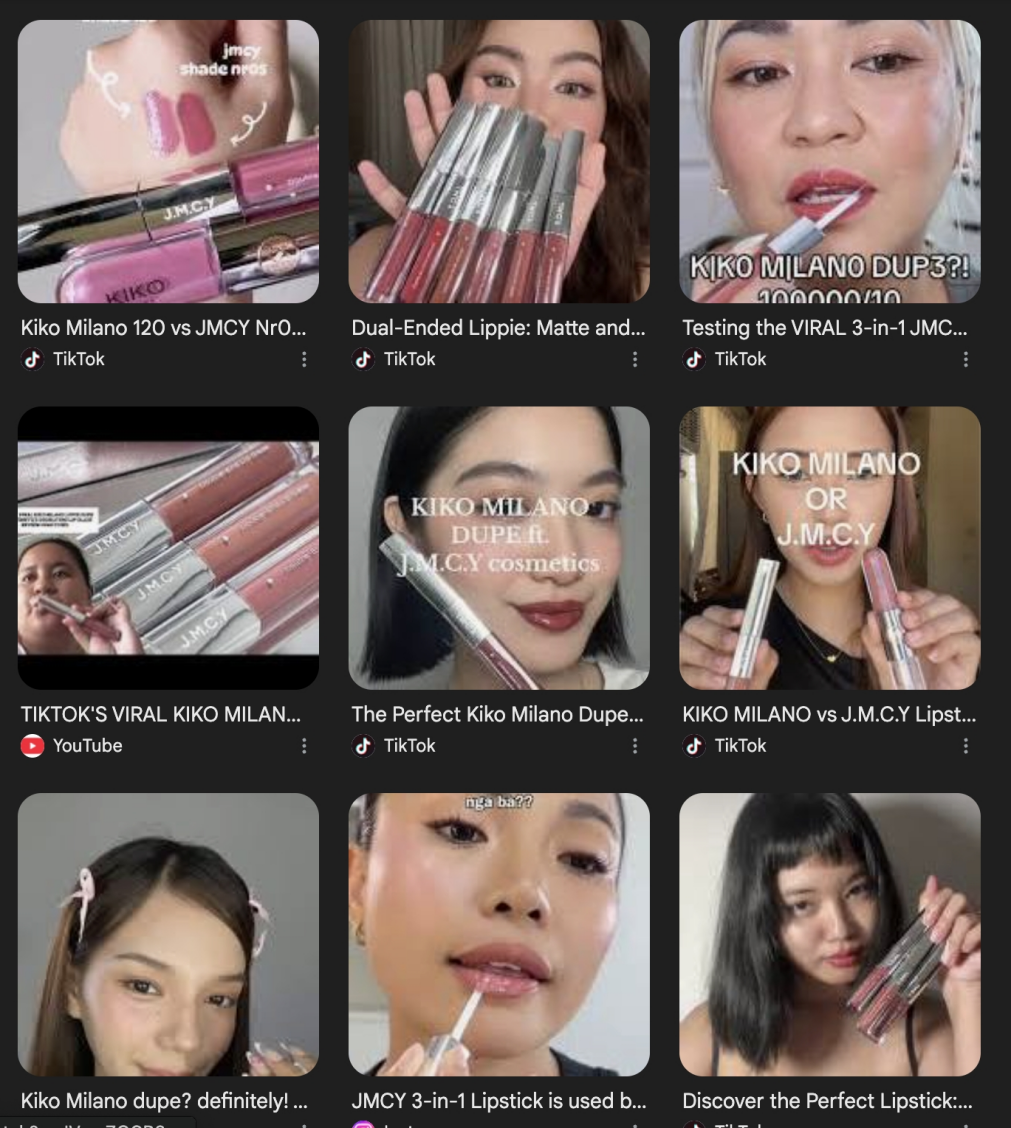
Core Insights - A Chinese lip gloss with a unique dual-ended design has gained significant popularity in Southeast Asia, particularly in the Philippines, due to its high quality and affordability [1][7][8] - The product's success is attributed to effective marketing strategies on TikTok, which have led to rapid sales growth and increased brand recognition [7][14][22] Product Features - The lip gloss features a three-in-one design that includes mirror, matte, and waterproof capabilities, making it resistant to sweat and water [2][7] - It has received positive feedback for its long-lasting wear, with users reporting that it does not smudge or fade even after multiple uses [16][18] Sales Performance - The product achieved over $100,000 in sales within a short period, with a single TikTok video reaching 28.5 million views [3][14] - JMCY, the brand behind the product, reported monthly sales exceeding $10 million in the Philippines, with orders increasing rapidly [7][19] Market Dynamics - Southeast Asia, with a consumer base of 650 million and a rapidly growing e-commerce market, has become a key target for Chinese brands looking to expand internationally [8][9] - The region's cultural similarities and increasing internet penetration make it an attractive market for Chinese companies [8] Strategic Decisions - Initially targeting Vietnam, JMCY faced challenges due to strong competition from established international brands, leading to a strategic pivot towards the Philippines [9][10] - The company leveraged TikTok's platform for market research and product testing, allowing them to tailor their offerings to local consumer preferences [11][12] Operational Improvements - JMCY established local warehouses in the Philippines to enhance delivery speed, resulting in a 30% increase in repurchase rates [21][22] - The brand's operational strategy now includes a triad of domestic production, overseas warehousing, and local distribution to improve efficiency [21] Future Plans - Following success in the Philippines, JMCY is considering expansion into other Southeast Asian markets, including Thailand and Vietnam, to further capitalize on its growing brand recognition [22]
中国品牌应弘扬中国商业文化的精髓——既不提倡低质低价品牌,也不提倡高价奢侈品牌
Jing Ji Guan Cha Bao· 2025-06-09 10:32
Core Viewpoint - The transformation of China's real economy into a brand economy is essential for achieving modernization goals, with a focus on quality and cultural values rather than luxury and exclusivity [1][2]. Group 1: Importance of Brand Economy - Brand economy represents the highest form of the real economy and is a crucial support for economies of scale [1]. - Achieving a per capita GDP of $30,000 to $50,000 in China could lead to a third of the economic structure being based on economies of scale, similar to the U.S. [1]. Group 2: Traditional Commercial Culture - Chinese brands should inherit the traditional commercial culture of "genuine goods, quality assurance, and fair pricing" [2][3]. - Historical insights from Chinese commercial culture emphasize the harmfulness of solely pursuing luxury and exclusivity [2]. Group 3: Current Brand Development - Chinese companies have developed the capability to produce high-quality products, with examples like Huawei and BYD leading globally [3]. - Brands should focus on being recognized for their intrinsic value rather than competing on low quality or high luxury [3]. Group 4: Value Output - Brands should prioritize beneficial contributions to society and individuals over luxury and possession [4]. - The essence of a brand lies not only in product quality but also in the values and philosophies it represents [4]. Group 5: Risks of Luxury Branding - There is a concerning trend where some Chinese brands adopt a luxury-oriented approach, often leading to exaggerated claims and a disconnect with consumers [6]. - The focus on luxury branding can detract from the traditional Chinese business spirit and hinder long-term brand development [6]. Group 6: Innovation Over Price Competition - Relying on low-cost strategies has led to a dependency on price wars, which undermines brand value and quality perception [7][8]. - Brands should build competitive advantages through innovation rather than price competition, as seen in the decline of companies like Jumei [8]. Group 7: Impact of E-commerce and Live Streaming - The rise of entertainment-driven e-commerce and live streaming can harm brand value by prioritizing sensationalism over product quality [9][10]. - Negative consumer perceptions can arise from low-quality promotional tactics, leading to a loss of brand trust [11]. Group 8: Long-term Brand Building - Brand building should focus on long-term strategies rather than quick profits through transient marketing tactics [12][13]. - Sustainable brand development requires continuous innovation and a commitment to quality across all business aspects [13]. Group 9: Global Positioning of Chinese Brands - The positioning of Chinese brands in the global market reflects the influence of Chinese culture and values [14]. - Successful global brands, like Apple, demonstrate the importance of quality and user experience, aligning with traditional Chinese commercial values [14].
大爆发!多股“20cm”涨停
新华网财经· 2025-06-09 04:59
Core Viewpoint - The A-share market shows strong performance with major indices rising, particularly in the pharmaceutical and financial sectors, indicating potential investment opportunities in these areas [1][2][12]. Market Performance - A-shares saw a collective rise with the Shanghai Composite Index returning to 3400 points, closing at 3393.26, up 0.23% [1]. - The Shenzhen Component and ChiNext Index increased by 0.62% and 1.22% respectively, with a total market turnover of 838.6 billion yuan, an increase of 75.5 billion yuan from the previous trading day [1]. - Nearly 3700 stocks in the market experienced gains, with significant contributions from innovative drug and solid-state battery sectors [2][7]. Sector Highlights - The pharmaceutical sector exhibited strong growth, with stocks like Hai Chen Pharmaceutical and Rui Zhi Pharmaceutical hitting the daily limit of 20% [7][12]. - The financial sector also showed resilience, with major players like Xinda Securities reaching their daily limit, and other firms like Yong'an Futures and Ruida Futures also hitting the limit [15][16]. New Stock Trends - In the Hong Kong market, newly listed stocks are experiencing significant gains, with companies like Mixue Group and Mao Ge Ping seeing increases of over 180% and 270% from their issue prices respectively [3][20]. - The new consumption concept stocks, such as Gu Ming and Blu-ray, have also shown substantial growth since their listings, with increases of over 170% and 200% respectively [20][21]. Policy and Industry Outlook - The National Medical Products Administration has approved 11 new innovative drugs, which is expected to boost the performance of related companies as they prepare for upcoming medical insurance negotiations [12]. - Analysts suggest that the pharmaceutical sector is poised for a recovery, with structural opportunities remaining, particularly in the innovative drug industry and related sectors [12][21]. Financial Sector Developments - The approval of the change of actual controllers for several financial institutions by the China Securities Regulatory Commission is expected to enhance financial resource allocation efficiency and strengthen the financial system's risk resistance [18]. - Central Huijin's acquisition of stakes in major financial institutions is anticipated to accelerate industry reforms and increase the number of integrated brokerage licenses [18].