智能手机

Search documents
手机全面涨价,这回有得等了
远川研究所· 2026-03-23 13:10
Core Viewpoint - The recent price increases in smartphones, initiated by OPPO and followed by other brands, are primarily driven by the soaring costs of storage chips, which have seen a dramatic price surge of 90%-95% since last year due to increased demand from AI infrastructure [7][8]. Price Adjustments - OPPO has adjusted prices for its A series, K series, and some OnePlus models, while vivo has also raised prices for certain models. Other brands like Redmi and Honor have made slight price increases as well [7][8]. - The price adjustments are particularly pronounced in the mid-range and low-end segments, with many affected models originally priced between 1500 to 2500 yuan [9][10]. Cost Structure Analysis - Smartphones' core components are categorized into elastic costs (screen, camera, processor) and rigid costs (battery, memory, storage). The latter, particularly storage chips, have a significant impact on the overall cost structure, especially for mid-range devices [9][10]. - For example, the storage cost for an iPhone 17 Pro Max is approximately 300 yuan, which is negligible compared to its overall price, but for a mid-range device priced around 2000 yuan, the storage cost can account for as much as 43% of the BOM cost [11][12]. Market Dynamics - The current storage price surge is reminiscent of the 2016-2018 cycle, which led to a significant reshaping of the smartphone market, particularly affecting lower-end brands that are more sensitive to price changes [14][15]. - The concentration of market power has shifted, with top brands like Xiaomi, OPPO, and Huawei gaining more control, while many second-tier brands have exited the market due to their inability to cope with rising costs [18][24]. Supply Chain Challenges - The supply chain dynamics have changed, with major storage chip manufacturers prioritizing higher-margin products for data centers over smartphone components, leaving smartphone manufacturers with less negotiating power [24][25]. - As a result, the burden of increased costs is being passed on to consumers, as manufacturers struggle to maintain margins without the ability to transfer costs to suppliers or competitors [25][27].




鲜猪肉竟是数个月前屠宰?山姆:是失误!网友称品质「不如菜市场」;马斯克宣布:进军2nm芯片制造!挑战台积电三星;OpenAI扩招至8000人
雷峰网· 2026-03-23 00:30
Group 1 - Sam's Club faced controversy over selling fresh pork that was allegedly slaughtered months prior, leading to consumer distrust and claims of "fraudulent sales" [4][5] - Despite the food safety issues, Sam's Club is rapidly expanding in China, with Walmart reporting a 21.67% increase in net sales in the region [5] - OpenAI plans to significantly expand its workforce, aiming to hire 3,500 new employees by the end of 2026, nearly doubling its current staff [36][37] Group 2 - Yu Minhong emphasized that Dongfang Zhenxuan is a product company rather than a live-streaming company, focusing on providing valuable products and services [8][9] - MiniMax is set to welcome Hu Weiqi, former general manager of Huawei Cloud Singapore, to enhance its B2B operations and market presence [20] - Xiaopeng Motors reported a revenue of 22.25 billion yuan for Q4 2025, with a significant focus on its Turing chip, which has already shipped over 200,000 units [26][27] Group 3 - Tesla announced plans to build a massive chip manufacturing facility, TeraFab, aiming to produce 100 to 200 billion chips annually, reducing reliance on external suppliers [38][39] - Huawei's Mate 80 series has achieved sales of over 4.53 million units, with improved supply chain capabilities for its Kirin 9030 chip [23][24] - Alibaba's chairman, Cai Chongxin, highlighted the importance of AI application in various sectors, aiming to leverage its Qwen model for market opportunities [33][34] Group 4 - Lightelligence, a Shanghai-based AI optical computing unicorn, plans to go public in Hong Kong, seeking to raise $300 to $400 million [56] - Yushu Technology's IPO application has been accepted, aiming to raise over 4.2 billion yuan, focusing on humanoid robot development [53][54] - OpenAI's recruitment strategy includes introducing "technical ambassadors" to help clients effectively deploy AI tools, enhancing commercial conversion [36][37]

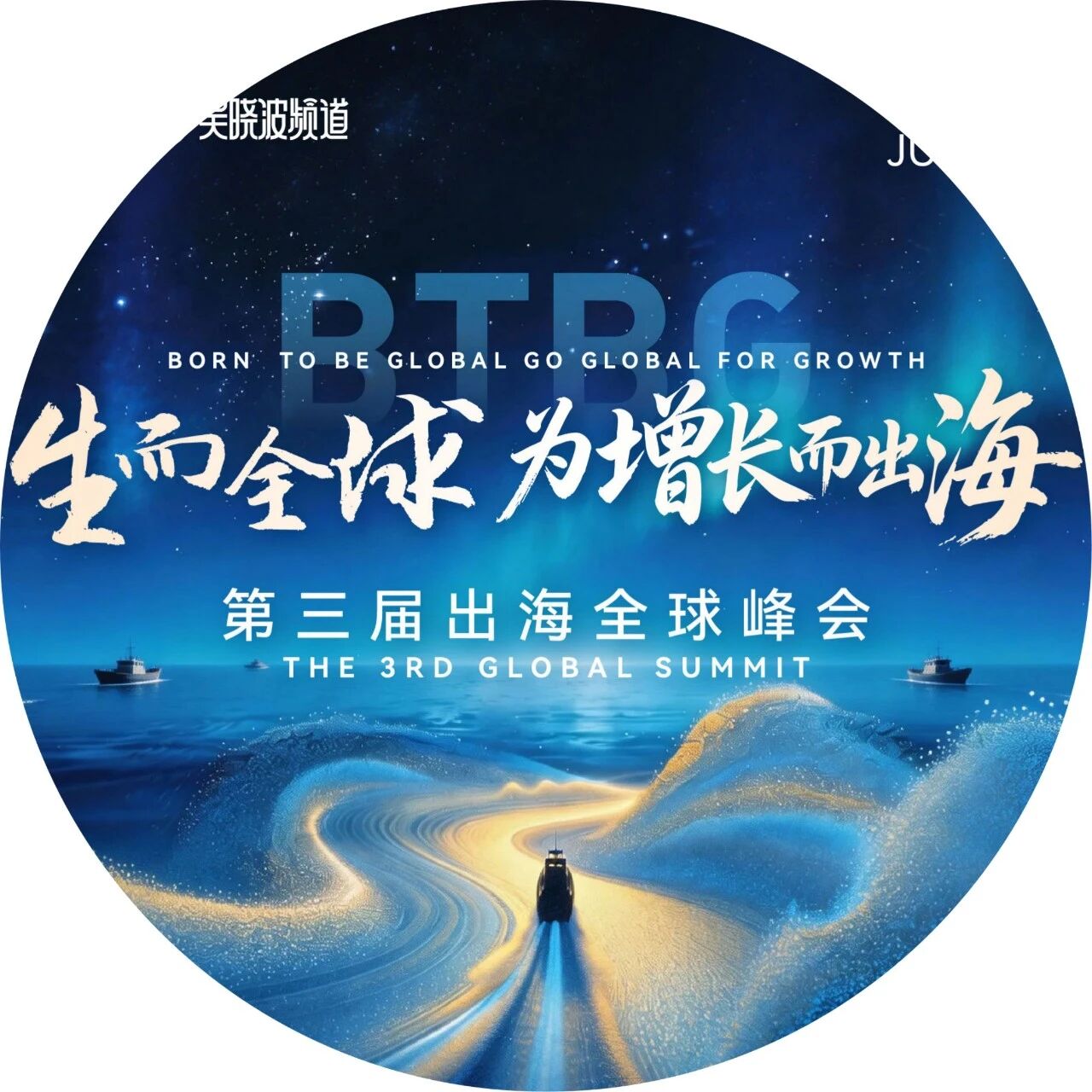
向全球要增长,第三届出海全球峰会6月开幕
吴晓波频道· 2026-03-23 00:21
Core Viewpoint - The article emphasizes the growing trend of Chinese companies going global, driven by the need for higher profits, larger markets, and more opportunities, marking a shift from being pushed to proactively seeking international expansion [3][10][11]. Group 1: Current Trends in Global Expansion - In 2024, China's foreign direct investment reached $192.2 billion, with 34,000 domestic investors establishing 52,000 overseas entities across 190 countries and regions [3]. - By 2025, the import and export volume of private enterprises reached 26.04 trillion yuan, a year-on-year increase of 7.1%, accounting for 57.3% of the total import and export volume [4]. - The article highlights the diverse products and services that Chinese private enterprises are exporting, including clothing, cosmetics, photovoltaic panels, and electric vehicles, contributing to significant growth figures [5]. Group 2: Shifts in Entrepreneurial Mindset - Three years ago, the sentiment among entrepreneurs was largely reactive, with many feeling compelled to go global due to external pressures such as trade wars and market demands [8][9]. - By 2025, the mindset shifted to a more proactive approach, with entrepreneurs actively seeking international opportunities for growth and profitability [10][11]. Group 3: Insights from Global Markets - The article discusses various international markets, such as Indonesia, where a young consumer base presents significant demand, and Ethiopia, where there are supply gaps in essential goods [11][12]. - In regions like the Middle East, ongoing infrastructure projects create a continuous demand for construction materials and home furnishings, indicating potential growth areas for Chinese companies [12]. Group 4: Technological Advancements and New Business Models - The narrative highlights a transformation in China's global economic role, moving from a "world factory" to a leader in technology and innovation, with companies now exporting technology, patents, and operational services [16]. - The article references a historical perspective on China's economic positioning, illustrating how the country has evolved from a low-margin manufacturing base to a more sophisticated global player [15]. Group 5: Upcoming Global Summit - The third "Born to be Global" summit will focus on the theme "Go Global for Growth," aiming to explore growth paths and strategies for Chinese companies in a multipolar world [20][21]. - The summit will feature discussions on various topics, including supply chain restructuring, AI empowerment, and brand globalization, providing a platform for sharing experiences and strategies [21][22].
工作被AI抢了?答案可能和你想的不一样
虎嗅APP· 2026-03-21 13:20
Core Viewpoint - The article discusses the impact of AI on jobs, emphasizing that technological advancements do not immediately lead to job displacement but rather redefine job roles and organizational structures over time [4][10][43]. Group 1: Historical Context of Job Displacement - The emergence of ATMs initially led to the belief that bank tellers would be replaced, but instead, their roles evolved to focus more on customer service and product sales [6][13][24]. - Over time, however, the number of bank tellers did decline significantly, primarily due to the introduction of smartphones and mobile banking, which fundamentally changed how customers interact with banking services [14][27][30]. Group 2: Mechanisms of Job Transformation - The introduction of ATMs reduced the need for tellers in specific tasks but did not eliminate the role entirely, as the banking system remained centered around physical branches [21][22]. - In contrast, the iPhone and mobile banking created a new paradigm where many tasks previously handled by tellers became obsolete, leading to a significant reduction in teller positions [31][32][39]. Group 3: Implications for AI - AI is currently viewed as a tool that can enhance efficiency and reshape job content, similar to how ATMs functioned, but it may not lead to immediate large-scale job losses [38][43]. - The more profound change may occur when AI fosters new organizational structures and workflows, akin to the transformation brought by the iPhone, potentially rendering many existing jobs unnecessary [39][40][43].

通信行业月报:英伟达投资Lumentum及Coherent,国内云厂商上调AI算力价格
Zhongyuan Securities· 2026-03-20 10:24
Investment Rating - The report maintains an "Outperform" investment rating for the communication industry [6] Core Insights - The communication industry index underperformed the CSI 300 index in February 2026, with a decline of 0.37% [5][12] - Lumentum forecasts a 40% CAGR for the optical communication market from 2025 to 2030, with the market size expected to reach $90 billion by 2030 [5][6] - Major North American cloud providers are projected to have a combined capital expenditure exceeding $660 billion in 2026, representing a year-on-year growth of 61% [5][22] - Domestic cloud providers, including Alibaba Cloud and Baidu Smart Cloud, have announced price increases for AI computing power products due to rising costs [5][39] - The smartphone DRAM prices increased by over 50% quarter-on-quarter, while NAND prices surged by over 90% [5] - The "14th Five-Year Plan" outlines the construction of 500,000 5G-A base stations and emphasizes the deployment of a 10G optical network [5][6] Summary by Sections Market Review - The communication industry index fell by 0.37% in February 2026, outperforming the ChiNext index but underperforming the Shanghai Composite and CSI 300 indices [12] - In February, sub-sectors such as cables, value-added services, and network optimization saw increases of 25.63%, 8.18%, and 6.50% respectively [14] Industry Tracking - The global cloud infrastructure is seeing significant investment, with major players like Amazon, Microsoft, Google, and Meta increasing their capital expenditures substantially [22][23][24][25] - The global computing power market is expected to grow rapidly, with a projected total data generation of 213.56 ZB in 2025 [41] - China's computing power scale reached 962 EFlops by mid-2025, accounting for approximately 21% of the global total [42] Investment Recommendations - The report suggests focusing on companies involved in optical chips, optical modules, AI smartphones, and telecom operators [6]
通信行业月报:英伟达投资Lumentum及Coherent,国内云厂商上调AI算力价格-20260320
Zhongyuan Securities· 2026-03-20 09:19
Investment Rating - The report maintains an "Outperform" investment rating for the communication industry [6] Core Insights - The communication industry index underperformed the CSI 300 index in February 2026, with a decline of 0.37% [5][12] - Lumentum forecasts a 40% CAGR for the optical communication market from 2025 to 2030, with a projected market size of $90 billion by 2030 [5][6] - Major cloud providers in North America are expected to have a combined capital expenditure exceeding $660 billion in 2026, representing a 61% year-on-year growth [5][22] - Domestic cloud providers, including Alibaba Cloud and Baidu Smart Cloud, have announced price increases for AI computing power products due to rising costs [5][39] Summary by Sections Market Review - The communication industry index fell by 0.37% in February 2026, outperforming the ChiNext index but underperforming the Shanghai Composite and CSI 300 indices [5][12] - In the communication sector, sub-sectors such as cables, value-added services, and network optimization saw increases of 25.63%, 8.18%, and 6.50% respectively [14] Industry Tracking - The global cloud infrastructure market is experiencing significant growth, with major players increasing investments in AI and cloud infrastructure to meet rising demand [22][28] - The total global computing power is projected to grow at a rate exceeding 60% over the next five years, with smart computing power expected to dominate [41] - The ICT market is forecasted to reach approximately $5.9 trillion globally by 2025, with a CAGR of 7% [46] Investment Recommendations - The report suggests focusing on companies involved in optical chips, optical modules, and AI smartphones, as well as major telecom operators like China Mobile, China Telecom, and China Unicom [6]
小米集团-W:大模型和新一代SU7定价超预期-20260320
HTSC· 2026-03-20 05:45
Investment Rating - The report maintains a "Buy" rating for Xiaomi Group with a target price of HKD 43 [7][5]. Core Insights - Xiaomi's recent product launch, including the new SU7 model and the Mimo-V2-Pro AI model, exceeded market expectations in terms of pricing and features, indicating strong competitive positioning in the AI era [1][2]. - The SU7 model features significant upgrades and competitive pricing, which is approximately HKD 20,000 lower than its main competitor, Tesla, enhancing its market appeal [3]. - Xiaomi's commitment to AI development is underscored by a projected investment of over RMB 60 billion in the next three years, positioning the company as a key player in the AI landscape [2]. Summary by Sections Product Launch - Xiaomi's spring product launch introduced the SU7 model with prices set at HKD 219,900, HKD 249,900, and HKD 303,900, reflecting only a HKD 4,000 increase from the previous generation [1]. - The Mimo-V2-Pro AI model, featuring 1 trillion parameters, ranks 8th globally in performance and offers significant cost advantages compared to competitors [2]. Automotive Segment - The new SU7 model has seen strong initial demand, with over 15,000 orders placed within 34 minutes of launch, indicating robust market interest [3]. - The report anticipates a total delivery of 410,000 vehicles for the year, supported by improvements in sales and production processes [3]. Financial Projections - The report forecasts non-GAAP net profits of RMB 388.9 billion, RMB 345.1 billion, and RMB 453.7 billion for 2025-2027, respectively [5]. - The target price of HKD 43 corresponds to a 29x PE ratio for 2026, reflecting confidence in Xiaomi's growth trajectory [5][37]. Ecosystem Development - Xiaomi's return to the PC market with the Xiaomi Book Pro and the launch of the Watch S5 further enhance its "human-vehicle-home" ecosystem strategy, addressing gaps in its product offerings [4].
小米集团-W(01810):大模型和新一代SU7定价超预期
HTSC· 2026-03-20 05:05
Investment Rating - The report maintains a "Buy" rating for Xiaomi Group with a target price of HKD 43 [5][7]. Core Insights - Xiaomi's recent product launch, including the new SU7 model and the Mimo-V2-Pro AI model, exceeded market expectations in terms of pricing and features, indicating strong competitive positioning in the AI era [1][2]. - The SU7 model features significant upgrades and competitive pricing, which is approximately HKD 20,000 lower than its main competitor, Tesla, enhancing its market appeal [3]. - Xiaomi's commitment to AI development is underscored by a projected investment of over RMB 60 billion in the next three years, positioning the company as a key player in the AI landscape [2]. Summary by Sections Product Launch - Xiaomi's spring product launch showcased the new SU7 model with prices set at HKD 219,900, HKD 249,900, and HKD 303,900, reflecting only a HKD 4,000 increase from the previous generation [1]. - The Mimo-V2-Pro AI model, featuring 1 trillion parameters, ranks 8th globally in performance, demonstrating significant cost advantages compared to competitors [2]. Automotive Segment - The new SU7 model has seen strong initial demand, with over 15,000 orders within 34 minutes of launch, indicating robust market interest [3]. - The report anticipates a total delivery of 410,000 vehicles for the year, supported by improvements in sales and production processes [3]. Financial Projections - The report forecasts non-GAAP net profits of RMB 388.9 billion, RMB 345.1 billion, and RMB 453.7 billion for 2025-2027, respectively [5]. - The target price of HKD 43 corresponds to a 29x PE ratio for 2026, reflecting confidence in Xiaomi's growth trajectory [5][37]. Ecosystem Development - Xiaomi's return to the PC market with the Xiaomi Book Pro and the launch of the Watch S5 further solidify its "human-vehicle-home" ecosystem strategy, enhancing its competitive edge [4].
信达国际控股港股晨报-20260320
Xin Da Guo Ji Kong Gu· 2026-03-20 03:42
Market Overview - The Hang Seng Index is facing resistance at 26,500 points due to ongoing geopolitical uncertainties and potential fluctuations in international oil prices, with a short-term economic growth target adjustment in mainland China to 4.5% to 5% [2] - The index has formed a head-and-shoulders pattern since January, with recent support seen around 25,000 points, while a short-term rebound resistance is noted at the 50-day moving average of approximately 26,500 points [2] Sector Outlook - AI Stocks: The semiconductor industry is experiencing rapid growth due to intensive upgrades in AI large models [3] - Energy Stocks: The ongoing situation in the Middle East is driving up oil and coal prices [3] Company News - Alibaba (9988) reported a 67% decline in adjusted profit, missing expectations [3] - JD Group (9618) announced that core products will not increase in price, with several products set to decrease in price [3] - Xiaomi Group (1810) launched the new generation SU7, starting at 219,900 RMB [3] - AAC Technologies (2018) reported a 40% increase in profit last year, expecting revenue growth to be no less than last year [3] Economic Indicators - The US Federal Reserve announced no change in interest rates, maintaining a cautious stance on future adjustments, with a slight increase in economic growth forecast to 2.4% for this year [3] - The unemployment rate is projected to remain at 4.4%, while inflation expectations have been raised to 2.7% due to uncertainties in the Middle East [3] International Market Trends - The US stock market is experiencing declines, with expectations that the Federal Reserve may not reduce interest rates this year, leading to a drop of 0.3% to 0.4% in major indices [5] - European markets are also down, with declines ranging from 2.0% to 2.8% [5] Regulatory Developments - The Hong Kong Securities and Futures Commission has imposed limits on the number of active projects that sponsors can handle simultaneously, reducing the maximum to five [8] - The commission noted that the emerging ecosystem in Hong Kong's asset and wealth management market continues to thrive, with significant growth in digital assets and ETFs [8]
舒淇、苏炳添代言,雷军发布小米新一代SU7,售价21.99万元起,涨价4000元!王兴兴等人现身
21世纪经济报道· 2026-03-19 15:39
Core Insights - Xiaomi officially launched the new generation SU7 at a spring product launch event, with prices set at 219,900 yuan for the standard version, 249,900 yuan for the Pro version, and 303,900 yuan for the Max version [1] - The new SU7 models feature improved range, with CLTC ratings of 720 km, 902 km, and 835 km for the three versions respectively [1] - Compared to the first generation SU7, the new models have seen a price increase of 4,000 yuan, attributed to upgraded configurations and rising raw material costs [1] - The new SU7 offers nine color options across four color schemes, enhancing user customization [1] Safety Features - The new SU7 incorporates advanced safety designs, including compliance with the 2027 national standards for door handles and a three-tiered safety redundancy system [3] - This system includes an external mechanical handle, automatic unlocking after a collision, a backup power source for door locks, and an internal mechanical handle for emergency access [3] Future Investments - Xiaomi plans to invest over 60 billion yuan in AI over the next three years, indicating a strong commitment to technological advancement [3] - The company is also launching its first mobile phone, the Xiaomi miclaw, which will feature the MiMo large model integrated with its ecosystem [3] Market Response - The launch event was attended by notable figures from the automotive industry, highlighting the competitive landscape [3] - Within 34 minutes of the new SU7's release, the order volume exceeded 15,000 units, demonstrating strong market demand [3]