算力

Search documents
本周17家A股公司披露并购重组进展,润泽科技超1200亿市值算力龙头领衔最大交易
Sou Hu Cai Jing· 2026-02-14 05:33
Group 1 - A total of 17 listed companies in the A-share market disclosed progress related to mergers and acquisitions this week, involving companies such as Runze Technology, Huapei Power, and Hainan Mining, across various sectors including computing infrastructure and automotive parts [1][3] - The largest transaction involves Runze Technology, which plans to issue convertible bonds to acquire a 42.56% stake in Guangdong Runhui Technology Development Co., Ltd., aiming for 100% ownership post-transaction [3] - Huapei Power announced plans to acquire 100% of Meichuang Zhiguan (Wuxi) Technology Co., Ltd. through a combination of convertible bonds and cash, constituting a major asset restructuring [3] Group 2 - Tianqimo intends to purchase 60% of Dongshi Co., a manufacturer specializing in commercial and passenger vehicle parts [4] - Aeffort plans to acquire 100% of Shengpu Co., which focuses on precision fluid control equipment, enhancing its industrial robotics service offerings [4] - Hainan Mining announced plans to acquire a 69.9% stake in Fengrui Fluorine Industry, which will add a new fluorite mining business segment to the company [4]



涨停复盘:今日全市场共46只股涨停,连板股总数5只,半导体板块国风新材、圣晖集成涨停!
Jin Rong Jie· 2026-02-13 10:26
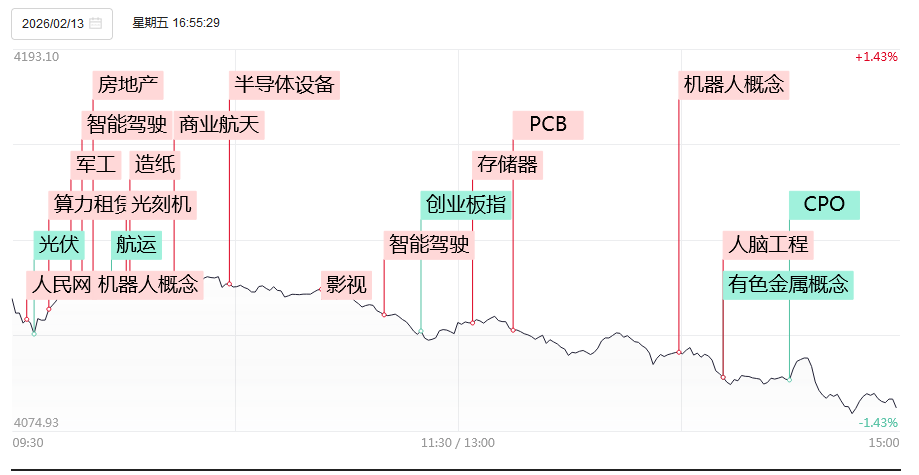
Market Overview - On February 13, the A-share market experienced a collective decline across the three major indices, with the Shanghai Composite Index falling by 1.26% to close at 4082.07 points, the Shenzhen Component Index down 1.28% to 14100.19 points, and the ChiNext Index decreasing by 1.57% to 3275.96 points [1] - The total trading volume in the Shanghai and Shenzhen markets was 199.91 billion, a decrease of 16.19 billion compared to the previous day [1] Sector Performance - The military industry sector showed strong performance, with key stocks like Yaxing Anchor Chain hitting the daily limit [1] - The semiconductor sector was active, with concepts such as photolithography machines and photolithography adhesives seeing rapid increases, exemplified by Guofeng New Materials achieving two consecutive limits in four days [1] - The paper-making sector also performed well, with Wuzhou Special Paper hitting the daily limit [1] - Conversely, the port and shipping sector saw significant declines, with China Merchants Energy and China Merchants Shipping experiencing substantial drops [1] Stock Highlights - A total of 32 stocks hit the daily limit, with five stocks achieving consecutive limits, and 11 stocks failed to maintain their limits, resulting in a limit rate of 74% (excluding ST and delisted stocks) [1] - Notable stocks included Zhangyue Technology, which achieved five consecutive limits, and Yunnan Energy Holdings, which reached three consecutive limits [1]




亿田智能2025年预亏,业务转型与股价波动引关注
Jing Ji Guan Cha Wang· 2026-02-13 05:53
经济观察网亿田智能(300911)近期发布2025年业绩预亏公告,并披露算力资产出售、业务合作及股价 波动等多方面动态。 业绩经营情况 2026年1月23日,公司发布业绩预告,预计2025年全年归属于上市公司股东的净利润亏损1.52亿元至1.86 亿元,扣非净利润亏损1.67亿元至2.04亿元。主要原因包括房地产行业放缓导致需求下滑、消费降级影 响产品均价、算力业务未达规模效应、可转债利息支付及资产减值损失等。 公司项目推进 2025年12月19日,公司公告全资子公司甘肃亿算拟以1.56亿元总价向华庆超算出售600台燧原智算机。 交易采用分期付款,约定2026年3月20日前支付50%款项,剩余部分于2026年6月20日前结清,且款项付 清前设备所有权仍归属亿田智能,体现战略调整意图。 业务进展情况 2025年11月28日,公司在机构调研中透露算力业务订单规模约100亿至110亿元,合同期限5年;同时与 意大利高端品牌SMEG达成合作,切入高端厨电市场,试图通过"厨电+算力"双引擎模式应对行业挑 战。 股票近期走势 2026年2月6日,公司股价单日上涨5.18%,报37.78元/股,连续3个交易日累计涨幅7.1 ...

未知机构:国金计算机科技坚守产业逻辑国内算力吹哨人复盘近期观点-20260213
未知机构· 2026-02-13 01:55
而这将推动AIDC、云与算力服务、 【国金计算机&科技】坚守产业逻辑,国内算力吹 哨人 复盘近期观点,我们始终坚定看好国内算力产业链的"高景气行情"。 逻辑核心在于供需态势的深刻变化: 【国金计算机&科技】坚守产业逻辑,国内算力吹 哨人 复盘近期观点,我们始终坚定看好国内算力产业链的"高景气行情"。 逻辑核心在于供需态势的深刻变化: 2026年是"训练+推理"双轮共振的转折点,多模态Scaling-law的延续与AI现象级应用的爆发,令需求侧斜率超预期陡 峭;供给侧得益于国产芯片成熟、晶圆产能释放、海外芯片供应,瓶颈渐解。 ——1月4日,发布计算机年度策略《两仪生四象,超级时代》,率先指明2026年AI路径清晰,一切核心指向算 力,预判国内算力扩容斜率极高; ——1月11日,发布行业深度《国内算力斜率陡峭》,强调AI入口之争开启,大厂CAPEX意愿增强,国内算力爆发 在即; ——1月12日,召开《产业与价值不会缺席——掘金AI算力》电话会,详细拆解国内算力的增长空间与演绎路径; ——1月26日,在市场波动中召开《继续相信算力》电话会,鲜明提出"国内云服务走向通胀"的判断; ——2月8日,针对Seedance ...
万和财富早班车-20260213
Vanho Securities· 2026-02-13 01:30
Core Insights - The report emphasizes the importance of discovering investment opportunities with a proactive attitude rather than merely relaying information [1] Macro News Summary - The State Council has issued implementation opinions to improve the national unified electricity market system, encouraging more private enterprises to participate in the electricity market [4] - The Ministry of Commerce stated that China and the U.S. maintain close communication at all levels through the economic and trade consultation mechanism [4] - The National Energy Administration highlighted that major global economies are actively laying out hydrogen energy and nuclear fusion, necessitating greater efforts to enhance original disruptive innovation [4] Industry Latest Developments - Ant Group's Alipay has launched a Spring Festival red envelope activity, with the AI healthcare sector expected to gain momentum, related stocks include Sanor Bio (300298) and Huaren Health (301408) [5] - Strong demand for memory is expected to continue until 2027, with opportunities for domestic storage development emerging, related stocks include Lanke Technology (688008) and Aisen Co. (688720) [5] - Domestic large models are being launched intensively, with the AI computing power sector showing promising growth and certainty, related stocks include UCloud (688158) and Shenxinfu (300454) [5] Company Focus - Wanrun Co. (002643) has commenced trial production of a PEI product production line with an annual capacity of 1,500 tons [6] - Zhiguang Electric (002169) expects its independent energy storage power station (Phase I) to commence commercial operation within the first quarter [6] - Deshi Co. (301158) has seen its ultra-wear-resistant high-pressure acidification fracturing hose widely applied in North America, while domestic usage is still in small-scale trials [6] - Jiawei New Energy (300317) successfully connected a 3.73MW distributed photovoltaic project in Guangxi Wuzhou to the grid [6] Market Review and Outlook - On February 12, major indices collectively rose, with the ChiNext Index and the Sci-Tech Innovation 50 Index both increasing by over 1%. The total trading volume in the Shanghai and Shenzhen markets reached 2.14 trillion, an increase of 157.5 billion from the previous trading day [7] - The computing power industry chain experienced a collective surge, with concepts related to computing power leasing gaining strength. Stocks like Dawi Technology saw a four-day consecutive rise, while UCloud hit a 20% limit up [7] - The consumer sector faced declines, particularly in film and television, tourism, retail, and food and beverage, with stocks like Hengdian Film and Haixin Food hitting the limit down [7] - The current spring market remains promising, with potential favorable news expected in the coming months, although a brief period of market correction may occur before the Spring Festival due to tightening liquidity and reduced trading enthusiasm [7]
A股突发!协创数据110亿天量订单
Xin Lang Cai Jing· 2026-02-12 15:09
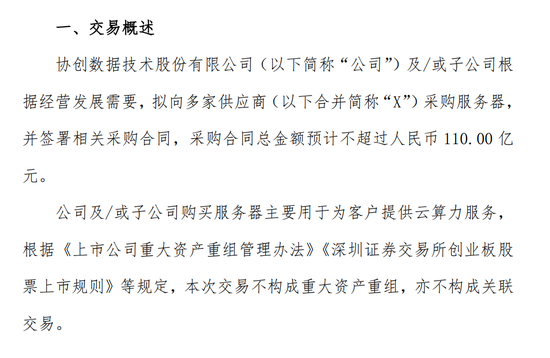
大家好,关注一则算力板块的大利好消息。 2月12日晚间,上市公司协创数据发布公告,公司及/或子公司根据经营发展需要,拟向多家供应商(以 下合并简称X)采购服务器,并签署相关采购合同,采购合同总金额预计不超过人民币110亿元。 公司 及/或子公司购买服务器主要用于为客户提供云算力服务。 公告称,本次交易金额占公司最近一期经审计净资产的50%以上,亦达到了公司最近一期经审计总资产 的50%以上。 【导读】A股又现百亿级大单!协创数据拟采购算力服务器 中国基金报记者 泰勒 公司表示,本次采购服务器系公司经营发展需要,本次交易完成后,将促进公司主营业务的大力发展, 为公司持续发展提供了必要的要素支撑,对公司开拓市场有着重大的促进作用。 数据显示,截至最新收盘,协创数据股价大涨15.72%,最新报247.99元,市值达858.34亿元。公开资料 显示,公司专注于消费电子及物联网领域,构建"智能终端+算力基建+云端服务"体系,产品涵盖云视 频摄像机、智能穿戴、数据存储及服务器。 另外,协创数据预计2025年净利润为10.5亿元至12.5亿元,同比增长51.78%—80.69%。报告期内,公司 聚焦智能算力、数据存储、服务 ...

A股突发!110亿天量订单
Zhong Guo Ji Jin Bao· 2026-02-12 14:55
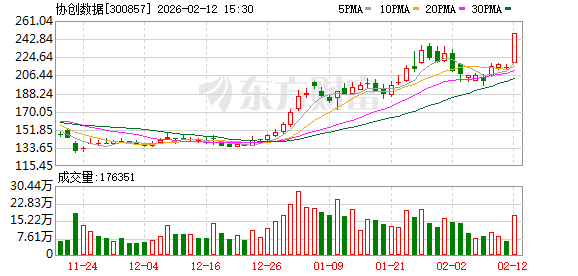
【导读】A股又现百亿级大单!协创数据拟采购算力服务器 大家好,关注一则算力板块的大利好消息。 2月12日晚间,上市公司协创数据发布公告,公司及/或子公司根据经营发展需要,拟向多家供应商(以下合并简称X)采购服务器,并签署相关 采购合同,采购合同总金额预计不超过人民币110亿元。 公司及/或子公司购买服务器主要用于为客户提供云算力服务。 公告称,本次交易金额占公司最近一期经审计净资产的50%以上,亦达到了公司最近一期经审计总资产的50%以上。 公司表示,本次采购服务器系公司经营发展需要,本次交易完成后,将促进公司主营业务的大力发展,为公司持续发展提供了必要的要素支撑, 对公司开拓市场有着重大的促进作用。 数据显示,截至最新收盘,协创数据股价大涨15.72%,最新报247.99元,市值达858.34亿元。公开资料显示,公司专注于消费电子及物联网领 域,构建"智能终端+算力基建+云端服务"体系,产品涵盖云视频摄像机、智能穿戴、数据存储及服务器。 另外,协创数据预计2025年净利润为10.5亿元至12.5亿元,同比增长51.78%—80.69%。报告期内,公司聚焦智能算力、数据存储、服务器再制 造、AIoT智能终端等 ...
龙虎榜复盘丨算力全线上涨,玻纤持续活跃
Xuan Gu Bao· 2026-02-12 11:20
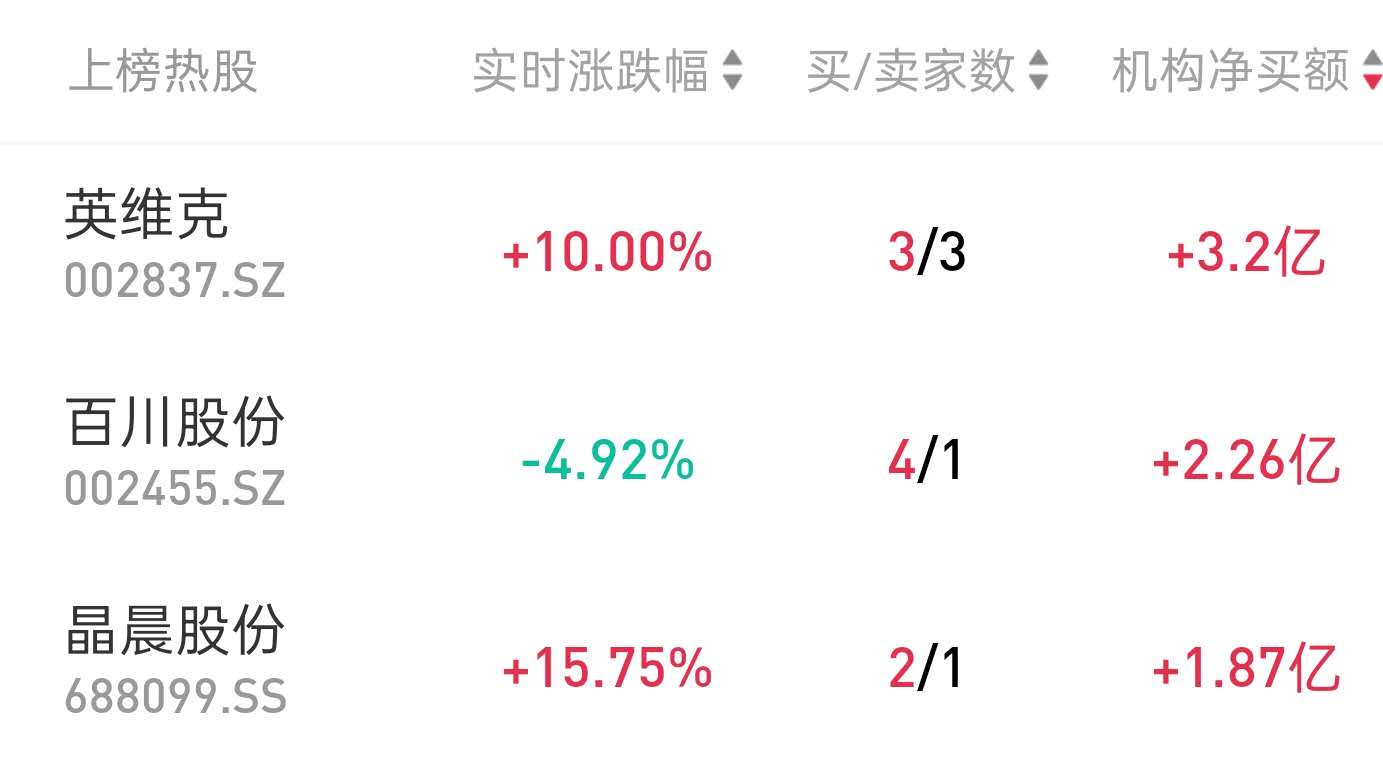
Group 1: Institutional Trading Insights - On the day, 41 stocks were listed on the institutional trading leaderboard, with 25 experiencing net buying and 16 facing net selling [1] - The top three stocks with the highest net buying by institutions were Yingweike (3.2 billion), Baichuan Co. (226 million), and Jingchen Co. (187 million) [1] Group 2: AI and Computing Power Sector - Zhizhu AI announced a price increase of at least 30% for its GLM Coding Plan due to strong market demand and increased user engagement [2] - The release of the new flagship model GLM-5 by Zhizhu AI achieved state-of-the-art performance in coding and agent capabilities, closely rivaling Claude Opus 4.5 in real programming scenarios [3] - Longjiang Securities reported that major companies invested a total of 4.5 billion during the Spring Festival to compete for AI market entry, indicating a sustained high demand for computing power [3] - North American CSP manufacturers are projected to increase capital expenditures by 65% in 2025 and 71% in 2026, reflecting strong AI demand and tight computing power supply [3] Group 3: Glass Fiber Industry - China Jushi, the world's leading glass fiber manufacturer, announced an expansion in electronic cloth production capacity [4] - The supply chain for weaving machines is experiencing delays, particularly with imports from Japan's Toyota, which may extend the shortage period for the industry [4] - A projected supply gap of 6.1% in 2026 and 10.6% in 2027 for weaving machines indicates a tightening market, with potential price increases for electronic cloth due to supply constraints [5]


A股五张图:这发大模型也要扎堆啊?
Xuan Gu Bao· 2026-02-12 10:32
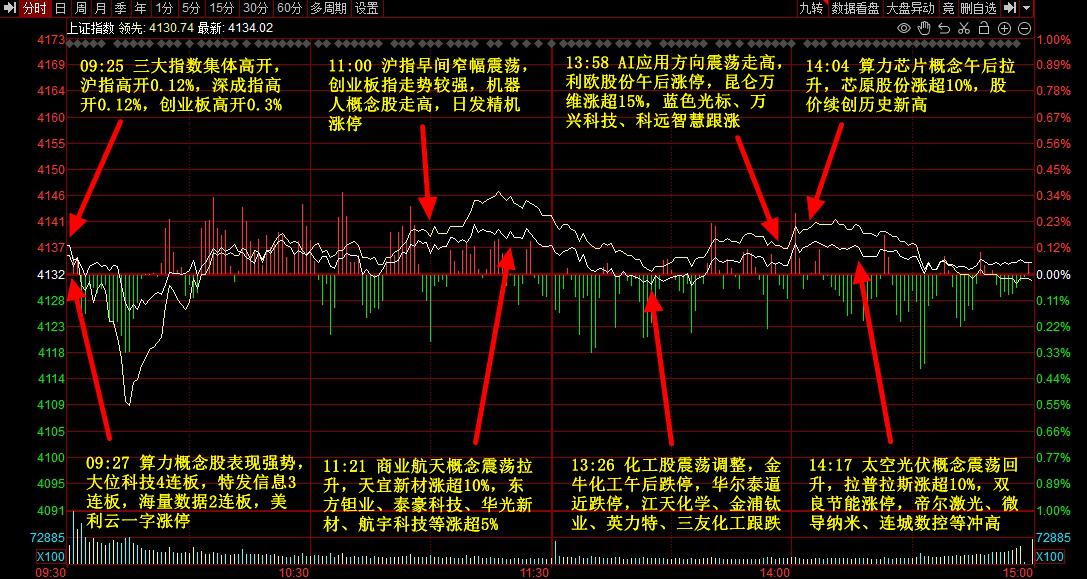
1、行情 今日虽然依旧跌多涨少,但市场局部的赚钱效应还是不错的。 题材方面,液冷概念开盘大涨,大元泵业一字,川润股份、宁波精达、博杰股份、英维克、科士达、宏盛股份涨停,申菱环境、依米康、朗进科 技、飞荣达、同飞股份等集体大涨; 同时,算力概念大位科技4连板,优刻得、首都在线双双20CM涨停,宏景科技、青云科技、网宿科技、佰维存储、弘信电子、光环新网等集体 大涨; CPO板块今日迎来大幅反弹,特发信息3连板,天孚通信、长鑫博创、锐捷网络、炬光科技、罗博特科等集体大涨; 智能电网迎来局部大涨,顺钠股份、望变电气、海联讯(20CM)、四方股份、汉缆股份先后涨停,明阳电气、良信股份、森源电气、神马电 力、思源电气等集体大涨; 此外,AI大模型、电子布、有色等均有强势大涨表现,影视、动漫、预制菜、大消费等跌幅居前。 截至收盘,沪指、深成指、创业板指分别收涨0.05%、0.86%、1.32%,市场超3200股下跌,2100股上涨,三市累计成交量超2.1万亿。 2、算力 算力产业链是今日最强的主线。 早盘液冷概念大涨,大元泵业一字,川润股份、宁波精达、博杰股份、英维克、科士达、宏盛股份涨停,申菱环境、依米康、朗进科技、飞荣 ...
史诗级暴涨!
Zhong Guo Ji Jin Bao· 2026-02-12 08:26
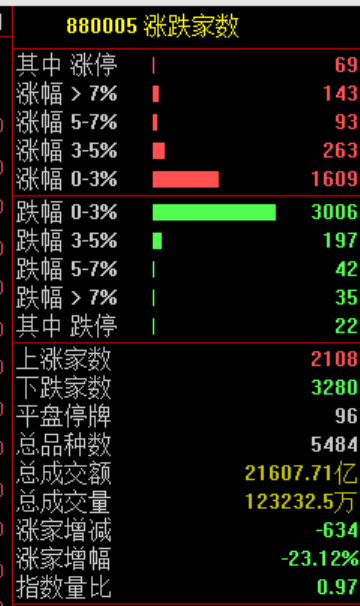
Market Overview - The A-share market experienced a slight upward trend on February 12, with the Shanghai Composite Index rising by 0.05%, the Shenzhen Component Index increasing by 0.86%, and the ChiNext Index gaining 1.32% [2] - A total of 2,108 stocks rose, while 3,280 stocks fell, indicating a mixed market sentiment [2][3] AI Sector Performance - The AI sector in Hong Kong saw a significant surge, with Zhizhu (智谱) stock soaring by 30%, bringing its market capitalization close to HKD 200 billion, and its stock price doubling in just a few trading days [13] - Zhizhu released its new flagship model GLM-5, which has shown strong performance in coding and agent capabilities, competing closely with established models [13] - The company announced a structural price adjustment for its GLM Coding Plan, with an overall price increase starting from 30%, reflecting strong market demand and the need for enhanced service quality [13] Data Center and Cooling Technologies - The computing power industry chain showed strong performance, with companies like Youke (优刻得) and Capital Online (首都在线) hitting the daily limit of 20% increase [4] - In the liquid cooling server segment, stocks such as Chuanrun (川润股份) and Yingweike (英维克) also reached their daily limit [6] CPO Sector - Companies in the CPO (Cloud Point of Operation) sector, including Taicheng (太辰光) and Tianfu Communication (天孚通信), saw stock prices rise over 10%, reaching new highs [8] Non-Ferrous Metals Sector - The non-ferrous metals sector continued its upward trend, with stocks like Xianglu Tungsten (翔鹭钨业) and Zhangyuan Tungsten (章源钨业) hitting the daily limit [10] Media Sector Decline - The media sector faced a downturn, with stocks such as Hengdian Film (横店影视) and Jinyi Film (金逸影视) experiencing significant declines, including some hitting the daily limit down [12]