
船舶工业

Search documents
【立方早知道】A股利好!超百亿分红来了/马斯克获价值290亿美元股票奖励/境外买卖股票收入需缴税
Sou Hu Cai Jing· 2025-08-05 00:51
Group 1 - A-share market sees over 100 billion yuan in cash dividends as 30 companies announce mid-term dividend plans for 2025 [1] - The trend of multiple dividends per year is expected to become a standard practice among listed companies, with an anticipated increase in the number of companies implementing mid-term dividends in 2025 [1] - Tesla grants CEO Elon Musk 96 million shares of restricted stock, valued at approximately 29 billion dollars based on last week's closing price [3] Group 2 - In July 2025, nearly 2 million new investors entered the A-share market, marking a year-on-year increase of over 70% [3] - Cumulative new investors in the A-share market from January to July 2025 reached approximately 14.56 million, a significant increase of 36.9% compared to the same period in 2024 [3] Group 3 - The Ministry of Finance emphasizes the use of proactive fiscal policies to boost consumption and expand domestic demand [5] - The People's Bank of China advocates for moderately loose monetary policies to support technological innovation and stabilize foreign trade [5] - The China Securities Regulatory Commission aims to consolidate market stability and enhance regulatory effectiveness [5] Group 4 - Guizhou Moutai repurchased 345.17 million shares, spending a total of 5.301 billion yuan [26] - The company plans to reduce its registered capital through the repurchased shares [26] Group 5 - Guoquan Food plans to distribute a mid-term dividend of 190 million yuan, with a total shareholder return exceeding 499 million yuan for 2025, a 130.7% increase year-on-year [15] - Yutong Bus reports a cumulative sales increase of 2.63% in the first seven months of 2025 [15] Group 6 - ChipLink Integrated achieved a 21.38% increase in revenue for the first half of 2025, with AI revenue contributing 6% of total revenue [31] - The company reported a significant reduction in net loss, with a quarterly profit for the first time [31] Group 7 - China Heavy Industry is set to delist from A-shares as it merges with China Shipbuilding, with trading suspended from August 13, 2025 [22]




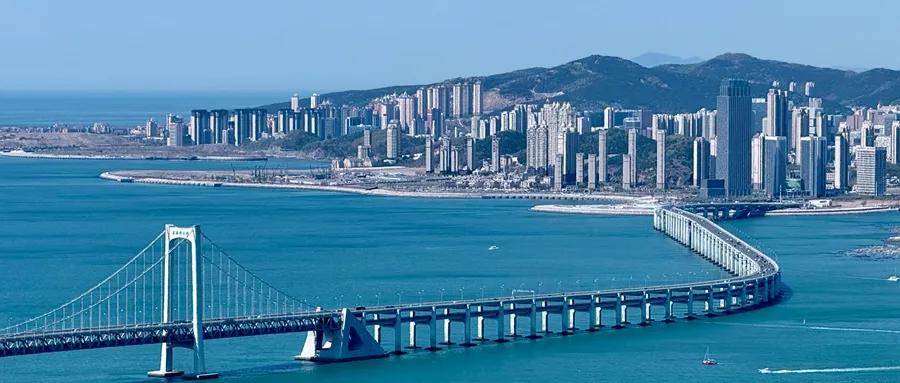
东北首个万亿城市,终于要来了?
Sou Hu Cai Jing· 2025-07-23 02:03
Core Viewpoint - Dalian's GDP in the first half of 2025 grew by 6.0% year-on-year, outperforming both national and provincial averages, indicating strong economic momentum and a potential breakthrough into the trillion-yuan GDP club by 2025 [2][3][4] Economic Performance - Dalian's GDP reached 464.7 billion yuan in the first half of 2025, with a year-on-year growth of 6.0%, exceeding national and provincial growth rates by 0.7 and 1.3 percentage points respectively [2] - The first industry added value was 21.69 billion yuan (4.5% growth), the second industry added value was 164.13 billion yuan (9.4% growth), and the third industry added value was 278.88 billion yuan (4.0% growth) [2] - In Q1 2025, Dalian's GDP grew by 6.2%, continuing into Q2 with a 6.0% growth, aligning with the target of over 5.5% growth for the year [3] Industrial Growth - Dalian's industrial output showed significant growth, with the industrial added value increasing by 12.5% year-on-year in the first half of 2025 [3] - Traditional industries like equipment manufacturing, shipbuilding, and automotive manufacturing saw substantial increases of 16.9%, 58.8%, and 27.7% respectively [3] - Emerging industries, particularly in renewable energy and high-tech manufacturing, experienced a 20.1% growth in added value, surpassing the overall industrial growth rate by 7.6 percentage points [3] Consumer Market - Dalian's total retail sales of consumer goods reached 112.57 billion yuan in the first half of 2025, with a year-on-year growth of 7.4%, ranking first among 15 sub-provincial cities [3] Future Outlook - To achieve a GDP exceeding one trillion yuan, Dalian needs to maintain a growth rate of at least 5.1% in the second half of 2025, which is considered feasible [4] - The Dalian government is committed to maintaining a stable and positive economic trend, aiming for high-quality growth towards becoming a trillion-yuan GDP city [4]
中国终于暴露实力!中美差距究竟有多大?张召忠:我可以负责任讲,别再被误导了!
Sou Hu Cai Jing· 2025-07-22 12:07
Economic Milestone - China's GDP, including Hong Kong, Macau, and Taiwan, has surpassed $20 trillion for the first time, reaching $20,196.39 billion [1] - Macau's economy has shown remarkable growth at 8.8%, leading among all provinces, while Taiwan's economy exceeded expectations with a growth rate of 4.59% [1] GDP Comparison with the US - In 2024, the US GDP is projected to be $29.21 trillion, while China's GDP (excluding Hong Kong, Macau, and Taiwan) is estimated at $18.94 trillion, resulting in a gap of $10.26 trillion [1] - This gap is expected to widen to $11 trillion by 2025, influenced by statistical technical factors [1] Currency and Inflation Impact - The average exchange rate of the RMB against the USD depreciated from 7.12 to 7.18 in the first half of 2025, leading to a "loss" of $160 billion in China's GDP when measured in USD [3] - The inflation difference also plays a significant role, with the US experiencing a CPI of 3% in Q1 2025, inflating nominal GDP, while China's nominal growth was only 4.6% despite a real growth of 5.4% [3] Statistical Methodology Differences - The US employs an expenditure approach to GDP calculation, including credit consumption and government stimulus, which inflates the figures, while China uses a production approach focusing on actual goods and services produced [3] Innovation and Development - During the 14th Five-Year Plan, China has made significant innovations in various fields, including shipbuilding, aerospace, and nuclear power, showcasing its technological advancements [3] - R&D investment in China has increased by nearly 50% compared to the end of the 13th Five-Year Plan, with an intensity of 2.68%, approaching developed countries' levels [4] Economic Structure Differences - The US economy is heavily service-oriented, with services accounting for 80% of its GDP, while China's manufacturing sector constitutes 28% and is enhancing its global competitiveness, particularly in the electric vehicle sector [6] - China's per capita GDP remains over six times lower than that of the US, indicating different stages of economic development [6] Environmental and Market Developments - China has reduced its energy consumption per unit of GDP by 11.6% over four years, equivalent to a reduction of 1.1 billion tons of CO2 emissions [6] - The establishment of a unified national market has led to a growth of over 40% in private enterprises compared to the end of the 13th Five-Year Plan [6]
时报访谈丨张立群:促进供需在更高水平上实现动态平衡
Sou Hu Cai Jing· 2025-07-11 00:43
Group 1 - The Consumer Price Index (CPI) in June increased by 0.1% year-on-year, ending a four-month decline, while the Producer Price Index (PPI) decreased by 3.6% year-on-year, indicating a mixed price trend in the economy [3][4][16] - The core CPI, excluding food and energy, rose by 0.7% year-on-year, marking a 0.1 percentage point increase from the previous month and reaching a 14-month high, reflecting improvements in supply-demand structures in certain industries [3][17] - The persistent low prices in the market are attributed to an oversupply situation, which could lead to a negative cycle affecting corporate expectations and investment, potentially dragging the economy into a "low inflation trap" [5][18] Group 2 - The decline in PPI is primarily driven by seasonal factors and the construction progress of infrastructure projects, along with an oversupply of raw materials like steel and cement, which has negatively impacted production material prices [4][17] - Key factors contributing to the current supply-demand imbalance include a decline in real estate investment, high tariff barriers affecting exports, and weak consumer income expectations leading to insufficient consumption willingness [4][18] - The overall economic recovery is influenced by a combination of supportive incremental policies and complex external environments, with expectations for CPI to show a trend of low-to-high throughout the year [8][10]

“十四五”成绩单来了:多项指标进展超过预期
Zhong Guo Xin Wen Wang· 2025-07-09 08:13
Economic Development - The total economic output of China is expected to reach around 140 trillion yuan this year, with a five-year economic increment exceeding 35 trillion yuan, equivalent to recreating the Yangtze River Delta region [2] - The average economic growth rate over the first four years of the "14th Five-Year Plan" is 5.5%, demonstrating resilience against various risks and challenges [3] Manufacturing and Innovation - China has maintained its position as the world's largest manufacturing power for 15 consecutive years, with annual manufacturing value added exceeding 30 trillion yuan [4] - China has established the world's largest number of 5G base stations and has made significant breakthroughs in various technological fields, including the first fourth-generation nuclear power plant and the first Chinese space station [4][5] Social Welfare - The average life expectancy in China has reached 79 years, with significant improvements in education, social security, and healthcare systems [6] - Over 402 new drugs have been added to the national medical insurance directory, enhancing healthcare accessibility [9] Employment and Income - The annual urban employment increase has stabilized at over 12 million, supporting improvements in living standards [8] - The income growth of residents is in sync with economic growth, leading to a reduction in the income gap between urban and rural areas [8] Governance and Market Environment - The business environment in China has improved significantly, with the establishment of a unified national market framework and a reduction in restrictions on foreign investment [10] Green Development - China has become the fastest-growing country in terms of increasing green cover, with a significant reduction in energy consumption per unit of GDP [11] - The number of new energy vehicles has reached 31.4 million, marking a fivefold increase since the end of the "13th Five-Year Plan" [12] Food and Energy Security - China has built over 100 million acres of high-standard farmland, ensuring food security [13] - The country has established the world's largest power infrastructure system, with a power generation capacity accounting for one-third of the global total [13] Foreign Investment - From 2021 to May 2025, foreign direct investment in China reached 4.7 trillion yuan, surpassing the total during the "13th Five-Year Plan" period [14]
超35万亿元、5.5%……这场发布会,信息量巨大→
证券时报· 2025-07-09 05:28
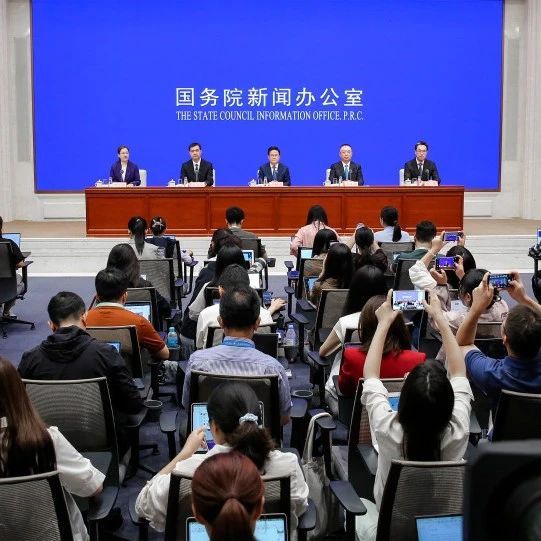
Core Viewpoint - The article highlights the significant economic growth expected in China during the "14th Five-Year Plan" period, with an estimated economic increment exceeding 35 trillion yuan, showcasing the country's resilience and contribution to global economic growth [1][9]. Economic Growth and Contributions - China's economic increment during the "14th Five-Year Plan" is projected to exceed 35 trillion yuan, with an average economic growth rate of 5.5% from 2021 to 2024 [2][11]. - By the end of 2024, China's total economic output is expected to reach approximately 140 trillion yuan, marking a substantial increase from previous years [9][10]. - China has maintained a contribution rate of around 30% to global economic growth, emphasizing its role as a major player in the world economy [11]. Domestic Demand and Consumption - Domestic demand is projected to contribute an average of 86.4% to economic growth from 2021 to 2024, with final consumption accounting for an average contribution rate of 56.2%, an increase of 8.6 percentage points compared to the "13th Five-Year Plan" period [12][13]. - Investment in high-tech industries has consistently outpaced overall investment growth, reflecting a strategic focus on optimizing supply structures [13][14]. Social and Economic Indicators - The number of private enterprises has increased by over 40% compared to the end of the "13th Five-Year Plan," reaching more than 58 million [16]. - The average life expectancy in China has risen to 79 years, indicating improvements in public health and living standards [16]. - The cumulative reduction in energy consumption per unit of GDP over four years is 11.6%, equivalent to a decrease of 1.1 billion tons of carbon dioxide emissions [16]. Infrastructure and Employment - The logistics cost savings for society are projected to exceed 400 billion yuan by 2024, with an additional expected savings of around 300 billion yuan this year [16]. - Urban employment has remained stable, with over 12 million new jobs created annually since the beginning of the "14th Five-Year Plan" [16].
“十四五”中国创新成绩斐然
Huan Qiu Wang Zi Xun· 2025-07-09 04:10
Group 1 - China's shipbuilding industry has achieved significant milestones with the launch of the first domestically produced electromagnetic aircraft carrier, the Fujian, the first large cruise ship, the Aida Magic City, and a leading position in large LNG carriers [1] - The "three pearls" symbolize China's innovative development during the 14th Five-Year Plan, showcasing breakthroughs in various fields such as space exploration, nuclear power, and aviation [2][3] - Despite challenges like the pandemic and trade tensions, China continues to advance on the path of innovation-driven development [3] Group 2 - Economic strength underpins China's innovation, with GDP expected to approach 140 trillion yuan, contributing approximately 30% to global economic growth [4] - R&D investment is projected to reach 3.6 trillion yuan in 2024, marking a nearly 50% increase from the end of the 13th Five-Year Plan, with R&D intensity nearing OECD averages [5] - The talent pool in China is robust, with educational attainment levels rising and the total number of R&D personnel leading globally [6][7] Group 3 - A conducive innovation ecosystem has been established, with a 73.8% increase in the value added by the core digital economy industries since the end of the 13th Five-Year Plan [8]
每经热评︱推动海洋经济高质量发展 谱写海洋强国建设新篇章
Mei Ri Jing Ji Xin Wen· 2025-07-06 08:30
Group 1 - The global economic landscape is shifting towards the ocean, with the recent Central Financial Committee meeting emphasizing the importance of high-quality development in the marine economy [1] - The marine economy is a significant part of the national economy, showing strong growth, with a reported 5.7% year-on-year increase in marine GDP in Q1 of this year [1] - The government is prioritizing the development of the marine economy, aiming to establish national marine economic development demonstration zones by 2025 [1] Group 2 - Technological innovation is identified as the core driving force for the development of the marine economy, with a need to enhance independent innovation capabilities in marine technology [2] - Efficient collaboration and industrial upgrading are crucial for high-quality development, requiring improved policy guidance and coordination across sectors [2] - The integration of marine fisheries with land-based food processing is essential for extending industrial chains and increasing added value [2] Group 3 - Harmonious human-ocean relationships are fundamental for sustainable marine economic development, necessitating the protection of marine ecosystems [3] - The construction of a strong marine nation is a strategic task for national rejuvenation, requiring a focus on innovation, collaboration, industrial upgrading, and ecological friendliness [3] - A comprehensive resource allocation through top-level design is necessary to enhance the vitality of the marine economy and contribute to global marine economic development [3]
一味追求遥遥领先,多半是病了
Hu Xiu· 2025-07-03 00:39
Group 1 - The core argument emphasizes that a country's technological innovation capability is determined more by its ability to capture and apply technological results rather than by original inventions [1][2] - The article uses Huawei as an example, highlighting its success in telecommunications, smartphones, and electric vehicles through imitation and learning from companies like Cisco, Samsung, and Tesla, rather than through original inventions [1][2] - The historical context shows that countries like Germany, the US, and Japan achieved technological advancements through rapid and continuous technology diffusion, with original inventions being secondary outcomes [2] Group 2 - The Wright brothers invented the airplane, but the aviation industry developed in Europe, illustrating that invention alone does not guarantee industrial success [3][4][5] - Despite the Wright brothers' invention, the US aviation industry lagged behind Europe for years due to a lack of commercial orders and industrial infrastructure [5][8] - The article argues that without the ability to convert inventions into products, technological innovations remain ineffective and do not impact society [9] Group 3 - The article discusses the importance of technology diffusion over original invention, citing Henry Kaiser’s innovations in shipbuilding as an example of applying techniques from other industries to achieve success [10][14] - Japan's shipbuilding industry rose from the ashes by combining innovative techniques with government support and market opportunities, surpassing the US and UK [15] - The US shipbuilding industry, despite having advanced technology, stagnated due to protective measures that limited the application of efficient manufacturing processes [11][12] Group 4 - Innovation is framed as an economic concept rather than a purely technical one, focusing on the introduction of new combinations of production factors into the economy [18][20] - The article emphasizes that the true measure of technological innovation lies in its economic value and the ability to create products that can be marketed [27][31] - The low patent conversion rate in Chinese universities compared to enterprises highlights the gap in translating research into economic benefits [25][32] Group 5 - The article asserts that the trend of enterprise-led innovation is a global phenomenon, with businesses increasingly taking the lead in research and development funding [34][39] - The US leads in corporate R&D spending, with a significant portion coming from the private sector, indicating a shift away from government-led initiatives [39][41] - Large enterprises are identified as the main drivers of technological diffusion, possessing superior capabilities in market information collection, product promotion, and resource integration [42][45] Group 6 - The article concludes that the competition between the US and China in technological innovation is evident, but there remains a disparity in the overall strength of large enterprises [47][48] - It advocates for a pragmatic approach that emphasizes economic benefits from technological innovation, focusing on market applications rather than merely pursuing original inventions [48][49]

向海图强加速,10万亿“蓝色市场”如何再突破
2 1 Shi Ji Jing Ji Bao Dao· 2025-07-02 13:38
Group 1: Core Insights - The central theme of the news is the emphasis on high-quality development of the marine economy, as highlighted in the recent meeting of the Central Financial Committee [1][3] - The meeting underscored the importance of various marine industries, including offshore wind power, modern deep-sea fishing, marine biomedicine, and marine tourism, aiming to foster a robust marine industry ecosystem [1][4] - By 2024, China's marine GDP reached 10.5438 trillion yuan, with a year-on-year growth of 5.9%, outpacing the national GDP growth by 0.9 percentage points, accounting for 7.8% of the national GDP [1][4] Group 2: Regional Developments - Coastal provinces such as Guangdong, Zhejiang, Hainan, and Fujian are accelerating their strategic layouts for marine economic development, each adopting differentiated development paths [2][7] - Guangdong province focuses on integrating traditional and new industries, emphasizing marine ranching, shipbuilding, marine renewable energy, and modern shipping [2][7] - Zhejiang aims to achieve over 220 billion yuan in marine economic project investments by 2025, with a target of 120 major projects and an investment of over 60 billion yuan [2][9] Group 3: Industry Highlights - The marine industry is identified as a key carrier for economic development, with a focus on marine renewable energy, fisheries, biomedicine, and port shipping [4][10] - The marine tourism sector remains significant, contributing 36.9% to the marine GDP, while marine transportation accounts for 18.7% [4] - The shipbuilding industry is a competitive sector for China, with a market share of 49.9% in completed shipbuilding and 67.6% in new orders globally [5][6] Group 4: Future Prospects - The meeting's signals suggest a potential acceleration in marine economic development across various regions [3][10] - Future projects like "four seas" (marine granaries, oil fields, mines, and pharmacies) and "three depths and one extreme" (deep diving, drilling, netting, and polar exploration) are expected to enhance the marine industry's overall growth [10] - The integration of AI technology with marine resources and industries is anticipated to drive significant advancements in the marine economy [10]