
资产管理业

Search documents
全国首例!法院联手京东平台,不上架拍品却上架了一份“和解协议”
Yang Zi Wan Bao Wang· 2025-09-23 07:04
Core Viewpoint - The case highlights an innovative approach to asset resolution through public disclosure of settlement agreements, which effectively avoids the negative impacts of auction processes and leads to a swift conclusion of a long-standing dispute [1][6]. Group 1: Legal Proceedings and Financial Obligations - In February 2015, a court ruled that a new materials company must repay a bank a principal amount of 170 million RMB and interest of approximately 7.89 million RMB [2]. - The company failed to fulfill its obligations, prompting the bank to seek enforcement through the court, which led to the involvement of a different court due to jurisdictional issues [2]. Group 2: Challenges in Asset Liquidation - The court's attempts to auction the collateral resulted in multiple failed attempts, leading to the termination of the enforcement process due to the inability to liquidate the assets [3]. - The bank subsequently transferred the non-performing asset to a state-owned asset management company, which sought to restart the enforcement process [3]. Group 3: Resolution Strategies - The court adopted a collaborative approach, facilitating negotiations between the parties to reach a consensus on the asset's value, ultimately leading to a settlement agreement in April 2025 [4]. - The settlement included a unique public disclosure clause, allowing for transparency and the opportunity for third parties to raise objections or make higher offers [5]. Group 4: Implications of the Settlement - The asset management company successfully publicized the settlement agreement, which, after a designated period without objections, allowed for the resolution of the case and the unfreezing of the debtor's assets [5]. - This case is noted as the first instance of a public disclosure of a settlement agreement on the JD asset trading platform, setting a precedent for future asset resolutions in a declining auction market [6]. Group 5: Judicial Perspectives - The execution judge emphasized the importance of transparency in asset disposal processes, noting that the public disclosure approach mitigated risks of undervaluation and potential loss of state assets [7]. - The case exemplifies a flexible and efficient method for resolving disputes, particularly in cases involving unique asset types or where parties are willing to negotiate alternative settlement terms [7].

特朗普降息梦成真!年内首次,市场预期今年再降两次、明年再降两次,但美联储更谨慎
Sou Hu Cai Jing· 2025-09-18 06:39
Core Viewpoint - The Federal Reserve announced a 25 basis point interest rate cut, marking its first reduction in nine months, bringing the target range to 4% to 4.25%, the lowest level in nearly three years. However, Chairman Powell characterized this cut as a "risk management" move, indicating uncertainty about future rate cuts [1][3]. Group 1: Interest Rate Predictions - Market expectations diverge from the Federal Reserve's forecasts regarding the pace and depth of future rate cuts. The Fed's median prediction suggests two more cuts this year, while Wall Street anticipates a more sustained reduction, expecting two additional cuts in the remaining meetings of the year and two more in the first half of 2026 [3][4]. - The consensus among market traders and economists indicates a belief that there will be two more cuts this year, with a split within the Fed regarding the timing and number of cuts in 2026 [4][6]. Group 2: Economic Outlook and Market Reactions - The differing expectations stem from contrasting confidence in the economy's "soft landing." Powell's hawkish signals suggest a cautious approach, while the market is more concerned about economic data, anticipating that the Fed may need to act more quickly [6][8]. - Following the announcement, financial markets exhibited confusion, with mixed reactions in stock indices and a volatile response in the bond market, highlighting the uncertainty surrounding the Fed's signals [9].


特朗普政府重提美联储“第三重使命”,美债市场要变天?
智通财经网· 2025-09-16 12:34
Core Viewpoint - The Federal Reserve's traditional dual mandate of maintaining price stability and achieving full employment may be expanding to include a third goal of maintaining moderate long-term interest rates, as suggested by Stephen Miran, a new Fed governor appointed by Trump [1][2]. Group 1: Implications of the Third Mandate - Analysts express concern that this potential third mandate could disrupt financial markets and undermine the Fed's independence, as it may be used to influence long-term bond yields for political purposes [1][2]. - The mention of the third mandate is seen as a significant indication of the Trump administration's intent to leverage monetary policy to achieve specific economic outcomes [1][2]. Group 2: Current Market Context - Currently, there are no policies in place to implement this third mandate, and the bond yields are declining, which may reduce the urgency for such measures [2][3]. - The long-term interest rates are crucial for determining the interest levels on various loans, including mortgages and corporate loans, highlighting their importance to the U.S. economy [3]. Group 3: Potential Actions and Market Reactions - Possible actions to manage long-term rates could include the Treasury issuing more short-term bonds and increasing buybacks of long-term bonds, although such measures are currently seen as unlikely [4][5]. - If the Fed were to adopt non-traditional methods to control long-term rates, it could complicate debt management and the Fed's operations, especially in a high-inflation environment [2][5]. Group 4: Historical Context and Comparisons - Historical precedents exist for the Fed's involvement in managing long-term rates, particularly during wartime and economic crises, but the current economic context does not warrant such actions [6][5]. - The ambiguity surrounding what constitutes "moderate long-term rates" raises concerns about the potential for justifying various policy actions [10]. Group 5: Fiscal Implications - The growing government deficit, which has reached $37.4 trillion, necessitates lower interest rates to manage the increasing debt burden [11][12]. - The Treasury's strategy to increase short-term bond sales while maintaining long-term bond sales reflects an effort to manage financing costs effectively [12].
若最高法院也裁定“特朗普关税”非法,对美股有何影响?
Feng Huang Wang· 2025-09-10 08:05
Group 1 - The legality of the tariffs imposed by former President Trump is under scrutiny, with the Supreme Court agreeing to expedite the case, which could lead to a ruling by the end of the year [1][2] - If the Supreme Court rules against the tariffs, it is estimated that up to $100 billion in tariffs could be refunded, significantly boosting the profits of affected companies [2][3] - The outcome of the Supreme Court's decision is expected to have a substantial impact on the stock market, with analysts suggesting that a ruling against the tariffs could lead to a bullish outlook for the market in 2026 [2][3] Group 2 - There is increasing uncertainty in the market as companies and investors await the government's response to potential legal setbacks regarding the tariffs [3][4] - Government officials, including Treasury Secretary Yellen, have indicated that they expect the Supreme Court to uphold the use of the International Emergency Economic Powers Act (IEEPA) to justify the tariffs, but alternative legal measures may be considered if necessary [3][4] - The current trade environment is expected to remain uncertain, with companies needing to navigate the implications of the tariffs and their potential legal challenges [3][4]
疯狂囤黄金!全球央行黄金储备反超美债 系29年来首次!美元“霸权”落幕?
Mei Ri Jing Ji Xin Wen· 2025-09-06 07:05
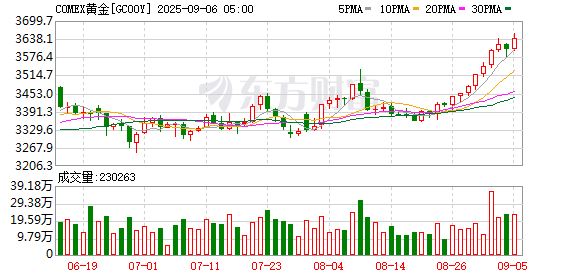
Core Viewpoint - Gold is challenging the foundation of the modern financial system, specifically U.S. Treasury bonds, as its share in central bank reserves has surpassed that of U.S. debt for the first time since 1996, indicating a significant global rebalancing in reserve asset structures [2][6]. Group 1: Central Bank Behavior - Central banks are increasingly accumulating gold to reduce reliance on U.S. dollar assets, thereby diversifying potential risks associated with a single reserve currency [2][10]. - Since Q3 2020, global central banks have net purchased gold for 14 consecutive quarters, with annual purchases exceeding 1,000 tons, nearly double the average of the previous decade [6][10]. - A recent survey indicated that 95% of central banks plan to continue increasing their gold reserves in the next 12 months, the highest percentage since the survey began in 2019 [8]. Group 2: Gold Market Dynamics - Gold is currently in its third major bull market, with prices rising 36% this year, significantly outperforming the S&P 500 and Bitcoin [11][15]. - Historical context shows that gold has previously surged during major financial upheavals, such as the 1970s and the 2008 financial crisis, making it a preferred asset for hedging against inflation and currency devaluation [14][15]. Group 3: U.S. Treasury Bonds - The bond market is experiencing a downturn, with long-term U.S. Treasury yields reaching levels not seen in decades, leading to a significant drop in bond prices [16][18]. - The current decade is projected to be one of the worst for U.S. Treasury bonds, with rising yields reflecting market concerns over inflation and debt sustainability [18][19]. - The perception of U.S. Treasury bonds as "risk-free" has shifted, requiring higher risk premiums to attract investors, while safe-haven funds are increasingly moving towards gold [19]. Group 4: Future Price Predictions - Several financial institutions are bullish on gold prices, with forecasts suggesting prices could reach $4,000 per ounce by mid-2026, driven by macroeconomic risks and potential political pressures on the Federal Reserve [20].
日本资金“回流潮”正在上演! 一场席卷西方金融市场的“抛售风暴”蓄势待发
Zhi Tong Cai Jing· 2025-09-04 07:22
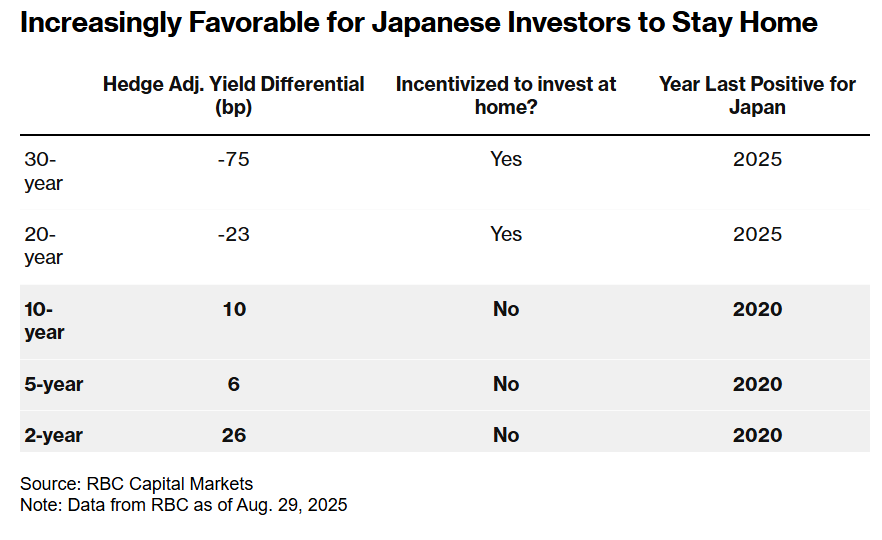
Core Viewpoint - The rising trajectory of Japanese government bond yields is attracting domestic investors to shift their funds back to Japan, potentially leading to downward pressure on international currency exchange rates and Western stock markets [1][3]. Group 1: Japanese Government Bonds - Japanese investors are expected to find government bond yields attractive enough to invest domestically, moving away from U.S. Treasuries [3][4]. - The report indicates that by the end of next year, Japanese investors could achieve excess returns of approximately 30 to 120 basis points depending on the segment of the yield curve they choose to invest in [3][6]. - The shift in investment focus is anticipated to occur around 2026, marking a significant change in investor behavior [3][6]. Group 2: Currency and Global Markets - The anticipated increase in Japanese government bond yields could lead to a stronger yen and a weaker dollar, impacting global capital flows and potentially causing a re-evaluation of asset valuations in U.S. Treasuries and equities [5][7]. - If Japanese life insurance companies increase their hedge ratio from 45% to 60%, it could result in approximately $173 billion flowing from dollars to yen, supporting the yen's appreciation [5][6]. - The shift in currency dynamics and the potential for rising yields in Japan may lead to a tightening of global financial market liquidity [7]. Group 3: Economic Predictions - RBC economists predict that by the end of next year, Japan's overnight interest rate will rise by about 50 basis points, while U.S. benchmark borrowing costs will decrease by approximately 130 basis points [4]. - The transition from ultra-loose monetary policy to tightening by the Bank of Japan has led to increased focus on the pricing of Japanese government bonds, with market-driven supply and demand becoming more influential [6]. - The expected changes in interest rates and currency hedging costs are critical variables for the re-pricing of global interest rates, exchange rates, and stock-bond market dynamics in 2025-2026 [6].
风暴再起!全球国债抛售潮,发生了什么?
华尔街见闻· 2025-09-03 09:59
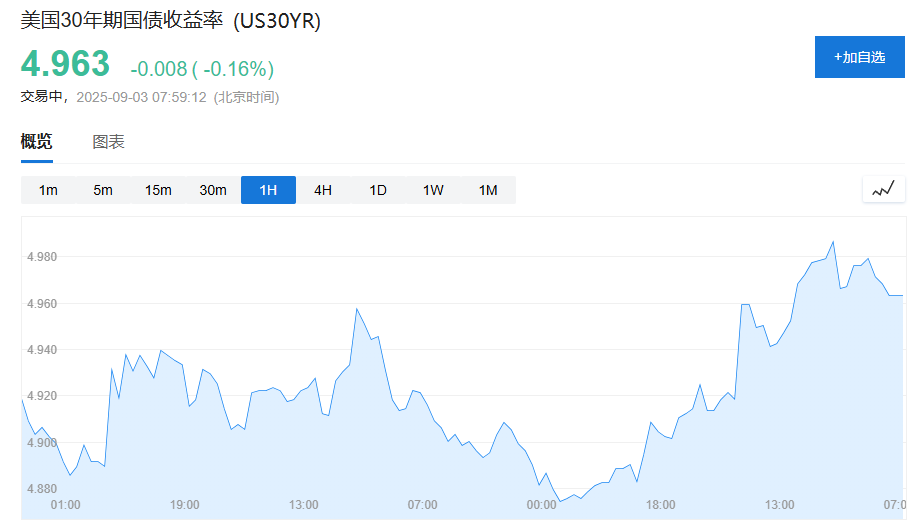
Core Viewpoint - A global bond sell-off is occurring, pushing the 30-year U.S. Treasury yield towards the psychological threshold of 5% [2][9]. Group 1: Market Dynamics - The sell-off has affected government bond markets across the U.S., U.K., Italy, and France, with yields rising significantly, including the U.K. and France reaching their highest levels since the financial crisis [1][13]. - The U.S. 30-year Treasury yield rose to 5%, marking the first time since July, while the 10-year yield climbed to 4.291% [1]. - The S&P 500 index fell by 0.7%, its worst single-day performance since August 1, due to the negative sentiment in the bond market [1]. Group 2: Supply and Demand Factors - A surge in corporate bond issuance is contributing to the sell-off, with predictions of $150 billion to $180 billion in investment-grade corporate bonds being issued in September, which is expected to exceed last year's figures [7][10]. - The influx of corporate bonds is providing investors with higher-yield alternatives, diverting funds away from government bonds [7][10]. - September is traditionally a challenging month for long-term bondholders, exacerbated by the return of traders from summer vacations and the influx of new corporate bond supply [7][10]. Group 3: Economic Indicators and Federal Reserve Focus - The market is closely watching the upcoming U.S. employment report, which will influence the Federal Reserve's interest rate decisions [7][20]. - Current expectations suggest a 92% chance of a rate cut by the Federal Reserve this month, with the employment report being a critical variable for market direction [20]. - Strong employment data could heighten concerns over prolonged high rates, while weak data may reinforce rate cut expectations, providing relief to the struggling bond market [20].

全球国债抛售潮!30年美债收益率重回5%,发生了什么?
Hua Er Jie Jian Wen· 2025-09-03 00:21
Group 1 - A global government bond sell-off is occurring, pushing the 30-year U.S. Treasury yield towards the psychological 5% level [1][7] - On Tuesday, the sell-off affected bond markets across the Atlantic, with yields rising in the U.S., U.K., Italy, and France [1][7] - The U.S. 30-year Treasury yield increased by 5.3 basis points to 4.97%, while the 10-year yield rose by 4.9 basis points to 4.276% [1] Group 2 - The market turmoil is attributed to a surge in corporate bond supply, concerns over government fiscal conditions, and seasonal liquidity tightening [4][9] - September is traditionally unfavorable for long bond holders, with a significant influx of corporate bond issuances expected [4][6] - Wall Street predicts that U.S. investment-grade corporate bond issuance could reach $150 billion to $180 billion this month, potentially exceeding last year's $172.5 billion [6] Group 3 - The sell-off is not limited to the U.S.; other developed economies like the U.K., Italy, and France are also experiencing rising yields [7][8] - The 30-year U.K. government bond yield reached its highest level since 1998, while French yields also increased [8] Group 4 - Historical data indicates that September has been the worst month for government bonds with maturities over 10 years, showing a median decline of 2% [10] - Technical liquidity factors and historical trends contribute to the negative sentiment in the bond market during September [10] Group 5 - Market focus is shifting to the upcoming U.S. employment report, which will influence the Federal Reserve's interest rate decisions [11] - Traders anticipate a 92% chance of a rate cut in September, with the employment report being a critical variable for market direction [11]
华尔街最近在忙的RWA:货币基金、日内回购、商业票据
Hua Er Jie Jian Wen· 2025-08-28 03:54
Core Insights - The integration of traditional finance and digital assets is undergoing a structural transformation, with major financial institutions rapidly tokenizing real-world assets (RWA) and incorporating them into core financial operations [1][2]. Group 1: Innovations in Financial Instruments - Three key areas of innovation include custom money market funds for stablecoins, blockchain-based intraday repurchase agreements, and fully digital commercial paper issuance [2]. - Traditional financial institutions are actively entering the stablecoin market, viewing it as a crucial bridge between the digital and real worlds. Notably, BNY Mellon is preparing to launch a stablecoin reserve money market fund, following BlackRock and Goldman Sachs [3][4]. - The BNY Dreyfus Stablecoin Reserves Fund will primarily invest in U.S. Treasury securities, repos, and cash, with a focus on compliant reserve assets for stablecoin issuers [3]. Group 2: Blockchain in Liquidity Management - The report highlights two significant advancements in the repurchase market utilizing blockchain technology to address liquidity needs outside traditional trading hours [4][5]. - A standard repurchase transaction was completed on the Canton Network, showcasing instant settlement without intermediaries, involving major institutions like Citadel [4]. - A collaboration between JPMorgan, HQLAx, and Ownera has led to a cross-ledger repurchase solution, allowing precise settlement times and enhancing intraday liquidity management [5]. Group 3: Digital Transformation of Commercial Paper - The application of blockchain technology has penetrated the core processes of traditional debt instruments, exemplified by the issuance of $100 million in U.S. commercial paper by OCBC Bank using JPMorgan's digital debt services [6][7]. - State Street purchased the entire issuance, becoming the first third-party custodian to utilize digital debt services, enhancing efficiency and transparency in the process [8]. Group 4: Regulatory Landscape - The intersection of digital assets and traditional finance is just the beginning, with the development of regulatory frameworks being crucial for widespread adoption. The CLARITY Act aims to establish a comprehensive regulatory framework for all digital assets in the U.S. [9]. - The CLARITY Act has passed the House but is yet to pass the Senate, with expectations that it will not reach the President's desk until early 2026 [9].


浦银理财上半年净利润9.25亿
Cai Jing Wang· 2025-08-28 02:04
Core Insights - The core point of the article is the financial performance of Shanghai Pudong Development Bank (SPDB) as revealed in its mid-term performance report, highlighting significant figures in asset management and profitability [1] Financial Performance - As of the end of the reporting period, SPDB's wealth management product scale reached 1,337.559 billion yuan [1] - The bank achieved an operating income of 1.333 billion yuan during the reporting period [1] - The net profit for the period was reported at 0.925 billion yuan [1]
