
资本市场服务

Search documents
长钱“活水”重在“参与”
Bei Jing Shang Bao· 2026-02-02 15:43
作为战略投资者,社保基金等长钱能够以战投的身份高比例持股上市公司,更深入地参与到公司治理中 去,例如通过派驻董事、参与重大决策等方式,帮助上市公司提升治理水平、优化发展战略。 近日,证监会对上市公司证券发行注册管理办法相关条款做了修改。这是落实推动中长期资金入市的又 一项新举措。 新规中最大的亮点在于对战略投资者类型进行扩容,明确全国社保基金、基本养老保险基金、银行理财 等机构投资者可以作为战略投资者,以耐心资本作为战略性资源对上市公司战略投资。同时,将上述投 资者界定为资本投资者,将其他实业投资者界定为产业投资者。 战略投资者不同于普通财务投资者,他们不仅提供资金,还往往与被投资公司建立更为紧密的关系,参 与公司治理,帮助公司提升价值。 战投阵营的扩容,相当于为A股市场引入了新的长钱"活水"。这些资金具有规模大、期限长、追求稳定 收益的特点,恰恰是资本市场最需要的"压舱石"。 资本投资者的新定义,意味着社保基金等长钱身份的进一步转变,从"旁观者"到"参与者",他们在资本 市场里的参与度自然会更高。 资本投资者的规模通常很庞大,数万亿的长线资金如果只是简单地在二级市场买卖股票,其资源配置的 效率会十分有限。而 ...
介甫资本市场研究院投资委员会正式揭牌成立
Zhong Guo Jing Ji Wang· 2026-02-02 14:53
Group 1 - The establishment of the Investment Committee of the Jiefu Capital Market Research Institute marks the completion of its core strategic framework, focusing on high-quality services in the capital market [1] - The mission of the research institute is to create a high-end value circle and empowerment platform for domestic and foreign institutional investors and listed companies, addressing the common challenges in the current complex market environment [1] - The research institute aims to build a high-end closed-loop ecosystem that integrates cutting-edge research, practical wisdom, and capital resources, enabling participants to deeply understand and efficiently utilize capital [1] Group 2 - The establishment of the Investment Committee is a key step in constructing a complete ecological closed loop, aiming to effectively merge deep industry insights with extensive capital resources to empower corporate value growth [1] - The research institute will continue to uphold the mission of "gathering wisdom, linking capital, and creating value" through the collaborative operation of its three committees and the continuous deepening of its five service systems [1] - The goal is to explore the essence of value and harness capital power, injecting continuous capital momentum into the high-quality development of the Chinese economy [1]
【数据发布】2026年1月中国采购经理指数运行情况
中汽协会数据· 2026-02-02 05:03
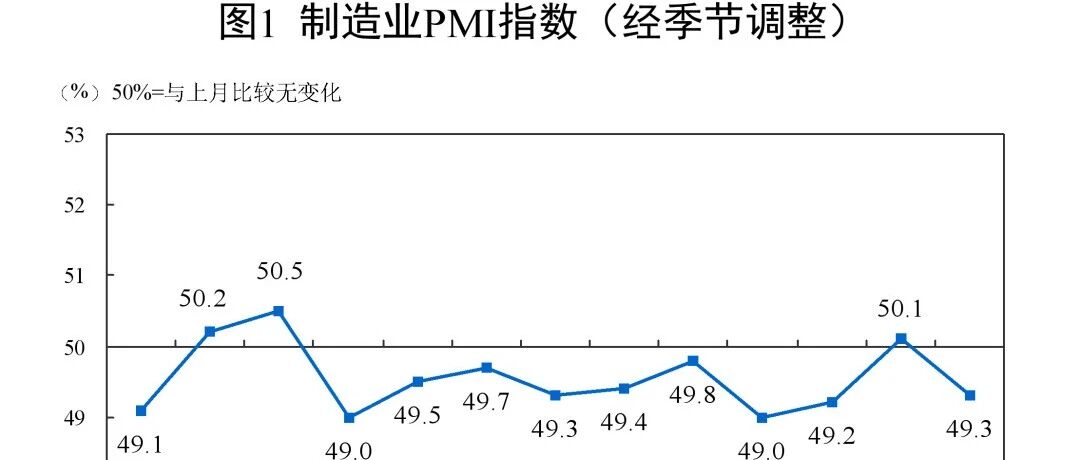
Group 1: Manufacturing PMI Overview - In January, the Manufacturing Purchasing Managers' Index (PMI) was 49.3%, a decrease of 0.8 percentage points from the previous month, indicating a decline in manufacturing activity [1] - Large enterprises had a PMI of 50.3%, down 0.5 percentage points, while medium and small enterprises had PMIs of 48.7% and 47.4%, down 1.1 and 1.2 percentage points respectively, both below the critical point [3] - The production index was 50.6%, down 1.1 percentage points, indicating continued expansion in manufacturing production [3] - The new orders index was 49.2%, down 1.6 percentage points, suggesting a slowdown in market demand [3] - The raw materials inventory index was 47.4%, down 0.4 percentage points, indicating a continued decrease in major raw material inventories [3] - The employment index was 48.1%, down 0.1 percentage points, reflecting a slight decline in employment conditions within manufacturing [3] - The supplier delivery time index was 50.1%, down 0.1 percentage points, indicating that supplier delivery times continued to accelerate [4] Group 2: Non-Manufacturing PMI Overview - In January, the Non-Manufacturing Business Activity Index was 49.4%, a decrease of 0.8 percentage points from the previous month [6] - The construction industry business activity index was 48.8%, down 4.0 percentage points, while the service industry business activity index was 49.5%, down 0.2 percentage points [8] - The new orders index for non-manufacturing was 46.1%, down 1.2 percentage points, indicating a decline in market demand [13] - The input prices index was 50.0%, down 0.2 percentage points, indicating stable input prices for non-manufacturing enterprises [13] - The sales prices index was 48.8%, up 0.8 percentage points, suggesting a narrowing decline in sales prices [13] - The employment index was 46.1%, stable from the previous month, indicating stable employment conditions in non-manufacturing [13] - The business activity expectation index was 56.0%, down 0.5 percentage points, remaining in a high optimism range [14] Group 3: Comprehensive PMI Overview - In January, the Comprehensive PMI Output Index was 49.8%, a decrease of 0.9 percentage points, indicating a general slowdown in production and business activities compared to the previous month [18]

未知机构:国海银行资产配置1月PMI点评景气度有所回落非制造业持续扩张-20260202
未知机构· 2026-02-02 02:10
Summary of Conference Call Notes Industry Overview - The overall economic sentiment in China has declined, with the composite PMI output index at 49.8% (↓0.9pp) indicating a contraction in economic activity [1] - Manufacturing PMI stands at 49.3% (↓0.8pp), below Bloomberg's expectation of 50.1% [1][2] - Non-manufacturing PMI is at 49.4% (↓0.8pp), also below Bloomberg's expectation of 50.3% [1][2] Manufacturing Sector Insights - Manufacturing supply and demand indices have decreased: - Production index at 50.6% (↓1.1pp), indicating continued expansion [4] - New orders at 49.2% (↓1.6pp) and new export orders at 47.8% (↓1.2pp), showing a decline in demand [4] - Price indices show signs of recovery: - Main raw material purchase price index at 56.1% (↑3.0pp) and factory price index at 50.6% (↑1.7pp), with the latter exceeding the critical point for the first time in 20 months [4] - Large enterprises maintain expansion with PMI at 50.3% (↓0.5pp), while medium and small enterprises show contraction at 48.7% (↓1.1pp) and 47.4% (↓1.2pp) respectively [4] - Market expectations remain generally positive with a production and business activity expectation index at 52.6% (↓2.9pp), still above the critical point [4] - Specific industries such as agricultural and food processing have maintained high activity levels, with expectation indices above 56.0% for two consecutive months [4] Non-Manufacturing Sector Insights - The construction industry has entered a contraction phase due to factors like low temperatures and the upcoming Spring Festival, with a business activity index at 48.8% (↓4.0pp) [5] - New orders index at 40.1% (↓7.3pp) and business activity expectation index at 49.8% (↓7.6pp), marking the latter's first drop into contraction since March 2020 [5] - Input prices have risen to 52.0% (↑1.1pp) for four consecutive months, while sales prices at 48.2% (↑0.8pp) and employment index at 41.1% (↑0.1pp) show varying degrees of recovery [5] - Service sector shows slight decline with a business activity index at 49.5% (↓0.2pp) [6] - Financial services, capital markets, and insurance sectors remain active with indices above 65.0%, while the real estate sector's index has dropped below 40.0%, indicating weak sentiment [6]
1月份制造业PMI为49.3%
Ren Min Ri Bao Hai Wai Ban· 2026-02-02 01:48
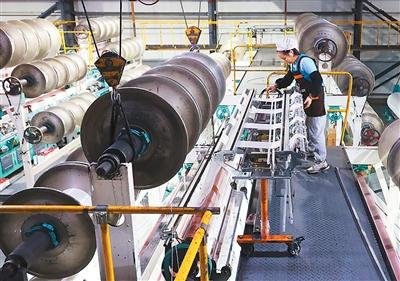
Group 1 - The manufacturing Purchasing Managers' Index (PMI) for January is 49.3%, a decrease of 0.8 percentage points from the previous month, indicating a decline in manufacturing activity due to seasonal factors and insufficient market demand [2] - The production index stands at 50.6%, indicating continued expansion in manufacturing production, while the new orders index is at 49.2%, reflecting a drop in market demand [2] - Certain industries such as agricultural processing and aerospace have production and new orders indices above 56.0%, indicating strong demand, while sectors like petroleum and automotive show indices below the critical point, suggesting a slowdown in market demand [2] Group 2 - The main raw materials purchasing price index and the factory price index are at 56.1% and 50.6%, respectively, both showing increases from the previous month, with the factory price index rising above the critical point for the first time in nearly 20 months [3] - Large enterprises maintain a PMI of 50.3%, indicating continued expansion, while medium and small enterprises show PMIs of 48.7% and 47.4%, reflecting a decline in their economic performance [3] - High-tech manufacturing leads with a PMI of 52.0%, remaining above 52.0% for two consecutive months, while consumer goods and high-energy industries show lower PMIs of 48.3% and 47.9%, indicating a decrease in their economic conditions [3] Group 3 - The production and business activity expectation index is at 52.6%, indicating optimism among enterprises, particularly in agricultural processing and food industries, which have indices above 56.0% [4] - The non-manufacturing business activity index for January is 49.4%, a decrease of 0.8 percentage points from the previous month, indicating a decline in overall non-manufacturing activity [4] - The service industry business activity index is at 49.5%, down 0.2 percentage points, with sectors like financial services showing high activity indices above 65.0%, while the real estate sector drops below 40.0%, indicating weak performance [4]
1月份中国采购经理指数有所回落
Guo Jia Tong Ji Ju· 2026-02-02 01:05
Group 1: Manufacturing Sector - The manufacturing Purchasing Managers' Index (PMI) decreased to 49.3% in January, indicating a decline in economic sentiment compared to the previous month [1][2] - The production index remained above the critical point at 50.6%, suggesting continued expansion in manufacturing production, while the new orders index fell to 49.2%, indicating a drop in market demand [2] - Large enterprises maintained a PMI of 50.3%, indicating ongoing expansion, while small and medium-sized enterprises saw declines in their PMIs to 48.7% and 47.4%, respectively [3] - High-tech manufacturing continued to lead with a PMI of 52.0%, reflecting a positive development trend in this sector [3] - The price indices for major raw materials and factory prices rose to 56.1% and 50.6%, respectively, indicating an overall improvement in market price levels [2] Group 2: Non-Manufacturing Sector - The non-manufacturing business activity index fell to 49.4%, reflecting a decrease in overall economic sentiment in this sector [1][4] - The service industry business activity index was at 49.5%, with significant activity in financial services, while the real estate sector's index dropped below 40.0%, indicating weak sentiment [4] - The construction industry experienced a notable decline, with its business activity index at 48.8%, influenced by adverse weather and the upcoming holiday [4] - Despite the decline in current activity, the service industry business activity expectation index rose to 57.1%, indicating increased confidence among service sector enterprises [4] Group 3: Composite PMI - The composite PMI output index was recorded at 49.8%, showing a slight decrease from the previous month, indicating a general slowdown in production and business activities [1][5] - The manufacturing production index and non-manufacturing business activity index were 50.6% and 49.4%, respectively, contributing to the overall composite PMI output index [5]
直接融资“三级跳” 辽宁靠什么
Xin Lang Cai Jing· 2026-02-01 22:24
(来源:辽宁日报) 转自:辽宁日报 本报记者 张学军 "十五五"开局之年,我省资本市场喜迎"开门红"。1月30日,一阵清脆的钟声响起,大连美德乐工业自 动化股份有限公司在北京证券交易所正式上市,2026年辽宁首家上市公司诞生。开盘首日,美德乐表现 亮眼,每股报价135元,较发行价41.88元大幅高开222.35%,总市值达98亿元左右。美德乐成功实现了 从新三板挂牌到北交所上市的华丽转身,掀开了我省资本市场发展充满勃勃生机的新春序幕。 近年来,辽宁资本市场紧紧锚定新时代东北全面振兴、资本市场全面深化改革重大机遇,助力区域实体 经济持续获得金融活水。全省上下以政策赋能筑牢发展根基、以精准服务破解瓶颈堵点、以生态优化强 化保障支撑,着力破解资本市场发展中的痛点、难点问题,推动一批优秀企业借助资本市场实现跨越式 发展。"十四五"期间,辽宁新增首发上市企业18家。2025年,辽宁直接融资增速实现历史性突破,全省 直接融资一举跨越900亿元大关,达927.8亿元,同比激增41.3%,创十年来新高。 逐年攀升 增速加快 释放融资需求239亿元,实现股权融资12.48亿元,让"资本入辽"从理念转化为实实在在的发展动能,为 ...
1月制造业生产保持扩张 金融市场活跃度较高
Zhong Guo Zheng Quan Bao· 2026-02-01 20:53
● 本报记者 连润 国家统计局1月31日发布的数据显示,1月份,制造业采购经理指数(PMI)为49.3%,比上月下降0.8个 百分点,其中,生产指数为50.6%,高于临界点,制造业生产保持扩张。非制造业商务活动指数为 49.4%,从行业看,货币金融服务、资本市场服务、保险等行业商务活动指数均高于65.0%,金融市场 活跃度较高。 出厂价格指数升至临界点以上 "1月份,部分制造业行业进入传统淡季,加之市场有效需求仍显不足,制造业PMI为49.3%,景气水平 较上月下降。"国家统计局服务业调查中心首席统计师霍丽慧表示。 从分项指数看,价格指数双双回升。霍丽慧分析,1月份,受近期部分大宗商品价格上涨等因素影响, 主要原材料购进价格指数和出厂价格指数分别为56.1%和50.6%,比上月上升3.0个和1.7个百分点,其中 出厂价格指数近20个月来首次升至临界点以上,制造业市场价格总体水平改善。 从非制造业看,霍丽慧表示,1月份,受建筑业等行业景气度下降等因素影响,非制造业商务活动指数 为49.4%,比上月下降0.8个百分点,非制造业总体景气水平有所回落。(下转A02版) 高技术制造业持续领跑。1月份,高技术制造业PMI ...
1月制造业PMI为49.3% 高技术制造业发展态势持续向好
Shang Hai Zheng Quan Bao· 2026-02-01 18:14
□ 1月生产指数为50.6%,高于临界点,制造业生产保持扩张 □ 1月高技术制造业PMI为52.0%,连续2个月位于52.0%及以上较高水平,行业发展态势持续向好。装备 制造业PMI为50.1%,保持在扩张区间 □ 1月主要原材料购进价格指数和出厂价格指数分别为56.1%和50.6%,分别比2025年12月上升3.0个百分 点和1.7个百分点。其中,原材料购进价格指数创2024年6月以来新高,出厂价格指数是近20个月来首次 升至临界点以上 □ 1月制造业企业生产经营活动预期指数为52.6%,继续高于临界点 □ 1月服务业业务活动预期指数为57.1%,比2025年12月上升0.7个百分点,连续2个月环比上升,表明服 务业企业对近期市场发展信心有所增强 ◎记者 陈芳 从制造业PMI的分项指标看,企业生产增势有所放缓,但整体仍保持扩张态势,市场需求承压运行,新 订单指数和新出口订单指数均回落。 数据显示:1月生产指数为50.6%,高于临界点,制造业生产保持扩张;新订单指数为49.2%,较2025年 12月下降1.6个百分点;新出口订单指数为47.8%,较2025年12月下降1.2个百分点。 对于需求回落的原因,中国 ...
1月制造业PMI为49.3% 出厂价格指数近20个月来首次升至临界点以上
Xin Lang Cai Jing· 2026-02-01 13:07
Group 1 - In January, the manufacturing Purchasing Managers' Index (PMI) decreased to 49.3%, indicating a decline in economic sentiment [1] - The non-manufacturing business activity index fell to 49.4%, reflecting a decrease in overall economic activity [1] - The comprehensive PMI output index also dropped to 49.8%, showing a general downturn in economic conditions [1] Group 2 - The decline in manufacturing PMI is attributed to seasonal factors, as many industries enter a traditional off-peak period in January [2] - The PMI index is affected by a high base effect from December 2025, which saw a significant increase, thus impacting January's figures [2] - Weak internal investment and consumption demand, along with high external uncertainties, are major factors dragging down the manufacturing sector [2] Group 3 - The raw material purchase price index rose to 56.1%, while the factory price index increased to 50.6%, marking the first time in nearly 20 months that the factory price index exceeded the critical point [3] - The difference between the raw material purchase price index and the factory price index indicates a transfer of profits upstream [3] - Recent structural policies aimed at supporting small and medium enterprises and technology firms are expected to take time to positively impact the manufacturing sector [3] Group 4 - The non-manufacturing business activity index's decline is influenced by the downturn in industries such as construction, with the index falling to 49.4% [4] - The real estate sector's business activity index dropped below 40.0%, indicating a weak overall sentiment in that industry [4] - Financial services and capital market services showed higher activity levels, with indices above 65.0%, reflecting a more active market [4] Group 5 - The overall macroeconomic sentiment is declining due to seasonal fluctuations, high previous month bases, and insufficient effective demand from the real estate market [5] - The manufacturing production index is expected to decline significantly in February due to the extended Spring Festival holiday [5] - Future manufacturing sentiment will be influenced by export growth, real estate market trends, and the timing and intensity of growth-stimulating policies [5]