
医疗保健

Search documents
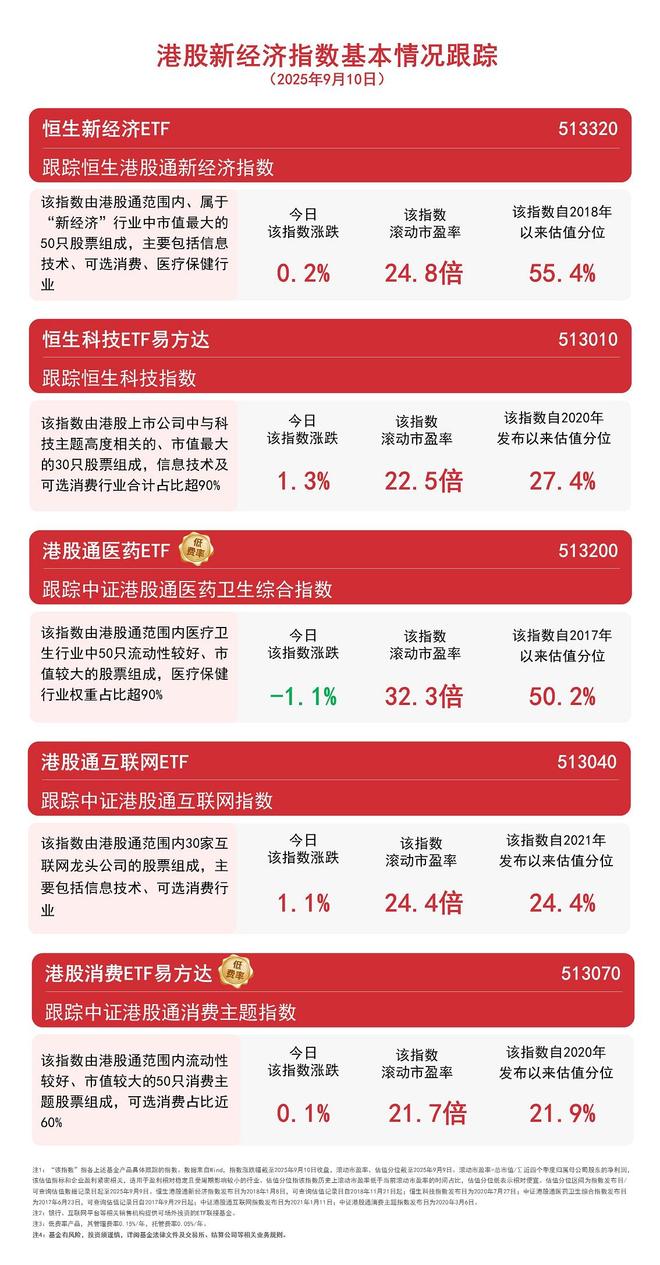
恒生科技ETF易方达(513010)连续10个交易日“吸金”,合计超20亿元,产品规模创历史新高
Mei Ri Jing Ji Xin Wen· 2025-09-10 11:22
Market Overview - The Hong Kong stock market showed mixed performance today, with financial and real estate sectors continuing to rise, while pharmaceutical and new consumption sectors experienced widespread declines [1] - The Hang Seng Technology Index increased by 1.3%, the CSI Hong Kong Stock Connect Internet Index rose by 1.1%, the Hang Seng Stock Connect New Economy Index gained 0.2%, and the CSI Hong Kong Stock Connect Consumer Theme Index saw a slight increase of 0.1%. In contrast, the CSI Hong Kong Stock Connect Pharmaceutical and Health Comprehensive Index fell by 1.1% [1] ETF Performance - The E Fund Hang Seng Technology ETF (513010) has recorded net inflows for 10 consecutive trading days, totaling over 2 billion yuan, with the latest scale reaching 17.6 billion yuan, marking a historical high [1] - The Hang Seng New Economy ETF (513320) tracks the Hang Seng Stock Connect New Economy Index, which consists of 50 stocks from the "new economy" sector with the largest market capitalization [2] - The Hang Seng Technology ETF (513010) tracks the Hang Seng Technology Index, composed of 30 stocks highly related to technology themes, with over 90% of the index comprising information technology and consumer discretionary sectors [2] - The CSI Hong Kong Stock Connect Pharmaceutical ETF (513200) tracks the CSI Hong Kong Stock Connect Pharmaceutical and Health Comprehensive Index, which includes 50 liquid and large-cap stocks in the healthcare sector [2] - The CSI Hong Kong Stock Connect Internet ETF (513040) tracks the CSI Hong Kong Stock Connect Internet Index, consisting of 30 leading internet companies, primarily in information technology and consumer discretionary sectors [2] Valuation Metrics - The rolling P/E ratio for the Hang Seng New Economy Index is 24.8 times, with a valuation percentile of 55.4% since 2018 [2] - The rolling P/E ratio for the Hang Seng Technology Index is 22.5 times, with a valuation percentile of 27.4% since its inception in 2020 [2] - The rolling P/E ratio for the CSI Hong Kong Stock Connect Pharmaceutical Index is 32.3 times, with a valuation percentile of 50.2% since 2017 [2] - The rolling P/E ratio for the CSI Hong Kong Stock Connect Internet Index is 24.4 times, with a valuation percentile of 24.4% since its inception in 2021 [2] - The rolling P/E ratio for the E Fund Hong Kong Consumption ETF (513070) is 21.7 times, with a valuation percentile of 21.9% since its inception in 2020 [3]

美国8月失业率升至4.3%,劳动力市场警报再次拉响
Sou Hu Cai Jing· 2025-09-08 01:37
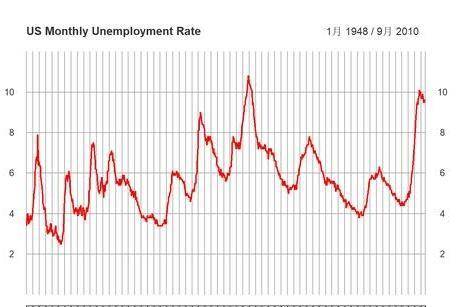
Group 1: Labor Market Overview - The unemployment rate in the U.S. rose to 4.3% in August, marking a new high in nearly four years, which is significantly above market expectations [1] - Non-farm payrolls increased by only 22,000 in August, a sharp decline from the revised 79,000 in July, and well below economists' expectations of 75,000 [1] - The number of permanent job losses increased to 1.915 million in July, indicating a shift from temporary layoffs to long-term structural reductions [3] Group 2: Sector Performance - Job growth in August was primarily driven by the healthcare sector, which added 31,000 jobs, although this is below the average monthly increase of 42,000 over the past year [3] - Manufacturing experienced job losses for the fourth consecutive month, shedding 24,000 jobs, largely due to tariff impacts and supply chain restructuring [3] - Federal government employment decreased by 15,000 in August, with a total reduction of 97,000 jobs since January [3] Group 3: Economic Implications - The weak labor market has raised concerns about the economic outlook, with some economists suggesting that the economy is sliding towards recession [1][4] - The average hourly wage for non-farm employees rose to $36.53 in August, a 0.3% month-over-month increase and a 3.7% year-over-year increase, although reduced working hours have raised concerns about economic growth [7] - The Federal Reserve is expected to lower interest rates in response to the weak employment data, with a potential 25 basis point cut anticipated in the upcoming policy meeting [7] Group 4: Political and Structural Factors - Political factors have influenced economic data, with President Trump dismissing the head of the Bureau of Labor Statistics over alleged manipulation of employment data [4] - Young graduates face a high unemployment rate of 6.6%, the highest in a decade, indicating that entry-level positions now often require several years of experience [5] - The OECD has downgraded the U.S. economic growth forecast for 2025 to 1.6%, warning that tariffs could push the unemployment rate above 4.4% by early 2026 [11]
欧洲大健康企业:中国市场增速迅猛,进博会成拓市“妙方”
2 1 Shi Ji Jing Ji Bao Dao· 2025-09-07 11:09
Group 1 - The event "China International Import Expo Goes to China Resources" was held in Huizhou, Guangdong, focusing on the health sector and attracting over 30 Fortune 500 companies [1] - The event aims to enhance cooperation between central enterprises and international partners, leveraging the opportunities in the Chinese health market [1] - China Resources Group's seven business units, including China Resources Pharmaceutical and China Resources Sanjiu, expressed import procurement needs during the event [1] Group 2 - European health companies reported that the China International Import Expo has significantly aided their market entry by connecting them with distributors, agents, and quality customers [2] - These companies are optimistic about the growth prospects in the Chinese market, citing its large scale advantage [2] - Some companies suggested that China should align its medical device market access standards more closely with international standards to facilitate broader consumer access [2]



W124市场观察:盈利质量、红利风格交易活跃度有所回暖
Changjiang Securities· 2025-09-07 10:11
Market Overview - The Shanghai Composite Index experienced increased volatility with a slight decline in trading volume during the week[2] - Growth style saw a pullback, but a strong rebound was noted on the last trading day, particularly in the ChiNext Index[2] Trading Activity - Dividend style trading activity showed signs of recovery, while high profitability quality continued to rise[3] - The congestion level in high dividend sectors like coal and insurance remains at the bottom, indicating potential for growth[2] Sector Performance - The healthcare sector led the weekly performance, with healthcare leaders significantly outperforming dividend stocks in the same sector[3] - The value stable and value prosperity composite strategies outperformed during the week[3] Fund Performance - The Fund Heavyweight 50 Index recorded a weekly return of 2.35%, continuing its upward trend[22] - The overall performance of the Fund Heavyweight Index was volatile, but it led the institutional series in returns[22] Theme Trends - The low-carbon leader indices (30/60) showed strong weekly performance, with returns of 8.58% and 8.26% respectively[34] - The carbon neutrality index also performed well, with a weekly return of 5.53%[34]
【民生调查局】虚假医疗广告危害堪比电诈,该如何预防?
Zhong Guo Xin Wen Wang· 2025-09-07 09:35
Core Viewpoint - The rise of false medical advertisements, particularly on short video platforms, poses significant risks to consumers, comparable to telecommunication fraud [1][2]. Group 1: Impact of False Medical Advertisements - False medical advertisements create a "ripple effect," negatively impacting the healthcare industry and undermining public trust in medical professionals [2]. - Common fraudulent products include magnetic therapy mattresses, ganoderma lucidum spore powder, and various health supplements, which are often promoted by fake "doctors" using pseudoscientific claims [2]. Group 2: Consumer Behavior and Risks - Consumers, like the case of a man whose mother spent tens of thousands on sheep milk powder, often fall victim to these scams due to emotional attachment and misinformation [1]. - The fraudulent marketing strategies involve creating urgency through live broadcasts, where links are frequently changed to evade detection [1]. Group 3: Prevention Measures - Regulatory bodies have issued guidelines to clean up misleading medical content on social media, emphasizing the need for collaboration among platforms, the public, and regulatory authorities [3]. - Platforms are encouraged to implement strict penalties, including permanent bans and credit sanctions against violators [3]. Group 4: Warning Signs of Fraud - Consumers are advised to avoid engaging with suspicious advertisements that promise miraculous cures for serious conditions, as these often lead to exorbitant costs for ineffective treatments [4].
美元跳水,黄金拉升!美国,重磅数据发布!
证券时报· 2025-09-05 15:13
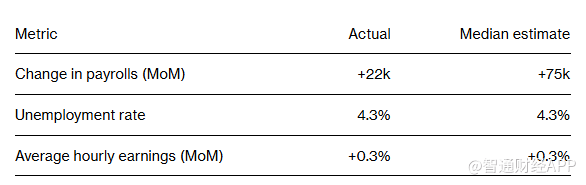
Core Viewpoint - The article discusses the implications of the weak U.S. employment data released on September 5, which has significantly increased expectations for a Federal Reserve interest rate cut in September [2][8]. Employment Data Summary - The U.S. added 22,000 jobs in August, falling short of the expected 75,000, with the previous month's figure revised from 73,000 to 79,000 [5][6]. - The unemployment rate remained at 4.3%, matching expectations, while average hourly wages increased by 3.7% year-over-year, slightly below the expected 3.8% [5][6]. - The report indicated a slowdown in job growth compared to July's addition of 79,000 jobs, with the June data showing a negative growth of 13,000 jobs [6]. Market Reaction - Following the employment data release, the U.S. dollar index dropped nearly 0.8%, while gold prices surged over 1%, reaching a record high of $3,594.76 per ounce [2][8]. - The two-year Treasury yield fell by 8 basis points to 3.5%, the lowest since April, and the ten-year yield decreased by 4 basis points to 4.1% [8]. Federal Reserve Rate Cut Expectations - Market expectations for a 25 basis point rate cut by the Federal Reserve in September have risen to 96% following the employment report [8][10]. - Analysts believe the weak employment data has made a rate cut almost certain, with some suggesting that the current economic conditions warrant a release of monetary policy strength [10].

美国8月非农“大爆冷” 巩固美联储9月降息预期
Zhi Tong Cai Jing· 2025-09-05 13:37
Group 1 - The core viewpoint of the articles indicates a significant slowdown in U.S. job growth, with the unemployment rate rising to its highest level since 2021, raising concerns about a potential worsening labor market [1][2][3] - In August, non-farm payrolls increased by only 22,000, far below the expected 75,000, while the unemployment rate rose to 4.3% [2][3] - Job growth has been concentrated in healthcare, leisure, and hospitality, while sectors such as information, finance, manufacturing, federal government, and business services saw substantial job losses [2][3] Group 2 - The average job growth over the past three months is only 29,000, marking the weakest employment growth phase since the pandemic began, with job additions consistently below 100,000 for four consecutive months [3] - The disappointing employment report has increased expectations for a Federal Reserve interest rate cut in September, with a 98% probability of a 25 basis point cut anticipated [4] - The yield on the two-year U.S. Treasury note fell to 3.5%, and the ten-year note yield dropped to 4.1%, both reaching five-month lows, indicating a market reaction to the employment data [3]
X @外汇交易员
外汇交易员· 2025-09-05 12:49
Employment Trends - US healthcare and social assistance sector added approximately 47 thousand jobs in August [1] - This represents the smallest monthly increase since January 2022 [1] - The healthcare sector's slowdown could be a significant warning sign for the overall labor market, considering it has accounted for over 40% of all new jobs in the past three years [1]
普华和顺(01358)9月5日斥资110.32万港元回购78.8万股
智通财经网· 2025-09-05 10:55
Core Viewpoint - PwC announced a share buyback plan, indicating confidence in its stock value and future prospects [1] Group 1: Share Buyback Details - The company will repurchase 788,000 shares at a total cost of HKD 1.1032 million [1] - The buyback price per share is set at HKD 1.4 [1] - The buyback is scheduled to take place on September 5, 2025 [1]
美联储降息之箭已在弦,全球钱往哪里跑?
Soochow Securities· 2025-09-05 10:32
Group 1 - Developed markets are expected to outperform emerging markets following a dovish signal from the Federal Reserve, with historical data indicating greater upward elasticity in developed markets during the first 1-3 months after such signals [2][3][4] - The S&P 500 has historically shown an average increase of 1.3% in the month following dovish meetings, with a larger average increase of 5.5% over three months [2][5] - Large-cap stocks are generally favored over small-cap stocks in the aftermath of preventive rate cuts, although small-cap stocks may show significant improvement if economic indicators point to recovery [3][4] Group 2 - Growth sectors such as information technology and healthcare, along with cyclical sectors like financials, are expected to perform better due to their sensitivity to interest rate changes [3][4] - The U.S. dollar may not necessarily decline following rate cuts, as historical trends show a slight average increase in the dollar one month and three months after dovish meetings [3][4][5] - Short-term U.S. Treasury yields are expected to decline more significantly than long-term yields, which may be constrained by factors such as fiscal deficits and credit conditions [4][5] Group 3 - In the Chinese market, the impact of rate cuts is seen as a supplementary factor, with the primary influence being the economic fundamentals [4][5] - A-shares are anticipated to favor growth sectors over value sectors, particularly in interest-sensitive industries like pharmaceuticals and electronics, which tend to perform better in the six months following rate cuts [6][7] - Hong Kong stocks, particularly in the information technology sector, are expected to show superior performance both in the short and long term following rate cuts [6][7]