
煤炭开采和洗选业

Search documents
山煤国际(600546)7月29日主力资金净流出2835.04万元
Sou Hu Cai Jing· 2025-07-29 16:42
天眼查商业履历信息显示,山煤国际能源集团股份有限公司,成立于2000年,位于太原市,是一家以从 事煤炭开采和洗选业为主的企业。企业注册资本198245.614万人民币,实缴资本7000万人民币。公司法 定代表人为孟君。 通过天眼查大数据分析,山煤国际能源集团股份有限公司共对外投资了43家企业,参与招投标项目4795 次,专利信息28条,此外企业还拥有行政许可2个。 金融界消息 截至2025年7月29日收盘,山煤国际(600546)报收于9.92元,上涨0.4%,换手率1.73%, 成交量34.32万手,成交金额3.37亿元。 资金流向方面,今日主力资金净流出2835.04万元,占比成交额8.41%。其中,超大单净流出531.14万 元、占成交额1.58%,大单净流出2303.89万元、占成交额6.83%,中单净流出流出467.11万元、占成交 额1.39%,小单净流入3302.14万元、占成交额9.79%。 山煤国际最新一期业绩显示,截至2025一季报,公司营业总收入45.02亿元、同比减少29.17%,归属净 利润2.55亿元,同比减少56.29%,扣非净利润2.69亿元,同比减少55.38%,流动比率0. ...

电投能源(002128)7月29日主力资金净流入1235.83万元
Sou Hu Cai Jing· 2025-07-29 12:17
金融界消息 截至2025年7月29日收盘,电投能源(002128)报收于20.51元,上涨0.54%,换手率 0.24%,成交量5.28万手,成交金额1.08亿元。 资金流向方面,今日主力资金净流入1235.83万元,占比成交额11.44%。其中,超大单净流入1278.39万 元、占成交额11.83%,大单净流出42.56万元、占成交额0.39%,中单净流出流入540.43万元、占成交额 5.0%,小单净流出1776.26万元、占成交额16.44%。 电投能源最新一期业绩显示,截至2025一季报,公司营业总收入75.37亿元、同比增长2.63%,归属净利 润15.59亿元,同比减少19.82%,扣非净利润15.27亿元,同比减少20.23%,流动比率1.988、速动比率 1.736、资产负债率24.14%。 天眼查商业履历信息显示,内蒙古电投能源股份有限公司,成立于2001年,位于通辽市,是一家以从事 煤炭开采和洗选业为主的企业。企业注册资本224157.3493万人民币,实缴资本192157.3493万人民币。 公司法定代表人为王伟光。 通过天眼查大数据分析,内蒙古电投能源股份有限公司共对外投资了46家企业 ...

上半年山西全社会用电量同比增长6.3%
Xin Hua Cai Jing· 2025-07-25 07:47
Core Viewpoint - Shanxi Province's electricity consumption in the first half of the year reached 156.96 billion kWh, showing a year-on-year growth of 6.3%, indicating a stable and improving economic performance [1][3] Group 1: Electricity Consumption by Sector - The first sector's electricity consumption was 1.40 billion kWh, up 6.81% year-on-year [1] - The second sector's electricity consumption was 1,126 billion kWh, increasing by 5.05% year-on-year [1] - The third sector's electricity consumption was 254.67 billion kWh, with a growth of 12.18% year-on-year [1] - Residential electricity consumption reached 174.9 billion kWh, growing by 6.29% year-on-year [1] Group 2: Industrial Electricity Consumption - Industrial electricity consumption increased by 5.17% year-on-year, reflecting the acceleration of transformation and upgrading [2] - Electricity consumption in the non-ferrous metal mining and selection industry grew by 23.97%, while the petroleum, coal, and other fuel processing industries saw a 16.41% increase [2] - The coal mining and washing industry experienced a 7.98% rise in electricity consumption [2] - The photovoltaic equipment and components manufacturing industry saw a significant increase of 671.83% in electricity consumption [2] Group 3: Growth in New Energy and Services - New energy vehicle manufacturing, medical instrument manufacturing, urban rail transit equipment manufacturing, and instrument manufacturing experienced electricity consumption growth rates of 197.09%, 36.5%, 27.2%, and 25.63% respectively [2] - The service sector's electricity consumption grew by 12.48%, with internet data services increasing by 43.28% [2] - The charging and swapping service industry saw a remarkable increase of 91.1% in electricity consumption due to the promotion of heavy-duty electric vehicle policies and the popularity of residential new energy vehicles [2] - The tourism industry grew by 14.78%, positively impacting wholesale and retail electricity consumption, which increased by 27.8% [2]
新疆上半年规上工业增加值增长7.4% 四大行业贡献近六成增长
Xin Hua Cai Jing· 2025-07-24 12:05
Group 1 - Xinjiang's industrial production has shown a steady and positive development trend in 2023, with a year-on-year growth of 7.4% in industrial added value for large-scale industries, surpassing the national average by 1.0 percentage points [1] - Among 40 major industrial sectors, 31 sectors achieved growth, resulting in a growth coverage of 77.5%, which is an increase of 7.5 percentage points compared to the first quarter [1] - In the first half of the year, 254 out of 384 major industrial products saw a year-on-year increase in output, with a growth coverage of 66.1%, slightly up by 0.2 percentage points from the first quarter [1] Group 2 - Key industries significantly contributed to industrial growth, with coal mining and washing industry increasing by 12.2%, contributing 1.5 percentage points to the growth of large-scale industrial added value [1] - The non-ferrous metal smelting and rolling processing industry experienced a substantial growth rate of 16.1%, contributing 1.2 percentage points to the overall industrial added value [1] - The chemical raw materials and products manufacturing industry grew by 11.5%, contributing 1.0 percentage points, while the petroleum, coal, and other fuel processing industry increased by 10.2%, contributing 0.7 percentage points [1] Group 3 - The combined contribution of the four key industries accounted for 4.4 percentage points of the growth in large-scale industrial added value, representing a contribution rate of 57.9%, which was the main driving force behind the rapid industrial growth in the first half of the year [2] - Xinjiang aims to continue nurturing and expanding new productive forces to solidify the positive recovery trend of the industrial economy [2]
查超产消息提振市场情绪,预计动力煤价格易涨难跌
Zhong Xin Qi Huo· 2025-07-23 08:48
Report Summary 1. Industry Investment Rating No relevant content provided. 2. Core View The report suggests that although the rumored news of investigating over - production in the coal industry is expected to have a limited impact, it will strengthen the market sentiment, making the thermal coal price more likely to rise than fall. The recent coal price is driven by peak - season demand for a weak rebound, but the high downstream inventory restricts the rebound space [3][4]. 3. Summary by Related Catalog Event - Since July, the "anti - involution" market in the domestic coal industry has continued to ferment. On July 22, it was rumored that the National Energy Administration issued a notice to conduct a coal mine production situation verification in 8 key coal - producing provinces (regions), mainly checking for over - production. Mines with annual or monthly production exceeding 10% of the announced capacity will be ordered to suspend production for rectification. As of the time of publication, the notice was not found on the official website of the National Energy Administration [2]. Recent Coal Price Operation Logic - In 2025, from January to June, the national cumulative raw coal production was 240,456 tons, a year - on - year increase of 5.4%. The coal price was weak, with the price of thermal coal at northern ports dropping from 770 yuan/ton at the beginning of the year to a low of 617 yuan/ton, a drop of 20%. Recently, the coal market sentiment is strong, and the high - temperature cooling demand in summer has increased daily consumption, driving a weak rebound in prices. However, the high downstream inventory restricts the rebound space [3]. Impact of Over - production Check News - Even though the impact of the over - production check news is expected to be limited, it will strengthen the market sentiment. Given that low - calorie coal has fallen below the cost line and there is a structural shortage of high - quality coal, the supply contraction expectation will make the thermal coal price more likely to rise than fall [4]. Policy Implementation Difficulties - In the previous round of supply - side reform, the elimination of backward coal mine production capacity had achieved obvious results. The current mines mostly meet safety and environmental requirements, so the effect of anti - involution and over - production checks on reducing production cannot be compared with that of supply - side reform. Also, the coal industry accounts for a large proportion of the economy in key coal - producing provinces, so over - production checks may conflict with local economic growth goals [5].
建信期货焦炭焦煤日评-20250718
Jian Xin Qi Huo· 2025-07-18 02:07
Report Information - Report Type: Coke and Coking Coal Daily Review [1] - Date: July 18, 2025 [2] - Research Team: Black Metal Research Team [3] - Researchers: Zhai Hepan, Nie Jiayi, Feng Zeren [3] 1. Market Review and Future Outlook 1.1 Spot Market Dynamics and Technical Analysis - On July 17, the main coke and coking coal futures contracts 2509 rebounded significantly after two days of decline. The J2509 contract closed at 1,519 yuan/ton, up 1.00%, and the JM2509 contract closed at 918.5 yuan/ton, up 1.55% [5]. - The daily KDJ indicators of the coke 2509 contract showed a divergent trend, with the J and K values turning up, but the D value continuing to decline slightly. The daily KDJ indicator of the coking coal 2509 contract changed from a dead cross to a golden cross. The daily MACD red bars of both contracts continued to narrow, but the decline rate slowed down significantly [8]. 1.2 Future Outlook - Coke: Last week, the coke output of independent coking plants dropped to the lowest since early April, and the coke output of steel mills dropped to the lowest since mid - March. Port coke inventories rebounded from the lowest since early March, steel mill coke inventories hovered at a slightly higher level after hitting the lowest since mid - December last year, and coking plant inventories dropped to the lowest since mid - January. The profit per ton of coke has been in the red for 8 consecutive weeks, and the loss widened for 3 consecutive weeks last week. On July 17, the first round of coke spot price increase was implemented [9]. - Coking Coal: From January to May, the year - on - year decline in imports widened significantly by 4.0 percentage points to - 7.3%. In the past 5 weeks, the raw coal and clean coal inventories of coal washing plants have dropped significantly, with declines of 11.1% and 23.8% respectively. The inventories of independent coking plants have increased significantly for 3 consecutive weeks to the level of mid - May, and port inventories have increased for 2 consecutive weeks to the level of late April. However, steel mill inventories declined slightly last week. With stable steel mill purchases, coking plants actively replenished stocks, and coking coal spot prices rebounded [9]. - Overall: Since early July, coke and coking coal futures have rebounded significantly driven by the anti - involution market. It is expected that the prices of coal and coke may continue to rise in the first half of July. One can try to buy for hedging or investment on dips but should take profits in time before the end of July to avoid the negative impact of the obvious correction in August - September on the positions [9]. 2. Industry News - The State Council Executive Meeting, chaired by Premier Li Qiang, focused on strengthening key policies for the domestic large - cycle. The meeting emphasized finding key points, implementing consumption - boosting actions, and releasing domestic demand potential [10]. - An all - around domestic demand expansion research and consultation symposium was held in Beijing on July 16. Wang Huning stressed the importance of expanding domestic demand for long - term economic health and meeting people's needs [10]. - In the first half of 2025, the total social energy consumption increased by 3.9% year - on - year, 0.3 percentage points faster than in Q1. The energy consumption structure continued to optimize, with the proportion of non - fossil energy rising by 1.7 percentage points [11]. - From June 30 to July 6, the average coal price in Shanxi Province was 790.58 yuan/ton, up 0.3% month - on - month. The price of thermal coal fluctuated upward, coking coal prices stabilized, and anthracite prices mainly declined. It is expected that coal prices may be weak in the short term [11]. - In early July, the key steel enterprises produced 20.97 million tons of crude steel, with an average daily output of 2.097 million tons, down 1.5% from the previous period. The daily output of pig iron and steel products also declined [11]. - In H1 2025, the top 10 coal enterprises produced 1.18 billion tons of raw coal, an increase of 40.26 million tons year - on - year, accounting for 49.2% of the output of enterprises above designated size [11]. - New Steel Co., Ltd. expects to turn a profit in H1 2025, with a net profit of 89 million - 112 million yuan [11]. - Liugang Co., Ltd. expects a net profit of about 340 million - 400 million yuan in H1 2025, a significant increase year - on - year [11]. - Maanshan Iron & Steel Co., Ltd. expects to reduce losses in H1 2025, with a net loss of about 75 million yuan [12]. - Bayi Iron & Steel Co., Ltd. expects to record a loss in H1 2025 due to weak supply - demand and low steel prices [12]. - Jiugang Hongxing Iron & Steel Co., Ltd. expects to reduce losses in H1 2025 [12]. - Chongqing Iron & Steel Co., Ltd. expects to reduce losses in H1 2025 [12]. - On July 14, the daily power generation of China Energy Investment Group reached 4.07 billion kWh, 8 days earlier than last year's peak - summer period. The photovoltaic power generation reached a record high of 302 million kWh [12]. - Xinji Energy aims to build a comprehensive energy supply system and enhance its long - term investment value [12]. - Shaanxi Coal Industry Group achieved stable production and operation in H1 2025, with revenue of 227.5 billion yuan, profit of 18.04 billion yuan, and investment of 16.03 billion yuan, up 52.3% year - on - year [13]. - Ruimaotong expects a significant decline in net profit in H1 2025 due to a loose coal market [13]. - Gansu Energy Chemical Industry Co., Ltd. expects to turn from profit to loss in H1 2025 due to weak coal demand and falling prices [13]. - On July 16, the national maximum power load exceeded 1.5 billion kilowatts for the first time, indicating strong power demand driven by high temperatures and economic growth [13]. - From January to May, the steel industry in Hebei Province ran smoothly, with a 14% increase in the added value of the advanced steel industry. The industry's profit accounted for 30.39% of the national total with 21.51% of the output [14]. - In H1 2025, the newly approved coal - fired power projects increased by 152% year - on - year. It is likely that the annual approval will exceed 60GW. The profitability of thermal power is recovering, and the valuation of power equipment manufacturers is expected to rebound [14]. - India achieved its target of 205 million tons/year of crude steel production capacity in the 2024 - 2025 fiscal year and is moving towards the 300 million tons/year target by 2030 - 2031. However, the industry faces challenges such as high import dependence on coking coal and high logistics costs [14]. 3. Data Overview - The report provides various data charts, including the spot price index of metallurgical coke, the spot price of coking coal, production and inventory data of coking plants and steel mills, and the basis between spot and futures prices [16][18][22]
CF40研究院:反内卷≠去产能,治理供需失衡的重点仍在于扩内需
Sou Hu Cai Jing· 2025-07-17 07:15
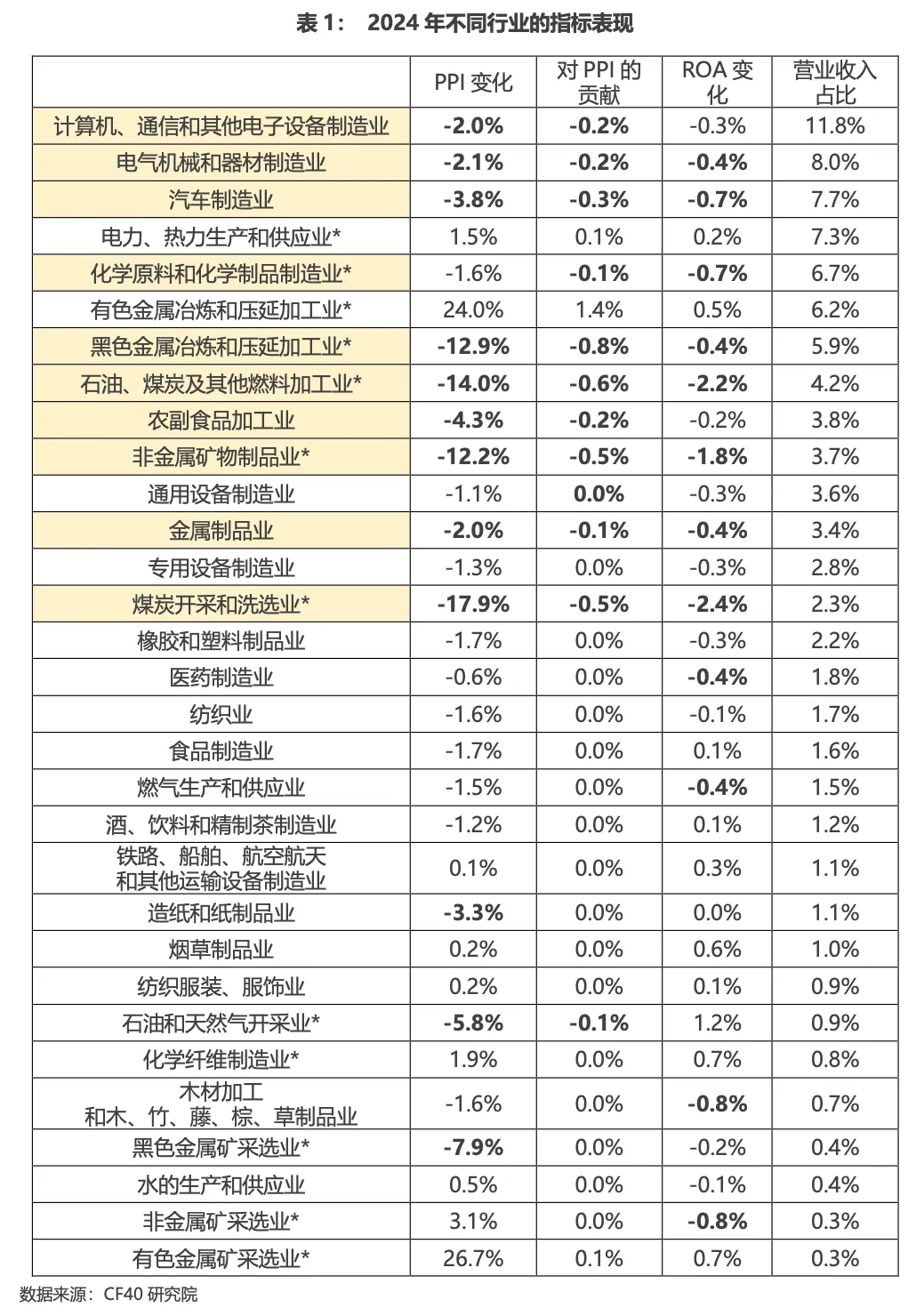
Core Viewpoint - The recent "anti-involution" policy in China is not equivalent to "capacity reduction" but aims to correct market failures and establish fair competition, thereby stimulating innovation and promoting high-quality economic development [1][2][3] Industry Overview - The "anti-involution" initiative has been initiated in industries such as photovoltaic, steel, automotive, and cement, with a focus on enhancing product quality and orderly exit of outdated capacity [1][2] - The current supply-demand imbalance is primarily due to insufficient demand rather than significant capacity expansion in most industries [2][3] Policy Implications - The CF40 research suggests that the focus should remain on expanding effective domestic demand rather than solely on capacity reduction [1][3] - Future policy directions should shift from subsidizing industries to subsidizing consumption [1][2] Industry Performance Analysis - The analysis indicates that the "new three types" of industries, including electric machinery, automotive manufacturing, and computer communications, have significantly higher revenue shares compared to previous capacity reduction industries [8][9] - In 2023, the capital expenditure growth rate for the "new three types" industries was 21.0%, contributing 2.78 percentage points to the overall manufacturing capital expenditure growth rate [8][9] Potential Capacity Reduction Industries - Based on the decision tree model, seven industries are identified as potentially facing capacity reduction, including coal mining, petroleum and coal processing, and automotive manufacturing [4][5] - The cumulative PPI change, contribution to PPI growth, and ROA are critical dimensions for assessing potential capacity reduction [4][5] Demand and Supply Dynamics - The automotive industry faces a core issue of unmet potential demand rather than absolute capacity overcapacity, with potential annual sales estimated at 43.26 million vehicles by 2030 [18][19] - The actual depreciation scale of vehicles has been significantly lower than potential levels, indicating suppressed demand [18][19] Conclusion on New Industries - The "new three types" industries are characterized by high capital and technology intensity, and their capacity should be analyzed on a case-by-case basis rather than assuming a general overcapacity [9][19]

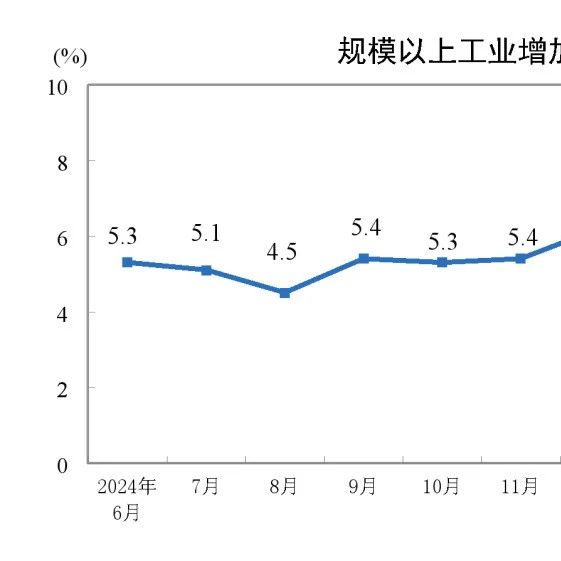
【数据发布】2025年6月份规模以上工业增加值增长6.8%
中汽协会数据· 2025-07-16 06:59
Core Viewpoint - In June, the industrial added value of large-scale enterprises increased by 6.8% year-on-year, indicating a robust growth trend in the industrial sector [1] Group 1: Industrial Growth - In June, the industrial added value increased by 0.50% month-on-month, while the growth for the first half of the year was 6.4% year-on-year [1] - By sector, mining increased by 6.1%, manufacturing by 7.4%, and electricity, heat, gas, and water production and supply by 1.8% in June [1] - State-owned enterprises saw a 5.7% increase, joint-stock enterprises 7.1%, foreign and Hong Kong, Macao, and Taiwan-invested enterprises 5.5%, and private enterprises 6.2% in June [1] Group 2: Industry Performance - Out of 41 major industries, 36 reported year-on-year growth in added value in June [2] - Notable growth sectors included coal mining and washing (6.5%), agricultural and sideline food processing (8.2%), and automotive manufacturing (11.4%) [2] - The electronics manufacturing sector also performed well, with computer, communication, and other electronic equipment manufacturing growing by 11.0% [2] Group 3: Product Output - In June, 379 out of 623 major industrial products saw year-on-year output growth [3] - Steel production reached 12.784 million tons (up 1.8%), while cement production fell by 5.3% to 15.547 million tons [3] - Notably, new energy vehicle production increased by 18.8% to 1.234 million units, contributing to an overall automotive production increase of 8.8% [3] - The industrial enterprises' product sales rate was 94.3%, a decrease of 0.3 percentage points year-on-year, with export delivery value reaching 1.3676 trillion yuan, a nominal increase of 4.0% [3]
7月合约即将到期,IC及IM合约深贴水【股指分红监控】
量化藏经阁· 2025-07-15 13:47
Key Points - The article provides an overview of the dividend progress of constituent stocks in major indices as of July 15, 2025, highlighting the number of companies at various stages of dividend declaration and implementation [1][3][9] - It compares the dividend yields across different industries, noting that coal, banking, and steel sectors have the highest yields [4] - The realized and remaining dividend yields for major indices are detailed, with the Shanghai 50 Index showing a realized yield of 1.80% and a remaining yield of 0.46% [7][8] - The article tracks the annualized premium/discount of stock index futures, indicating the market sentiment and risk appetite of institutional investors [2][14][15] Dividend Progress of Constituent Stocks - As of July 15, 2025, the dividend progress for major indices is as follows: - Shanghai 50 Index: 0 companies in the proposal stage, 7 in the decision stage, 5 in the implementation stage, 35 have paid dividends, and 3 will not pay dividends [1] - CSI 300 Index: 2 in the proposal stage, 51 in the decision stage, 31 in the implementation stage, 190 have paid dividends, and 26 will not pay dividends [1] - CSI 500 Index: 1 in the proposal stage, 51 in the decision stage, 17 in the implementation stage, 354 have paid dividends, and 77 will not pay dividends [1] - CSI 1000 Index: 1 in the proposal stage, 54 in the decision stage, 44 in the implementation stage, 691 have paid dividends, and 210 will not pay dividends [1] Industry Dividend Yield Comparison - The article presents a statistical analysis of the current dividend yields of stocks with disclosed dividend proposals, ranking coal, banking, and steel industries as the top three [4] Realized and Remaining Dividend Yields - The realized and remaining dividend yields for major indices as of July 15, 2025, are as follows: - Shanghai 50 Index: Realized yield of 1.80%, remaining yield of 0.46% [7] - CSI 300 Index: Realized yield of 1.35%, remaining yield of 0.53% [7] - CSI 500 Index: Realized yield of 1.09%, remaining yield of 0.20% [7] - CSI 1000 Index: Realized yield of 0.83%, remaining yield of 0.12% [7] Stock Index Futures Premium/Discount Tracking - As of July 15, 2025, the annualized premiums/discounts for major stock index futures are: - IH main contract: annualized discount of 0.44% [2] - IF main contract: annualized discount of 2.48% [2] - IC main contract: annualized discount of 11.78% [2] - IM main contract: annualized discount of 15.26% [2]

国家统计局:二季度汽车制造业产能利用率71.3%
news flash· 2025-07-15 02:15
Core Insights - The capacity utilization rate of the automotive manufacturing industry in the second quarter of 2025 is reported at 71.3% [1] - Other industries have varying capacity utilization rates, with the highest being in the black metal smelting and rolling processing industry at 80.8% [1] - The lowest capacity utilization is observed in the non-metal mineral products industry at 62.3% [1] Industry Summaries - Coal mining and washing industry: 69.3% capacity utilization [1] - Food manufacturing industry: 69.1% capacity utilization [1] - Textile industry: 77.8% capacity utilization [1] - Chemical raw materials and chemical products manufacturing: 71.9% capacity utilization [1] - General equipment manufacturing: 78.3% capacity utilization [1] - Specialized equipment manufacturing: 76.5% capacity utilization [1] - Electrical machinery and equipment manufacturing: 73.5% capacity utilization [1] - Computer, communication, and other electronic equipment manufacturing: 77.3% capacity utilization [1] - Non-ferrous metal smelting and rolling processing: 77.7% capacity utilization [1]