
电商零售

Search documents
2025年618,你一定要关注的8大趋势
混沌学园· 2025-06-03 07:36
Core Viewpoint - The 618 shopping festival is evolving, reflecting new consumer behaviors and market trends, with a focus on rational consumption and innovative strategies for both consumers and businesses [2][41]. Group 1: New Trends - Trend 1: "Going Global" - The 618 festival is not just a domestic shopping event anymore; it has become a platform for Chinese products to enter international markets, particularly benefiting from recent tariff adjustments [5][9]. - Trend 2: Simplified Shopping Rules - E-commerce platforms are moving towards more transparent pricing strategies, eliminating complex discount structures in favor of straightforward price reductions [10][14]. - Trend 3: Return of Value Optimization - Consumers are increasingly focused on the overall value of products, considering factors like quality and service rather than just price [15][16]. - Trend 4: Rise of Personalization and Niche Brands - There is a growing demand for customized products and niche brands, particularly among younger consumers who seek unique and personalized shopping experiences [17][18]. - Trend 5: Integration of Content and E-commerce - The seamless connection between content platforms and e-commerce is enhancing the shopping experience, allowing consumers to purchase directly from content they engage with [19][21]. - Trend 6: Acceleration of Instant Retail - Instant retail is becoming mainstream, offering rapid delivery options that meet consumer demands for speed [23][25]. - Trend 7: Shift from Low Price to Quality Service - E-commerce platforms are focusing more on product quality and customer service rather than just competing on price [27]. - Trend 8: "Trade-in for New" Strategy - The "trade-in for new" approach is stimulating consumption in durable goods, supported by government incentives [28][31]. - Trend 9: Explosive Potential in Lower-tier Markets - There is significant growth potential in lower-tier markets, with brands increasingly targeting these areas for expansion [32][34]. - Trend 10: AI Empowering Shopping Experience - AI technology is enhancing the shopping experience through smarter interactions and personalized recommendations [35][39].


汇丰研究:维持阿里“买入”评级及目标价176美元
news flash· 2025-06-03 06:15
汇丰研究:维持阿里"买入"评级及目标价176美元 金十数据6月3日讯,汇丰环球研究发表报告表示,商务部国际贸易经济合作研究院估计,到2030年,即 时购物将为国内带来2万亿元人民币的增量市场机会。阿里巴巴(BABA.N)计划积极扩大市场份额,充分 利用淘宝与品牌/商家的强大关系、饿了么的配送网络和算法,以及第三方营运数据。饿了么和淘宝已 实现超过4000万的日均订单(食品和其他即时零售),对比对手京东为日均2500万。该行维持阿里"买 入"评级及目标价176美元。 ...

京东美团外卖大战的底层逻辑是什么?
Hu Xiu· 2025-05-30 03:40
Group 1 - JD's recent aggressive entry into the food delivery market has led to intense competition with Meituan, with both companies engaging in public disputes [1] - The competition between JD and Meituan is rooted in the underlying logic of e-commerce logistics, which can be categorized into "long chain," "middle chain," and "short chain" models [2][3] - JD's "middle chain" model relies on self-operated products and self-built logistics, allowing for faster delivery times compared to Meituan's "short chain" model [4][5] Group 2 - The "short chain" model, while offering faster delivery, faces structural challenges that make it difficult for many companies to achieve scalability and profitability [7][9] - Meituan's success in the "short chain" model is attributed to its strong delivery network and the ability to leverage high-frequency consumer data from its food delivery business [10][18] - JD's decision to enter the food delivery market now is strategic, as both companies seek new growth points amid slowing growth in their respective core businesses [11][13] Group 3 - Meituan's competitive advantages include a robust business development team and an efficient IT system that supports rapid merchant onboarding and operational efficiency [16][17] - JD's current capabilities in business development and IT systems are significantly weaker than Meituan's, which may hinder its ability to compete effectively in the food delivery space [19][21] - The merger of JD's logistics with Dada has impacted the quality of JD's delivery personnel, further widening the gap with Meituan's delivery capabilities [20][21]


恒生科技指数ETF(513180)开盘重挫,科网股全线下跌,理想汽车绩后逆势上涨超6%
Mei Ri Jing Ji Xin Wen· 2025-05-30 01:52
公开信息显示,恒生科技指数ETF(513180)在A股上市的同赛道ETF中规模和流动性双双领先,支持 T+0交易。恒生科技指数ETF(513180)兼具硬科技与新消费属性,在外围扰动下具备韧性:1)硬科 技:恒生科技代表了中国AI核心资产,成分股深度聚焦AI产业链的上中下游,其中阿里、腾讯、小 米、美团、中芯国际、联想等有望成为中国科技股"七巨头";2)新消费:恒生科技超一半权重在电商 零售、汽车、家电、消电、旅游等可选消费板块,包含"蔚小理"、小米、联想等硬件厂商,携程、同程 等OTA平台,以及海尔、美的等家电龙头。(场外联接A/C:013402/013403) (文章来源:每日经济新闻) 5月30日早盘,港股三大指数集体低开,恒生指数跌0.99%,报23339.64点,恒生科指跌1.26%,国企指 数跌1.14%。盘面上,科网股全线下跌,黄金股集体上涨,药品股普涨。开盘后,恒生科技指数跌幅持 续扩大,现已跌超2%,恒生科技指数ETF(513180)跟随指数震荡向下,持仓股中,网易、舜宇光学 科技、比亚迪电子、联想集团等领跌,一度仅理想汽车上涨。 理想汽车涨超6%。消息面上,昨日理想汽车发布2025年第一季 ...

消费参考丨收缩的酸奶市场,两极分化加剧
2 1 Shi Ji Jing Ji Bao Dao· 2025-05-29 23:42
Group 1 - The yogurt market is experiencing a contraction, with a projected decline of 10.68% in market size for 2024 according to Euromonitor data [2] - Major players like Yili and New Hope are still achieving growth in this shrinking market, with Yili's low-temperature yogurt business significantly increasing its market share by 1.3 percentage points [2][4] - Junlebao's "Jianchun" brand leads the low-temperature yogurt market, holding the top market share in both zero-sugar and low-temperature yogurt categories [2][3] Group 2 - The yogurt market is facing intensified price competition, with mainstream prices dropping from 8-10 yuan to around 5 yuan over the past five years [3] - There is a clear polarization in the yogurt market, where low-end products are struggling to sell despite price cuts, while distinctive mid-to-high-end products are seeing relative growth [3] - Companies are increasingly focusing on innovation and new product launches to drive growth in a challenging market environment [3]
龙虎榜 | 支付概念大火!四方精创被疯狂抢筹,深股通加仓1.5亿,机构抛售雄帝科技
Ge Long Hui· 2025-05-29 09:48
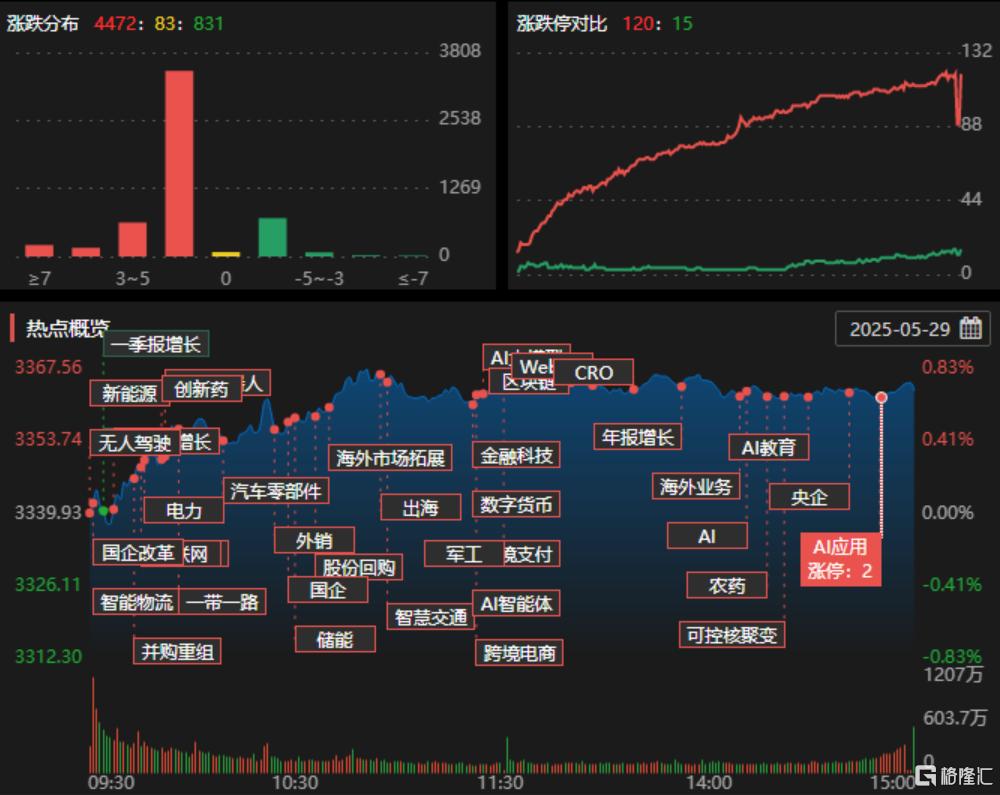
5月29日,市场情绪回暖,4472只个股上涨,仅831只个股下跌,120只个股涨停,15只个股跌停,市场热点聚焦医药、无人驾驶、跨境支付等板块。 高位股方面,无人车辆概念全线爆发,逾20股涨停或涨超10%,云内动力7天5板,通达电气7天6板。算力股鸿博股份4天2板,核电板块中超控股19天12板、 王子新材14天7板、尚纬股份6连板、融发核电5连板。 | 代码 | 名称 | 几天几板 涨停分析 | 价格 | 张唱% | 换手率 | 成交额 | 自次涨停时间 | | --- | --- | --- | --- | --- | --- | --- | --- | | 603390 | 通达中气 | 7天6板 自动驾驶物流车+车联网+比 17.56 | | +10.03% | 4.20% | 2.58 Z | 09:25:00 | | 603333 | 尚纬股份 | 6连板 核电电缆+控股股东变更+新 | 9.96 | +10.06% | 8.29% | 5.03 7 | 09:31:00 | | 000903 | 云内动力 | 7天5板 无人配送车+柴油机+配送机 5.56 | | +10.10% | 1.11% ...


小米卢伟冰:SU7发布这么久没对手,一个能打的都没有;谷歌回应在AI搜索里塞广告:用户觉得有用;夸克健康大模型通过副主任医师考试
雷峰网· 2025-05-28 00:26
Group 1 - The "2025 Elite Internship Program" launched by Industrial Bank aims to provide internship opportunities for high-net-worth clients' children, requiring a minimum deposit of 10 million yuan for new clients and 5 million yuan for existing clients [4][6] - The program faced backlash and was suspended due to misunderstandings in its promotion, with the bank apologizing for the confusion [6][4] Group 2 - Xiaomi Group reported a record revenue of 111.3 billion yuan for Q1 2025, a year-on-year increase of 47.4%, with adjusted net profit rising by 64.5% to 10.7 billion yuan [8][9] - The smart electric vehicle segment generated 18.1 billion yuan in revenue, contributing to a total of 18.6 billion yuan for the innovative business segment [8][9] - The delivery of the Xiaomi SU7 series reached 75,869 units in Q1 2025, with a total delivery exceeding 258,000 units [8] Group 3 - Deep Blue Automotive faced criticism for advertising to 480,000 old car owners without consent, leading to an apology from the CEO who admitted the decision was his fault [10][9] - The CEO promised not to use intrusive advertising methods in the future after acknowledging the negative impact on user experience [10] Group 4 - Geely's chairman Li Shufu emphasized the company's stance against price wars, advocating for value-based competition and sustainable growth in the automotive industry [13][12] - He highlighted the importance of foundational skills in the automotive sector, referencing Geely's acquisitions of established brands like Volvo [13] Group 5 - The competition in the Chinese food delivery market has led to a combined market value loss of approximately 100 billion USD for Meituan and JD.com [15][14] - Both companies have seen their stock prices drop over 30% since last October, reflecting the high costs of their aggressive market strategies [15][14] Group 6 - Long-term plans for Changan Automobile's high-end electric vehicle brand Avita indicate that 59% of its users come from traditional luxury brands like BBA (Benz, BMW, Audi) [19][18] - Changan plans to invest over 200 billion yuan in new energy and smart vehicle technologies, aiming for significant advancements in the automotive sector [19] Group 7 - Meta's Llama AI team has experienced significant talent loss, with 11 out of 14 core members leaving for competitors, raising concerns about the company's ability to retain top AI talent [25][26] - The company is facing internal challenges and has delayed the launch of its most powerful AI model due to performance concerns [25] Group 8 - Google has started integrating ads into its AI search results, claiming they provide useful connections for users, despite concerns about potential misleading information [27][28] - The company reported 72.5 billion USD in ad revenue, with expectations for growth as advertising expands into new areas [27] Group 9 - Volvo Cars announced plans to cut 3,000 jobs as part of a restructuring effort to address high costs and declining demand for electric vehicles [28][29] - The company is facing significant financial challenges, reporting a net loss of 670.9 billion yen (approximately 35.5 billion yuan) for the fiscal year [28][29]

消费参考丨始祖鸟或许也要涨价了
2 1 Shi Ji Jing Ji Bao Dao· 2025-05-26 23:47
Group 1: Nike and Amer Sports Pricing Strategies - Nike plans to increase prices on certain products in the U.S. market starting next month, with a maximum increase of $5 for shoes priced between $100 and $150, and $10 for shoes priced above $150. Products under $100, children's items, and popular "Air Force One" shoes will not see price increases [1] - Amer Sports, the parent company of Arc'teryx, indicated that if tax rates rise, it expects an EPS impact of $0.05, corresponding to about 100 basis points of margin pressure. The company plans to counteract tariff impacts through price increases, supplier negotiations, and supply chain adjustments [1] - Amer Sports reported a 23% year-over-year revenue growth to $1.473 billion in the first quarter, with adjusted net profit rising significantly from $39 million to $148 million [1] Group 2: Regional Performance and Growth - Amer Sports' Technical Apparel segment saw a 28.4% year-over-year revenue increase to $664 million, with direct-to-consumer sales up 31% and same-store sales up 19% [2] - The Outdoor Performance segment, including Salomon, experienced a 24.9% revenue growth to $502 million, driven by over 60% growth in the Greater China and Asia-Pacific regions [2] - In the first quarter, sales in the Greater China region surged 43.1% to $446 million, nearly matching North America's sales of $465 million, which grew by 12% [2]
美团与拼多多都是“该死的零售商”?
Hu Xiu· 2025-05-26 10:43
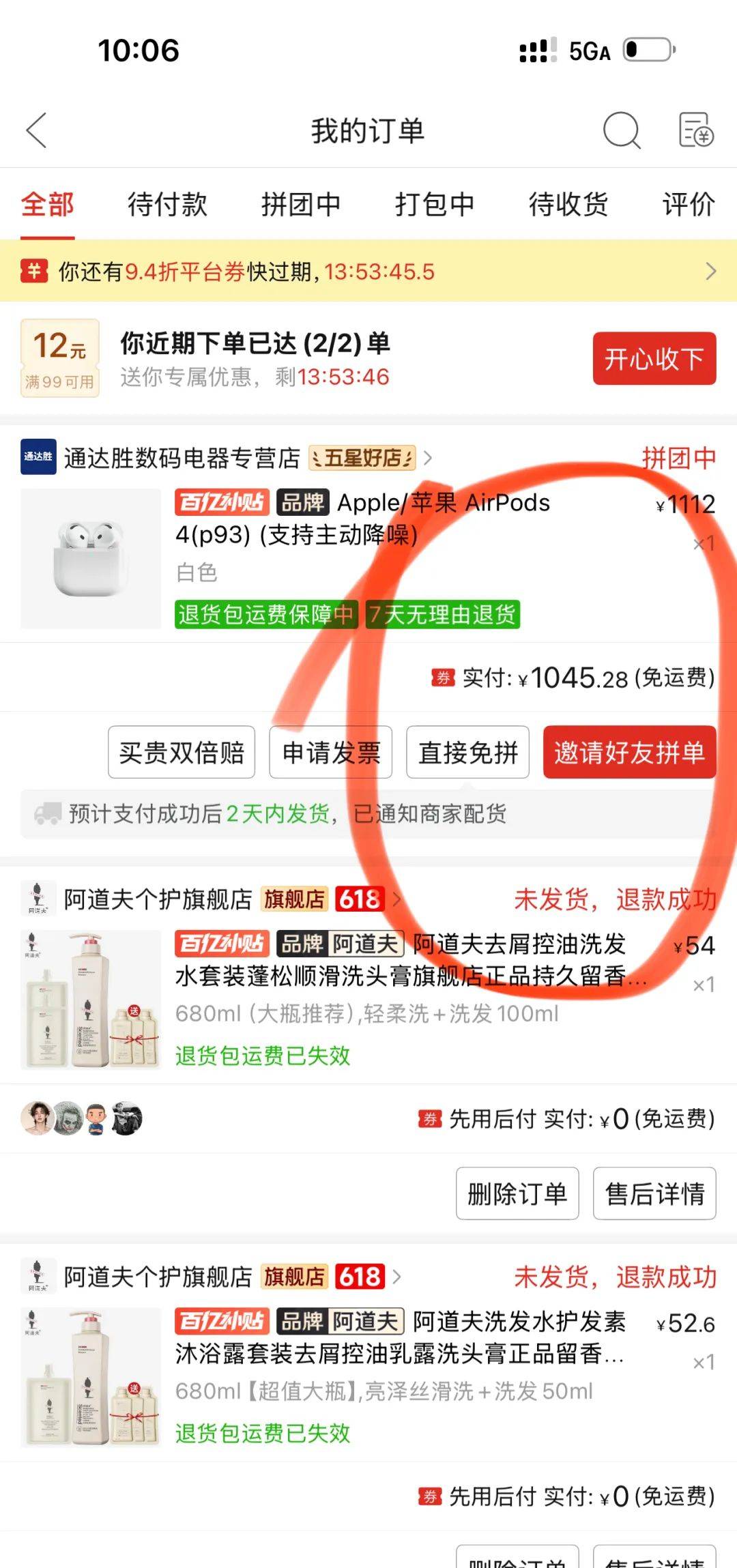
本文来自微信公众号:方伟看十年,作者:方伟Rey,原文标题:《美团与拼多多都是"该死的零售商"吗?》,头图来自:视觉中国 "你的利润率,就是我的机会"——亚马逊创始人贝佐斯 查理·芒格在他生前参加的最后一次Daily Journal的股东会上回顾对阿里巴巴的投资时表示: "我认为阿里巴巴是我犯下的一个严重错误。我被其在中国互联网的地位所吸引,却忽略了它本质上仍然是一个该死的零售商。" 我同意芒格的观点,电商本质上就是零售,而不是所谓的互联网平台。 在之前的文章《线上之王腾讯抖音,线下之王美团拼多多》聊过: 阿里是流量思维,不是零售思维,它的问题是以为自己也是互联网公司,也是腾讯与抖音,要干低价买入流量,然后以最高的价格卖出流量的事情,做流 量的贩子。 而拼多多与美团都是零售思维,零售思维是更加消费者导向的,就是要确保单个商品交付到用户手上的成本最低,它们会一个个环节去扣成本,没有人能 够在成本结构上战胜拼多多,也没有人能够在30分钟内送达的外卖或商品的成本结构上战胜美团,他们都是卷王之王。 题外话,今天两次购物,比价后都是拼多多完胜:一次是AirPods 4降噪版,拼多多最终成交价1045元,京东国补后124 ...

中国零售业景气指数连续在扩张区间运行
Zhong Guo Chan Ye Jing Ji Xin Xi Wang· 2025-05-23 22:30
Core Viewpoint - The China Retail Prosperity Index (CRPI) for May stands at 50.5%, remaining stable compared to the previous month, indicating continued expansion for nine consecutive months. The positive impact of the "May Day" holiday on offline retail is significant, supported by various government initiatives to boost consumption [1]. Group 1: Retail Sector Overview - The CRPI for the goods retail sector is at 50.4%, a slight increase of 0.3 percentage points from last month, indicating a positive trend in offline retail performance [2]. - The rental business index is at 51.8%, a decrease of 0.9 percentage points from the previous month, suggesting challenges in the rental sector due to adjustments in store income and operational spaces [3]. - The e-commerce index is at 50.0%, a minor decline of 0.1 percentage points, reflecting stable development in the e-commerce sector [3]. Group 2: Goods Retail Sector Details - The sales index for goods retail is at 50.8%, up by 0.3 percentage points, while the profitability index is at 51.3%, an increase of 0.4 percentage points, indicating positive profit expectations for May [2]. - The average transaction value index is at 49.8%, showing a slight increase of 0.5 percentage points, the highest growth since February, signaling a positive market trend [2]. - The operational cost index for goods retail is at 49.5%, a slight increase of 0.1 percentage points, indicating expectations of stable operational costs [2]. Group 3: E-commerce Sector Insights - The total sales index for e-commerce is at 50.6%, down by 1.3 percentage points, while the total number of online products index is at 52.0%, a slight decrease of 0.5 percentage points, indicating stable inventory levels [3]. - The average transaction value index for e-commerce is at 48.9%, with a small increase of 0.6 percentage points, reflecting a positive consumer trend [3]. - The total cost index for e-commerce is at 49.3%, an increase of 1.1 percentage points, suggesting a reduction in cost inputs for e-commerce businesses [3].