咖啡

Search documents
深夜炸场!谷歌终极杀器Gemini 3重磅发布;俞敏洪连发10条南极游视频;香港千万富翁增至近40万人;马云现身蚂蚁园区丨邦早报
创业邦· 2025-11-19 00:12
Group 1: AI Developments - Google launched its new AI model Gemini 3, claiming it to be the "most intelligent" and "factually reliable" AI system to date, with enhanced capabilities in handling text, images, and audio simultaneously [2] - Jeff Bezos founded a new AI startup named "Project Prometheus," which has raised $6.2 billion in funding and employs nearly 100 staff from major tech companies [4] - Perplexity integrated the Kimi K2 Thinking model, marking it as the only domestic model included alongside OpenAI's GPT-5.1 [17] Group 2: Company Financials and Performance - Amer Sports, the parent company of Arc'teryx, reported a 30% revenue increase to $1.756 billion in Q3 2025, with a 161% rise in adjusted net profit to $185 million [14] - Xiaomi Group announced a record high adjusted net profit of 11.3 billion yuan in Q3 2025, with total revenue reaching 113.1 billion yuan, a 22.3% year-on-year increase [14] - 元气森林 announced the separation of its dairy brand 北海牧场 into an independent operation, focusing on low-temperature yogurt while consolidating resources in the beverage sector [14] Group 3: Market Trends and Predictions - A report indicated that the number of "millionaires" in Hong Kong has increased to approximately 395,000, reflecting a growing wealth concentration in the region [27] - The global smartphone shipment is projected to reach 1.2213 billion units in 2025, with AI smartphones expected to grow from 445.8 million units in 2025 to nearly 600 million units in 2026 [27] Group 4: Corporate Changes and Strategies - DJI held closed-door meetings with multiple investment institutions regarding its new panoramic drone, DJI Avata 360, while stating it has no current financing or IPO plans [6][7] - Manner Coffee responded to rumors about a potential IPO in Hong Kong, stating it would not comment on the speculation [7] - The management of 胖东来 underwent significant changes, with 于东来 stepping down as general manager while retaining his position as chairman [7]







京东正式推出京东外卖App
Zheng Quan Ri Bao· 2025-11-18 23:14
Group 1 - JD Group has made significant moves in the local lifestyle sector, launching JD Takeout App to provide a comprehensive platform for local services, including takeout, instant retail, reviews, travel, and shopping [1] - The JD Review feature integrates content with the transaction system, allowing users to seamlessly transition from browsing reviews to making purchases, thus breaking down barriers between review and e-commerce platforms [2] - The introduction of the self-operated brand "Seven Fresh Coffee" aims to enhance user experience and drive coffee consumption, with plans to open 3 to 5 new stores weekly in Beijing [4] Group 2 - The takeout business has shown positive effects, with a high repurchase rate and increased user activity, leading to a nearly 50% conversion rate of new takeout users to other services [5] - The integration of AI in JD Review allows for the analysis of vast amounts of data to generate reviews, enhancing the credibility of the platform while maintaining a non-commercialized approach [2] - Experts suggest that JD's strategy in the local lifestyle sector involves supply chain integration and the development of self-operated formats to strengthen competitive advantage [4]

外卖大战“赚吆喝”,瑞幸增收不增利
Guo Ji Jin Rong Bao· 2025-11-18 14:43
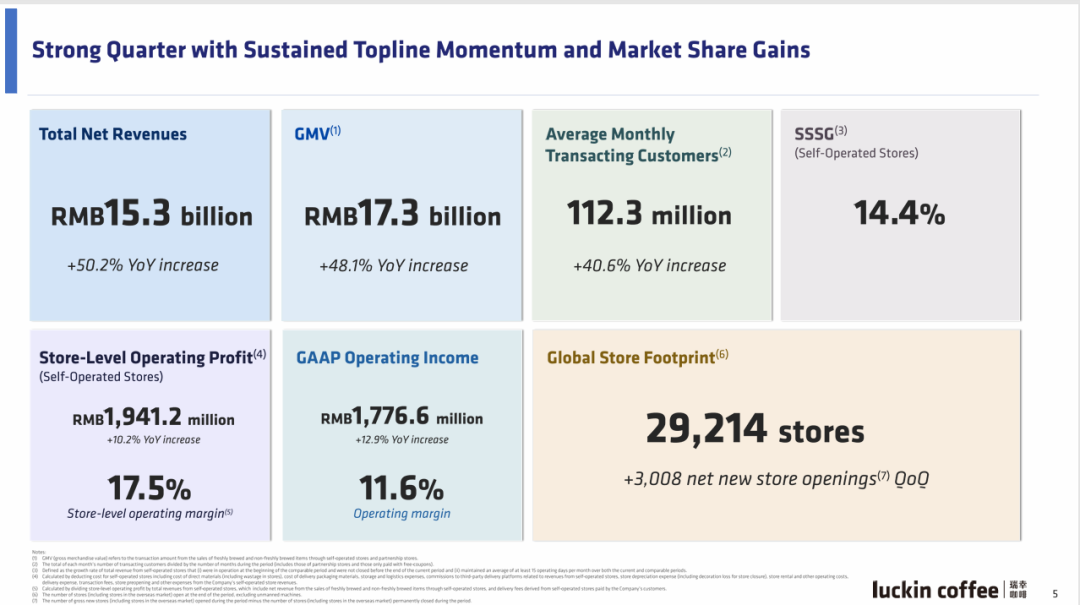
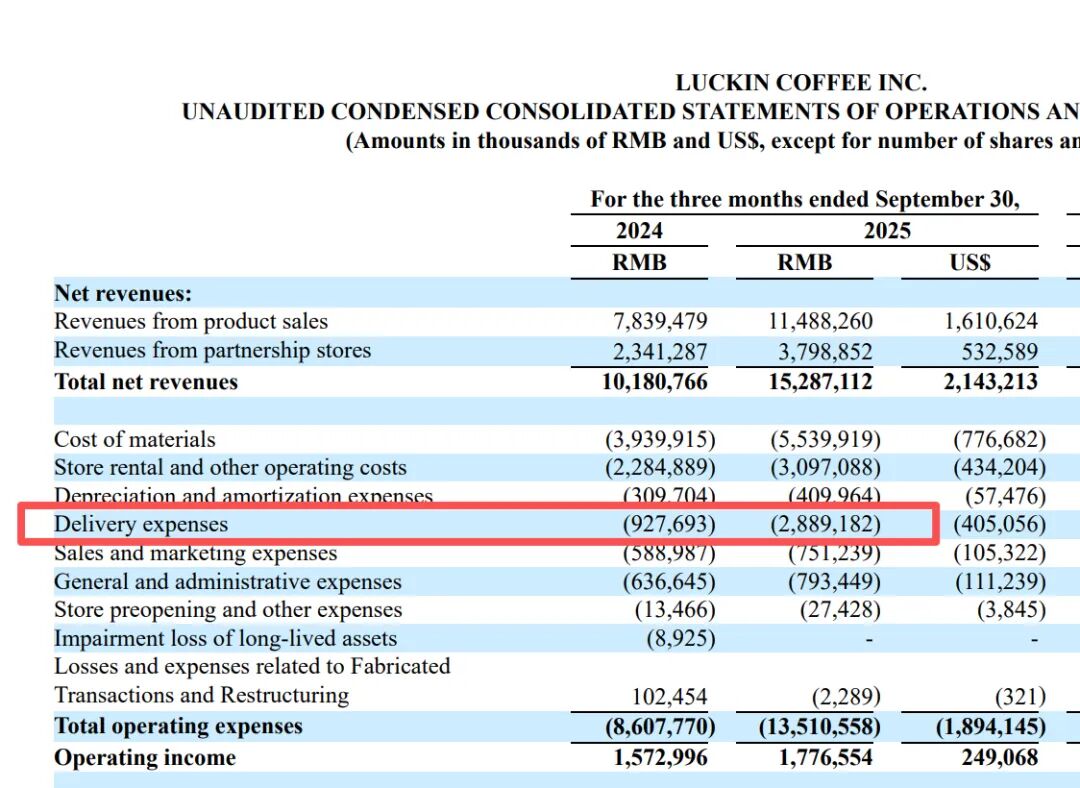
Core Viewpoint - Luckin Coffee reported its Q3 2025 financial results, highlighting a record revenue growth driven by delivery subsidies, but facing profit erosion leading to a situation of revenue growth without profit increase [1][2]. Group 1: Financial Performance - In Q3 2025, Luckin Coffee achieved revenue of RMB 15.29 billion, a year-on-year increase of 50.2%, while net profit was RMB 1.28 billion, down 2.74% year-on-year [1]. - The net profit margin decreased from 12.91% in the same period last year to 8.26%, marking the lowest profit level for the company since Q3 2022 [1]. - The company's Gross Merchandise Value (GMV) grew by 48.1% to RMB 17.32 billion, with an average monthly customer count reaching 112 million, up 40.6% year-on-year [2]. Group 2: Cost Structure and Profitability - Delivery expenses surged to RMB 2.89 billion in Q3, a staggering increase of 211.4% year-on-year, accounting for 18.9% of total revenue, up from 9% the previous year [3]. - Despite a nearly RMB 3 billion increase in revenue from the previous quarter, profits remained nearly flat, indicating that the surge in delivery orders significantly impacted the company's cost structure [3]. Group 3: Strategic Developments - The company is accelerating partnerships with delivery platforms, which has increased the proportion of traffic and customers from third-party platforms [2]. - CEO Guo Jinyi indicated that the intensity of platform subsidies is beginning to decrease, suggesting future subsidy forms will be more refined [6]. - Luckin Coffee is also focusing on expanding its international presence, with a total of 118 overseas stores by the end of Q3, including 68 in Singapore and 5 in the United States [9][10]. Group 4: Leadership and Market Position - The company underwent significant leadership changes, with Guo Jinyi transitioning to CEO and Li Hui becoming the new chairman, emphasizing the importance of this phase for the company's development [8]. - The company is considering a return to the NASDAQ, although no specific timeline has been established [11].
华源晨会精粹20251118-20251118
Hua Yuan Zheng Quan· 2025-11-18 13:49
Group 1: Public Utilities and Environmental Protection - The profitability of waste incineration power generation companies has significantly increased, with net profits for major companies like Junxin Co. (+47.6%), Hanlan Environment (+28.1%), and Yongxing Co. (+25.6%) showing substantial growth in Q3 2025 [7][12] - The improvement in cash flow for waste incineration companies is attributed to capacity expansion, increased utilization rates, and enhanced heating services, with profit increments of approximately 80 yuan per ton of waste [8][12] - The biofuel sector has also seen a substantial increase in profitability, driven by rising prices for used cooking oil (UCO), which increased by 16.7%-22.2% year-on-year [10][12] Group 2: Infrastructure and Construction - In the first ten months of 2025, the broad infrastructure growth rate was slightly positive at 1.51%, while narrow infrastructure (excluding electricity) saw a minor decline of 0.10% [19][20] - Significant projects under the "14th Five-Year Plan" are expected to sustain investment resilience, including major constructions like the Yajiang Hydropower Station and the New Tibet Railway [19][20] - The construction sector is recommended to focus on high-dividend and low-valuation stocks, with companies like Sichuan Road and Bridge and Jianghe Group highlighted for their potential [21][22] Group 3: Media and Internet - Apple has introduced a partnership plan for mini-programs, reducing the revenue share for developers from 30% to 15%, which may enhance the growth of Tencent's mini-program ecosystem [24] - The collaboration is expected to drive traffic growth for WeChat, benefiting Tencent's advertising and gaming business [24] - The media industry is advised to focus on new channels and content directions, with a positive outlook on the ongoing industry recovery [34] Group 4: Specialty Materials - Global Pearl Pigments International has emerged as a leader in the pearl pigment industry, with a CAGR of 36.58% in revenue from 2017 to 2024 [35][36] - The company has strategically acquired international brands to penetrate the high-end market and plans to expand its domestic production capacity to approximately 48,700 tons [37][38] - The pearl pigment industry is characterized by high growth potential and low price sensitivity, making it an attractive investment opportunity [36][37]

外卖大战三个月,瑞幸不是赢家
36氪未来消费· 2025-11-18 13:28
Core Viewpoint - The takeaway from the article is that for Luckin Coffee, delivery services are seen as a temporary supplement rather than a core business model, with a focus on maintaining in-store pickup as the primary method of service [5][6]. Financial Performance - In Q3 2025, Luckin Coffee reported revenue of 15.29 billion yuan, a year-on-year increase of 50.2%, while net profit was 1.28 billion yuan, a slight decline of 1.9% [3]. - The company added over 3,000 new stores in the quarter, bringing the total to 29,214 globally [3]. Impact of Delivery Services - The delivery service has stimulated sales, contributing to the highest revenue growth rate in the past seven quarters, with same-store GMV increasing by 14.4% [4]. - However, the delivery service has led to a significant drop in net profit margins, with net profit margins for the last three Q3s recorded at 13.7%, 12.9%, and 8.4% respectively [4]. - Delivery costs surged by 211.4% to 2.89 billion yuan, increasing its share of revenue from 9.1% to 18.9% [4]. Strategic Focus - CEO Guo Jinyi emphasized that delivery is a temporary supplement, with the core business model focusing on in-store pickup due to the nature of coffee consumption [5]. - The company plans to continue expanding its store count, with a target of adding 6,092 stores in 2024, reflecting a strategic priority on growth and market share [7]. Cost Structure and Market Dynamics - Luckin's cost structure has shown improvement, with raw material costs decreasing from 38.7% to 36.2%, and other operational costs also declining [7]. - The company faces ongoing pressure from high international coffee bean prices, which may impact profit margins in the future [8]. - The competitive landscape is intensifying, with Luckin aiming to position itself as a comprehensive player in the coffee market, leveraging its scale and operational efficiency [8].
11.18日报
Ge Long Hui· 2025-11-18 12:23
Group 1 - The total GMV for Double Eleven reached 1,695 billion, a year-on-year increase of 14%, with traditional e-commerce at 1,619.1 billion (+12%) and instant retail at 67 billion (+138%), while community group buying dropped to 9 billion (-90%) [1] - The data indicates a K-shaped recovery, where high-end consumption, such as high-end cosmetics, grew by approximately 20%, while mid-to-low-end consumption remained flat [1] - The performance of high-end consumption is linked to the bull market, suggesting that those benefiting from the stock market are typically higher-income individuals, contrasting with the more accessible real estate market [1] Group 2 - Yum China (KFC China) announced plans to return 100% of its free cash flow to shareholders starting in 2027, equating to an approximate dividend yield of 6% or share buybacks, with future growth expectations [1] - Luckin Coffee reported Q3 revenue growth of 50% year-on-year, but net profit decreased by 2.7%, indicating that aggressive subsidies in the delivery battle may not be sustainable long-term [2] - Xpeng Motors achieved Q3 revenue of 20.38 billion, a year-on-year increase of 101.8%, with a gross margin of 20.1% (+4.8%), and a narrowed net loss of 380 million, but market sentiment remains cautious due to previous stock price increases and ongoing profitability concerns [2]
增收不增利的瑞幸,站上新的增长十字路口
美股研究社· 2025-11-18 11:33
Core Viewpoint - Luckin Coffee is experiencing a significant growth in revenue while facing challenges in profitability, indicating a potential shift in its business model and growth strategy [1][5][12]. Revenue and Profitability - In Q3, Luckin Coffee reported a net revenue of 15.29 billion RMB, a year-on-year increase of 50.2%, continuing its trend of high growth [5]. - However, net profit decreased by 1.9% year-on-year to 1.28 billion RMB, marking a rare decline in profitability for the company [5]. - The GAAP operating profit was 1.777 billion RMB, up 12.9% year-on-year, but the operating profit margin fell from 15.5% to 11.6% [5]. Cost Structure - Total costs increased by 57% year-on-year, outpacing revenue growth, with delivery costs surging by 211.4%, significantly impacting profitability [7]. - Material costs rose by 40.6%, and rental and operational costs increased by 35.5% [7]. - The shift towards a higher reliance on delivery orders and rapid store expansion is leading to structural changes in the company's growth model [8]. User Growth and Market Position - Luckin Coffee added over 42 million new transaction customers in Q3, with an average monthly transaction customer count of 112 million, both reaching historical highs [7]. - The company remains the only one in the domestic coffee market capable of sustained explosive growth [8]. Expansion Strategy - As of the end of Q3 2025, Luckin had 29,214 stores globally, with 3,008 new stores opened in Q3, averaging 33 new stores per day [9]. - Self-operated store revenue grew by 47.7%, while same-store sales growth improved to 14.4% [9]. - The revenue from franchise stores increased by 62.3% to 3.799 billion RMB, indicating a strategic shift towards expanding the franchise model to reduce fixed cost pressures [10]. Future Challenges - The company faces challenges in maintaining profitability as it shifts from a focus on single-store efficiency to a reliance on franchise stores and delivery orders [10]. - The need for a sustainable growth model is emphasized, as the current rapid expansion may lead to increased operational complexity and cost management issues [10][12]. - To sustain growth without becoming passive, Luckin must enhance product quality, improve delivery efficiency, and develop differentiated capabilities beyond price competition [10].

瑞幸董事长平均一天喝六七杯咖啡瑞幸咖啡准备重新在美上市
Xin Lang Cai Jing· 2025-11-18 11:22
Core Viewpoint - Luckin Coffee's chairman, Lei Hui, is a heavy coffee consumer, averaging six to seven cups a day, and the company is accelerating its expansion in the U.S. market while denying involvement in the acquisition of Starbucks China shares [1] Group 1: Company Insights - Lei Hui, the chairman of Luckin Coffee, admits to being a heavy coffee user, consuming an estimated six to seven cups daily [1] - CEO Guo Jinyi stated that the company is accelerating its layout in the U.S. market, although specific details about the relisting have not been disclosed [1] Group 2: Market Activity - Lei Hui denied participation in the rumored acquisition of Starbucks China shares, despite the topic being popular [1] - There was no response from Lei Hui regarding the rumors about Dazhong Capital considering the acquisition of Costa Coffee [1]
MANNER COFFEE据悉考虑最早2026年在香港上市
Di Yi Cai Jing· 2025-11-18 10:25
(文章来源:第一财经) 据外媒报道,MANNER COFFEE据悉考虑最早2026年在香港上市。 ...
月活破亿!瑞幸咖啡还有机会重返美股吗?
Shen Zhen Shang Bao· 2025-11-18 07:37
Core Viewpoint - Luckin Coffee reported a strong revenue growth of 50.2% year-on-year for Q3 2025, despite a slight decline in net profit, indicating robust operational performance but rising costs [1][2]. Financial Performance - The company achieved a net revenue of 15.29 billion yuan, with a net profit of 1.28 billion yuan, reflecting a 1.9% decrease year-on-year [1]. - Adjusted earnings per ADS were 4.4 yuan, while GAAP operating profit was 1.777 billion yuan, up 12.9% year-on-year [1]. - Non-GAAP operating profit reached 1.926 billion yuan, marking a 15.2% increase, but the operating profit margin decreased from 16.4% to 12.6% [1]. Store Expansion - As of the end of Q3, the total number of stores reached 29,214, with 18,882 self-operated and 10,332 partner stores, adding 3,008 new stores during the quarter [1]. - The majority of new stores were opened in mainland China, with 2,979 new locations, while international markets saw modest additions [1]. Customer Growth - The company added over 42 million new transaction customers in Q3, with a monthly average of 112 million, representing a 40.6% year-on-year increase [2]. - Cumulative transaction customers surpassed 420 million, setting a new historical high [2]. Cost and Expenses - Total costs and expenses for the quarter amounted to 13.5106 billion yuan, a 57.0% increase, outpacing revenue growth [2]. - Delivery costs surged to 2.8892 billion yuan, a staggering 211.4% increase from the previous year, driven by increased delivery volumes and substantial subsidies for third-party delivery services [2]. Strategic Focus - The CEO emphasized that the long-term development of the coffee industry will focus on self-pickup, with delivery serving as a temporary supplement [2]. - The company is actively pursuing a return to the U.S. main board listing, although no specific timeline has been established [2][3].