电信

Search documents
港股3日涨0.97% 收报26158.36点
Xin Hua Wang· 2025-11-03 11:17
新华社香港11月3日电 香港恒生指数3日涨251.71点,涨幅0.97%,收报26158.36点。全日主板成交 2286.76亿港元。 国企指数涨90.15点,收报9258.73点,涨幅0.98%。恒生科技指数涨14.4点,收报5922.48点,涨幅 0.24%。 中资金融股方面,中国银行涨2.5%,收报4.51港元;建设银行涨3.12%,收报7.94港元;工商银行 涨2.49%,收报6.17港元;中国平安涨0.71%,收报56.55港元;中国人寿涨0.24%,收报24.58港元。 石油石化股方面,中国石油化工股份涨1.94%,收报4.21港元;中国石油股份涨3.37%,收报8.29港 元;中国海洋石油涨3.49%,收报20.46港元。 【纠错】 【责任编辑:王雪】 蓝筹股方面,腾讯控股跌0.16%,收报628港元;香港交易所涨1.23%,收报428.8港元;中国移动涨 1.11%,收报86.2港元;汇丰控股涨0.19%,收报108.3港元。 香港本地股方面,长实集团涨1.72%,收报39.1港元;新鸿基地产涨2.22%,收报96.55港元;恒基 地产涨1.39%,收报27.66港元。 ...
印度迎IPO狂潮,全民“股疯”,散户疯狂打新,298家公司扎堆上市
Sou Hu Cai Jing· 2025-11-03 11:04
Core Insights - India's stock market is experiencing an unprecedented IPO boom, with 298 companies listed in the first ten months of the year, surpassing the total for all of 2023 [1][3] - Retail investor participation has surged, with the ease of the IPO application process leading to a threefold increase in enthusiasm, allowing even ordinary workers to earn significant returns [1][3] - Major players like Jio, owned by Asia's richest man Mukesh Ambani, are expected to join the IPO wave next year, further fueling market excitement [5] IPO Activity - The number of IPOs in India has reached a record high, with 298 companies going public in 2023, including new entrants in the renewable energy and technology sectors [3] - Companies are utilizing IPOs for various purposes, such as expanding production capacity in the renewable energy sector and raising funds for business expansion in the tech industry [11][12][14] Retail Investor Trends - The proportion of household savings directed towards the stock market has doubled from 2.5% in 2020 to 5% currently, driven by improved market performance and simplified application processes [7] - A significant portion of new retail investors is under 30 years old, with over 40% of IPO participants falling into this age group, indicating a shift in market demographics [9] Company Strategies - Renewable energy firms are primarily raising funds to expand capacity, with companies like Waaree Energies and NTPC Green Energy planning to use IPO proceeds for solar power projects [12] - Technology companies, such as Swiggy and Ather Energy, are seeking capital to enter new markets and enhance production capabilities, despite some not yet being profitable [14][16] Market Dynamics - A substantial portion of this IPO activity involves existing shareholders cashing out, with approximately two-thirds of new stock offerings being "offer for sale" transactions [19] - Foreign investment dynamics are mixed, with some companies like LG Electronics and Hyundai Motor listing their subsidiaries through "offer for sale" while foreign institutional investors have sold around $18 billion in Indian stocks this year [21]


英伟达投资诺基亚,全球电信市场影响几何?
Sou Hu Cai Jing· 2025-11-03 09:16
Core Insights - Nvidia and Nokia have formed a strategic partnership, with Nvidia investing $1 billion at a subscription price of $6.01 per share, focusing on the AI-RAN market and future 6G evolution [1][3] - The partnership marks a significant shift in Nokia's strategy, as it aims to reform its RAN products to accommodate Nvidia's technology, despite previous skepticism about using Nvidia's GPUs for RAN applications [3][4] Group 1: Strategic Developments - The change in Nokia's stance is attributed to the appointment of Justin Hotard as CEO, who has a strong background in AI and technology, advocating for the integration of AI in network solutions [4][12] - Nvidia's willingness to provide financial support to companies that can drive demand for its products is evident from its previous investments in OpenAI and Intel, indicating a strategy to bolster its market position [7][11] Group 2: Market Dynamics - The RAN market is relatively small, with total sales of $35 billion last year, and has seen a decline of $10 billion since 2022, making Nvidia's interest in this sector appear puzzling [8][12] - Nvidia's real attraction lies in the opportunity to sell GPUs to telecom operators, which could be deployed at numerous sites, enhancing AI capabilities closer to end-users [8][9] Group 3: Financial Implications - Following the announcement of the partnership, Nokia's stock price surged over 20%, reaching its highest level since early 2016, reflecting investor optimism about the potential benefits of the collaboration [13][14] - Nokia's financial struggles are evident, with a reported operating profit of €251 million ($293 million) in the first nine months of 2024, down from a profit in the same period the previous year [12][19] Group 4: Competitive Landscape - The partnership raises questions about the future role of other chip suppliers like Marvell in Nokia's 5G and 6G plans, as reliance on Nvidia could lead to an over-dependence on a single supplier [18][19] - Major telecom operators have expressed skepticism about deploying GPUs in RAN, indicating a potential challenge for Nvidia in convincing the industry of the benefits of its technology [11][21] Group 5: Future Outlook - If successful, the partnership could position Nokia as a key player in the evolving telecom landscape, potentially leading to significant advancements in mobile network technology [20][21] - The collaboration is seen as a pivotal moment for Nokia, with the potential to reshape its market presence and influence in the telecom sector, akin to a transformative event in the industry [21]



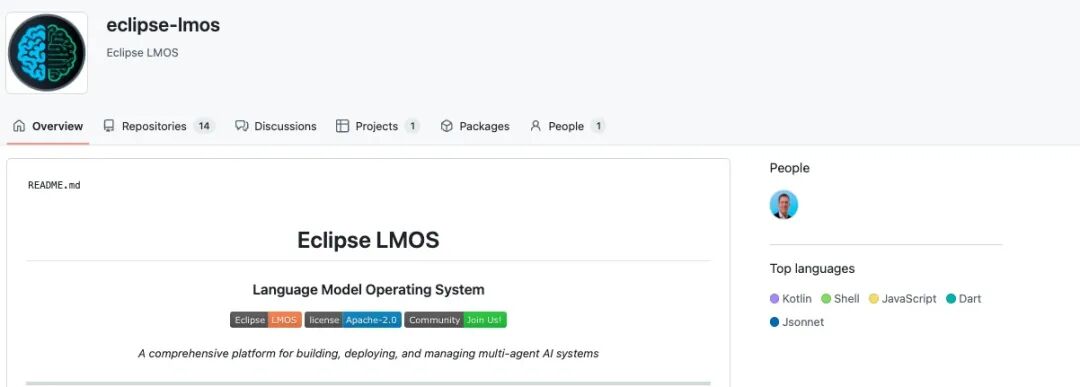
Python只是前戏,JVM才是正餐,Eclipse开源新方案,在K8s上不换栈搞定Agent
3 6 Ke· 2025-11-03 08:51
Core Insights - The Eclipse Foundation has launched the Agent Definition Language (ADL) within its open-source platform Eclipse LMOS, enabling users to define AI behaviors without coding [1] - ADL is positioned as a core component of the LMOS platform, which aims to reconstruct the development and operational chain of enterprise-level AI agents in a unified and open manner, challenging proprietary platforms and Python-centric enterprise AI tech stacks [1][2] - The LMOS project follows a "land first, open source later" approach, initially developed from Deutsche Telekom's production-level practices in traditional cloud-native architecture [1][4] Technical Convergence - The LMOS project aims to leverage existing skills in the JVM ecosystem, allowing enterprises to integrate AI capabilities without discarding their current technology stack [2][4] - The platform is built on Kubernetes and Istio, deploying agents as microservices and enhancing them to first-class citizens through custom resources [5][6] - Eclipse LMOS provides a streamlined development workflow, allowing developers to deploy agent images quickly and enabling operational teams to monitor and release updates using familiar tools [6] Business Outcomes - The platform has supported multiple AI applications at Deutsche Telekom, including the award-winning customer service bot Frag Magenta, which processes approximately 4.5 million conversations monthly and has reduced human handovers by 38% [7][8] - The initial deployment of the first agent in late 2023 has expanded from 3-4 countries to 10 across Europe, showcasing the scalability of the system [7][8] Dual Strategy - Eclipse has adopted a dual strategy for pushing AI agents into production, with one line focusing on the LMOS platform and the other on ADL, which simplifies the process of writing agents [10][13] - ADL allows business and engineering teams to collaboratively define agent behaviors, enabling rapid testing and iteration without waiting for engineering work orders [13] Integration and Control - The LMOS platform consists of three independent yet collaborative modules: ADL, the ARC Agent Framework, and the LMOS platform layer, facilitating agent lifecycle management and observability [13][14] - The LMOS protocol is designed to enable agents to discover and negotiate communication protocols, inspired by established standards and decentralized technologies [16] Conclusion - Eclipse LMOS aims to bridge the gap between agile, open-source AI development and the robust, controlled environments of JVM-based enterprise systems, allowing organizations to build scalable and transparent agent systems without overhauling their existing infrastructure [18]
红利国企ETF(510720)涨1.4%,关注上市以来连续分红18个月,可月月评估分红的红利国企ETF
Mei Ri Jing Ji Xin Wen· 2025-11-03 02:52
Core Insights - The article emphasizes that during the balance sheet reduction cycle, the cost-effectiveness of stocks versus bonds is limited, with a higher probability favoring value-oriented styles [1] - Dividend stocks should exhibit three main characteristics: no balance sheet expansion, strong profitability, and sustainability [1] - The focus for dividend combinations is on industries such as banking, telecommunications, oil and petrochemicals, and transportation, which have stable dividend characteristics and currently low valuations relative to historical levels [1] Industry Analysis - The large-scale debt issuance has reduced local government financing costs and default risks, enhancing overall societal expectations [1] - The central bank's policy to prevent fund idling has strengthened the allocation value of dividend assets [1] ETF Insights - The Dividend State-Owned Enterprise ETF (510720) tracks the State-Owned Dividend Index (000151), which selects stocks with high dividend characteristics, stable dividends, and good liquidity, primarily covering traditional sectors like finance, energy, and industry [1] - Notably, the Dividend State-Owned Enterprise ETF (510720) has achieved monthly dividends since its listing, maintaining this for 18 consecutive months, making it one of the few ETFs to consistently distribute dividends since inception [1]
拓展双向投资合作空间 更多细化措施将出台
Zhong Guo Zheng Quan Bao· 2025-11-02 20:26
Group 1 - The core viewpoint emphasizes the importance of expanding bilateral investment cooperation, which includes both foreign investment and outbound investment as key strategies during the 14th Five-Year Plan period [1] - The Ministry of Commerce reported that from January to September, 48,921 new foreign-invested enterprises were established, a year-on-year increase of 16.2%, with actual foreign investment amounting to 573.75 billion yuan, reflecting a growth of 11.2% in September alone [2] - High-tech industries accounted for over one-third of foreign investment, with significant projects in automotive, healthcare, and electronic information sectors, indicating a shift towards quality in foreign investment [2] Group 2 - The Ministry of Commerce plans to further reduce market access barriers, particularly in the service sector, to attract foreign investment [4] - The negative list for foreign investment access will focus on service sectors such as telecommunications, internet, education, culture, and healthcare, with measures to gradually lift restrictions on foreign ownership in these areas [4] - Experts suggest that attracting foreign investment can enhance technology and management practices, aiding in the transformation of China's industrial and supply chains [5] Group 3 - In 2024, China's outbound direct investment is projected to reach $192.2 billion, marking an 8.4% increase from the previous year, maintaining a global share of 11.9% [6] - The government aims to optimize outbound investment management and enhance the overseas service system to facilitate trade and investment integration [6] - There is a focus on establishing a comprehensive service system for overseas investments, providing support in compliance, legal, financial, and intellectual property matters [6]
拓展双向投资合作空间更多细化措施将出台
Zhong Guo Zheng Quan Bao· 2025-11-02 20:16
Group 1 - The core viewpoint of the article emphasizes the importance of expanding bilateral investment cooperation and enhancing foreign investment attraction as key strategies during the "15th Five-Year Plan" period [1][2] - The Ministry of Commerce reported that from January to September this year, 48,921 new foreign-invested enterprises were established, a year-on-year increase of 16.2%, with actual foreign investment amounting to 573.75 billion yuan, reflecting a growth of 11.2% in September alone [1][2] - The focus on high-tech industries is evident, with over one-third of foreign investment directed towards high-tech sectors, including automotive, healthcare, and electronic information [1][2] Group 2 - The article highlights the need to simplify approval processes and ensure both market entry and operational ease for foreign investors, particularly in the service sector [2][3] - The negative list for foreign investment access will be further reduced, particularly in telecommunications, internet, education, culture, and healthcare sectors [3] - The government aims to create a favorable investment environment by enhancing intellectual property protection and providing policy incentives to attract high-tech industries and R&D centers [2][3] Group 3 - The article discusses the significance of optimizing foreign investment management to facilitate China's deeper participation in global industrial division and cooperation [4][5] - In 2024, China's outward direct investment is projected to reach 192.2 billion USD, marking an 8.4% increase from the previous year, maintaining a global share of 11.9% [4] - The establishment of a comprehensive overseas service system is emphasized to support enterprises going abroad, ensuring compliance and enhancing the supply chain's resilience [5]
特斯拉董事长:若马斯克辞职,公司将任命新 CEO;文远知行CFO炮轰小马智行港股路演书造假丨Going Global
创业邦· 2025-11-02 10:36
Key Points - The article highlights significant events in the global expansion of companies, including new product launches, market share growth, and strategic investments [2][3]. Group 1: E-commerce Developments - AliExpress launched a new "Brand+" channel in the UK, offering price protection for consumers who find lower prices on competing platforms within seven days [5]. - TikTok Shop's market share in Vietnam surged to 41%, narrowing the gap with Shopee, which held 58% earlier this year [6]. Group 2: Corporate Actions and Investments - WeRide's CFO accused Pony.ai of providing false data in its Hong Kong roadshow materials, claiming that WeRide operates over 700 Robotaxi vehicles across multiple cities [8][11]. - Pop Mart opened its first 24-hour store in the Middle East at Hamad International Airport, aiming to enhance cultural exchange and attract global travelers [12]. - Sequoia China agreed to acquire Bayer's antibiotic Avelox business for between €160 million and €260 million, as the original drug's price in China has plummeted by over 95% [15]. - Ant Group invested in AI hardware developer Aide Future, expanding its footprint in the AI sector [16]. - Ant International invested in the Latin American embedded credit platform R2, targeting a $1 trillion financing gap for SMEs in the region [17][18]. - BYD partnered with Aeon in Japan to sell cars in approximately 30 commercial facilities, offering competitive pricing and promotional activities [19]. - Intel and BOE announced a collaboration to develop energy-saving display solutions for laptops, expected to be implemented in 2026 [22]. - Nvidia announced a $1 billion investment in Nokia, aiming to enhance AI-driven mobile network infrastructure [30][31].




美股市场速览:走势与业绩均有较大分化
Guoxin Securities· 2025-11-02 08:56
Market Performance - The S&P 500 increased by 0.7% this week, while the Nasdaq rose by 2.2%[1] - Large-cap growth (Russell 1000 Growth) outperformed small-cap growth (Russell 2000 Growth) with a difference of 2.2%[1] - Semiconductor products and equipment led the sectors with a gain of 6.2%[1] Fund Flows - Estimated fund flow for S&P 500 components was -$40.5 million this week, down from +$65.6 million last week[2] - Major inflows were seen in semiconductor products and equipment (+$77.3 million) and retail (+$26.9 million)[2] - Significant outflows occurred in media and entertainment (-$65.2 million) and diversified financials (-$63.2 million)[2] Earnings Forecast - The 12-month forward EPS expectation for S&P 500 components was raised by 0.6% this week, following a 0.4% increase last week[3] - Retail sector EPS was revised up by 2.9%, while energy sector EPS was cut by 1.7%[3] - Overall, 14 sectors saw upward revisions in earnings expectations, while 10 sectors experienced downward adjustments[3]



Q2 earnings, macro data, global trends key drivers for stock markets this week: Analysts
BusinessLine· 2025-11-02 07:56
Core Insights - The Indian stock markets are expected to be influenced by quarterly earnings, macroeconomic data announcements, and global trends during a holiday-shortened week [1][2] Macroeconomic Data - Key macroeconomic indicators to be released include the final readings of the HSBC manufacturing PMI, as well as the HSBC services and composite PMI data, which will provide insights into domestic growth momentum [2][5] Corporate Earnings - Major companies set to announce their quarterly results include Bharti Airtel, Titan Company, Adani Enterprises, Adani Ports, InterGlobe Aviation, Mahindra & Mahindra, State Bank of India, Lupin, Bajaj Auto, and Hindalco [3] Foreign Investment Activity - Foreign investors have turned net buyers with a net infusion of ₹14,610 crore in October after three months of withdrawals, indicating a potential shift in market sentiment [4] Market Trends - The BSE benchmark dropped by 273.17 points or 0.32%, while the NSE Nifty decreased by 73.05 points or 0.28% last week, reflecting profit-booking by investors after a sustained rally [6][7] Global Influences - Developments related to trade deals and trends in major international markets will be closely monitored for directional cues, alongside the ongoing corporate earnings season which has shown mixed results [3][7]