
茶饮

Search documents
霸王茶姬的三道选择题
3 6 Ke· 2025-12-05 02:37
Core Viewpoint - The financial report for Q3 2025 from Bawang Chaji highlights significant growth in overseas markets, with overseas GMV reaching 303 million yuan, a year-on-year increase of 75.3%. However, domestic GMV decreased to 7.6292 billion yuan compared to 8.1301 billion yuan in the same period of 2024, indicating challenges in the domestic market due to competition and slowed expansion [1]. Group 1: Market Competition and Strategy - Bawang Chaji has chosen not to participate in the ongoing food delivery wars, which has led to a unique position compared to other brands that have heavily invested in this area without clear winners emerging. The company aims to maintain stability and prepare for long-term competition by refining product development and store models [2][4]. - The company’s decision not to engage in the food delivery battle is debated among franchisees, with some believing it may lead to missed opportunities, while others argue that it protects profit margins from the high costs associated with delivery subsidies [5][6]. - The company has maintained a low store closure rate of 0.3% over three consecutive quarters, significantly lower than the industry average of 2%-10%, indicating healthy operational performance [8]. Group 2: New Business Model and Product Development - Starting January 1, 2026, Bawang Chaji will implement a new business model that includes significant discounts on raw materials and a shift from a supply chain model to a GMV revenue-sharing model, which aims to align the interests of the brand and franchisees [9][10]. - The company has been cautious in launching new products, focusing on maintaining brand integrity and operational efficiency. Recent product iterations, such as the new floral version of the popular "Boya Juexian," reflect this strategy [12][14]. - Despite a slower pace in national product launches, regional innovations have been successful, with new products gaining popularity in specific markets, indicating a strategic focus on localized offerings [15][17]. Group 3: Long-term Vision and Market Positioning - The new tea beverage market is characterized by rapid growth, with over 415,000 stores nationwide and a high chain rate of 55.2%. Bawang Chaji's strategy to remain calm and focus on long-term value rather than short-term gains positions it well for future competition [20][22]. - Franchisees have shown loyalty to Bawang Chaji, with many reporting stable or increasing sales, particularly in regions where the brand has established a strong presence. This loyalty is attributed to the brand's focus on product quality and value [22]. - The company is committed to enhancing its strategic approach across brand, product, experience, and channel dimensions, which, combined with the new business model, is expected to drive significant improvements in store performance [23].


9个月分红41亿!巨头上市“速套现”,超七成流入老板口袋……
Sou Hu Cai Jing· 2025-12-05 01:08
Core Viewpoint - The restaurant industry in 2025 is experiencing a dramatic contrast, with brands like Gu Ming and Mi Xue Bing Cheng showing significant growth, while the capital market witnesses a wave of cash-out activities in the food and beverage sector [1][6]. Group 1: Company Performance - Gu Ming reported impressive results for the first half of 2025, with revenue increasing by 41.2% and net profit soaring by 121.5%, reaching 1.625 billion yuan [3][4]. - The total number of Gu Ming stores surpassed 11,000, making it the second tea brand to achieve this milestone after Mi Xue Bing Cheng [1][3]. - The average daily GMV per store rose from 6,200 yuan to 7,600 yuan, and the average daily cups sold increased from 374 to 439 [3]. Group 2: Capital Market Activities - Gu Ming initiated two rounds of dividend payouts totaling 4.1 billion HKD within just nine months of its IPO, which exceeds the company's net profit accumulated over the past year and a half [5][6]. - Approximately 2.7 billion HKD of the dividends flowed into the founder's team, raising concerns about the implications for long-term corporate governance [6][9]. - The broader trend in the A-share market shows a significant "dividend wave," with over 1,034 listed companies announcing mid-term dividend plans, expected to exceed 734.9 billion yuan [6]. Group 3: Market Trends and Concerns - The phenomenon of substantial cash-outs by shareholders is not isolated to Gu Ming, as other companies in the food and beverage sector are also engaging in similar practices, raising questions about their motivations for going public [12][14]. - The actions of major shareholders, such as selling shares before or after dividend announcements, often signal a lack of confidence in the company's short-term prospects [12][16]. - The ongoing discussions around Gu Ming's dividend strategy provide important insights into the capitalized processes within the food and beverage industry [18].

霸王茶姬的三道选择题
36氪未来消费· 2025-12-05 01:04
Core Viewpoint - The article discusses the strategic decisions made by the company BaWang Tea Ji in response to market challenges, particularly its choice to avoid participating in the intense food delivery competition, focusing instead on long-term stability and product development [3][4][32]. Financial Performance - In Q3 2025, BaWang Tea Ji reported an overseas GMV of 303 million yuan, a year-on-year increase of 75.3%, while domestic GMV decreased to 7.6292 billion yuan from 8.1301 billion yuan in the same period of 2024 [3]. Market Strategy - The company opted not to engage in the food delivery battle, which has led to significant financial strain on many competitors, with major platforms spending over 44 billion yuan in Q3 without clear winners emerging [4][9]. - BaWang Tea Ji's decision to refrain from the food delivery competition is seen as a protective measure for its franchisees, ensuring their profitability amidst rising costs associated with delivery services [8][10]. Franchisee Perspective - Franchisees have mixed opinions on the company's decision not to participate in the food delivery competition, with some believing it may lead to missed opportunities, while others appreciate the focus on maintaining profitability [7][8]. - The company has communicated that engaging in the food delivery battle would directly impact franchisee earnings, as the profit model heavily relies on in-store sales rather than delivery [8][9]. New Business Model - Starting January 1, 2026, BaWang Tea Ji plans to implement a new business model that includes significant discounts on raw materials and a shift from a supply chain model to a GMV sharing model, which aims to align the interests of the brand and franchisees [11][12]. - This new model is expected to enhance collaboration with franchisees, allowing for shared risks and potentially higher overall GMV [12][13]. Product Development - The company has been cautious with new product launches, focusing on maintaining brand integrity and operational efficiency, with a notable product iteration occurring in November 2025 [15][18]. - Despite a slower pace in national product launches, regional innovations have been successful, indicating a strategic focus on localized market needs [19][21]. Long-term Vision - BaWang Tea Ji is positioning itself as a stable player in the market, emphasizing the importance of product development, supply chain strength, and long-term profitability over short-term gains [32][31]. - The company aims to enhance its strategic framework across brand, product, experience, and channel dimensions, preparing for future market challenges [33][34].
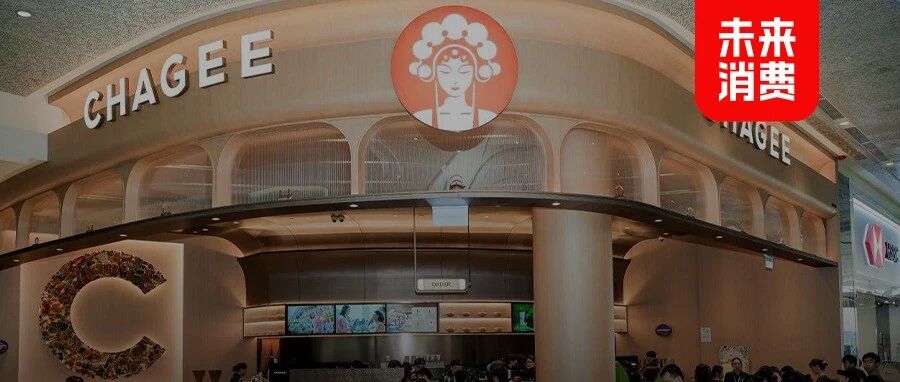
入局现制茶饮 香飘飘姗姗来迟
Bei Jing Shang Bao· 2025-12-04 16:13
Core Viewpoint - Xiangpiaopiao has entered the ready-to-drink tea market with the opening of its first two stores in Hangzhou, focusing on "original leaf" milk tea series, amidst a highly competitive landscape [1][2][3] Company Strategy - Xiangpiaopiao is testing two business models: dine-in and takeout, with the aim of creating a new consumer experience and gathering direct feedback for product innovation [2][6] - The company has a long-term strategy of diversifying its business, establishing a dual-driven model of brewing and ready-to-drink products to counteract declining sales in its traditional brewing segment [7][8] Market Environment - The ready-to-drink tea market in China is projected to exceed 300 billion yuan by 2025, with numerous brands competing across various market segments [3] - High-end market leaders include Heytea and Bawang Chaji, while mid-tier brands like Cha Bai Dao and Gu Ming dominate the middle market, and Mixue Ice City leads in lower-tier markets [3] Financial Performance - In the first three quarters of 2025, Xiangpiaopiao reported a revenue of 1.684 billion yuan, a year-on-year decline of 13.12%, and a net profit loss of 89 million yuan, a drastic drop of 603.07% [6][8] - The company attributes the revenue decline to changes in the external consumption environment and inventory management strategies [6] Product Development - The "original leaf" series has generated over 100 million yuan in sales within a year of its launch, indicating positive market reception [8] - Xiangpiaopiao is also exploring new product categories, such as ice cream, to meet evolving consumer demands [8]

霸王茶姬20251204
2025-12-04 15:37
Summary of Cha Ji Company Conference Call Company Overview - **Company**: Cha Ji Company - **Industry**: Tea and Beverage Key Financial Metrics - Total net revenue for Q3 2025 decreased by 9.4% year-over-year to **32.083 billion RMB** [2] - Non-GAAP net profit margin was **15.7%**, indicating profitability [2] - Global tea house network expanded to **7,338 locations**, with **300 new openings** including **54 overseas** [5] - Overseas market GMV grew by **75.3%** to **300.3 million RMB** [2] - Total GMV in Greater China decreased by **6.2%** to **7,629.2 million RMB** [5] - Average monthly GMV per tea house was **378,506 RMB** [5] - Total registered members reached **222 million**, a **36.7%** increase year-over-year [7] Strategic Initiatives - **High-Quality Development Strategy**: Focused on four dimensions: brand, product, experience, and channel [3] - Brand: Creating value through tea culture and expanding user base [3] - Product: Prioritizing product excellence and upgrading raw materials [3] - Experience: Creating engaging content and emotional connections [3] - Channel: Emphasizing store quality and sustainable growth [3] Product Innovation - Launched low-caffeine Jasmine Green Tea Latte and Bo Ya Jasmine Green Milk Tea, the latter winning the **World Beverage Innovation Award** [2][6] - PG Oolong Milk Tea performed well in the Asia-Pacific region [6] Membership and Franchise Network - Membership ecosystem showed strong growth with a **1.5 million** increase in members quarter-over-quarter [7] - Franchise network stability reflected by a low store closure rate of **0.3%** for three consecutive quarters [7] Future Growth Expectations - Short-term same-store sales growth expected to face pressure, but long-term outlook remains optimistic [8] - Continued focus on product innovation and brand investment, alongside operational efficiency improvements [8] - Board approved a special cash dividend of **92 cents per share**, totaling approximately **$177 million**, to be paid on December 15, 2025 [8] Brand and Market Expansion - Upgrading brand experience through T House and specialized tea culture theme stores [9] - Successful overseas market expansion into the Philippines and Vietnam, with over **200 stores** in Malaysia [4][14] - Localized products and marketing strategies have shown success in Southeast Asia [15] Channel Strategy - Strong channel strategy with **300 new store openings** this quarter [13] - Highlight stores like Hong Kong Super Tea Restaurant and pop-up stores during the Shanghai Master Competition to enhance brand visibility [13] Product Quality and Consumer Experience - Implementing a **4.0 upgrade** for product quality, including strict standards and improved core materials [10] - Expanding product categories and enhancing customer experience through new consumption scenarios [11] - Optimizing membership system to increase member engagement and repeat purchase rates [12]
香飘飘杀入现制茶饮,娃哈哈、完达山都曾“折戟”
Bei Jing Shang Bao· 2025-12-04 13:06
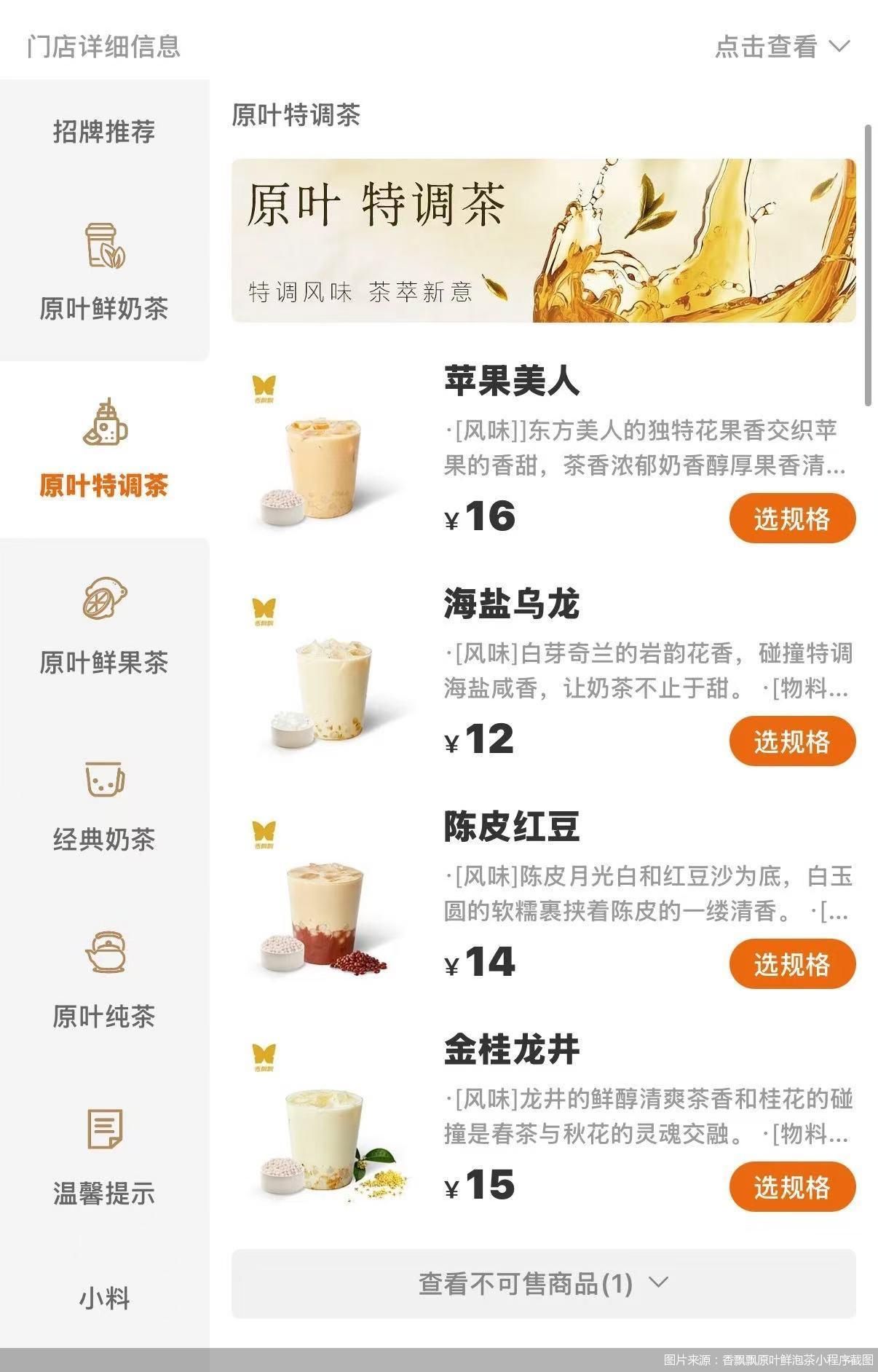
Core Viewpoint - Xiangpiaopiao is expanding its business by opening its first and second physical stores in Hangzhou, focusing on a new "original leaf" tea series, amidst a competitive market for ready-to-drink tea beverages [1][7][9]. Store Details - The first store is located in the basement of Hangzhou Joy City, featuring a layout similar to typical tea shops, with a prominent display of "Xiangpiaopiao cup tea" at the entrance [7]. - The store offers five main product lines: original leaf fresh milk tea, original leaf special tea, original leaf fresh fruit tea, classic milk tea, and original leaf pure tea, with prices ranging from 5.9 yuan to 16 yuan [7]. - The original leaf pure tea is priced at 5.9 yuan per cup, while the higher-end apple beauty tea is priced at 16 yuan, showcasing a variety of ingredients [7]. Market Context - The ready-to-drink tea market is highly competitive, with projections indicating it will exceed 300 billion yuan by 2025, featuring numerous brands [9]. - Major players in the high-end market include Heytea and Bawang Chaji, while mid-tier brands like Cha Bai Dao and Gu Ming dominate the middle market [9]. - Xiangpiaopiao's entry into this saturated market is not unique, as other companies like Wahaha have also attempted to launch tea businesses with mixed results [9]. Business Strategy - Xiangpiaopiao aims to diversify its operations due to declining revenues, implementing a dual strategy of "brewing + ready-to-drink" to stabilize its business [12][14]. - The company reported a revenue of 1.684 billion yuan for the first three quarters of 2023, a year-on-year decline of 13.12%, and a net loss of 89 million yuan, a significant drop of 603.07% [12]. - The company is focusing on creating an interactive consumer space in its stores to gather feedback for product innovation [8][12]. Product Development - The launch of the "original leaf" series has already generated over 100 million yuan in sales within a year, indicating a positive market response [14]. - The company is also exploring new product lines, such as ice cream, to cater to consumer demands and enhance brand engagement [13][14].
为了三套新工服,外卖平台烧光1000亿
远川研究所· 2025-12-04 13:04
Core Viewpoint - The intense competition among Meituan, JD, and Alibaba in the food delivery sector has led to significant financial losses, with nearly 100 billion yuan in profits wiped out over the past six months, marking one of the most costly battles in Chinese internet history [2][6]. Group 1: Financial Performance - Meituan reported its largest quarterly loss since its IPO, while Alibaba's e-commerce business saw operating profits decline by 85% year-on-year, and JD's overall operating profit dropped by 108% [2][6]. - In Q3, Alibaba's EBITDA decreased by approximately 24 billion yuan, while JD and Meituan's EBITDA fell by 17.5 billion yuan and 44.8 billion yuan, respectively [6]. - Marketing expenses surged dramatically, with Alibaba and JD increasing their spending by 106% and 110% year-on-year, while Meituan's marketing costs rose by 91% [6]. Group 2: Market Dynamics - The oligopolistic structure of the food delivery market is beginning to shift, with Meituan's market share expected to drop to around 65% in 2024, a decline of nearly 20% this year [6][8]. - The competition is not just about food delivery; it serves as a strategic entry point for e-commerce growth, with JD and Alibaba leveraging food delivery to drive traffic to their core retail businesses [8][9]. Group 3: User Engagement and Growth - JD's food delivery GMV experienced triple-digit growth, with new user conversion rates nearing 50%, leading to a 40% increase in active users and shopping frequency [9]. - Taobao's flash sales in August contributed to a 25% year-on-year increase in monthly active users, while Meituan also saw a more than 20% increase in daily active users [9]. Group 4: Strategic Adjustments - The three major platforms have begun to recognize the unsustainable nature of the price war, with joint statements issued to resist "disorderly competition" in July [22]. - JD has quietly adjusted its strategy, including plans to launch an independent app and improve unit economic costs, while Alibaba aims to significantly reduce its flash sales investments in the upcoming quarter [22]. Group 5: Long-term Outlook - Despite the fierce competition, the platforms are now more focused on survival rather than solely defeating competitors, indicating a potential shift towards more sustainable practices in the industry [22][23]. - The ongoing battle in the food delivery sector is expected to continue, with companies acknowledging that the price war has not created value for the industry and is not sustainable [20][26].


霸王茶姬拒绝价格战的代价
华尔街见闻· 2025-12-04 09:30
三季度,霸王茶姬在大中华区的总GMV为76.3亿元,同比下降6.2%;单店月均GMV为37.85万元,同比下滑约28.3%。 同时,贡献公司近九成收入的加盟业务出现萎缩,相关收入同比下降14.8%,至28亿元。 以下文章来源于信风TradeWind ,作者刘艺晨 关注资本市场的趋势与发展 作者刘艺晨 编辑松壑 外卖补贴过境后,霸王茶姬的三季报压力尽显。 三季度,霸王茶姬净新增门店300家,总门店数达到7338家。 在会员数同比增长36.7%至2.22亿的背景下,总GMV同比下滑4.5%至79.3亿元,环比一、二季度分别下滑3.5%、2.1%。 扩张仍在进行,GMV滑坡显然无法被简单归因于"不打价格战"的决定。 去年四季度以来,霸王茶姬同店GMV一直处在同比下降通道;归母净利润也连续两个季度同比下滑,净利润率由去年三季度的18%降至12%。 开店高峰期渐过、单店收入下滑,均指向其所属品类的市场红利正在减退。 业绩会上,CEO张俊杰强调将围绕品牌、产品、体验、渠道推动"高质量发展策略"。 近年来,在普通的商圈店之外,霸王茶姬已发展出24小时门店、宠物友好门店、超级茶仓等特色店型。 在星巴克预备借由中资布局下沉、冲 ...
奈雪十周年锚定健康不动摇,"小绿瓶"获行业首款低GI蔬果茶认证
Ge Long Hui· 2025-12-04 07:49
Core Insights - The new tea beverage industry is shifting from a focus on sugar control to a more refined approach centered on natural nutrition and health adaptation, as highlighted by Nayuki's announcement of actress Gao Yuanyuan as the brand ambassador for its 10th anniversary [1][3] Group 1: Product Innovation - Nayuki's "Slim Green Bottle" is the first product in the tea beverage industry to use the innovative "perfect sweetener" D-Allulose, achieving a low Glycemic Index (GI) certification with a GI value of only 37, which maintains a refreshing taste while being low in calories [5][7] - D-Allulose has a caloric content of just 0.4 kcal per gram, which is only 10% of that of sucrose, making it a highly appealing alternative for health-conscious consumers [5][7] Group 2: Market Positioning - The "Slim Green Bottle" won the title of "Annual Star Ambassador" in Nayuki's "Green 101 Ranking Competition," reflecting strong consumer support and engagement with the brand [3][9] - Nayuki's strategy emphasizes a shift from "taste first" to "health first" in the tea beverage market, indicating a broader trend towards health-oriented products [5][9] Group 3: Health Benefits - Research indicates that D-Allulose may help stabilize post-meal blood sugar levels and assist in weight control, aligning with Nayuki's commitment to integrating health benefits into its product offerings [7][9] - The company has adopted the Rainbow Diet and Dietary Pyramid theories in product development, promoting a formula of "nutritious ingredients + fresh preparation + low-calorie sugar control" [7]

茉莉奶白出海再提速:东方摩登茶如何触达全球消费者的心?
36氪未来消费· 2025-12-04 07:22
Core Viewpoint - The article emphasizes that globalization for brands like Jasmine Milk White is not merely about store expansion but involves a systematic capability that includes product strength, operational efficiency, and cultural expression [3][4]. Group 1: Global Expansion Strategy - Jasmine Milk White has chosen to enter the U.S. market as its first international destination, diverging from the common practice of starting in culturally similar Southeast Asian countries [1][3]. - The brand's approach to globalization is characterized by a gradual and systematic strategy, focusing on building a solid operational foundation before expanding to other markets [14][15][18]. Group 2: Market Performance in Indonesia - The brand opened two stores in Jakarta, Indonesia, achieving a revenue of over 7 billion Indonesian Rupiah (approximately 280,000 RMB) within three days, with total sales nearing 17,000 cups [6]. - The Indonesian non-alcoholic beverage market is projected to grow from $15.0167 billion in 2023 to $28.3949 billion by 2033, with tea expected to reach a market size of $10.7242 billion at a compound annual growth rate of 6.28% [6]. Group 3: Localization Strategy - Jasmine Milk White's success in Indonesia is attributed to its deep localization strategy, incorporating local cultural elements into its store design and product offerings [9]. - The brand has launched exclusive products for the Indonesian market, such as jasmine-themed souvenirs, enhancing emotional connections with local consumers [9]. Group 4: U.S. Market Insights - The U.S. market is crucial for Jasmine Milk White, with a population of over 330 million and a GDP per capita exceeding $70,000, indicating strong consumer spending potential [13]. - The brand has opened four new stores in the U.S., bringing its total to 12, and has achieved a monthly average GMV of around $500,000 in its first year [13][16]. Group 5: Brand Aesthetics and Cultural Expression - Jasmine Milk White aims to convey modern interpretations of Eastern culture through its branding and product offerings, emphasizing the importance of aesthetic appeal [20][24]. - The brand's name, "Jasmine," resonates with both Eastern and Western consumers, serving as a recognizable symbol that evokes a sense of elegance and cultural connection [22]. Group 6: Future Outlook - The article suggests that Jasmine Milk White's model could serve as a reference for other Chinese consumer brands aiming for systematic global expansion, highlighting the potential for "Eastern modern tea" to become a modern lifestyle choice across cultural boundaries [24].
