
纯碱

Search documents
国内目前最大天然碱资源新动向:中盐化工携山东海化等出资80亿元,集结通辽
Mei Ri Jing Ji Xin Wen· 2025-10-21 12:32
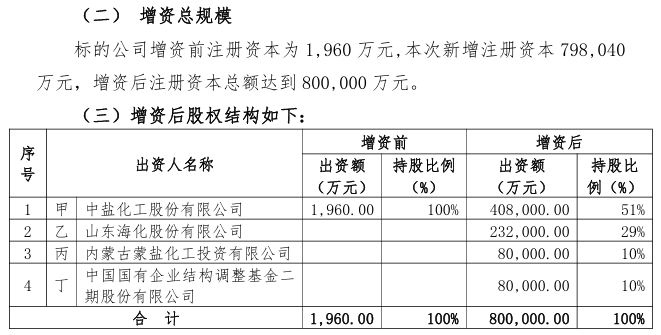
Core Viewpoint - The announcement of the capital increase and share expansion agreement between Zhongyan Chemical and Shandong Haohua marks a significant step in consolidating the natural soda ash industry, with a total registered capital of 8 billion yuan for Zhongyan Soda Industry [1][2]. Group 1: Capital Increase and Share Structure - Zhongyan Chemical will invest 4.08 billion yuan to secure a 51% controlling stake in Zhongyan Soda Industry, while Shandong Haohua will invest 2.32 billion yuan for a 29% stake [1][7]. - The total registered capital of Zhongyan Soda Industry will increase from 1.96 million yuan to 8 billion yuan [5][11]. - The remaining 49% of shares will be held by two strategic investors, Inner Mongolia Mengyan Chemical Investment Co., Ltd. and the China State-Owned Enterprise Structural Adjustment Fund Phase II, each contributing 800 million yuan for a 10% stake [1][7]. Group 2: Strategic Importance and Market Context - The capital increase is aimed at securing mining rights for the largest known natural soda ash resource in China, located in the Daqintala area of Tongliao, Inner Mongolia, with a transaction price of 6.809 billion yuan [1][11]. - Zhongyan Chemical's current soda ash production capacity is 3.9 million tons, making it the third-largest producer in China, and the acquisition aligns with its strategy to strengthen its core business in the soda ash industry [11]. - Shandong Haohua, facing a 96.24% decline in net profit in 2024, seeks to diversify its product offerings by investing in natural soda ash to mitigate operational pressures from declining synthetic soda ash prices [2][11]. Group 3: Risks and Challenges - The development of the natural soda ash project is expected to require significant investment, raising concerns about potential increases in debt levels and financial risks for Zhongyan Chemical [12]. - Shandong Haohua acknowledges risks related to administrative approvals and uncertain investment returns associated with the project [12]. - The project aims to establish a production capacity of 5 million tons of soda ash, which could significantly impact the industry landscape and potentially disrupt existing synthetic soda ash operations [12].


黑色建材日报:市场成交偏弱,钢价震荡下行-20251021
Hua Tai Qi Huo· 2025-10-21 02:15
Report Investment Rating - No investment rating for the industry is provided in the report. Core Viewpoints - The market trading volume is weak, and steel prices are fluctuating downward. Glass and soda ash are facing supply - demand contradictions and are showing a weak downward trend. Silicon manganese and silicon iron prices are expected to fluctuate, with silicon manganese enterprises facing increased losses and silicon iron enterprises having low production - increasing motivation [1][3]. Market Analysis Summary Glass and Soda Ash - **Glass**: Futures fluctuated weakly with active trading yesterday. Spot market's downstream purchasing sentiment was cautious, and the trading center shifted down. Supply is on a low - rising trend, middle - stream trade inventory is high, speculative demand is weakening, and destocking pressure is increasing. With the end of the consumption peak season approaching and the possibility of some production lines resuming, demand is expected to further weaken [1]. - **Soda Ash**: Futures fluctuated with active trading yesterday. Spot market trading was average, downstream purchasing sentiment was cautious, and low - price just - in - time demand transactions were the main type. Supply - demand contradictions remain, supply is at a high level with growth expectations, demand shows resilience, and destocking pressure persists throughout the year [1]. Silicon Manganese and Silicon Iron - **Silicon Manganese**: Futures rose in a fluctuating manner yesterday. Spot market performed okay, with strong market waiting sentiment at the beginning of the week. Northern market price was 5630 - 5680 yuan/ton, and southern market price was 5650 - 5700 yuan/ton. Enterprises' losses are intensifying, production is high, demand has weakened with the decline of hot metal, and prices are expected to fluctuate and follow the sector [3]. - **Silicon Iron**: Futures fluctuated yesterday. Spot prices were stable. Ningxia 72 - grade silicon iron natural block was 5150 - 5200 yuan/ton, 72 - grade silicon iron standard block was 5250 - 5300 yuan/ton, and 75 - grade silicon iron was 5800 yuan/ton. Enterprises' production has slightly decreased, losses continue, production - increasing motivation is insufficient, downstream demand is weakening, and prices are expected to follow the sector [3]. Strategy Summary - **Glass**: Fluctuate weakly [2] - **Soda Ash**: Fluctuate weakly [2] - **Silicon Manganese**: Fluctuate [4] - **Silicon Iron**: Fluctuate [4]
纯碱、玻璃日报-20251021
Jian Xin Qi Huo· 2025-10-21 01:36
Report Information - Report Name: Soda Ash, Glass Daily Report [1] - Date: October 21, 2025 [2] - Research Team: Energy and Chemical Research Team [4] Industry Investment Rating - Not provided Core Viewpoints - The soda ash market has a weak supply - demand pattern with supply affected by equipment maintenance, downstream low - price restocking, and insufficient fundamental drivers. The market supply - demand imbalance persists. The contract shows signs of bottom - building and is expected to oscillate weakly [8]. - The glass market is in a weak supply - demand balance. The post - festival factory inventory remains high, and the demand for float glass may not continue to rise. The market may experience a second bottom - testing, but excessive short - selling is not advisable. Attention should be paid to potential positive factors from policies and production line changes [9][10]. Summary by Directory 1. Soda Ash and Glass Market Review and Operation Suggestions Soda Ash - **Market Data**: On October 21, the main soda ash futures SA601 contract oscillated. The closing price was 1,219 yuan/ton, and the position decreased by 36,196 lots [7]. - **Fundamentals**: Weekly production decreased by 30,300 tons to 740,500 tons, a 3.93% week - on - week decline. The alkali plant inventory reached 1.705 million tons, at a low level in the past six months. The total shipment volume of Chinese soda ash enterprises at the end of September was 881,000 tons, a 11.86% increase from the previous period. The demand for heavy soda ash changed little [8]. - **Outlook**: It is expected to oscillate weakly due to the lack of substantial positive factors [8]. Glass - **Market Data**: On October 21, FG601 closed at 1,091 yuan/ton, down 27 yuan or 2.41%; FG603 closed at 1,161 yuan/ton, down 27 yuan or 2.27% [7]. - **Fundamentals**: Float glass production was stable, and the photovoltaic glass was in a weak balance. The overall glass supply was at a high level this year. The post - festival factory inventory remained high, and the real - estate market showed no signs of stabilization [9]. - **Outlook**: The market may experience a second bottom - testing, but attention should be paid to potential positive factors from policies and production line changes [9][10]. 2. Data Overview - The report provides multiple data charts including soda ash weekly production, soda ash enterprise inventory, soda ash active contract price trend, glass active contract price trend, central China heavy soda market price, and flat glass production, with data sources from Wind, iFind, and the research and development department of Jianxin Futures [14][16][20]
三季度中国GDP同比增4.8%,油厂豆粕库存
Dong Zheng Qi Huo· 2025-10-21 00:47
Report Industry Investment Rating No relevant content provided. Core Viewpoints of the Report - The US delays the G7 plan to expand the use of frozen Russian assets, indicating an intention to reduce tensions before Trump meets Putin, leading to a rise in market risk appetite [17]. - Affected by news such as Sino - US negotiations, on October 20, the A - share market rose with shrinking volume. Currently, market liquidity is rapidly contracting, and there is a strong wait - and - see sentiment. Future trends depend on domestic and foreign policy changes [2]. - During the Fourth Plenary Session, there are relatively many policies. It is advisable to be cautious in the short - term. If the market risk preference fails to strengthen, the bond market will turn stronger [25]. - The cost of imported soybeans supports the soybean meal price, but the current supply - demand situation is weak, and sufficient soybean supply is expected in the fourth quarter. The soybean meal futures price is likely to remain volatile [4]. - In September, economic data continued to show structural differentiation. The overall terminal demand was weak, with real estate and infrastructure demand remaining sluggish and manufacturing showing resilience. High pig iron production will suppress the subsequent inventory reduction speed, limiting the upward space for steel prices [5]. - The continuous inventory reduction during the peak season supports the lithium carbonate price, but further upward momentum may depend on unexpected supply - side disruptions [6]. Summary by Directory 1. Financial News and Reviews 1.1 Macro Strategy (Gold) - The US government continues to be shut down. The gold price hit a new high, and overseas gold and silver ETF holdings increased, while the domestic market was weak. Gold is expected to fluctuate at a high level this week, and attention should be paid to the callback risk [13]. - Investment advice: The gold price will fluctuate at a high level in the short - term, and attention should be paid to the callback risk caused by long - position profit - taking [14]. 1.2 Macro Strategy (Foreign Exchange Futures - US Dollar Index) - The US and Australia signed a key minerals agreement, and the US Senate will "pause" the new round of sanctions against Russia. The US delays the G7 plan to expand the use of frozen Russian assets, indicating an intention to reduce tensions before Trump meets Putin, and market risk preference has recovered [15][16][17]. - Investment advice: The US dollar is expected to decline in the short - term [18]. 1.3 Macro Strategy (Stock Index Futures) - China's GDP in the third quarter increased by 4.8% year - on - year. Affected by news such as Sino - US negotiations, on October 20, the A - share market rose with shrinking volume. Currently, market liquidity is rapidly contracting, and there is a strong wait - and - see sentiment [2][19]. - Investment advice: Allocate various stock indices evenly [21]. 1.4 Macro Strategy (Treasury Bond Futures) - The LPR quotation in October remained stable. China's economic data in September showed differentiation. The bond market fluctuated and declined today due to Trump's softened stance towards China, but market risk preference has not been strongly activated [22][23][24]. - Investment advice: Be cautious in short - term trading this week. If market risk preference fails to strengthen, look for opportunities to build long - term long positions at low prices [25]. 2. Commodity News and Reviews 2.1 Black Metal (Steam Coal) - On October 20, the steam coal price in the northern port market was strong. The downstream demand increased last week, and the coal price rose. After the Datong - Qinhuangdao Railway maintenance ends, the supply of port spot will increase, and the coal price increase is expected to narrow this week [26]. - Investment advice: The coal price will remain strong in the short - term [26]. 2.2 Black Metal (Iron Ore) - Fenix Resources' iron ore production in the third quarter increased significantly. The iron ore price continued to be weak and volatile. The terminal orders weakened, the steel mill inventory pressure increased, and the steel mill profit was compressed. It is expected that the pig iron production will decline in November [27]. - Investment advice: The potential for production cuts is approaching. The iron ore price will remain weak in the short - term, but the downward valuation space is limited [27]. 2.3 Agricultural Products (Cotton) - As of October 17, the inspection volume of US cotton was slow. In September, the export unit price of cotton products rebounded slightly month - on - month. China imported 100,000 tons of cotton and 130,000 tons of cotton yarn in September [28][29][30]. - Investment advice: The Zhengzhou cotton futures price has been resistant to decline recently. However, as the new cotton is listed, the hedging pressure will limit the upward space, and the downstream orders are insufficient. Attention should be paid to the new cotton listing, downstream orders, and Sino - US relations [31][32]. 2.4 Agricultural Products (Soybean Meal) - As of October 17, the national port soybean inventory decreased, the soybean inventory of major oil mills increased, the soybean meal inventory decreased, and the unexecuted contracts decreased. In September, China imported 0 tons of soybeans from the US, and the Brazilian soybean planting rate reached 24% [34][35][36]. - Investment advice: Pay attention to the weather in the Brazilian production area and Sino - US relations. The soybean meal futures price is likely to remain volatile [36]. 2.5 Agricultural Products (Soybean Oil/Rapeseed Oil/Palm Oil) - From October 1 to 20, the export volume of Malaysian palm oil increased by 3.4% month - on - month. As of October 17, the domestic palm oil inventory increased slightly [37][38]. - Investment advice: The market lacks driving forces in the short - term and is expected to remain volatile. In the long - term, pay attention to the long - position opportunities of palm oil [39][40]. 2.6 Black Metal (Rebar/Hot - Rolled Coil) - From January to September, China's infrastructure investment increased by 1.1% year - on - year. In the first three quarters, China's steel exports showed different trends, and the real estate investment continued to decline. The overall terminal demand was weak, and the high pig iron production limited the upward space for steel prices [41][42][44]. - Investment advice: Adopt a volatile trading strategy for steel prices in the short - term [46]. 2.7 Agricultural Products (Jujube) - In Xinjiang, jujubes in some areas are in the drying stage. The futures price of the main contract CJ601 fluctuated and closed down today. The price of jujubes in the distribution areas is stable, and merchants purchase goods as needed [47][48]. - Investment advice: Wait and see before the market logic becomes clear. Pay attention to the price game in the production area and downstream consumption [48]. 2.8 Agricultural Products (Corn Starch) - On October 20, the theoretical profits of corn starch enterprises in different regions showed differentiation. In the future, the inventory pressure and production reduction expectations of starch may be mainly concentrated in the Northeast [49]. - Investment advice: The price difference between starch and corn futures is expected to recover after entering the delivery month. The price difference of 01 and 03 contracts is at a low level and is not expected to shrink further [49]. 2.9 Agricultural Products (Corn) - The domestic corn price is rising. Snowy weather and farmers' reluctance to sell have led to a decrease in downstream arrivals. The spot price is expected to decline, while the futures price may enter a volatile bottom - grinding period [50]. - Investment advice: Wait and see in the short - term. Pay attention to the implementation of wheat auction rumors [50]. 2.10 Non - Ferrous Metals (Polysilicon) - In September, China's polysilicon export volume decreased by 28.17% month - on - month. The spot price of polysilicon is expected to remain stable. The terminal demand has weakened marginally since late October, and the silicon wafer price is under pressure [51][52]. - Investment advice: Maintain the view that the spot price will not decline in October. Consider long - position opportunities when the futures price is at a discount to the spot price. Pay attention to the reverse spread opportunity of PS2511 - PS2512 at around - 2000 yuan/ton [53]. 2.11 Non - Ferrous Metals (Industrial Silicon) - In September, China's industrial silicon export volume increased by 7.73% year - on - year. Some silicon plants in the South are expected to reduce production in late October. The inventory is expected to be difficult to reduce in November and will be reduced by 15,000 tons in December [54][55]. - Investment advice: It is more cost - effective to go long on industrial silicon at low prices [55]. 2.12 Non - Ferrous Metals (Lead) - On October 17, the LME0 - 3 lead was at a discount of $41.85/ton. In September, the import of lead concentrates increased month - on - month and decreased year - on - year. The export of lead - acid batteries decreased, and the import increased [55][56]. - Investment advice: Adopt a wait - and - see strategy for single - side trading. Pay attention to the medium - term positive spread opportunity for cross - market trading [56]. 2.13 Non - Ferrous Metals (Zinc) - Vedanta's zinc concentrate production in the third quarter increased by 6%. In September, the export volume of galvanized sheets increased both month - on - month and year - on - year. The import volume of zinc concentrates increased [57][58][60]. - Investment advice: Wait and see for single - side trading. Pay attention to the medium - term positive spread opportunity. Maintain a positive spread trading strategy for cross - market trading and take profits in batches at low prices [61]. 2.14 Non - Ferrous Metals (Nickel) - In September, China's unforged nickel import volume increased significantly, especially from Russia. The short - term macro situation is still volatile. The global visible inventory has increased significantly, and the price is fluctuating above the cash cost. The nickel ore price is expected to rise in the fourth quarter [62]. - Investment advice: Allocation portfolios can consider long - position opportunities at low prices. Speculative portfolios can consider selling near - the - money put options and buying deep - out - of - the - money call options [63]. 2.15 Non - Ferrous Metals (Lithium Carbonate) - In September, China's lithium ore import volume increased by 14.7% month - on - month. The first batch of lithium concentrate from the Bougouni lithium project was shipped. The inventory has been decreasing, which supports the price, but further upward momentum depends on supply - side disruptions [64][66]. - Investment advice: Use range - bound trading in the short - term. Consider short - position opportunities after the demand peaks this year. Pay attention to the reverse spread opportunity of LC2511 - LC2601 and the positive spread opportunity of LC2601 against more distant contracts [67]. 2.16 Non - Ferrous Metals (Copper) - Peru's Las Bambas copper mine is being affected by illegal mining. In September, China's scrap copper import volume increased by 14.84% year - on - year [68][69]. - Investment advice: The copper price is expected to remain volatile at a high level in the short - term. Consider long - position opportunities at low prices for single - side trading. Wait and see for spread trading [70]. 2.17 Energy Chemicals (Liquefied Petroleum Gas) - Guangzhou Petrochemical's partial device maintenance has reduced the liquefied gas production. The East China liquefied gas price has declined due to factors such as fundamental imbalance and falling paper - futures prices [71][72]. - Investment advice: The price is expected to remain volatile in the short - term [73]. 2.18 Energy Chemicals (Crude Oil) - A Russian refinery was affected by a drone attack. The oil price is weak and volatile. Market risk preference supports the oil price, but concerns about supply surplus continue to put pressure on it [74]. - Investment advice: The oil price will remain weak and volatile in the short - term [75]. 2.19 Energy Chemicals (PVC) - The domestic PVC powder market price has been slightly stronger. The downstream procurement enthusiasm is low, and the spot trading is light. The PVC fundamentals remain weak, and the inventory is high [76][77][78]. - Investment advice: The PVC price is expected to remain weak and volatile in the short - term, and the downward space is limited [78]. 2.20 Energy Chemicals (Styrene) - As of October 20, the styrene inventory in the East China main port increased. The styrene price declined, and the inventory is a key issue. The production profit has decreased, and the cost support is not obvious [79]. - Investment advice: Pay attention to the negative feedback of pure benzene downstream products. The styrene industry needs a low - profit level to slow down the inventory accumulation in the main port [80]. 2.21 Energy Chemicals (Asphalt) - As of October 20, the asphalt factory and social inventories decreased. The BU futures price was weak last week, and the spot price continued to decline. The demand recovery is limited, and the weak international oil price may affect the asphalt price [81][82]. - Investment advice: The asphalt price will be volatile in the short - term [83]. 2.22 Energy Chemicals (Soda Ash) - As of October 20, the domestic soda ash factory inventory increased slightly. The soda ash futures price rose and then fell, affected by the bearish sentiment in the glass market. The downstream demand is stable, and the inventory in the delivery warehouse is high [84]. - Investment advice: Adopt a short - selling strategy at high prices for soda ash in the medium - term, and pay attention to the new capacity release [84]. 2.23 Energy Chemicals (Float Glass) - On October 20, the float glass price in the Hubei market declined. The glass futures price continued to fall due to the failure of supply - reduction expectations and the cooling of macro - positive expectations [85]. - Investment advice: Wait and see in the short - term as the market is bearish, but the futures price is at a discount to the spot price, and the risk of short - selling is high [85].
建材策略:?业需求数据?佳,期待政策端释放利好
Zhong Xin Qi Huo· 2025-10-21 00:39
1. Report Industry Investment Rating - The mid - term outlook for the black building materials industry is "oscillating" [6][7][8] 2. Core Viewpoints of the Report - On October 20, 2025, the main economic indicators for September were announced. Data in real estate, infrastructure, and other fields related to black building materials remained poor. The prices of leading sector varieties dropped from their intraday highs and remained under pressure at night. The demand side of the industry continued to be weak. With the "15th Five - Year Plan" meeting underway, the market still expects policy benefits to boost confidence [1][2] - Entering late October, the traditional peak season is ending, and with tariff disturbances, the demand side is unlikely to perform well. Although high molten iron still supports the furnace charge in the short term, the market's negative feedback expectation strengthens as the peak season ends. Attention should be paid to the possibility of the "15th Five - Year Plan" meeting releasing sector benefits [3] 3. Summary by Related Catalogs 3.1 Iron Element - **Iron Ore**: Overseas mine shipments rebounded slightly, and the arrival volume at 45 ports dropped from a high level. The demand side saw a slight decline in the average daily output of sample molten iron and the steel mill profitability rate, but molten iron remained at a high level. Port inventories continued to accumulate. The fundamentals of iron ore weakened marginally, but the overall pressure was not prominent. Policy expectations may cause fluctuations, and steel demand improved slightly. The future of Sino - US trade relations is uncertain, so short - term prices are expected to oscillate [2][8] - **Scrap Steel**: The arrival volume at steel mills decreased, and the electric furnace profit improved slightly. The fundamentals of scrap steel have no obvious contradictions. With the current pressure on finished product prices and poor electric furnace profits, short - term prices are expected to follow finished products [2][10] 3.2 Carbon Element - **Coke**: The short - term supply and demand of coke remained tight. With rising costs, the second price increase was initiated, but steel prices were still weak. The price increase needs time to be implemented, and coke prices are expected to oscillate [2][11][13] - **Coking Coal**: Supply disturbances continued, and the production increment space of coal mines was limited. With low inventories, the fundamentals were healthy. Coking coal prices are expected to oscillate [2][11][12] 3.3 Alloys - **Manganese Silicon**: Short - term high costs, peak demand season, and policy expectations support the price, but the market's supply - demand expectation is pessimistic, and there is still room for the price center to decline in the future [3][15] - **Silicon Iron**: Short - term peak demand season, policy expectations, and firm costs support the price, but the supply - demand relationship is becoming looser, and there is still downward pressure on prices [3][16] 3.4 Glass and Soda Ash - **Glass**: Spot sales and production are weak. After the negative feedback between futures and spot, short - term prices show an oscillating and weakening trend. In the long term, market - oriented capacity reduction is needed, and prices are expected to oscillate downward [3][12] - **Soda Ash**: The supply surplus pattern remains unchanged. It is expected to follow macro - changes and oscillate widely. In the long run, the price center will decline to promote capacity reduction [3][14] 3.5 Steel - The fundamentals of steel still have contradictions. After the National Day, the demand for five major steel products recovered to a limited extent, and the inventory level is still moderately high. With the domestic important meeting this week, attention should be paid to policy disturbances, and short - term prices are expected to oscillate at a low level [7] 3.6 Commodity Index - On October 20, 2025, the comprehensive index of CITIC Futures commodities showed that the commodity 20 index was 2533.64, down 0.15%; the industrial products index was 2183.97, up 0.37%. The steel industry chain index was 1976.21, up 0.55% on the day, up 0.13% in the past 5 days, down 1.65% in the past month, and down 6.26% since the beginning of the year [102][104]
期货市场交易指引2025年10月20日-20251020
Chang Jiang Qi Huo· 2025-10-20 05:44
Report Industry Investment Ratings - **Macrofinance**: Index futures are expected to be bullish in the medium to long term, suggesting buying on dips; treasury bonds should be kept under observation [1][5]. - **Black Building Materials**: Coking coal and rebar are recommended for range - bound trading; glass is advised to be observed [1]. - **Non - ferrous Metals**: Copper is recommended to hold long positions cautiously on dips without chasing highs; aluminum is advised to lay out long positions on dips after pullbacks; nickel is suggested to be observed or shorted on highs; tin, gold, and silver are recommended for range - bound trading [1]. - **Energy and Chemicals**: PVC, caustic soda, styrene, rubber, urea, and methanol are expected to oscillate; polyolefins are expected to have wide - range oscillations; the 01 contract of soda ash should be traded with a short - selling mindset [1]. - **Cotton Textile Industry Chain**: Cotton and cotton yarn, and PTA are expected to oscillate; apples and jujubes are expected to be slightly bullish [1]. - **Agriculture and Animal Husbandry**: Live pigs and eggs are recommended to be shorted on highs; corn is expected to have wide - range oscillations; soybean meal is expected to have range - bound oscillations; oils are expected to be slightly bullish [1]. Core Views The report provides investment strategies and market analyses for various futures products. It takes into account factors such as macroeconomic data, industry events, supply - demand relationships, and international policies. For example, in the macro - financial sector, important meetings and potential Fed rate cuts support the stock market, while in the bond market, the outcome of Sino - US negotiations is crucial. In the black building materials sector, supply and demand factors affect the prices of coking coal, rebar, etc. Each sector's analysis is based on a combination of multiple factors to guide investment decisions [5][7][8]. Summaries by Categories Macrofinance - **Index Futures**: Last week, A - share broad - based indices all had negative weekly returns, with the ChiNext and STAR Market indices having the largest declines. This week, the release of macro - economic data and important events will affect the market. With the approaching of important meetings and the potential Fed rate cuts, the market is expected to be supported. It is recommended to buy on dips in the medium to long term [5]. - **Treasury Bonds**: Interest - rate bond yields declined across all tenors and varieties, and credit - bond yields also decreased. Overseas credit risks led to a decline in risk appetite, but the compound negative factors in the bond market have not been fundamentally resolved. It is advisable to take partial profits during risk - event shocks. The Sino - US negotiations at the end of the month will be the key to determining market risk appetite [5]. Black Building Materials - **Coking Coal and Coke**: During the National Day, supply was temporarily halted and is expected to gradually recover after the holiday. The supply recovery is relatively slow, and coking coal has long - position value. After the holiday, the first round of coke price increases started, supported by steel mills' demand [7][8]. - **Rebar**: Last Friday, rebar futures prices oscillated. The fundamental situation shows that the price is undervalued, and with the improvement of demand and the decline of production, the price is expected to oscillate at a low level. It is recommended to pay attention to the opportunity to go long around 3000 for the RB2601 contract [8]. - **Glass**: After the National Day, environmental protection and macro - policy expectations cooled down, and the market returned to the fundamental logic. Supply is increasing, demand is weak, and the inventory is rising. It is recommended to observe and wait for a reversal to consider going long [9][10]. Non - ferrous Metals - **Copper**: The copper price fluctuated greatly due to trade - related news. Although the price increase suppresses demand, the demand in the fourth quarter has room for improvement. The fundamentals are relatively stable, and it is recommended to hold long positions cautiously on dips without chasing highs [11]. - **Aluminum**: The price of bauxite in Guinea decreased, and the operating capacity of alumina and electrolytic aluminum changed. The demand in the peak season is weak, but the inventory of aluminum ingots is decreasing well. It is recommended to lay out long positions on dips [13]. - **Nickel**: The price of nickel ore is firm, but the supply may become looser. Refined nickel is in an oversupply situation, and the price of nickel iron has limited upside. It is recommended to observe or short on highs [18]. - **Tin**: The domestic refined tin production decreased in September, and the supply is expected to be more relaxed in the fourth quarter. The downstream consumption is weak, and it is recommended for range - bound trading [18]. - **Silver and Gold**: Due to the delay of the US PPI data and the risk of government shutdown, the safe - haven sentiment increased. With the expectation of rate cuts and concerns about the US economy, the prices of silver and gold are expected to be supported. It is recommended to trade cautiously and build positions after sufficient pullbacks [19][20]. Energy and Chemicals - **PVC**: The cost is at a low level, the supply is high, the domestic demand is weak, and the export sustainability is questionable. It is expected to oscillate, and the 01 contract is temporarily observed in the range of 4600 - 4800 [21][22]. - **Caustic Soda**: There are new maintenance plans in the short - term supply, and the demand is increasing. It is expected to oscillate weakly, and the 01 contract is temporarily observed for the pressure at 2450 [23][24]. - **Styrene**: The cost is under pressure, the inventory is high, and the demand is limited. It is expected to oscillate, and the range of 6400 - 6700 is to be observed [24][25]. - **Rubber**: Overseas weather improvement pressures the raw material price, but the reduction of rubber arrivals supports the price. It is expected to oscillate in the short term, and the support at 14500 is to be observed [26][27]. - **Urea**: The supply is increasing, the agricultural demand is scattered, and the inventory is accumulating. It is expected to oscillate, and factors such as compound fertilizer production and export policies should be focused on [28]. - **Methanol**: The supply is recovering, the demand from the methanol - to - olefins industry is increasing, and the inventory is at a high level. It is expected to oscillate [30]. - **Polyolefins**: The cost is affected by macro factors, the supply has an increasing expectation, and the demand is limited. It is expected to oscillate weakly, and the L2601 contract should pay attention to the support at 6800, and the PP2601 contract should pay attention to the support at 6500 [30][31]. - **Soda Ash**: The spot trading is light, the downstream demand is weak, and the supply is in excess. The 01 contract should be traded with a short - selling mindset [33]. Cotton Textile Industry Chain - **Cotton and Cotton Yarn**: The global cotton supply - demand situation has changed, and the recent increase in seed cotton prices has led to a situation of grabbing cotton. However, due to the uncertainty between China and the US, the outlook is bearish [35]. - **PTA**: The international oil price is affected by geopolitical factors, the PTA spot price is low, and the supply - demand situation leads to a slowdown in inventory accumulation. It is expected to oscillate weakly in the range of 4350 - 4600 [34][35]. - **Apples**: The price of late - maturing Fuji apples shows a polarization, and good - quality apples are in high demand. The expected output this year is stable, but the quality has declined, and the price is expected to be slightly bullish [36][37]. - **Jujubes**: The new - season jujubes in Xinjiang are about to be harvested, and the ordering progress in different regions varies. The market is in a state of waiting and seeing, and the price is expected to be slightly bullish [37]. Agriculture and Animal Husbandry - **Live Pigs**: The supply in October is increasing, the weight of pigs is relatively high, and the entry of secondary fattening has weakened recently. In the medium to long term, the supply will remain high before the first half of next year. It is recommended to adjust short positions according to different contracts [39][40][41]. - **Eggs**: The current egg price is supported by improved storage conditions and increased procurement, but the post - holiday demand is weak. In the medium to long term, the supply growth rate is slowing down, but the capacity clearance still takes time. It is recommended to take partial profits on short positions and wait for spot guidance [42][43][44]. - **Corn**: Currently, it is the transition period between old and new crops. The short - term supply is sufficient, and the price is under seasonal pressure. In the medium to long term, the cost has support, and the demand is moderately weak. The 11 - contract should be traded with a short - selling mindset, and attention should be paid to the 1 - 5 reverse spread [44][45]. - **Soybean Meal**: The US soybean is under pressure from harvest and slow exports, and the domestic soybean meal is affected by import expectations. It is expected to oscillate at a low level, and attention should be paid to the support at 2900 for the M2601 contract [45][46]. - **Oils**: In the short term, the callback of oils is limited. The 01 contracts of palm oil, soybean oil, and rapeseed oil should pay attention to the support levels of 8150 - 8200, 9200 - 9300, and 9800 - 9900 respectively. It is recommended to go long after the callback [47][53].
《特殊商品》日报-20251020
Guang Fa Qi Huo· 2025-10-20 03:25
Report on the Rubber Industry Investment Rating No investment rating information is provided in the report. Core View In the short - term, the rubber price may follow the macro - led market due to the lack of obvious fundamental drivers. If the raw material supply is smooth during the peak production season in the main producing areas, the price may decline further; if not, the price is expected to run around 15,000 - 15,500 [1]. Summary by Category - **Spot Price and Basis**: On October 17, the price of Yunnan state - owned whole latex in Shanghai decreased by 50 yuan to 14,250 yuan, with a decline of 0.35%. The whole - milk basis increased by 155 yuan to - 445 yuan, with an increase of 25.83%. The price of Thai standard mixed rubber increased by 50 yuan to 14,650 yuan, with an increase of 0.34%. The non - standard price difference increased by 255 yuan to - 45 yuan, with an increase of 85.00% [1]. - **Monthly Spread**: The 9 - 1 spread increased by 350% to an unspecified value, the 1 - 5 spread remained unchanged at 10 yuan, and the 5 - 9 spread decreased by 35 yuan to - 32 yuan [1]. - **Fundamental Data**: In August, Thailand's rubber production decreased by 2.00 to 458.80, with a decline of 0.43%; Indonesia's production decreased by 8.50 to 189.00, with a decline of 4.30%; India's production increased by 5.00 to 50.00, with an increase of 11.11%; China's production increased by 12.20 to 113.70. The weekly开工率 of semi - steel tires and all - steel tires increased by 26.21 and 20.56 respectively. In August, domestic tire production increased by 859.00 to 10,295.4, with an increase of 9.10%. In September, tire exports decreased by 671.00 to 5,630.0, with a decline of 10.65%. In August, the total import of natural rubber increased by 4.60 to 52.08 million tons, with an increase of 9.68%. In September, the import of natural and synthetic rubber increased by 8.00 to 74.00 million tons, with an increase of 12.12% [1]. - **Inventory Change**: The bonded area inventory decreased by 486 to 456,039, with a decline of 0.11%. The factory - warehouse futures inventory of natural rubber in the SHFE decreased by 1,210 to 40,119, with a decline of 2.93% [1]. Report on the Glass and Soda Ash Industry Investment Rating No investment rating information is provided in the report. Core View For soda ash, the supply - demand pattern is bearish, and the idea of shorting on rebounds should be continued. For glass, in the medium - and long - term, the industry needs to clear excess capacity, and if the demand continues to weaken, it can be treated as bearish [3]. Summary by Category - **Glass - related Price and Spread**: On October 17, the North China glass price decreased by 30 yuan to 1,180 yuan, with a decline of 2.48%; the South China price decreased by 40 yuan to 1,270 yuan, with a decline of 3.05%. The glass 2505 contract decreased by 53 yuan to 1,231 yuan, with a decline of 4.13%; the glass 2509 contract decreased by 38 yuan to 1,322 yuan, with a decline of 2.79%. The 05 basis increased by 23 yuan to - 51 yuan, with an increase of 31.08% [3]. - **Soda Ash - related Price and Spread**: The prices in North China, East China, Central China, and Northwest China remained unchanged. The soda ash 2505 contract decreased by 31 yuan to 1,294 yuan, with a decline of 2.34%; the soda ash 2509 contract decreased by 24 yuan to 1,360 yuan, with a decline of 1.81%. The 05 spread increased by 31 yuan to 6 yuan, with an increase of 124.00% [3]. - **Supply**: On October 17, the soda ash operating rate increased by 3.37% to 88.41%, and the weekly production increased by 2.5 million tons to 77.08 million tons. The float glass daily melting volume increased by 0.2 million tons to 16.13 million tons, with an increase of 1.16% [3]. - **Inventory**: The glass factory - warehouse inventory increased by 346.9 million weight boxes to 6,282.40 million weight boxes, with an increase of 5.84%. The soda ash factory - warehouse inventory increased by 6.0 million tons to 165.98 million tons, with an increase of 3.74%; the soda ash delivery - warehouse inventory increased by 2.7 million tons to 69.91 million tons, with an increase of 4.05% [3]. - **Real Estate Data**: The new construction area increased by 0.09% to - 0.09%, the construction area decreased by 2.43% to 0.05%, the completion area decreased by 0.03% to - 0.22%, and the sales area decreased by 6.50% to - 6.55% [3]. Report on the Log Industry Investment Rating No investment rating information is provided in the report. Core View Currently, there is no obvious driver in the log supply - demand situation. The near - month 11 contract is weak, while the far - month 01 contract is relatively strong. The 01 contract may be treated as bullish [4]. Summary by Category - **Futures and Spot Price**: On October 17, the log 2511 contract increased by 7 yuan to 804 yuan per cubic meter, with an increase of 0.88%; the log 2601 contract increased by 11 yuan to 835.5 yuan per cubic meter, with an increase of 1.33%. The prices of major benchmark delivery spot products remained unchanged [4]. - **Supply**: In September, the port shipping volume increased by 10.0 million cubic meters to 176.6 million cubic meters, with an increase of 6.00%. The number of ships from New Zealand to China, Japan, and South Korea increased by 2.0 to 46.0 [4]. - **Inventory**: As of October 10, the national total inventory of coniferous logs was 299 million cubic meters, an increase of 13 million cubic meters from the previous week [4]. - **Demand**: As of October 10, the average daily log delivery volume was 5.73 million cubic meters, a decrease of 0.83 million cubic meters from the previous week [4]. Report on the Industrial Silicon Industry Investment Rating No investment rating information is provided in the report. Core View The industrial silicon price is under pressure due to increased supply and accumulated inventory, but there is cost support below. It is expected to fluctuate at a low level, with the main price range between 8,000 - 9,500 yuan per ton. If the 11 - contract price drops to 8,000 - 8,300 yuan per ton, buying on dips can be considered [5]. Summary by Category - **Spot Price and Main - contract Basis**: On October 17, the prices of East China oxygen - passing SI5530 industrial silicon, East China SI4210 industrial silicon, and Xinjiang 99 silicon remained unchanged. The basis of different varieties increased to varying degrees [5]. - **Monthly Spread**: The 2510 - 2511 spread increased by 180 yuan to 185 yuan, with an increase of 640.00%; the 2511 - 2512 spread decreased by 35 yuan to - 420 yuan, with a decline of 9.09% [5]. - **Fundamental Data**: In the month, the national industrial silicon production increased by 3.51 million tons to 42.08 million tons, with an increase of 9.10%. The Xinjiang production increased by 3.36 million tons to 20.32 million tons, with an increase of 19.78%. The national operating rate increased by 6.07% to 61.94%. The organic silicon DMC production decreased by 1.29 million tons to 21.02 million tons, with a decline of 5.78%. The polysilicon production decreased by 0.17 million tons to 13.00 million tons, with a decline of 1.29% [5]. - **Inventory Change**: The Xinjiang factory - warehouse inventory decreased by 0.01 million tons to 10.85 million tons, with a decline of 0.09%. The social inventory increased by 1.70 million tons to 56.20 million tons, with an increase of 3.12% [5]. Report on the Polysilicon Industry Investment Rating No investment rating information is provided in the report. Core View The polysilicon market is relatively stable, mainly in a high - level oscillation. Attention should be paid to policy implementation, production control, and whether there is an increase in demand - side orders. If there are long positions, they can be closed at high prices [7]. Summary by Category - **Spot Price and Basis**: On October 17, the average price of N - type re - feeding material increased by 50 yuan to 52,800 yuan per ton, with an increase of 0.09%. The N - type material basis increased by 285 yuan to 460 yuan, with an increase of 162.86% [7]. - **Futures Price and Monthly Spread**: The main contract decreased by 235 yuan to 52,340 yuan per ton, with a decline of 0.45%. The spreads between different contracts changed to varying degrees [7]. - **Fundamental Data**: In the week, the silicon wafer production increased by 1.52GW to 14.35GW, with an increase of 11.85%. In the month, the polysilicon production decreased by 0.17 million tons to 13.00 million tons, with a decline of 1.29%. The polysilicon import volume decreased by 0.02 million tons to 0.10 million tons, with a decline of 14.02%; the export volume increased by 0.09 million tons to 0.30 million tons, with an increase of 40.12% [7]. - **Inventory Change**: The polysilicon inventory increased by 1.30 million tons to 25.30 million tons, with an increase of 5.42%. The silicon wafer inventory increased by 0.53 million tons to 17.31 million tons, with an increase of 3.16% [7].
黑色建材日报-20251020
Wu Kuang Qi Huo· 2025-10-20 01:12
1. Report Industry Investment Rating There is no information provided regarding the report industry investment rating in the given content. 2. Core Viewpoints of the Report - In the long - term, under the background of a gradually loosening macro - environment, the long - term trend of steel prices remains unchanged. In the short - term, the weak real demand pattern of steel is difficult to improve significantly. Attention should be paid to the policy strength and direction around the Fourth Plenary Session of the 20th Central Committee [3]. - For iron ore, due to factors such as a decline in steel mill profits, an increase in iron - making production pressure, and an accumulation of port inventories, iron ore prices are under pressure. The overall terminal demand is weak, and macro - level disturbances continue, so the ore price is expected to fluctuate weakly [6]. - For manganese silicon and silicon iron, although the current real - world situation is not ideal, most of it has been priced in. Macro - level factors may be more important. The market is not pessimistic about the black sector, and it may be more cost - effective to look for rebound opportunities. Manganese silicon and silicon iron are likely to follow the black sector's trend [10][11]. - For industrial silicon, supply pressure persists, and it is likely to fluctuate with the overall commodity environment and consolidate in the short - term [14]. - For polysilicon, there are policy expectations, but real - world constraints also exist. The sustainability of high prices depends on whether the expectations can be substantively implemented [16]. - For glass, with high inventory levels and weak downstream demand, the market is expected to maintain a weak and volatile trend in the short - term [19]. - For soda ash, in the context of weak supply and demand, insufficient cost and demand support, the market is expected to continue to operate weakly and stably in the short - term [21]. 3. Summary by Related Catalogs Steel Market Information - The closing price of the rebar main contract was 3037 yuan/ton, down 12 yuan/ton (- 0.39%) from the previous trading day. The registered warehouse receipts were 277,451 tons, with no change. The main contract's open interest was 2.004317 million lots, a decrease of 35,070 lots. In the spot market, the aggregated price in Tianjin was 3120 yuan/ton with no change, and in Shanghai it was 3200 yuan/ton, an increase of 10 yuan/ton. - The closing price of the hot - rolled coil main contract was 3204 yuan/ton, down 15 yuan/ton (- 0.46%) from the previous trading day. The registered warehouse receipts were 118,411 tons, a decrease of 2694 tons. The main contract's open interest was 1.496079 million lots, an increase of 16,084 lots. In the spot market, the aggregated price in Lecong was 3240 yuan/ton, an increase of 10 yuan/ton, and in Shanghai it was 3270 yuan/ton, a decrease of 10 yuan/ton [2]. Strategy Viewpoints - Macroscopically, the upcoming Fourth Plenary Session of the 20th Central Committee is expected to have an important guiding significance for the macro - economic trend. Attention should also be paid to the meeting's stance and the progress of Sino - US negotiations. - Fundamentally, rebar production decreased slightly, and post - holiday demand led to a slight reduction in inventory, but overall demand recovery was insufficient. Hot - rolled coil production continued to decline, post - holiday demand also increased, but the inventory level was still high, and the fundamental contradiction was prominent, with the coil - rebar spread continuing to narrow [3]. Iron Ore Market Information - The main iron ore contract (I2601) closed at 771.00 yuan/ton, with a change of - 0.32% (- 2.50), and the open interest increased by 9848 lots to 545,400 lots. The weighted open interest was 905,400 lots. The spot price of PB fines at Qingdao Port was 778 yuan/wet ton, with a basis of 55.83 yuan/ton and a basis rate of 6.75% [5]. Strategy Viewpoints - Supply: The latest overseas iron ore shipments decreased seasonally. Shipments from Australia and Brazil both decreased slightly, and shipments from non - mainstream countries remained stable. The near - term arrival volume increased to a high level in the same period. - Demand: The latest average daily pig iron production was 2.4095 million tons, a decrease of 0.59 million tons. There were both blast furnace restarts and overhauls, and some blast furnaces began overhauls due to profit declines. The steel mill profitability rate continued to decline. - Terminal: The inventory pressure of sheet metal remained high, and the structural contradiction within the finished products still existed. Overall, iron ore prices were under pressure, and the short - term commodity environment was still under pressure. If a new round of economic and trade consultations is initiated, market sentiment may improve [6]. Manganese Silicon and Silicon Iron Market Information - On October 17, the manganese silicon main contract (SM601) closed down 0.63% at 5718 yuan/ton. The spot price of 6517 manganese silicon in Tianjin was 5680 yuan/ton, with a conversion to the delivery - equivalent price of 5870 yuan/ton, unchanged from the previous day, and a premium of 152 yuan/ton over the futures. - The silicon iron main contract (SF601) closed down 0.48% at 5430 yuan/ton. The spot price of 72 silicon iron in Tianjin was 5600 yuan/ton, a decrease of 50 yuan/ton from the previous day, and a premium of 170 yuan/ton over the futures [8][9]. Strategy Viewpoints - The short - term real - world demand pressure on prices has been reflected in the market. Macro - level factors such as important meetings may be more important. Although the current real - world situation is not ideal, it has mostly been priced in. - The market is not pessimistic about the black sector. It may be more cost - effective to look for rebound opportunities. Manganese silicon's potential driver may come from the manganese ore end, and silicon iron is likely to follow the black sector's trend with low operational cost - effectiveness [10][11]. Industrial Silicon Market Information - The main industrial silicon contract (SI2511) closed at 8430 yuan/ton, with a change of - 2.03% (- 175). The weighted contract open interest increased by 12,173 lots to 442,119 lots. The spot price of non - oxygen - permeable 553 in East China was 9300 yuan/ton, unchanged, with a basis of 870 yuan/ton for the main contract. The price of 421 was 9700 yuan/ton, unchanged, and the basis for the main contract after conversion was 470 yuan/ton [13]. Strategy Viewpoints - The industrial silicon price fluctuated lower. Supply showed a pattern of "increasing in the north and decreasing in the south", with an overall increase in weekly production. Demand was under pressure, and cost factors provided some support. It was likely to fluctuate with the overall commodity environment and consolidate in the short - term [14]. Polysilicon Market Information - The main polysilicon contract (PS2511) closed at 52,340 yuan/ton, with a change of - 0.45% (- 235). The weighted contract open interest decreased by 1633 lots to 276,945 lots. The average spot price of N - type granular silicon was 50.5 yuan/kg, unchanged; the average price of N - type dense material was 51.25 yuan/kg, unchanged; the average price of N - type re - feed material was 52.8 yuan/kg, an increase of 0.05 yuan/kg, with a basis of 460 yuan/ton for the main contract [15]. Strategy Viewpoints - There were policy expectations for polysilicon, and the contract price rebounded. However, real - world constraints still existed, with an unexpected increase in production scheduling in October, a decrease in downstream silicon wafer production scheduling, and continuous inventory accumulation pressure. The sustainability of high prices depends on whether the expectations can be substantively implemented [16]. Glass Market Information - The glass main contract closed at 1147 yuan/ton on Friday, an increase of 1.59% (+ 18). The quoted price of large - sized glass in North China was 1180 yuan, a decrease of 30 yuan from the previous day; the price in Central China was 1200 yuan, unchanged. The weekly inventory of float glass sample enterprises was 64.2756 million cases, an increase of 1.4516 million cases (+ 2.31%). The top 20 long - position holders increased their long positions by 53,303 lots, and the top 20 short - position holders increased their short positions by 117,133 lots [18]. Strategy Viewpoints - Float glass factories had high inventory levels and faced great pressure to sell. Traders mainly focused on stabilizing prices and reducing inventory. The market lacked substantial positive support, and downstream purchasing willingness was low. The market was expected to maintain a weak and volatile trend in the short - term [19]. Soda Ash Market Information - The soda ash main contract closed at 1235 yuan/ton on Friday, an increase of 0.24% (+ 3). The quoted price of heavy soda ash in Shahe was 1165 yuan, unchanged from the previous day. The weekly inventory of soda ash sample enterprises was 1.7005 million tons, an increase of 40,700 tons (+ 2.31%), including an increase of 20,000 tons in heavy soda ash inventory and 20,700 tons in light soda ash inventory. The top 20 long - position holders increased their long positions by 11,705 lots, and the top 20 short - position holders increased their short positions by 31,185 lots [20]. Strategy Viewpoints - The domestic soda ash market continued to be weak and stable, with the price center basically unchanged. The industry's fundamentals had not improved substantially, and the supply - demand pattern remained loose, with enterprises generally in a loss - making state. Supply pressure was difficult to relieve quickly, and demand was weak. The market was expected to continue to operate weakly and stably in the short - term [21].
10.17纯碱日评:纯碱市场局部调整
Sou Hu Cai Jing· 2025-10-18 08:40
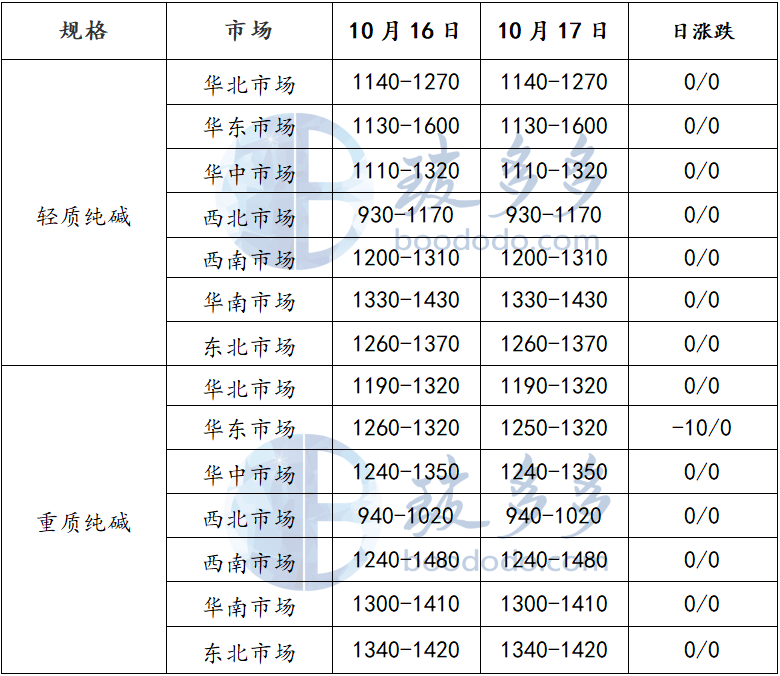
Core Viewpoint - The domestic soda ash market is maintaining a weak and stable operation with little price fluctuation, indicating a supply surplus and moderate demand [2][5][6]. Price Summary - Light soda ash prices in East China are stable at 1130-1600 CNY/ton, while heavy soda ash prices range from 1250-1320 CNY/ton [2]. - The price index for light soda ash is 1160, unchanged from the previous working day, and the heavy soda ash price index is 1211.43, down 1.43, a decrease of -0.12% [3]. Market Dynamics - The main contract for soda ash (SA2601) opened at 1240 CNY/ton and closed at 1209 CNY/ton, with a daily decline of 1.47% [5]. - The market is currently lacking clear directional drivers, with the supply-demand imbalance continuing to exert pressure on prices [5][6]. Supply and Demand Analysis - Supply remains high despite some companies undergoing maintenance, and the overall production capacity is substantial, making it difficult to fundamentally change the supply surplus situation [6]. - Demand from downstream industries, particularly glass, has not shown significant improvement, and companies are primarily adopting a cautious purchasing strategy based on actual needs [2][6]. Future Outlook - The soda ash market is expected to maintain a weak and stable oscillation in the short term, with no significant changes anticipated in supply or demand dynamics [6].
2025年1-4月中国纯碱(碳酸钠)产量为1343.7万吨 累计增长6.9%
Chan Ye Xin Xi Wang· 2025-10-18 02:54
Core Viewpoint - The report highlights the growth in China's soda ash (sodium carbonate) production, indicating a significant increase in both production volume and year-on-year growth rates, which presents potential investment opportunities in the sector [1]. Industry Summary - As of April 2025, China's soda ash production reached 3.64 million tons, reflecting a year-on-year increase of 14.7% [1]. - Cumulatively, from January to April 2025, the total production of soda ash in China was 13.437 million tons, showing a cumulative growth of 6.9% [1]. - The data indicates a positive trend in the soda ash industry, suggesting robust demand and potential for further expansion [1]. Company Summary - Listed companies in the soda ash sector include Yuanxing Energy (000683), Sanyou Chemical (600409), Shandong Haihua (000822), Shuanghuan Technology (000707), Chlor-Alkali Chemical (600618), Jinjing Technology (600586), Hubei Yihua (000422), Yuntu Holdings (002539), and Hebang Biotechnology (603077) [1]. - These companies may benefit from the increasing production and demand for soda ash, positioning them favorably in the market [1].
