
软件

Search documents
午盘:美股涨跌不一 纳指小幅下跌
Xin Lang Cai Jing· 2026-02-10 17:05
Market Overview - The Dow Jones Industrial Average rose by 273.89 points, or 0.55%, closing at 50,409.76 points, while the Nasdaq Composite fell by 26.55 points, or 0.11%, to 23,212.12 points, and the S&P 500 increased by 2.10 points, or 0.03%, to 6,966.92 points [3][9] - The Dow reached an intraday all-time high of 50,512.79 points [10] Consumer Spending and Economic Data - U.S. retail sales unexpectedly stagnated in December, indicating more cautious consumer spending at year-end [5][12] - Retail sales remained flat after a 0.6% increase in November, with eight out of thirteen retail categories experiencing declines, including clothing and furniture stores [11][12] - Despite expectations that tax refunds will support demand early in the year, households remain dissatisfied with high living costs and ongoing concerns about the job market [12] Federal Reserve Policy Outlook - Strategists from State Street anticipate the possibility of three interest rate cuts by the Federal Reserve this year, with a potential 10% decline in the dollar [4][11] - The market expects the Fed to resume rate cuts around June, with at least two cuts of 25 basis points each by year-end [11] - There is speculation that the next Fed chair may face pressure for more significant rate cuts than the market currently anticipates [11] Technology Sector Insights - Analysts suggest that software stocks may rebound from historical declines, as the market's perception of the short-term disruptive impact of artificial intelligence is deemed unrealistic [10] - A report led by Dubravko Lakos-Bujas indicates that extreme price movements may lead to a rotation of funds back into high-quality software stocks resistant to AI disruption [10]


瑞银下调标普500信息技术板块评级至中性 四大超算云厂商AI年投入预计近7000亿美元
Jin Rong Jie· 2026-02-10 16:44
Group 1 - UBS Global Wealth Management Strategy Team downgraded the rating of the S&P 500 Information Technology sector from "attractive" to "neutral" based on three core adjustments [1] - Uncertainty in the software industry is expected to persist as AI technology tools intensify competition against traditional software core businesses, making it difficult for investors to maintain stable confidence in long-term growth rates and profitability of software companies [1] - Capital expenditures by cloud service providers have reached unsustainable levels, with high investments increasingly reliant on external debt or equity financing, leading to a mismatch between investment scale and current revenue returns, which may suppress market sentiment [1] Group 2 - The combined investment of major cloud providers, including Alphabet, Microsoft, Meta, and Amazon, in AI is projected to approach $700 billion by 2026, with Amazon's spending expected to reach $200 billion, potentially resulting in negative free cash flow for 2026 [1] - Valuations in the technology hardware sector are currently at a high range, reducing their attractiveness to investors [1] - UBS emphasizes that the rating adjustment does not reflect a negative outlook for the entire technology sector, as opportunities arising from AI development are still worth attention, extending beyond the technology sector [1]

业绩利好!深夜,美股软件股爆发!
证券时报· 2026-02-10 15:48
Market Overview - The U.S. stock market opened higher on February 10, with the Dow Jones up by 0.67%, S&P 500 up by 0.19%, and Nasdaq up by 0.05% [1] - The Nasdaq China Golden Dragon Index increased by 0.56% [1] Key Stock Movements - Major tech stocks mostly rose, with Microsoft up nearly 2%, Tesla over 1%, and slight increases for Apple, Amazon, and Broadcom. However, Google A fell over 2%, and Nvidia and Meta saw minor declines [2] - AI application software stocks surged, with Spotify and Datadog both rising approximately 16%, Shopify over 6%, and Unity nearly 5% [2] Economic Data Insights - U.S. retail sales for December 2025 unexpectedly stagnated, indicating cautious consumer spending, with 8 out of 13 retail categories showing declines [6] - The retail sales data was below expectations, with a forecast of a 0.4% increase, while the actual figure was flat [5] - The ADP report indicated an average weekly increase of 6,500 jobs in the private sector as of January 24 [7] Future Economic Indicators - Upcoming reports on non-farm payrolls and CPI are expected to be released on Wednesday and Friday [8] - Economists predict a 70,000 increase in non-farm employment for January, with the unemployment rate expected to remain at 4.4% [9] Federal Reserve Outlook - The White House's economic advisor noted that job growth may slow due to labor force growth deceleration and productivity increases [10] - The probability of a 25 basis point rate cut by the Federal Reserve in March is estimated at 17.7%, with an 82.3% chance of maintaining current rates [10]

道指再创新高,软件股强劲拉升,叮咚买菜涨超9%,金银短线跳水
21世纪经济报道· 2026-02-10 15:29
Market Performance - The US stock market opened higher, with the Dow Jones Industrial Average rising over 360 points, reaching a new intraday historical high [1] - As of the latest update, the Dow Jones stood at 50,498.45 (+362.58, +0.72%), the Nasdaq at 23,254.24 (+15.57, +0.07%), and the S&P 500 at 6,979.29 (+14.47, +0.21%) [2] Technology Sector - Major tech stocks showed mixed performance, with Microsoft up over 2%, Amazon up over 1%, while Google fell over 1% [2] - Notable gains were seen in software stocks, with Spotify and Datadog both rising approximately 16%, and Shopify increasing nearly 7% [3] Semiconductor Industry - TSMC reported a nearly 20% month-over-month revenue increase in January and a nearly 40% year-over-year growth, indicating strong global AI spending [2] - TSMC also projected a significant capital expenditure increase, potentially reaching $56 billion by 2026, a 37% year-over-year rise [2] Chinese Tech Stocks - The Nasdaq Golden Dragon China Index rose by 0.72%, with notable increases in stocks such as Dingdong Maicai (+9%) and Tencent Music (+2%) [3] - However, some Chinese stocks like Kingsoft Cloud fell over 3%, and Daqo New Energy and Vipshop both dropped over 1% [3] Commodity Market - Gold and silver prices experienced a decline, with silver dropping nearly 2% to below $82, and gold falling about 0.5% to around $5,030 [3] - Bitcoin also saw a short-term drop, with a decrease of 1.69%, trading at $68,167.9 per coin [5] Oil Market - WTI crude oil fluctuated, narrowly holding above $64 per barrel, while ICE Brent crude slightly increased to $69 per barrel [7] - Ongoing geopolitical tensions in the Middle East continue to pose risks to oil prices [7][8]


早盘:美股继续上扬 道指创盘中新高
Xin Lang Cai Jing· 2026-02-10 15:04
Market Performance - The Dow Jones Industrial Average rose by 364.84 points, or 0.73%, reaching 50,500.71 points, marking an intraday all-time high [3][9] - The Nasdaq increased by 11.53 points, or 0.05%, to 23,250.20 points, while the S&P 500 gained 13.56 points, or 0.19%, closing at 6,978.38 points [3][9] - The Dow reached a peak of 50,512.79 points during the session, setting a new intraday record [4][9] Consumer Spending and Economic Data - U.S. retail sales unexpectedly stagnated in December, indicating more cautious consumer spending at the end of the year [4][10] - Retail sales remained flat after a 0.6% increase in November, with eight out of thirteen retail categories experiencing declines, including clothing and furniture stores [5][10] - Spending at auto dealers also decreased, while building materials and sporting goods retailers saw an increase [5][10] - Concerns arise regarding the breadth of consumer spending, particularly among low-income Americans whose discretionary spending is weaker [6][10] Employment Data - The January non-farm payroll report is delayed until Wednesday due to a brief budget dispute in Congress [6][11] - This report will provide the latest employment data for January and update the final revised figures for new jobs added in 2025, with a focus on correcting previously overstated job growth by 910,000 [6][11]
高盛CEO所罗门:软件股抛售过度 AI冲击叙事过于宽泛
Ge Long Hui A P P· 2026-02-10 14:57
格隆汇2月10日|高盛集团CEO大卫·所罗门表示,上周因担心人工智能竞争而导致的软件股大幅下跌可 能反应过度。"我认为上周的市场叙事有点过于宽泛了,"所罗门周二在佛罗里达州基比斯坎举行的瑞银 集团会议上表示。"(AI领域)会有赢家和输家——许多公司将成功转型并发展良好。"许多软件股因 Anthropic PBC新推出一款AI自动化工具及其对传统软件即服务业务的潜在影响而下跌。此次抛售波及 范围广泛,无论公司是否已与AI公司建立合作伙伴关系或拥有专有数据资产,均受到影响。 ...

瑞银下调美国科技股评级,并给出三大理由
Xin Lang Cai Jing· 2026-02-10 14:52
Group 1 - UBS has downgraded its outlook for the US information technology sector, adopting a more cautious stance and warning of a "divergent" market reaction to high corporate capital expenditures and the impact of AI [1][9] - The recent sell-off in software stocks was triggered by AI company Anthropic's release of a new AI tool designed for professional workflows, which directly competes with core products of many traditional software companies [1][10] - The S&P 500 Software and Services Index, comprising 140 stocks, saw a significant rebound, rising approximately 3% on Monday as investors hoped for a continuation of the market's upward trend after a pullback [1][10] Group 2 - UBS noted that uncertainty in the software industry may persist, with increasing competition among software companies making it difficult for investors to maintain confidence in growth rates and profitability [2][3][11] - Mark Houghton from Liontrust Asset Management stated that the revenue generated by AI does not match the scale of investment, leading to greater uncertainty and unpredictability in future prospects, which investors tend to avoid [4][12] - UBS emphasized that capital expenditures by cloud service providers have reached unsustainable levels, posing a potential "negative pressure" on investors, especially as these expenditures increasingly rely on external debt or equity financing [4][12] Group 3 - Concerns were raised regarding the spending plans of several major tech giants, with Alphabet, Microsoft, Meta, and Amazon expected to collectively invest nearly $700 billion in AI this year [4][13] - Amazon is projected to spend $200 billion this year, with its free cash flow potentially turning negative by 2026, nearing $17 billion [5][14] - Houghton expressed that if investors can access $60 billion in cash flow now but must exchange it for uncertain future cash flows, this uncertainty warrants a lower valuation [6][15] Group 4 - UBS recommended that investors diversify their allocations, indicating that the downgrade does not reflect a negative view of the entire tech sector, but rather highlights that AI opportunities extend beyond just technology and IT sectors [7][16] - The firm advised investors to reassess their current allocations to US tech stocks, suggesting a reduction in concentrated holdings in single software companies, particularly those with non-diversified business models [7][16] - UBS suggested reallocating funds into sectors such as banking, healthcare, utilities, communication services, and discretionary consumer goods [7][16]
小摩加入力挺美股软件股行列:AI冲击担忧被夸大 历史性下跌过后有望反弹
智通财经网· 2026-02-10 13:47
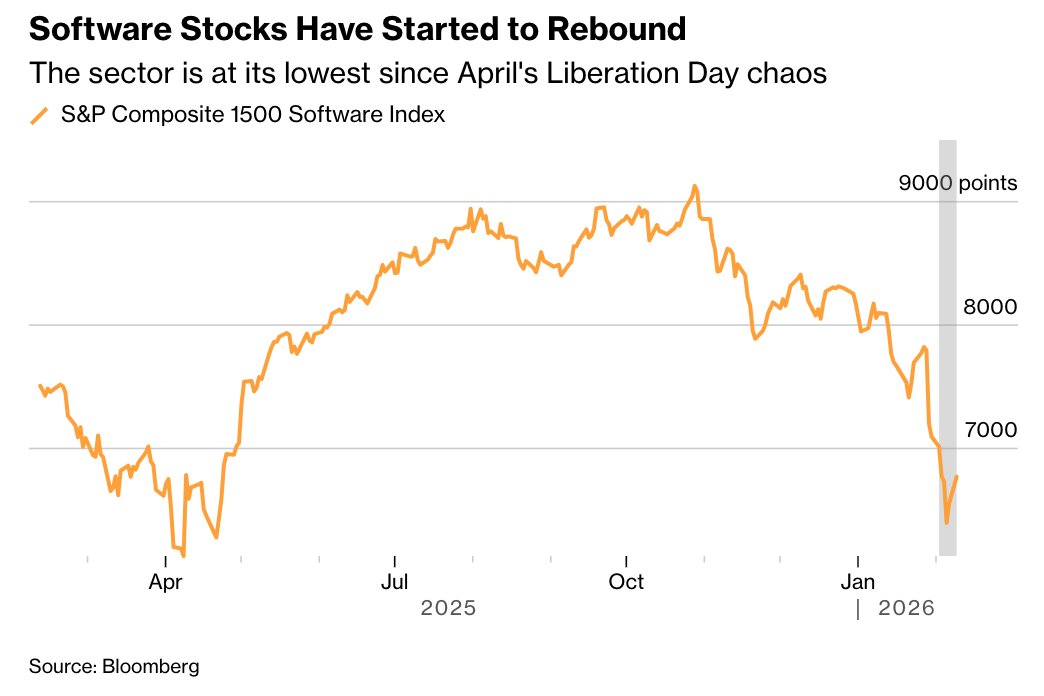
Core Viewpoint - Software stocks are expected to rebound from historic lows as the market has overly pessimistic expectations regarding AI's short-term disruption of the software industry, according to JPMorgan strategists [1][5]. Group 1: Market Sentiment and Stock Performance - The software sector has fallen to its lowest level since the market turmoil in April last year [4]. - Concerns over new AI tools potentially disrupting traditional Software as a Service (SaaS) business models have led to sustained pressure on U.S. software stocks [1][5]. - The recent sell-off did not differentiate between companies with AI partnerships or proprietary data assets, affecting nearly all related software companies equally [1]. Group 2: Company Resilience and Long-term Outlook - Companies like Microsoft and CrowdStrike are highlighted as resilient players in the AI space, likely to benefit from AI-enhanced workflow efficiencies [5]. - The high switching costs and long-term contracts in enterprise software provide a buffer against short-term disruptions [5]. - The long-term fate of traditional software companies in the face of AI remains uncertain, but current market pessimism appears to be an overreaction [5]. Group 3: Analyst Perspectives - Analysts from Morgan Stanley believe that U.S. tech stocks still have room for further gains, and the decline in software stocks has created an attractive entry point [5]. - Wedbush analysts argue that the market's reaction to AI risks is excessive, suggesting that the current sell-off implies an extreme assumption of widespread AI disruption, which is not feasible [6]. - The caution of enterprise clients regarding AI migration is emphasized, as many are reluctant to expose core data to immature new platforms [6]. Group 4: AI Integration and Market Dynamics - The narrative that AI will replace entire enterprise software stacks is overly simplistic; the value density of enterprise software lies in proprietary data and compliance structures [8][9]. - AI is more likely to integrate as embedded tools within existing software platforms rather than completely replacing them [6][9]. - The current sell-off reflects a market response to the question of how much profit pools in SaaS will be redistributed due to AI [10]. Group 5: Future Indicators and Investment Strategy - The rebound in software stocks may depend on two hard indicators: the speed of real deployment and payment expansion by enterprises, and the elasticity of SaaS companies' AI-related product revenues [10]. - Companies with strong data assets and solid fundamentals, such as Microsoft, MongoDB, Snowflake, Palantir, and SAP, are likely to experience a robust rebound post-panic [10].



盘前:纳指期货涨0.06% 软件股劲升
Xin Lang Cai Jing· 2026-02-10 13:41
Market Overview - Global stock markets have returned to historical highs, with Japan's market continuing its upward trend and software stocks stabilizing, boosting overall risk appetite [2][30] - As of the report, Dow futures rose by 0.06%, S&P 500 futures increased by 0.11%, and Nasdaq futures gained 0.06% [3][30] - European markets saw the Stoxx 600 index slightly retreat from a record high, while Kering Group surged by 11% due to signs of recovery in its Gucci business [4][30] Japanese Market - The Nikkei 225 index closed up by 2.3%, with other Asian markets showing moderate gains: Hang Seng Tech Index up by 0.5%, Shanghai Composite Index up by 0.1% [5][31] - The market anticipated that the victory of the ruling party would benefit the Japanese stock market due to planned fiscal stimulus, with unexpected rebounds in Japanese government bonds and the yen [5][31] Economic Data Focus - Traders are awaiting a series of U.S. economic data, with retail sales being the first major report expected to show resilience in consumer spending despite high living costs and a weak job market [6][32] - Upcoming data includes non-farm payrolls and inflation metrics, which will influence expectations regarding the Federal Reserve's interest rate path [6][32] Technology Sector Insights - PineBridge Investments' Mike Kelly expressed confidence in the current tech stock rebound, emphasizing the importance of identifying winners in the evolving landscape of disruptive technologies [7][33] - Ecofi Investissements' Karen Georges anticipates an economic rebound in the second half of the year, although short-term consumer data may appear less optimistic [7][33] Currency and Commodity Movements - The Chinese yuan strengthened to its highest level against the dollar since May 2023, following reports of regulatory recommendations to reduce U.S. Treasury exposure [7][33][34] - Gold prices maintained above $5,000, with traders awaiting new catalysts, while Bitcoin fell by 2.3% to $68,708 [6][36] Company-Specific Developments - Datadog's stock surged over 10% in pre-market trading, while Spotify's shares rose by 11% due to expected profits exceeding forecasts [15][42] - Conversely, Coca-Cola's stock fell over 2% as its fourth-quarter net revenue missed market expectations [17][43] - Ferrari's stock jumped nearly 10% due to strong demand, with orders extending to the end of 2027 [20][46]

美股前瞻02.10:风偏提振科技反弹,但软件考验或将延续
East Money Securities· 2026-02-10 13:30
Market Overview - After a significant decline due to concerns over AI replacing software, market sentiment improved this week, with funds beginning to trade oversold conditions. The continued weakening of the dollar also provided additional support for risk assets and gold [1] - The technology sector continued its rebound, with the Nasdaq 100 closing above the critical 100-day moving average. Notably, Oracle surged nearly 10%, and Google announced plans to issue $20 billion in bonds to increase AI spending, reflecting confidence in its long-term competitiveness in the search engine and AI ecosystem [1] Software Sector Analysis - Despite a rebound led by Oracle, the software sector remains below last week's opening highs, indicating that while it may be at a bottom, it has not yet stabilized. The report suggests that internal differentiation within the sector will intensify, and investors should be cautious rather than blindly bottom-fishing [3] - The report highlights that traditional software business models and revenue sources may face significant disruption from generative AI, automation platforms, and alternative tools. Companies with proprietary data and strong AI integration capabilities are likely to benefit [3] Investment Strategy - The market's trading focus shifted from AI builders in the tech sector to value stocks that are short-term beneficiaries of AI, such as DOW, WMT, and FDX, which have seen significant rebounds. The report notes that the most shorted stocks have risen over 11% from last week's lows, indicating a potential clearing of short positions [3] - The adjusted valuations of M7, OpenAI chain, and the software sector provide reasonable entry points for buyers, suggesting a potential return to a risk-on market environment focused on AI and resource hedging [3] Macroeconomic Considerations - The report emphasizes that macroeconomic uncertainties remain high, particularly with the delayed release of January non-farm payroll and the latest CPI data, which could influence market dynamics. Currently, the market appears inclined to maintain a certain level of risk exposure ahead of these data releases [3]

