
农产品贸易

Search documents
市场预计巴西玉米酒糟将进入我国
Qi Huo Ri Bao Wang· 2026-02-02 16:15
作为全球第三大玉米生产国,巴西2024/2025年度玉米产量为1.36亿吨。该国于2017年建成首座玉米乙 醇生产专用设施。截至2024年,巴西玉米乙醇产量由4亿升增至75亿升,用于乙醇生产的玉米从95万吨 上升至1700万吨。在此背景下,巴西玉米酒糟产量从2019/2020年度的120万吨增至2024/2025年度的420 万吨,增幅为256%,其中约79%用于国内消费。2017年至2021年,巴西玉米酒糟出口量极低,但自 2022年起出口逐步扩大。2024年,巴西已向21个国家和地区出口79.1万吨玉米酒糟,出口总额1.18亿美 元。 国内涉粮及饲料加工企业普遍认为,巴西玉米酒糟进入我国市场,是中巴谷物贸易从单一玉米品类向多 元饲用原料延伸的标志性事件。市场预估2026年巴西玉米酒糟对华出口量约为100万吨,绝对规模有 限,但这一品类进口的落地,填补了巴西玉米对华出口收尾后的市场空白,标志着巴西谷物在华布局进 入品类多元化、供应常态化的新阶段,将成为我国饲料原料进口多元化战略的重要落地成果,为中巴农 业贸易合作打开新的增长空间。 河南开封粮油贸易商扶伟认为,巴西玉米酒糟进入我国市场,意味着我国蛋白饲料进口 ...
IIGF观点 | 孙瑾、周正韵等:棕榈油行业绿色贸易的发展路径与政策建议
Xin Lang Cai Jing· 2026-02-02 14:51
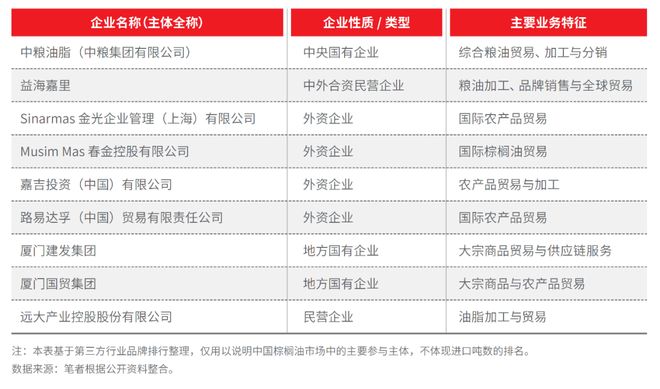
Core Insights - The article emphasizes the urgent need for sustainable palm oil trade in the context of global low-carbon and sustainable trade transformations, highlighting China's significant role as a major importer and its impact on upstream production countries [1][2]. Group 1: Importance and Urgency of Sustainable Palm Oil - Palm oil is the most produced and traded vegetable oil globally, crucial for food processing, daily chemicals, and bioenergy, but its production is linked to deforestation, peatland degradation, biodiversity loss, and greenhouse gas emissions [1]. - The international trade rules surrounding forest-risk commodities like palm oil are becoming increasingly stringent, shifting from voluntary commitments to mandatory compliance for market access [2]. Group 2: China's Palm Oil Import Structure - In 2024, China's palm oil import volume is projected to be approximately 2.8 million tons, making it the second-largest importer globally, following India [2]. - China's palm oil supply is heavily reliant on imports from Southeast Asia, particularly Indonesia and Malaysia, creating a close connection between its trade and ecological risks in tropical forest regions [2]. Group 3: Market Structure and Key Players - The palm oil import and trade in China are dominated by a few large grain and oil trading companies, including state-owned enterprises and multinational corporations, which play a critical role in ensuring domestic supply stability [3][4]. Group 4: Challenges in Sustainable Trade - The main challenges for sustainable palm oil trade in China stem from the inability of the current trade system to convert sustainability requirements into stable economic incentives, leading to difficulties in forming a "green premium" [6][10]. - Institutional constraints arise from the lack of a unified governance framework for forest-risk commodities, with companies often driven by external market pressures rather than domestic regulatory expectations [6][7]. Group 5: Financial and Market Mechanisms - The trade financing system has not effectively supported sustainable palm oil trade, as traditional financing tools do not incorporate sustainability criteria into their risk assessment models [8]. - There is a weak demand foundation for sustainable palm oil in the downstream market, with many companies prioritizing price stability and supply reliability over sustainability commitments [9][10]. Group 6: Recommendations for Improvement - Policy recommendations include establishing clear information disclosure and risk identification requirements for palm oil imports, enhancing supply chain due diligence capabilities among companies [11]. - Financial institutions should gradually incorporate environmental and deforestation risks into their trade financing frameworks to alleviate the financial friction faced by companies transitioning to sustainable practices [12]. - The focus should be on embedding sustainability requirements into procurement policies of large oil-using enterprises to create stable demand for sustainable palm oil without relying solely on consumer willingness to pay a premium [12].

炸锅!加征25%再追加25%!印度对美出口遭史上最重关税打击!
Sou Hu Cai Jing· 2026-02-02 08:50
Core Viewpoint - The article discusses the dramatic shift in US-India relations, highlighting how the once strong alliance has faced significant challenges due to changing US policies, particularly under the Trump administration, leading India to seek closer ties with the EU [1][3][5][7]. Group 1: Historical Context - Since the late 1990s, US policy towards India has been based on strategic altruism, aimed at countering China's rise, with India seen as a key partner [1]. - The Bush administration broke international norms to support India, including lifting sanctions related to nuclear tests and enhancing defense cooperation [1]. - The Obama administration further solidified this relationship by designating India as a major defense partner and facilitating military sales [1]. Group 2: Shift Under Trump Administration - The turning point in US-India relations occurred during Trump's presidency, which adopted an "America First" policy that contradicted previous strategic support for India [3][5]. - In April 2025, the Trump administration implemented a reciprocal tariff policy, imposing a 25% tariff on Indian exports due to India's unwillingness to compromise on agricultural trade [3]. - Trump's administration also targeted India's service sector by drastically increasing H-1B visa fees, which affected India's ability to send skilled workers to the US [5]. Group 3: India's Response - In response to US pressures, the Modi government shifted its focus towards the EU, recognizing the complementary economic structures and potential for cooperation in various sectors [5][7]. - India aims to expand agricultural and manufacturing exports to the EU to offset losses from the US and is actively pursuing collaboration in technology sectors like AI and renewable energy [5][7]. - This strategic pivot reflects India's long-standing non-alignment policy and the desire to maintain strategic autonomy, avoiding over-reliance on the US [7]. Group 4: Future Implications - The article suggests that while the US-India alliance may not be completely broken, it has entered a phase where competition outweighs cooperation, driven by the decline of US influence and India's rising ambitions [7]. - The pressures from the Trump administration have made India more aware of the importance of diplomatic diversification and strategic independence [7].

菜籽油2026年报:中加关系修复or进口来源重构 决定未来定价的锚
Xin Lang Cai Jing· 2026-02-02 07:39
Group 1 - Global canola production is experiencing a mild recovery, but major producing countries face export challenges. Canada and the EU account for over 65% of global canola production, with both regions expected to see reduced output in the 2024/25 season, particularly the EU, which is projected to decline by over 13% year-on-year due to extreme weather conditions [2][19][20] - For the 2025/26 season, global canola production is estimated at 92.27 million tons, a 7.3% increase from the previous year, primarily driven by a recovery in EU production, which is expected to rise nearly 20% [20][19] - Canada remains the primary exporter of canola, with a projected production of 20.028 million tons for the 2025/26 season, a 12% increase despite a 2% decrease in planting area [22][19] Group 2 - The anti-dumping investigation initiated by China against Canadian canola has significantly impacted export volumes, with a sharp decline in exports observed since May, leading to a substantial increase in Canadian canola inventory [22][5] - The future price dynamics of canola oil will depend on the outcome of the anti-dumping case, with two potential scenarios: continued tension in China-Canada relations leading to sustained supply issues, or a thawing of relations resulting in increased exports from Canada [22][24] - The final ruling on the anti-dumping case is expected to influence the pricing and valuation system for canola oil, with market sentiment likely to fluctuate based on the outcome [24][25] Group 3 - China imported 6.39 million tons of canola in 2024, with 95.8% sourced from Canada. However, due to ongoing trade tensions, Australia and Russia are emerging as alternative suppliers [11][27] - The domestic inventory of canola is under pressure, with a significant reduction in imports from Canada leading to a tight supply situation. As of November 21, coastal oil mills had only 24,500 tons of canola in stock, a drop of over 50% from the peak in May [28][12] - Despite weak demand for canola oil, stable withdrawal volumes are expected to continue until trade channels with Canada are reopened, maintaining a tight supply situation and providing price support [30][14] Group 4 - The oilseed sector is anticipated to remain in a tight supply-demand balance, influenced by international trade relations and biofuel policies. The outcome of the anti-dumping case will be a critical factor in determining future price trends [31][16] - If relations between China and Canada improve, a potential price drop may occur, while continued tensions could lead to price increases, despite the introduction of Australian and Russian canola into the market [31][16]

闽台同心筑家园
Xin Lang Cai Jing· 2026-01-31 22:37
从1小时办妥临时驾照的"同城效率",到带动当地数百户农户增收致富的高山茶合作社;从"夕发朝 至"的物流速度,到"一键绑卡"的金融便利……近年来,福建以建设两岸融合发展示范区为使命,在探 索海峡两岸融合发展新路上迈出坚实步伐。通过持续深化社会、经济、情感、全域融合,福建正将"两 岸一家亲"的理念,转化为台胞台企可感可及的同等待遇、互利共赢的发展实景与血脉相连的温馨家 园。 生活同城化 不久前,台胞巫乂在连江黄岐台胞服务驿站,仅用1小时就办妥了临时机动车驾驶许可,成为福建省首 例"口岸现场一站式办理"台胞临时机动车驾驶许可业务的受益者。"业务办理过程简单高效,我1小时就 拿到了证件,完全不耽误后续的行程安排。"巫乂说,他常年往返于连江、马祖两地,近年来,不断缩 短的通关时间与愈发便捷的业务办理,让他切实感受到了福马"同城生活圈"的服务效率与温度。 "在相关部门的支持和配合下,我们通过整合资源、简化流程,将便民服务延伸至对台胞服务最前沿, 通过配备专业工作人员及设备,将原本分散的材料受理、信息核验、证件制作等环节集中至口岸现场, 大幅减少台胞办理业务的'时间成本'问题,为台胞就业、创业及生活提供极大便利。"黄岐台胞 ...
闽台同心筑家园 ——福建探路两岸融合发展迈出新步伐
Jing Ji Ri Bao· 2026-01-31 22:25
从1小时办妥临时驾照的"同城效率",到带动当地数百户农户增收致富的高山茶合作社;从"夕发朝 至"的物流速度,到"一键绑卡"的金融便利……近年来,福建以建设两岸融合发展示范区为使命,在探 索海峡两岸融合发展新路上迈出坚实步伐。通过持续深化社会、经济、情感、全域融合,福建正将"两 岸一家亲"的理念,转化为台胞台企可感可及的同等待遇、互利共赢的发展实景与血脉相连的温馨家 园。 生活同城化 不久前,台胞巫乂在连江黄岐台胞服务驿站,仅用1小时就办妥了临时机动车驾驶许可,成为福建省首 例"口岸现场一站式办理"台胞临时机动车驾驶许可业务的受益者。"业务办理过程简单高效,我1小时就 拿到了证件,完全不耽误后续的行程安排。"巫乂说,他常年往返于连江、马祖两地,近年来,不断缩 短的通关时间与愈发便捷的业务办理,让他切实感受到了福马"同城生活圈"的服务效率与温度。 "在相关部门的支持和配合下,我们通过整合资源、简化流程,将便民服务延伸至对台胞服务最前沿, 通过配备专业工作人员及设备,将原本分散的材料受理、信息核验、证件制作等环节集中至口岸现场, 大幅减少台胞办理业务的'时间成本'问题,为台胞就业、创业及生活提供极大便利。"黄岐台胞 ...
“我的货舱在广东,我的市场在全球”——我在海外卖广货|南岭东风
Nan Fang Nong Cun Bao· 2026-01-30 03:34
Core Viewpoint - The article highlights the growing global market for Guangdong products, emphasizing the increasing demand for high-quality Chinese goods abroad and the cultural connections they foster among overseas Chinese communities [12][13][41]. Group 1: Market Expansion - The New Hui Chen Pi is changing lifestyles in the U.S., particularly in Los Angeles, where more people are adopting the practice of drinking Chen Pi tea [3][4]. - Guangdong products are increasingly recognized for their quality and brand appeal, moving beyond simple manufacturing to become preferred choices among foreign consumers [13][41]. - The article discusses various Guangdong products successfully entering international markets, such as agricultural drones in Vietnam and tea products in North America, showcasing the diverse applications of Guangdong goods [10][63]. Group 2: Business Strategies - Companies like Chen Pi Village are focusing on the North American market, overcoming regulatory challenges to introduce authentic Chen Pi products, with sales projected to exceed 15 million RMB by 2025 [36][37]. - The article mentions the establishment of a U.S. headquarters for Chen Pi Village, which aims to enhance brand recognition and sales in the overseas market [36][38]. - Guangdong's agricultural technology, such as DJI's drones, is being utilized to modernize farming practices in countries like Vietnam, indicating a shift towards providing comprehensive solutions rather than just products [63][65]. Group 3: Cultural Impact - The demand for Guangdong products among overseas Chinese communities is driven by a desire to connect with their cultural roots, with items like Cantonese sausages and tea sets serving as emotional links to their homeland [39][41]. - The article notes that the success of Guangdong products abroad is not just about commerce but also about cultural exchange and storytelling, enhancing the global perception of Chinese goods [73][74]. - The establishment of a network among overseas Chinese entrepreneurs aims to facilitate the export of Guangdong products, further integrating cultural and business efforts [48].

特朗普恐怕没想到,中国竟会果断停止采购;中俄两国防长紧急通话,释放出的信号非常明确且强烈
Sou Hu Cai Jing· 2026-01-29 20:48
Group 1 - The article discusses China's recent decision to halt imports of Venezuelan oil and U.S. soybeans, indicating a strategic response to U.S. actions in Venezuela [1][2][7] - China's suspension of Venezuelan oil purchases is framed as a calculated move to avoid endorsing U.S. control over Venezuelan resources and to mitigate risks associated with U.S. sanctions [1][4][7] - The decision to pivot to Brazilian soybeans, following the fulfillment of a previous purchasing agreement with the U.S., reflects a market-driven approach rather than a political one [8][10][27] Group 2 - The article highlights the decline in the attractiveness of Venezuelan oil due to reduced discounts and increased political risks, making it an unwise choice for Chinese companies [7][10] - China's procurement strategy emphasizes flexibility and cost-effectiveness, demonstrating a commitment to market principles over political pressures [10][18][21] - The ongoing military cooperation between China and Russia, marked by recent communications, signals a deepening strategic partnership aimed at enhancing national security and reducing reliance on external powers [12][14][17] Group 3 - The article asserts that China's actions are not merely reactive but part of a broader strategy to establish a self-sufficient security network across various sectors, including energy and agriculture [17][18][29] - The emphasis on "strategic autonomy" reflects a shift in China's approach, moving from passive compliance to proactive engagement in international trade [27][31][32] - The narrative concludes that China's recent decisions are grounded in rational economic calculations, reinforcing its position as a significant player in global trade dynamics [29][35][36]
贝森特坐地起价,采购完1200万吨美国大豆后,中国不买了,转向采购巴西大豆!
Sou Hu Cai Jing· 2026-01-29 12:55
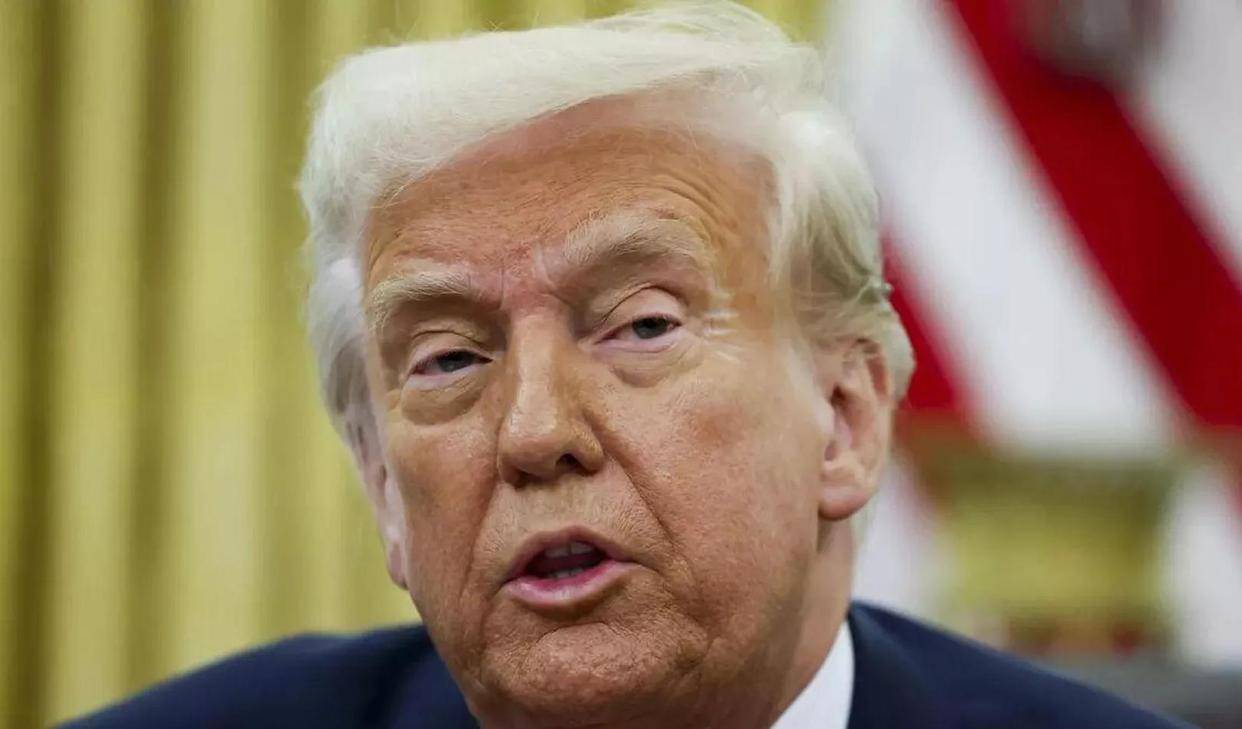
Group 1 - Chinese importers have confirmed the procurement of at least 25 shipments of Brazilian soybeans, scheduled for shipment between March and April this year [1] - The U.S. Treasury Secretary announced that China has fulfilled its commitment to purchase 12 million tons of U.S. soybeans, with expectations of 25 million tons annually over the next three years [1] - China, as the world's largest soybean importer, has a demand exceeding 100 million tons annually, accounting for 60% of the global market [1] Group 2 - Despite U.S. soybeans not being entirely uncompetitive, their pricing and trade terms have led to a loss of market share, particularly as China shifts towards Brazilian soybeans [3] - The procurement actions by China serve as a subtle warning to the U.S. regarding its importance in the soybean market, indicating that China is not solely reliant on U.S. products [3] - The current trade issues between the U.S. and China are primarily rooted in political factors, with the Trump administration struggling to ensure commitments made in trade relations [3] Group 3 - The increase in Chinese purchases of Brazilian soybeans coincides with visits from G7 leaders to Beijing, highlighting a shift in the international political and economic landscape [7] - This trend indicates an improvement in trade environments and recognition of China's ongoing open policies by the international community [7] - The decision to turn to Brazilian soybeans reflects a sophisticated political and economic strategy, emphasizing the need for balance in complex international relations [9]

柬老签署跨境运输协议 协助柬农产品出口中国
Shang Wu Bu Wang Zhan· 2026-01-27 15:57
Core Viewpoint - The signing of the "Cross-Border Agricultural Products Transportation Agreement" between Cambodia and Laos marks a significant step in enhancing agricultural trade and cooperation between the two countries, particularly in exporting Cambodian agricultural products to the Chinese market [1] Group 1: Agreement and Cooperation - The agreement aims to facilitate the cross-border transportation of agricultural products, thereby strengthening bilateral relations [1] - Both countries will establish a technical working group to study the transportation processes for agricultural products, focusing on creating pathways for Cambodian exports to China [1] Group 2: Areas of Collaboration - Discussions included potential cooperation in various fields such as connecting value chains, sourcing fertilizer raw materials from Laos, improving the investment environment, enhancing crop varieties, and raising production standards [1] - Emphasis was placed on the importance of quality standards, safety, low costs, and economic benefits in all collaborative efforts [1] Group 3: Environmental and Resource Protection - Both parties expressed a strong commitment to joint efforts in forest fire prevention, forest protection, wildlife conservation, biodiversity, and natural resource protection [1] - There is a shared determination to deepen bilateral cooperation to promote agricultural trade and economic growth for the benefit of both nations' populations [1]
