
数码

Search documents
海西州春节期间持续开展系列惠民消费促进活动
Xin Lang Cai Jing· 2026-02-11 20:52
Core Viewpoint - The article highlights the "Gift to Chaidamu" series of consumer promotion activities in Haixi Mongolian and Tibetan Autonomous Prefecture, aimed at boosting consumer spending during the Spring Festival through various subsidies and coupons [1] Group 1: Consumer Promotion Activities - The first round of the "Gift to Chaidamu: Warm Winter Shopping Season" has been launched, featuring multiple events such as the New Year Goods Festival and various promotional activities in different cities [1] - The second round, "Gift to Chaidamu: Warm Spring Shopping Season," is set to start in early March, focusing on subsidies for automobiles, home appliances, and digital products, along with electronic coupons for supermarkets and restaurants [1] Group 2: Participation and Accessibility - The activities are designed to be easily accessible, primarily conducted through online platforms like the Cloud Flash Payment App, allowing consumers to download the app and redeem coupons for discounts at participating merchants [1] - The second round will implement differentiated policies, with automobile subsidies based on purchase price tiers and various discount offers for home appliances and digital products at retail locations [1]
山东潍坊:消费品以旧换新政策升级扩围再发力
Sou Hu Cai Jing· 2026-02-11 11:29
Core Insights - The core viewpoint of the article emphasizes the significant impact of the "old-for-new" consumption policy in Weifang City, projecting a direct consumption boost of 16 billion yuan by 2025, with a year-on-year growth exceeding three times [1][3]. Group 1: Consumption Growth - In 2025, Weifang's total retail sales of consumer goods reached 358.49 billion yuan, marking a 6.3% year-on-year increase, largely driven by the "old-for-new" policy [3]. - The policy facilitated 1.29 million people receiving government subsidies totaling 2.034 billion yuan, directly stimulating consumption by 16 billion yuan [3]. Group 2: Policy Optimization - The 2026 policy adjustments focus on three main areas: more precise subsidy categories, enhanced energy efficiency requirements, and a more scientific subsidy method [4]. - Subsidities for home appliances are now limited to six specific categories, and new digital products include smart glasses [4]. - The subsidy method for automobiles has shifted from a fixed amount to a percentage of the new car price, while home appliances and digital products receive a 15% subsidy based on sales price [4]. Group 3: Automotive Replacement - The automotive "old-for-new" policy has been refined, with subsidy standards now differentiated by vehicle type and energy source, favoring electric vehicles over fuel vehicles [5]. - Consumers can apply for subsidies directly when purchasing new cars from January 1 to March 31, streamlining the process [5]. Group 4: Home Appliances and Digital Products - The process for replacing home appliances and digital products is straightforward, allowing consumers to apply for subsidies through specific apps and receive immediate discounts at participating stores [6]. - Over a thousand merchants are involved in the program, facilitating easy access for consumers [6]. Group 5: Future Outlook - The Weifang Municipal Bureau of Commerce aims to leverage the "old-for-new" policy to convert policy benefits into consumption momentum, thereby stimulating market potential and promoting steady growth in the local consumption market [6]. - In 2025, Weifang conducted over 600 promotional consumption activities, generating more than 10 billion yuan in consumption [6].

菏泽发放提振新春消费“大礼包”
Da Zhong Ri Bao· 2026-02-11 02:17
让更多真金白银直达消费者 提质增效实施消费品以旧换新。积极落实国家、省以旧换新政策,聚焦汽车、家电、数码及智能产 品等重点领域,优化补贴流程,加快资金兑付,加力扩围消费品以旧换新,激发消费市场内生动力。同 时,大力推动产品上新、场景焕新、活动出新,满足人民群众高品质、多样化消费需求。 新业态、新模式、新场景协同发力。打造消费新业态。大力发展直播电商、即时零售、智慧商圈、 品牌首店等消费新业态,深化"文旅+""牡丹+""中医药+"等产业融合模式,推动消费形态多元化升级。 发展消费新模式。积极培育萌宠经济、悦己经济、银发经济、"好房子"供给等消费新模式,支持知 名企业来菏布局,创新开展农产品进市场、进商超等展销活动,更好满足多元化、个性化需求。 菏泽发放提振新春消费"大礼包" 春节前夕,菏泽专属的票根地图福利活动暖心上线。电影票、景区门票、购书小票,变身通用的文 化出行优惠凭证,串联起观影、逛景、买书的超划算新春文化旅程,解锁全域新春文化消费优惠。 1月份,菏泽市政府办公室印发《2026年菏泽市提振消费实施方案》,着力推动消费市场高质量发 展打出政策"组合拳",努力让群众的消费底气更足、信心更强。同时,统筹整合汽 ...
深圳今年如何“花钱”?财政将支持实施提振消费专项行动
Nan Fang Du Shi Bao· 2026-02-10 12:00
2月9日,深圳市七届人大七次会议开幕,《关于深圳市2025年预算执行情况和2026年预算草案的报告》 提请大会审查。聚焦深圳"钱袋子",今年预算报告有何看点?财政支出如何惠民生、促发展? 收入结构居于全国最优水平之列 深圳属于计划单列市,财政管理体制不同于一般城市,来源于深圳辖区的一般公共预算收入分中央级收 入和地方级收入。 《关于深圳市2025年预算执行情况和2026年预算草案的报告》显示,2025年,来源于深圳辖区的一般公 共预算收入达11302亿元,已连续五年超过1万亿元。其中,地方级收入4163.8亿元、增长6.4%。地方级 收入中,税收收入3510.6亿元、增长7.5%,非税收入653.1亿元、增长0.6%;税收占比84.3%,收入结构 居于全国最优水平之列。 值得关注的还有地方政府债务的情况。据介绍,经积极争取,财政部下达深圳市2025年地方政府债务限 额1063亿元,首破千亿元,已全部发行。其中,一般债券68亿元,专项债券995亿元。 据了解,近年来,深圳发行的地方政府债券以专项债券为主,专项债券在支持强基础、补短板、惠民 生、扩投资方面发挥了积极作用。此外,国家开展专项债券项目"自审自发"试点 ...
北京市家电数码“以旧换新”补贴升级
Sou Hu Cai Jing· 2026-02-10 08:50
2月9日,《北京市2026年家电以旧换新、数码和智能产品购新补贴实施细则》(以下简称《实施细 则》)正式施行。此次《实施细则》对在京个人消费者进一步明确了补贴方式、资格领取和使用流程 等。其中,设置线上及线下资格有效期,以及逾期未使用某品类线上或线下资格4次不可再领取相应品 类资格等,被业内人士视为对补贴政策的精细化升级,其核心是实现补贴资金的精准投放与高效利用。 同时,对时效管理和信用约束等的创新设计,也反映出财政资金使用从"重投入"向"重绩效"的治理转 型。 在中关村物联网产业联盟副秘书长袁帅看来,《实施细则》是对以往补贴政策的精细化升级,核心是实 现补贴资金的精准投放与高效利用。"过往补贴政策在执行中可能出现资格滥用、资金浪费等问题,例 如部分消费者领取资格后闲置,导致补贴资金无法及时惠及真正有消费需求的群体,同时分散的领取与 使用规则也增加了监管难度,通过统一申领入口、设置资格有效期和次数限制,能够从制度层面堵塞漏 洞,确保补贴资金流向真实消费场景。" "两新"政策进入提质阶段 "本着'总额控制、均衡使用、先购先得、用完即止'的原则,按照'资格领取、资格绑定、购买商品、补 贴立减'的方式实施",《实施 ...

换新车、购新机,山东春节补贴加码,以旧换新最高补2万元
Qi Lu Wan Bao· 2026-02-10 06:12
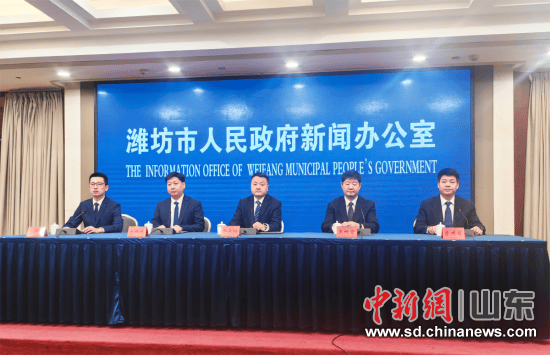
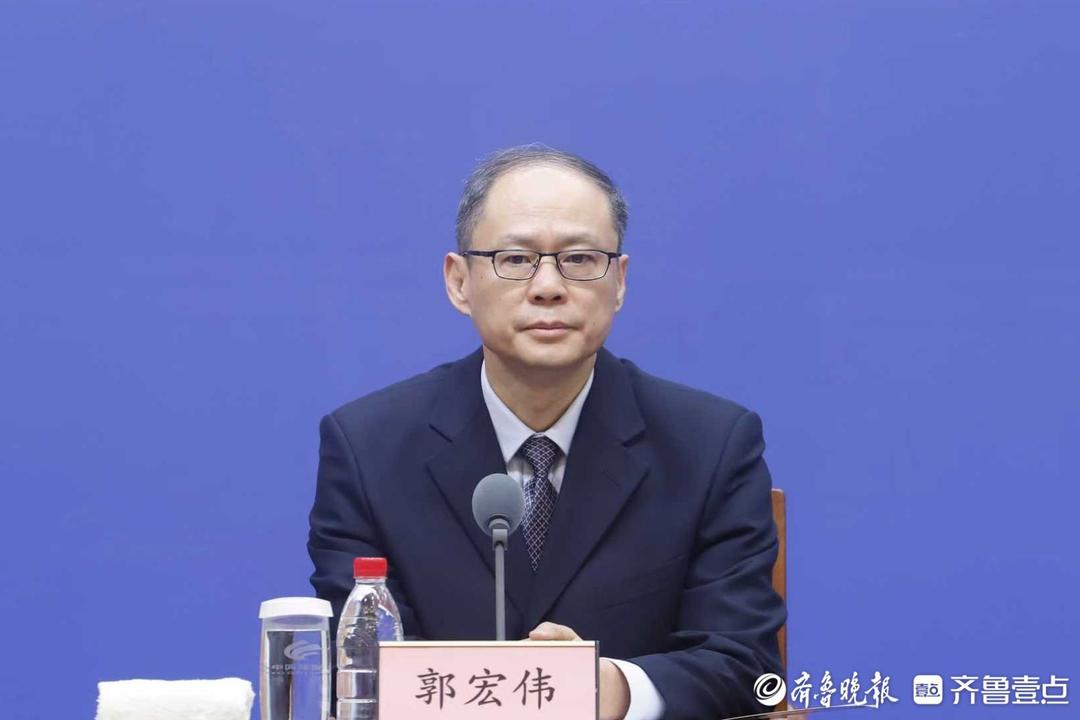
齐鲁晚报.齐鲁壹点记者张阿凤 2月10日,省政府新闻办举行发布会,介绍2026年山东春节假期促消费、稳市场、惠民生工作情况。发布会上,省商务厅二级巡视员郭宏伟详细介绍了春 节期间消费品以旧换新政策的具体安排。 申领流程上,消费者可通过"爱山东"政务服务平台或省市合作平台申领资格及补贴。 为保障春节假期供应,全省将实行"春节不打烊""供应不限量",各市将加大线下实体零售投入,保障家电、数码产品以旧换新资格充足。消费者购买新车 并开具发票即可获得相应补贴资格,同时鼓励企业打造智能终端体验专区并给予到店体验消费者更多优惠。 据介绍,2026年政策以"精准覆盖、标准优化、流程简化"为核心,重点支持汽车、家电、数码和智能产品三大类别。补贴范围包括汽车报废更新、汽车置 换更新、家电以旧换新(涵盖冰箱等6类产品)以及数码和智能产品购新(包括首次纳入补贴的智能眼镜)。 补贴标准方面,对报废旧车购置新能源乘用车的补贴车价12%,最高2万元;换购新能源乘用车的按销售价格8%补贴,最高1.5万元。购买1级能效家电按 销售价格15%补贴,单件最高1500元。数码和智能产品单件价格不超过6000元的,补贴15%,单件最高500元。 ...
政策加力,以旧换新激发市场潜能
Sou Hu Cai Jing· 2026-02-10 02:23
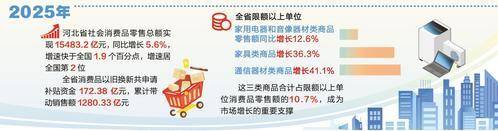
Core Viewpoint - The retail sales of consumer goods in Hebei Province reached 1,548.32 billion yuan in 2025, with a year-on-year growth of 5.6%, outpacing the national average by 1.9 percentage points, ranking second in the country [1] Group 1: Policy Impact - The "old-for-new" policy has significantly boosted consumer spending, with 172.38 billion yuan in subsidies leading to a sales increase of 1280.33 billion yuan [1] - The Hebei Province has expanded its "old-for-new" policy framework, enhancing its coverage and ensuring effective implementation through a combination of short-term and long-term strategies [2] - The introduction of subsidies for digital products such as smartphones, tablets, and smartwatches marks a significant expansion of the policy's scope, supporting consumers in adopting smart technologies [2] Group 2: Consumer Experience - The "Huanxin Life" app in Langfang has facilitated the purchase of electronic products, offering substantial subsidies and creating a new consumer service environment [4] - In Baoding, a streamlined online platform for electric bicycle exchanges has been established, allowing consumers to complete the entire process quickly and efficiently [4] - The "old-for-new" initiative not only stimulates consumption but also drives quality supply, creating a positive cycle of policy stimulation, industrial upgrading, and consumption expansion [4] Group 3: Sales Growth Data - In 2025, retail sales of household appliances and audio-visual equipment increased by 12.6%, furniture by 36.3%, and communication equipment by 41.1%, collectively accounting for 10.7% of retail sales in the province [5]
北京家电数码以旧换新补贴升级
Bei Jing Shang Bao· 2026-02-09 17:07
Core Viewpoint - The implementation of the "Beijing 2026 Home Appliance Trade-in and Digital Product Purchase Subsidy Implementation Details" aims to enhance the precision and efficiency of subsidy fund allocation for consumers in Beijing, reflecting a shift from "heavy investment" to "performance-oriented" governance in fiscal fund usage [2][6]. Group 1: Subsidy Details - The subsidy applies to six categories of home appliances and four categories of digital and smart products, with a subsidy standard of 15% of the final sales price after discounts, capped at 1,500 yuan for home appliances and 500 yuan for digital products [3][4]. - Consumers must complete real-name authentication via the "Jingtong" mobile app to claim subsidies, with restrictions on the number of qualifications that can be claimed for each category [3][4]. Group 2: Qualification and Usage Rules - The qualification for subsidies has a validity period, with online qualifications expiring at 24:00 on the same day and offline qualifications expiring at 24:00 on the following Sunday, with a limit of four unutilized qualifications leading to ineligibility for future claims in that category [3][4]. - The implementation emphasizes consistency among the applicant, payer, and recipient, requiring verification of product activation and alignment with sales orders [4][5]. Group 3: Policy Implementation and Evolution - The "Two New" policy has entered a quality enhancement phase, transitioning from initial implementation to a focus on precision and efficiency in subsidy distribution [6]. - The central and local governments are collaborating to ensure unified policy direction while adapting to local market conditions, enhancing the convenience of participation through digital platforms [5][6].
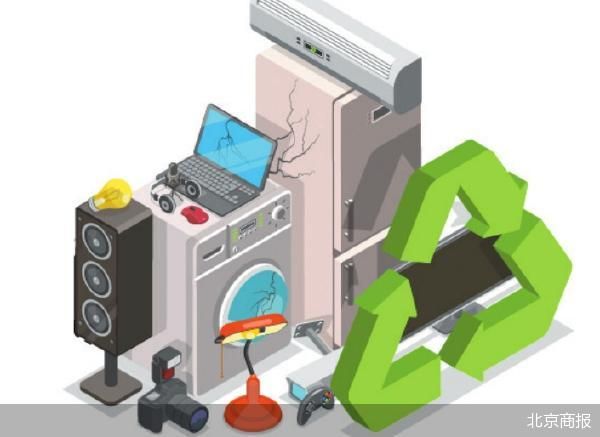
以旧换新“新国补”首月成绩单:1613万人次参与,撬动近千亿消费
Sou Hu Cai Jing· 2026-02-09 15:51
Core Insights - The new consumption policy for replacing old products is showing strong effects, with 16.13 million people benefiting and sales reaching 92.56 billion yuan in January 2023 [1] Group 1: Policy Changes - The 2026 policy marks a significant shift in top-level design, granting local governments greater autonomy to implement the policy within a national framework [2] - Local subsidies can now include a wider range of products, such as smart home devices, alongside traditional categories like home appliances and automobiles [2] Group 2: Financial Support - A total of 62.5 billion yuan from the first batch of special long-term bonds has been allocated to support the old-for-new consumption policy, with an additional 93.6 billion yuan for large-scale equipment updates [3] - This funding is expected to drive total investments exceeding 460 billion yuan across approximately 4,500 projects in various sectors [3] Group 3: Market Impact - In January, the policy led to significant sales in key sectors, with 6.813 million home appliances sold, generating 29.71 billion yuan in revenue [4] - The automotive sector saw 335,000 applications for subsidies, resulting in new car sales of 53.77 billion yuan, indicating a clear trend towards consumption upgrades [4] Group 4: Growth in Smart Products - Digital and smart products emerged as key growth areas, with sales of 9.115 million units and revenue of 29.21 billion yuan in January [5] - Smart glasses, newly included in the subsidy program, achieved sales of 7.197 million yuan, highlighting their market potential [6] Group 5: Benefits to Physical Retail - The new policy has significantly boosted offline retail, with nearly 80% of sales occurring through physical channels, leading to a year-on-year sales increase of about 20% [7] - Increased foot traffic in stores has positively impacted surrounding businesses, creating a beneficial commercial cycle [7] Group 6: Environmental Impact - The policy has contributed to a robust recycling system, with 659,000 scrapped vehicles collected in January, a 50.2% increase year-on-year [8] - This initiative supports resource recovery and promotes a green transformation in the industry [8] Group 7: Future Directions - Despite initial successes, challenges remain in ensuring uniform market rules and preventing local protectionism [9] - Streamlining subsidy processes and improving fund disbursement efficiency are crucial for enhancing policy effectiveness [10] Group 8: Long-term Growth Engine - The expansion of the policy to include smart glasses and drones signals a shift towards "tech consumption" and "quality living" [11] - The ongoing implementation of the policy is expected to stimulate market dynamics and transform the large-scale market advantage into high-quality development momentum [11]
新思想引领新征程丨消费补贴精准发力绿色智能产品引领消费新热潮
Yang Guang Wang· 2026-02-09 05:28
Group 1 - Consumption is identified as the "main engine" of economic growth and a "barometer" of people's well-being, with a focus on establishing a long-term mechanism to expand resident consumption [1] - Local governments and departments are actively working on both supply and demand sides to stimulate consumption through new scenarios, new formats, and new supplies, enhancing both industrial upgrades and quality of life [1] - The "National Subsidy" policy for smart glasses and other digital products is expected to boost consumer spending, with a reported 200% increase in sales for new interactive electronic products [2][4] Group 2 - The automotive industry is accelerating the integration of electrification, intelligence, and connectivity, with Chinese brands capturing nearly 70% of the passenger car market [4] - The government emphasizes green consumption and aims to promote a lifestyle that is resource-saving, low-carbon, and healthy, with policies designed to stimulate demand for high-efficiency green appliances and vehicles [4] - The "14th Five-Year Plan" suggests a focus on improving consumer sentiment and enhancing quality supply to activate the consumption "main engine" [5]