
现代服务

Search documents
强基提质激发内生动力
Jing Ji Ri Bao· 2025-10-15 22:12
Core Insights - The economic development of Tibet has achieved historic milestones, with GDP increasing from 327 million in 1965 to 276.5 billion in 2024, emphasizing the need for high-quality development based on local realities [1] Group 1: Economic Structure - The core of Tibet's economy lies in the real economy, which has evolved under harsh natural conditions, forming a unique industrial system comprising nine key sectors: highland特色 agriculture, clean energy, green industry, high-tech digital, cultural tourism, modern services, Tibetan medicine, border trade logistics, and general aviation [1] - These sectors are not only vital for regional economic development but also serve as a foundation for social stability, ethnic unity, and ecological protection [1] Group 2: Role of the Real Economy - The real economy acts as a stabilizer for improving livelihoods, a cornerstone for social stability, and a crucial link for promoting prosperity in border areas [2] - It possesses "green genes," safeguarding ecological security, and is a driving force for common prosperity, supporting poverty alleviation and rural revitalization efforts [2] - The real economy also plays a significant role in the transmission and innovation of ethnic culture, injecting new life and economic value into traditional handicrafts like Thangka, Tibetan carpets, and incense through industrial development [2] Group 3: Internal Development Dynamics - Tibet's development is shifting from reliance on "policy blood transfusions" to a sustainable "market blood production" model, with technological innovation and industrial upgrading as core engines for continuous economic health [3] - The focus is on cultivating local endogenous power through the modernization of highland green agriculture, industrialization of clean energy, and enhancement of cultural tourism [3] - The strategy includes leveraging local enterprises and private sector growth, enhancing industry competitiveness through technology, and optimizing human resource structures via local talent development [3] - This approach aims to effectively connect the "resources-industry-market" chain, promoting high-quality economic development in Tibet [3]
周度经济观察:总需求维持平稳,风险偏好在抬升-20250930
Guotou Securities· 2025-09-30 06:34
Demand and Price Trends - Total demand remains stable with no significant slowdown observed, indicating a gradual narrowing of economic fluctuations[2] - Industrial enterprise profits in August increased by 20.4% year-on-year, a significant rebound of 21.9 percentage points from the previous month, marking three consecutive months of profit growth[4] - The Producer Price Index (PPI) year-on-year growth is expected to continue rising due to low base effects, supporting profit margins[4] Market Sentiment and Economic Outlook - The manufacturing PMI for September is at 49.8, a slight increase of 0.4 percentage points from the previous month, indicating a broad-based economic recovery[6] - The service sector PMI stands at 50.1, down 0.4 percentage points but still within the expansion zone, reflecting overall stability in the service industry[7] - The upcoming Fourth Plenary Session in October is anticipated to provide investment guidance for related industries, particularly regarding the "14th Five-Year Plan"[11] Bond Market Dynamics - The bond market is expected to face headwinds this year, influenced by stock market gains, tax adjustments, and potential inflationary pressures[14] - Long-term bond yields have recently risen, with the 30-year bond yield reaching its highest level this year, indicating ongoing adjustments in the bond market[13] - The overall sentiment suggests that the bond market is still in a phase of adjustment, with upward risks to yields outweighing downward possibilities[14] U.S. Economic Indicators - The U.S. PCE inflation rate for August is reported at 2.7%, with core PCE at 2.9%, indicating persistent inflationary pressures[16] - The U.S. manufacturing PMI for September is at 52.0, down 1 percentage point, while the services PMI is at 52.9, reflecting resilience in the U.S. economy despite slight declines[18] - Market expectations for U.S. interest rate cuts have slightly decreased, with projections indicating two rate cuts in 2025, occurring in October and December[19]
5分钟意向融资近2亿!粤港澳大湾区创业大赛现场项目获资本强助力
Sou Hu Cai Jing· 2025-09-27 09:39
Group 1 - The event held in Foshan on September 27, 2025, facilitated face-to-face discussions between 24 promising startup projects seeking funding and 12 well-known investment institutions, resulting in a total intended investment amount of 185 million yuan [2][5][12] - The projects presented at the event spanned various sectors, including new materials, renewable energy, artificial intelligence, healthcare, equipment manufacturing, aerospace, military, and modern services, focusing on strategic emerging industries with innovative technologies [5][12] - The event utilized an efficient "5+5+1" format, allowing for quick project introductions, discussions, and expressions of investment interest, which led to significant capital attention for many startups [5][12] Group 2 - The "next-generation strategic emerging high-end membrane materials" project attracted interest from six investment institutions, with the highest intended investment amount reaching 90 million yuan, contributing to a total of 185 million yuan in intended investments [12] - The "multi-loop feedback puncture intervention surgery control system" project received interest from three investment institutions, with a maximum intended investment of 50 million yuan, totaling 85 million yuan [12] - The "precise fluid control technology for dual-use industrialization" project garnered a maximum intended investment of 40 million yuan, highlighting the effectiveness of the direct engagement format for startups [12]


“十四五”以来中国城镇新增就业累计达5921万人
Zhong Guo Xin Wen Wang· 2025-09-26 05:31
Core Points - The employment situation in China during the "14th Five-Year Plan" period has been generally stable, with a cumulative urban new employment of 59.21 million, exceeding the target of 55 million [1][2] - The Ministry of Human Resources and Social Security has spent over 470 billion RMB on employment subsidies and issued 138.9 billion RMB in stability return funds [1] - The average urban survey unemployment rate over the past four years was 5.3%, lower than the expected control target of 5.5% [1] Employment Services - The Ministry has strengthened comprehensive employment services and improved human resource matching efficiency, establishing a five-level service network covering provinces, cities, counties, and rural areas [2] - Nearly 9,000 gig markets have been established to extend service resources to grassroots and rural areas [2] - A total of 72 new occupations have been published during the "14th Five-Year Plan," covering industries such as digital economy, modern services, and intelligent manufacturing [2]
活力中国调研行 | 海南离岛免税销售额占全球免税市场比重超8%
Sou Hu Cai Jing· 2025-09-22 06:33
Group 1 - The core viewpoint of the article highlights the significant progress and development of Hainan Free Trade Port over the past five years, emphasizing its increasing openness and improved industrial system [1][3] - Hainan's actual foreign investment reached 102.5 billion yuan, with an average annual growth of 14.6%, and investment from 176 countries and regions [1][3] - The number of countries eligible for visa-free entry to Hainan has expanded to 85, establishing partnerships with 39 overseas free trade zones [1][3] Group 2 - The modern industrial system in Hainan is rapidly being constructed, with tourism, modern services, high-tech industries, and tropical agriculture accounting for 68.6% of the province's GDP [3] - Key free trade zones contribute significantly to the economy, with less than 2% of the province's area generating 30% of investment, 50% of tax revenue, 70% of imports and exports, and 90% of foreign investment [3] - From January to August this year, Hainan's total retail sales reached 176.2 billion yuan, growing by 9.6%, which is 5 percentage points higher than the national average [3] Group 3 - The duty-free shopping amount in Hainan has exceeded 250 billion yuan, with the duty-free market accounting for over 68% of the national total [3] - Hainan Free Trade Port is set to commence full island closure operations on December 18 this year, marking a new phase in its development [3] - The government aims to enhance Hainan's role as a significant gateway for China's new era of opening up, focusing on providing the most open policies, favorable conditions, and efficient services for high-quality development [3]
为高质量发展筑牢技能人才支撑——“十四五”期间我国技能人才队伍不断发展壮大
Xin Hua She· 2025-09-17 08:24
Core Viewpoint - The development of skilled talent in China is crucial for supporting manufacturing and innovation, with a significant increase in both the quantity and quality of skilled workers during the "14th Five-Year Plan" period [1] Group 1: Skilled Talent Development - China's skilled talent pool exceeds 200 million, with over 60 million high-skilled workers contributing to various industries and driving technological advancements [1] - The implementation of the "New Eight-Level Worker" system has improved career development opportunities and compensation for skilled workers, enhancing their social status [4] - The government has organized over 92 million subsidized vocational skills training sessions since the beginning of the "14th Five-Year Plan," benefiting over 40 million enterprise employees and over 30 million migrant workers [3] Group 2: Training and Education - A robust vocational training system has been established, with 2,440 vocational schools and 29,000 private training institutions providing various skill training services [2] - The training programs are designed to align with industry needs, with a focus on lifelong learning and adapting to technological changes [2][3] - The employment rate for graduates from vocational schools remains high at around 97%, indicating strong alignment with industry demands [3] Group 3: Competitions and Recognition - China has participated in the World Skills Competition since 2010, achieving significant success with 93 gold medals and maintaining the top position in the medal tally for four consecutive events [7] - A comprehensive vocational skills competition system has been established, promoting skill enhancement and recognition among skilled workers [7] - The government aims to further develop the skilled workforce by enhancing policies and creating a favorable environment for skill development [7][5]
8月份多项指标显示 我国经济发展新动能进一步增强
Ren Min Wang· 2025-09-16 05:30
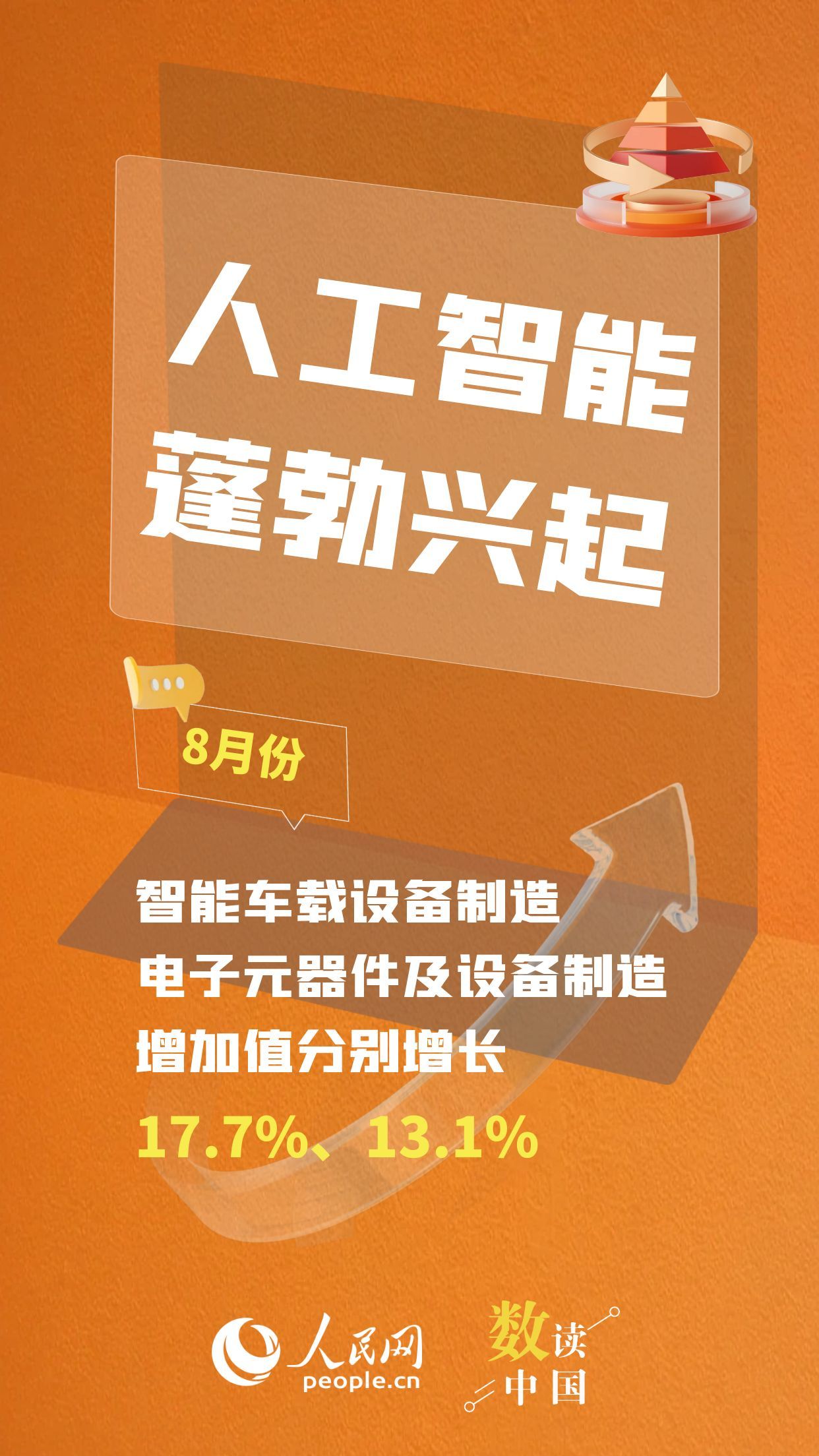
Group 1 - The core viewpoint of the article highlights the steady progress in China's economic structural adjustment, driven by continuous innovation policies, leading to enhanced new economic momentum [1]. Group 2 - In August, the value-added of the equipment manufacturing industry and high-tech manufacturing industry increased by 8.1% and 9.3% year-on-year, respectively [7]. - The production index of the information transmission, software, and information technology services industry grew by 12.1%, while the leasing and business services industry increased by 7.4% [9]. - The production of new energy vehicles and lithium-ion power batteries for vehicles saw significant growth, with increases of 22.7% and 44.2%, respectively [18]. Group 3 - From January to August, the import and export volume with countries involved in the Belt and Road Initiative increased by 5.4% [22].
长三角示范区6年推出154项制度创新成果
Su Zhou Ri Bao· 2025-09-14 00:30
Core Viewpoint - The Yangtze River Delta Ecological Green Integrated Development Demonstration Zone has made significant progress over the past six years through institutional innovation and project construction, resulting in 154 institutional innovation achievements and 57 experiences promoted nationwide [1] Group 1: Institutional Innovation and Policy Implementation - The demonstration zone has focused on institutional innovation and reform authorization, establishing a comprehensive land spatial planning system and implementing unified ecological environment standards, monitoring, and law enforcement [1] - A series of integrated institutional innovations in key areas have been effectively implemented, providing institutional support for high-quality development [1] - The zone has received 18 reform authorization items from the central government, with 14 already implemented, facilitating the construction of the demonstration area [1] Group 2: Project Construction and Functional Development - The demonstration zone has launched a three-year action plan for major construction projects, with a total investment of 645.6 billion yuan across 180 key projects, including 43 projects supported by central budget investment of 2.133 billion yuan [2] - The functional layout of the water town has been improved, with major technological innovation platforms established to enhance the transition from form-based to function-based development [2] - The zone hosts 1 national manufacturing innovation center, 15 national enterprise technology centers, 3,750 national high-tech enterprises, and 82 listed companies, with R&D expenditure intensity reaching 42%, surpassing the average level in the Yangtze River Delta [2] Group 3: Future Development Goals - By 2030, the water town construction framework is expected to be fully formed, with core demonstrations established and industrial patterns developed [3] - Plans are underway to create a world-class lake area around the Lake District, promoting ecological governance and the establishment of various key projects [3] - The construction of "railway demonstration zones" and "water demonstration zones" is being accelerated, with significant projects like the national key laboratory for water pollution control and resource recycling being implemented [3]
施耐德电气不断加大在华研发投入 以技术创新激活服务“新动能”
Xin Hua Cai Jing· 2025-09-11 15:58
Core Insights - Schneider Electric showcased its upgraded "New Quality Service System" at the 2025 China International Service Trade Fair, emphasizing innovation-driven, ecosystem collaboration, and industry empowerment [1][2] Group 1: New Quality Service System - The company has established a "New Quality Service System" that integrates technology innovation and ecosystem collaboration, providing comprehensive services throughout the entire lifecycle from design to upgrade [1] - Schneider Electric's service business in China is centered around local R&D investments, with the establishment of the EcoFit Industrial Automation Adaptation Center in Beijing and the EcoFit Low Voltage Distribution Innovation Center in Shanghai [1] Group 2: Industry Collaboration and Ecosystem - Schneider Electric has strengthened its service ecosystem with over 400 service partners nationwide, enabling agile responses to diverse customer needs and supporting enterprise transformation [2] - At the trade fair, the company signed cooperation agreements with multiple enterprises to expand service areas and launched the "Navigating the Future: New Quality Service Benchmark Case Collection" to share practical cases across various industries [2] Group 3: Industry Transformation and Service Integration - The dialogue at the event highlighted the importance of deep integration between modern services and various industries to enhance competitiveness and meet market demands [3] - Schneider Electric views new quality services as a "multiplier" for enterprise efficiency and an "accelerator" for industry transformation, aiming to balance short-term gains with long-term sustainable goals [3]
百日千万招聘专项行动推出现代服务等专场招聘
Ren Min Ri Bao· 2025-09-10 22:13
Group 1 - The "Hundred Days of Millions of Recruitment" initiative is being launched from September 8 to 14, focusing on four online recruitment events in the intelligent driving, financial insurance, modern services, and electric power industries, with over 83,000 employers participating and a recruitment demand exceeding 577,000 positions [1] - The intelligent driving sector will feature over 40 employers offering positions such as autonomous driving algorithm engineers, data mining engineers, and hardware testing engineers, with a recruitment demand exceeding 1,000 positions [1] - The financial insurance sector will have over 60 employers providing roles like risk strategy analysts, financial risk control specialists, asset management consultants, and financial advisors, also with a recruitment demand exceeding 1,000 positions [1] Group 2 - The modern services sector will involve 83,000 employers offering positions such as maintenance engineers, administrative management, customer managers, and new media operations, with a recruitment demand of 574,000 positions [1] - The electric power sector will include over 90 employers offering roles such as electrical engineers, surveying engineers, equipment engineers, and centralized control operators, with a recruitment demand of 1,800 positions [1] - Employers and job seekers can participate in the recruitment activities through platforms like the China Public Recruitment Network, the National Talent Network, and the Employment Online Special Action main venue page [1]