
畜牧

Search documents
乐购兵团好物!第三师图木舒克市“粤兵戈壁富农”直播电商系列活动即将举办
Nan Fang Nong Cun Bao· 2025-09-18 08:31
Core Viewpoint - The upcoming "Yue Bing Gobi Rich Agriculture" live e-commerce event aims to promote high-quality agricultural products from the Third Division of Tumushuke City, leveraging digital economy trends to enhance sales channels and brand influence [2][7][8]. Group 1: Event Overview - The event titled "Xinjiang Products Southbound, Guangdong Products Northbound" will commence on September 22, 2025, and will last for two months [3][4]. - It is organized by the Xinjiang Production and Construction Corps Commerce Bureau and aims to utilize live streaming to boost the sales of local agricultural products [6][7]. Group 2: Objectives and Benefits - The initiative seeks to broaden the market reach of high-quality agricultural products, increase local farmers' income, and deepen collaboration between Guangdong and Xinjiang [8][36]. - The event will feature well-known influencers to create immersive live streaming experiences, showcasing the entire production process of featured products [9][10][11]. Group 3: Agricultural Advantages - Tumushuke City benefits from unique climatic conditions, with an average of nearly 2800 hours of sunlight per year and significant temperature variations, which contribute to the high quality of its agricultural products [20][21]. - The region has developed a robust agricultural industry focusing on specialty products such as red dates, nuts, and unique melons [24][25]. Group 4: E-commerce Development - The Third Division has actively embraced e-commerce opportunities, establishing an e-commerce incubation park and attracting over 80 enterprises [28][29]. - Collaborations with platforms like Douyin have led to the training of over 300 e-commerce professionals, enhancing local capabilities in digital sales [30][31]. Group 5: Future Prospects - The series of events will serve as a platform to showcase the achievements of the local agricultural industry and promote digital transformation among local businesses and farmers [35][36].



青海青甘川陆港基地生态科技有限责任公司成立 注册资本50万人民币
Sou Hu Cai Jing· 2025-09-17 17:36
Core Viewpoint - A new company named Qinghai Qinggan Chuan Land Port Base Ecological Technology Co., Ltd. has been established with a registered capital of 500,000 RMB, focusing on various agricultural and food-related services [1] Company Overview - The legal representative of the company is Liu Xinyu [1] - The registered capital of the company is 500,000 RMB [1] Business Scope - The company’s business activities include livestock sales, poultry acquisition, retail of edible agricultural products, wholesale and retail of fresh meat, and internet sales of pre-packaged food [1] - Additional services include catering management, personal internet live streaming, general cargo warehousing (excluding hazardous chemicals), and primary processing of agricultural products [1] - The company is also involved in the production, sales, processing, transportation, storage, and other related services of agricultural products [1] - Other activities include the purchase and sale of traditional Chinese medicine (excluding Chinese medicine pieces), sales of agricultural by-products, vegetable planting (excluding rare and precious varieties), grass planting, and flower planting [1] Licensing and Permits - The company is authorized to engage in various licensed activities such as livestock breeding, food management, food production, grain processing, and accommodation services [1] - Specific projects require approval from relevant authorities before operations can commence [1]
长江期货市场交易指引-20250917
Chang Jiang Qi Huo· 2025-09-17 02:44
Report Industry Investment Ratings - **Macro Finance**: Long-term bullish on stock indices, recommended to buy on dips; hold a wait-and-see attitude towards treasury bonds [1][5] - **Black Building Materials**: Adopt range trading for coking coal and rebar; recommended to buy on dips for glass [1][7][8] - **Non-ferrous Metals**: Hold a wait-and-see attitude or buy on dips for copper; recommended to buy on dips after pullbacks for aluminum; recommended to hold a wait-and-see attitude or sell on rallies for nickel; adopt range trading for tin, gold, and silver [1][10][11][14][15][17][18] - **Energy and Chemicals**: PVC, caustic soda, styrene, urea, and methanol are expected to trade in a range; recommended to conduct an arbitrage strategy of shorting the January contract and going long on the May contract for soda ash; rubber is expected to trade with a bullish bias; polyolefins are expected to trade in a wide range [1][19][20][22][23][25][26][28][30][32] - **Cotton Textile Industry Chain**: Cotton, cotton yarn, and PTA are expected to trade in a range; apples are expected to trade with a bullish bias; jujubes are expected to trade with a bearish bias [1][33][34][35][35] - **Agricultural and Livestock**: Recommended to sell on rallies for live pigs and eggs; corn is expected to trade in a range; soybean meal is expected to trade in a range; oils and fats are expected to trade with a bullish bias [1][37][38][39][42][44][50] Core Views - The market is currently in a state of structural adjustment, with different sectors showing varying trends. Some sectors are supported by positive factors such as improved macro liquidity and strong demand expectations, while others face challenges such as oversupply and weak demand [5][7][8][10][11][12][14][15][16][17][18][20][22][23][25][26][28][30][32][33][34][35][37][38][39][42][44][50] - The Fed's interest rate decision and macro policies will have a significant impact on the market. The market has strong expectations for a Fed rate cut in September, which will create favorable conditions for domestic monetary easing and support the prices of some assets [5][10][11][12][14][15][16][17][18][20][22][23][25][26][28][30][32][33][34][35][37][38][39][42][44][50] - Investors should pay attention to the supply and demand fundamentals, cost factors, and policy changes of different sectors and adjust their investment strategies accordingly [5][7][8][10][11][12][14][15][16][17][18][20][22][23][25][26][28][30][32][33][34][35][37][38][39][42][44][50] Summary by Directory Macro Finance - **Stock Indices**: The market may continue to experience a structural adjustment in the near term, with a search for a clear leading sector. The bull market logic driven by liquidity remains intact, and it is recommended to buy on dips in the medium to long term [5] - **Treasury Bonds**: It is recommended to hold a wait-and-see attitude. Although the central bank's bond purchase operations may have an impact on the market, the market reaction is expected to be more of a phased and impulse-like nature [5][6] Black Building Materials - **Double Coking Coal**: The price increase of pithead coal has slowed down, and the market is in a state of shock. It is recommended to wait for a clear driving factor [7] - **Rebar**: The price of rebar futures has continued to strengthen, but the supply and demand fundamentals are still weak. It is recommended to buy on dips, with a focus on the support level of 3000 - 3100 for the RB2601 contract [7] - **Glass**: The supply of glass has remained stable, and the demand has improved. It is recommended to buy on dips for the January contract, with a focus on the arbitrage opportunity between soda ash and glass [8] Non-ferrous Metals - **Copper**: The price of copper has shown a strong upward trend in the near term, supported by factors such as the Fed's interest rate cut expectations and the improvement in domestic demand. It is recommended to hold a wait-and-see attitude or buy on dips, with a focus on the 82500 resistance level for the Shanghai copper main contract [10][11] - **Aluminum**: The supply of aluminum has increased slightly, and the demand has entered the peak season. It is recommended to buy on dips, with a focus on the arbitrage strategy of going long on AD and shorting AL [12] - **Nickel**: The supply of nickel is expected to increase, but the price is supported by the bottom. It is recommended to sell on rallies moderately in the short term, with a focus on the impact of the macro environment on the price [15][16] - **Tin**: The supply of tin is tight, and the demand is expected to recover. It is recommended to conduct range trading, with a focus on the 26 - 27.8 million yuan/ton range for the Shanghai tin 10 contract [17] - **Silver and Gold**: The prices of silver and gold are expected to be supported by the Fed's interest rate cut expectations and the weakening of the US dollar. It is recommended to conduct range trading, with a focus on the 9700 - 10500 range for the Shanghai silver 10 contract and the 815 - 855 range for the Shanghai gold 10 contract [17][18] Energy and Chemicals - **PVC**: The supply of PVC is high, and the demand is weak. It is recommended to conduct range trading, with a focus on the 4850 - 5050 range for the January contract [19][20] - **Caustic Soda**: The supply of caustic soda has increased slightly, and the demand is expected to improve. It is recommended to conduct range trading, with a focus on the 2550 - 2650 range for the January contract [21][22] - **Styrene**: The supply of styrene is sufficient, and the demand is limited. It is recommended to conduct range trading, with a focus on the 7000 - 7300 range [23][24] - **Rubber**: The supply of rubber is stable, and the demand has improved. It is recommended to conduct range trading, with a focus on the 15600 support level [24][25] - **Urea**: The supply of urea is high, and the demand is weak. It is recommended to conduct range trading, with a focus on the 1630 - 1650 support level for the January contract and the positive arbitrage opportunity for the 1 - 5 spread [26][27][28] - **Methanol**: The supply of methanol has remained stable, and the demand has decreased. It is recommended to conduct range trading, with a focus on the 2330 - 2450 range for the January contract [28] - **Polyolefins**: The supply of polyolefins has decreased slightly, and the demand has improved. It is recommended to conduct range trading, with a focus on the 7200 - 7500 range for the L2601 contract and the 6900 - 7200 range for the PP2601 contract [30] - **Soda Ash**: The supply of soda ash is high, and the demand is weak. It is recommended to conduct an arbitrage strategy of shorting the January contract and going long on the May contract [32] Cotton Textile Industry Chain - **Cotton and Cotton Yarn**: The global supply and demand of cotton have improved, but the new cotton production is expected to increase significantly. It is recommended to prepare for hedging [33] - **PTA**: The supply of PTA is expected to increase, and the price of oil has weakened. It is recommended to conduct range trading, with a focus on the 4600 - 4950 range [34][35] - **Apples**: The price of apples has shown a strong upward trend, supported by the high price of early-maturing apples and the positive procurement sentiment of merchants. It is recommended to pay attention to the development of the market [35] - **Jujubes**: The consumption of jujubes is weak, and the price is under pressure. It is recommended to conduct range trading with a bearish bias [36] Agricultural and Livestock - **Live Pigs**: The supply of live pigs is high, and the demand is weak. It is recommended to sell on rallies, with a focus on the 13700 - 14000 resistance level for the November contract and the 14000 - 14300 resistance level for the January contract. Also, pay attention to the arbitrage strategy of going long on the May contract and shorting the March contract [37][38] - **Eggs**: The supply of eggs is expected to increase, and the price is under pressure. It is recommended to sell on rallies for the near-term contracts (October and November) or hold put options for the November contract. It is recommended to be cautious when shorting the December and January contracts, with a focus on the range trading [38] - **Corn**: The supply of corn is sufficient, and the price is under pressure during the listing period. It is recommended to sell on rallies for the November contract, with a focus on the 2220 - 2250 resistance level. Also, pay attention to the 1 - 5 reverse arbitrage [39][40][41] - **Soybean Meal**: The supply of soybean meal is expected to be loose in the near term, and the price is under pressure. It is recommended to pay attention to the 3030 support level for the M2601 contract, with a focus on the impact of the US - China trade relationship and the procurement of ships after October on the price [42][43][44] - **Oils and Fats**: The prices of oils and fats are expected to be strong in the near term, supported by factors such as the reduction in palm oil production in Malaysia and the improvement in demand. It is recommended to buy on dips or purchase call options, with a focus on the 8550, 9700, and 10300 resistance levels for the January contracts of soybean oil, palm oil, and rapeseed oil respectively. Also, pay attention to the positive arbitrage opportunity for the rapeseed oil 11 - 01 contract spread [44][45][46][47][48][50]
超百万人一起学一起“飞”,“媒体+畜牧”培训课再掀热潮
Nan Fang Nong Cun Bao· 2025-09-13 04:32
Core Insights - The "Media+" initiative is driving high-quality development in the Guangdong livestock industry, with significant participation in training sessions [4][5][11] - The second training session attracted 354,000 online learners, building on the first session's 672,000 views, totaling over one million participants [5][6] - The training focuses on practical strategies for brand building and market integration, leveraging media to enhance the livestock sector's competitiveness [12][29] Group 1: Training Impact - The training sessions are designed to provide actionable insights for the livestock industry, emphasizing the importance of media in brand development [10][12] - Participants are encouraged to adopt innovative marketing strategies, such as using cultural narratives to enhance product appeal [18][51] - The success of the training is reflected in the enthusiasm of participants, with many expressing appreciation for the practical content [82][84] Group 2: Case Studies and Examples - The training highlighted successful case studies, such as the marketing of Xu Wen pineapples, which transformed from frequent oversupply to a "super internet celebrity" product [23][29] - The integration of media strategies in agricultural marketing is exemplified by the rise in annual output value of Xu Wen pineapples from 980 million yuan in 2018 to over 2.7 billion yuan by 2024 [60] - The use of engaging media formats, like short dramas, is suggested as a method to effectively communicate brand stories and connect with consumers [69][70] Group 3: Industry Challenges and Solutions - The Guangdong livestock industry faces challenges such as fragmented branding and insufficient marketing strategies, which hinder its growth potential [42][46] - Recommendations include leveraging "Media+" to enhance brand storytelling and market outreach, addressing issues like product visibility and market access [50][62] - The training emphasizes the need for a shift from traditional agricultural practices to a more integrated approach that combines production with market strategies [64][66] Group 4: Future Directions - Future training sessions will incorporate new methods, including AI and short dramas, to provide participants with cutting-edge strategies for industry transformation [93][99] - The ongoing integration of "Media+" is expected to facilitate a transition from production advantages to brand and market advantages in the Guangdong livestock sector [100][102] - Participants are eager for continued insights into innovative practices that can be adapted to their businesses, aiming for sustainable growth in a changing market landscape [98][99]
广东启动未来社区试点建设 | “百千万”周周见
Nan Fang Nong Cun Bao· 2025-09-03 13:30
Group 1 - Guangdong Province has launched a pilot program for future community construction, focusing on eight major scenarios including governance, public space, and community services [4][20][21] - The program aims to enhance community environment, services, and governance, transforming communities into service centers and activity hubs [22][23] - A technical guideline has been issued to standardize construction, emphasizing the use of advanced technologies such as AI, blockchain, and big data [25][26][27] Group 2 - The Guangdong Provincial State-owned Assets Supervision and Administration Commission held a meeting to discuss the high-quality development of state-owned enterprises, emphasizing the need for effective investment and modernization of industrial systems [30][32][34] - Key industries highlighted for development include artificial intelligence, marine ranching, and biomedicine, with a focus on enhancing corporate governance and market-oriented reforms [36][38] Group 3 - The "Media+" initiative in Zhaoqing aims to enhance the poultry industry, specifically the Xinghua chicken, by establishing a new development model that integrates standards, branding, and technology [81][84][85] - The initiative targets a comprehensive standard system and significant brand value enhancement by 2027, with a current industry value exceeding 2 billion [89][90] Group 4 - The Yangxi County organized a training program to improve the "Hundred Thousand Project," focusing on typical town and village construction as a key strategy for rural revitalization [95][99][100] - The training included discussions on the evaluation methods for typical towns and villages, aiming to enhance rural industry development [107][109] Group 5 - The Yuan Cheng District has implemented a reform in government services, achieving 100% coverage of a three-tier service system and reducing approval times by an average of 65% [130][132] - The district has integrated multiple departments into a single service center, significantly increasing the number of services available to the public [133][134]
长江期货市场交易指引-20250902
Chang Jiang Qi Huo· 2025-09-02 06:05
Report Industry Investment Ratings - **Bullish**: Index futures [1][5] - **Bearish**: Live pigs, eggs [1][40][42] - **Neutral**: Treasury bonds, double cokes, rebar, glass, copper, aluminum, nickel, tin, silver, gold, PVC, caustic soda, styrene, rubber, urea, methanol, polyolefins, cotton, cotton yarn, PTA, apples, dates, corn, soybean meal, oils [1][5][7][9][10][11][15][16][17][19][21][24][26][28][29][31][33][34][35][36][42][44][46] Core Views - A shares opened higher in September, with the Shanghai Composite Index recovering its August losses and the ChiNext Index hitting a new high. The market is expected to continue to strengthen in the medium to long term due to the Fed's expected interest rate cut in September, the approaching Fourth Plenary Session of the 20th CPC Central Committee, and the slight increase in the August PMI [5]. - The bond market is expected to remain stable in the short term, but the upside potential is limited due to the lack of strong support and the potential for an increase in risk appetite [5]. - The coal market is expected to remain under pressure in the short term due to weak downstream demand and a lack of clear supply - demand signals [7]. - The steel market is expected to be volatile in the short term, with prices likely to fall first and then rise in September. The market is waiting for signs of demand recovery [7]. - The glass market is expected to rebound in the short term due to improved demand and positive macro - sentiment. It is recommended to buy on dips [9]. - The copper market is expected to remain strong in the short term, with prices likely to rise due to the expected increase in demand during the peak season and the high level of domestic maintenance in September and October [10]. - The aluminum market is expected to remain stable in the short term, with prices likely to rise due to the approaching peak season and the improvement in downstream demand. It is recommended to buy on dips [11]. - The nickel market is expected to be volatile in the short term, with prices likely to fall due to the oversupply situation. It is recommended to wait and see or sell on rallies [16]. - The tin market is expected to remain stable in the short term, with prices likely to be supported by the tight supply of tin ore. It is recommended to trade within a range [16]. - The precious metals market is expected to remain stable in the short term, with prices likely to be supported by the expected interest rate cut by the Fed in September. It is recommended to buy on dips [17]. - The PVC market is expected to be weak in the short term, with prices likely to be under pressure due to the high inventory and the uncertain export situation. It is recommended to pay attention to the 5000 - level pressure [19]. - The caustic soda market is expected to be stable in the short term, with prices likely to be supported by the rigid demand from the alumina industry. It is recommended to pay attention to the 2650 - level support [21]. - The styrene market is expected to be weak in the short term, with prices likely to be under pressure due to the weakening supply - demand situation. It is recommended to pay attention to the 7200 - level pressure [24]. - The rubber market is expected to be strong in the short term, with prices likely to continue to rise due to the high raw material prices and the decline in inventory. It is recommended to pay attention to the 15600 - level support [26]. - The urea market is expected to be volatile in the short term, with prices likely to fall first and then rise. It is recommended to pay attention to the 1680 - 1720 support [28]. - The methanol market is expected to be stable in the short term, with prices likely to be limited by the high inventory. It is recommended to pay attention to the supply - demand situation [30]. - The polyolefin market is expected to be stable in the short term, with prices likely to be supported by the approaching peak season. It is recommended to pay attention to the specified price ranges [31]. - The cotton and cotton yarn market is expected to be stable in the short term, with prices likely to be affected by the global supply - demand situation and the macro - environment. It is recommended to hedge risks [34]. - The PTA market is expected to be strong in the short term, with prices likely to rise due to the good inventory reduction and the possible suspension of OPEC's production increase in September. It is recommended to pay attention to the 4900 - level pressure [34]. - The apple market is expected to be strong in the short term, with prices likely to remain high due to the limited supply of high - quality early - maturing apples [36]. - The date market is expected to be stable in the short term, with prices likely to remain stable due to the normal progress of the sugar - increasing stage and the stable demand [36]. - The live pig market is expected to be under pressure in the short term, with prices likely to be limited by the large supply. It is recommended to take corresponding short - selling and arbitrage strategies [38]. - The egg market is expected to be weak in the short term, with prices likely to be limited by the high supply. It is recommended to sell on rallies [41]. - The corn market is expected to be volatile in the short term, with prices likely to be affected by the new crop supply and the cost. It is recommended to sell on rallies [42]. - The soybean meal market is expected to have limited upside potential in the short term, with prices likely to be supported by the cost. It is recommended to pay attention to the 3030 - level support [44]. - The oil market is expected to be in a high - level adjustment phase in the short term, with prices likely to be affected by various factors. It is recommended to wait for the end of the adjustment and then buy [46]. Summary by Categories Macro - finance - **Index Futures**: The A - share market rose on Monday. The market is expected to strengthen in the medium to long term due to the Fed's expected interest rate cut, policy expectations, and economic data [5]. - **Treasury Bonds**: The bond market continued to recover on Monday, but the upside potential is limited due to the lack of strong support and the potential increase in risk appetite [5]. Black Building Materials - **Double Cokes**: The coal market is "mostly down and less up", with weak downstream demand. The price is expected to be under pressure in the short term, and it is recommended to trade within a range [7]. - **Rebar**: The rebar futures price fell on Monday. The market is expected to be volatile in September, with prices likely to fall first and then rise. It is recommended to trade in bands [7]. - **Glass**: The supply is stable, and the demand has improved. The market is expected to rebound in the short term, and it is recommended to buy on dips [9]. Non - ferrous Metals - **Copper**: The copper price is mainly affected by macro - factors and is expected to remain strong in the short term. It is recommended to hold a moderate long position at low levels [10]. - **Aluminum**: The price of bauxite has increased, and the demand for downstream products is improving. It is recommended to buy on dips [11]. - **Nickel**: The nickel market is in a state of oversupply, and the price is expected to be weak in the short term. It is recommended to wait and see or sell on rallies [16]. - **Tin**: The supply of tin ore is tight, and the demand for semiconductors is expected to recover. It is recommended to trade within a range [16]. - **Silver and Gold**: The prices of silver and gold are expected to be supported by the expected Fed interest rate cut. It is recommended to buy on dips [17]. Energy and Chemicals - **PVC**: The PVC market is expected to be weak in the short term due to high inventory and uncertain exports. It is recommended to pay attention to the 5000 - level pressure [19]. - **Caustic Soda**: The caustic soda market is expected to be stable in the short term, with prices likely to be supported by the alumina industry. It is recommended to pay attention to the 2650 - level support [21]. - **Styrene**: The styrene market is expected to be weak in the short term due to weak supply - demand fundamentals. It is recommended to pay attention to the 7200 - level pressure [24]. - **Rubber**: The rubber market is expected to be strong in the short term due to high raw material prices and declining inventory. It is recommended to pay attention to the 15600 - level support [26]. - **Urea**: The urea market is expected to be volatile in the short term, with prices likely to fall first and then rise. It is recommended to pay attention to the price support level [28]. - **Methanol**: The methanol market is expected to be stable in the short term, with limited upside potential due to high inventory. It is recommended to pay attention to supply - demand changes [30]. - **Polyolefins**: The polyolefin market is expected to be stable in the short term, with prices likely to be supported by the approaching peak season. It is recommended to pay attention to the specified price ranges [31]. - **Soda Ash**: It is recommended to conduct an arbitrage strategy of shorting the 01 contract and going long on the 05 contract [33]. Cotton Textile Industry Chain - **Cotton and Cotton Yarn**: The global cotton supply - demand situation is improving, but the new cotton output is expected to increase significantly. It is recommended to hedge risks [34]. - **PTA**: The PTA market has seen good inventory reduction, and the price is expected to be strong in the short term. It is recommended to pay attention to the 4900 - level pressure [34]. - **Apples**: The price of early - maturing apples is firm, and the market is expected to remain strong in the short term [36]. - **Dates**: The date market is expected to be stable in the short term, with prices likely to remain stable [36]. Agricultural and Livestock - **Live Pigs**: The live pig market is under pressure due to large supply. It is recommended to take corresponding short - selling and arbitrage strategies [38]. - **Eggs**: The egg market is expected to be weak in the short term due to high supply. It is recommended to sell on rallies [41]. - **Corn**: The corn market is expected to be volatile in the short term, with prices likely to be affected by new crop supply and cost. It is recommended to sell on rallies [42]. - **Soybean Meal**: The soybean meal market has limited upside potential in the short term, with prices likely to be supported by cost. It is recommended to pay attention to the 3030 - level support [44]. - **Oils**: The oil market is in a high - level adjustment phase in the short term. It is recommended to wait for the end of the adjustment and then buy [46].
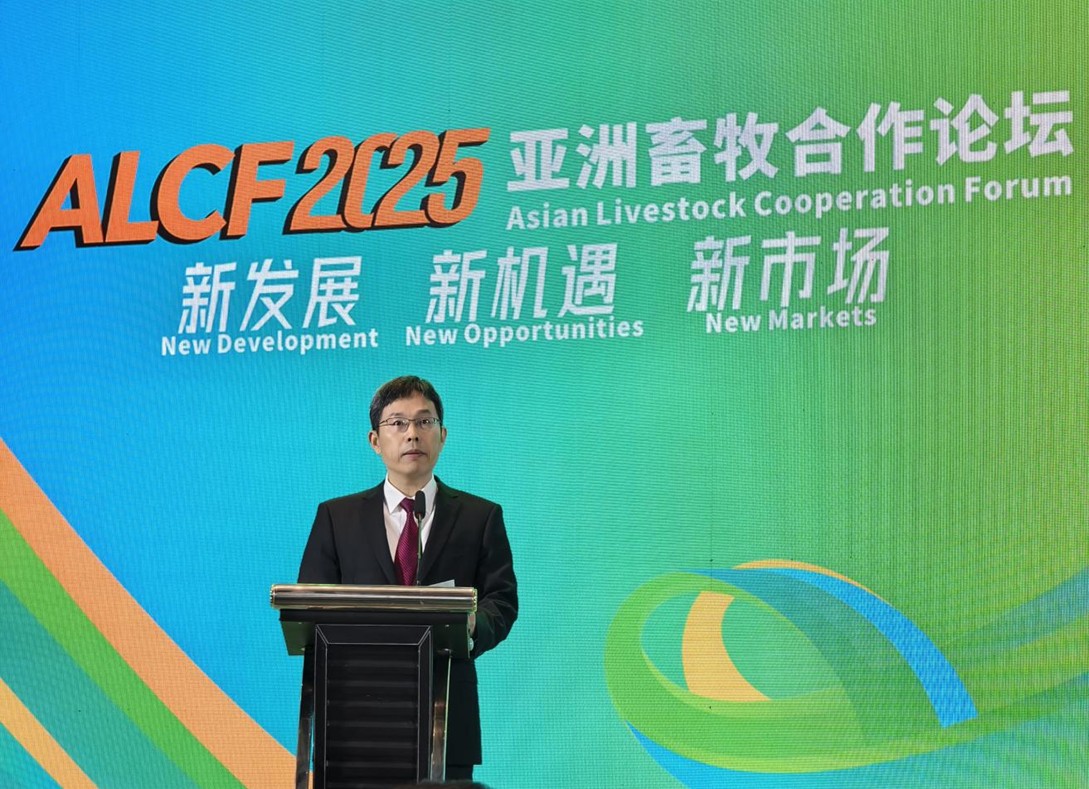
“ALCF2025亚洲畜牧合作论坛”在曼谷开幕
人民网-国际频道 原创稿· 2025-08-31 02:41
Group 1 - The "ALCF2025 Asia Livestock Cooperation Forum" was held in Bangkok, Thailand, with nearly 300 participants from the livestock industry, including representatives from China and ASEAN countries [1][2][4] - China has been Thailand's largest trading partner and agricultural product export market for 12 consecutive years, with significant cooperation in livestock trade, investment, training, and policy exchange [2][4] - The Chinese livestock industry has maintained the world's highest annual production for 15 years, positioning itself as a leader in global livestock development [4] Group 2 - The forum's theme is "Exploring New Situations, New Ecologies, and New Business Rules for Joint Win-Win Cooperation," emphasizing the need for knowledge and technology sharing among Asian countries to address challenges in food security and environmental protection [7][8] - A special activity at the forum included a visit to Charoen Pokphand Group's leadership academy to learn about advanced talent management practices in international development [7]

市场调整,牛市未尽:你的基金该止盈了吗?
Sou Hu Cai Jing· 2025-08-28 03:35
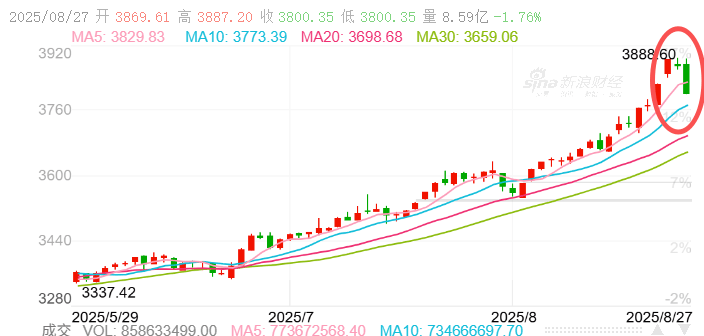
Market Overview - The Shanghai Composite Index has recently broken a nearly decade-long high, but experienced a significant pullback today, dropping by 1.76%, while the ChiNext Index fell by 0.69%. Despite this, the trading volume in both markets remained high at 3.17 trillion yuan [1] - The market seems to have entered a "buy on dips" mode, where slight adjustments quickly attract capital inflows, although today saw a notable late-session sell-off that disrupted this trend [1] Market Dynamics - The market has shown two significant changes: a faster pace of increase, shifting from gradual to rapid gains, and a rotation of popular sectors from high-tech fields like AI and robotics to undervalued sectors such as consumer goods, livestock, liquor, and chemicals, which aligns with characteristics of a bull market [3] - This bull market differs from previous ones, as it lacks signs of retail investor frenzy, such as massive fund sales or a surge in new retail accounts. Instead, the driving force appears to be institutional capital and high-net-worth individuals participating through private equity funds [3] Investor Sentiment - Investor sentiment remains cautious, with no signs of excessive enthusiasm. While some new investors are entering the market, there is no large-scale inquiry about investment directions. Long-term fund investors are considering redemption or profit-taking, indicating that as the market improves, redemption pressure on public funds increases [4] - The rapid growth of China's ETF market, expanding from 4 trillion to 5 trillion yuan in just four months, reflects active participation from institutional investors [4] Investment Strategies - In light of the market adjustment, investors are advised to consider their selling strategies carefully. The bull market has not yet peaked, and significant adjustments are normal. Investors should act decisively to avoid missing opportunities [4] - Suggested profit-taking strategies include setting clear profit targets (e.g., selling after an 8% or 10% gain), prioritizing the sale of underperforming funds, and making decisions based on market conditions, despite the difficulty in predicting market tops [4][5] - For hesitant investors, partial profit-taking and optimizing portfolio structure by reducing the number of funds held are recommended, with an emphasis on maintaining appropriate position management over merely pursuing profit-taking [5]
天康生物(002100.SZ):正筹划收购羌都畜牧51%股权
Ge Long Hui A P P· 2025-08-25 09:18
Core Viewpoint - TianKang Bio (002100.SZ) has signed a framework agreement to acquire 51% equity in Qiangdu Livestock Technology Co., Ltd. from Qixing Qiangdu Group Agricultural and Animal Husbandry Co., Ltd. through cash payment, aiming to gain control over Qiangdu Livestock after the transaction is completed [1] Group 1 - The acquisition involves a cash payment for 51% equity in Qiangdu Livestock Technology Co., Ltd. [1] - The transaction is expected to result in TianKang Bio gaining a controlling stake in Qiangdu Livestock [1]

天康生物(002100.SZ):未直接或间接参股任何军工类企业
Ge Long Hui· 2025-08-13 08:37
Core Viewpoint - TianKang Bio (002100.SZ) has confirmed that it does not have any direct or indirect stakes in military-related enterprises, focusing instead on its core business in the livestock industry [1] Group 1: Company Operations - The company primarily serves the agricultural and livestock sectors, providing products such as feed, live pigs, meat products, and animal biological products (including vaccines) [1] - TianKang Bio's operations are centered around meeting agricultural production needs, animal disease prevention, and consumer demand for meat products [1] - In the first half of this year, the company successfully participated in a meat product procurement bid for a certain unit in Tibet, enabling it to supply pork products that meet military standards [1] Group 2: Industry Focus - The company remains committed to the development of its livestock business, emphasizing its role in the agricultural industry and public consumption [1] - The product offerings are aligned with the needs of the agricultural sector and the demand for safe and quality meat products among consumers [1]