
石化

Search documents
2026年全国碳市场重点工作来了!从存证到清缴,一步都不能少
2 1 Shi Ji Jing Ji Bao Dao· 2026-02-13 14:01
Core Viewpoint - The Ministry of Ecology and Environment has issued a notification detailing the responsibilities and obligations of key emission units in the carbon emission trading market, which will include the power generation, steel, cement, and aluminum smelting industries by 2026, as part of China's dual carbon goals [1][2]. Group 1: Key Emission Units and Coverage - By 2026, the carbon market will include approximately 3,700 key emission units, covering around 8 billion tons of carbon emissions, which accounts for over 60% of the national carbon emissions [2]. - The eight key industries, including power generation, steel, construction materials, non-ferrous metals, petrochemicals, chemicals, paper, and aviation, contribute to about 75% of China's carbon dioxide emissions [2][5]. Group 2: Compliance Requirements - The four core industries (power generation, steel, cement, aluminum smelting) must complete a full compliance process, including listing, monthly verification, annual reporting, and quota management [2][4]. - The notification outlines specific deadlines for key emission units, such as the publication of the 2027 key emission unit list by October 31, 2026, and the submission of greenhouse gas emission reports by March 31, 2026 [3][4]. Group 3: Additional Industry Management - Industries like petrochemicals and chemicals are required to submit annual emission reports but are not yet involved in quota trading and compliance [5]. - Companies in these sectors with annual emissions of 26,000 tons of CO2 equivalent must participate in the annual reporting process, with the same reporting deadline of March 31, 2026 [5][6]. Group 4: Future Preparedness - Industries not yet included in the carbon market should focus on preparing for future compliance by enhancing their reporting and verification capabilities [6]. - It is recommended that these companies establish carbon asset management departments and develop carbon reduction plans to ensure readiness for future inclusion in the carbon market [6].

恒逸石化(000703.SZ):首次回购603.19万股
Ge Long Hui A P P· 2026-02-13 11:55
格隆汇2月13日丨恒逸石化(000703.SZ)公布,2026年2月13日,公司通过集中竞价交易方式,首次回购 股份数量603.19万股,占公司总股本的0.17%,最低成交价12.72元/股,最高成交价13.00元/股,支付的 回购总金额7,782.71万元(不含佣金、过户费等交易费用)。本次回购股份符合相关法律法规的要求, 符合公司既定的回购方案要求。 ...

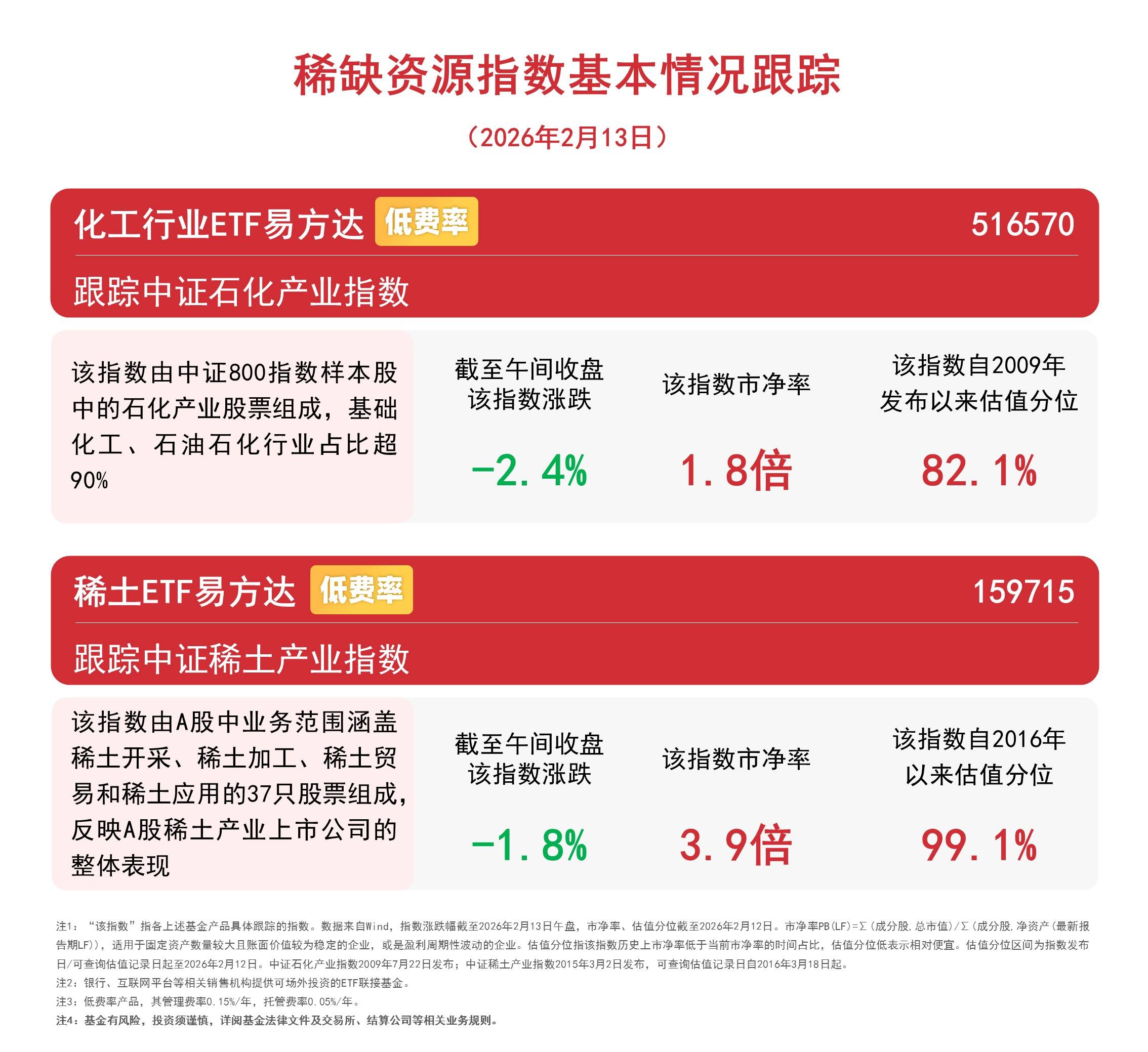
稀缺资源指数低开低走,关注稀土ETF易方达(159715)、化工行业ETF易方达(516570)等产品布局机会
Sou Hu Cai Jing· 2026-02-13 05:09
截至午间收盘,中证稀土产业指数下跌1.8%,中证石化产业指数下跌2.4%。相关ETF受资金关注,Wind数据显示,截至昨日,化工行业ETF易方达 (516570)近一月合计"吸金"超14亿元。 每日经济新闻 ...
生态环境部发布《关于做好2026年全国碳排放权交易市场有关工作的通知》
Xin Lang Cai Jing· 2026-02-13 04:07
Core Viewpoint - The Ministry of Ecology and Environment of China has issued a notification regarding the management of the national carbon emission trading market for 2026, focusing on key emission units in the power generation, steel, cement, and aluminum smelting industries, with specific guidelines for data management, quota allocation, and compliance [1][19]. Group 1: Key Emission Unit Management - Provincial ecological environment departments are required to establish a list of key emission units for 2027, including those with annual direct emissions of 26,000 tons of CO2 equivalent [20][21]. - The list of key emission units must be published by October 31, 2026, through the national carbon market management platform and provincial websites [21][2]. Group 2: Data Quality Management - Provincial departments must implement data quality management for greenhouse gas emissions in the specified industries, following the technical specifications set by the Ministry [3][21]. - By December 31, 2026, a data quality control plan must be developed for the key emission units [4][21]. - Monthly carbon emission data must be stored electronically within 40 days after each month ends [5][22]. Group 3: Reporting and Verification - Key emission units must submit their 2025 greenhouse gas emission reports by March 31, 2026 [6][23]. - Technical audits of these reports must be completed by June 30, 2026, for the power generation sector, and by July 31, 2026, for the steel, cement, and aluminum sectors [7][23]. Group 4: Quota Allocation and Compliance - Quotas for carbon emissions will be pre-allocated to key emission units in the steel, cement, and aluminum sectors by April 10, 2026, and to the power generation sector by June 30, 2026 [8][25]. - By September 20, 2026, the final allocation of quotas based on verification results must be completed [9][26]. - Compliance with the quota must be fulfilled by December 31, 2026 [10][27]. Group 5: Management of Other Key Industries - Other industries such as petrochemicals, chemicals, construction materials, non-ferrous metals, paper, and civil aviation with emissions of 26,000 tons of CO2 equivalent must also report their emissions [11][28]. - Reports from these industries must be submitted by March 31, 2026, and verified by December 31, 2026 [12][28]. Group 6: Strengthening Implementation - Local ecological environment departments are urged to enhance their management capabilities and training related to carbon emission data quality and quota compliance [30][31]. - Strict enforcement of regulations regarding carbon market data quality and compliance is emphasized to prevent fraudulent activities [31].
石油板块投资布局:把握石油ETF(561360)“看涨期权”价值
Sou Hu Cai Jing· 2026-02-13 01:41
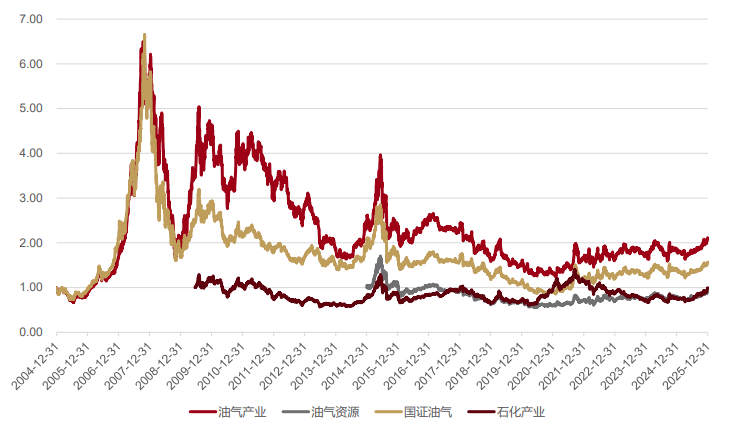
从油价走势关联到油气产业,石油产业链主要分为上游的勘探、开采、生产,以及下游的炼化环节,若通过指数对油气产业进行布局,产业链的上中下 游其实都会涉及到。整体来看,当下布局石油板块的股票,相当于买入油价的看涨期权。原因在于,无论是上游的开采环节,还是炼化、油服设备、油 运等领域,都会受到油价上涨的整体情绪提振,市场对各环节的未来表现也会形成向好预期。从康波周期来看,正如刚才所说,在这一商品大周期中, 原油价格相对滞涨,整个油气产业都在紧盯油价的上行趋势,筹备进一步的产业投资,同时对后续盈利改善抱有期待。此外,无论是投资者还是产业 端,都对原油供给过剩的叙事真实性存有一定怀疑,这也让石油产业链的上中下游都显现出一定的投资机会。 再看中证油气产业指数的历史表现,该指数自基日以来,业绩表现跑赢市场主流同类指数,尤其在行业景气上行周期,具备较强的上涨弹性。2008年、 2014年的行业周期中,该指数的上行弹性均优于其他同类指数,能为投资者带来更好的投资体验。需要注意的是,指数的过往业绩不代表未来表现,投 资者需谨慎选择投资标的。 | 指数代码 | 指数简称 | 近五年 | 近三年 | 近一年 | | --- | --- ...
国内高频 | 生产走弱,需求改善(申万宏观·赵伟团队)
申万宏源宏观· 2026-02-13 01:18
Group 1: Industrial Production Trends - Industrial production has slightly declined, with a small recovery in blast furnace operation rates, which increased by 0.5% week-on-week and 0.5 percentage points year-on-year to 2.4% [2] - Steel apparent consumption decreased by 5.1% week-on-week and fell by 6.8 percentage points year-on-year to -5.5% [2] - Steel social inventory saw a significant increase, rising by 5.6% week-on-week [2] Group 2: Construction Industry Insights - Cement production showed a slight recovery, but the shipment rate declined, with a week-on-week decrease of 7.7% and a year-on-year drop of 1.7 percentage points to -7.7% [19] - The cement inventory ratio increased, rising by 2.3% week-on-week and 3.2 percentage points year-on-year to 4.2% [19] - The average price of cement decreased by 0.8% week-on-week [19] Group 3: Demand and Consumption Patterns - The average daily transaction area of commercial housing in 30 major cities decreased by 1.6% week-on-week but increased by 2.9 percentage points year-on-year to -19% [37] - The transaction performance varied by city tier, with first-tier and third-tier cities showing resilience, while second-tier cities experienced weakness [37] - Port cargo throughput and railway freight volume both increased year-on-year, with port container throughput rising by 12.0 percentage points to 14.5% [45] Group 4: Price Trends - Agricultural product prices showed divergence, with pork prices stable, egg prices rising by 0.1%, and vegetable and fruit prices declining by 3.1% and 0.3% respectively [76] - The industrial product price index decreased by 1.8% week-on-week, with energy and chemical prices down by 0.9% and metal prices down by 3.6% [85]
宏观专题报告:开年经济“新变化”?
Shenwan Hongyuan Securities· 2026-02-12 09:13
Group 1: Production Trends - In January, the manufacturing PMI dropped to 49.3%, a decrease of 0.8 percentage points, indicating a contraction in manufacturing activity[3] - The average PMI over the past two months shows a recovery trend, rising 0.5 percentage points to 49.7% compared to November 2025[15] - The operating rate of blast furnaces in the metallurgical chain increased by 2.2 percentage points year-on-year to 1% during the weeks leading up to the Spring Festival[21] Group 2: Demand Insights - Export activity is expected to remain strong due to a delayed Spring Festival, with foreign trade cargo volume increasing by 13.9% year-on-year in the weeks leading up to the festival[5] - Retail sales are projected to see a slight rebound of around 1.9% in January-February 2026, supported by extended holiday periods and local consumption stimulus policies[40] - The demand for consumer goods has been impacted by previous "trade-in" policies, leading to a low performance in retail sales for household appliances and vehicles[43] Group 3: Price Dynamics - The Producer Price Index (PPI) is expected to show weak recovery, with January PPI rising to -1.4% year-on-year, indicating limited upward pressure from upstream prices[57] - The Consumer Price Index (CPI) is anticipated to exhibit a "V-shaped" trend due to the timing of the Spring Festival, with food prices providing moderate support[7] - The overall inflationary pressure remains subdued, with core CPI expected to stay low due to weak demand and reduced government subsidies[7] Group 4: Investment Outlook - Investment is expected to improve moderately in early 2026, supported by government debt financing and new policy measures aimed at infrastructure projects[49] - The net financing of government bonds in January showed positive performance, indicating a supportive environment for infrastructure investment[49] - The operating rates for asphalt and grinding processes maintained resilience, reflecting stable investment activity in the construction sector[49]
上海石化发布2025年度业绩盈警,预计净亏损超12亿元
Jing Ji Guan Cha Wang· 2026-02-12 07:51
Core Viewpoint - Shanghai Petrochemical Company (00338.HK) has issued a profit warning, expecting a net loss of approximately 1.289 billion to 1.576 billion yuan for the fiscal year 2025, indicating a shift from profit to loss [1][2]. Group 1: Financial Performance - The company anticipates a net loss attributable to shareholders of approximately 1.289 billion to 1.576 billion yuan for the fiscal year 2025, marking a year-on-year transition from profit to loss [2]. - The stock price has experienced fluctuations recently, influenced by oil prices and sector performance [1]. Group 2: Industry Policy and Environment - On February 4, 2026, the Ministry of Industry and Information Technology and four other departments issued guidelines for the construction of zero-carbon factories, with plans to select benchmark zero-carbon factories starting in 2026 and expanding to the petrochemical industry by 2030. This policy may have long-term implications for chemical companies, including Shanghai Petrochemical [3]. Group 3: Stock Performance - On January 9, 2026, the company's H-shares rose by 2.7%, closing at 1.52 HKD, partly driven by a rebound in international oil prices and overall strength in the oil and petrochemical sector. Long-term performance will still depend on industry cycles and the company's profit recovery progress [4].

2月11日持仓过节的资金在买入哪些ETF?
Mei Ri Jing Ji Xin Wen· 2026-02-12 02:10
Group 1 - The Shanghai Composite Index experienced a seven-day rise, but trading volume continued to shrink, leading to a significant "seesaw" effect in capital allocation and accelerated sector rotation [1] - Ahead of the Spring Festival holiday, funds are divided into two camps: one showing cautious sentiment favoring dividend and free cash flow ETFs, while the other is positioning for a rebound after the holiday [1] - Major ETFs that received significant net subscriptions from external funds include the ChiNext ETF and the CSI 1000 ETF, with industry-specific ETFs like satellite, robotics, AI, semiconductor equipment, and chemical ETFs also seeing strong inflows [1] Group 2 - According to Wang Bo from Huaxia Fund, the reduction in trading volume before the holiday is normal, and there is a general optimistic expectation for the February market, although a short-term recovery in market sentiment will take time [2] - The investment strategy suggested includes maintaining a balanced allocation across technology, cyclical, and consumer sectors through broad-based ETFs like the Hu-Shen 300 ETF [2] - The recent increase in January PPI by 0.4% month-on-month has catalyzed price increases in the chemical sector, while positive developments in robotics and AI models are also emerging [1][2]
上海实施先进制造业转型升级三年行动方案
Ke Ji Ri Bao· 2026-02-12 02:01
Core Viewpoint - The "Three-Year Action Plan for Supporting the Transformation and Upgrading of Advanced Manufacturing in Shanghai (2026-2028)" aims to accelerate the establishment of a modern industrial system centered on advanced manufacturing, promoting green and intelligent transformation across various enterprises in Shanghai [1][2]. Group 1: Action Plan Overview - The action plan includes four major actions and 17 measures to enhance the development of advanced manufacturing [1]. - By 2028, Shanghai aims to add 100 manufacturing enterprises with an annual output value exceeding 1 billion yuan and increase the number of large-scale industrial enterprises in the supply chain by 500 [1]. Group 2: Industry Development Paths - The plan outlines three development paths: - For traditional advantageous industries, it emphasizes "optimization and enhancement" [1]. - For leading industries, it promotes "strategic guidance" [1]. - For key and emerging industries, it focuses on "expansion and development" [1]. Group 3: Innovation and Resource Support - The action plan supports enterprises in high-level R&D and high-value product transformation, addressing industry pain points and overcoming key core technologies [2]. - It encourages full-process upgrades, AI integration in manufacturing, and carbon footprint management to achieve quality and efficiency improvements [2]. Group 4: Financial Incentives - The plan provides substantial financial support for R&D, including: - A one-time subsidy of 10 million yuan for enterprises with annual R&D expenditures of 100 million yuan or more [2]. - A one-time subsidy of 5 million yuan for those spending between 50 million and 100 million yuan [2]. - A one-time subsidy of 2 million yuan for R&D expenditures between 1 million and 5 million yuan [2]. Group 5: Additional Financial Support Measures - The plan includes subsidies for fixed asset investment loans related to technology upgrades, with a maximum of 20 million yuan [3]. - Companies upgrading energy-saving processes and equipment can receive rewards based on coal consumption, up to 10 million yuan [3]. - A one-time reward of 200,000 yuan is available for enterprises recognized as national green factories [3].