贵金属

Search documents
泡泡玛特、快手、中芯国际、华虹半导体,集体大跌
第一财经· 2026-03-26 08:38
Market Overview - The Hang Seng Index closed at 24,856.43, down 479.52 points or 1.89% [1] - The Hang Seng Tech Index fell to 4,761.54, decreasing by 161.40 points or 3.28% [1] - The Hang Seng Biotech Index dropped to 13,819.14, down 257.41 points or 1.83% [1] - The Hang Seng China Enterprises Index ended at 8,389.93, down 192.81 points or 2.25% [1] - The Hang Seng Composite Index closed at 3,745.27, decreasing by 79.39 points or 2.08% [1] Precious Metals Sector - The precious metals sector experienced a widespread decline, with Zijin Mining International and China Silver Group both dropping over 7% [2] - Shandong Gold fell more than 6%, while Zhu Feng Gold and Datang Gold decreased over 5% [2] - Notable declines included: - Zijin Mining International: -7.57% to 168.500 [3] - China Silver Group: -7.29% to 0.445 [3] - Shandong Gold: -6.55% to 30.240 [3] - Zhu Feng Gold: -5.60% to 1.180 [3] - Datang Gold: -5.56% to 0.510 [3] Technology Sector - The tech sector saw collective declines, with Kuaishou dropping over 14% [4] - Other significant declines included: - Huahong Semiconductor: -6.20% to 83.150 [5] - SMIC: -5.93% to 53.150 [5] - Alibaba: -4.58% to 123.000 [5] - Meituan: -3.67% to 86.700 [5]


每日市场观察-20260326
Caida Securities· 2026-03-26 05:02
Market Performance - On March 25, the Shanghai Composite Index rose over 1%, surpassing 3900 points, while the ChiNext Index increased by over 2%[3] - The total trading volume reached 2.18 trillion yuan, an increase of approximately 970 billion yuan compared to the previous trading day[3] - The main indices, including the Shanghai Composite and Shenzhen Component, recorded gains of 1.3% and 1.95%, respectively[3] Sector Trends - All sectors except coal and oil saw gains, with notable increases in telecommunications, non-ferrous metals, electronics, and construction materials[1] - The ChiNext Index and the Sci-Tech 50 Index led the gains, rising by 2.01% and 1.91%, respectively, indicating a growing preference for growth sectors[1] Capital Flow - On March 25, net inflows into the Shanghai Stock Exchange amounted to 26.891 billion yuan, while the Shenzhen Stock Exchange saw net inflows of 25.904 billion yuan[4] - The top three sectors for capital inflow were power, consumer electronics, and communication equipment, while the sectors with the highest outflows included photovoltaic equipment, industrial metals, and precious metals[4] Future Outlook - The sustainability of the market rebound depends on the continued performance of key sectors, particularly high-tech industries like artificial intelligence and semiconductors[1] - Energy-related sectors, including new energy, energy storage, and lithium battery industries, remain focal points amid geopolitical tensions[1] Industry Developments - As of the end of February, the cumulative installed power generation capacity in China reached 3.95 billion kilowatts, a year-on-year increase of 15.9%[6] - Solar power generation capacity grew by 33.2% year-on-year, reaching 1.23 billion kilowatts, while wind power capacity increased by 22.8% to 650 million kilowatts[6]
国投期货综合晨报-20260326
Guo Tou Qi Huo· 2026-03-26 02:32
1. Report Industry Investment Ratings No relevant content provided. 2. Core Views of the Report - The geopolitical situation in the Middle East is complex and uncertain, significantly impacting various commodity markets. The short - term price trends of many commodities are highly volatile, and long - term trends are closely related to the development of the situation in the Middle East, especially the status of the Strait of Hormuz [2]. - The market sentiment fluctuates with the news related to the US - Iran conflict, affecting the short - term trends of precious metals, copper, aluminum, and other commodities [3][4]. - The supply and demand patterns of different commodities vary. Some commodities face supply pressure, while others have improving demand, and the overall market is in a state of dynamic adjustment. 3. Summary by Commodity Categories Energy Commodities - **Crude Oil**: US crude inventories have increased significantly, far exceeding market expectations. The US - Iran negotiation situation is unclear, and the Strait of Hormuz has limited vessel traffic. Short - term oil prices have high two - way fluctuation risks, and the long - term trend depends on the strait's smoothness [2]. - **Fuel Oil & Low - Sulfur Fuel Oil**: The geopolitical situation has a significant impact. There is a supply interruption risk, and the demand for fuel oil may increase in summer. The market is mainly driven by geopolitical factors, and any progress in the negotiation will cause wide - range oscillations [22]. - **Natural Gas**: Although not specifically mentioned in detail, the impact of the geopolitical situation on LNG is implied, with potential supply shortages and increased fuel oil demand as a substitute [22]. - **Coal (Coking Coal and Coke)**: The supply of carbon elements is abundant, and the downstream iron - making production has increased. The prices of coking coal and coke are likely to rise due to energy concerns caused by geopolitical conflicts [17][18]. - **LPG**: No relevant content provided. - **Naphtha**: No relevant content provided. - **Bitumen**: The supply of bitumen has decreased, and the inventory level is low. The price trend follows the oil price, but the downward space is limited [23]. Metal Commodities - **Precious Metals (Gold and Silver)**: The short - term trend is unclear, waiting for the further development of the US - Iran conflict. The market sentiment swings with the relevant news [3]. - **Base Metals** - **Copper**: The price is affected by the Middle East situation. The downstream buying is active when the price drops. The short - term price may fluctuate, and the key support level is at 91,000 yuan [4]. - **Aluminum**: The price fluctuates narrowly. The inventory and spot market feedback have improved, and the key support level is at 23,000 yuan [5]. - **Zinc**: The short - term consumption is entering the peak season, and the price may enter a range - bound oscillation between 22,000 - 23,000 yuan/ton [8]. - **Lead**: The market is in a low - level consolidation pattern, and the price is expected to oscillate between 16,200 - 17,000 yuan/ton [9]. - **Nickel and Stainless Steel**: The market is under pressure from a strong US dollar. The demand for stainless steel is lower than expected, and the inventory is high. The market is likely to be in a weak oscillation [10]. - **Tin**: The supply is stable, and the downstream has rigid demand. Attention should be paid to the short - term moving average price and the amplitude change [11]. - **Alumina**: The over - supply situation has improved slightly, but the long - term over - supply prospect remains. It is waiting for the guidance of Guinea's mining policy [7]. - **Manganese Silicon and Ferrosilicon**: The prices have bottomed out and rebounded. The demand is increasing with the rise of iron - making production, and the inventory has increased slightly [19][20]. - **Iron Ore**: The supply has increased, and the demand is gradually recovering. The price is expected to oscillate [16]. Chemical Commodities - **Polyethylene, Polypropylene, and Propylene**: The supply of polyethylene is tight, and the price of polypropylene is high. The downstream demand is weak, and the market is affected by complex news [28]. - **PVC and Caustic Soda**: The price of PVC has fallen from a high level, and the supply has decreased. The export market is expected to be good. Caustic soda is in a weak oscillation [29]. - **PX and PTA**: The prices are oscillating at a high level, affected by the US - Iran situation. The industry efficiency has declined, and the downstream consumption is slow [30]. - **Ethylene Glycol**: The supply has decreased, and the price has fallen with the decline of oil prices. The market is affected by the Middle East situation [31]. - **Short - Fiber and Bottle - Chip**: The short - fiber load has decreased slightly, and the bottle - chip efficiency has improved. The market is affected by the Middle East situation [32]. - **Methanol**: The import volume has decreased, and the domestic production has increased. The demand is recovering, and the supply - demand situation is expected to be strong [25]. - **Pure Benzene**: The domestic production load has decreased, and the import volume is expected to decrease. The port inventory is decreasing [26]. - **Styrene**: The fundamentals are good, and the price is in a strong oscillation [27]. - **Polysilicon**: The supply pressure remains, and the demand is weak. The price is expected to be bearish in the medium - term [13]. - **Industrial Silicon**: The market shows a situation of weak supply and demand, and the price is expected to oscillate in the short - term [14]. Agricultural Commodities - **Grains and Oilseeds** - **Soybeans and Soybean Meal**: The supply of Brazilian soybeans to China has recovered, which suppresses the domestic soybean meal. The market is affected by multiple factors such as the US - Iran situation and energy and fertilizer markets [36]. - **Rapeseed Meal and Rapeseed Oil**: The price of Canadian rapeseed has risen. The supply of rapeseed is expected to increase, and the pressure on the price is still there [38]. - **Corn**: The price has declined slightly, affected by the international situation and the increase of wheat auction [40]. - **Soybean Oil and Palm Oil**: The prices are affected by the US - Iran situation and the expectation of bio - fuel policies. The supply - chain risk of agricultural products is not clear [37]. - **Livestock and Poultry Products** - **Pigs**: The spot price has continued to decline, and the inventory pressure is still large. The industry needs to reduce production capacity [41]. - **Eggs**: The egg - laying hen inventory is expected to decline, and the spot price is expected to strengthen. It is recommended to go long at a low position [42]. - **Cash Crops** - **Cotton**: The domestic demand in the peak season is good, and the inventory has decreased. The medium - term strategy is to be bullish [43]. - **Sugar**: The international market focuses on the new - season production in Brazil. The domestic sugar market is in a pattern of weak reality and strong expectation [44]. - **Apples**: The futures price has回调, and the market focuses on the demand side. It is recommended to wait and see [45]. Other Commodities - **Rubber**: The supply of natural rubber is increasing, and the inventory has changed. The market is affected by geopolitical risks and cost factors. It is recommended to wait and see and look for cross - variety arbitrage opportunities [34]. - **Glass**: The market is in a weak oscillation. The inventory pressure is large, and the price is expected to oscillate in a wide range [33]. - **Soda Ash**: The inventory is decreasing, but the supply pressure is still large. The price is affected by the macro - sentiment and cost [35]. - **Timber**: The price is oscillating. The supply is expected to be tight in the short - term, and the demand is recovering. The low inventory supports the price. It is recommended to wait and see [46]. - **Pulp**: The price has a certain support at the bottom. The port inventory is high but decreasing. The short - term is expected to oscillate in a low - level range [47]. Financial Commodities - **Stock Index**: The A - share market has risen, and the futures index has also increased. The geopolitical situation is uncertain. The medium - term configuration should be balanced, and the short - term strategy is to go long on broad - based indexes at a low position [48]. - **Treasury Bonds**: The market is in a narrow oscillation. The long - term bonds may have a rebound opportunity after over - decline [49].
研究所晨会观点精萃-20260326
Dong Hai Qi Huo· 2026-03-26 02:31
1. Report Industry Investment Rating - No information provided in the content. 2. Core Views of the Report - Overseas, with the continuation of the war and low traffic in the Strait of Hormuz, oil prices have rebounded, the US dollar index remains strong, and US Treasury yields have slightly declined, leading to a cooling of global risk appetite. Domestically, China's economy rebounded more than expected from January to February, exports far exceeded expectations, and inflation continued to recover. The overall economic and inflation situation was better than expected. The government work report set the main development targets and fiscal and monetary policies for 2026, with the overall targets and policy intensity lower than in 2025. The recent market trading logic has mainly focused on Middle - East geopolitical risks. In the short term, although the domestic economy is better than expected, the stock index will fluctuate weakly and with increased volatility due to the mixed geopolitical news. Currently, influenced by the US's signals of easing and a cease - fire, the domestic stock index market has recovered. [3][4] - For different asset classes, the stock index will rebound with short - term fluctuations and increased volatility, and it is advisable to wait and see carefully. Treasury bonds will fluctuate in the short term, and it is also advisable to wait and see carefully. In the commodity sector, the black metals will rebound with short - term fluctuations, and it is advisable to wait and see carefully; non - ferrous metals will rebound with short - term fluctuations, and it is advisable to wait and see carefully; energy and chemicals will fluctuate significantly in the short term, and it is advisable to be cautious in going long; precious metals will fluctuate significantly and rebound in the short term, and it is advisable to wait and see carefully. [3] 3. Summary by Relevant Catalogs Macro - finance - Overseas: With the continuation of the war and low traffic in the Strait of Hormuz, oil prices have rebounded, the US dollar index remains strong, and US Treasury yields have slightly declined, leading to a cooling of global risk appetite. [3] - Domestic: From January to February, China's economy rebounded more than expected, exports far exceeded expectations, and inflation continued to recover. The overall economic and inflation situation was better than expected. The government work report set the main development targets and fiscal and monetary policies for 2026, with the overall targets and policy intensity lower than in 2025. [3][4] - Market: The recent market trading logic has mainly focused on Middle - East geopolitical risks. In the short term, although the domestic economy is better than expected, the stock index will fluctuate weakly and with increased volatility due to the mixed geopolitical news. Currently, influenced by the US's signals of easing and a cease - fire, the domestic stock index market has recovered. [3][4] - Asset Allocation: The stock index will rebound with short - term fluctuations and increased volatility, and it is advisable to wait and see carefully. Treasury bonds will fluctuate in the short term, and it is also advisable to wait and see carefully. [3] Stock Index - Driven by sectors such as military equipment, electricity, and communications, the domestic stock market has continued to rebound significantly. [4] - Fundamentally, from January to February, China's economy rebounded more than expected, exports far exceeded expectations, and inflation continued to recover. The overall economic and inflation situation was better than expected. The government work report set the main development targets and fiscal and monetary policies for 2026, with the overall targets and policy intensity lower than in 2025. [4] - The recent market trading logic has mainly focused on Middle - East geopolitical risks. In the short term, although the domestic economy is better than expected, the stock index will fluctuate weakly and with increased volatility due to the mixed geopolitical news. Currently, influenced by the US's signals of easing and a cease - fire, the domestic stock index market has recovered. It is advisable to wait and see carefully in the short term. [4] Precious Metals - On Wednesday night, the precious metals market rose overall. The main contract of Shanghai Gold closed at 1016.92 yuan/gram, up 1.82%; the main contract of Shanghai Silver closed at 18000 yuan/kilogram, up 2.15%. [5] - As the market weighs the uncertainty of the Middle - East situation, the global market has fluctuated sharply, and the decline of the US dollar index has provided some support for precious metals. Spot gold has stabilized and rebounded, ending a nine - day losing streak, and finally closed up 1.54% at 4474.31 US dollars/ounce, but it is still suppressed by the strong US dollar and rising US Treasury yields; spot silver has turned from a decline to an increase, and finally closed up 2.8% at 71.05 US dollars/ounce. [5] - Precious metals will fluctuate significantly and rebound in the short term. It is advisable to wait and see carefully. [5] Black Metals - **Steel**: On Wednesday, the domestic steel futures and spot markets declined slightly, and market transactions were at a low level. Recently, the steel market has mainly followed the fluctuations of energy prices, and the decline in oil prices has led to the weakness of the steel market in the past two trading days. The fundamentals have changed little, the actual demand is still weak, and although the steel inventory has peaked and declined, the apparent consumption growth rate of the five major varieties has slowed down. After the important meeting, the output of the five major varieties of steel increased by 18.85 tons week - on - week last week. This week, the molten iron output also continued to rise. In the short term, the steel market will still follow the cost. Attention should be paid to the price adjustment risk after the cost decline. [6][7] - **Iron Ore**: On Wednesday, the futures and spot prices of iron ore declined significantly. The decline in oil prices and the news related to iron ore negotiations led to the weakness of iron ore futures and spot prices. On the demand side, the daily average molten iron output of blast furnaces increased by 6.9 tons week - on - week, and the proportion of profitable steel mills is still around 42%, so the demand for iron ore is still resilient. On the supply side, the shipping and arrival volume of iron ore have both increased this week, and the problem of short - term supply - demand imbalance is gradually being resolved. It is expected that there is limited room for the ore price to continue to rise, and attention should be paid to the short - term adjustment risk after the decline of energy prices. [7] - **Silicon Manganese/Silicon Iron**: On Wednesday, the spot and futures prices of silicon iron and silicon manganese declined. The decline in oil prices has weakened the expectation of rising coal prices. The price of silicon manganese 6517 in the northern market is 6050 - 6150 yuan/ton, and in the southern market is 6150 - 6250 yuan/ton. The manganese ore market quotation remains firm. The supply side shows that the national capacity utilization rate of 187 independent silicon manganese enterprises is 35.7%, an increase of 0.08% from last week; the daily average output is 27980 tons/day, a decrease of 225 tons. Currently, the start - up situation in the north is relatively stable, and factories are gradually hedging, with a good profit margin. The ex - factory price of 72 - grade silicon iron in the main production area is 5550 - 5650 yuan/ton, and the price of 75 - grade silicon iron is 5950 - 6100 yuan/ton. The steel procurement in March has basically ended, and the market is waiting for the entry situation in April. It is recommended to view the futures prices of silicon iron and silicon manganese with a bullish - biased and volatile mindset. [8] Non - ferrous and New Energy - **Copper**: According to current news, the US and Iran are indeed in negotiations, and the short - term situation has eased, with risk appetite rising. However, attention should be paid to the actual progress, which may bring significant fluctuations. The spot TC of copper is close to - 70 US dollars/ton, hitting a new low, but the profits from by - products such as sulfuric acid and precious metals have made up for the smelting profit. Coupled with the abundant supply of crude copper and the increase in scrap copper ingot imports, the growth rate of refined copper production is at a high level. The processing fee of southern crude copper is 1800 yuan/ton, a decrease of 600 yuan/ton from the previous high of 2400 yuan/ton, but still at a high level. The core contradiction in the fundamentals still lies in the mine end. It is a consensus in the market that copper mines are tight, but the probability of extreme shortage is not high. The domestic and foreign inventories have continued to accumulate, and the visible inventory of the three major exchanges is close to 1.29 million tons, reaching a record high. The copper price has dropped significantly, and downstream enterprises have replenished their stocks intensively at low prices, resulting in a significant decline in social copper inventory. Attention should be paid to the sustainability of inventory reduction. [9] - **Aluminum**: On Wednesday, the news of the negotiation between the US and Iran overnight stimulated the rise of risk appetite. The easing of the Middle - East situation is actually negative for aluminum, as the aluminum supply in the Middle - East will increase, so the rebound strength of aluminum is weaker than that of other non - ferrous metals. LME aluminum has fallen to the vicinity of the rising trend line. Attention should be paid to the effectiveness of the support. From January to February, the year - on - year increase in domestic primary aluminum production was relatively large, and the pattern of domestic weakness and foreign strength may change temporarily. From the import data, the import of domestic primary aluminum has remained at a high level; the import of scrap aluminum has decreased slightly, and the overseas supply of scrap aluminum is relatively tight. Currently, the domestic aluminum supply is rigid and remains at a high level, with a 3% year - on - year increase in production from January to February, and the previously shut - down production capacity will resume production later, so the supply pressure still exists. [10] - **Zinc**: Domestic zinc mines are mainly distributed in the south. With the resumption of work and production, the zinc ore processing fee in the southern region has rebounded from 1300 yuan/metal ton to 1500 yuan/metal ton, and the processing fee in the northern region has remained at 1500 yuan/metal ton. The TC of imported ore has decreased from 30 US dollars/dry ton to 20 US dollars/dry ton. The domestic smelting capacity is still expanding, and the profits from by - products have made up for the losses, so the domestic smelting output remains at a relatively high level. Overseas smelters cut production in 2025, but will resume production in 2026, with output increasing. The demand side is not optimistic. Real estate, infrastructure, transportation, and emerging fields such as photovoltaics are difficult to bring obvious boosts to photovoltaic demand, and may even decline. After the seasonal inventory accumulation of domestic zinc ingots, the inventory has turned to decline, reaching 219,600 tons, a decrease of 9,400 tons month - on - month, only slightly lower than the same period in 2022; the LME zinc inventory has increased to nearly 120,000 tons, which has increased significantly from the previous period. [10][11] - **Lead**: Due to the continuous opening of the import window from January to February, the imports of refined lead and crude lead in China have increased significantly in the first two months. Among them, the import of refined lead is 33,400 tons, a year - on - year increase of 732%; the import of crude lead is 25,200 tons, a year - on - year increase of 85%. The import of lead ingots will remain at a high level in March. Domestically, the production of primary lead and secondary lead has increased seasonally. The latest weekly production of primary lead is 57,100 tons, at a high level in recent years. The recovery speed of secondary lead production is similar to that of previous years, and currently, the finished product inventory of secondary lead is 13,800 tons, the highest level since 2020. On the demand side, the peak season has passed and is gradually entering the off - season. The trade - in policy has overdrawn the later demand. Due to the decline in price, downstream enterprises have replenished their stocks intensively at low prices, and the social inventory of domestic primary lead has decreased, dropping 17,000 tons from the high point to 63,100 tons, slightly lower than the same period last year. Although the LME lead inventory has not fluctuated much recently, it is still at the highest level in the same historical period in recent years, remaining above 280,000 tons. [11] - **Nickel**: On Wednesday, the Indonesian Ministry of Finance stated that if approved by the government, it will start levying a windfall profit tax on nickel from April 1st. Driven by this news, the nickel price has risen. The mine end is still the core contradiction at present. The RKAB quota of Indonesia in 2026 has dropped significantly to 260 million wet tons. Although there is still room for improvement later, the increase is expected to be limited, and the year - on - year decline compared with 2025 has basically been determined. Since the Indonesian Ministry of Energy and Mineral Resources requires mining enterprises to use one - quarter of the "old quota" in the first quarter, mining enterprises will maintain normal production in the first quarter without a supply gap. In addition, the Middle - East conflict has led to a shortage of sulfur in Indonesia, affecting the production of MHP. In addition, the previous tailings accident has also led to enterprise production cuts, so the supply of MHP is at risk of decline. The nickel price still has support at the bottom, but the upside space is limited by the high domestic and foreign inventories. [12] - **Tin**: On the supply side, in the first two months, the import of tin ore from Myanmar was 13,501 tons, a year - on - year increase of 175%, and the monthly average level was similar to that in November and December last year. With the acceleration of pumping in the mines in Wa State, Myanmar, it is expected that the import volume will still have room for further growth; the import of tin ore from other sources is 21,444 tons, with a year - on - year growth rate of up to 57%, reflecting that the sources of tin ore imports in China are more diverse; the operating rate has slightly decreased by 0.42%, but it is still at a high level in the same period in recent years; due to the continuous closure of the import window, the import of tin ingots from January to February was 3,269 tons, a year - on - year decrease of 27%. On the demand side, in January 2026, the global semiconductor sales increased by 46% year - on - year, with the growth rate further expanding. However, other traditional and emerging industries have performed poorly. The automobile production from January to February decreased by 9.9% year - on - year, the photovoltaic module production decreased by 26% year - on - year, and the home appliance production plan has continued to decline. The industry is significantly differentiated, and the semiconductor alone cannot support the overall demand, which is generally poor. As the tin price has dropped significantly, downstream enterprises have replenished their stocks intensively at low prices, and the social inventory of tin ingots has decreased by 2,770 tons to 11,035 tons. [13] - **Lithium Carbonate**: On Wednesday, the main contract of lithium carbonate 2605 rose 4.34%, with the latest settlement price of 158,220 yuan/ton. The weighted contract increased its position by 2,016 lots, with a total position of 595,800 lots. The SMM quoted the price of battery - grade lithium carbonate at 152,500 yuan/ton (a month - on - month increase of 5,000 yuan), and the basis between futures and spot is - 5,480 yuan/ton. For lithium ore, the latest CIF price of Australian spodumene is 2,155 US dollars/ton (a month - on - month increase of 75 US dollars). The production profit of purchasing lithium mica is 6,289 yuan/ton, and the production profit of purchasing spodumene is 1,602 yuan/ton. The supply and demand of lithium carbonate are both strong, the social inventory is continuously decreasing, and the inventory of smelters is at a low level. The strong - reality situation continues, and the export ban in Zimbabwe may cause a short - term supply - demand mismatch. It is expected that lithium carbonate will fluctuate in the support position range, and it is advisable to make long positions at low prices. [14] - **Industrial Silicon**: On Wednesday, the main contract of industrial silicon 2605 rose 1.74%, with the latest settlement price of 8,685 yuan/ton. The weighted contract position is 370,100 lots, an increase of 20,576 lots. The price of East China oxygen - passing 553 is 9,200 yuan/ton (month - on - month unchanged), and the futures are at a discount of 430 yuan/ton. In the situation of weak supply and demand, overcapacity, and high - level inventory accumulation, industrial silicon is priced close to the cost. The cost side is driven by coking coal. Attention should be paid to the cost support at the bottom, and interval operations are recommended. [14][15] - **Polysilicon**: On Wednesday, the main contract of polysilicon 2605 rose 2.77%, with the latest settlement price of 36,555 yuan/ton. The weighted contract position is 50,700 lots
深夜中国资产集体爆发!美团大涨14.43%,美股芯片股狂飙,ARM涨超16%
Jin Rong Jie· 2026-03-26 00:27
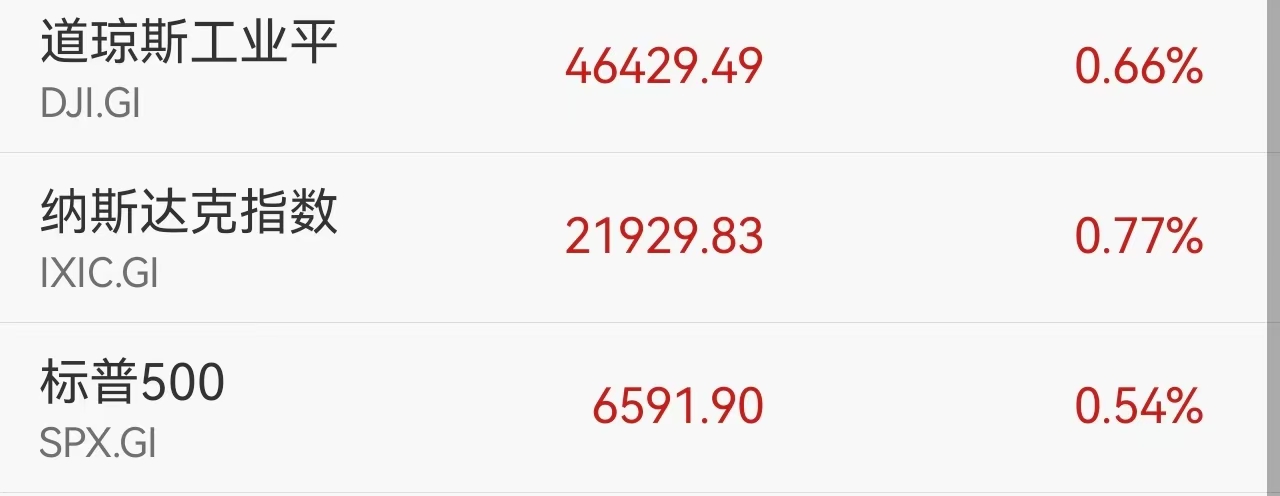
Market Performance - The three major U.S. stock indices closed higher, with the Dow Jones Industrial Average rising by 305.43 points (0.66%) to 46,429.49 points, the Nasdaq Composite increasing by 0.77% to 21,929.83 points, and the S&P 500 gaining 0.54% to 6,591.90 points [1][2]. Technology Sector - The Wande American Technology Seven Giants Index rose by 0.80%, with notable gains from Amazon (up 2.16%), NVIDIA (up 1.99%), and Tesla (up 0.76%). However, Microsoft saw a slight decline of nearly 0.5% due to mixed market sentiment [3][4]. Semiconductor and Storage Stocks - The Philadelphia Semiconductor Index increased by 1.21% to 7,967.74 points, indicating a strong performance in the semiconductor sector [5]. - In contrast, the storage sector experienced a downturn, with Western Digital falling by 1.63%, Seagate by 2.6%, and Micron Technology dropping over 3%. This decline was attributed to concerns over AI storage demand following Google's introduction of a new memory compression technology [7]. Chinese Stocks - Chinese assets saw a significant rally, with the Nasdaq Golden Dragon China Index rising by 1.86% and the Wande Chinese Technology Leaders Index increasing by 1.93%. Notable individual stock performances included Meituan surging by 14.43% and JD.com by 8.30% [8][9]. Commodity Market - Precious metals continued their strong performance, with COMEX gold futures rising by 2.2% to approximately $4,530 per ounce and silver futures increasing by 2.6% to $70.41 per ounce. Gold stocks also performed well, with Harmony Gold rising over 5% [10]. - Conversely, international oil prices fell significantly, with light crude oil futures dropping by $2.03 to $90.32 per barrel, and Brent crude futures down by $2.27 to $102.22 per barrel, influenced by easing tensions in the Middle East [11]. Inflation and Interest Rates - U.S. Treasury yields fell, with the 10-year yield decreasing by 7.6 basis points to 4.32%. Rising inflation concerns, driven by increased oil prices, have altered market expectations regarding the Federal Reserve's interest rate path, with no anticipated rate cuts for the year [12].

黄金与有色的交易逻辑是否失效?
对冲研投· 2026-03-25 11:30
Group 1 - The market's pricing logic is shifting from "inflation shock" to "growth shock," with gold prices dropping from $5,400/ton to below $4,300/ton amid escalating Middle East conflicts [1][4] - Precious metals have outperformed other sectors, with the performance ranking as follows: precious metals > non-ferrous metals > chemicals/agriculture > black metals [4][5] - The recent price declines across various sectors correspond inversely to their previous gains, indicating that sectors with larger prior increases are experiencing greater pullbacks [7][9] Group 2 - The market is currently trading based on historical patterns where oil price increases lead to inflation, rising interest rates, and falling stock prices, but a shift to "growth shock" is anticipated [9][10] - Global central banks have adopted a hawkish stance, with expectations of "panic rate hikes" despite soft economic data, indicating a reluctance to lower interest rates [13] - The logic behind gold pricing has been altered, as central banks are using gold to exchange for essential goods during crises rather than merely as a safe-haven asset [14][16] Group 3 - The current market sentiment is characterized by high volatility in metals, with emotional trading patterns emerging, particularly in gold, silver, and copper [17] - The demand for non-ferrous metals is under pressure due to high inventory costs and locked-up capital, leading to a lack of resistance against price declines [17][18] - The risk of excessive tightening by central banks could lead to significant market instability, with a stabilization period expected around mid-April [18]

刚刚!全线暴涨!伊朗突发大消息!
天天基金网· 2026-03-25 08:34
Group 1 - Precious metals surged collectively as the situation in Iran showed signs of easing, leading to a weaker US dollar [1] - The US proposed a 15-point agreement to Iran aimed at ending hostilities, which includes commitments from Iran regarding nuclear weapons and the status of the Strait of Hormuz [1] - Iran stated that "non-hostile vessels" can safely pass through the Strait of Hormuz with coordination from Iranian authorities [2] Group 2 - SpaceX plans to submit its IPO prospectus soon, aiming to raise over $75 billion, significantly higher than previous estimates of $50 billion [3] - The latest funding round valued SpaceX at $1.25 trillion, and if the IPO proceeds as planned, it will surpass the previous record set by Saudi Aramco [3] Group 3 - A-shares saw a significant rebound, with the Shanghai Composite Index rising by 1.30% to 3932 points, and the ChiNext Index leading with a 2.01% increase [10] - The total trading volume in the Shanghai, Shenzhen, and Beijing markets approached 2.2 trillion, an increase of nearly 100 billion from the previous day [6] - The market showed a clear "risk-off + growth" dual-driven pattern, with the precious metals sector leading the gains [10] Group 4 - The market is currently in a rebound phase, with the Shanghai Composite Index recovering approximately 3.1% from its low of 3813 points [12] - The fear index (GVIX) decreased from 23.83 to 20.69, indicating a partial recovery in market sentiment, though it remains elevated compared to normal levels [12] - The market is expected to consolidate around the 3900-point level, with potential for further gains if it can break above 3950 points [12] Group 5 - The external environment is shifting from "extreme tension" to "tense with easing," but uncertainties remain high, impacting A-shares' strength [13] - Domestic policies are maintaining a positive tone, with ongoing support for new industrial policies and a manageable outflow pressure from foreign capital [14] - The commercial space sector is entering a critical validation phase, with multiple rocket recovery tests planned for 2026, and SpaceX's IPO is expected to catalyze the global commercial space industry [14] Group 6 - Investment focus should be on three main lines: precious and non-ferrous metals, technology growth sectors like commercial space and AI computing, and opportunities in sectors that have seen significant corrections [15] - Precious metals are expected to have value regardless of the geopolitical situation, with potential for growth in both easing and prolonged conflict scenarios [15] - The commercial space sector is poised for growth due to SpaceX's IPO and advancements in satellite internet and rocket recovery technologies [15]

研究所晨会观点精萃-20260325
Dong Hai Qi Huo· 2026-03-25 01:50
1. Report Industry Investment Rating No relevant content provided. 2. Core Viewpoints of the Report - Affected by the easing of the Middle - East situation, global risk appetite continues to recover. In the short term, the domestic economy is better than expected, but due to the intertwined geopolitical news in the Middle - East, the stock index fluctuates weakly in the short term and the volatility intensifies. After the US released signals of easing and cease - fire, the domestic stock index market recovered. Attention should be paid to the changes in the Middle - East geopolitical situation, the implementation of policies after the Two Sessions, and the changes in market sentiment [2][3]. - Different asset classes have different trends. The stock index fluctuates weakly in the short term, and short - term cautious waiting is recommended; treasury bonds fluctuate in the short term, and cautious waiting is recommended; the black commodity sector rebounds in the short term, and short - term cautious waiting is recommended; the non - ferrous sector fluctuates weakly in the short term, and short - term cautious waiting is recommended; the energy and chemical sector fluctuates greatly in the short term, and cautious long - positions are recommended; precious metals fluctuate greatly and rebound in the short term, and short - term cautious waiting is recommended [2]. 3. Summary According to Relevant Catalogs 3.1 Macro - finance - Overseas: Affected by new rumors of a cease - fire between the US and Iran, international oil prices declined in the short term, and the US dollar index and US bond yields declined but remained at relatively high levels. Global risk appetite increased overall. - Domestic: From January to February, China's economy rebounded beyond expectations, exports far exceeded expectations, and inflation continued to recover. The overall economic and inflation situation was better than expected. The government work report put forward the main expected development goals and fiscal and monetary policies for 2026, with the overall goals and policy intensity lower than in 2025 [2]. 3.2 Stock Index - Driven by sectors such as military equipment, electricity, and trade, the domestic stock market rebounded significantly. In the short term, due to the intertwined geopolitical news in the Middle - East, the stock index fluctuates weakly and the volatility intensifies. After the US released signals of easing and cease - fire, the domestic stock index market recovered. Short - term cautious waiting is recommended [3]. 3.3 Precious Metals - The precious metals market rebounded on Tuesday night. The main contract of Shanghai gold closed at 982.90 yuan/gram, up 0.37%; the main contract of Shanghai silver closed at 17,245 yuan/kilogram, up 1.93%. Spot gold ended a nine - day losing streak and rose 1.54% to 4,474.31 US dollars/ounce; spot silver rose 2.8% to 71.05 US dollars/ounce. Short - term cautious waiting is recommended [4]. 3.4 Black Metals - **Steel**: On Tuesday, the domestic steel futures and spot markets fluctuated weakly, and the trading volume was at a low level. The real demand is still weak, the steel inventory has peaked and declined, but the growth rate of the apparent consumption of the five major varieties has slowed down. After the important meeting, the output of the five major varieties of steel increased by 188,500 tons week - on - week, and the hot - metal output increased by nearly 69,000 tons. In the short term, the steel market will still follow the cost, and attention should be paid to the price adjustment risk after the cost drops [5][6]. - **Iron Ore**: On Tuesday, the futures and spot prices of iron ore rebounded slightly. The rebound in crude oil prices boosted the ore price. The demand for iron ore is still resilient, and the problem of short - term supply - demand mismatch is gradually alleviated. It is expected that the room for further price increase of ore is limited, and attention should be paid to the short - term adjustment risk after the energy price weakens [6]. - **Silicon Manganese/Silicon Iron**: On Tuesday, the spot prices of silicon iron and silicon manganese rebounded; the futures prices showed a differentiated trend, with silicon iron being slightly stronger. The rebound in energy prices still supports the ferroalloy prices. The spot price of manganese ore remains firm. The disk prices of silicon iron and silicon manganese are recommended to be treated with a bullish - biased shock mindset [7]. 3.5 Non - ferrous Metals and New Energy - **Copper**: The market focus is on the Middle - East situation. The spot TC of copper is close to - 70 US dollars/ton, a new low. By - product revenues such as sulfuric acid and precious metals make up for the smelting profit. The refined copper production growth rate is at a high level. The core contradiction lies in the mine end, and the copper mine is generally considered to be in short supply, but the probability of extreme shortage is not high. The domestic and foreign inventories continue to accumulate, and the downstream replenished stocks intensively at low prices [8]. - **Aluminum**: On Tuesday, the risk appetite recovered, and Shanghai aluminum rebounded. The easing of the Middle - East situation is actually bearish for aluminum, and the supply of aluminum in the Middle - East will increase, so the rebound strength of aluminum is weaker than that of other non - ferrous metals. The LME aluminum has fallen near the rising trend line. The year - on - year increase in domestic primary aluminum production from January to February is relatively large, and the pattern of "domestic weakness and foreign strength" may change temporarily [9]. - **Zinc**: The zinc ore processing fees in the southern and northern regions of China have changed. The domestic smelting capacity is still expanding, and the by - product revenues make up for the losses. The overseas smelting plants will resume production in 2026. The demand is not optimistic, and the domestic zinc ingot inventory has decreased seasonally [9]. - **Lead**: From January to February, the imports of refined lead and crude lead in China increased significantly. The domestic production of primary lead and secondary lead has recovered seasonally. The demand peak season has passed, and it is gradually entering the off - season. The domestic social inventory of primary lead has decreased [10]. - **Nickel**: The core contradiction lies in the mine end. The RKAB quota in Indonesia in 2026 has dropped significantly to 260 million wet tons, and there is still room for improvement, but the decline compared with 2025 is basically a foregone conclusion. The supply of MHP is at risk of decline. The nickel price has support below, but the upside space is limited by high domestic and foreign inventories [11]. - **Tin**: The imports of tin ore from Myanmar and other sources have increased. The demand is not good overall, and the industry is significantly differentiated. The social inventory of tin ingots has decreased, while the LME inventory has increased [12]. - **Lithium Carbonate**: On Tuesday, the main contract of lithium carbonate rose 6.11%. The supply and demand of lithium carbonate are both strong, and the social inventory is continuously decreasing. It is expected to fluctuate in the support range, and long - positions can be established at low prices [13]. - **Industrial Silicon**: On Tuesday, the main contract of industrial silicon rose 0.17%. Under the situation of weak supply and demand, over - capacity, and high - level inventory accumulation, industrial silicon is priced close to the cost. Attention should be paid to the cost support below, and range - bound operations are recommended [13]. - **Polysilicon**: On Tuesday, the main contract of polysilicon fell 3.17%. The polysilicon inventory continues to accumulate at a high level, and the spot price is falling. It is expected that the price will fluctuate weakly, and short - positions should be held cautiously or profits should be taken in a timely manner [14][15]. 3.6 Energy and Chemicals - **Methanol**: The methanol spot price index is 2676.38, up 32.04. The supply has tightened, and the supply - demand fundamentals have been repaired. The methanol price is still firm, but attention should be paid to the marginal changes brought about by geopolitical easing and downstream negative feedback [16]. - **PP**: The domestic polypropylene parking rate has increased, the upstream supply has shrunk, and the downstream demand has increased. The spot market shows signs of tightness, and it is expected that the market will maintain a strong pattern. The biggest uncertainty lies in the navigation situation in the Strait of Hormuz [16]. - **LLDPE**: The supply has decreased, the demand has increased, and the inventory has been depleted rapidly. It is expected that polyethylene will continue to run strongly, and geopolitical dynamics are the key variables affecting external supply [17]. - **Urea**: The supply has decreased slightly, and the demand shows a pattern of "weak agricultural demand and strong industrial demand". The policy guides the market, and the urea price is expected to maintain a narrow - range fluctuation [18]. 3.7 Agricultural Products - **US Soybeans**: The stability of Sino - US soybean trade relations has been disturbed, and the export and sales data of high - priced US soybeans have deteriorated. The US biodiesel policy will be finalized soon, and the trading sentiment of US soybean oil is cautious [20]. - **Soybean and Rapeseed Meal**: The inventory of soybeans and soybean meal is decreasing rapidly, supporting the soybean meal basis. The supply of rapeseed meal is increasing, and it will adjust with soybean meal in the short term [20]. - **Soybean and Rapeseed Oil**: The domestic soybean oil inventory is decreasing rapidly, supporting the basis. The supply of rapeseed oil may increase, and it will be under pressure with soybean and palm oil [21]. - **Palm Oil**: The international crude oil is oscillating at a high level, and the support for vegetable oils from crude oil risk has weakened. The export of Malaysian palm oil has increased, and the production has decreased. The domestic palm oil import is slow, and the market trading is light [21]. - **Corn**: The corn price is adjusting within a narrow range. The sales progress of corn in the production areas has slowed down, and the inventory in ports and deep - processing enterprises is low. The acceptance of high - priced corn by downstream feed enterprises has decreased, and the possible rice bran auction in early April may have a negative impact on the corn price [22]. - **Pigs**: The pig production capacity is in the pain period of adjustment, the demand is improving marginally but is still in the off - season. The industry's production capacity reduction expectation is increasing. It is expected that the short - term futures and spot prices may continue to fall, and there are still risks in the futures market [22].
广发早知道:汇总版-20260324
Guang Fa Qi Huo· 2026-03-24 13:16
1. Report Industry Investment Rating No relevant content found. 2. Core Viewpoints of the Report - The market is significantly affected by the geopolitical conflict between the US, Israel, and Iran, with prices of various commodities fluctuating greatly. The market is constantly adjusting its expectations for the development of the war, and the uncertainty is high [2][3][4]. - Different industries have different supply - demand situations. Some industries are facing supply shortages due to the conflict, while others are affected by demand changes. For example, the energy and chemical industries are strongly affected by supply disruptions, while the agricultural and livestock industries are more affected by factors such as seasonal demand and production capacity [2][66][69]. 3. Summary According to the Directory 3.1 Daily Selections - **Stainless Steel**: The macro - pressure on stainless steel has improved, and supply - demand is gradually recovering. The raw material cost is strongly supported, and the short - term is expected to maintain a relatively strong shock, with the main contract referring to the 14000 - 14600 range [2][38][40]. - **Methanol**: Affected by the uncertainty of the Middle - East situation, the fluctuation of methanol is magnified. The import reduction dominates the current market, but attention should be paid to the sustainability of demand and policy risks [3][106]. - **Rebar**: The steel price center has risen, and attention should be paid to the pressure at the previous high. The supply and demand of steel are both increasing, and the inventory has entered the destocking cycle [4][50][51]. - **Pig**: The pressure of pig slaughter is large, and attention should be paid to the intensity of supply reduction. The futures and spot prices are expected to continue to bottom out, but the downward space is limited after the futures price falls below 10000 [5][69][70]. 3.2 Macro - finance - **Stock Index Futures**: The A - share market has experienced a significant correction, with the stock index futures following the decline. It is recommended to closely monitor the inflow of broad - based ETFs and wait for the stabilization opportunity [6][7][9]. - **Precious Metals**: The news of the conflict between the US and Iran has repeatedly aggravated market turmoil. The precious metals have rebounded after a sharp decline. In the short term, it is recommended to wait and see for the situation to become clear [10][12][13]. 3.3 Non - ferrous Metals - **Copper**: The situation between the US and Iran may ease, and the copper price has rebounded. The short - term copper price is in the adjustment stage, and the long - term multi - order layout opportunity may be provided by the short - term adjustment [14][17]. - **Alumina**: The speculative demand has increased, and the spot price has continued to rise. The current market is in a state of oversupply, and the short - term strategy is to maintain a short - selling idea at high prices [18][20]. - **Aluminum**: The expectation of the easing of the conflict between the US and Iran has increased, and the downward space of the aluminum price is limited. The short - term aluminum price will maintain a wide - range shock, and the long - term bullish logic still holds [21][23]. - **Zinc**: The social inventory has decreased, and the zinc price has stopped falling and stabilized. The short - term zinc price is under pressure, but the long - term supply - demand fundamentals are relatively stable [26][29]. - **Tin**: Trump's easing of the threat to Iran has improved the market risk sentiment, and the tin price has rebounded at night. If the war is expected to end, long - orders can be considered [29][33][34]. - **Nickel**: The macro - expectation is repeated, and the nickel price fluctuates widely. The short - term is expected to be in a range - bound shock [34][37][38]. - **Stainless Steel**: The macro - pressure has improved, and the supply - demand is gradually recovering. The short - term is expected to maintain a relatively strong shock [38][40]. - **Lithium Carbonate**: The macro - expectation is repeated, and the lithium carbonate price fluctuates greatly. The short - term is expected to be in a relatively strong range adjustment [41][44]. - **Polysilicon**: The supply exceeds demand, the spot price has fallen, and the futures are approaching the limit - down. It is recommended to wait and see [45][46][47]. - **Industrial Silicon**: The cost center has moved up, the spot price has risen, and the futures have oscillated upward. It is recommended to pay attention to the opportunity of buying at low prices [47][49]. 3.4 Ferrous Metals - **Steel**: The steel price center has risen, and attention should be paid to the pressure at the previous high. The supply and demand of steel are both increasing, and the inventory has entered the destocking cycle [50][51]. - **Iron Ore**: The macro - disturbance has intensified, and the iron - making production has accelerated. The short - term iron ore main contract is expected to be in a high - level shock [52][53]. - **Coking Coal**: Some coal types have risen, and the overseas energy commodities have fluctuated greatly. It is recommended to go long on the coking coal 2605 contract at low prices [55][57]. - **Coke**: The coke spot price has increased, and the cost has pushed up the increase expectation. It is recommended to go long on the coke 2605 contract at low prices [58][59]. - **Silicon Iron**: The geopolitical conflict continues, and the supply and demand of silicon iron are both increasing. The short - term price is expected to be in a wide - range shock [60][61]. - **Manganese Silicon**: The market sentiment is changeable, and the cost of manganese silicon has increased. The short - term price is expected to be in a wide - range shock [63][65]. 3.5 Agricultural Products - **Meal**: The US soybeans are in a high - level shock, and the domestic spot price has fallen slightly. The short - term domestic soybean meal is expected to be in a high - level shock [66][68]. - **Pig**: The pressure of pig slaughter is large, and attention should be paid to the intensity of supply reduction. The futures and spot prices are expected to continue to bottom out, but the downward space is limited after the futures price falls below 10000 [69][70]. - **Corn**: Driven by the rise of starch, the corn price is in a high - level shock. The short - term rise of the corn price is restricted [71][73]. - **Sugar**: The spot price has increased, but the transaction is average. The short - term sugar futures are expected to maintain a high - level and relatively strong shock [74]. - **Cotton**: The market trading is stable, and the cotton price is adjusted within the range. The short - term cotton price is expected to be in a wide - range shock [77]. - **Egg**: The demand is boosted by stocking, and the egg price is stable and slightly strong. The short - term egg price is expected to maintain a low - level shock [80][81]. - **Oil**: Affected by geopolitical factors, the fluctuation of oil is intensified. Different types of oils have different market trends [82][84]. - **Jujube**: The supply exceeds demand, and the futures price is in a low - level range shock. The price is expected to be in the range of 8500 - 9500 yuan/ton [85][86]. - **Apple**: The market sentiment is weak, and the futures price has fallen from a high level. The 05 contract is expected to maintain a relatively strong shock, and the 10 contract needs to pay attention to the weather during the flowering period [87][88]. 3.6 Energy and Chemicals - **Crude Oil**: Trump has released a signal of easing, and the oil price has significantly corrected. The short - term oil price is expected to maintain a wide - range shock [90][91]. - **PX**: There are signs of geopolitical easing, and PX has adjusted with the oil price. It is recommended to exit the long - orders and wait and see [92][93]. - **PTA**: There are signs of geopolitical easing, and PTA has adjusted with the oil price. It is recommended to pay attention to the oil price trend [94][95]. - **Short - fiber**: It has limited self - driving force and follows the raw material price fluctuation. It is recommended to pay attention to the passage recovery of the Strait of Hormuz and the downstream cost transmission [96]. - **Bottle Chip**: The supply is expected to be in short supply, and the supply - demand is expected to be tight. It is recommended to go long on the PR2605 call option with a light position [98][99]. - **Ethylene Glycol**: Affected by the Middle - East conflict, the cost support is strong, and the destocking amplitude in the near - term is expected to increase. It is recommended to go long on the EG2605 call option with a light position [100]. - **Pure Benzene**: There are signs of geopolitical easing, and pure benzene has adjusted with the oil price. It is recommended to exit the long - orders and wait and see [101][102]. - **Styrene**: There are signs of geopolitical easing, and styrene has adjusted with the oil price. It is recommended to follow the strategy of pure benzene [103][104]. - **LLDPE**: The basis is risk - free, and the transaction is cold. The short - term market is in a wide - range shock [105]. - **PP**: The upstream shutdown and production reduction have increased, and the 05 contract has significantly reduced inventory. It is recommended to gradually take profit on the 5 - 9 positive spread [106]. - **Methanol**: Affected by the uncertainty of the Middle - East situation, the fluctuation of methanol is magnified. It is recommended to reduce the long - orders [3][106]. - **Caustic Soda**: The situation in the Middle - East has escalated, and the caustic soda price is running strongly. The short - term caustic soda price is expected to be strong [107][109]. - **PVC**: The geopolitical disturbance has brought export expectations, and the emotional fluctuation of PVC has been magnified. The short - term PVC price is passively pushed up [110][111]. - **Urea**: The situation in the Middle - East is tense, and the emotional fluctuation of urea has increased. It is recommended to take profit on the long - orders and exit in the short - term [112][114]. - **Soda Ash**: The supply is in a downward trend at a high level, and the cost has boosted the sentiment. The soda ash has rebounded. It is recommended to wait and see on the long - side and pay attention to the 5 - 9 reverse spread [114][118]. - **Glass**: The daily melting volume has continued to decline, and the cost has been boosted. It is recommended to wait and see [114][118]. - **Natural Rubber**: Trump has eased the threat to Iran, the market sentiment has eased, and the rubber price has stopped falling and rebounded. It is recommended to wait and see [119][121]. - **Synthetic Rubber**: Under the tense situation in the Middle - East, the cost support of BR is significantly enhanced, and BR is running strongly. It is recommended to pay attention to the risk of falling after the rise [121][123]. 3.7 Container Shipping to Europe - The geopolitical concern has increased, and the European line has significantly risen and then fallen during the session. It is recommended to wait for the market sentiment to cool down and pay attention to the long - order layout opportunity of the peak - season contract [123][124][126].
现阶段择时太难了,定投可能更合适!
雪球· 2026-03-24 13:01
Core Viewpoint - The article discusses the recent volatility in the A-share market and the impact of geopolitical events on investment strategies, emphasizing the importance of maintaining a balanced approach to asset allocation during turbulent times [3][5][12]. Market Performance - In March, the A-share market saw a median decline of over 5.5%, with the Shanghai Composite Index dropping by 6.76%, and major global indices like the S&P 500 and KOSPI also experiencing declines of 4.33% and over 11% respectively [5]. - Commodity prices were significantly affected, with COMEX gold falling over 16% and silver dropping more than 26% [6]. Investment Strategies - Holding cash or being heavily invested in oil may not be the best strategy, as the recent fluctuations in oil prices are influenced by geopolitical communications rather than just conflict developments [8]. - The article suggests that relying on short-term information and trading based on tweets or news can be risky, as market reactions often occur before individual investors can respond [9]. Historical Context - The article draws parallels to the early pandemic period when panic selling occurred, leading to significant market volatility. However, those who invested in various assets during that time have generally seen positive returns [11]. Current Investment Recommendations - Investors are advised to control their buying pace and consider dollar-cost averaging to accumulate positions gradually, which can help lower costs over time [12][13]. - The article highlights the importance of asset allocation strategies, particularly during periods of high correlation among different asset classes, which can lead to synchronized declines [15].