
铝业

Search documents
所长早读-20260330
Guo Tai Jun An Qi Huo· 2026-03-30 03:06
1. Report Industry Investment Ratings The report does not explicitly mention industry - wide investment ratings. 2. Core Views - The global geopolitical situation, especially the conflict in the Middle East, has a significant impact on the commodity market. Supply disruptions and cost increases are common themes across various industries [7][8][118]. - Different commodities have different trends. Some are expected to be strong due to supply shortages or cost - driven factors, while others may face downward pressure or be in a state of shock [11][13][88]. 3. Summary by Relevant Catalogs Metals - **Aluminum**: Concerns about supply disruptions are high. Middle - East aluminum plants have been affected, and if production cuts expand, prices may rise. However, there are also risks from macro - negative pricing [8]. - **Copper**: The strong US dollar restricts price rebounds. There are geopolitical and industry - specific factors such as attacks in the Middle East and production changes in different countries [23][25]. - **Zinc**: It is running strongly, with price and trading volume showing positive trends [26]. - **Lead**: Reduced inventory supports prices [29]. - **Tin**: It shows a stable and upward trend. Market sentiment is affected by supply concerns from Indonesia, and fundamentals are strong with high premiums and inventory depletion [11]. - **Nickel**: Inventory accumulation is slowing, and the cost of pyrometallurgy is rising due to support from the ore end [44]. - **Stainless Steel**: There is a game between demand and cost, and steel prices are oscillating [45]. - **Precious Metals**: Gold is affected by the easing of geopolitical tensions, and silver has fallen from the shock platform [19]. Energy and Chemicals - **Crude Oil and Related Products**: The conflict in the Middle East has led to supply disruptions, and oil - related products are affected by cost support and supply - demand changes [12][83]. - **Methanol**: It is expected to run strongly, with supply disturbances from geopolitical factors and inventory decline [118][119]. - **Urea**: The price center is moving up, with a neutral - to - strong domestic fundamental pattern [123]. - **Benzene and Related Products**: Benzene is in a strong shock state, with supply shortages and increased downstream demand [126]. - **LPG and Propylene**: There are geopolitical risks and supply disturbances, and the trend is strong [136][137]. - **PVC**: The driving force is upward, with long - term support from supply disturbances and cost increases [146]. - **Fuel Oil**: The night - session price rebounds, and it may be strong in the short term [148]. Agricultural Products - **Palm Oil**: It is in a high - level shock operation due to continuous oil - price disturbances [176]. - **Soybean Products**: Soybean meal may be in a weak shock, and soybean is in a state of adjustment shock due to factors such as the US EPA's renewable fuel policy and expected changes in planting areas [182][184]. - **Corn**: It is running in a shock state [185]. - **Sugar**: It is in a strong shock state, with changes in domestic and international production and consumption [189][190]. - **Cotton**: The domestic market lacks new driving forces [193]. - **Eggs**: Wait for opportunities to short at high prices in the far - month contracts [197]. - **Hogs**: The weight - reduction is less than expected, and the price center will move down again [200]. - **Peanuts**: Attention should be paid to oil - mill acquisitions [204]. Others - **Shipping**: The container shipping market is affected by the situation in the Middle East. The near - month contract of the container shipping index (European line) is in a narrow - range shock, and the far - month contract fluctuates with geopolitical factors [150][161][162]. - **Paper**: The market for offset printing paper is in a wait - and - see state [166].
巴林铝业遭袭损毁铝价偏强
Tong Guan Jin Yuan Qi Huo· 2026-03-30 03:04
1. Report Industry Investment Rating - No relevant content provided 2. Core Views of the Report - For electrolytic aluminum, the frequent news of peace talks between the US and Iran last week initially released market risk sentiment, but Iran denied the talks. The large differences in the peace agreement and the setback in the hope of de - escalating the Middle East situation have led to a resurgence of risk - aversion sentiment. The attack on Bahrain Aluminium has damaged its facilities, with the impact on production capacity unclear. Newly - invested capacities in Inner Mongolia and Indonesia continue to increase. The downstream operating rate has risen by 1.1% to 64%. Aluminum ingot inventory has increased by 10,000 tons to 1.349 million tons, while aluminum rod inventory has decreased by 28,000 tons to 341,500 tons. Overall, due to the severe damage to Bahrain Aluminium, the expectation of further production cuts is rising, and supply concerns may become the mainstream logic again. Aluminum prices are expected to rise strongly at the opening this week. The market sentiment may fluctuate between the recession risk brought by the tightening cycle and the supply disruption caused by the conflict, and aluminum prices are expected to be strong but with large fluctuations [3][8]. - For cast aluminum, last week, the operating rate of aluminum alloy remained flat at 59.5%. The spot price of cast aluminum adjusted following the large fluctuations in aluminum prices, but the spot price of raw materials was relatively resistant to decline, compressing the profit of cast aluminum. Coupled with insufficient new downstream orders, the increase in the operating rate of cast aluminum enterprises was hindered. The large import loss made it difficult for imported goods to enter the market. The recovery in the consumption peak season was less than expected, and downstream procurement was highly sensitive to prices, with low inventory - building willingness and mainly for rigid demand. Overall, the cost support for cast aluminum has weakened slightly, but the downward space is expected to be limited. The supply - side operating rate has not continued to rise, and the import window is not open, so the supply pressure is not large. However, consumption is also relatively weak, providing limited support for prices. Cast aluminum is expected to fluctuate within a range [3][9]. 3. Summary by Directory 3.1 Transaction Data - The price of LME aluminum for 3 - month contracts rose from 3,192 yuan/ton to 3,284.5 yuan/ton, an increase of 92.5 yuan/ton. The price of SHFE aluminum continuous - three contracts decreased from 24,085 dollars/ton to 24,025 dollars/ton, a decrease of 60 dollars/ton. The Shanghai - London aluminum ratio decreased from 7.5 to 7.3, a decrease of 0.2. The LME spot premium increased from 37.83 dollars/ton to 61.23 dollars/ton, an increase of 23.4 dollars/ton. The LME aluminum inventory decreased from 429,675 tons to 420,875 tons, a decrease of 8,800 tons. The SHFE aluminum warehouse receipt inventory increased from 403,558 tons to 408,197 tons, an increase of 4,639 tons. The spot average price decreased from 24,546 yuan/ton to 23,596 yuan/ton, a decrease of 950 yuan/ton. The spot premium/discount increased from - 160 yuan/ton to - 90 yuan/ton, an increase of 70 yuan/ton. The South China Storage spot average price decreased from 24,548 yuan/ton to 23,544 yuan/ton, a decrease of 1,004 yuan/ton. The Shanghai - Guangdong price difference increased from - 2 yuan/ton to 52 yuan/ton, an increase of 54 yuan/ton. The social inventory of aluminum ingots increased from 133,900 tons to 134,900 tons, an increase of 1,000 tons. The theoretical average cost of electrolytic aluminum increased from 15,972.99 yuan/ton to 16,047.87 yuan/ton, an increase of 74.9 yuan/ton. The weekly average profit of electrolytic aluminum decreased from 8,573.01 yuan/ton to 7,548.13 yuan/ton, a decrease of 1,024.9 yuan/ton. The SMM spot price of cast aluminum decreased from 24,700 yuan/ton to 24,400 yuan/ton, a decrease of 300 yuan/ton. The Baotai spot price of cast aluminum decreased from 24,100 yuan/ton to 23,800 yuan/ton, a decrease of 300 yuan/ton. The refined - scrap price difference in Foshan decreased from 2,130 yuan/ton to 1,468 yuan/ton, a decrease of 662 yuan/ton. The refined - scrap price difference in Shanghai decreased from 3,313 yuan/ton to 2,758 yuan/ton, a decrease of 555 yuan/ton. The warehouse receipt inventory decreased from 47,732 tons to 36,684 tons, a decrease of 11,048 tons [5]. 3.2 Market Review - The weekly average price of the electrolytic aluminum spot market was 23,596 yuan/ton, a decrease of 950 yuan/ton compared with last week. The weekly average price of the South China Storage spot was 23,544 yuan/ton, a decrease of 1,004 yuan/ton compared with last week. - Macroscopically, US President Trump postponed the strike on Iranian energy facilities by 10 days to 8 pm on April 6, 2026, Eastern Time, and denied being eager to reach an agreement with Iran. The preliminary value of the US S&P Global Composite PMI in March dropped to 51.4, a new low in 11 months. The manufacturing and service industries showed a differentiated trend: the manufacturing PMI rose to 52.4, exceeding expectations, while the service - industry PMI dropped to 51.1, also a new low in 11 months. The euro - zone S&P Global Composite PMI in March dropped from 51.9 in February to 50.5, the lowest since May last year. The preliminary value of the manufacturing PMI rose to 51.4, a new high in 45 months, but the preliminary value of the service - industry PMI dropped from the previous value of 51.9 to 50.1, far lower than the expected 51.1. - In terms of electrolytic aluminum consumption, the operating rate of the domestic downstream aluminum processing industry increased by 1% to 63.9%. - In terms of electrolytic aluminum inventory, on March 26, the inventory of electrolytic aluminum ingots increased by 10,000 tons to 1.349 million tons, and the aluminum rod inventory decreased by 28,000 tons to 341,500 tons. - For cast aluminum, the SMM spot price of cast aluminum alloy on Friday was 24,400 yuan/ton, a decrease of 300 yuan/ton compared with last Friday. The spot price of Jiangxi Baotai ADC12 was 23,800 yuan/ton, a decrease of 300 yuan/ton compared with last Friday. The refined - scrap price difference of Foshan crushed primary aluminum decreased by 662 yuan/ton to 1,468 yuan/ton compared with last Friday. The refined - scrap price difference of Shanghai machine - made primary aluminum decreased by 555 yuan/ton to 2,758 yuan/ton compared with last Friday. The operating rate of leading recycled - aluminum enterprises last week remained flat at 59.5% week - on - week. The exchange warehouse receipt inventory was 37,000 tons, a decrease of 11,048 tons compared with last Friday [6][7]. 3.3 Market Outlook - Similar to the core views, for electrolytic aluminum, due to the situation of the US - Iran peace talks and the attack on Bahrain Aluminium, aluminum prices are expected to rise strongly at the opening this week and be strong but with large fluctuations. For cast aluminum, it is expected to fluctuate within a range [8][9]. 3.4 Industry News - The second - quarter aluminum premium in Japan in 2026 (QMJP) is set at $350 - 353 per ton, with an average of $351.5 per ton, an increase of 80.27% compared with Q1. - The production capacity operation level of the San Ciprián smelter of Alcoa has reached 90% and is expected to reach full - load operation by the middle of this year. In 2021, the output of the San Ciprián smelter decreased due to high electricity prices. In April 2025, a large - scale power outage in Spain further disrupted the overall operation of the smelter and refinery. Before the production cut, the total annual production capacity of the smelter was 228,000 tons [11][12]. 3.5 Related Charts - The report provides multiple charts, including the price trends of LME aluminum 3 - SHFE aluminum continuous - three, the Shanghai - London aluminum ratio, LME aluminum premium/discount, Shanghai aluminum month - to - month spread, Shanghai - Guangdong price difference, physical trade seasonal spot premium/discount, domestic and imported alumina prices, electrolytic aluminum cost - profit, electrolytic aluminum inventory seasonal changes, aluminum rod inventory seasonal changes, cast aluminum futures price, cast aluminum spot price, refined - scrap price difference, and cast aluminum exchange inventory [14][16][20]
金元证券每日晨报-20260330
Jinyuan Securities· 2026-03-30 03:04
Market Overview - The A-share market showed positive movement with the Shanghai Composite Index rising by 0.63% to 3,913.72 points, the Shenzhen Component Index increasing by 1.13% to 13,760.37 points, and the ChiNext Index up by 0.71% to 3,295.88 points [3][11] - The Hong Kong Hang Seng Index rose by 0.38% to 24,951.88 points, while the South Korean KOSPI Index fell by 0.40% to 5,763.22 points [11] - In the US market, the Dow Jones Industrial Average decreased by 1.73% to 45,166.64 points, and the Nasdaq Index dropped by 2.15% to 20,948.36 points [11] International News - The Houthis in Yemen have escalated military actions in response to regional tensions, targeting significant military objectives in Israel with ballistic missiles [7] - US President Trump claimed control over the Strait of Hormuz, indicating a potential reduction in US military presence in Iran after achieving military objectives [8] - Ongoing conflicts between the US, Israel, and Iran have intensified, with Iran threatening to strike military and political targets in retaliation for attacks on its territory [9] Domestic News - The Ministry of Ecology and Environment held a meeting in Wuhan to address air pollution in the Yangtze River middle reaches, emphasizing the need for green transformation in key industries [13] - Hong Kong's visitor numbers have increased by approximately 17% year-on-year, with expectations for retail sales to continue growing [14] - A report titled "2026 Industrial 4.0 Barometer" indicates that China's industrial digitalization level is leading globally, with a score of 72%, up 3 percentage points from the previous year [14] Company Announcements - Mingde Bio is advancing a major asset restructuring plan to acquire 100% of Wuhang Bikaier's equity [16] - Juchip Technology is projected to see a 91.95% year-on-year increase in net profit by 2025 [16] - United Optoelectronics is acquiring 92.62% of Changyi Optoelectronics and has received approval for fundraising from the Shenzhen Stock Exchange [16] - Fulian Precision has established a wholly-owned subsidiary to focus on humanoid robot smart joints [16]
矿石周度报告:矿石价格上行,中东铝厂减产预期升温-20260330
Dong Zheng Qi Huo· 2026-03-30 03:02
1. Report Investment Rating - The investment rating for alumina is "Oscillation" [5] 2. Core View - The price of alumina is affected by multiple factors. Although the oversupply situation has slightly eased, the cost of alumina production has increased due to the rising prices of related raw materials. However, the expected reduction in electrolytic aluminum production in the Middle East will impact global alumina demand. Overall, the alumina market still has a significant over - capacity, but the rising cost provides support for the futures price under the influence of the Middle East conflict [12] 3. Summary by Directory 3.1 Alumina Industry Chain Weekly Overview - **Raw Materials**: Domestic ore prices remained stable last week, with the ex - works含税 price of 58/5 grade ore in Shanxi at 628 yuan and in Henan at 610 yuan/ton. Inland mine开工率 is still low, and the resumption of some mines is slow. For imports, the CIF price of Guinean ore at $70/ton has low acceptance from downstream. The Guinean government changed its statement to reducing overall export volume. 4.071 million tons of new ore arrived, including 3.368 million tons from Guinea and 0.534 million tons from Australia. The freight for Cape - type ships on the Guinea - China route is $31/ton [2][9] - **Alumina**: The spot price of alumina continued to rise last week, but the increase narrowed. The northern comprehensive price of ALD is 2760 - 2800 yuan/ton, up 25 yuan/ton from last week; the domestic weighted index is 2788 yuan/ton, up 15.7 yuan/ton. The port quotation of imported alumina is 2730 - 2780 yuan/ton, up 20 yuan/ton. Most traders are cautious in selling and reluctant to sell at low prices. In the import market, the spot trading activity overseas increased, with 4 spot transactions reported and prices rising. The theoretical import cost to Chinese ports rose to about 2864 yuan/ton. As of last week, the full cost of domestic alumina was 2660 yuan/ton, with a real - time profit of 102 yuan/ton. In terms of supply, some southern alumina enterprises entered the overhaul stage, and some northern enterprises increased their production loads, but the total operating capacity did not change significantly. The total built - in capacity of alumina in China is 114.62 million tons, with an operating capacity of 93.75 million tons, an increase of 50,000 tons from last week, and an operating rate of 81.8% [3][10] - **Demand**: Domestically, Liaoning Xiangyu Aluminum started the resumption of production, planning to resume 300,000 tons and complete the resumption in May, with the current operating capacity increasing to 490,000 tons. The second - phase project of Huomei Hongjun Zha Aluminum resumed production to 1 million tons. The domestic operating capacity of electrolytic aluminum is 4.4573 million tons, an increase of 50,000 tons week - on - week. Overseas, the expansion project of Balco electrolytic aluminum plant under India's Vedanta is slowly being put into production, with the current operating capacity at 840,000 tons. The San Ciprián aluminum plant in Spain is gradually resuming production, with the current operating capacity reaching 205,000 tons and full production expected in the middle of the year. The latest overseas operating capacity of electrolytic aluminum is 2.938 million tons [11] - **Inventory**: The national alumina inventory last week was 5.379 million tons, an increase of 10,000 tons from last week. The inventory of electrolytic aluminum enterprises fluctuated slightly, with increases and decreases in the north and south, showing a slight overall increase. The bagged inventory of alumina plants maintained normal shipments, with slight regional fluctuations and the total remaining the same as last week. The instantaneous re - export of bagged alumina had a short - term significant impact on the inventory changes of some ports. The import of foreign - trade alumina in northern ports remained at a certain scale, while the domestic - trade alumina decreased relatively. The inventory in yards/platforms/in - transit/delivery warehouses continued to increase [11] - **Warehouse Receipts**: The registered warehouse receipts of alumina on the Shanghai Futures Exchange were 416,774 tons, an increase of 24,587 tons from last week [12] 3.2 Key News Summary - **Damage to UAE Global Aluminum's Facility**: UAE Global Aluminum's AITaweelah facility in Abu Dhabi's Khalifa Economic Zone was severely damaged during an attack by Iranian missiles and drones. Multiple employees were injured but none were in life - threatening condition. The company said it would resume operations as soon as possible. The AITaweelah aluminum complex consists of an alumina plant with a built - in capacity of 2.45 million tons and an electrolytic aluminum plant with a built - in capacity of 1.5 million tons [13] - **Rise in Alumina Import Cost**: The FOB price of Australian alumina rose from $310/ton to $320/ton, and the theoretical import cost to Chinese ports rose to about 2864 yuan/ton (last week's estimated import cost was about 2684 yuan/ton), higher than the average price of 2780 yuan/ton in the northern region, indicating no short - term import profit [13] 3.3 Key Data Monitoring of the Industry Chain - **Raw Materials and Cost**: The report provides data on domestic and imported bauxite prices, domestic bauxite port inventory, port shipping volume of major bauxite - importing countries, sea - floating inventory of major bauxite - importing countries, domestic caustic soda price trends, domestic thermal coal price trends, and alumina production costs in various provinces [14][16][18] - **Alumina Price and Supply - Demand Balance**: It includes data on domestic provincial alumina spot prices, imported alumina prices, domestic electrolytic aluminum spot prices, the futures price ratio of electrolytic aluminum to alumina on the Shanghai Futures Exchange, and the weekly supply - demand balance of domestic alumina [29][31][32] - **Alumina Inventory and Warehouse Receipts**: Data on electrolytic aluminum plant alumina inventory, alumina plant alumina inventory, domestic alumina yard/platform/in - transit inventory, alumina port inventory, domestic total social alumina inventory, and the quantity and holding volume of alumina warehouse receipts on the Shanghai Futures Exchange are provided [40][43][45]
铝产业链周报-20260330
Chang Jiang Qi Huo· 2026-03-30 03:00
1. Report Industry Investment Rating - No information provided in the report 2. Core Viewpoints - The price of domestic bauxite remains stable, while the mainstream transaction price of Guinea's bulk ore has increased by $3.4 per dry ton to $67 per dry ton due to rising shipping costs. The export restriction measures for Guinea's bauxite will be relatively mild, and the policy is expected to be officially introduced soon. The operating capacity of alumina has increased by 50,000 tons to 93.75 million tons, and the national alumina inventory has increased by 10,000 tons to 5.379 million tons. The current industry profit has been repaired, and enterprises have a strong willingness to maintain stable production. The operating capacity of electrolytic aluminum has increased by 30,000 tons to 44.786 million tons. The blockade of the Strait of Hormuz is gradually affecting the production of electrolytic aluminum in the region, and the sharp rise in European natural gas prices has raised concerns about aluminum plant production cuts. Two major aluminum plants in the Middle East were attacked over the weekend, and the extent of capacity damage is currently unknown. On the demand side, the weekly average operating rate of domestic aluminum downstream processing leading enterprises has increased by 1.1% to 64%. Downstream operations are gradually picking up, entering the peak season rhythm, but demand is also suppressed by the sharp fluctuations in high aluminum prices. In terms of inventory, the social inventory of aluminum ingots is still waiting for a turning point. For recycled cast aluminum alloys, new orders for recycled aluminum plants are insufficient, and there is insufficient impetus for the operating rate to recover. Due to concerns about supply, aluminum prices are expected to be boosted, and attention should be paid to the development of the situation [3]. 3. Summary by Directory 3.1 Macroeconomic Indicators - The report presents data on the US Treasury yield curve, US dollar index, US Treasury yields, and RMB exchange rates, but no specific analysis or conclusions are provided [5]. 3.2 Bauxite - The price of domestic bauxite remains stable. Mines in Shanxi, Henan and other places are gradually resuming production, but fundamental issues such as mining rectification, mine reclamation requirements, and strengthened safety and environmental supervision are difficult to fundamentally resolve in the short term. The mainstream transaction price of Guinea's bulk ore has increased by $3.4 per dry ton to $67 per dry ton. Although some mining enterprises have signed long - term shipping agreements, some long - term agreement prices are linked to oil prices, and the sharp increase in shipping costs, combined with Guinea's plan to restrict bauxite exports, has pushed up the price of imported ore from Guinea. According to ALD, the export restriction measures for Guinea's bauxite will be relatively mild, and the Guinean Ministry of Mines has held talks with relevant mining enterprises, and the policy is expected to be officially introduced soon [8]. 3.3 Alumina - As of last Friday, the built - in capacity of alumina was 114.62 million tons, remaining unchanged week - on - week, and the operating capacity was 93.75 million tons, an increase of 50,000 tons week - on - week, with an operating rate of 89.7%. The weighted price of domestic spot alumina was 2,788 yuan per ton, an increase of 15.7 yuan per ton week - on - week. The national alumina inventory was 5.379 million tons, an increase of 10,000 tons week - on - week. National alumina enterprises are operating relatively stably. The current industry profit has been repaired, and enterprises have a strong willingness to maintain stable production. The second phase of a large alumina plant in Hebei is in a state of full shutdown at the roasting end due to policy influence. Currently, the group is accelerating the construction progress of the second and third phases of the roasting furnaces in Jiayuguan, with an expected construction period of 7 - 9 months. Guinean officials said they will restrict bauxite exports, but the measures are expected to be relatively mild, and alumina is expected to show a wide - range bottom - oscillating pattern in the short term [11]. 3.4 Electrolytic Aluminum - As of last Friday, the built - in capacity of electrolytic aluminum was 45.462 million tons, an increase of 20,000 tons week - on - week; the operating capacity was 44.786 million tons, an increase of 30,000 tons week - on - week. The blockade of the Strait of Hormuz will gradually affect the production of electrolytic aluminum in the region, and the sharp rise in European natural gas prices has raised concerns about production cuts at European aluminum plants. In terms of new production capacity, 350,000 tons of Zha Aluminum are under construction, and the second phase of 80,000 tons of Tianshan Aluminum is still under construction. In terms of resuming production, 300,000 tons of Liaoning Zhongwang have started to resume production, and Guangxi Longlin is accelerating the revitalization of 57,100 tons of idle production capacity. Overseas, the first - phase 120,000 - ton electrolytic aluminum project of Huatong Angola is under construction and may reach full production in the second quarter; the first batch of 500,000 tons of the North Kalimantan electrolytic aluminum project in Indonesia is under construction; the Slovak government will seek to restart the Slovalco aluminum plant with a capacity of about 200,000 tons that has been shut down; the about 200,000 - ton production capacity reduction of the Grundartangi electrolytic aluminum plant in Iceland will start to resume production at the end of April, six months earlier than originally planned; two major aluminum plants in Bahrain and the UAE were attacked over the weekend, and the extent of capacity damage is currently unknown; Qatar Aluminum has decided to stop further production cuts and will maintain an operating level of about 60%; the 580,000 - ton capacity of the Mozal aluminum plant in Mozambique has entered a maintenance and maintenance state [20]. 3.5 Inventory - The report presents data on the social inventory of aluminum rods, aluminum ingots, Shanghai Futures Exchange aluminum futures inventory, and LME aluminum inventory from 2022 to 2026, but no specific analysis or conclusions are provided [24][25][26][27]. 3.6 Cast Aluminum Alloy - The weekly average operating rate of recycled aluminum alloy leading enterprises remained stable at 59.5%. Some downstream enterprises still face profit pressure, and some die - casting enterprises exporting to the Middle East are facing transportation obstacles. They mainly purchase raw materials based on rigid demand and have a weak willingness to stock up. The recovery rhythm of the demand peak season is lower than expected, new orders for recycled aluminum plants are insufficient, production enthusiasm is not high, and there is insufficient impetus for the operating rate to recover [30]. 3.7 Downstream Operations - The weekly average operating rate of domestic aluminum downstream processing leading enterprises increased by 1.1% to 64%. - Aluminum profiles: The weekly average operating rate of aluminum profile leading enterprises increased by 4% to 59%. In the industrial profile sector, the demand in new energy fields such as automobiles and batteries has been good recently, driving up the operating rate of relevant enterprises; orders related to electricity such as power pipelines and transformers have performed well. In the construction profile sector, the decline in aluminum prices has provided some boost to the construction market demand, and downstream orders have increased month - on - month. - Aluminum strips: The weekly average operating rate of aluminum strip leading enterprises increased by 1% to 71%. The aluminum strip market has been stable, and leading enterprises have been producing steadily. In terms of terminal consumption, the downstream demand for energy storage has been continuously strong, and the capacity utilization rate of leading battery cell enterprises has been at a high level, providing support for aluminum strip materials such as battery casings and brazing materials related to energy storage. - Aluminum cables: The weekly average operating rate of domestic cable leading enterprises increased by 1% to 66%. Currently, it is a critical period for power grid construction material preparation. Coupled with the accelerated implementation of UHV and power transmission and transformation projects, the characteristics of the peak demand season in the industry are prominent. Downstream purchasing enthusiasm is high, the delivery rhythm is tight, and the supply - tight pattern continues. The promotion rhythm of major projects this year has accelerated, with the start of the ±800 kV UHV project from Inner Mongolia West to Beijing - Tianjin - Hebei and the resumption of the 1000 kV project from Datong to Huailai to Tianjin South, as well as the intensive promotion of 500 kV and 200 kV power transmission and transformation projects. - Primary aluminum alloy: The weekly average operating rate of primary aluminum alloy leading enterprises increased by 0.8% to 55%. Terminal consumption has maintained a moderate growth. After the previous inventory has been digested to a certain extent, production enterprises are gradually and steadily increasing their operating levels and increasing output to deliver long - term orders [38][43][46].
港股异动丨铝业股走强,中国宏桥涨超4%,中东铝生产设施遭袭推动铝价大涨
Ge Long Hui· 2026-03-30 02:46
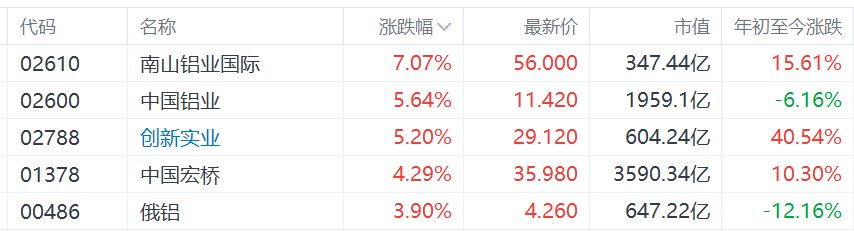
Group 1 - The aluminum sector in the Hong Kong stock market experienced a significant rally, with notable increases in stock prices for various companies, including a rise of over 29% for China Aluminum International [1] - The surge in aluminum prices was driven by recent attacks on aluminum production facilities in the Middle East, exacerbating an already tight global supply situation [1] - The London Metal Exchange (LME) reported a peak aluminum price of $3,492 per ton, reflecting a substantial increase of 6% during early trading [1] Group 2 - Major aluminum producers in the Middle East, such as Emirates Global Aluminium, reported severe damage to their facilities, impacting production capabilities [1] - The ongoing geopolitical tensions in the region have led to significant supply constraints, with smelters unable to export finished aluminum or import raw materials [1] - The potential long-term disruption of production capacity could lead to an extended supply gap in the aluminum market, even if shipping routes like the Strait of Hormuz are restored [1] Group 3 - Specific stock performance data includes: - Nanshan Aluminum International: up 7.07% with a market cap of 34.744 billion and a year-to-date increase of 15.61% [2] - China Aluminum: up 5.64% with a market cap of 195.91 billion and a year-to-date decrease of 6.16% [2] - Innovation Industry: up 5.20% with a market cap of 60.424 billion and a year-to-date increase of 40.54% [2] - China Hongqiao: up 4.29% with a market cap of 359.034 billion and a year-to-date increase of 10.30% [2] - Rusal: up 3.90% with a market cap of 64.722 billion and a year-to-date decrease of 12.16% [2]

宏观金融类:文字早评-20260330
Wu Kuang Qi Huo· 2026-03-30 02:43
Report Summary 1. Report Industry Investment Rating There is no information about the report industry investment rating in the provided content. 2. Core Views of the Report - The ongoing Middle - East conflict, especially the Iran - US conflict, has significantly affected global risk preferences. It has led to inflation concerns, changes in the Fed's interest - rate expectations, and fluctuations in various financial and commodity markets [2][4]. - Different industries are affected differently by the conflict. Energy - related industries are generally strong, while sectors related to liquidity and global macroeconomics, such as precious metals and non - ferrous metals, are under pressure. The black sector may face relatively lower pressure due to the retreat of funds from the long - non - ferrous and short - black strategy [36][43]. 3. Summary by Industry Macro - Financial - **Stock Index** - **Market Information**: Tensions in the Middle East, including attacks on US - related military and industrial enterprises and an aluminum company, and corporate cooperation news. 150 securities companies had significant year - on - year growth in revenue and net profit in 2025 [2]. - **Strategy**: The US - Iran conflict affects global risk preferences. Inflation concerns lead to changes in Fed's interest - rate expectations. It is recommended to pay attention to the war situation and control risks [4]. - **Treasury Bonds** - **Market Information**: Bond contract prices had slight changes. Industrial enterprise profits increased in January - February. There are expectations of a Fed rate hike. The central bank conducted net reverse - repurchase operations [5]. - **Strategy**: Economic data improved at the beginning of the year, but the sustainability of economic recovery is uncertain. Inflation pressure may put the bond market under pressure. The bond market is expected to be volatile and weak in the short term [6][7]. - **Precious Metals** - **Market Information**: Gold and silver prices had different trends. There are political events in the US and the Middle East, and the energy market is under threat [8]. - **Strategy**: Geopolitical conflicts are the core focus. Inflation expectations are sticky, and the short - term trend of precious metals is under pressure. It is recommended to wait and see, with reference price ranges for Shanghai gold and silver [9]. Non - Ferrous Metals - **Copper** - **Market Information**: Copper prices fluctuated due to the Middle - East situation. LME and domestic inventories had different changes, and the basis and spreads also changed [11]. - **Strategy**: The Middle - East situation suppresses copper prices, but inventory reduction and raw material supply changes may support prices. Copper prices are expected to decline in a volatile manner [12]. - **Aluminum** - **Market Information**: Aluminum prices rose due to energy cost increases. Inventory and basis had changes [13]. - **Strategy**: Aluminum prices are supported by energy costs and supply disruptions but are also affected by sentiment. It is expected to rise in the short term [14]. - **Zinc** - **Market Information**: Zinc prices rose slightly. Inventory and basis data changed. Downstream enterprises replenished stocks after price declines [15]. - **Strategy**: Zinc prices may stop falling in the short term, but the follow - up purchasing sustainability is limited. Zinc prices are in a downward trend and may continue to decline after consolidation [15]. - **Lead** - **Market Information**: Lead prices rose slightly. Inventory and basis data changed. Social inventory decreased [16]. - **Strategy**: The spot market is supported in the short term, but the high Shanghai - London ratio may lead to more imports. There is a possibility of further price decline [17]. - **Nickel** - **Market Information**: Nickel prices rose slightly. Spot premiums and raw material prices were stable [18]. - **Strategy**: In the short term, nickel prices may weaken, but in the medium term, there is strong support at the bottom. It is recommended to operate within a range [19]. - **Tin** - **Market Information**: Tin prices rose. Supply and demand had different trends, and inventory decreased [20]. - **Strategy**: Supply is still constrained, and demand is in a weak recovery. Tin prices are expected to be weak, with reference price ranges [21]. - **Lithium Carbonate** - **Market Information**: Lithium carbonate prices rose. There were changes in inventory and raw material prices [22]. - **Strategy**: The market contradiction is in the resource end. The supply may be under pressure in the long term, and demand is expected to be strong. Pay attention to market changes, with a reference price range [23]. - **Alumina** - **Market Information**: Alumina prices rose slightly. There were changes in inventory and raw material prices [24]. - **Strategy**: The ore price is expected to rise, but the long - term oversupply pattern remains. It is recommended to wait and see, with a reference price range [25]. - **Stainless Steel** - **Market Information**: Stainless steel prices fell slightly. Inventory increased, and raw material prices were stable [26]. - **Strategy**: Supply is stable, and terminal consumption is slightly better than expected. The market is expected to be strong in the short term, with a reference price range [27]. - **Cast Aluminum Alloy** - **Market Information**: Cast aluminum alloy prices rose. Inventory and trading volume changed [28]. - **Strategy**: Cost and demand are expected to improve, and prices are expected to rise in a volatile manner [29]. Black Building Materials - **Steel** - **Market Information**: Steel prices were slightly lower. Inventory and trading volume changed [31]. - **Strategy**: The steel market is in a "weak balance" state. The real - estate demand support is limited, and it is necessary to pay attention to demand release and raw material price changes [31]. - **Iron Ore** - **Market Information**: Iron ore prices fell slightly. Inventory and basis data changed [32]. - **Strategy**: Supply is increasing, and demand is recovering. The price is expected to be volatile at a high level, and risk control is needed [33]. - **Coking Coal and Coke** - **Market Information**: Coking coal and coke prices fell slightly. There were changes in spot and futures prices and basis [34]. - **Strategy**: The short - term fundamentals do not support a significant price rebound. It is recommended to operate short - term or wait and see, and be optimistic about coking coal prices in the medium - long term [36]. - **Glass and Soda Ash** - **Market Information**: Glass prices fell, and soda ash prices also fell. Inventory and trading volume changed [38][40]. - **Strategy**: Glass is expected to be in a narrow - range shock. Soda ash is in a game between supply and demand, with reference price ranges [39][40]. - **Manganese Silicon and Ferrosilicon** - **Market Information**: Manganese silicon and ferrosilicon prices rose. There were changes in spot and futures prices and basis [41]. - **Strategy**: The black sector may be supported. The future market is affected by the overall market sentiment and cost factors. Pay attention to manganese ore and "dual - carbon" policies [43][44]. - **Industrial Silicon and Polysilicon** - **Market Information**: Industrial silicon prices fell, and polysilicon prices rose slightly. There were changes in inventory and basis [45][47]. - **Strategy**: Industrial silicon is expected to be in a shock state. Polysilicon is in a negative - feedback adjustment, and it is recommended to wait and see [46][48]. Energy and Chemicals - **Rubber** - **Market Information**: The butadiene market is strong, and natural rubber has different views from bulls and bears. There are changes in tire enterprise operating rates and inventory [50][51]. - **Strategy**: The market fluctuates greatly. It is recommended to trade short - term, take profit on butadiene rubber call options, and hold the hedging position [52]. - **Crude Oil** - **Market Information**: Crude oil and related product prices rose [53]. - **Strategy**: Configure short - position strategies for crude oil, do long - short spreads for different oil types, and short - sell high - sulfur fuel oil cracking spreads and INE - Brent spreads [54]. - **Methanol** - **Market Information**: Methanol prices rose, and MTO profits changed [55]. - **Strategy**: Take profit at high prices and widen MTO profits at low prices [56]. - **Urea** - **Market Information**: Urea prices had slight changes, and the basis was reported [57]. - **Strategy**: Short - sell urea. There may be short - term demand support when the substitution valuation reaches the extreme [58]. - **Pure Benzene and Styrene** - **Market Information**: There were changes in prices, basis, and inventory of pure benzene and styrene [59]. - **Strategy**: The non - integrated profit of styrene is high, and it is recommended to wait and see [60]. - **PVC** - **Market Information**: PVC prices fell. There were changes in cost, inventory, and operating rates [61]. - **Strategy**: The short - term price may rise, but pay attention to risks [62]. - **Ethylene Glycol** - **Market Information**: Ethylene glycol prices rose. There were changes in supply, demand, and inventory [63]. - **Strategy**: The load is expected to decline, and inventory is expected to decrease. Pay attention to risks after a large increase [65]. - **PTA** - **Market Information**: PTA prices rose. There were changes in load, inventory, and processing fees [66]. - **Strategy**: It is difficult to enter a de - stocking cycle, and pay attention to risks after a large increase [67]. - **Para - Xylene** - **Market Information**: PX prices rose. There were changes in load, inventory, and valuation [68]. - **Strategy**: The load is expected to decline, and inventory is expected to decrease. Pay attention to risks after a large increase [69]. - **Polyethylene (PE)** - **Market Information**: PE prices rose. There were changes in inventory and operating rates [70]. - **Strategy**: Short - sell the LL2605 - LL2609 contract spread when the shipping volume through the Strait of Hormuz increases [71]. - **Polypropylene (PP)** - **Market Information**: PP prices rose. There were changes in inventory and operating rates [72]. - **Strategy**: The short - term is affected by geopolitical conflicts, and the long - term is affected by production and demand mismatches [73]. Agricultural Products - **Hogs** - **Market Information**: Hog prices had different trends in different regions. Some areas had price increases, and some had decreases [75]. - **Strategy**: The supply - side improvement is limited. Consider short - selling on rebounds, and pay attention to profit - taking when the position is large [76]. - **Eggs** - **Market Information**: Egg prices had different trends in different regions. Some areas had price increases, and some had decreases [77]. - **Strategy**: The supply is sufficient, but small - sized eggs are in short supply. Short - sell on rebounds for the near - term and hold short positions for the far - term [78]. - **Soybean and Rapeseed Meal** - **Market Information**: There are news about Trump's visit to China, soybean export data, and production forecasts [79]. - **Strategy**: The price fluctuation is large, and it is recommended to wait and see in the short term [80]. - **Oils and Fats** - **Market Information**: There are policies and data related to biofuels, palm oil production, and inventory [81]. - **Strategy**: The price is expected to rise in the medium - term due to the Iran - US event [82]. - **Sugar** - **Market Information**: There are forecasts of sugar production and export in different countries, and import data in China [83]. - **Strategy**: Due to the unstable international oil price, it is recommended to wait and see [84]. - **Cotton** - **Market Information**: There are news about Trump's visit to China, cotton import data, and production forecasts [85]. - **Strategy**: Trump's visit is short - term positive for US cotton. It is recommended to buy on dips in the medium - term, but pay attention to the risk of a global financial crisis [86].
中东两大铝厂遇袭,铝价狂涨超4%!天山铝业涨停,一季度业绩预增107%!有色ETF汇添富(159652)冲击两连阳!中信证券:铝价或超预期上涨
Sou Hu Cai Jing· 2026-03-30 02:25
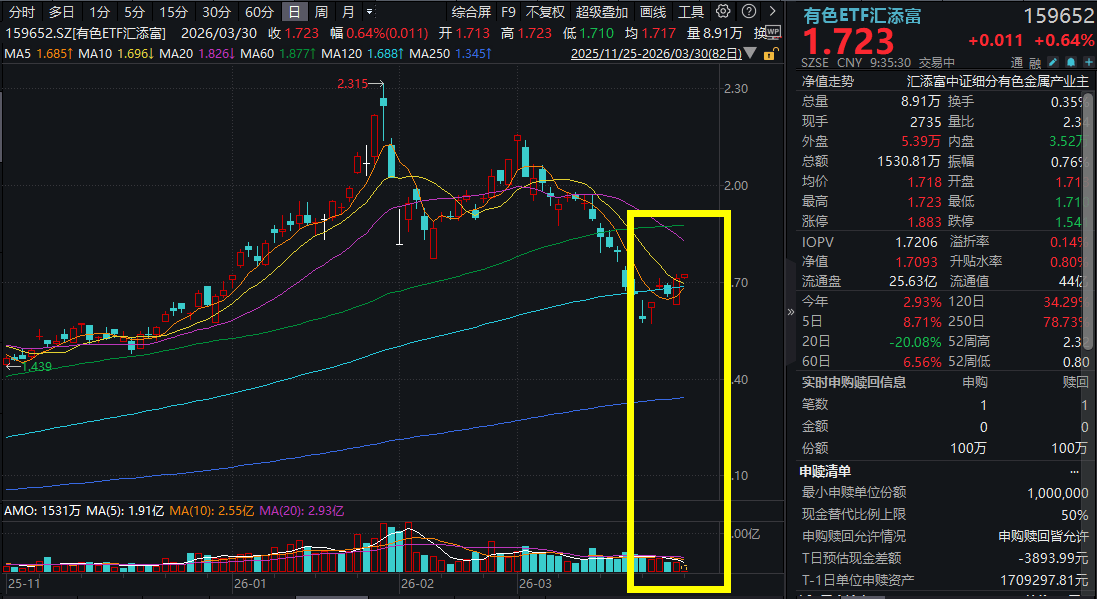
Core Viewpoint - The A-share market experienced fluctuations on March 30, with the non-ferrous metals sector rising against the trend, particularly the aluminum stocks, driven by supply chain disruptions and strong earnings reports from leading companies [1][3][6]. Group 1: Market Performance - The non-ferrous ETF Huatai (159652) rose by 0.64% as of 9:36 AM, aiming for a second consecutive day of gains [1]. - Major component stocks of the non-ferrous ETF saw significant increases, with Tianshan Aluminum hitting the daily limit, Yun Aluminum rising over 6%, and China Aluminum increasing by over 4% [3]. Group 2: Supply Chain Disruptions - Recent attacks on two major aluminum plants in Bahrain and the UAE by Iranian forces have raised concerns about supply disruptions, as these regions account for approximately 10% of global aluminum supply [6]. - Tianshan Aluminum reported a revenue of 29.502 billion yuan for 2025, a year-on-year increase of 5.03%, and a net profit of 4.818 billion yuan, up 8.13% [6][7]. Group 3: Dividend and Earnings Outlook - Tianshan Aluminum announced a cash dividend plan of 2.5 yuan per 10 shares, totaling 1.147 billion yuan, with a commitment to maintain a dividend payout ratio of no less than 50% of net profit for 2026 [7]. - The aluminum sector is expected to face significant supply risks due to the recent attacks, which could lead to prolonged production disruptions and potential price increases [8]. Group 4: Investment Opportunities - The non-ferrous ETF Huatai (159652) is positioned to benefit from a comprehensive layout across various metal sectors, including gold, copper, aluminum, lithium, and rare earths, capitalizing on the ongoing super cycle in non-ferrous metals [10][12]. - The ETF has a leading "gold-copper content" of 45% among its peers, with a high concentration of leading companies in strategic and supply-deficient core varieties [12][14].


A股集体低开,港股科技股普跌,小鹏跌5%,中芯国际跌超4%
21世纪经济报道· 2026-03-30 02:20
Market Overview - A-shares opened lower on March 30, with all four major indices dropping over 1%, and more than 4,500 stocks declining in the market [1] - The Hong Kong Hang Seng Index opened down 1.68%, and the Hang Seng Tech Index fell by 2.78%, although the decline slightly narrowed by the time of reporting [3] Sector Performance - The aluminum sector saw a collective rise, with companies like Tianshan Aluminum and Minfa Aluminum hitting the daily limit up, driven by news of attacks on large aluminum plants in Bahrain and the UAE by Iran, which could impact global aluminum supply [3] - LME aluminum prices increased by 5% following the attacks, indicating potential market volatility [3] - Oil and gas stocks performed well, with companies such as China Petroleum and CNOOC rising over 2%, supported by the continued increase in oil prices, with both WTI and Brent crude exceeding $100 per barrel [5] Innovation and Pharmaceuticals - The innovative drug sector was active, with companies like Meinohua achieving significant stock gains, and a notable collaboration between Eli Lilly and Insilico Medicine valued at $27.5 billion for the exclusive rights to a GLP-1 diabetes drug [6] - Insilico's stock saw a peak increase of 14.95% before settling at a 6% gain by the time of reporting [6] Company Earnings and Dividends - Several listed companies reported earnings forecasts exceeding 100% growth, with the highest forecast showing a 32-fold increase [7] - Despite a collective profit decline among the "three oil giants," they still announced a substantial dividend payout of 160 billion yuan [7]

港股开盘:恒指跌1.68%,恒生科指跌2.78%,铝业股逆势大涨中国宏桥涨6.49%
Jin Rong Jie· 2026-03-30 01:57
Market Performance - The Hong Kong stock market opened with the Hang Seng Index down by 1.68% at 24,532.85 points, the Hang Seng Tech Index down by 2.78% at 4,645.26 points, and the China Enterprises Index down by 1.81% at 8,301.10 points [1][2] - Major tech stocks showed declines, with Alibaba down 3.59%, Tencent down 1.7%, JD.com down 2.99%, and Xiaomi down 2.12% [2] - The Nasdaq Golden Dragon China Index fell by 1.9%, with Alibaba down 2.17% and Pinduoduo down 0.81% [3] Company Earnings - China Petroleum's projected revenue for 2025 is 286.45 billion yuan, a decrease of 2.5% year-on-year, with a net profit of 15.73 billion yuan, down 4.5% [8] - China Merchants Bank expects a 2025 operating income of 337.27 billion yuan, a slight increase of 0.05%, and a net profit of 15.02 billion yuan, up 1.21% [8] - BYD Electronics anticipates a revenue of 179.48 billion yuan for 2025, an increase of 1.22%, but a net profit decrease of 17.61% to 3.52 billion yuan [8] - New China Life Insurance expects a total revenue of 155.55 billion yuan for 2025, an increase of 17.8%, with a net profit of 36.28 billion yuan, up 38.3% [8] - AIA Group plans to repurchase shares worth 1.743 billion USD [8] Market Trends and Recommendations - The market is experiencing structural differentiation, with sectors like innovative pharmaceuticals, lithium batteries, and new consumption leading the market, while storage chips and power sectors are underperforming [3] - Analysts suggest maintaining positions in energy, new energy, and power chains while reallocating investments towards domestic consumption opportunities, particularly in essential and service consumption [3][4]




