啤酒

Search documents
青岛啤酒:子公司拟开展不超43.4亿元固定收益类投资
Zhong Guo Zheng Quan Bao· 2026-01-21 01:44
Core Viewpoint - The company has approved its wholly-owned subsidiary to engage in fixed-income investment activities using its own funds, with a maximum investment balance of 4.34 billion yuan, aimed at improving capital efficiency and cash asset returns without affecting core business operations [1] Group 1: Investment Details - The investment activities will include government bonds, local government bonds, financial bonds, AAA-rated corporate bonds, money market funds, and fixed-income funds [1] - The maximum investment balance is capped at 70% of the financial company's net capital, and the funds can be rolled over within a 12-month period from the board's approval [1] Group 2: Financial Performance - For the first three quarters of 2025, the company reported total operating revenue of 29.367 billion yuan, reflecting a year-on-year growth of 1.41% [1] - The net profit attributable to shareholders reached 5.274 billion yuan, showing a year-on-year increase of 5.70% [1]

瑞银:消费出现复苏迹象,行业估值仍有吸引力
IPO早知道· 2026-01-21 01:31
Group 1: Consumer Confidence and Market Trends - UBS believes that consumer confidence is improving, with a notable shift in preferences among consumers [3] - The firm conducted discussions with approximately 35 consumer companies and observed a recovery in consumer sentiment despite a short-term downturn in the real estate market [3] - UBS indicates that the valuation of the consumer sector remains attractive, being about one standard deviation below the 10-year average, and has not yet reflected the recovery in consumption [3] Group 2: Sector-Specific Insights - The snack industry is expected to benefit from category expansion and channel restructuring, presenting structural growth opportunities [6] - In the liquor sector, private consumption and potential easing of drinking bans for government institutions may support mid-range liquor demand, with companies accelerating channel transformation for sustainable long-term earnings growth [5] - The ready-to-drink beverage (FMB) segment is projected to capture market share from bottled beverages, driven by rapid store expansion and more efficient business models [5] Group 3: Dairy and Other Beverages - Despite resilience in fresh milk, liquid milk sales are expected to remain weak in 2025, with a slight recovery anticipated in 2026 due to improved raw milk supply and demand, alongside marketing and innovation efforts [5] - The beer segment is experiencing short-term consumption fatigue, but product diversification and home consumption channel expansion continue to drive premiumization [5] Group 4: Other Consumer Goods - The pet food sector shows confidence in domestic market growth despite varying overseas growth prospects [7] - The home appliance industry is expected to see higher growth overseas compared to the domestic market, with strategies to cope with rising material costs differing among companies [9] - In the jewelry sector, brands with differentiated product designs and craftsmanship may pursue consolidation following VAT reforms [10]


北京控股:燕京啤酒预期2025年归母净利同比增长50%至65%
Xin Lang Cai Jing· 2026-01-21 00:35
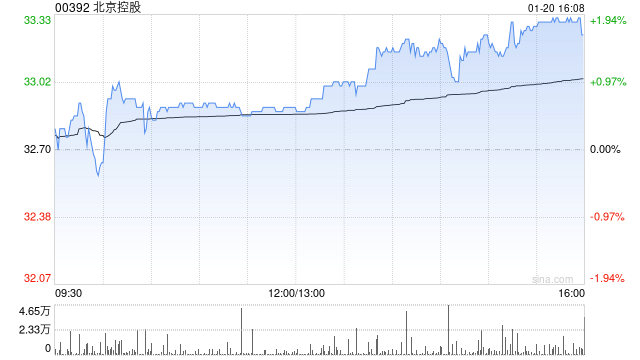
北京控股(00392)公布,燕京啤酒(000729.SZ)预期2025年归母净利为约15.835亿-17.42亿元,同比 增长50%-65%;扣除非经常性损益后的净利润约14.57亿-15.61亿元,同比增长40%-50%。 报告期内,燕京啤酒(000729.SZ)坚定推进大单品战略,围绕产品力、品牌力、渠道力积极探寻创新 路径,深化卓越管理体系建设,推行品牌年轻化、时尚化、高端化建设,实施梯度化市场开发策略,燕 京 U8 继续保持稳健增长态势。燕京啤酒(000729.SZ)持续攻坚生产、营销、市场和供应链等关键业 务领域变革,扎实推进各项战略举措,强健组织机制保障,以产品升级、市场升级和管理升级,全面提 升管理质效,系统激活运营效率和增长潜力,企业经营效益持续向好。 2025 年度非经常性损益主要系燕京啤酒(000729.SZ)确认了子公司土地收储款,增加归母净利润约 1.32 亿元。 责任编辑:卢昱君 热点栏目 自选股 数据中心 行情中心 资金流向 模拟交易 客户端 北京控股(00392)公布,燕京啤酒(000729.SZ)预期2025年归母净利为约15.835亿-17.42亿元,同比 增长50%-65% ...

北京燕京啤酒股份有限公司 2025年度业绩预告
Zheng Quan Ri Bao· 2026-01-20 23:30
Core Viewpoint - The company expects a significant increase in net profit for the year 2025, driven by both core business performance and non-recurring gains [1][3]. Group 1: Performance Forecast - The performance forecast period is from January 1, 2025, to December 31, 2025, with an expected net profit that is positive and indicates a growth trend [1]. - The company has communicated with its accounting firm regarding the preliminary financial data, which has not yet been audited, and there are no significant disagreements [1][2]. Group 2: Business Impact - The company is actively pursuing a major product strategy, focusing on product strength, brand power, and channel capabilities, while implementing innovative paths and enhancing management systems [2]. - The company aims for brand rejuvenation, modernization, and premiumization, alongside a tiered market development strategy, with the Yanjing U8 product line showing steady growth [2]. Group 3: Non-Recurring Gains - The non-recurring gains for the year 2025 primarily stem from the recognition of land reserve payments from a subsidiary, which is expected to increase net profit attributable to shareholders by approximately 132 million yuan [3]. - The overall expected net profit growth compared to the previous year is projected to be between 50.00% and 65.00% [3].
青岛啤酒股份有限公司第十一届董事会第四次会议决议公告
Shang Hai Zheng Quan Bao· 2026-01-20 18:24
Group 1 - The company held its 4th meeting of the 11th Board of Directors on January 19, 2026, with all 9 directors present, complying with legal and regulatory requirements [2][4] - The Board approved the financial company's fixed income investment plan for 2026, allowing investments up to RMB 4.34 billion, not exceeding 70% of the financial company's net capital [3][14] - The investment will include government bonds, financial bonds, AAA-rated corporate bonds, money market funds, and fixed income funds, with a validity period of 12 months from the approval date [15][18] Group 2 - The Board approved the appointment of Mr. Wang Yan as Vice President, effective immediately until the end of the current Board's term [5][6] - The Board also approved daily related party transactions with Qingdao Beer Group and its subsidiaries, with an estimated total transaction amount of RMB 1,342.89 million for 2026 [6][30] - The related party transactions include various framework agreements for production, sales, and service provisions, which are deemed to be conducted under normal commercial terms [30][31] Group 3 - The company will engage in daily related party transactions with Qingdao Beverage Group, Qingdao Youjia Health Beverage Co., and others, with specific agreements signed on January 20, 2026 [28][47] - The total expected transaction amount for the framework agreements is capped at RMB 41.5 million for the production and sales services, and RMB 123.9 million for supply chain services [52][59] - The agreements are structured to ensure fair pricing and compliance with market standards, with independent directors confirming the fairness of the transactions [34][45]
每天三分钟公告很轻松 | 华邦健康等公司预计年报业绩扭亏;利欧股份:完成停牌核查 21日起复牌;海康威视披露业绩快报
Shang Hai Zheng Quan Bao· 2026-01-20 16:23
Group 1: Earnings Forecasts - Huabang Health expects a net profit of 660 million to 730 million yuan for 2025, recovering from a loss of 299 million yuan in the previous year, driven by improvements in its agricultural chemical materials sector and steady growth in its pharmaceutical and tourism segments [2] - Kangda New Materials anticipates a net profit of 125 million to 135 million yuan for 2025, compared to a loss of 246 million yuan last year, primarily due to significant sales growth in adhesive and specialty resin products, particularly in the wind power sector [2] - Longxin Technology forecasts a net profit of 100 million to 150 million yuan for 2025, recovering from a loss of 250 million yuan, with improvements in its energy digitalization business and reduced losses in its new energy sector [3] - Hualu Bio expects a net profit of 100 million to 130 million yuan for 2025, recovering from a loss of 47.57 million yuan, attributed to increases in both sales price and volume [3] - Jiuxi Software predicts a net profit of 40 million to 60 million yuan for 2025, recovering from a loss of 156 million yuan, supported by AI technology enhancements and market expansion strategies [3] Group 2: Major Corporate Developments - Liou Co. has completed its stock suspension review and will resume trading on January 21, 2026, confirming that its business operations remain normal and no significant undisclosed matters exist [4] - Hikvision reported total revenue of 92.518 billion yuan for 2025, a slight increase of 0.02%, with a net profit of 14.188 billion yuan, up 18.46%, driven by strategic adjustments and improved cash flow management [6] - JianTou Energy expects a net profit of approximately 1.877 billion yuan for 2025, a significant increase of about 253.38% from the previous year, due to optimized coal resource allocation and cost management [6] Group 3: Investment and Mergers - Aibo Medical plans to acquire at least 51% of Demai Medical to gain control, aiming to leverage its R&D advantages in the sports health sector [19] - Yifan Transmission intends to purchase 87.07% of Beijing Helishi Motor Technology Co., which will become a subsidiary upon successful completion of the transaction [16] - Guangdong Hongtu plans to invest up to 95 million yuan to establish a subsidiary in Thailand for automotive parts production and sales [20] Group 4: Stock Performance and Changes - Huicheng Environmental's major shareholder plans to increase their stake in the company by investing between 25 million and 50 million yuan within six months [22] - Liou Co. will resume trading after completing its stock suspension review, indicating stability in its operations [24] - Kailong High-Tech and Debang Co. have been suspended from trading, indicating potential issues or developments requiring further clarification [25]




燕京啤酒2025年净利润预计增长50.00%~65.00%
Zheng Quan Shi Bao Wang· 2026-01-20 15:44
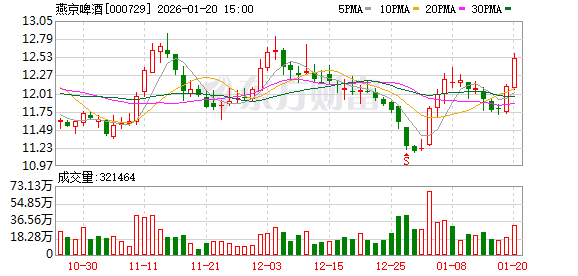
Core Viewpoint - Yanjing Beer (000729) announced a profit forecast for 2025, expecting a net profit between 1.584 billion to 1.742 billion yuan, representing a year-on-year growth of 50.00% to 65.00% [2] Stock Performance - The stock closed at 12.51 yuan, up 3.30%, with a turnover rate of 1.28% and a trading volume of 397 million yuan, showing a 5-day increase of 3.56% [2] - Historical data indicates that 63.33% of stocks with a profit forecast increase of over 50% saw a price increase on the announcement day, with 3 stocks hitting the daily limit [2] - Over a 5-day period post-announcement, 71.11% of these stocks experienced price increases [2] Capital Flow - The stock saw a net inflow of 46.51 million yuan from main funds today, with a total net inflow of 36.79 million yuan over the past 5 days [2] - As of January 19, the margin balance was 303 million yuan, with a financing balance of 301 million yuan, reflecting a 2.63% decrease from the previous trading day, but a cumulative increase of 1.29% over the past 5 days [2] Institutional Ratings - In the past month, 2 institutions rated the stock as a buy [2] - The highest target price forecast is 17.75 yuan, as per a report from Guotai Junan Securities on January 4 [2]
北京控股:燕京啤酒预期2025年归母净利同比增长50%-65%
Zhi Tong Cai Jing· 2026-01-20 14:56
Core Viewpoint - Beijing Enterprises Holdings (00392) announced that Yanjing Beer (000729.SZ) expects a net profit attributable to shareholders of approximately 1.5835 billion to 1.742 billion yuan for 2025, representing a year-on-year growth of 50% to 65% [1] - The net profit after deducting non-recurring gains and losses is expected to be around 1.457 billion to 1.561 billion yuan, with a year-on-year increase of 40% to 50% [1] Group 1 - Yanjing Beer is firmly advancing its major product strategy, focusing on product strength, brand power, and channel capability while actively exploring innovative paths [1] - The company is deepening the construction of an excellent management system and promoting brand youthfulness, fashion, and premiumization [1] - Yanjing Beer is implementing a gradient market development strategy, with Yanjing U8 continuing to maintain a steady growth trend [1] Group 2 - The company is continuously tackling key business areas such as production, marketing, market, and supply chain transformation [1] - Yanjing Beer is solidly advancing various strategic initiatives, strengthening organizational mechanisms to ensure operational efficiency and growth potential [1] - The company aims to enhance management quality and efficiency through product upgrades, market upgrades, and management upgrades [1] Group 3 - The non-recurring gains and losses for the 2025 fiscal year mainly stem from Yanjing Beer recognizing land reserve payments from its subsidiary, which will increase net profit attributable to shareholders by approximately 132 million yuan [1]
北京控股(00392):燕京啤酒(000729.SZ)预期2025年归母净利同比增长50%-65%
智通财经网· 2026-01-20 14:52
Core Viewpoint - Beijing Enterprises Holdings (00392) announced that Yanjing Beer (000729.SZ) expects a net profit attributable to shareholders of approximately 1.5835 billion to 1.742 billion yuan for 2025, representing a year-on-year growth of 50% to 65% [1] - The net profit after deducting non-recurring gains and losses is expected to be around 1.457 billion to 1.561 billion yuan, reflecting a year-on-year increase of 40% to 50% [1] Group 1 - Yanjing Beer is firmly advancing its major product strategy, focusing on product strength, brand power, and channel capability while actively exploring innovative pathways [1] - The company is deepening the construction of an excellent management system and promoting brand youthfulness, fashion, and premiumization [1] - Yanjing Beer is implementing a gradient market development strategy, with Yanjing U8 continuing to maintain a steady growth trend [1] Group 2 - The company is continuously tackling key business areas such as production, marketing, market, and supply chain transformation [1] - Yanjing Beer is solidly advancing various strategic initiatives, strengthening organizational mechanisms to ensure operational efficiency and growth potential [1] - The company aims to enhance management quality and efficiency through product upgrades, market upgrades, and management upgrades [1] Group 3 - The non-recurring gains and losses for the 2025 fiscal year mainly stem from Yanjing Beer recognizing land reserve payments from its subsidiary, which will increase net profit attributable to shareholders by approximately 132 million yuan [1]
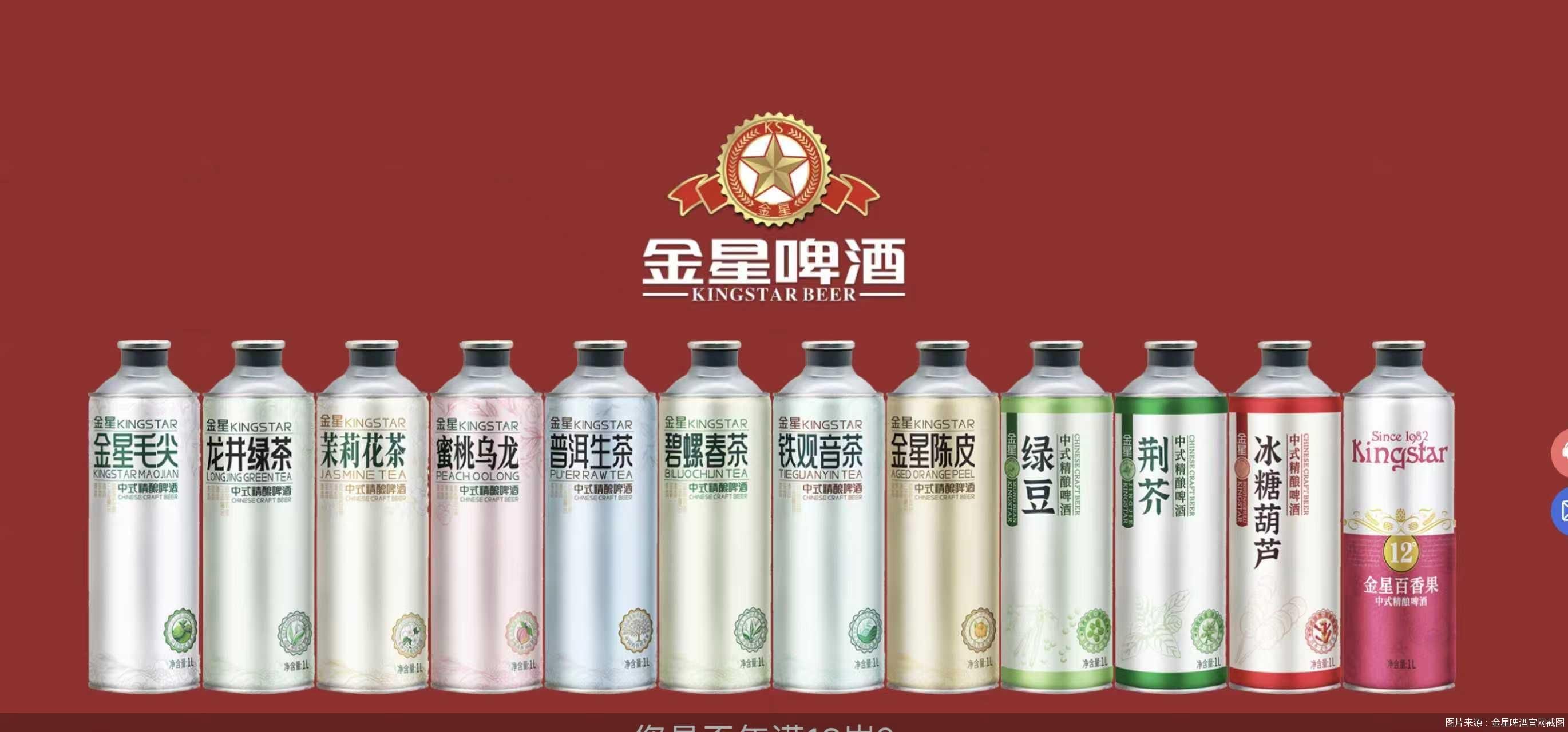
携“中式精酿”令牌 金星啤酒“瘸腿”赶考IPO
Bei Jing Shang Bao· 2026-01-20 14:51
Core Viewpoint - Jin Xing Beer is preparing to list on the Hong Kong Stock Exchange, marking a significant step in its long journey towards capital market entry, driven by the rising trend of Chinese craft beer [1][3][4]. Group 1: Company Background and Listing Journey - Jin Xing Beer has been pursuing its IPO dream for over 20 years, transitioning from a village-run factory to a family-controlled enterprise, with the current listing attempt seen as a turning point [3][4]. - The company has previously attempted to go public twice, with the first attempt in 2003 and a second in 2011, both of which were unsuccessful due to various historical and strategic issues [8][10]. - The current listing application is supported by a clearer business direction focused on Chinese craft beer, which has shown strong profitability, unlike previous attempts that relied on traditional beer [10][12]. Group 2: Financial Performance and Business Model - Jin Xing Beer reported that its craft beer segment generated revenue of 867 million yuan in the first three quarters of 2025, accounting for 78.1% of total revenue, while traditional beer segments saw a decline in revenue [4][5]. - The reliance on a single product category, craft beer, has raised concerns about the company's revenue structure's vulnerability, as traditional beer revenues have decreased significantly [5][12]. - Industry experts predict that craft beer may only represent 5%-8% of total beer consumption, indicating potential challenges for Jin Xing Beer if consumer preferences shift [5][12]. Group 3: Governance and Ownership Structure - The ownership structure of Jin Xing Beer has become more concentrated, with the Zhang family controlling 93.45% of the company, which raises concerns about family governance post-IPO [12][13]. - The company has faced issues related to cash distribution, having conducted significant dividend payouts prior to the IPO, which could impact liquidity if the IPO does not proceed as planned [14][15]. - There are compliance risks associated with the company's failure to fully pay social insurance and housing funds for employees, which may attract regulatory scrutiny [15].