
金融服务

Search documents
景林、但斌,大举买入谷歌;黄金储备连增15个月|投资前瞻(2.9—2.13)
Sou Hu Cai Jing· 2026-02-08 08:43
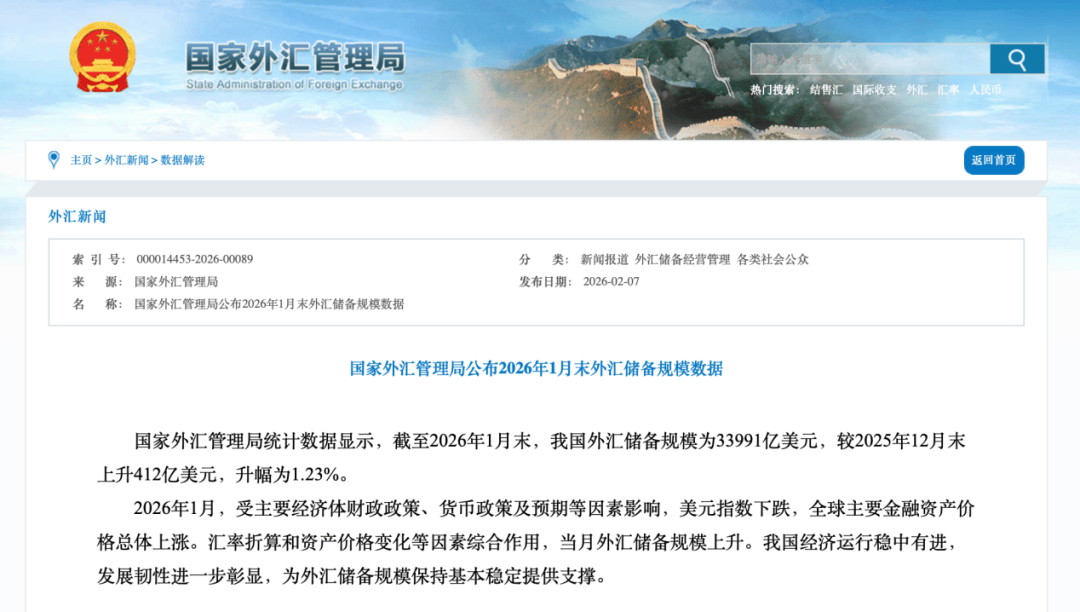
Macro and Financial - China's foreign exchange reserves increased for the sixth consecutive month, reaching $339.91 billion by the end of January 2026, up $4.12 billion or 1.23% from December 2025. Gold reserves also rose for 15 months, totaling 74.19 million ounces, with a month-on-month increase of 40,000 ounces [2] - The State Council is planning to promote effective investment policies, focusing on major projects in infrastructure, urban renewal, public services, and emerging industries [2] - The People's Bank of China and eight other departments reiterated the ban on virtual currency activities, classifying them as illegal financial activities [2] Capital Market - The China Securities Regulatory Commission (CSRC) announced strict regulations on the issuance of asset-backed securities tokens overseas based on domestic assets [5] - By the end of 2025, China's domestic ETF market reached approximately $860 billion, surpassing Japan to become the largest ETF market in Asia, with a net inflow of over 1.16 trillion yuan [6] - The CSRC and other departments are addressing illegal "agent rights protection" activities on social media platforms, particularly in short videos and live streaming [7] Business and Industry - The Ministry of Commerce is developing a "1+N" policy system to foster new growth points in service consumption, with specific support policies for various sectors [13] - The National Medical Insurance Administration has implemented direct payment of maternity allowances to individuals nationwide [14] - Hainan is launching a "zero tariff" policy for daily consumer goods, with the first five duty-free stores set to open on February 11 [15] - Kuaishou has been fined 119 million yuan for hosting inappropriate content and has committed to rectifying the issues [16] - Elon Musk emphasized the importance of energy production and capacity over traditional currency in future economic models [17] - China's commercial space sector is expected to enter a phase of frequent launches, following the successful test of a reusable spacecraft [18] - Nvidia's CEO expressed optimism about AI development, indicating a significant demand for AI infrastructure and chip products in the coming years [18]


新版可持续发展报告指南落地,ESG信息披露透明度提升
Xinda Securities· 2026-02-08 06:32
Domestic Developments - The new guidelines for sustainable development reporting have been implemented, enhancing ESG information disclosure transparency. 2026 marks the first year of mandatory disclosure under the "Guidelines for Information Disclosure of Sustainable Development Reports by Listed Companies" [3] - The Shanghai, Shenzhen, and Beijing stock exchanges have revised and released the "Guidelines for Preparing Sustainable Development Reports," adding three new topics: pollutant emissions, energy utilization, and water resource utilization [3] International Developments - The European Union has established the world's first permanent carbon removal certification standard, marking a significant step from passive emission reduction to active carbon removal. This framework aims to provide clarity and transparency for investors and project developers in the emerging carbon removal industry [3] - The certification framework is seen as a "blueprint for the global carbon market," reinforcing Europe's role as a key architect of the future carbon economy [3] ESG Financial Products Tracking - As of February 7, 2026, China has issued 3,959 ESG bonds, with a total outstanding amount of 5.79 trillion RMB. Green bonds account for the largest share at 62.35% [4] - In the past month, 44 ESG bonds were issued, raising 27.2 billion RMB, while 1,307 ESG bonds were issued over the past year, totaling 1.4211 trillion RMB [4] Public Fund Developments - There are currently 1,089 ESG products in the market, with a total net asset value of 1.754424 trillion RMB. Social responsibility products represent the largest share at 41.79% [4] - In the past month, 2 new ESG products were issued, totaling 1.491 billion units, with a focus on ESG strategies and environmental protection [4] Risk Factors - Potential risks include slower-than-expected ESG development, delays in the dual carbon strategy implementation, and insufficient policy advancement [7]
株洲多项工作获省政府通报表扬
Xin Lang Cai Jing· 2026-02-08 05:06
株洲多项工作获通报表扬 转自:株洲发布 省政府公布2025年推动高质量发展大抓落实成效明显地区名单 实施环境优化提升攻坚,推进营商环境领域各项改革,推进"高效办成一件事"提升行政效能,提高经营 主体全生命周期服务水平,打造"三化"一流营商环境成效明显; 推动小微企业、绿色金融、涉农等重点领域信贷投放,实施企业上市"金芙蓉"跃升行动,着力提升上市 公司市值,打击非法金融活动,防范化解金融领域风险等成效明显; 深化源头治理化解信访矛盾,深入开展集中治理重复信访专项行动,落实信访工作法治化"五化四到 位"等成效明显; 实施民生补短提质攻坚,办好"十大重点民生实事"、保重点群体就业、兜牢基本生活底线等成效明显; 2月7日下午,省政府第九次全体会议召开。会议通报了2025年推动高质量发展大抓落实成效明显的地区 名单,株洲多项工作获得通报表扬。 为深入贯彻落实习近平总书记关于湖南工作的重要讲话和指示批示精神,进一步树牢和践行正确政绩 观,强化正向激励,营造创先争优、大抓落实浓厚氛围,根据有关文件精神,省政府决定,对2025年推 动高质量发展大抓落实成效明显的地区予以通报表扬。本次表扬激励共设置20个项目。 根据名单,株洲 ...
新华财经早报:2月8日
Xin Hua Cai Jing· 2026-02-08 00:28
·连续15个月增持 1月中国黄金储备增加4万盎司 ·记者从有关部门获悉,2月7日,我国在酒泉卫星发射中心使用长征二号F运载火箭,成功发射一型可重复使用试验航天器。试验航天器将按计划开展可重复 使用试验航天器技术验证,为和平利用太空提供技术支撑。(新华社) ·上海证券交易所的数据显示,截至2025年底,全球ETF资产总规模达19.7万亿美元,近20年的规模年均复合增长率超20%。而国内ETF市场同样表现亮眼, 规模和成交双双创出新高。截至2025年底,境内交易所挂牌上市的ETF产品数量达1381只,较2024年底增长35.7%;总规模达6.02万亿元,较2024年底增长 61.4%。( 央视财经) ·中国国家电网青海超高压公司7日发布消息称,国网青海省电力公司开展中国首次5000米级高海拔区域超高压等电位带电作业,刷新了世界超高压带电作业 的海拔纪录。(中国新闻网) ·2025年社会物流总费用与GDP比率降至13.9% ·国际能源署:可再生能源与核电2030年将提供全球一半电力 ·中国人民银行数据显示,中国1月末黄金储备报7419万盎司(约2307.567吨),环比增加4万盎司(约1.24吨),12月末为741 ...

商业航天,利好!
Zhong Guo Zheng Quan Bao· 2026-02-08 00:28
Group 1 - China successfully launched a reusable experimental spacecraft on February 7, using the Long March 2F rocket, aimed at validating reusable spacecraft technology for peaceful space utilization [1] - Shanghai aims to enhance its industrial economy by focusing on advanced manufacturing and developing six emerging pillar industries, targeting new sectors such as smart terminals, commercial aerospace, and low-altitude economy, with a goal of creating a trillion-level industry increment [2] - As of January 2026, China's foreign exchange reserves reached $339.91 billion, an increase of $4.12 billion from December 2025, marking a 1.23% rise [2] - China's gold reserves increased by 40,000 ounces to 74.19 million ounces by the end of January, representing the 15th consecutive month of gold accumulation by the central bank [2] Group 2 - The International Energy Agency (IEA) predicts that global electricity demand will grow at an average annual rate exceeding 3.5% until 2030, with renewable energy and nuclear power expected to account for 50% of the global electricity mix by that year [3] - The IEA reports that renewable energy generation is on track to surpass coal generation by 2025, driven by record deployments of solar power facilities [3] - The National Bureau of Statistics, along with other governmental bodies, has released guidelines to cultivate data circulation service institutions, including data exchanges and service platforms, to promote the marketization of data elements [5][6] - The guidelines propose targeted policies to support the development of high-quality datasets for artificial intelligence and encourage diverse trading models for data exchange [4]
黄金白银直线飙涨原因!
Sou Hu Cai Jing· 2026-02-07 18:28
近期黄金白银市场的剧烈波动,犹如一面多棱镜,清晰映照出各类投资者的不同应对策略——深圳水贝 商家选择"锁仓躺平"、谨慎惜售,短线交易者则视其为盈利契机,而普通投资者却可能面临被套牢的风 险,这一切背后,是市场情绪与供需关系的复杂交织与博弈。 深圳水贝,作为全国黄金交易的晴雨表,近期"金条缺货"现象频发,上游原料供应商纷纷停供并锁仓。 这一行为本质上是对市场极端波动的理性规避:既担忧高价库存因价格暴跌而蒙受损失,又预期长期供 需缺口将为价格提供支撑。这种行业内部的审慎态度,与市场上"金价将持续飙升"的狂热预测形成鲜明 对比,进一步凸显了当前市场行情的不确定性。1月底,伦敦金单日跌幅超过9%,白银跌幅更是扩大至 对于具备专业素养的短线投资者而言,市场的波动确实蕴含着机会。金价在5000-5100美元/盎司的支撑 位与历史高位之间的震荡,为精准捕捉买卖点提供了可能,但这要求投资者对宏观政策、地缘政治局势 以及技术面有深入的理解和研判,同时必须具备严格的止损纪律。然而,对于缺乏风险抵御能力的普通 投资者来说,盲目跟风可能遭遇"高位接盘"的困境:1月31日,单日就有超过27万人爆仓,不少加杠杆 的散户在一夜之间亏光了本 ...
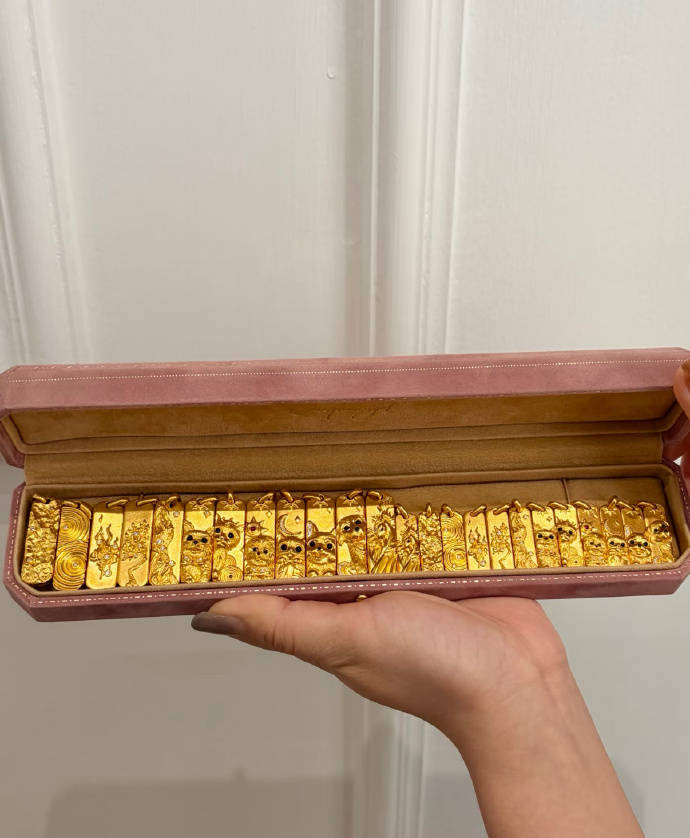
重磅!央行连续15个月增持黄金
Sou Hu Cai Jing· 2026-02-07 15:27
Group 1: Foreign Exchange Reserves - As of the end of January 2026, China's foreign exchange reserves stood at $339.91 billion, an increase of $4.12 billion or 1.23% from December 2025 [2] - The increase in reserves is attributed to factors such as the decline in the US dollar index and the overall rise in global financial asset prices, supported by China's stable economic performance [4] - Analysts expect that the foreign exchange reserves will remain stable, providing support for the RMB exchange rate and acting as a buffer against external shocks [4] Group 2: Gold Reserves - By the end of January, China's gold reserves reached 74.19 million ounces, with an increase of 40,000 ounces, marking the 15th consecutive month of gold accumulation by the central bank [6] - The incremental increase in gold reserves in January was relatively low, attributed to the rapid rise in international gold prices, which has led to a cautious approach in accumulation [9] - Analysts suggest that the necessity to increase gold reserves is rising due to changes in the global political and economic landscape, indicating a long-term strategy for optimizing international reserves [9] Group 3: Gold Price Trends - In January, gold prices experienced significant volatility, with futures and spot gold prices returning above $4,900 per ounce, reflecting an overall upward trend despite some sharp declines [11] - Morgan Stanley analysts maintain a bullish outlook on gold prices, predicting they could reach $6,300 per ounce by the end of 2026, driven by demand from central banks and investors [13] - There is a divergence in views among Wall Street analysts regarding gold prices, with some suggesting that prices may have peaked based on historical data [13][14]
上海将着力塑造吸引外资新优势、推动外资稳量提质
Zhong Guo Xin Wen Wang· 2026-02-07 09:19
Group 1 - Shanghai is a key destination for foreign investment in China, with a focus on enhancing the quality and scale of foreign capital utilization [1] - By 2025, Shanghai's actual foreign investment will account for 15.3% of the national total, with high-tech industries making up 33% of foreign investment, a 10 percentage point increase from the previous five-year plan [1] - The number of newly established foreign enterprises in Shanghai is projected to reach 6,300 by 2025, representing a growth of 6.8% [1] Group 2 - Shanghai aims to align with international high-level trade rules and expand institutional openness, particularly in telecommunications, healthcare, education, and finance [2] - The city will support the transformation of foreign investment and guide it towards advanced manufacturing, modern services, high-tech, and energy-saving industries [2] - Shanghai plans to enhance cross-border trade facilitation through specialized actions involving customs, foreign exchange, and tax departments [2] Group 3 - The Shanghai government is focused on enhancing the competitiveness of its international financial center, aiming to establish a global center for RMB asset allocation and risk management [3] - Efforts will be made to attract companies to set up global supply chain management centers and to support new trade formats such as cross-border e-commerce and bonded maintenance [3] - The city will promote the development of service trade and digital trade, establishing a national demonstration zone for innovative service trade [3]
金力永磁获摩根大通增持约138.2万股 每股作价约21.15港元
Xin Lang Cai Jing· 2026-02-07 06:30
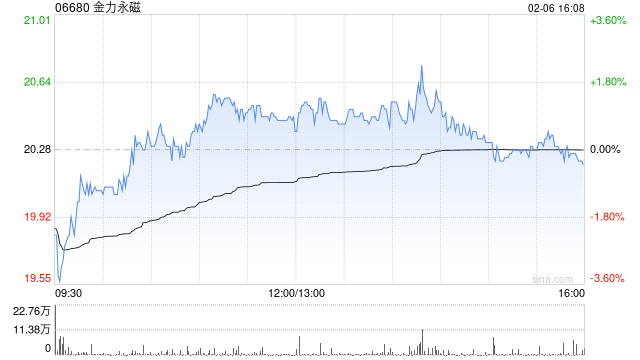
香港联交所最新资料显示,2月3日,摩根大通增持金力永磁(06680)138.2047万股,每股作价21.151港 元,总金额约为2923.17万港元。增持后最新持股数目约为1743.1万股,最新持股比例为7.42%。 香港联交所最新资料显示,2月3日,摩根大通增持金力永磁(06680)138.2047万股,每股作价21.151港 元,总金额约为2923.17万港元。增持后最新持股数目约为1743.1万股,最新持股比例为7.42%。 责任编辑:卢昱君 热点栏目 自选股 数据中心 行情中心 资金流向 模拟交易 客户端 责任编辑:卢昱君 热点栏目 自选股 数据中心 行情中心 资金流向 模拟交易 客户端 ...

五部门发布风险提示:警惕不法“代理维权”侵害
Zhong Guo Jing Ying Bao· 2026-02-07 04:00
据介绍,不法"代理维权"短视频、直播乱象主要呈现四方面特征。 中经记者 孙汝祥 夏欣 北京报道 2026年2月6日,金融监管总局、中央网信办、公安部、中国人民银行、中国证监会发布风险提示,提醒 广大群众警惕不法"代理维权"侵害,依法理性维权。 五部门表示,近期,社会上一些组织和个人通过短视频及直播等自媒体平台违规制作、散布涉及"全额 退保""债务清零""债务优化""债务协商""债务置换""征信洗白""投顾退费"等不实短视频,甚至以直播形 式传授"技巧",诱导金融消费者、投资者委托其"代理维权",从而收取高额咨询费、服务费,以"依法 维权"之名行"非法牟利"之实。此类不法"代理维权"短视频、直播传播不实信息,扰乱金融市场秩序, 侵害金融消费者、投资者合法权益。 四是其他煽动性话术。如宣称"股市下跌投顾骗钱",此类短视频、直播通过"血本无归""A股股灾"等唱 空股市的话术以及投资者亏损的案例进行诱导营销宣传,通过煽动性文案吸引投资者主动联系"代理维 权"机构。 五部门提示金融消费者、投资者,勿听信谣言。"全额退保""贷款/信用卡不用还""债务协商""债务置 换""征信洗白""投顾费用全退"等均属不实信息,与金融法 ...