
油气

Search documents
交易日历 | 元旦期间宏观&大宗商品重要数据事件预告
对冲研投· 2025-12-31 08:56
Group 1 - The article outlines key upcoming economic events and data releases in the U.S. and China, including the EIA natural gas inventory report and the Federal Reserve meeting minutes, which are critical for market analysis [1][2] - It highlights the importance of the U.S. December Manufacturing PMI report, which is expected to provide insights into the manufacturing sector's performance [1] - The article mentions various inventory reports from China, including rebar production, steel mill stocks, and methanol inventories, which are essential for understanding the domestic commodity market dynamics [1][2] Group 2 - The article details the weekly inventory data for soybean meal and the operating rates of major oil mills in China, indicating trends in the oilseed processing industry [2] - It includes information on the USDA oilseed crushing report and the U.S. cotton on-call report, which are significant for agricultural commodity traders [2] - The article notes that reports may be delayed due to public holidays, emphasizing the need for timely updates in market analysis [2]


石油ETF(561360)连续3日迎净流入,地缘风险升温对油价形成支撑
Mei Ri Jing Ji Xin Wen· 2025-12-31 06:40
Core Viewpoint - Recent geopolitical factors have driven oil prices higher, including stalled peace negotiations in Ukraine, tensions between the U.S. and Venezuela, and escalating situations in the Middle East [1] Group 1: Oil Price Trends - Despite high gasoline and distillate fuel inventories in the U.S., commercial crude oil inventories remain low [1] - Short-term oil prices are expected to exhibit a strong oscillating trend [1] Group 2: Oil and Gas Industry Index - The oil ETF (561360) tracks the oil and gas industry index (H30198), which selects listed companies involved in oil and gas exploration, extraction, processing, and related services [1] - This index reflects the overall performance of securities related to the oil and gas industry [1]
聚焦2025IEEF | 地缘政治动荡下的企业合作
Sou Hu Cai Jing· 2025-12-30 15:36
Group 1 - The global energy landscape is undergoing structural and technological transformations, with a focus on clean, electrified, and intelligent energy systems, necessitating deepened international cooperation [3] - The establishment of the International Oil and Gas Cooperation Working Committee aims to connect domestic and international stakeholders, promote practical project collaboration, and support national energy diplomacy and corporate globalization [3] - Continuous collaboration in the oil and gas sector is essential to strengthen global energy security, foster technological innovation, and support green low-carbon development [5] Group 2 - Southeast Asia is projected to see an annual electricity demand growth of over 5% by 2030, highlighting the need for significant investment in clean energy, while facing talent and funding gaps in key technology areas [8] - China and Arab countries are experiencing a historic peak in energy cooperation, with stable trade growth and increased investment in green and high-tech sectors, reflecting a shift away from a US-centric global economic structure [11] - Africa's energy transition is hindered by insufficient investment, with over 640 million people lacking electricity, necessitating deeper international cooperation, particularly with China, to attract investment and support clean energy development [12] Group 3 - Russia's updated energy strategy aims for a trillion-dollar energy status by 2050, focusing on policy adjustments and expanding cooperation with China and other global southern countries to ensure strategic goals are met [13] - The "Belt and Road" initiative emphasizes China's dual role in ensuring energy security and promoting global energy accessibility through technological innovation, despite challenges in target regions [15] - Chinese enterprises are actively engaging in local energy transition projects along the "Belt and Road," enhancing clean energy capacity and reducing costs for host countries while fostering local talent [16]
2025中国矿业十大新闻发布
Zhong Guo Xin Wen Wang· 2025-12-30 09:11
Core Viewpoint - The China Mining Association released the "Top Ten Mining News of 2025," highlighting significant developments in the mining sector, including legislative changes, major discoveries, and advancements in technology. Group 1: Legislative and Regulatory Developments - The revised "Mineral Resources Law of the People's Republic of China" will take effect on July 1, focusing on enhancing support for strategic mineral resources exploration and extraction, and ensuring competitive bidding for mining rights [2] - The Ministry of Natural Resources clarified the rules for the minimum price for mining rights transfer, ensuring that the pricing follows market principles and remains confidential until the end of the transaction [8] Group 2: Major Discoveries and Achievements - The first domestic thousand-ton gold mine was discovered in China, with a total gold metal amount of 1,444.49 tons located in the Dadonggou gold mine in Liaoning Province [3] - New copper resources exceeding 20 million tons were discovered in the Qinghai-Tibet Plateau, forming four major copper resource bases with a potential forecast of 150 million tons [5] - China's lithium reserves have increased significantly, rising from 6% to 16.5% of the global total, making it the second-largest lithium reserve holder in the world [9] Group 3: Industry Events and Recognitions - The 27th China International Mining Conference was held on October 23, attracting professionals from over 40 countries [4] - Zijin Mining ranked fourth among Chinese companies and first among global metal mining companies in terms of return on net assets, as reported in the 2025 Fortune Global 500 list [6] - The successful launch of China's first geological hyperspectral remote sensing satellite, "Geology No. 1," on May 17, represents a significant technological advancement in geological information acquisition [7] Group 4: Production Milestones - In 2025, China's crude oil production is expected to reach approximately 215 million tons, and natural gas production is projected to exceed 260 billion cubic meters, both setting historical records [11]
瑞银2026北美油气行业十大预测:油价料“先抑后扬” 天然气公司前景更优
Zhi Tong Cai Jing· 2025-12-30 06:23
3、北美天然气价差下半年改善:受液化天然气出口增加、新发电产能及管道输送能力提升驱动,亨利 枢纽基准价差预计将收窄,尤其是二叠纪盆地和加拿大AECO地区。 瑞银近日发布了其对北美油气行业2026年的十大预测报告,该行预计,原油价格将在2026年呈现"上下 半场分化"走势,而天然气勘探与生产(E&P)公司表现将优于石油E&P公司。此外,行业并购活动有望复 苏,勘探活动将重新抬头。 以下是瑞银提出的十大核心预测概要: 1、原油价格"先抑后扬":预计2026年上半年WTI原油可能因供应过剩承压,维持在55-60美元/桶区间, 甚至下探50美元。但随着供需逐渐趋于平衡,2027年价格前景将改善,年底前有望获得支撑。 2、能源板块跑赢标普500需WTI达65-70美元:基于健康的自由现金流、稳健的资产负债表及当前估 值,瑞银认为WTI若能升至70美元,能源板块将具备足够吸引力以吸引资金流入并跑赢大盘。 7、若WTI跌至50美元,企业将倾向回购而非资本开支:行业或将普遍缩减资本支出,转而利用资产负 债表空间加大股票回购,这在长期有利于股东回报。 8、勘探活动复苏:出于对核心开发区资源深度的担忧,多家大型E&P公司已启动大 ...
LPG早报-20251230
Yong An Qi Huo· 2025-12-30 01:29
1. Report Industry Investment Rating - No information provided regarding the report industry investment rating 2. Core Viewpoints - The overseas market remains tight with an expected increase in the official price of January CP. Domestically, the domestic - foreign price difference is relatively high, and the basis is relatively low, and the driving force needs further waiting. The profit of PDH is deteriorating, and the maintenance situation in January needs to be observed [1] 3. Summary by Relevant Data and Information Price Data - **Domestic Civil Gas**: On 2025/12/29, the price in East China was 4380 (-4), in Shandong was 4320 (+50), and in South China was 4510 (+0). The price of ether - post carbon four was 4430 (-70). The lowest delivery location was Shandong, with the latest basis at 244 (-30) [1] - **Futures Spreads**: The 02 - 03 month spread was 113 (+1), another 02 - 03 month spread was 126 (+13), and the 03 - 04 month spread was -190 (+10). For the inner - plate, the 02 basis was 186 (-95), the 01 - 02 month spread was 117 (-2), and the 03 - 04 month spread was -203 (-3) [1] - **Paper Goods Prices**: As of 9 p.m., the FEI and CP paper goods prices were 523 and 510 respectively, up 2 and 6 US dollars [1] - **1 - Month CP First - Round Recommended Values**: Propane and butane were 505/495 (+10/+10) respectively [1] - **Price Ratios**: PG - CP reached 100 (+1.86), PG - FEI reached 89 (+4.86), FEI - MB reached 185.6 (+10.6), and FEI - CP reached 11 (+3) [1] - **Propane Premiums**: The premium of propane arriving at East China was 4 (+1), and the premiums of AFEI, Middle - East, and US propane OB were 18.75 (+5.75), 50 (-1), and 43 (+0) respectively [1] - **FEL - MORI Price Difference**: -14 (up 4 month - on - month) [1] Inventory and Production Data - **Port Inventory**: The arrival rate of ships was 54.83%, and port inventory decreased by 14.3% [1] - **Refinery Data**: The refinery's commercial volume increased by 1.18%, and refinery inventory increased by 0.41% [1] - **PDH Data**: The operating rate of PDH was 76.36% (+1.36 pct) [1]
A股收评 | 年内新纪录!沪指走出九连阳 商业航天概念热度不减
智通财经网· 2025-12-29 07:26
Market Overview - The Shanghai Composite Index closed up 0.04% at 3965.28 points, marking a nine-day winning streak, a new record for the year [1] - The market saw a total turnover of 2.1 trillion yuan, with over 3300 stocks declining [1] - Gold prices fell below 4500 yuan, and silver and palladium also saw significant declines, impacting related stocks [1] Sector Performance - The commercial aerospace sector remained strong, with stocks like Shenjian Co. and China Satellite achieving consecutive gains [1] - The oil and gas sector showed robust performance, with stocks such as Intercontinental Oil and Heshun Petroleum hitting the daily limit [1] - The battery, photovoltaic equipment, and industrial metals sectors attracted significant capital inflow, with leading stocks including Sunshine Power and BYD [2] Policy and Economic Developments - The People's Bank of China announced a digital yuan action plan, set to officially launch on January 1, 2026 [3] - The Ministry of Agriculture emphasized the need to cultivate leading agricultural technology enterprises to enhance innovation capabilities [4] Monetary Policy - The People's Bank of China conducted a 7-day reverse repurchase operation of 482.3 billion yuan, resulting in a net injection of 415 billion yuan [5] - Analysts from CITIC Securities predict that the market's year-end rally has begun, driven by optimistic institutional investor sentiment and favorable policy expectations [5] Market Sentiment and Predictions - Guosheng Securities suggests that the market is still in a phase of adjustment, with several indices showing signs of potential declines [6] - Huatai Securities indicates that while the overseas environment has improved, the A-share market may continue to experience volatility in the short term, with a focus on sectors like batteries and chemicals for potential gains [8]
2025油气行业交出“十四五”以来最具分量的“安全答卷”
Zhong Guo Neng Yuan Wang· 2025-12-29 04:23
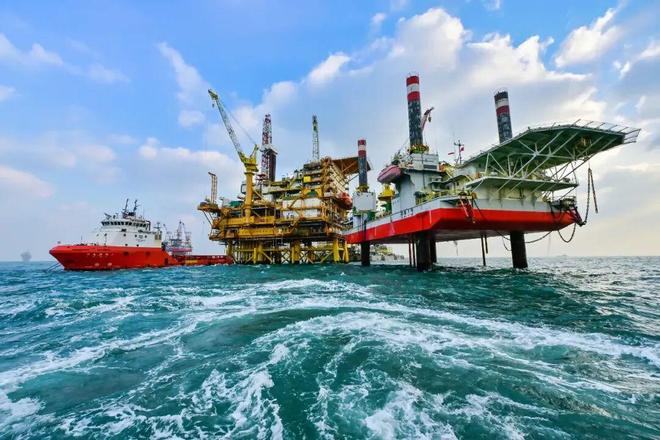
Core Viewpoint - In 2025, China's oil and gas industry is undergoing a multi-dimensional transformation, achieving historical highs in both oil and gas production while transitioning from a traditional energy provider to a materials and systems service provider [1][7]. Group 1: Industry Achievements - The "Seven-Year Action Plan" for increasing oil and gas reserves and production has successfully concluded, marking a significant milestone in energy security [3][4]. - Offshore oil production has significantly contributed to national oil output, with the Bohai Oilfield achieving a historic breakthrough of 40 million tons of oil equivalent, comparable to creating a new "Daqing" in offshore production [3][4]. - The first 10,000-meter exploratory well, "Deep Earth Taka 1," has been drilled, marking a global first in discovering oil and gas at such depths, thus opening new resource reserves [4][5]. Group 2: Technological Advancements - China has developed a complete deep-sea oil and gas development capability, mastering the entire chain from exploration to operation, which allows for independent development of most deep-sea resources [4][5]. - Significant breakthroughs in ultra-deep drilling technology have been achieved, with drilling cycles for deep coalbed gas wells reduced from nearly 100 days to under one month, enhancing resource extraction efficiency [5][6]. - The industry is transitioning from reliance on external technologies to a self-sufficient, technology-driven model, establishing a robust safety defense for energy independence [5][6]. Group 3: Value Transition - The oil and gas industry is at a critical juncture as refined oil consumption peaks, indicating a shift from traditional fuel provision to becoming a key player in industrial materials and stable system services [7][8]. - The role of oil is evolving from merely a fuel source to being integral in high-end manufacturing and supply chain security, with petrochemicals becoming increasingly important [7][8]. - Natural gas is positioned as a crucial stabilizer and regulator in the new power system, especially as renewable energy sources like wind and solar gain prominence [7][8]. Group 4: Future Outlook - The oil and gas industry is set to integrate into the new energy system blueprint, showcasing its potential to adapt and thrive in a changing landscape [8].
2025油气行业交出“十四五”以来最具分量的“安全答卷”
中国能源报· 2025-12-29 03:58
Core Viewpoint - In 2025, the Chinese oil and gas industry is undergoing a profound transformation, achieving historical highs in both oil and gas production while transitioning from a traditional energy provider to a key player in new materials and systems integration [1][7]. Group 1: Industry Achievements - The "Seven-Year Action Plan" has successfully concluded, marking a significant milestone in energy security with record production levels in both oil and gas [3][4]. - Offshore oil production has notably increased, with the Bohai Oilfield achieving a historic output of over 40 million tons of oil equivalent, comparable to creating a new "Daqing" in offshore production [3][4]. - The first 10,000-meter exploratory well, "Deep Earth Taka 1," has been drilled, discovering underground oil and gas resources, thus opening new resource potential [4]. Group 2: Technological Advancements - The industry has made significant breakthroughs in core technologies, establishing a robust technical foundation for energy independence [5]. - The completion of the "Deep Sea No. 1" Phase II project has integrated domestic underwater production systems and deep-water drilling ships, enabling China to independently develop most deep-sea resources [5]. - Innovations in drilling technology have drastically reduced drilling cycles for deep coalbed methane wells from nearly 100 days to under one month, enhancing efficiency [5]. Group 3: Market Transition - The peak in refined oil consumption signifies a shift in the industry, moving from providing fuel to becoming a supplier of industrial materials and stable system services [7][8]. - The role of natural gas has evolved, becoming a crucial stabilizer and regulator in the new power system, especially as the share of wind and solar energy increases [7]. - The oil and gas industry is transforming into an open "symbiotic platform," integrating with renewable energy sources and leveraging digitalization and AI for enhanced operational efficiency [7][8]. Group 4: Future Outlook - The industry is poised to accelerate its integration into the new energy system, showcasing its strength and adaptability in response to evolving energy demands and technological advancements [8].

ETF午评 | A股冲击九连阳,恒生ETF港股通跌停
Ge Long Hui· 2025-12-29 03:50
Market Performance - The A-share market experienced a nine-day rally, with the Shanghai Composite Index rising by 0.31% and the Shenzhen Component Index increasing by 0.03% [1] - The ChiNext Index fell by 0.32%, while the North China 50 Index rose by 0.11% [1] - The total trading volume in the Shanghai, Shenzhen, and Beijing markets reached 1.4078 trillion yuan, a decrease of 57.8 billion yuan compared to the previous day [1] - Over 3,400 stocks in the market declined [1] Sector Performance - Leading sectors included carbon fiber, diversified finance, brain-computer interfaces, non-ferrous metals, CPO, wind power equipment, commercial aerospace, and humanoid robots [1] - Underperforming sectors were food and beverage, retail, batteries, chemicals, and influenza [1] ETF Performance - The non-ferrous metal sector saw gains, with the Dachen Fund Non-Ferrous Metal ETF rising by 2.9% [1] - The oil and gas sector performed well, with the Penghua Fund Oil and Gas ETF and the Jingshun Great Wall Fund Oil and Gas ETF increasing by 2% and 1.92%, respectively [1] - The AI sector showed signs of recovery, with the Kexin AI ETF and the Kexin Artificial Intelligence ETF rising by 2% [1] - The commercial aerospace sector continued its upward trend, with the Satellite ETF from Yifangda increasing by 1.7% [1] Declining ETFs - High-premium Hong Kong stock ETFs saw significant declines, with the Hang Seng ETF for Hong Kong Stock Connect hitting the limit down and the Hong Kong Stock Connect 50 ETF dropping by 7% [1] - The latest premium/discount rates for these ETFs were 5% and 0.27%, respectively [1] - The Hong Kong innovative drug sector declined, with the Hang Seng Innovative Drug ETF falling by 2% and the Hong Kong Stock Connect Innovative Drug ETF decreasing by 1.7% [1] - Power stocks experienced a pullback, with the Green Power ETF and Power ETF both declining by 1.6% [1]