电动车

Search documents
441家桂企亮相广交会 “广西智造”吸引海外客商目光
Zhong Guo Xin Wen Wang· 2025-10-15 09:50
Group 1 - The 138th China Import and Export Fair (Canton Fair) opened in Guangzhou, with Guangxi organizing 441 enterprises and 468 exhibits, totaling 783 booths across various sectors including new energy materials and intelligent equipment [1] - The Guangxi trading group featured 310 industrial enterprises, accounting for 70.3% of the exhibitors, showcasing advanced products such as the Dongfeng Liuzhou Automobile's long-range new energy vehicles [1] - Guangxi Yuchai Machinery Group presented innovative products like direct current generators for new energy storage systems and small excavators, attracting significant interest from both new and returning customers [1] Group 2 - To leverage the Canton Fair platform, Guangxi's Commerce Department will host an international trade matchmaking event for the hanger industry, facilitating connections between local enterprises and overseas buyers [2] - The Guangxi trading group, in collaboration with the China Export & Credit Insurance Corporation, launched a special initiative to provide digital services for risk identification and order facilitation during the fair [2] - In the previous 137th Canton Fair, Guangxi's trading group reported an export transaction of approximately $423 million, a 2.1% increase compared to the 135th session, with significant growth in domestic sales [2]

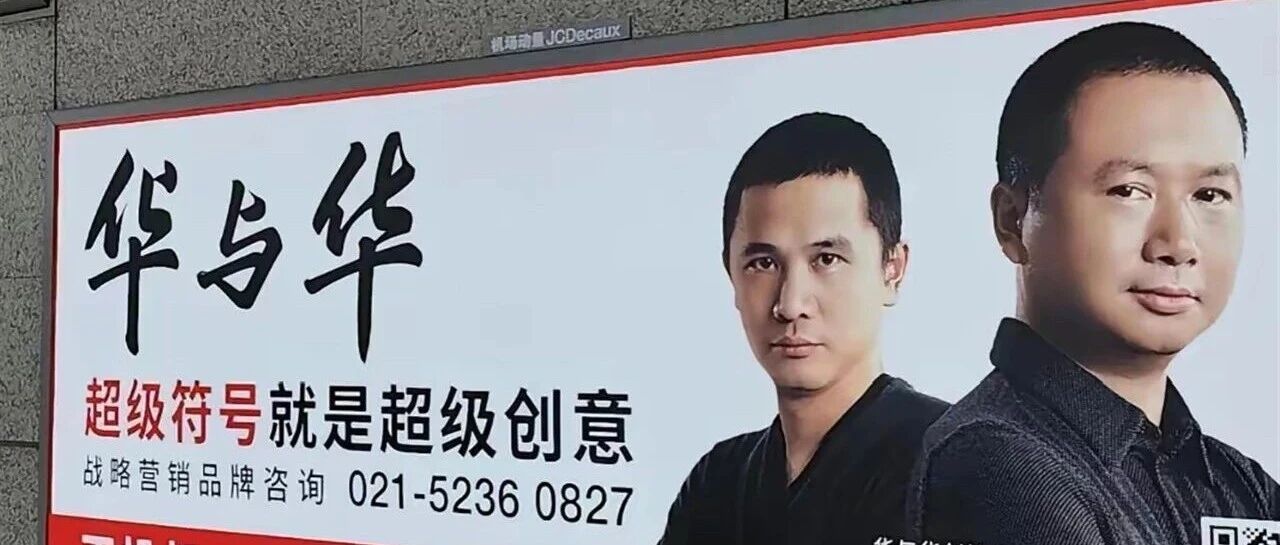
华与华的依附哲学
YOUNG财经 漾财经· 2025-10-15 09:27
Core Viewpoint - The article discusses the relationship between the consulting company Hua Yu Hua and its major client, Xibei, highlighting the successes and failures of their collaboration, as well as the broader implications for the consulting industry in China [4][6][28]. Group 1: Relationship with Xibei - Xibei is the most important client for Hua Yu Hua, generating significant revenue and helping the company expand into the restaurant industry [8]. - Hua Yu Hua's marketing strategies for Xibei included creating the "I love 莜" symbol, which was derived from the famous "I love New York" phrase, but its effectiveness is questioned as Xibei rebranded and dropped the "莜面村" name [6][9]. - The consulting firm has been credited with various marketing initiatives, but many of these were actually inspired by Xibei's founder, who had a strong influence on the brand's direction [10][11]. Group 2: Marketing Strategies and Their Effectiveness - Hua Yu Hua's approach to branding often involves leveraging cultural references, but the actual impact of their strategies on client success is debated [10][16]. - The article notes that while Hua Yu Hua has had some successful campaigns, such as the children's menu at Xibei, these were often based on insights from the client rather than the consulting firm's strategies [10][11]. - The firm has been involved in numerous marketing campaigns, but the results have varied significantly, with some clients experiencing growth while others have failed despite the same consulting strategies [17][20]. Group 3: Broader Industry Implications - The article highlights that Hua Yu Hua's success is often tied to the existing strength of its clients, suggesting that the firm's strategies may not be universally applicable [28]. - Several case studies of failed collaborations, such as with brands like "老娘舅" and "傣妹火锅," illustrate that relying solely on marketing symbols without addressing core business issues can lead to failure [17][19]. - The consulting firm's standardized approach to service delivery may overlook the unique challenges faced by different industries, leading to diminishing returns on their marketing strategies [28].

李亚鹏的创业魔咒:每次跨界都精准卡在风口变坑口的关键时刻!
Xin Lang Cai Jing· 2025-10-15 06:22
Core Insights - The news highlights the recent trending topic of Li Yapeng's divorce, which has drawn significant public attention due to his failed business ventures and substantial debts [1][3]. Group 1: Business Ventures - Li Yapeng's entrepreneurial journey is characterized as a series of missteps, often entering industries just as they begin to decline, earning him the label of a "reverse indicator" in business [4][12]. - His investment in the Snow Mountain Art Town project, which cost 3.5 billion, was made during a downturn in the real estate market, leading to a significant loss and a forced sale of 51% of the stake for 190 million, along with an additional 40 million in debt [6]. - The launch of a hotpot restaurant during the rise of e-commerce and a marriage platform "Xiyuan" also exemplifies his tendency to enter markets after they have peaked, resulting in poor timing and execution [8][10]. Group 2: Market Timing and Strategy - Li Yapeng's ventures often coincide with market saturation, as seen in the white liquor industry where he invested heavily only when competition intensified [8]. - His late entry into the electric vehicle market, investing 800 million when leading players had already established dominance, further illustrates his struggle with market timing [10]. - The early success of the "Xiyuan" project, which was on the verge of acquisition, was squandered when he declined the offer, marking a missed opportunity in his entrepreneurial journey [12]. Group 3: Lessons Learned - The narrative serves as a cautionary tale for entrepreneurs, emphasizing that having a celebrity status and passion is insufficient without market awareness and operational skills [12]. - The experiences of Li Yapeng highlight the importance of timing in business, suggesting that entering a market at the right moment is more critical than inherent talent [12].

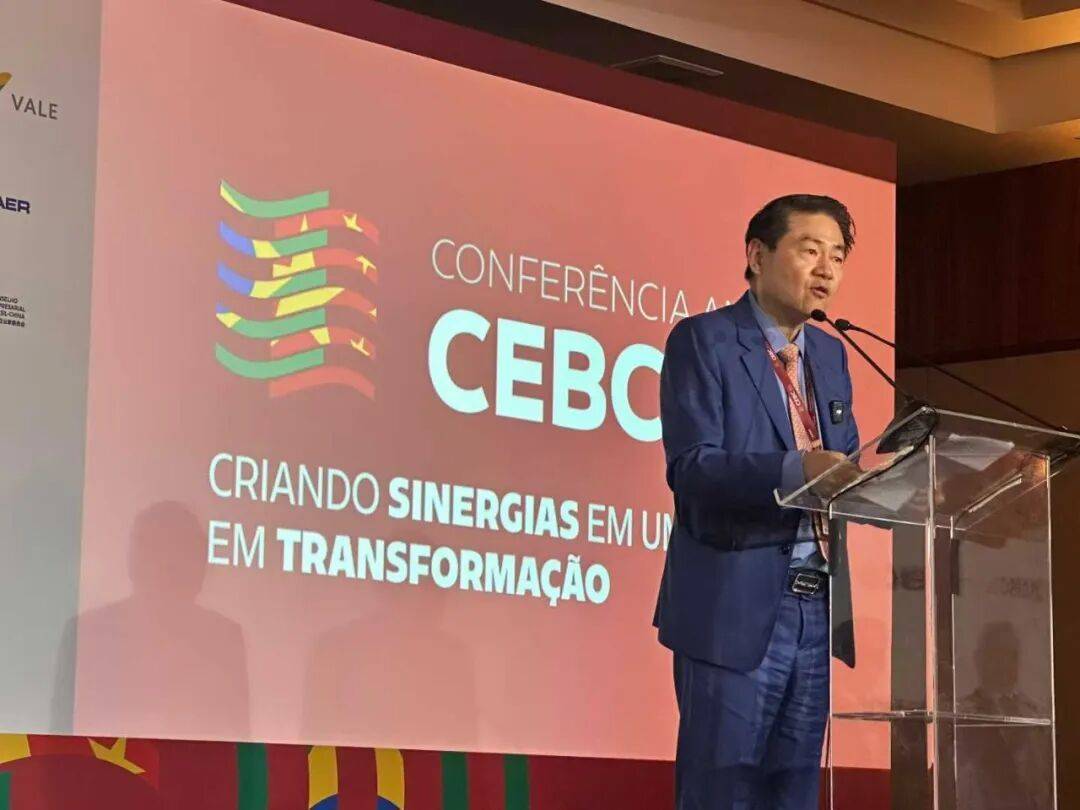
王辉耀在圣保罗出席巴中企业家委员会年度会议并发表主旨演讲
Sou Hu Cai Jing· 2025-10-15 02:40
Group 1 - The annual meeting of the Brazil-China Business Council (CEBC) focused on deepening strategic cooperation between China and Brazil in the context of significant global economic and geopolitical changes [2][5] - The theme of the meeting was "Creating Synergies in a Transforming World," emphasizing inclusive growth and sustainable cooperation [2] - Wang Huiyao highlighted that 2025 marks the 50th anniversary of diplomatic relations between China and Brazil, with cooperation evolving from traditional trade to deeper economic collaboration in areas like green innovation and digital economy [5] Group 2 - China has been Brazil's largest trading partner for 15 consecutive years, with bilateral trade exceeding $180 billion in 2024, accounting for nearly one-third of Brazil's total global trade [5] - Chinese investments in Brazil have surpassed $79 billion, focusing on sectors such as renewable energy, infrastructure, and digital transformation [5] - Key examples of Chinese investment include BYD's establishment of an electric vehicle and battery production center in Bahia and Huawei's support for Brazil's 5G and digital talent development [5] Group 3 - The CEBC, established in 2004, is a significant platform for Brazil-China economic cooperation, involving major Brazilian multinational companies, financial institutions, and policy think tanks [7] - CEBC aims to promote sustainable development in trade, investment, and industrial cooperation between the two countries [7] - The organization facilitates communication between governments, businesses, and academia, hosting high-level dialogues and policy discussions [7]
纳斯达克中国金龙指数涨3.21%;威刚陈立白表示,存储产业行情“好到让人头痛”,韩国厂商或涨20%-30%——《投资早参》
Mei Ri Jing Ji Xin Wen· 2025-10-13 23:30
Market News - US stock indices collectively rose, with the Dow Jones up 1.29%, Nasdaq up 2.21%, and S&P 500 up 1.56%. Notable tech stocks saw significant gains, including Botong up over 9%, Tesla and Oracle up over 5%, and Google up over 3% [1] - Spot gold increased by 2.29% to $4110.02 per ounce, reaching a new high, while spot silver surged by 4.39% to $52.33 per ounce, also a historical high. COMEX gold futures rose by 3.24% to $4130 per ounce, and COMEX silver futures increased by 7.47% to $50.775 per ounce [1] - International oil prices also saw gains, with WTI crude oil up 1.12% to $59.56 per barrel and Brent crude oil up 1.05% to $63.39 per barrel [1] Industry Insights - The storage industry is experiencing a significant upturn, with ADATA's chairman noting that the market conditions are "painfully good." The sudden shortage and price increases for storage products began in late August, with major manufacturers halting DDR4 production, leading to a sustained supply gap and expected price increases of 20%-30% for new contracts [2][3] - The demand for DRAM and NAND Flash storage products is anticipated to recover, driven by limited capacity and unexpected demand, particularly from large cloud service providers shifting NAND supply from consumer to enterprise markets. The DRAM price index has reportedly increased by approximately 72% over the past six months [3] - In the nuclear fusion sector, significant progress has been made with the successful testing of the "Kua Fu" prototype component, which is crucial for the stable operation of fusion reactors. This development is expected to accelerate the growth of the controlled nuclear fusion industry in China, with related materials and components likely to see increased market opportunities [4] - A breakthrough in solid-state lithium batteries has been achieved by a team from the Chinese Academy of Sciences, which could significantly enhance battery performance and safety. The new technology allows for a battery energy density exceeding 500Wh/kg, potentially doubling the range of electric vehicles and eliminating risks associated with liquid electrolytes [5][6] - The solid-state battery market is projected to grow substantially, with expectations of reaching a shipment volume of 614.1GWh by 2030 and a market size exceeding 250 billion yuan. China is anticipated to capture 40% of the global market share, with a projected annual market size of 116.3 billion yuan by 2030 [6]
从贸易战到科技战
2025-10-13 14:56
从贸易战到科技战 20251012 摘要 中美科技战升级,涉及国家安全、核心产业等多维度,复杂性远超 4 月 份关税冲突,地缘政治压力增加,谈判节奏和复杂程度显著上升。 市场短期波动难免,长期影响取决于谈判、政策及全球经济。建议保持 灵活、多元化投资、关注基本面,谨慎抄底。 全球供应链面临重组,各国加速寻找替代供应源或发展自主生产能力, 科技产业格局面临变化,地缘政治风险增加,新能源等产业迎来投资机 会。 当前市场正收益比例和幅度高于 4 月份,换手率维持高位,投资者对短 期收益要求更高,市场与 4 月份存在明显差异。 全球主要经济体财政政策保持宽松,货币政策趋于收紧。美国财政赤字 维持高位,经济增长稳定,但美联储对降息持谨慎态度。 黄金受益于美联储降息逻辑及全球主要经济体财政问题,再次成为避险 资产,价格上限提升。铜和原油等实体需求相关商品表现相对弱势。 AI 产业资本支出与收入比值高于移动互联网时代,资金来源依赖资本市 场融资及经营性现金流,对经济稳定提出更高要求。财政不信任加剧, 黄金成为重要投资方向。 Q&A 本次中美科技战及稀土冲突的背景是什么?与 4 月份的中美关税冲突有哪些区 别和相似之处? 本 ...
仅仅2天,特朗普发出“可能取消对华新关税”的暗示,美股上涨!
Sou Hu Cai Jing· 2025-10-13 06:04
Core Viewpoint - The article discusses the escalating trade tensions between the U.S. and China, highlighting President Trump's fluctuating stance on tariffs and the implications for both economies [2][4][16]. Group 1: U.S.-China Trade Relations - On October 12, President Trump hinted at canceling new tariffs on China, leading to a rise in U.S. stock index futures [2][16]. - Following China's retaliatory measures, including export restrictions on rare earths and increased port fees for U.S. vessels, Trump expressed anger and threatened to impose 100% tariffs on Chinese goods starting November 1 [4][9][13]. - The article emphasizes that the U.S. and China are economically intertwined, and mutual sanctions would likely harm the U.S. more than China [21][22]. Group 2: China's Strategic Position - China remains a dominant player in global manufacturing, particularly in rare earth elements, making it difficult for other nations to replace its role [19][20]. - The new regulations on rare earth exports and increased fees for U.S. ships are seen as strategic moves to counter U.S. sanctions [5][9]. - The article suggests that China's response to U.S. actions is not merely retaliatory but a calculated strategy to maintain its economic standing [12][22]. Group 3: Market Reactions - Trump's comments on October 12 were interpreted as a signal to ease tensions, resulting in a significant uptick in U.S. stock markets [16][13]. - The article posits that the stock market serves as a barometer for economic sentiment, reflecting the interconnectedness of U.S. and Chinese economies [16][22]. - The potential for negotiation and adjustment in tariff policies is highlighted as a pragmatic approach by Trump, who is characterized as a flexible dealmaker [23][26][27].
广发基金观富钦:关注科技板块“戴维斯双击”机会
Shang Hai Zheng Quan Bao· 2025-10-12 15:11
Core Viewpoint - The article emphasizes the significant investment opportunities in the TMT (Technology, Media, and Telecommunications) sector, particularly driven by advancements in artificial intelligence (AI) and the concept of "Davis Double" in investment strategies [1][6]. Group 1: Investment Strategy - The investment framework prioritizes valuation protection, industry trends, and company value, with a focus on acquiring good companies at favorable prices [4][5]. - The manager specializes in identifying opportunities during the commercialization phase of technology, particularly from "1 to 10" in the growth cycle [1][2]. - The strategy includes deep research on industry leaders and exploring opportunities within the supply chain of these leaders [3][5]. Group 2: Focus Areas - The investment focus is on three types of companies: industry leaders in sectors like consumer electronics and AI chips, collaborators in the supply chain, and those experiencing supply-demand mismatches during high-growth cycles [2][3]. - The portfolio includes long-term holdings in technology manufacturing leaders across various sectors, such as consumer electronics and new energy [3][6]. Group 3: Market Outlook - The current market dynamics are influenced by economic recovery and the sustainability of technological innovations, particularly AI [6][7]. - TMT is viewed as a core sector capable of producing trillion-dollar companies, with significant investment opportunities arising from technological iterations [6][7]. - Future investment directions include focusing on computing power as AI infrastructure, software applications with reasonable valuations, and innovations in consumer electronics and smart driving technologies [6][7].
能源贸易风云突变!中俄合作提速,欧美关税加码后局势升温
Sou Hu Cai Jing· 2025-10-11 22:41
Group 1 - The EU is facing challenges in energy and trade dynamics, with increasing reliance on alternative suppliers and changing payment methods in energy trade [1][9] - In 2023, sanctions aimed at cutting off Russian oil and gas have led to supply shortages and increased operational pressures in factories [3][7] - China has implemented export controls on critical materials like gallium and germanium, impacting the supply chain for industries reliant on these resources [3] Group 2 - The U.S. has raised tariffs on Chinese electric vehicles to 100%, affecting the supply chain and highlighting the difficulty of replacing certain materials in the short term [5] - Despite tariffs, trade routes have adapted, with Southeast Asia becoming a transit hub for materials, and China maintaining a dominant position in battery and critical mineral supplies [5][11] - The shift in energy trade is evident as China has significantly increased its imports of Russian crude oil, accounting for about 40% of Russia's total exports by 2024 [7][11] Group 3 - The payment methods in energy trade are evolving, with the Chinese yuan gaining traction in transactions with Russia, surpassing the dollar in some exchanges [9] - European countries are struggling with energy costs, leading to a resurgence in coal usage and increased subsidies for consumers [9] - The trade relationship between China and Russia has strengthened, with bilateral trade exceeding $240 billion in 2023 and continuing at high levels into 2024 [11] Group 4 - The electric vehicle sector is under scrutiny, with the EU launching anti-subsidy investigations and imposing temporary tariffs, yet orders remain strong due to competitive pricing [13] - Chinese companies are expanding their manufacturing footprint internationally, with factories established in Thailand and Hungary, adapting to tariff challenges [13] - The integration of battery technology and charging networks is becoming a competitive advantage for Chinese firms, as they set standards that are difficult for the U.S. and EU to match [15]
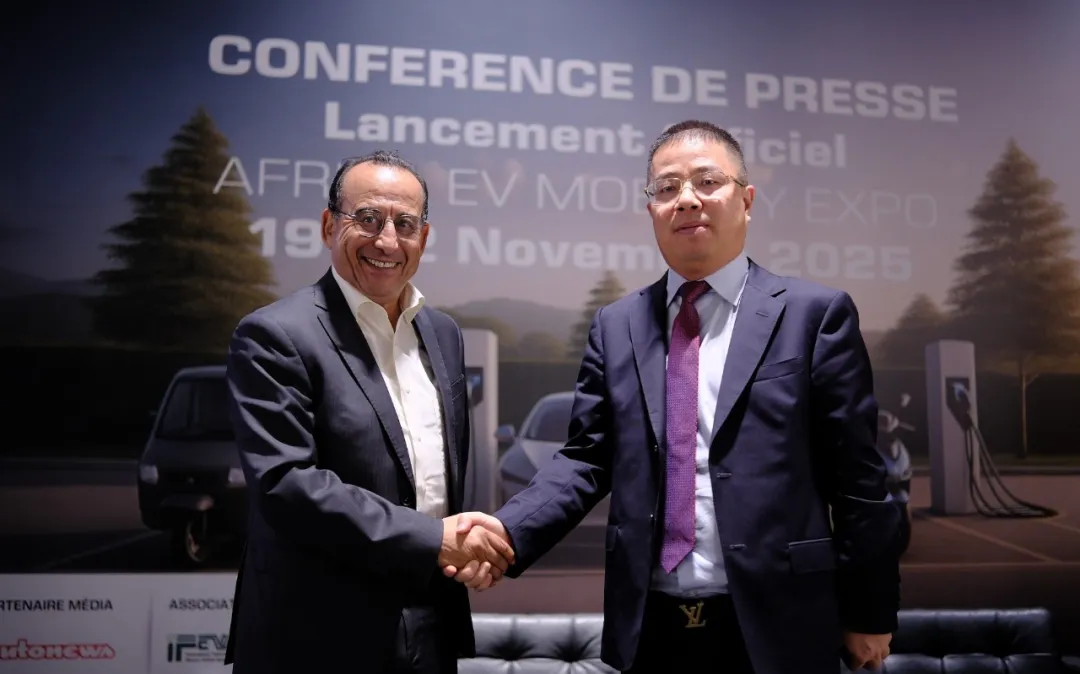
首届摩洛哥电动车及储能展新闻发布会在卡萨布兰卡举办
Huan Qiu Wang· 2025-10-11 09:36
Core Insights - The first "Morocco Electric Vehicle and Energy Storage Exhibition (EVS Morocco)" will be held from November 19 to 22, 2025, in Casablanca, focusing on "African Electric Vehicle Mobility" to promote technological innovation in transportation and accelerate energy transition [1][3] Group 1: Event Overview - The event is organized by the Moroccan Automotive Industry Association (AMICA) and the Middle East International Exhibition Group (MIE), with strong support from Morocco's Ministry of Industry and Trade [1] - The exhibition is expected to attract over 150 exhibitors from more than 10 countries across Africa, Asia, and Europe, showcasing electric two-wheelers, three-wheelers, cars, scooters, charging stations, batteries, cables, and energy storage devices [6] Group 2: Industry Impact - The event aims to solidify Morocco's position as a hub for industrial and technological development in Africa, particularly in the electric and sustainable mobility sectors [3][8] - The exhibition will feature high-level international expert seminars, targeted B2B matchmaking activities, and outdoor test drives of electric vehicles, providing diverse interactive experiences and business opportunities for exhibitors and attendees [6] Group 3: Support for Local Entrepreneurs - A startup showcase area will be established at the exhibition to provide Moroccan youth entrepreneurs with a platform to display innovative technologies and foster collaboration [6] - The organizers will promote cooperation between Moroccan vocational technical colleges and leading Chinese electric vehicle technology research institutions to cultivate future talent in the electric vehicle sector [6]