
煤化工

Search documents
化工板块领涨两市,超26亿主力资金狂涌!化工ETF(516020)上探3%,机构:反内卷政策或打开广阔上行空间
Xin Lang Ji Jin· 2025-11-10 01:59
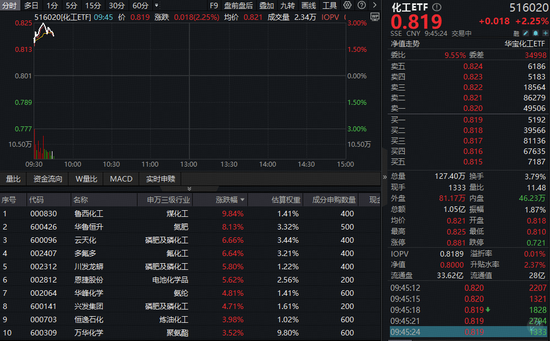
Group 1 - The chemical sector continues to perform strongly, with the basic chemical sector leading the gains among 30 CITIC primary industries, reflecting a robust overall trend [1] - The Chemical ETF (516020) saw a price increase of 2.25%, with intraday gains reaching up to 3% [1][2] - Key stocks in the sector, such as Luxi Chemical and Hualu Hengsheng, experienced significant price increases of over 9% and 8% respectively [1] Group 2 - The basic chemical sector attracted over 2.65 billion CNY in net inflows from major funds on the day, the highest among all CITIC primary industries [3] - Over the past five trading days, the sector accumulated a total of 43.9 billion CNY in net inflows, ranking second among the 30 CITIC primary industries [3] - Analysts suggest that the chemical sector has been in a long-term bottoming phase, with significant upward potential due to reduced competition [3] Group 3 - The fluorochemical industry is expected to enter a long-term prosperity cycle, with growth potential across various segments, including refrigerants and high-end fluorinated materials [3] - The phosphate chemical sector is anticipated to maintain high price levels due to increased barriers to entry and challenges in processing phosphogypsum [3] - The PTA industry is projected to experience positive development due to limited new capacity and high industry concentration, leading to significant profit potential [4] Group 4 - The Chemical ETF (516020) tracks the CSI sub-industry chemical theme index, with nearly 50% of its holdings concentrated in large-cap leading stocks, providing an efficient way to invest in the sector [5] - The ETF offers exposure to various sub-sectors, including phosphate and fluorochemical industries, allowing investors to capture opportunities across the chemical sector [5] Group 5 - Current valuations in the chemical sector are relatively low, with the chemical ETF's index price-to-book ratio at 2.36, indicating a favorable long-term investment opportunity [4] - The sector is expected to benefit from a rebound in oil prices and ongoing efforts to reduce competition, suggesting significant mid-term upside potential [9]




“中国式现代化是拼出来的”
Zhong Guo Hua Gong Bao· 2025-11-09 10:56
Core Insights - The conference highlighted the transformation of the Ningdong Energy and Chemical Base into a modern industrial city, with an industrial output value exceeding 200 billion yuan in 2024, making it the largest coal chemical industry base in China [1][4] - The event emphasized the importance of innovation and technology in enhancing the efficiency and competitiveness of the coal chemical industry, showcasing various high-value products and advanced materials [4][6] Group 1: Industry Development - The Ningdong base has developed four key industries: modern coal chemical, new materials, fine chemicals, and clean energy, aiming to become a national strategic reserve for coal-to-oil and coal-based olefins [2][4] - The base has achieved significant milestones, including the production of high-value products such as aramid fibers and high-end fuels, which are applicable in aerospace, high-speed trains, and medical fields [4][6] Group 2: Technological Innovation - The Ningdong modern coal chemical pilot base is the first of its kind in the western region, facilitating the transition from laboratory results to industrial-scale applications [5][6] - The base has introduced 43 pilot projects, with 23 completed and 7 industrialized projects, attracting over 12.5 billion yuan in investments [6] Group 3: Future Outlook - The upcoming "14th Five-Year Plan" is seen as a critical phase for achieving China's modernization goals by 2035, with a focus on high-quality development through increased R&D investment in fine chemicals [7] - The experiences and planning of the Ningdong Energy and Chemical Base serve as a valuable reference for the industry, promoting a spirit of innovation and practical implementation [7]

“双碳”背景下现代煤化工产业创新发展会议:行业发展瞄准绿色低碳智能
Zhong Guo Hua Gong Bao· 2025-11-09 08:59
Group 1 - The modern coal chemical industry is focusing on high-quality development under the dual carbon goals, emphasizing green, low-carbon, and intelligent trends [1] - Experts suggest achieving green and low-carbon development through raw material lightening, low-carbon production processes, industrial clustering, green hydrogen industrialization, and resource utilization of waste and CO2 [1] - The new 15 million tons/year clean and efficient coal conversion demonstration project by Shaanxi Coal Group aims to produce high-value products, including battery electrolyte solvents and biodegradable plastics, leveraging low-rank coal [2] Group 2 - The development of diversified and high-end products is seen as the direction for upgrading coal-to-oil processes, with technologies like Fischer-Tropsch synthesis enhancing economic viability [2] - The "Guoning Furnace" gasification technology has been successfully applied in a 4 million tons/year indirect liquefaction project, yielding significant economic and social benefits [2] - Reports on renewable electricity production of green hydrogen and its conversion into low-carbon fuels and chemicals were presented, highlighting advancements in energy efficiency and intelligent development in the industry [3]
中密控股:接受中泰资管等投资者调研
Mei Ri Jing Ji Xin Wen· 2025-11-08 00:12
Company Overview - Zhongmi Holdings (SZ 300470) announced that on November 7, 2025, it will accept investor research from Zhongtai Asset Management and others, with the company’s board secretary Shen Xiaohua participating in the reception and addressing investor inquiries [1] Revenue Composition - For the first half of 2025, Zhongmi Holdings' revenue composition is as follows: Equipment manufacturing (main engine factory) accounts for 44.94%, petrochemicals for 22.0%, rubber and plastic sealing industry for 12.73%, coal chemical industry for 7.47%, special valves industry for 7.14%, and others for 5.71% [1]

兰花煤化工三废炉排放口氮氧化物排放浓度超标,被罚23.2万元
Zhong Guo Neng Yuan Wang· 2025-11-08 00:02
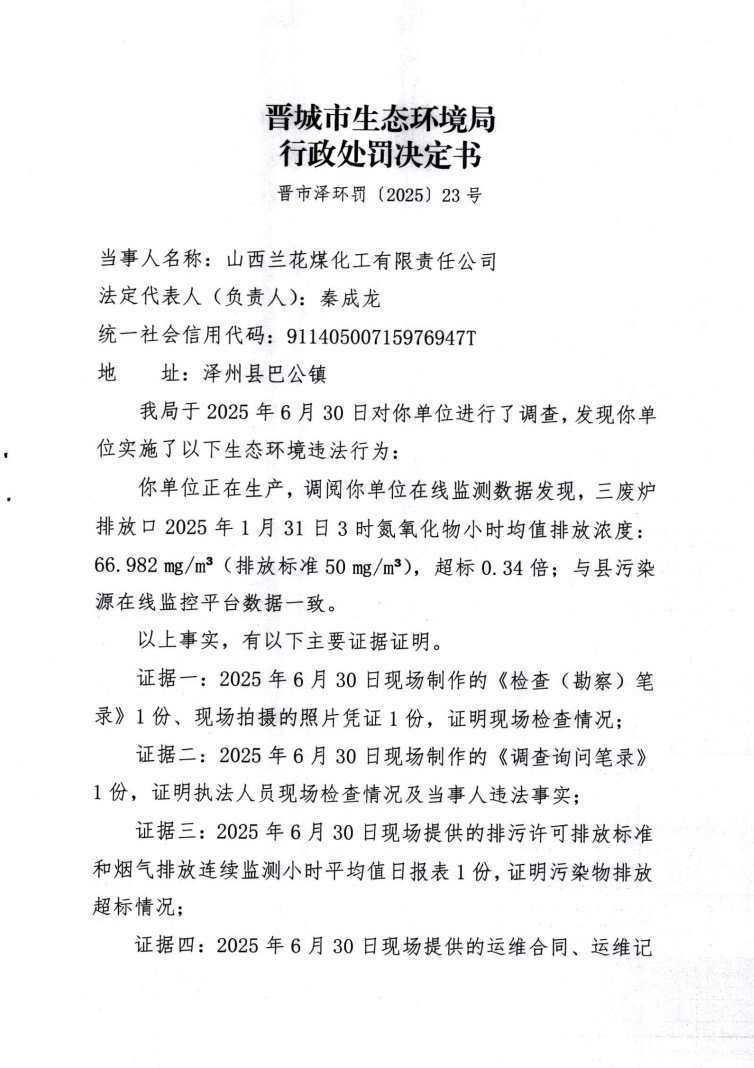
Core Points - Shanxi Lanhua Coal Chemical Co., Ltd. was fined 232,000 yuan due to nitrogen oxide emissions exceeding the standard by 0.34 times [1][3] - The company claimed that the excess emissions were caused by an unexpected incident and took measures to reduce pollution [3] - The company is 100% controlled by Shanxi Lanhua Technology Entrepreneurship Co., Ltd. [3] Environmental Violation - The investigation revealed that on January 31, 2025, the nitrogen oxide hourly average concentration at the waste gas discharge outlet was 66.98 mg/m³, exceeding the standard of 50 mg/m³ [2][3] - Evidence supporting the violation included inspection records, monitoring data, and emission reports [2] Financial Performance - Shanxi Lanhua Technology Entrepreneurship Co., Ltd. reported a revenue of 5.886 billion yuan for the first three quarters of 2025, a year-on-year decrease of 30.09% [3] - The net profit attributable to shareholders plummeted by 98.51%, amounting to 10.51 million yuan [3] - In Q3 alone, the company experienced a 37.61% decline in main business revenue, totaling 1.835 billion yuan, and a net loss of 46.96 million yuan [4] Market Conditions - The decline in performance is attributed to falling prices of coal and urea, as well as reduced investment income from a subsidiary that ceased operations [4] - The average coal price before tax was 485.76 yuan/ton, down 23.32% year-on-year [4] - Urea prices also fell by 17%, averaging 1,628 yuan/ton, while the production of caprolactam dropped by 64.55% to 30,100 tons [4] Operational Adjustments - The company is gradually restoring production at its main coal mines, which had been affected by geological conditions [4] - An investment of 3.962 billion yuan is underway for energy-saving and environmental upgrades, including projects for VOCs treatment and LNG storage [4]

出口消息扰动,尿素领涨煤化工,后续价格走势如何?
Jin Shi Shu Ju· 2025-11-07 11:02
Core Viewpoint - The urea market is experiencing slight price increases due to improved production rates and market sentiment, but overall demand remains cautious with a focus on export quota developments [2][4][6]. Group 1: Market Trends - Urea prices in Shandong have slightly increased, with small granular urea trading at 1540-1590 RMB/ton and large granular urea at 1740-1760 RMB/ton [2]. - The overall market sentiment has been positively influenced by recent export news, although the follow-up market response has been less than expected [2][4]. - The industry’s daily production rate is reported at 19.59 thousand tons, showing a slight decrease of 0.08 thousand tons from the previous day [4]. Group 2: Supply and Demand Dynamics - Urea production rates have improved as previously shut-down facilities are coming back online, leading to an accumulation of inventory [3][7]. - As of November 5, total inventory for Chinese urea enterprises reached 157.81 million tons, an increase of 2.38 million tons week-on-week, reflecting a 1.53% rise [3][8]. - Agricultural demand is tapering off as the wheat planting season concludes, while industrial demand is gradually increasing, particularly from compound fertilizer manufacturers [7][8]. Group 3: Future Outlook - Analysts suggest that the new export quota news could lead to a stronger market performance, but caution is advised as the actual impact remains to be seen [4][5]. - There is speculation that export quotas may be significantly relaxed next year, but the export window for this year is likely to remain closed [5][7]. - The overall expectation is for prices to remain volatile with a tendency towards weakness due to limited increases in future export expectations [8].
化工行业10月月报:行业发展高端化﹑绿色化-20251107
Hengtai Securities· 2025-11-07 10:46
Investment Rating - The report maintains an "Outperform" rating for the chemical industry [3] Core Views - The macroeconomic data indicates a decline in the PMI to 49.0%, a decrease of 0.8 percentage points from the previous month. The main raw material purchasing price index also decreased by 0.7 percentage points [5][27] - The report highlights the need for the chemical industry to focus on high-end, green, intelligent, and circular development as emphasized in the recent policy recommendations from the Communist Party of China [5][51] - Investment strategies suggest focusing on sectors such as coal chemical, fluorochemical, phosphate and phosphorus chemical, and potassium fertilizer [5][61] Summary by Sections Macroeconomic Data - The October PMI is at 49.0%, down 0.8 percentage points from last month. The main raw material purchasing price index is at 52.5%, down 0.7 percentage points [27] - The PPI for September shows a year-on-year decline of 2.3%, with the decline narrowing by 0.6 percentage points from the previous month [5][27] - Fixed asset investment in the chemical raw materials and chemical products manufacturing sector saw a year-on-year decline of 5.6% in September, widening from the previous month [27] Downstream Industry Performance - In September, the export value of textile yarns and fabrics increased by 6.4% year-on-year, while the export value of household appliances decreased by 9.6% [42] - The production of new energy vehicles decreased by 2.4% year-on-year, while automobile production increased by 3.2% [42] Investment Recommendations - The report suggests focusing on the SW coal chemical, SW fluorochemical, SW phosphate and phosphorus chemical, and SW potassium fertilizer sectors for potential investment opportunities [61][62] - Recommended ETF: Penghua CSI Sub-Sector Chemical Industry Theme ETF (159870.SZ) [62]


光大期货煤化工商品日报-20251107
Guang Da Qi Huo· 2025-11-07 08:47
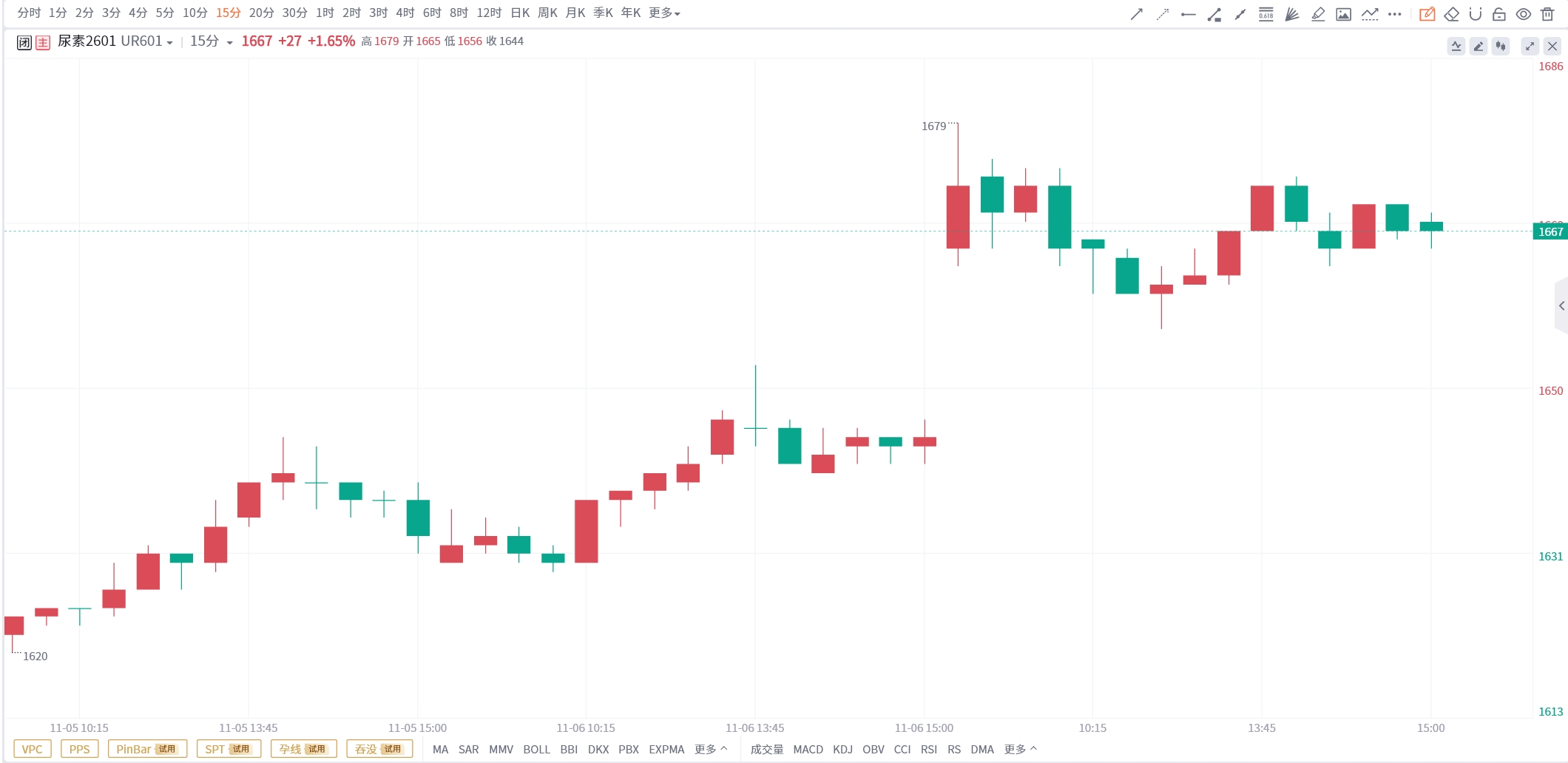
Report Industry Investment Rating No relevant content provided. Core Viewpoints - Urea futures prices continued to oscillate strongly on Thursday, with the closing price of the main 01 contract at 1,644 yuan/ton, a slight increase of 0.74%. Spot prices were mostly stable. The daily output of the urea industry decreased slightly, and the demand follow - up sentiment improved. Although enterprise inventory increased by 1.53% this week, short - term market logic is shifting to factors such as coal cost support, reduced production of gas - based enterprises, and export rumors. The new export quota news may drive the market up, but caution is advised [1]. - Soda ash futures prices oscillated in a wide range and trended strongly on Thursday, with the closing price of the main 01 contract at 1,207 yuan/ton, a slight increase of 0.84%. Spot manufacturers' quotes were mostly stable, while traders' quotes continued to strengthen. This week, the industry's start - up rate and production decreased, and enterprise inventory increased slightly. Demand was stable, but the downstream was more cautious after the rebound. The fundamentals still face pressure, and excessive bullishness is not recommended [1]. - Glass futures prices fluctuated widely and trended weakly on Thursday, with the closing price of the main 01 contract at 1,101 yuan/ton, a slight decrease of 0.45%. The spot market rebounded slightly. The industry's production capacity decreased, and the demand sentiment was positive, but the sustainability needs verification. After the production line maintenance, the short - term market lacks new drivers and returns to a wide - range oscillation pattern [1]. Summary by Directory Market Information Urea - On November 6, the number of urea futures warehouse receipts on the Zhengzhou Commodity Exchange was 3,900, unchanged from the previous trading day, and the effective forecast was 1,192 [4]. - On November 6, the daily output of the urea industry was 19.59 tons, a decrease of 0.08 tons from the previous working day, and an increase of 1.22 tons compared with the same period last year. The start - up rate was 83.73%, 1.35 percentage points higher than 82.38% in the same period last year [4]. - On November 6, the spot prices of small - particle urea in various domestic regions were mostly unchanged. For example, the price in Shandong was 1,580 yuan/ton, in Henan was 1,570 yuan/ton, etc. [4]. - As of November 5, the urea enterprise inventory was 157.81 tons, an increase of 2.38 tons or 1.53% compared with last week [5]. Soda Ash & Glass - On November 6, the number of soda ash futures warehouse receipts on the Zhengzhou Commodity Exchange was 9,318, a decrease of 300 from the previous trading day, and the effective forecast was 756. The number of glass futures warehouse receipts was 219, a decrease of 34 from the previous trading day [7]. - On November 6, the spot prices of soda ash in different regions varied. For example, in North China, the light soda ash was 1,200 yuan/ton, and the heavy soda ash was 1,300 yuan/ton [7]. - As of the week of November 6, the soda ash industry's start - up rate was 85.67%, a decrease of 1.23 percentage points from the previous week. The weekly production was 74.69 tons, a decrease of 1.07 tons or 1.41% [7]. - As of November 6, the soda ash manufacturer inventory was 171.42 tons, an increase of 2.24 tons or 1.32% compared with Monday, and an increase of 1.22 tons or 0.72% compared with last Thursday [7]. - As of November 6, the average price of the float glass market was 1,157 yuan/ton, an increase of 3 yuan/ton from the previous day. The industry's daily output was 15.91 tons, a decrease of 0.014 tons from the previous day [7]. - As of November 6, the inventory of domestic float glass sample enterprises was 63.136 million weight boxes, a decrease of 2.654 million weight boxes or 4.03% from the previous week, and an increase of 29.05% compared with the same period last year. The inventory days were 27.1 days, a decrease of 0.9 days from last week [8]. Chart Analysis The report provides multiple charts, including the closing prices of the main contracts of urea and soda ash, their basis, trading volume and open interest, the price difference between different contracts, spot price trends, and the price difference between different futures varieties. All chart data sources are iFind and the Research Institute of Everbright Futures [10][22][23]. Research Team Introduction - Zhang Xiaojin, the research director of resource products at the Research Institute of Everbright Futures, focuses on the sugar industry. She has rich experience and many honors in the industry [25]. - Zhang Linglu, an analyst of resource products at the Research Institute of Everbright Futures, is responsible for the research of futures varieties such as urea, soda ash, and glass. She has participated in many projects and won multiple awards [25]. - Sun Chengzhen, an analyst of resource products at the Research Institute of Everbright Futures, is mainly engaged in the fundamental research and data analysis of varieties such as cotton, cotton yarn, and ferroalloys [25].
金煤科技涨2.17%,成交额2519.17万元,主力资金净流入113.71万元
Xin Lang Zheng Quan· 2025-11-07 02:37
Group 1 - The core viewpoint of the news is that Jinmei Technology's stock has shown a significant increase in price and trading activity, indicating positive market sentiment and potential investment interest [1][2]. - As of November 7, Jinmei Technology's stock price rose by 2.17% to 3.30 CNY per share, with a total market capitalization of 3.355 billion CNY [1]. - The company has experienced a year-to-date stock price increase of 28.91%, with a 5-day increase of 5.77% and a 20-day increase of 10.00%, while it has seen a 2.94% decline over the past 60 days [1]. Group 2 - Jinmei Technology, established on February 17, 1994, and listed on March 11, 1994, is primarily engaged in the production of coal chemical products, with major revenue sources including ethylene glycol (68.83%) and oxalic acid (25.72%) [2]. - As of September 30, the company reported a revenue of 688 million CNY for the first nine months of 2025, reflecting a year-on-year growth of 17.17%, while the net profit attributable to shareholders was -88.80 million CNY, showing a year-on-year increase of 55.28% [2]. - The company has a total of 52,700 shareholders, which is a decrease of 14.94% compared to the previous period [2]. Group 3 - Jinmei Technology has cumulatively distributed 43.87 million CNY in dividends since its A-share listing, with no dividends distributed in the last three years [3].

鲁西化工涨2.12%,成交额8325.95万元,主力资金净流出1092.35万元
Xin Lang Cai Jing· 2025-11-07 02:11
Group 1 - The core viewpoint of the news is that Lu Xi Chemical has shown a mixed performance in stock price and financial results, with a notable increase in stock price year-to-date but a decline in net profit [1][2]. Group 2 - As of November 7, Lu Xi Chemical's stock price increased by 2.12% to 13.96 CNY per share, with a total market capitalization of 26.584 billion CNY [1]. - The company has experienced a year-to-date stock price increase of 23.10%, with a recent 5-day increase of 3.56%, a 20-day decrease of 4.97%, and a 60-day increase of 15.37% [1]. - For the period from January to September 2025, Lu Xi Chemical reported a revenue of 21.918 billion CNY, reflecting a year-on-year growth of 1.57%, while the net profit attributable to shareholders decreased by 35.03% to 1.023 billion CNY [2]. - The company has distributed a total of 9.885 billion CNY in dividends since its A-share listing, with 2.167 billion CNY distributed over the past three years [2]. Group 3 - Lu Xi Chemical's main business segments include chemical new materials (66.07% of revenue), basic chemicals (20.11%), fertilizers (12.06%), and other products (1.76%) [1]. - The company is categorized under the basic chemicals industry, specifically in chemical raw materials and coal chemicals [1].