
券商

Search documents
浙商证券:“未分胜负”变“利于多方” 防挖坑、不追高、逢低配
Xin Lang Cai Jing· 2025-12-28 08:51
Core Viewpoint - The market is experiencing a gradual upward trend driven by the strong performance of the A500 ETF, the booming commercial aerospace sector, and the continued strength of optical modules. The conclusion of a medium-term bullish outlook for A-shares, characterized as a "systematic slow bull," is deemed to have high confidence, although the sustainability of the driving factors needs to be verified in the short term [1][4][9]. Market Overview - Major indices collectively rose, with the CSI 500 leading in gains during the week of December 22 to December 26, 2025. The market showed broad-based gains, although the dividend consumption sector remained generally weak. Trading volume in Shanghai and Shenzhen saw a slight decline, and most stock index futures contracts were trading at a discount. The margin financing balance increased slightly, with a higher proportion of financing purchases and net inflows into stock ETFs. The valuation of the ChiNext index is relatively low, and the downward energy model is at a normal level [2][7]. Market Attribution - The IPO guidance status of Blue Arrow Aerospace has changed to "guidance work completed," and SpaceX has confirmed preparations for a potential IPO in 2026. The central bank has released a one-time personal credit repair policy to help individuals rebuild credit. Additionally, the central bank's monetary policy committee held its fourth-quarter meeting, emphasizing the need to "maintain the stability of the capital market" [3][8]. Future Market Outlook - The market has shifted from a state of indecision to one favorable for bulls, primarily due to three driving factors: the strong performance of the CSI A500 ETF, which saw total shares increase by 39.89 billion and 67.23 billion over the past week and two weeks, respectively; the ongoing boom in commercial aerospace, which has significantly boosted growth indices; and the continued strength of optical modules, which supports the innovation index. While these factors have shifted the market towards a bullish trend and laid the foundation for upward movement in the first half of the following year, their sustainability remains uncertain. The medium-term bullish outlook for A-shares is supported, but short-term developments require careful observation [4][9]. Investment Strategy - Based on the assessment of a medium-term bullish outlook and the need for short-term observation, it is advised to maintain current positions and avoid chasing after high-performing stocks, especially those with significant gains this year. If a situation similar to the "golden pit" seen earlier this year arises, it is recommended to actively increase allocations at lower prices. The focus should be on the brokerage sector, which has shown signs of lagging and potential for share expansion. Additionally, attention should be given to the Hang Seng Technology Index, which has undergone sufficient adjustments and formed a daily MACD divergence. A strategy of "light index, heavy stock" is suggested, with a focus on low-performing stocks above the annual line [5][10].

非银金融行业周报:IFRS17切换后所得税处理方式进一步明确,为新准则全面落地奠定坚实基础-20251228
Shenwan Hongyuan Securities· 2025-12-28 07:56
Investment Rating - The report maintains a "Positive" outlook on the non-bank financial industry [3] Core Insights - The report highlights the recovery in the securities sector, with a projected increase in December performance driven by improved investment returns and a rise in equity financing [4][7] - The insurance sector is expected to benefit from the clarification of income tax treatment under IFRS17, enhancing profit predictability for insurers [4][11] - The report emphasizes the growth of ETFs, which have surpassed 6 trillion yuan in total assets, indicating a strong trend in the investment landscape [4] Summary by Sections Market Performance - The Shanghai Composite Index closed at 4,657.24, with a weekly increase of 1.95%, while the non-bank index rose by 2.09% [7] - The securities, insurance, and diversified financial sectors reported increases of 1.58%, 2.97%, and 2.66% respectively [7] Securities Industry Insights - The average daily trading volume in the A-share market for December is estimated at 1.84 trillion yuan, with a 5% decrease month-on-month [4] - The margin financing balance reached 2.5 trillion yuan, reflecting a 3% increase [4] - Equity financing in December totaled 508.4 billion yuan, a 72% increase from the previous month [4] Insurance Industry Insights - The report notes that the implementation of IFRS17 will standardize income tax calculations for insurers starting in 2026, which is expected to improve profit visibility [4][11] - The insurance sector index rose by 2.97%, outperforming the Shanghai Composite Index by 1.02 percentage points [4] Investment Recommendations - For the securities sector, the report recommends focusing on leading firms with strong competitive positions, such as Guotai Junan and CITIC Securities, as well as firms with significant earnings elasticity like Huatai Securities [4] - In the insurance sector, the report suggests investing in major players like China Life and Ping An, highlighting their systemic value re-evaluation opportunities [4]





华金证券:一月春季行情延续 科技和周期占优
Xin Lang Cai Jing· 2025-12-28 06:45
Core Viewpoint - The A-share market is expected to experience a strong performance in January, driven by favorable policies, external events, and liquidity factors. Group 1: Historical Context and Influencing Factors - Historically, when the spring market starts early, the A-share market tends to perform strongly in January, influenced by policies, external events, and liquidity [1][7] - Key factors affecting January's A-share performance include: - Positive policies and external events can lead to an increase in the Shanghai Composite Index, as seen in 2019 with the easing of US-China trade tensions and in 2023 with the optimization of pandemic policies [1][7] - Conversely, external risk events or tightening policies may end the spring market, as evidenced by past events like the European debt crisis in early 2010 and the COVID-19 pandemic in early 2020 [1][7] - Liquidity plays a significant role; a loose liquidity environment may boost A-share performance, while tight liquidity could weaken it [1][7] - Economic fundamentals and profit outlooks have limited impact on January's A-share performance [1][7] Group 2: Outlook for January - The spring market is likely to continue into January, with expectations of a strong A-share performance [2][8] - Positive policy expectations are anticipated to rise in January, with potential announcements of provincial "14th Five-Year" plans and consumer stimulus policies [2][8] - External risks are expected to be limited, with global central banks likely to continue easing and stable US-China relations [2][8] - Liquidity conditions are projected to improve, with expectations of further interest rate cuts by the Federal Reserve and domestic central banks [2][8] - Economic recovery is expected to remain weak, but corporate profit growth may continue to rebound, with PPI growth likely to rise [2][8] Group 3: Sector Performance Expectations - In January, technology growth and certain cyclical industries are expected to outperform [3][9] - Historical data shows that technology growth sectors tend to perform well when the spring market starts early, driven by upward industry trends and increased fund allocations [3][9] - Current trends suggest that technology and cyclical sectors will continue to see upward momentum, particularly in AI and related industries [3][9] - Themes such as commercial aerospace and controlled nuclear fusion are expected to catalyze performance in January [3][9] Group 4: Investment Recommendations - A balanced allocation strategy is recommended for January, focusing on technology growth, cyclical sectors, and consumer industries [4][10] - Specific sectors to consider include: - Mechanical equipment (robots), military (commercial aerospace), new energy (nuclear fusion, energy storage), electronics (semiconductors, AI hardware), and pharmaceuticals (innovative drugs) [4][10] - Sectors that may see a rebound include brokerage firms and consumer goods (food, retail, and services) [4][10]
定期报告:一月春季行情延续,科技和周期占优
Huajin Securities· 2025-12-28 06:45
Investment Rating - The report suggests a positive outlook for the technology growth and certain cyclical industries in January, indicating a potential for strong performance in these sectors [2][3]. Core Insights - The report highlights that the spring market rally is likely to continue into January, driven by favorable policies, external events, and liquidity factors. Historical data shows that when the spring rally starts early, the A-share market tends to perform strongly in January [5][8]. - It emphasizes that the main drivers for January's performance will be proactive policies and external events, with liquidity playing a crucial role. The report notes that a loose liquidity environment can lead to market gains, while tightening can have the opposite effect [5][10]. - The report anticipates that January will see a continuation of weak economic recovery trends, with potential improvements in corporate earnings driven by rising prices in certain cyclical sectors and ongoing demand in technology [17][23]. Summary by Sections Section 1: January Spring Market Continuation - Historical analysis indicates that the A-share market has shown strong performance in January during years when the spring rally starts early, with 6 out of 8 instances since 2010 showing gains [5][7]. - Key factors influencing January's performance include proactive policies, external events, and liquidity conditions, with a focus on the impact of monetary policy and external risks [5][6]. Section 2: Industry Allocation for January - The report suggests that technology growth and certain cyclical industries are likely to outperform in January, supported by upward industry trends and thematic catalysts such as AI and commercial aerospace [8][23]. - Current sectors with low PEG ratios include electric power equipment and media, indicating potential for growth [23]. - A balanced allocation strategy is recommended, focusing on technology growth, cyclical sectors, and consumer industries, with specific mentions of robotics, military, new energy, electronics, and pharmaceuticals [23][24].
喜娜AI速递:昨夜今晨财经热点要闻|2025年12月28日
Xin Lang Cai Jing· 2025-12-27 22:42
Group 1: AI and Energy Infrastructure - The demand for AI computing power is experiencing explosive growth, posing challenges to global energy infrastructure, with global data center electricity consumption expected to reach 945 terawatt-hours by 2030 [2] - To meet the energy needs of data centers, global investments in power grid construction are increasing, with China leading the way, expecting over 4 trillion yuan in grid investment during the 14th Five-Year Plan [2] - The domestic ultra-high voltage construction is accelerating, with multiple projects completed by the State Grid and several companies winning bids, leading to improved performance for ultra-high voltage companies [2] Group 2: ETF Market Growth - China's ETF market has surpassed 6 trillion yuan, with an increase of 2.29 trillion yuan in 2025, representing a year-on-year growth of over 60% [7] - The market has shifted from slow growth to explosive growth, with a diverse product structure, where broad-based ETFs dominate the scale rankings and gold ETFs show significant growth [7] - 35 ETFs have seen net inflows exceeding 10 billion yuan this year, with strong interest in Hong Kong stocks and bond assets, and 8 ETFs have doubled in value, led by technology themes [7] Group 3: Precious Metals Surge - On December 26, the global precious metals market surged, with gold, silver, and platinum reaching historical highs, driven by factors such as a declining US dollar index, Federal Reserve rate cuts, supply shortages, and investment demand [7] - Silver saw a remarkable increase, with a daily rise of over 10% and an annual increase of 174%, while gold rose by 1.19% with a cumulative annual increase of 72% [7] - The rapid price increase has led to heightened speculative sentiment in the market, with the London silver market facing potential squeeze risks, prompting the Shanghai Futures Exchange to adjust margin ratios [7] Group 4: Commercial Aerospace and Investment - The Shanghai Stock Exchange has released listing rules for commercial rocket companies on the Sci-Tech Innovation Board, with Blue Arrow Aerospace completing IPO counseling and several companies starting their counseling processes [8] - The recent increase in rocket launches in China, including the first flight of Tianbing Technology's Tianlong-3, is supported by policies that provide full-cycle capital support for the commercial aerospace industry [8] - 95 satellite industry chain companies have seen increased investment from financing clients, with 20 stocks favored by institutional investors, indicating strong development momentum and a broad market space [8] Group 5: Changes in Brokerage Industry - In 2025, there is a significant reshuffle among chief economists in Chinese brokerages, with at least 14 firms experiencing personnel changes due to industry mergers and reorganizations [8] - Major mergers, such as the integration of Guotai Junan and Haitong Securities, and the consolidation of Guolian Securities and Minsheng Securities, are influencing personnel arrangements [8] - Smaller brokerages are competing for talent through poaching and internal training to enhance competitiveness, reflecting a strategic restructuring of core intellectual resources in the brokerage industry [8] Group 6: National Venture Capital Fund - The National Venture Capital Guidance Fund has been launched, focusing on early-stage and small investments in the technology sector, with at least 70% of funds directed towards seed and startup companies [9] - The fund operates under a structure of "guidance fund + regional fund + sub-fund," with a 20-year duration and government investment as a limited partner without daily management involvement [9] - This initiative aims to support strategic emerging industries and future industries, mobilizing nearly 1 trillion yuan in local and social capital while avoiding duplicate investments and promoting industry chain development [9] Group 7: Copper Market Dynamics - Jiangxi Copper's stock surged, reaching a maximum increase of 122.13% since April, benefiting from high copper prices, with London copper hitting a historical high on December 25, up 51.54% from April's low [4] - The demand for copper is increasing due to the AI boom and the development of the new energy industry, while supply tightens due to multiple mine shutdowns, leading to an expanding supply-demand gap in 2025-2026 [4] - Jiangxi Copper has abundant resources and cost advantages, with a significant increase in net profit for the first three quarters of the year [4] Group 8: Financial Losses and Legal Actions - Shengyuan Environmental Protection announced significant losses exceeding 80% due to severe losses in a private equity fund, with the fund's net value dropping to 0.1846, resulting in a loss of approximately 46.92 million yuan, exceeding last year's net profit by 10% [4] - Following the discovery of losses, the company established a team to investigate, uncovering potential violations by the fund manager and a lack of oversight by the custodian [4] - The company has taken multiple measures, including reporting to the police and regulatory authorities, and plans to file a lawsuit, with the possibility of not recovering the entire investment principal [4] Group 9: Major Asset Restructuring - Baida Qiancheng announced plans for a significant asset restructuring, intending to acquire 100% of Zhonglian Century's shares and raise matching funds, which is expected to constitute a major asset restructuring [10] - The company has experienced a decline in operations this year, with revenue and net profit decreasing in the first three quarters [10] - After the transaction, Baida Qiancheng will take over the entire industry chain business of Zhonglian Century, transforming from a "content provider" to a "comprehensive marketing solution service provider," enhancing its overall competitiveness and profitability [10] Group 10: Legal Challenges for Wenta Technology - Wenta Technology's chairman announced plans to pursue legal claims potentially reaching 8 billion US dollars due to issues arising from the Nexperia semiconductor incident, with multiple legal actions initiated [10] - The company is willing to negotiate a resolution and is actively working on validating new suppliers after Nexperia halted wafer supply in October [10] - The company expects to complete this validation process between the first and second quarters of 2026, while a shareholders' meeting will review related transactions and the addition of independent directors [10]




华金证券:明年1月春季行情可能延续 科技成长和部分周期行业占优
Zhi Tong Cai Jing· 2025-12-27 11:01
Core Viewpoint - The spring market rally is likely to continue in January, with A-shares expected to show a strong upward trend, driven by technology growth and certain cyclical industries [1][2]. Group 1: Market Trends and Influences - Historical data indicates that when the spring market rally starts early, A-shares tend to perform strongly in January, influenced by policies, external events, and liquidity [2]. - Key factors affecting A-share performance in January include positive policies and external events, which can lead to an increase in the Shanghai Composite Index, as seen in past instances like the easing of US-China trade tensions in 2019 and the optimization of pandemic policies in 2023 [2]. - Liquidity plays a crucial role in January's A-share performance; a loose liquidity environment may lead to an increase in A-shares, while tight liquidity could result in weaker performance [2]. Group 2: Economic and Policy Outlook - Positive policy expectations are anticipated to rise in January, with potential announcements of provincial "14th Five-Year" plans and consumer stimulus measures [3]. - Global central banks are expected to continue easing, and the relationship between China and the US is likely to remain stable, with limited external risks [3]. - Economic recovery is expected to continue, albeit weakly, with corporate profit growth likely to improve, particularly in technology and cyclical sectors [3]. Group 3: Sector Performance Expectations - Technology growth and certain cyclical industries are expected to outperform in January, driven by upward trends in the technology sector, particularly in artificial intelligence, and demand for non-ferrous metals and chemicals [4]. - Historical analysis shows that when the spring market rally begins early, technology growth sectors tend to perform relatively better in January [4]. - The upcoming themes in January, such as commercial aerospace and controllable nuclear fusion, are expected to catalyze market interest [4]. Group 4: Investment Recommendations - A balanced allocation strategy is recommended for January, focusing on technology growth, cyclical sectors, and consumer industries [5]. - Specific sectors suggested for investment include machinery (robots), military (commercial aerospace), new energy (nuclear fusion, energy storage), electronics (semiconductors, AI hardware), and media (AI applications, gaming) [5]. - There is potential for recovery in brokerage firms and consumer sectors (food, retail, and social services) that may see marginal improvements in fundamentals [5].

A股:连续11个涨停板!股民:妖股太妖了!
Sou Hu Cai Jing· 2025-12-26 13:54
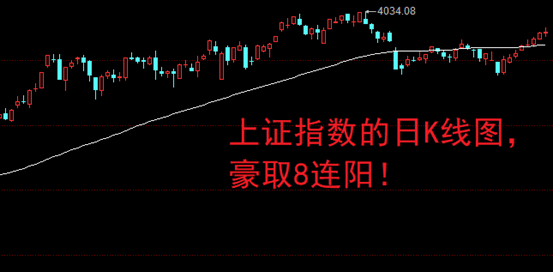
Core Viewpoint - The market has shown a strong upward trend, achieving an "eight consecutive days of gains" performance, but many individual stocks are lagging behind, creating a disparity between index performance and individual stock returns [1][3]. Market Performance - The overall market has been bullish, with a notable increase in the index, yet many stocks are experiencing declines, leading to a situation where investors feel frustrated as they see gains in the index but losses in their portfolios [3][8]. - The current market environment is characterized by a focus on core assets, with limited liquidity and accelerated rotation of hot sectors, making it challenging for investors to succeed by blindly chasing high-performing stocks or holding onto weak ones [3][8]. Futures Market Insights - Citic Futures has reduced its long positions by 188 contracts and short positions by 777 contracts in the CSI 300 index futures, indicating a "bullish" signal [4]. - In the CSI 1000 index futures, there was a reduction of 606 long contracts and 436 short contracts, signaling a "bearish" outlook, while the SSE 50 index futures showed a reduction of 76 long contracts and 232 short contracts, indicating a "bullish" signal [4]. Stock Highlights - Victory Energy has achieved an impressive feat with 11 consecutive days of price increases, reflecting the volatility and excitement in the market [5]. - The current market sentiment is described as a "structural market," where only a few sectors and leading stocks are generating profits, while the majority of stocks remain stagnant or decline [7][8]. Investor Sentiment - Many investors are longing for a robust bull market characterized by widespread gains across the board, rather than the current environment of structural divergence where only select stocks perform well [8].

人民币汇率破7!接下来股市、楼市和你手里的资产都会怎么走?
Sou Hu Cai Jing· 2025-12-26 11:43
Core Viewpoint - The recent appreciation of the RMB against the USD, crossing the 7.0 mark, signals a significant shift in market dynamics, impacting various sectors and consumer behavior [1][3]. Exchange Rate Dynamics - The RMB has experienced a steady rise since hitting a low of 7.3498 in April, culminating in a peak of 6.9965 on December 25, marking a 14-month high [1][3]. - The decline of the USD index, dropping over 8% this year, has diminished the attractiveness of USD-denominated assets, prompting capital to seek new opportunities [3][5]. Capital Flows and Market Reactions - Export companies are accelerating their currency conversion ahead of the year-end, contributing to increased demand for RMB as they prepare for the new year [5]. - There is a noticeable trend of foreign capital returning to the A-share market, particularly in technology, consumer, and financial sectors, with blue-chip stocks gaining favor due to their liquidity and reasonable valuations [5][10]. Stock Market Implications - The appreciation of the RMB is expected to benefit the stock market, with estimates suggesting that a 1% increase in the RMB could enhance A-share returns by approximately 3% [8]. - However, not all sectors will benefit equally; foreign capital is favoring core assets and blue-chip stocks, while industries reliant on imported materials, such as aviation and paper manufacturing, are experiencing cost reductions and improved financial performance [10][12]. Real Estate Market Impact - The direct impact of RMB appreciation on the real estate market is limited, as foreign investment faces regulatory hurdles and the overall market is influenced more by policy and demographic factors [14][16]. - While RMB appreciation may enhance the attractiveness of RMB-denominated assets, it does not directly drive up property prices, which remain under pressure in major cities [16][17]. Consumer Behavior and Purchasing Power - The appreciation of the RMB enhances purchasing power for consumers, making overseas education, travel, and imported goods more affordable [19][21]. - However, individuals holding USD-denominated assets may face challenges, as currency fluctuations can offset interest earnings, highlighting the importance of considering broader trends in investment decisions [21][23]. Strategic Investment Considerations - Investors are encouraged to diversify their asset allocations rather than concentrating on a single currency or asset type, as this approach mitigates risks associated with currency fluctuations [25]. - The recent RMB appreciation reflects a broader reassessment of risks and opportunities in the global market, indicating a potential shift in capital flows towards Chinese assets [25][27].
策略周度报告:十二月LPR报价维持不变,国家创业投资引导基金正式启动-20251226
Yuan Da Xin Xi· 2025-12-26 11:09
Group 1: Key News and Insights - The December 22 LPR remains unchanged at 3.0% for 1-year and 3.5% for 5-year loans, indicating a stable monetary policy environment [1][12] - The launch of the National Venture Capital Guiding Fund aims to attract diverse investments, targeting a total fund size of trillions by leveraging central government funds [1][22] - The National Development and Reform Commission (NDRC) has initiated 21 key measures to support the high-quality development of the Western Land-Sea New Corridor, emphasizing financial support and cooperation [1][15][16] Group 2: Market Overview - The domestic securities market showed mixed performance, with the Sci-Tech 100 index rising by 5.60%, while other major indices experienced declines [2][26] - The non-ferrous metals sector led the industry gains with a 6.43% increase, reflecting strong demand dynamics [2][28] Group 3: Buyback and Stake Increase - A total of 5 companies reported significant shareholder buybacks, with Kangnibei planning to increase its stake by over 1% of total shares [3][34] - 60 companies announced buyback plans, with 9 companies intending to repurchase more than 1% of their total shares, highlighting a trend of corporate confidence [3][36] Group 4: Investment Recommendations - In the technology sector, companies focused on artificial intelligence, semiconductor chips, and robotics are expected to outperform due to favorable policies and liquidity conditions [4][39] - The non-bank financial sector, particularly brokerage firms, is anticipated to benefit from a slow bull market, while insurance companies may see improved returns on long-term assets [4][40] - The copper market is expected to maintain a tight supply-demand balance, supporting price increases, while energy metals like lithium and cobalt remain attractive due to battery and storage demand [4][40] - The electric equipment sector is poised for growth driven by AI and renewable energy, indicating a robust future demand for power equipment [4][41] - Domestic consumption is projected to expand, with a focus on enhancing consumer spending capabilities [4][42]




朝闻道 20251226:沪指七连阳,中盘蓝筹强者恒强
Orient Securities· 2025-12-26 08:02
Market Strategy - The Shanghai Composite Index has experienced seven consecutive days of gains, indicating a market that is entering a period of oscillation and upward movement, although the overall increase remains limited [2][7] - The report suggests a focus on structural investments rather than index-heavy strategies, recommending broad-based ETFs that reflect mid-cap blue-chip characteristics [7] - Key sectors identified for investment include advanced manufacturing, non-bank financials, technology, and cyclical industries, which are expected to attract incremental capital and serve as the backbone of the market during this upward trend [7] Industry Strategy - The coal industry is highlighted, with coking coal prices expected to rebound due to seasonal inventory replenishment by downstream steel and coking plants, which is anticipated to support prices in the short term [4][7] - The report emphasizes the importance of monitoring the coking coal sector for investment opportunities, particularly as downstream purchasing behavior shifts from a wait-and-see approach to active procurement [7] - Recommended stocks in the coal sector include Shaanxi Coal and Chemical Industry (601225) and Jincheng Anthracite Mining Group (601001), both rated for increased holdings [7] Thematic Strategy - The humanoid robot sector is noted for significant advancements in motion control technology, with mass production expected to accelerate in 2026 [5][7] - Recent demonstrations by Tesla and Yush Robot showcase rapid progress in humanoid robot capabilities, indicating a shift in market focus towards actual production rather than just technological advancements [7] - Companies with strong manufacturing and management capabilities in the components sector are expected to benefit from this trend, with Top Group (601689) recommended for purchase [7]


