
石油与天然气

Search documents
金价,又涨了
Sou Hu Cai Jing· 2025-09-20 03:56
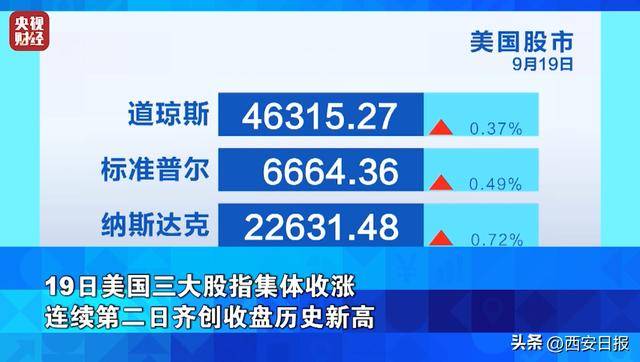
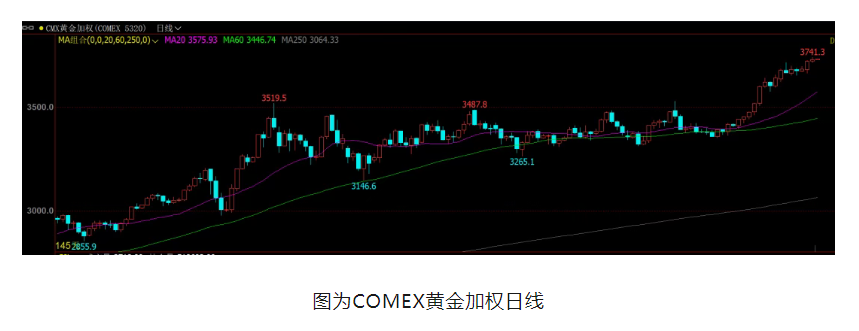
Group 1: Federal Reserve and Interest Rates - The Federal Reserve is expected to implement two rate cuts this year, which is more than previously predicted in June, indicating a potential increase in liquidity that may benefit high-growth stocks [1] - The market is currently digesting the Federal Reserve's hawkish signals from the recent meeting, despite the anticipated rate cuts [1] Group 2: U.S. Stock Market Performance - U.S. stock indices closed higher on Friday, with the Dow Jones up 0.37%, S&P 500 up 0.49%, and Nasdaq up 0.72%, marking the second consecutive day of record closing highs [3] - The latest report from Bank of America suggests that the current investment surge in large U.S. tech stocks has not yet reached historical peak levels, indicating further potential for valuation expansion [3] - For the week, the Dow Jones rose 1.05%, S&P 500 increased by 1.22%, and Nasdaq gained 2.21% [6] Group 3: Gold Market - International gold prices rose on Friday, closing at $3705.8 per ounce, a 0.75% increase, following a period of decline due to profit-taking after the Fed's rate cut announcement [5] - Despite fluctuations, gold prices accumulated a weekly increase of 0.53% [5] Group 4: European Market Trends - European stock indices collectively declined on Friday, with the UK market down 0.12%, France down 0.01%, and Germany down 0.15% [9] - Germany's producer price index for August showed a month-on-month contraction of 0.5%, significantly worse than expected [9] Group 5: Oil Market Dynamics - International oil prices fell on Friday, with light crude oil futures closing at $62.68 per barrel, down 1.40%, and Brent crude at $66.68 per barrel, down 1.13% [12] - The oil market is facing a supply-demand imbalance, with the U.S. government encouraging increased production to lower prices and OPEC+ increasing output to capture market share [12] - Weak signals from the U.S. job market and cooling manufacturing and real estate activities indicate a decline in oil demand [12]

中国石油获得发明专利授权:“一种油泥调驱剂及其制备方法和应用”
Sou Hu Cai Jing· 2025-09-19 19:50
证券之星消息,根据天眼查APP数据显示中国石油(601857)新获得一项发明专利授权,专利名为"一 种油泥调驱剂及其制备方法和应用",专利申请号为CN202310794997.1,授权日为2025年9月19日。 通过天眼查大数据分析,中国石油天然气股份有限公司共对外投资了1288家企业,参与招投标项目443 次;财产线索方面有商标信息107条,专利信息32476条;此外企业还拥有行政许可168个。 专利摘要:本发明公开一种油泥调驱剂及其制备方法和应用。该油泥调驱剂,按质量份数计,包括以下 组分:油泥1~5份,磺化剂1~5份,碱中和剂0.1~5份,表面活性剂0.01~3份。本发明提供的油泥调驱 剂,通过各组分之间协同复配作用,能够获得良好的调剖和洗油效果。在此基础上,由于磺化剂对油泥 中富含芳香化合物的原油进行磺化,经过碱中和实现部分油泥向石油磺酸盐的转化,与表面活性剂复配 后,激活了油泥的洗油作用,同时油泥自身微细颗粒物以及磺化反应的残渣具有一定的封堵调剖作用。 相比于现有技术,本发明提供的油泥调驱剂,在调剖性能相近的前提下,还能够有效降低油水界面张 力;在相同使用量、同等油藏条件下,可以使得原油采收率提高5 ...

光大期货能化商品日报-20250919
Guang Da Qi Huo· 2025-09-19 03:52
1. Report Industry Investment Rating No information about the industry investment rating is provided in the report. 2. Core Viewpoints of the Report - All energy - chemical products, including crude oil, fuel oil, asphalt, polyester, rubber, methanol, polyolefins, and PVC, are expected to show a volatile trend [1][3][4][6][8][9]. 3. Summary According to Relevant Catalogs 3.1 Research Views 3.1.1 Crude Oil - On Thursday, WTI October contract closed down $0.48 to $63.57 per barrel, a 0.75% decline; Brent November contract closed down $0.51 to $67.44 per barrel, a 0.75% decline; SC2511 closed at 488.8 yuan per barrel, down 7.5 yuan per barrel, a 1.51% decline [1]. - Ukraine increased attacks on Russian energy infrastructure, with two Russian refineries attacked and a petrochemical plant on fire. The EU plans to phase out Russian gas and oil imports by the end of 2027, opposed by Hungary and Slovakia [1]. - In August, Russia's seaborne oil product exports increased 8.9% from July to 9.44 million tons due to refinery maintenance completion and increased fuel production. After the Fed's interest - rate hike, oil prices will remain volatile [1]. 3.1.2 Fuel Oil - On Thursday, the main fuel oil contract FU2601 on the SHFE closed down 1.24% at 2798 yuan per ton; the low - sulfur fuel oil contract LU2511 closed down 1.07% at 3410 yuan per ton [3]. - As of September 17, Singapore's on - land fuel oil inventory decreased by 111.8 million barrels (14.21%) week - on - week; Fujeirah's fuel oil inventory decreased by 170.5 million barrels (24.03%) week - on - week [3]. - Although the autumn refinery maintenance season may tighten the low - sulfur fuel oil supply in Asia, the market will remain well - supplied before October. The high - sulfur market is supported by stable demand and weak refining margins, but supply is still abundant. The prices of FU and LU will follow the cost - end crude oil fluctuations [3]. 3.1.3 Asphalt - On Thursday, the main asphalt contract BU2511 on the SHFE closed down 0.35% at 3427 yuan per ton [3]. - This week, the shipment of 54 domestic asphalt enterprises increased by 14.6% week - on - week; the capacity utilization rate of 69 modified asphalt enterprises reached 20.2%, a 1.7% week - on - week and 3.6% year - on - year increase, hitting a three - year high [3]. - Supply is expected to decline slightly in the remaining weeks of September. Demand in the north is supported by good weather, while the south faces increased rainfall. Considering the continuous losses of non - quota refineries, supply pressure is limited. With the arrival of the peak demand season, asphalt prices may rise, and attention should be paid to oil price fluctuations and demand fulfillment [3]. 3.1.4 Polyester - TA601 closed at 4666 yuan per ton, down 0.98%; EG2601 closed at 4268 yuan per ton, down 0.67%. PX futures closed at 6684 yuan per ton, down 1.3% [4]. - Jiangsu and Zhejiang polyester yarn sales were weak, with an average sales rate of 40% - 50%. A 300,000 - ton/year synthetic gas - to - ethylene glycol plant in Inner Mongolia plans to shut down for maintenance from October 10 for 20 - 30 days; a 600,000 - ton/year plant in Xinjiang is restarting; two US MEG plants with a total capacity of 380,000 tons/year have shut down for about a month [4]. - As of September 18, the overall ethylene glycol operating load in mainland China was 74.93%, up 0.02% from the previous period. PX supply has recovered, and downstream TA has new maintenance, so PX prices are expected to fluctuate with oil prices. With the increase in TA maintenance in the fourth quarter and the rebound in the peak demand season, TA fundamentals are expected to improve. For ethylene glycol, effective supply recovery in October depends on the restart of Satellite Petrochemical. The port inventory is expected to remain low, but the far - month supply is abundant, and the downstream demand improvement is less than expected, with a strong expectation of basis correction [4]. 3.1.5 Rubber - On Thursday, the main Shanghai rubber contract RU2601 fell 310 yuan per ton to 15,570 yuan per ton; the NR main contract fell 290 yuan per ton to 12,300 yuan per ton; the butadiene rubber BR main contract fell 175 yuan per ton to 11,415 yuan per ton [6]. - This week, the operating load of domestic tire enterprises' semi - steel tires was 74.58%, up 0.28 percentage points from last week and down 2.17 percentage points from the same period last year; the operating load of Shandong tire enterprises' full - steel tires was 64.96%, up 0.09 percentage points from last week and up 7.57 percentage points from the same period last year [6]. - After the Fed's interest - rate cut, the macro - environment weakened, and rubber products led the decline. Typhoons brought limited rainfall to domestic rubber - producing areas, and production is expected to recover. Tire operating rates were flat week - on - week, and automobile sales in the fourth quarter are estimated to reach 8.38 million, a 3% increase for the year, with less sales pressure. Rubber supply and demand are both increasing, and rubber prices will fluctuate with the macro - environment [6]. 3.1.6 Methanol - On Thursday, the spot price in Taicang was 2247 yuan per ton, the price in Inner Mongolia's northern line was 2090 yuan per ton, the CFR China price was $264 - 268 per ton, and the CFR Southeast Asia price was $324 - 329 per ton [6]. - Downstream, the formaldehyde price in Shandong was 1075 yuan per ton, the acetic acid price in Jiangsu was 2500 - 2560 yuan per ton, and the MTBE price in Shandong was 5160 yuan per ton [6][8]. - Recently, many domestic methanol plants have been under maintenance, resulting in a temporary low supply. Overseas, Iranian plants have high operating loads, and although there are short - term shutdowns, shipping volumes are stable, and arrivals are expected to remain high. The Xingxing plant has restarted, and the supply - demand gap in East China is narrowing, with port inventory expected to peak. Methanol prices are expected to reach a phased bottom [8]. 3.1.7 Polyolefins - On Thursday, the mainstream price of East China PP was 6780 - 6950 yuan per ton. Oil - based PP had a loss of 481.35 yuan per ton, coal - based PP had a profit of 399.87 yuan per ton, methanol - based PP had a loss of 980.67 yuan per ton, propane - dehydrogenated PP had a loss of 839.47 yuan per ton, and externally - sourced propylene - based PP had a loss of 411.47 yuan per ton [8]. - For PE, HDPE film prices were 8023 yuan per ton, up 8 yuan per ton from last week; LDPE film prices were 9639 yuan per ton, down 9 yuan per ton; LLDPE film prices were 7447 yuan per ton, down 8 yuan per ton [8]. - Supply will remain high and volatile. With the arrival of the "Golden September and Silver October" peak demand season, orders are picking up, and the industry's operating rate is rising. Polyolefin demand is marginally improving, supply changes are limited, the supply - demand gap is narrowing, but the cost side is under pressure, and polyolefin prices are expected to be weakly volatile in the short term [8]. 3.1.8 PVC - On Thursday, the East China PVC market partially declined, with calcium - carbide - type 5 material at 4720 - 4850 yuan per ton and ethylene - type material at 4900 - 5050 yuan per ton; the North China PVC market was stable, with calcium - carbide - type 5 material at 4660 - 4820 yuan per ton and ethylene - type material at 4840 - 4980 yuan per ton; the South China PVC market was range - bound, with calcium - carbide - type 5 material at 4850 - 4900 yuan per ton and ethylene - type material at 4920 - 5020 yuan per ton [8][9]. - Domestic real - estate construction has stabilized and rebounded, but is still weak year - on - year. The operating rates of pipes and profiles are expected to increase slightly. Supply remains high and volatile, domestic demand recovers slowly, and exports will weaken due to India's anti - dumping policy. Although the basis and inter - month spread are high, inventory has been transferred from refineries to the market, and the total inventory pressure is large. However, this has been priced in. The market is now trading on the "anti - involution" concept, and short - term PVC prices may rebound but with limited upside [9]. 3.2 Daily Data Monitoring - The report provides data on the basis, basis rate, spot price, and futures price of various energy - chemical products, including crude oil, liquefied petroleum gas, asphalt, high - sulfur fuel oil, low - sulfur fuel oil, methanol, urea, polyethylene, polypropylene, PTA, ethylene glycol, natural rubber, 20 - number rubber, and soda ash, as well as their changes and historical quantiles [10]. 3.3 Market News - In August, Russia's seaborne oil product exports increased by 8.9% month - on - month to 9.44 million tons due to the completion of refinery maintenance and increased fuel production. Exports from Baltic ports increased by 12.3% to 5.326 million tons, those from Black Sea and Azov Sea ports increased by 3.6% to 3.392 million tons, and those from Arctic ports decreased by 22.6% to 30,700 tons [12]. - Kuwait's oil minister, Tariq Al - Roumi, expects an increase in oil demand after the US interest - rate cut, especially in the Asian market. He also believes that new sanctions on Russia will have a positive impact on oil prices [12]. 3.4 Chart Analysis 3.4.1 Main Contract Prices - The report presents charts of the closing prices of main contracts for various energy - chemical products from 2021 to 2025, including crude oil, fuel oil, low - sulfur fuel oil, asphalt, LPG, PTA, ethylene glycol, short - fiber, LLDPE, polypropylene, PVC, methanol, styrene, 20 - number rubber, rubber, synthetic rubber, European line container shipping, p - xylene, and bottle chips [14][15][18][20][22][26][28]. 3.4.2 Main Contract Basis - Charts show the basis of main contracts for various products, such as crude oil, fuel oil, low - sulfur fuel oil, asphalt, ethylene glycol, PP, LLDPE, natural rubber, 20 - number rubber, p - xylene, synthetic rubber, and bottle chips [29][35][38][41][42]. 3.4.3 Inter - period Contract Spreads - The report provides charts of inter - period contract spreads for fuel oil, asphalt, European line container shipping index, PTA, ethylene glycol, PP, LLDPE, and natural rubber [44][46][49][52][53][57][59]. 3.4.4 Inter - variety Spreads - Charts display inter - variety spreads, including crude oil internal - external spreads, B - W spreads, fuel oil high - low sulfur spreads, fuel oil/asphalt ratio, BU/SC ratio, ethylene glycol - PTA spread, PP - LLDPE spread, and natural rubber - 20 - number rubber spread [61][63][68][69]. 3.4.5 Production Profits - The report includes charts of production profits for ethylene - based ethylene glycol, PP, and LLDPE [71][73]. 3.5 Team Member Introduction - The research team consists of several analysts: - Zhong Meiyan, the assistant director of the research institute and director of energy - chemical research, has over ten years of experience in futures and derivatives research [77]. - Du Bingqin, an analyst for crude oil, natural gas, fuel oil, asphalt, and shipping, has in - depth research on the energy industry [78]. - Di Yilin, a rubber and polyester analyst, is good at data analysis [79]. - Peng Haibo, an analyst for methanol, PE, PP, and PVC, has experience in energy - chemical spot - futures trading [80].
中国石油9月18日获融资买入1.51亿元,融资余额23.17亿元
Xin Lang Cai Jing· 2025-09-19 03:51
Group 1 - China Petroleum's stock fell by 2.96% on September 18, with a trading volume of 2.034 billion yuan [1] - The financing buy-in amount for China Petroleum on the same day was 151 million yuan, with a net buy of 28.79 million yuan [1] - As of September 18, the total financing and securities lending balance for China Petroleum was 2.331 billion yuan [1] Group 2 - China Petroleum's financing balance is 2.317 billion yuan, accounting for 0.17% of its market capitalization, which is below the 40th percentile level over the past year [1] - On September 18, the company repaid 138,200 shares in securities lending and sold 153,600 shares, with a selling amount of 1.2611 million yuan [1] - The remaining securities lending amount is 1.41475 million yuan, which is above the 60th percentile level over the past year [1] Group 3 - China Petroleum's main business includes exploration, development, production, transportation, and sales of crude oil and natural gas, as well as refining and chemical products [2] - As of June 30, 2025, China Petroleum reported a revenue of 1.450 trillion yuan, a year-on-year decrease of 6.68%, and a net profit of 83.993 billion yuan, a decrease of 5.21% [2] - The company has distributed a total of 875.28 billion yuan in dividends since its A-share listing, with 247.08 billion yuan distributed in the last three years [3] Group 4 - As of June 30, 2025, the number of shareholders for China Petroleum was 482,400, a decrease of 8.82% from the previous period [2] - The top ten circulating shareholders include Hong Kong Central Clearing Limited and various ETFs, with notable increases in holdings [3] - The average circulating shares per shareholder increased by 9.77% to 339,297 shares [2]
原油日报:中国如期下发第三批出口配额-20250919
Hua Tai Qi Huo· 2025-09-19 02:56
Report Summary 1. Investment Rating No investment rating for the industry is provided in the report. 2. Core View The report suggests that oil prices will experience short - term range - bound fluctuations and a medium - term bearish configuration. The issuance of China's third - batch of refined oil export quotas, along with factors such as the situation of local refineries and the future of sensitive oil, are important factors affecting the oil market. The type of oil absorbed by SPR in the future is a core factor influencing oil price trends [3][4]. 3. Summary by Section Market News and Important Data - New York Mercantile Exchange's October - delivery light crude oil futures dropped 48 cents to $63.57 per barrel, a 0.75% decline; November - delivery London Brent crude oil futures fell 51 cents to $67.44 per barrel, also a 0.75% decline. SC crude oil's main contract closed down 1.51% at 489 yuan per barrel [1]. - The number of initial jobless claims in the US for the week ending September 13 was 231,000, lower than the expected 240,000, and the previous value was revised from 263,000 to 264,000 [2]. - The EU is formulating measures to accelerate the phased - out of Russian natural gas. Analysts expect the global natural gas market to turn into a supply surplus in the second half of next year, reducing the risk of supply pressure and price spikes in Europe [2]. - US President Trump stated that further oil price cuts are needed, claiming that if oil prices are lowered, the Russia - Ukraine conflict will end [2]. - French President Macron said that UN sanctions on Iran will be restored [2]. - China's cumulative new energy vehicle sales have exceeded 40 million, with production and sales ranking first globally for 10 consecutive years, contributing to global carbon reduction goals [2]. Investment Logic - China issued the third - batch of refined oil export quotas, totaling 8.395 million tons, with a cumulative total of 40.195 million tons for the three batches. The total is basically the same as last year but slightly lower than the market expectation of 9 million tons. The refined oil export quotas have remained stable in the past three years, and the total crude oil import quota has also been stable. However, the proportion of private large - scale refining quotas has been increasing, while that of local refineries has been decreasing. Factors such as quota shortages, a decline in the consumption tax deduction ratio, and the peak of gasoline and diesel demand are squeezing the survival space of local refineries. The reduced ability of local refineries to absorb sensitive oil has led to some inventory backlog, which has contributed to the increase in China's crude oil inventory since the beginning of the year. In the short term, policies are suppressing the operating rate of local refineries, and the future of sensitive oil is uncertain. Although China's storage tank space is relatively abundant (with a current storage rate of about 65%), it may flow into the SPR, which is a core factor for future oil price trends [3]. Strategy - Short - term: Oil prices will fluctuate within a range. - Medium - term: Bearish configuration [4].
泰山石油(000554) - 000554泰山石油投资者关系管理信息20250918
2025-09-18 08:50
Group 1: Profit Distribution and Shareholder Returns - The profit distribution plan proposes a cash dividend of 0.62 CNY per 10 shares, based on the company's current profitability, financial status, and shareholder returns [3] - The company aims to optimize cash dividend frequency and increase the cash dividend ratio as performance grows, emphasizing investor-centric principles [3] Group 2: Natural Gas Business Growth - The significant growth in natural gas revenue is attributed to increased market demand and proactive company strategies, including market expansion and site optimization [3] - Future plans include expanding the natural gas sales network and enhancing service quality while monitoring market trends and industry policies [3] Group 3: Share Buyback Progress - As of August 31, 2025, the company has not yet implemented the announced share buyback plan disclosed on September 3, 2025 [3] Group 4: Related Party Transactions - The estimated total amount for routine related party transactions in 2025 is 242 million CNY, with approximately 72.6 million CNY already incurred [3] Group 5: Revenue Growth Plans - The company plans to maintain profit growth while optimizing sales structure, stabilizing market share, and expanding into new markets and customer segments to increase revenue [3] Group 6: Disclosure of Major Information - The activity did not involve any undisclosed major information [3]

成本端上行动力不足 LPG期货弱势震荡
Jin Tou Wang· 2025-09-18 05:53
Market Review - Liquefied petroleum gas (LPG) futures showed weak fluctuations, with the 2511 contract closing at 4425 yuan/ton, and the price difference between October and November around 50 yuan/ton [1] Fundamental Summary - As of September 17, the Dalian Commodity Exchange had 13,002 LPG futures warehouse receipts, unchanged from the previous trading day [2] - Analysts from Rabobank, including Florence Schmit, expect European natural gas prices to stabilize at over 20 euros per megawatt-hour starting in the second quarter of next year due to new liquefied natural gas (LNG) production capacity coming online [2] - Nippon Yusen KK, Japan's largest shipping company, plans to expand its LNG fleet by approximately 50% by early 2029 to meet the growing global demand for this ultra-low temperature fuel [2] Institutional Perspectives - Zhonghui Futures indicates that there is insufficient upward momentum on the cost side, with downstream PDH profits declining, maintaining a bearish outlook on LPG. The decrease in crude oil demand and increased supply lead to rising oversupply pressure, suggesting further downside potential. The main contract's basis remains relatively high, while PDH profits are expected to weaken, although demand remains acceptable with current operating rates exceeding 70% [3] - Hualian Futures notes that international oil prices briefly rebounded above a series of moving averages. Domestic LPG supply decreased week-on-week but remains at a multi-year high. Inventory levels have risen, with port storage rates at mid-range for recent years. Refinery storage rates have increased but are still near multi-year lows. The demand side is experiencing a seasonal lull, with gasoline consumption at a four-year low, declining growth in restaurant consumption, and overall chemical demand weakening. PDH weekly capacity utilization has dropped to multi-year lows, while alkylation and MTBE capacity utilizations have also decreased, with margins remaining low. The "gas/oil" price ratio is neutral to high. The strategy suggests holding a small long position with stop-loss references around 4300-4400 [3]
(砥砺奋进七十载 天山南北谱华章)新疆传统能源产业的“机”与“变”
Zhong Guo Xin Wen Wang· 2025-09-17 11:25
Core Insights - China Petroleum & Chemical Corporation (Sinopec) has produced over 170 million tons of crude oil and over 41 billion cubic meters of natural gas in Xinjiang, highlighting the region's rich energy resources [1] - Since entering Xinjiang in 1978, Sinopec has discovered and developed 17 oil and gas fields, with proven geological reserves of 2.167 billion tons of oil and 338.703 billion cubic meters of natural gas [1] - The Xinjiang oil field has transitioned from a single resource development model to a multi-energy complementary and green transformation approach, aiming to establish a modern energy hub [2][3] Industry Developments - The Xinjiang oil field initiated the "Digital Oilfield" project in 2002, evolving into an "Intelligent Oilfield" by incorporating IoT and big data technologies [2] - In July 2023, Xinjiang oil field's core data products were successfully traded on a national data trading platform, marking a significant step in data assetization [2] - The region's coal mining sector has also embraced automation, with the Udong coal mine becoming a national-level intelligent demonstration coal mine, showcasing advancements in mining technology [3] Future Projections - Xinjiang is projected to produce 66.64 million tons of oil and gas equivalent in 2024, maintaining its position as the top producer in China for four consecutive years [3] - The region's coal production is expected to reach 541 million tons, with growth rates leading among major coal-producing provinces in China for four years [3] - Xinjiang is enhancing energy cooperation with neighboring countries, focusing on oil, gas, coal, and power transmission, contributing to the Belt and Road Initiative [3]
再创纪录,黄金突破3700美元/盎司!美联储降息25个基点的概率高达96.1%!
Qi Huo Ri Bao· 2025-09-17 00:33
Market Overview - The three major U.S. stock indices closed lower amid cautious trading ahead of the Federal Reserve's interest rate decision, with the Dow Jones down 125.18 points (0.27%) at 45758.27, the Nasdaq down 14.79 points (0.07%) at 22333.96, and the S&P 500 down 8.49 points (0.13%) at 6606.79 [2] - Most popular Chinese stocks rose, with the Nasdaq Golden Dragon China Index up 1.76%, NIO rising over 8%, Baidu over 7%, JD.com and iQIYI over 3%, and Alibaba over 2% [2] Commodity Prices - Light crude oil futures for October delivery rose by $1.22 to $64.52 per barrel (1.93% increase), while November Brent crude oil futures increased by $1.03 to $68.47 per barrel (1.53% increase) [2] - COMEX gold futures rose by 0.31% to $3730.50 per ounce, reaching an intraday high of $3739.90, marking a historical peak [2] Federal Reserve Interest Rate Expectations - The probability of a 25 basis point rate cut by the Federal Reserve this week is 96.1%, with a 3.9% chance of a 50 basis point cut [5][6] - Recent economic data, including stronger-than-expected retail sales in August, has not significantly altered market expectations for a rate cut [6] Oil Market Dynamics - Domestic crude oil futures saw a slight increase of 1.15%, closing at 493.6 yuan per barrel, driven by optimistic market sentiment due to geopolitical tensions and expectations of a Federal Reserve rate cut [8] - Geopolitical risks, including ongoing conflicts and potential sanctions, are contributing to short-term price support in the oil market [9] - Analysts suggest that the current oil price rebound is a corrective move following a decline in August, with ongoing OPEC+ production increases and global economic concerns creating a complex market environment [9][10] Long-term Oil Price Outlook - Key factors to monitor for the long-term oil price trajectory include OPEC+ production levels, U.S. shale oil output, economic downturn risks, and potential fiscal policy changes in China [10] - The expectation is for oil prices to continue a corrective rebound in the short term, but to face downward pressure later in the year due to inventory accumulation, with a potential rise in 2026 as global inflation increases [10]
泰山石油:9月16日召开董事会会议
Mei Ri Jing Ji Xin Wen· 2025-09-16 12:43
Group 1 - The company, Taishan Petroleum, held a temporary board meeting on September 16, 2025, to discuss the election of the vice chairman of the board [1] - For the first half of 2025, the company's revenue composition was entirely from oil and natural gas, accounting for 100.0% [1] - As of the report date, Taishan Petroleum's market capitalization was 3.3 billion yuan [1]