
高端装备

Search documents
豫品走出去有了硬支撑——侨力汇中原 千企万品通江海
He Nan Ri Bao· 2025-09-27 00:09
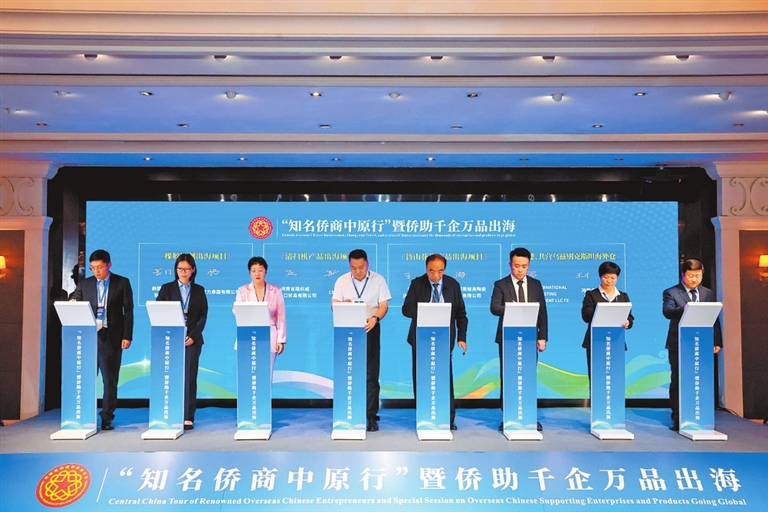
Core Insights - The 15th Henan Investment and Trade Fair opened on September 26, featuring the "Famous Overseas Chinese Businessmen in Central Plains" event aimed at promoting Henan products to international markets [1] - Over 40 overseas Chinese businessmen from 14 countries and regions gathered with Henan entrepreneurs to facilitate trade and investment opportunities [1] - The event highlighted the emotional connection between overseas Chinese and Henan, emphasizing the province's role as a significant cultural and economic hub [1] Group 1 - Henan is leveraging its "Air Silk Road" and dual hub connections to Luxembourg and Kuala Lumpur to enhance its global trade presence [1] - Emerging industries such as high-end equipment manufacturing, new energy vehicles, and biomedicine are rapidly developing in Henan, attracting the attention of overseas investors [2] - Malaysian overseas Chinese businessmen are seen as a bridge to Southeast Asian markets, facilitating the entry of foreign products into China [1][2] Group 2 - The event showcased the vibrant development of Henan, with its favorable business environment and market potential drawing global interest [2] - Overseas Chinese businessmen are encouraged to invest in Henan while also helping local enterprises expand internationally [2] - Various cooperation projects were established during the event, strengthening the export capabilities of Henan products [2][4]

碧水新颜启迪江河之治——智库报告解析新时代长江治理
Xin Hua She· 2025-09-26 14:32
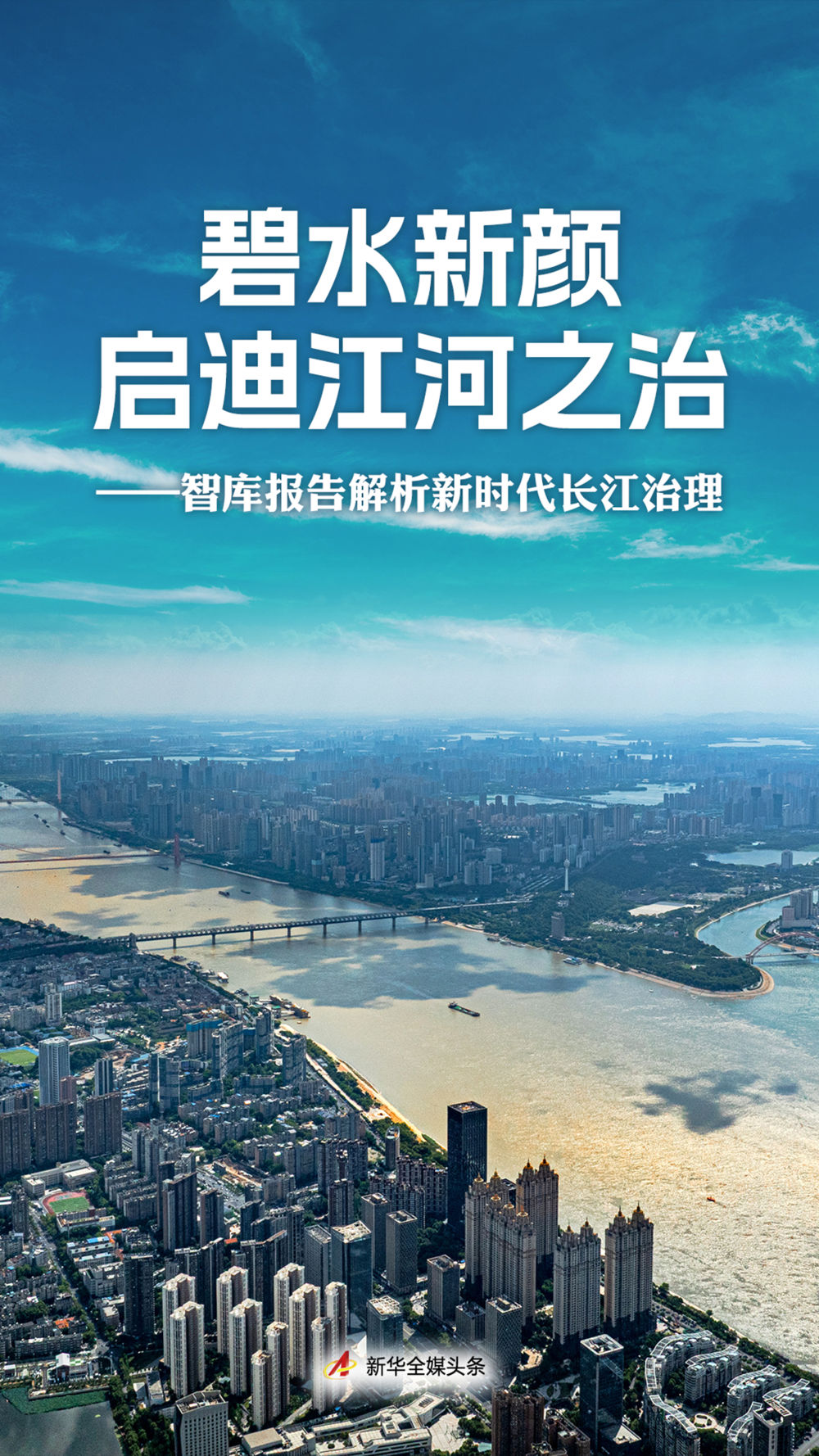
Core Insights - The report titled "The River of Clear Water Flows East: Achievements and Insights of Yangtze River Governance in the New Era" highlights the historical achievements and scientific strategies in the governance of the Yangtze River, emphasizing its significance for both China and the world [3][4][11]. Environmental Protection - The proportion of water quality monitoring points in the Yangtze River basin with good water quality has increased from 82.3% in 2016 to over 98% currently, with the main river maintaining Class II water quality for five consecutive years [7]. - The population of the Yangtze River dolphin has seen a historic rebound, indicating successful ecological restoration efforts [7]. Economic Development - The Yangtze River Economic Belt accounts for a significant portion of China's economy, with 11 provinces and cities contributing to national economic growth [7]. - The cargo throughput of the Yangtze River ports has surpassed 4 billion tons, making it the leading inland river in the world [7]. Cultural Significance - The Yangtze River serves as a cultural symbol of the Chinese nation, with seven major cultural regions along its 6,300 kilometers, promoting cultural heritage and tourism [8]. - The establishment of the Yangtze National Cultural Park and the Yangtze International Golden Tourism Belt reflects the integration of culture and tourism [8]. Governance Strategies - The governance of the Yangtze River is characterized by five key principles: ecological priority, dialectical unity, regional collaboration, co-construction and sharing, and the inheritance and development of culture [11][13][14][15]. - A comprehensive protection framework has been established, transitioning from spontaneous to conscious governance practices among local governments and departments [7][11]. Global Implications - The governance model of the Yangtze River offers a new paradigm for global river management, emphasizing integrated and systematic approaches to ensure effective governance and sustainable outcomes [19][20]. - The Yangtze governance experience provides a reference for developing countries to pursue a greener path of modernization, avoiding the pitfalls of pollution-first development [22][23].
释放融资需求超7亿元,“投成都”未来产业投资联盟首场活动举行
Sou Hu Cai Jing· 2025-09-26 12:50
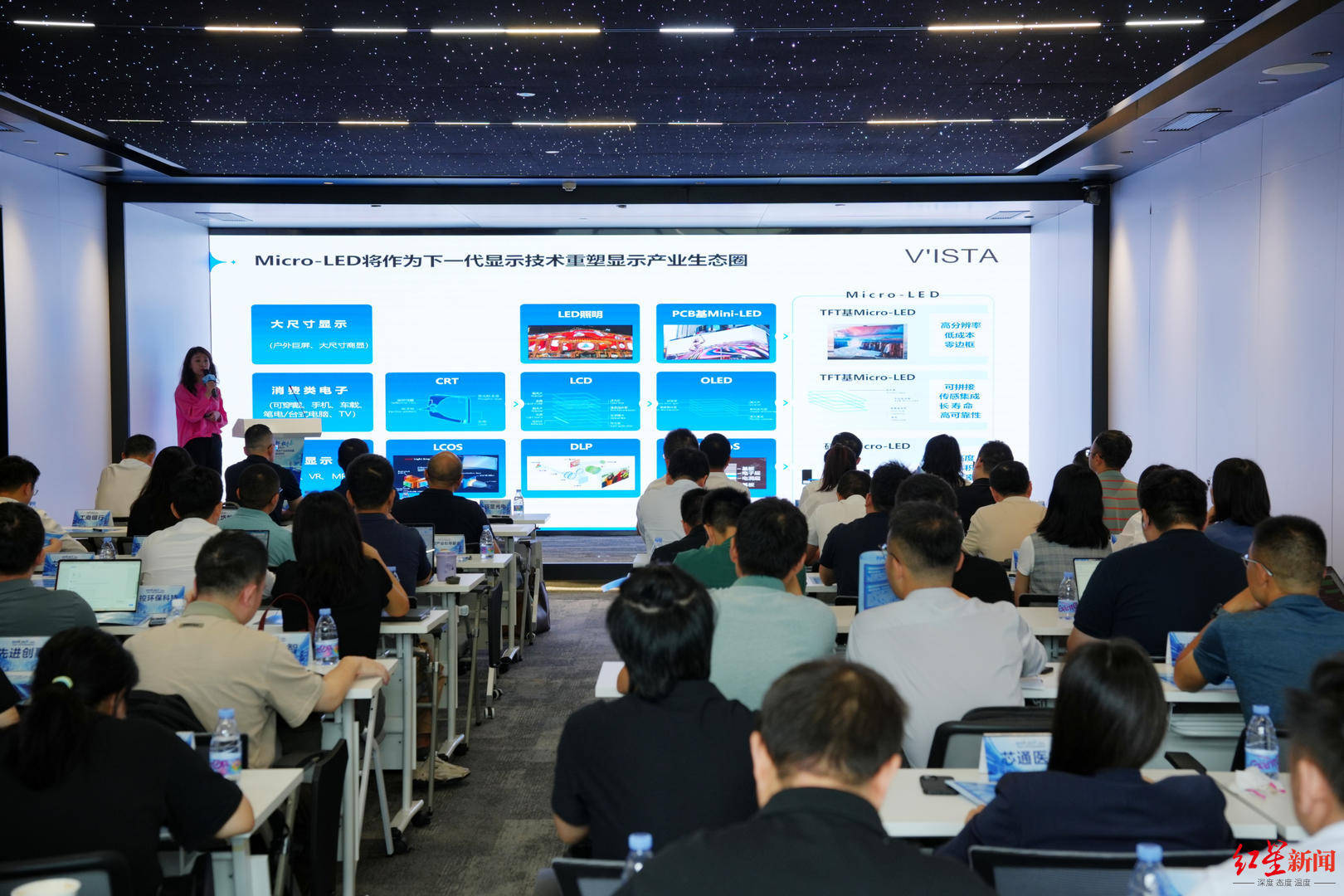
Core Insights - The "Invest Chengdu" Future Industry Investment Alliance held its first financing roadshow event, showcasing five high-quality companies from future industries with a total financing demand exceeding 700 million yuan [2][5] Group 1: Event Overview - The event took place on September 26 at the Chengdu Private Economy Development Promotion Center, focusing on future industries such as future energy, satellite communication, new displays, high-end equipment, and biotechnology [2][3] - The Chengdu government aims to strengthen the "Invest Chengdu" brand and establish a "tropical rainforest" fund ecosystem to support these industries [2] Group 2: Company Highlights - Chengdu Chenxian Optoelectronics Co., Ltd. presented its Micro-LED production line with a technology transfer yield of 99.995%, seeking 500 to 1,000 million yuan for production line construction and R&D [4] - Sichuan Rongxin New Energy Power System Co., Ltd. showcased its leading technology in high-power fuel cell hybrid systems, with applications in rail and road transportation [4] Group 3: Investment Engagement - Notable investment institutions such as Hillhouse Capital and Dongfang Fuhai participated, engaging in discussions on technology maturity, application scenarios, and market potential [5] - The event facilitated precise matching between investors and projects, with a total financing demand of over 700 million yuan reported [5] Group 4: Government Support and Future Plans - Chengdu's government has launched the "Tomorrow Star" initiative to support innovative companies with significant market potential and disruptive technologies [6] - The future industry fund aims to provide comprehensive capital services throughout the lifecycle of enterprises, focusing on seed, startup, and growth stages [10][11]
“投资辽宁”欧美企业交流对接活动举行
Liao Ning Ri Bao· 2025-09-26 01:04
Core Insights - The "Investment in Liaoning" event held on September 25 focused on the theme of "Localization of Foreign Enterprises - Now and Future," discussing collaboration in sectors such as medical devices, high-end equipment, precision manufacturing, and mineral processing [1] Group 1: Event Overview - The event attracted nearly 200 domestic and foreign guests to discuss cooperation and development opportunities [1] - It provided a platform for enhancing understanding and expanding cooperation between Liaoning and European and American enterprises [1] Group 2: Participation and Contributions - Executives from companies like Belgium's Bekaert, America's Johnson & Johnson, and Italy's Tianbing shared their localization development experiences in Liaoning [1] - A professor from Liaoning University delivered a keynote report, and Dalian Jinpu New Area conducted investment promotion [1] Group 3: Economic Context - Liaoning has established trade relations with 230 countries and regions, attracting 165 Fortune 500 companies to invest in the province [1]
构建企业主导的融合型人才培育生态
Xin Hua Ri Bao· 2025-09-25 00:09
Group 1: Core Insights - The integration of technological innovation and industrial innovation is crucial for high-quality regional economic development, as emphasized in the 2025 Government Work Report and by President Xi Jinping [1] - For Jiangsu, seamless integration of the innovation chain and industrial chain is key to advancing intelligent manufacturing and moving up the global industrial chain [1] - The shortage of interdisciplinary talent is a significant challenge in Jiangsu's industrial upgrade, affecting efficiency in smart manufacturing, innovation speed in emerging industries, and equipment utilization in traditional industries [1] Group 2: Challenges in Talent Development - The cultivation of integrated talent faces challenges such as institutional barriers that limit the full potential of enterprises, including overlapping responsibilities in policies and cumbersome approval processes for faculty to engage with businesses [2] - There is a mismatch between educational supply and industrial demand, with higher education institutions lagging in setting up new programs that align with industry upgrades [2] - Jiangsu's talent cultivation efforts need to establish a more mature and efficient closed-loop system between enterprise demand and talent supply [2] Group 3: Advantages of Integrated Talent - Integrated talent serves three core functions: acting as a "converter" for technology commercialization, a "glue" for promoting talent flow between academia and industry, and a "catalyst" for enhancing management and technical integration [3] - Establishing an enterprise-led talent cultivation system is essential to ensure that training aligns closely with market needs and enhances practical experience [3] Group 4: Building an Enterprise-led Ecosystem - To enhance integrated talent cultivation, it is necessary to strengthen the role of enterprises, creating a new ecosystem that forms a "demand-supply" closed loop [4] - Implementing a model where enterprises present challenges, universities solve them, and market validation occurs is crucial for effective talent development [4] - Initiatives such as establishing shared training centers and expanding the coverage of industry professors are recommended to improve training outcomes [4] Group 5: Incentive Systems for Talent Development - An innovative talent incentive system that emphasizes market recognition is proposed, including a four-dimensional evaluation method in key sectors [5] - The system aims to eliminate rigid academic requirements in talent evaluation and focus on industry relevance, providing comprehensive support for integrated talent cultivation [5] - Establishing collaborative innovation frameworks among leading enterprises, supporting small and medium-sized enterprises, and creating shared training resources are essential for overcoming talent development challenges [5][6] Group 6: Practical Experience in Talent Development - Integrated talent is best developed through practical engagement with real industry challenges rather than traditional classroom settings [7] - Jiangsu's enterprise-led talent cultivation ecosystem is positioned to seize opportunities in the new technological revolution and industrial transformation, contributing to national and global supply chain stability [7]
上海百强企业净利润增长24.84% 上榜民企营收合计首破3万亿元
Xin Hua Wang· 2025-09-24 09:12
Group 1 - The total revenue of the top 100 private enterprises in Shanghai has surpassed 3 trillion yuan for the first time, reaching 3.3 trillion yuan, with a year-on-year increase of 277.1 billion yuan, representing a growth rate of 9.26% [2] - The net profit of these enterprises totaled 224.55 billion yuan, an increase of 92.07 billion yuan compared to the previous year, with a remarkable growth rate of 69.50% [2] - The strong growth of private enterprises is primarily driven by emerging industries, with 8 out of the top 10 companies in net profit increase being from these sectors, indicating the vitality of Shanghai's private enterprises [2] Group 2 - The emerging industries' top 100 companies have also shown rapid growth, with total revenue reaching 2.2 trillion yuan and net profit of 195.37 billion yuan, reflecting a growth rate of 72.47% [2] - The information technology sector is the leading force among emerging industries, with 47 listed companies achieving a total revenue of 1.5 trillion yuan, a year-on-year growth of 19.14%, contributing nearly 70% of the revenue of the emerging industries top 100 [3] - The net profit of information technology companies reached 191.84 billion yuan, with a growth rate of 88.25%, driven largely by retail e-commerce firms like Pinduoduo and Meituan [3] Group 3 - The service industry top 100 achieved a total revenue of 4.7 trillion yuan, reflecting a growth of 7.57%, and a net profit of 583.49 billion yuan, which is a significant increase of 41.14% [3] - The performance of the service industry is attributed to strong results in retail e-commerce, marine transportation, and insurance sectors [3] - Despite challenges in the manufacturing sector due to the economic conditions of black metallurgy and automotive industries, companies in smart terminals, pharmaceuticals, integrated circuits, new energy vehicles, and high-end equipment have shown improved performance, contributing positively to the sector's transformation [3]


【聚焦第三届全国技能大赛】技能人才如何向“新”?
Zheng Zhou Ri Bao· 2025-09-24 02:56
Core Insights - The third National Skills Competition showcased 348 participants competing for 106 medals across various projects, highlighting the emergence of new fields and the need for skilled talent in evolving industries [1][2] New Professions: Shaping Industry Development - The competition featured 17 new profession categories, including roles in smart connected vehicles and industrial vision systems, reflecting the direction of new productive forces [1][2] - New professions are products of industrial transformation and innovation, providing high-skilled talent with new opportunities in the digital economy and platform economy [2] New Skills: Reflecting Talent Demand Trends - The competition emphasized the integration of multiple disciplines in projects like mechatronics, requiring participants to possess a broad knowledge base and practical skills [3][4] - A significant portion of participants held advanced degrees, indicating a growing demand for high-skilled talent in cutting-edge technology fields [4] New Opportunities: Opening New Career Paths - The competition highlighted the urgent need for skilled engineers in digital operations and automation within industries such as injection molding [5] - Reports indicate a high demand for talent in core areas like AI and 5G technology, emphasizing the importance of industry-education integration for talent development [5][6] Enhancing Skills and Recognition - The competition aimed to improve the recognition and treatment of skilled workers, with awards and titles like "National Technical Expert" for top performers [6] - The Ministry of Human Resources and Social Security plans to implement a new skill level system to enhance the status and compensation of skilled laborers [6]
上海百强企业净利润增长24.84% 上榜民企营收合计首破3万亿元 信息技术产业领跑新兴产业
Jie Fang Ri Bao· 2025-09-24 02:04
Group 1 - The total revenue of the top 100 companies in Shanghai reached 10.03 trillion yuan in 2024, marking the third consecutive year of surpassing 10 trillion yuan, with a net profit of 665.57 billion yuan, reflecting a strong growth of 24.84% [1] - The top two positions in the ranking are held by China Baowu and SAIC Motor, while China State Construction Engineering and COSCO Shipping have risen to third and fourth places respectively [1] - Notably, Pinduoduo and Meituan have entered the top ten for the first time, ranking seventh and ninth, indicating the rise of new economy enterprises [1] Group 2 - The private sector has shown remarkable performance, with the total revenue of the top 100 private enterprises exceeding 3 trillion yuan for the first time, reaching 3.3 trillion yuan, an increase of 277.1 billion yuan, with a growth rate of 9.26% [1] - The net profit of private enterprises totaled 224.55 billion yuan, an increase of 92.07 billion yuan, with a growth rate of 69.50%, driven primarily by emerging industries [1] - The new emerging industries top 100 have also maintained a high growth trend, with total revenue reaching 2.2 trillion yuan and net profit of 195.37 billion yuan, reflecting a growth rate of 72.47% [2] Group 3 - The service industry top 100 achieved a total revenue of 4.7 trillion yuan, growing by 7.57%, with net profit increasing by 41.14% to 583.49 billion yuan, driven by strong performances in retail e-commerce, marine transportation, and insurance [3] - The manufacturing sector faced challenges due to the economic conditions in black metallurgy and automotive industries, but sectors such as smart terminals, pharmaceuticals, integrated circuits, new energy vehicles, and high-end equipment showed positive performance [3]


上海百强企业净利润增长24.84%
Jie Fang Ri Bao· 2025-09-24 01:59
Group 1 - The 2025 Shanghai Top 100 Enterprises list shows a total revenue of 10.03 trillion yuan for the listed companies in 2024, marking the third consecutive year of surpassing 10 trillion yuan; net profit reached 665.57 billion yuan, reflecting a strong growth of 24.84% [1] - The top two positions are held by China Baowu and SAIC Motor, while China State Construction Engineering and COSCO Shipping have risen to third and fourth place respectively; notable entries include Pinduoduo and Meituan, which have made their debut in the top ten at seventh and ninth positions [1] Group 2 - The private sector has shown remarkable performance, with the total revenue of the top 100 private enterprises exceeding 3 trillion yuan for the first time, reaching 3.3 trillion yuan, an increase of 277.1 billion yuan, representing a growth rate of 9.26%; net profit totaled 224.55 billion yuan, up by 92.07 billion yuan, with a growth rate of 69.50% [2] - The new emerging industries have driven the strong growth of private enterprises, with eight out of the top ten companies in net profit increase being from emerging industries, indicating the vitality of Shanghai's private sector [2] - The top 100 emerging industries achieved a total revenue of 2.2 trillion yuan, with net profit of 195.37 billion yuan, reflecting a growth rate of 72.47%; compared to 2021, when the total revenue was less than 900 billion yuan, this shows significant growth over five years [2] Group 3 - In terms of industry structure, the information technology sector is the absolute leader among emerging industries, with 47 listed IT companies achieving a total revenue of 1.5 trillion yuan, a year-on-year growth of 19.14%, contributing nearly 70% of the revenue for the emerging industries; net profit reached 191.84 billion yuan, with a growth rate of 88.25% [3] - The service sector's top 100 companies achieved a total revenue of 4.7 trillion yuan, growing by 7.57%, and net profit of 583.49 billion yuan, a significant increase of 41.14%, driven by strong performances in retail e-commerce, marine transportation, and insurance [3] - The manufacturing sector faced challenges due to the economic conditions in black metallurgy and automotive industries, but companies in smart terminals, pharmaceuticals, integrated circuits, new energy vehicles, and high-end equipment have shown improved performance, contributing positively to the sector's transformation and upgrade [3]
京运通股价涨6.1%,华夏基金旗下1只基金位居十大流通股东,持有788.9万股浮盈赚取197.22万元
Xin Lang Cai Jing· 2025-09-24 01:47
Core Insights - On September 24, Jingyuntong's stock rose by 6.1%, reaching 4.35 CNY per share, with a trading volume of 147 million CNY and a turnover rate of 1.40%, resulting in a total market capitalization of 10.504 billion CNY [1] Company Overview - Beijing Jingyuntong Technology Co., Ltd. is located in Beijing Economic and Technological Development Zone and was established on August 8, 2002, with its listing date on September 8, 2011 [1] - The company's main business areas include high-end equipment manufacturing, photovoltaic power generation, new materials, and energy conservation and environmental protection [1] - The revenue composition of the main business is as follows: silicon wafers 36.93%, electricity 36.00%, silicon rods 16.94%, others 5.26%, denitration catalysts 4.84%, and equipment 0.03% [1] Shareholder Insights - Among the top ten circulating shareholders of Jingyuntong, one fund under Huaxia Fund holds a significant position. The Huaxia CSI 1000 ETF (159845) increased its holdings by 1.8749 million shares in the second quarter, totaling 7.889 million shares, which accounts for 0.33% of the circulating shares [2] - The estimated floating profit from this investment is approximately 1.9722 million CNY [2] Fund Performance - The Huaxia CSI 1000 ETF (159845) was established on March 18, 2021, and currently has a total scale of 38.227 billion CNY [2] - Year-to-date, the fund has achieved a return of 25.57%, ranking 1956 out of 4220 in its category; over the past year, it has returned 67.36%, ranking 1299 out of 3814; since inception, it has returned 26.34% [2]
