资产管理

Search documents
大型债券机构警告:特朗普冲击美联储独立性,或将推高利率
Sou Hu Cai Jing· 2026-01-14 02:00
太平洋投资管理公司(PIMCO)、PGIM及德意志资产管理等大型债券投资机构的基金经理警告,美国总 统特朗普对美联储独立性的冲击,未能压低利率,反将推高利率。他们指出,若削弱美联储抗通胀的公 信力,将为金融市场注入重大新风险。在不确定性持续下,交易员或会令美国国库债收益率维持在较高 水平,从而推高按揭、企业贷款及其他信贷成本。PGIM固定收益联席投资总监Gregory Peters表示,市 场将对美联储视为不稳定来源而感到不安。他形容,司法部威胁起诉美联储主席鲍威尔的消息,反映制 度规范进一步受损,对中长期影响深远。 ...
桥水 中国市场新动作
Zhong Guo Zheng Quan Bao· 2026-01-13 23:23
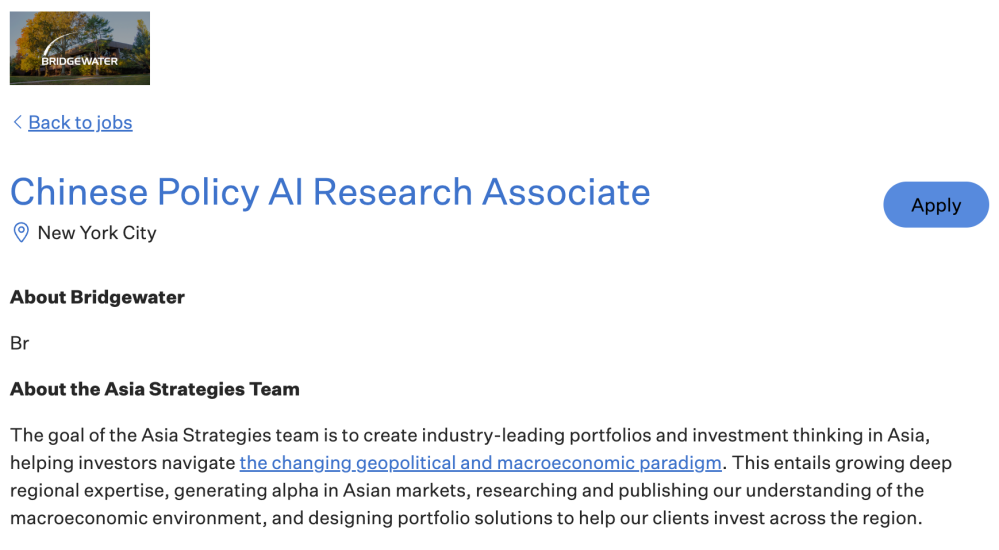
Core Insights - Bridgewater Associates is hiring for a "China Policy AI Research Assistant" position, indicating a strategic focus on China and AI integration in macroeconomic research [1][3] - The role aims to enhance understanding of China's policy environment and its impact on assets and the economy, utilizing AI tools for data processing and trend identification [3][4] Group 1: Bridgewater's Strategic Focus - The recruitment signals Bridgewater's preparation to increase its focus on the Chinese market by 2026, amidst growing global macroeconomic uncertainties [3][6] - The Asia Strategy Team at Bridgewater aims to develop leading investment research and strategies to navigate evolving geopolitical and macroeconomic landscapes [3][4] Group 2: AI Integration in Investment Research - The trend of combining subjective research with AI is gaining traction, with Bridgewater exemplifying this shift by establishing an AI lab to leverage machine learning for excess returns [4][5] - The hiring strategy reflects a transformation towards incorporating more data scientists, as stated by Greg Jensen, Co-CIO of Bridgewater [4][5] Group 3: Market Diversification Insights - Bridgewater's analysis highlights the risk of high concentration in U.S. assets, suggesting a shift towards Asian and emerging markets for better diversification [6] - The firm recommends that global equity allocations outside the U.S. should at least match those in U.S. markets, emphasizing the timing for tactical investments in non-U.S. markets [6] Group 4: Positive Outlook on Chinese Assets - Several foreign investment giants express optimism for the performance of Chinese assets in 2026, particularly in the technology sector [7] - There has been a notable inflow of funds into various U.S.-listed Chinese stock ETFs, indicating growing interest from foreign investors [7]

金融圈都在搞知识付费
远川研究所· 2026-01-13 12:30
Core Viewpoint - The article discusses the rising trend of knowledge monetization in the financial industry, highlighting how financial professionals are leveraging their expertise to create subscription-based services and courses, thus generating significant revenue despite the challenges in traditional investment avenues [6][20]. Group 1: Knowledge Monetization Trends - Financial figures indicate that 洪灏's knowledge platform saw a GMV of 12.586 million yuan within two months of a price increase to 1499 yuan per year, up from 899 yuan [6]. - 李蓓's course, priced at 12,888 yuan, sold out in two days, generating 2.57 million yuan in revenue [6]. - The article notes that the media sector is generally considered a poor business, yet knowledge monetization through private domains and courses stands out as a lucrative opportunity [6]. Group 2: Leveraging Different Types of Leverage - 纳瓦尔 identifies three types of leverage for wealth creation: labor leverage, capital leverage, and the most crucial, the ability to replicate products with zero marginal cost, such as code and media [8]. - 洪灏 and 李蓓 effectively utilize all three types of leverage, with 李蓓's company 半夏 surpassing 10 billion yuan in scale by 2022 [8][12]. - The article emphasizes that the ability to create engaging content and attract a large audience is essential for maximizing the benefits of these leverages [12]. Group 3: Performance and Market Positioning - 洪灏's investment performance has been inconsistent, with a notable spike in August 2023 when a fund he managed saw an 8.98% increase, but prior performance was lackluster [10]. - Despite questions about his actual investment results, 洪灏's marketing skills and ability to create compelling narratives have helped him attract a significant following [12][15]. - The article contrasts 洪灏's approach with 李蓓's, noting that while 洪灏 focuses on macroeconomic predictions, 李蓓 has adopted strategies to retain clients through free courses and engagement [18][19]. Group 4: Market Dynamics and Client Engagement - The financial industry is experiencing pressure from salary reductions, prompting professionals to seek alternative income sources through knowledge monetization [20]. - Investors are increasingly looking for reliable information sources, creating a demand for knowledgeable fund managers who can provide insights and emotional reassurance in a chaotic market [20]. - The article suggests that successful fund managers are adapting by targeting high-value clients and leveraging their expertise to create tailored educational content [21].

民营AMC的大旗,倒了 / 金融机构抵债资产全流程管理
Xin Lang Cai Jing· 2026-01-13 11:34
Core Viewpoint - The restructuring plan led by Wensheng Asset for Huiyuan Group has officially failed, resulting in the freezing of 640 million shares of Wensheng Asset [2][4][27] Group 1: Restructuring and Financial Issues - Huiyuan Group has stated that it has fulfilled its obligations under the restructuring investment agreement, while Wensheng Asset has failed to pay 850 million yuan of the promised investment and has not managed the operations of Beijing Huiyuan as agreed [2][25] - The failure of the restructuring plan has been attributed to Wensheng Asset's fundamental breach of the investment agreement, leading to the court's restructuring ruling remaining unfulfilled [4][27] Group 2: Background and Capital Dynamics - Huiyuan Juice, once a national brand, has been embroiled in internal conflicts and capital issues since its delisting from the Hong Kong Stock Exchange in 2021 and subsequent bankruptcy restructuring in 2022 [5][28] - Wensheng Asset injected 1.6 billion yuan into the restructuring, with claims that over 90% of the funds were intended for operational upgrades [28] - National Water Company announced plans to indirectly acquire Beijing Huiyuan, holding 21.89% of its shares after multiple transactions with Wensheng Asset [5][28] Group 3: Brand and Operational Management - Huiyuan Group accused Wensheng Asset of irresponsible actions, including sourcing juice materials from unverified suppliers, undermining the brand's safety standards [6][29] - The internal conflict has led to significant market disruptions, including product shortages on major e-commerce platforms, affecting normal operations and sales [8][31] - Huiyuan Group has declared a complete takeover of Beijing Huiyuan's operations and will manage all orders until Wensheng Asset fulfills its obligations under the restructuring agreement [9][32]

2025年中国长城资产盘活企业存量资产超800亿元
Xin Lang Cai Jing· 2026-01-13 10:35
Core Viewpoint - In 2025, China Great Wall Asset Management Co., Ltd. aims to focus on the divestiture of non-core businesses and revitalization of inefficient assets, with a target of revitalizing over 80 billion yuan in various types of stock assets throughout the year [1] Group 1 - The company will innovate asset revitalization models and concentrate advantageous resources to enhance efficiency in asset allocation [1] - Since 2025, the company has identified the revitalization of stock assets as a key point to address asset circulation bottlenecks and promote domestic economic circulation [1] - The goal is to transform "sleeping assets" into "effective supply" [1]

2025上市公司与金融机构可持续发展典型案例征集
清华金融评论· 2026-01-13 10:17
Core Viewpoint - The article emphasizes the transition of sustainable development from a strategic concept to a critical measure of high-quality economic growth in China, particularly highlighting 2025 as a pivotal year for deepening practical implementation of sustainability initiatives [3]. Group 1: Policy and Regulatory Framework - The Chinese government has introduced several policies, including the "Central Enterprise ESG Special Action Guidelines (2025)" and the "Management Measures for Information Disclosure of Listed Companies," mandating the integration of sustainable development into corporate governance and shifting from optional to standardized disclosure of non-financial information [3]. - Financial institutions are evolving from advocates of sustainability to key actors, embedding ESG principles into their strategies and business processes, and promoting green finance and responsible investment practices [3]. Group 2: Case Collection Initiative - Tsinghua Financial Review has launched a "2025 Sustainable Development Case Collection" initiative aimed at creating a high-level platform for sharing best practices in green finance and sustainable governance [4]. - The initiative encourages submissions from various sectors, including banks, insurance companies, asset management firms, and listed companies, focusing on innovative and impactful sustainability practices [6]. Group 3: Submission Themes and Requirements - The case collection is organized around three main dimensions: climate change response, social responsibility, and corporate governance, with specific topics such as pollution control, waste management, and supply chain safety [7][8]. - Submissions must reflect the positive contributions of financial institutions and listed companies to sustainable development, with a focus on authenticity and relevance to future industry pathways [8]. Group 4: Selection and Publication - A selection process will be conducted by an expert panel from Tsinghua Financial Review to identify exemplary cases, which will be published across various media platforms [12]. - Selected case representatives will have opportunities to share their experiences at events hosted by Tsinghua Financial Review, and in-depth reports will be conducted on outstanding cases [12].

百利好晚盘分析:黄金向上破位 短期维持强势
Sou Hu Cai Jing· 2026-01-13 09:09
Gold - Geopolitical tensions remain high as Iran's foreign minister claims that Iranian security forces have controlled the national situation, with the US and Israel bearing "direct responsibility" for events in Iran. President Trump has stated that any country doing business with Iran will face a 25% tariff, and airstrikes against Iran are a potential option [2] - Analyst Chen Yu from Bailihau believes that the Trump administration's threats against the current Federal Reserve Chairman Powell will likely undermine the Fed's independence, increasing market distrust in the US dollar and leading to a strong performance in gold in the short term [2] - On the technical front, the previous trading day saw a bullish trend with a closing positive candle, indicating a strong short-term market. The price has broken through previous highs, suggesting potential for further upward movement. Support is noted in the $4550-$4560 range [2] Crude Oil - The US State Department has issued an emergency security warning for American citizens to leave Iran immediately, indicating a potential for airstrikes against Iran, which could escalate tensions in the Middle East and support oil prices due to supply disruption risks [3] - Despite geopolitical tensions potentially driving oil prices higher, the fundamental outlook remains concerning due to oversupply risks, with OPEC+ and US production levels remaining high. Recent economic data indicates a slowdown in US economic growth, which may hinder improvements in oil demand [3] - Technically, the oil price has recently broken above the 20-day moving average, indicating strength. The price has surpassed the previous resistance level of $58.80, suggesting potential for further upward movement. Support is noted at the $58.50 level [3] US Dollar Index - Recent US economic data has been disappointing, with May non-farm payrolls adding only 50,000 jobs, falling short of market expectations. The annual increase for 2025 is projected to be less than 600,000, marking the worst performance since the pandemic. Although the unemployment rate has decreased from 4.5% to 4.4%, the decline in labor force participation indicates that improvements in the job market are not stable [4] - The manufacturing PMI for December fell to 47.9, remaining below the neutral line for ten consecutive months, indicating ongoing contraction in the US manufacturing sector [4] - According to CME's FedWatch tool, the probability of a 25 basis point rate cut in January is 5.0%, while the probability of maintaining the current rate is 95.0%. By March, the cumulative probability of a 25 basis point cut rises to 26.0% [4] - On the technical side, the previous trading day saw a decline from highs, indicating potential for further downward risk. However, the overall trend remains upward, with the price still above the 20-day and 62-day moving averages, suggesting short-term bullish sentiment. Support is noted at the 98.69 level [4] Nikkei 225 - The recent trend in the Nikkei 225 has been strong, with the price breaking out of previous consolidation patterns, indicating a bullish outlook and potential for further upward movement [5] - On the 4-hour chart, the price is moving along the 62-day moving average, with short-term attention on a potential pullback to test support at the 52626 level [5] Copper - The recent trend in copper has been characterized by a primary upward movement, with expectations for continuation. Indicators show that both the 20-day and 62-day moving averages are trending upward, indicating a strong bullish trend [6] - On the 4-hour chart, the price has been moving along the 62-day moving average, with attention on a potential pullback to test support at the $5.83 level [6]

贝莱德称投资者2026年押注人工智能领域时 更青睐能源企业而非大型科技公司
Jin Rong Jie· 2026-01-13 08:55
贝莱德美国核心股票投资主管Ibrahim Kanan在随调查数据发布的一份报告中表示:"在把握差异化上行 收益机遇的同时,对巨型市值股及人工智能相关敞口进行风险管理,正变得愈发重要。" 来源:环球市场播报 贝莱德在其投资方向报告中援引其近期开展的投资者调查称,计划在2026年布局人工智能投资主题的投 资者,更倾向于选择能源与基础设施供应商,而非华尔街大型科技企业。 贝莱德的调查显示,2025年,人工智能与大型科技企业主导了全球市场及股票收益,但随着微软、元宇 宙平台公司、字母表等巨头斥资数万亿美元竞逐新数据中心建设,市场开始担忧相关资本回报的不确定 性以及企业借贷成本上升的问题,投资者也在积极寻求新的投资方向。 在贝莱德针对欧洲、中东和非洲地区客户开展的调查中,参与调研的732家企业里,仅有五分之一的受 访者认为,美国头部科技集团是人工智能领域最具吸引力的投资标的。 超半数受访者表示,他们看好数据中心所需电力的供应商;37%的受访者将基础设施列为人工智能领域 的首选投资标的。 全球最大资产管理公司贝莱德于周二表示,其对未来一年人工智能领域的投资价值仍持乐观态度,但后 续将重点关注该领域更广泛的投资机遇。 仅有 ...

金融圈都在搞知识付费
Xin Lang Cai Jing· 2026-01-13 07:14
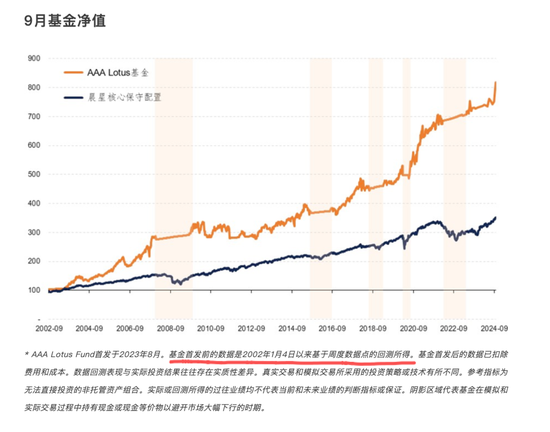
Core Insights - The rise of knowledge payment platforms among financial professionals indicates a shift in the industry, where subscription numbers are becoming more important than investment ideas [2][20] - The trend reflects a broader need for reliable information sources among investors, while financial managers seek long-term clients [34][35] Group 1: Knowledge Payment Trends - Hong Hao's knowledge platform has increased its annual fee to 1499 yuan, generating a GMV of 12.586 million yuan within two months from 14,000 subscribers [1][19] - Li Bei's course, priced at 12,888 yuan, sold out in two days, earning 2.57 million yuan [1][19] - The media industry is generally considered a poor business, yet knowledge payment and private domain marketing are exceptions attracting many financial professionals [1][19] Group 2: Leveraging Strategies - Three types of leverage are essential for wealth creation: labor leverage, capital leverage, and the most crucial, the ability to replicate products with zero marginal cost, such as media [2][20] - New wealth is increasingly generated through media and digital platforms, allowing for significant income with minimal costs [21][22] Group 3: Individual Case Studies - Hong Hao and Li Bei effectively utilize all three types of leverage, with Li Bei's firm surpassing 10 billion yuan in scale by 2022 [22][24] - Hong Hao's recent fund performance has been inconsistent, but he claims a cumulative return of 718.77% over 20 years [24][27] - Both individuals excel in creating engaging content that attracts a large audience, enhancing their ability to monetize knowledge [27][28] Group 4: Market Dynamics - The financial industry is experiencing pressure due to salary reductions, prompting professionals to seek alternative income sources through knowledge payment [34] - The shift towards media and knowledge sharing is seen as a way to maintain relevance and attract clients in a competitive market [34][35] - Financial managers are increasingly targeting high-level executives and industry experts as clients, enhancing their market positioning [35][36]
金融圈都在搞知识付费
远川投资评论· 2026-01-13 07:04
Core Viewpoint - The article discusses the rising trend of knowledge monetization in the financial industry, highlighting how prominent figures like Hong Hao and Li Bei are leveraging their expertise to generate significant income through paid courses and subscription services, despite the overall poor performance of the media sector [3][4]. Group 1: Knowledge Monetization - Hong Hao's knowledge platform has increased its annual fee to 1499 yuan, achieving a GMV of 12.586 million yuan within two months with 14,000 subscribers [3]. - Li Bei sold a course worth 12,888 yuan in just two days, generating 2.57 million yuan in revenue [3]. - The article notes that the media sector is generally considered a poor business, yet knowledge monetization through private domains and courses stands out as a lucrative opportunity [3]. Group 2: Leveraging Different Types of Capital - According to investor Naval, wealth freedom can be achieved through three types of leverage: labor leverage, capital leverage, and the most crucial, the ability to replicate products with zero marginal cost, such as media and code [5]. - Hong Hao and Li Bei effectively utilize all three types of leverage, with Li Bei already achieving wealth freedom through her business, while Hong Hao is still establishing his presence in the knowledge monetization space [5][6]. Group 3: Market Positioning and Strategy - Hong Hao's past experience as a chief strategist at major financial institutions adds credibility to his current endeavors, although his recent fund performance has been inconsistent [6][7]. - Both Hong Hao and Li Bei have successfully created strong personal brands, allowing them to attract a larger audience and monetize their insights more effectively than their peers [9][11]. - The article emphasizes that the macroeconomic topics they cover resonate with a broader audience, making their knowledge monetization efforts more appealing [9]. Group 4: Challenges and Market Dynamics - Fund managers are often cautious about transitioning to media roles due to concerns about losing professional credibility and focus [12]. - Despite skepticism about their actual investment performance, Hong Hao and Li Bei's ability to market themselves and their predictions has garnered significant attention and a loyal following [12][17]. - The article suggests that as traditional investment avenues become more challenging, financial professionals are increasingly turning to knowledge monetization as a viable alternative income source [17][18].