饮料

Search documents
8点1氪:雷军回应“小字营销”:确实是行业陋习;宇树科技:未涉及申请“绿色通道”相关事宜,上市工作正常推进;罗马仕启动重组方案
36氪· 2026-01-04 23:59
Core Viewpoint - Lei Jun, the chairman of Xiaomi Group, acknowledged the issue of "small print marketing" as a common industry practice and committed to immediate rectification, emphasizing that compliance measures should not be misinterpreted as false or excessive marketing [4][5]. Group 1: Xiaomi's Response to Marketing Practices - Lei Jun stated that "small print marketing" is an industry flaw that Xiaomi will correct starting now [4]. - He clarified that some practices used for compliance should not be labeled as misleading marketing, which he views as a significant misunderstanding of Xiaomi [4]. - Xiaomi's assistant, Xu Jieyun, mentioned that the use of small print in promotional materials has been a common practice, but they have overlooked consumer perceptions [5]. Group 2: Industry Developments - Xiaomi aims to deliver 550,000 cars by the end of 2026, focusing more resources on automotive development [16]. - The company has introduced a safety feature in its vehicles called "wheel loss protection," which is designed to enhance safety by allowing wheels to detach under certain conditions [16]. - The overall market for electric vehicles is expected to grow, with companies like Enchem entering long-term supply agreements to boost production capabilities [13].

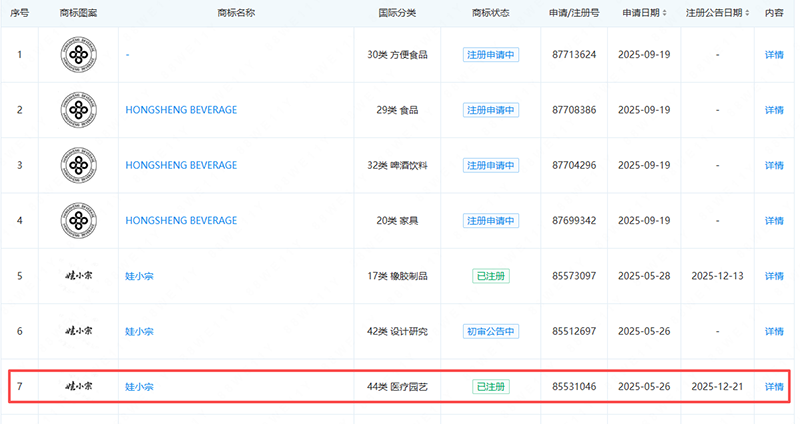
宗馥莉品牌布局有新进展:两个“娃小宗”商标及“KELLYONE 凯壹 ”注册通过
Jin Rong Jie· 2026-01-04 11:07
Group 1 - Hongsheng Beverage Group Limited has successfully registered two trademarks for "WAXIAOZONG" in the international classifications of "Social Services" and "Medical Horticulture" with the registration announcement date set for December 21, 2025, and the exclusive rights period from December 14, 2025, to December 13, 2035 [1] - The trademark "WAXIAOZONG" in the 44th class (Medical Horticulture) has been registered, while other trademarks under the Hongsheng Beverage name are still in the application process [2] - The "KELLYONE" trademark, invested by Hongsheng Group and classified under "Convenience Foods," has also been registered with the same announcement date of December 21, 2025, and an exclusive rights period from December 21, 2025, to December 20, 2035 [1][2] Group 2 - KELLYONE is a beverage brand launched by Hongsheng Group in 2016, founded by Zong Fuli, focusing on sugar-free tea drinks, soda water, and fruit and vegetable beverages, targeting new-generation consumers in first- and second-tier cities [3] - As of December 26, 2025, the legal representative of Hongsheng Group has changed from Zheng Qundi to Zong Fuli, who currently holds 29.4% of the shares in Hangzhou Wahaha Group, making her the second-largest shareholder [3]
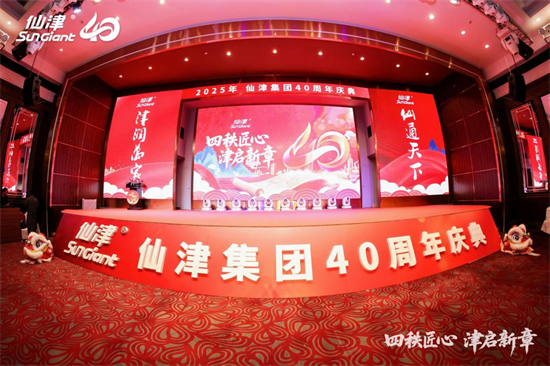
仙津集团隆重举行四十周年庆典晚宴
Jin Tou Wang· 2026-01-04 07:23
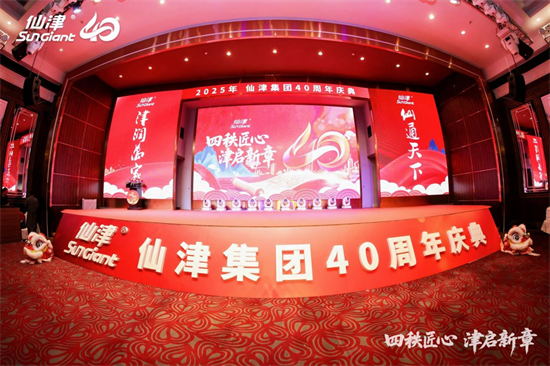
四十载砥砺前行,初心不变!2025年12月30日,"四秩匠心,津启新章"仙津集团四十周年庆典晚宴于东 莞市横沥镇稻香酒店盛大举行。 仙津集团董事长邓志华、总裁邓启俊出席,广州军区总医院原院长李永奇少将,广东省人民政府参事曾 添贵先生,广东省公安厅原处长、广东省中医药基金会东莞分会会长张光润先生,中国食品工业协会顾 问、广东省食品行业协会创会会长张俊修先生,中共广东省食品医药行业联合党委书记、广东省食品行 业协会常务副会长曾祥云先生,广东省企业管理研究院院长柳更生先生等特邀嘉宾莅临现场。集团高层 管理团队、各中心及部门负责人与团队,以及来自全国各地的经销商、供应商们欢聚一堂,一同回顾仙 津集团过往四十年的辉煌历程,共同见证发展新篇章。 灯火辉煌添喜色,雄狮献瑞庆华章!仙津集团总裁邓启俊先生上台发表致辞。他首先代表仙津集团,向 社会各界同仁、经销商伙伴及全体仙津员工致以诚挚感恩与真切祝福,同时回顾仙津集团四十年砥砺奋 进的发展成就,阐述未来发展的战略布局与核心方向。 同时他强调:仙津集团始终坚守"品质第一、合作共赢"的经营理念,未来将持续加大科研投入赋能产品 升级,以"共赢共生"为信条,深化与合作伙伴的战略协同, ...
四秩匠心,津启新章 | 仙津集团隆重举行四十周年庆典晚宴
Jin Tou Wang· 2026-01-04 07:20
四十载砥砺前行,初心不变!2025年12月30日,"四秩匠心,津启新章"仙津集团四十周年庆典晚宴于东 莞市横沥镇稻香酒店盛大举行。 仙津集团董事长邓志华、总裁邓启俊出席,广州军区总医院原院长李永奇少将,广东省人民政府参事曾 添贵先生,广东省公安厅原处长、广东省中医药基金会东莞分会会长张光润先生,中国食品工业协会顾 问、广东省食品行业协会创会会长张俊修先生,中共广东省食品医药行业联合党委书记、广东省食品行 业协会常务副会长曾祥云先生,广东省企业管理研究院院长柳更生先生等特邀嘉宾莅临现场。集团高层 管理团队、各中心及部门负责人与团队,以及来自全国各地的经销商、供应商们欢聚一堂,一同回顾仙 津集团过往四十年的辉煌历程,共同见证发展新篇章。 灯火辉煌添喜色,雄狮献瑞庆华章!仙津集团总裁邓启俊先生上台发表致辞。他首先代表仙津集团,向 社会各界同仁、经销商伙伴及全体仙津员工致以诚挚感恩与真切祝福,同时回顾仙津集团四十年砥砺奋 进的发展成就,阐述未来发展的战略布局与核心方向。 同时他强调:仙津集团始终坚守"品质第一、合作共赢"的经营理念,未来将持续加大科研投入赋能产品 升级,以"共赢共生"为信条,深化与合作伙伴的战略协同, ...
美联储降息要等,但选股票得看这个
Sou Hu Cai Jing· 2026-01-04 07:04
Core Viewpoint - The Federal Reserve is considering the economic impact of previous monetary easing and may delay interest rate cuts until later this year, depending on inflation and employment data. The focus should be on identifying stocks that can perform well regardless of policy changes [1]. Group 1: Interest Rate and Investment Strategy - Interest rate cuts are not definitive buy or sell signals; controlling costs is crucial for investment success. A notable example is Warren Buffett's long-term investment in Coca-Cola, where he maintained a low average cost per share, leading to significant profits despite market fluctuations [1]. - Institutional investors prioritize cost management before purchasing stocks, often engaging in trading activities that are not visible to the average investor. Monitoring institutional trading data can provide insights into their cost management efforts [1]. Group 2: Institutional Activity and Stock Performance - In the "9.24" market event of 2024, a blue-chip stock with consistent earnings growth and a low price-to-earnings ratio saw a 40% increase after institutional trading data indicated active cost management prior to the price surge [2]. - Stocks with low trading volumes may struggle to maintain price increases without institutional support. For instance, a small-cap stock with a circulation of less than 100 million shares experienced a brief price rise followed by a decline due to lack of institutional involvement [7]. Group 3: Monitoring Institutional Engagement - Investors should focus on whether institutions are actively managing costs rather than speculating on policy changes. Stocks can appreciate even without favorable policy news if institutions are engaged in cost management [9]. - Active institutional trading data serves as a more reliable indicator of potential stock performance than news headlines. If institutions are not participating, even positive news may lead to temporary price increases followed by declines [9].

2025年1-11月中国饮料产量为16560.6万吨 累计增长3.3%
Chan Ye Xin Xi Wang· 2026-01-04 03:36
Group 1 - The core viewpoint of the article highlights the growth trends in China's beverage industry, with a reported production of 10.46 million tons in November 2025, reflecting a year-on-year increase of 0.4% [1] - Cumulative beverage production from January to November 2025 reached 165.61 million tons, showing a cumulative growth of 3.3% [1] - The article references several listed companies in the beverage sector, including Yangyuan Beverage (603156), Chengde Lolo (000848), Dongpeng Beverage (605499), and Junyao Health (605388) [1] Group 2 - The data source for the beverage production statistics is the National Bureau of Statistics, with additional analysis provided by Zhiyan Consulting [2] - Zhiyan Consulting is recognized as a leading industry consulting firm in China, specializing in in-depth industry research reports and tailored consulting services [2] - The report titled "Analysis of the Market Operation Pattern and Future Prospects of the Beverage Industry in China from 2026 to 2032" is mentioned as a relevant document for further insights [1]


中国人最爱喝的饮料,大多数都不及格
虎嗅APP· 2026-01-03 13:35
Core Viewpoint - Shanghai is implementing a beverage "nutritional choice" grading system, marking a national first aimed at reducing sugar consumption, particularly from sugary drinks [4][5][6]. Group 1: Grading System Overview - The grading system categorizes beverages into four levels: A, B, C, and D, with A being the healthiest and D the least healthy [9]. - Manufacturers are required to label C and D grade beverages, effectively informing consumers about their health risks [9][10]. - The grading is based on three criteria: sugar content, saturated fat content, and the presence of non-sugar sweeteners [10]. Group 2: Comparison with Singapore - Singapore has already implemented a similar grading system since late 2022, which has now expanded to include freshly prepared drinks [5][6]. - The Singaporean system is considered one of the strictest globally, with penalties for non-compliance, including advertising bans for D grade beverages [14]. Group 3: Health Implications - The average sugar intake in Singapore is significantly above the World Health Organization's recommended limit, with many people consuming around 60 grams daily, primarily from sugary drinks [37]. - In contrast, China's average daily sugar intake is lower, at about 21 grams, suggesting that the grading system could be beneficial if adapted [38][42]. Group 4: Beverage Analysis - Common beverages like carbonated drinks and fruit juices often fall into C or D grades due to high sugar content, while unsweetened teas and sodas are more likely to achieve A grades [24][30]. - The grading system may not favor certain products like full-fat milk, which could receive lower grades due to saturated fat content, despite their nutritional benefits [26][29]. Group 5: Consumer Behavior and Alternatives - The rise of non-sugar sweeteners in beverages is a response to sugar reduction efforts, but their health implications are still debated [49][52]. - The World Health Organization has raised concerns about the potential health risks associated with excessive consumption of non-sugar sweeteners, suggesting that moderation is key [54][55].
娃哈哈不上市的资本迷局:揭开宗庆后家族37年的股权魔术
Sou Hu Cai Jing· 2026-01-03 06:26
Group 1 - The core issue is why Wahaha, despite generating over 50 billion in annual revenue, has refused to go public for 37 years, with concerns that listing would expose its financial practices and valuation bubble [1][4] - Wahaha's founder, Zong Qinghou, has created a complex capital structure that allows for profit transfer through parallel companies, avoiding scrutiny that would come with a public listing [3][5] - The beverage industry is witnessing a shift where competitors like Nongfu Spring are leveraging public financing for innovation, while Wahaha remains stagnant due to its reluctance to embrace transparency [6] Group 2 - The investigation into a joint venture with Danone revealed that Zong's family had registered 87 offshore companies, which generated significant profits without authorization, highlighting the hidden financial maneuvers of Wahaha [3] - The potential for valuation inflation in capital markets is illustrated through hypothetical funding rounds, emphasizing that Wahaha's true profitability would be revealed if it were to go public [4] - The intricate structure of Wahaha, including its dual company setup with state-owned shares, presents significant barriers to listing, such as competition with non-listed entities and complex ownership arrangements [5]

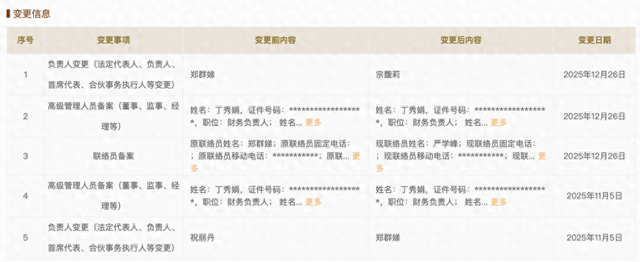
宗馥莉,重任法定代表人
Xin Lang Cai Jing· 2026-01-03 05:54
来源/每日经济新闻 全国工商信息系统显示,2025年12月26日,宏胜集团法定代表人由郑群娣变更为宗馥莉。此外,高级管 理人员备案也相应发生了变更,郑群娣在变更前担任宏胜集团经理一职,而变更后,高级管理人员中不 再有郑群娣的名字。变更后宗馥莉同时担任宏胜集团的董事和经理。 | 宏胜饮料集团有限公司 | | | | | NAW 业 下载报告 @ 风险监控 | 14 C) 关注 | | --- | --- | --- | --- | --- | --- | --- | | 您 深度思考 (DeepSeek-R1) 图院解读 > | | | | | | | | 企业认证 | 开业 查看艾利亚图+ A级纳股人(2024) 国泰民总书资+ 利进型体质量 · 沙沃尼第2个+ | | | | | C 22小时0分钟期退新 | | 统一壮会值用代码:9133010975441236XF 更多工商信息 | 法定代表人:■ 字题词 TA有191家企业> | | 电话: 0571-8788060 ... 里多(32) 邮箱: pr@h-shgroup.com 则冬邮箱14 隐藏 | | | ○在线影系 | | 注册送本:1,025 ...

宗馥莉重任宏胜集团法定代表人,严学峰任联络员
Xin Lang Cai Jing· 2026-01-03 04:50
智通财经记者 吴雨欣 宏胜饮料集团有限公司官网显示,该公司成立于2003年,以饮料为主业,同时经营饮料上游产业链配料 生产、高端装备制造、印刷包装,提供饮料生产全产业链解决方案。宏胜饮料集团有限公司由恒枫贸易 有限公司100%控股。 宏胜系是娃哈哈商品的实际生产和销售方,而娃哈哈集团是商标拥有方。 2025年9月,宗馥莉已向娃哈哈集团有限公司辞去公司法定代表人、董事及董事长等相关职务。2025年 11月,杭州娃哈哈集团有限公司发生工商变更,宗馥莉卸任法定代表人,变更为许思敏。同时,许思敏 还任杭州娃哈哈集团有限公司董事长、总经理职务。 虽然许思敏接任杭州娃哈哈集团法定代表人、董事长、总经理职位,但天眼查APP显示,宗馥莉的持股 比例未发生变化,她仍持有杭州娃哈哈集团有限公司29.40%的股权。 有娃哈哈员工告诉智通财经记者,许思敏此前是宏胜集团法务负责人,"他很年轻,是90后,大家都知 道,许思敏其实是宗馥莉的人,背后抓工作的依然是宗馥莉。" 宗馥莉重新担任宏胜集团法定代表人。 近日,国家企业信用信息公示系统显示,2025年12月26日,宏胜饮料集团有限公司(宏胜集团)由郑群 娣变更为宗馥莉,联络员备案也由郑 ...