
电子设备

Search documents
爆了!最猛散户扫货中国资产
Ge Long Hui· 2025-07-17 09:20
Group 1 - South Korean retail investors have significantly increased their investment in Chinese assets, making the Chinese stock market the second-largest overseas investment destination for them, following the US market [1][2] - As of July 15, the cumulative trading volume of South Korean investors in Hong Kong and A-shares has exceeded $5.4 billion, with notable net purchases in companies like Xiaomi, BYD, and CATL [1][2] - The aggressive trading style of South Korean retail investors reflects a broader trend of foreign capital returning to the Chinese stock market, as evidenced by a nearly twofold increase in trading volume in February compared to the previous month [2] Group 2 - International investment institutions are showing renewed interest in the Chinese market, with Bridgewater Associates adjusting its view on Chinese stocks to "moderate overweight" based on policy support and relatively low valuation levels [3] - The sentiment among long-term investors in the A-share market is mixed, with frustrations over stagnant index levels juxtaposed against hopes for future growth [4] Group 3 - The bond ETF market in China is experiencing significant growth, with total assets reaching approximately 431.57 billion yuan as of July 17, 2023, and a net inflow of 196.04 billion yuan this year [19][21] - The recent launch of the first batch of 10 technology innovation bond ETFs has attracted substantial capital, with some ETFs seeing turnover rates exceeding 600% on their debut [11][13][18] - The rapid expansion of credit bond ETFs is expected to continue, driven by the inclusion of these products in general pledge-style repurchase agreements and heightened market interest [23]

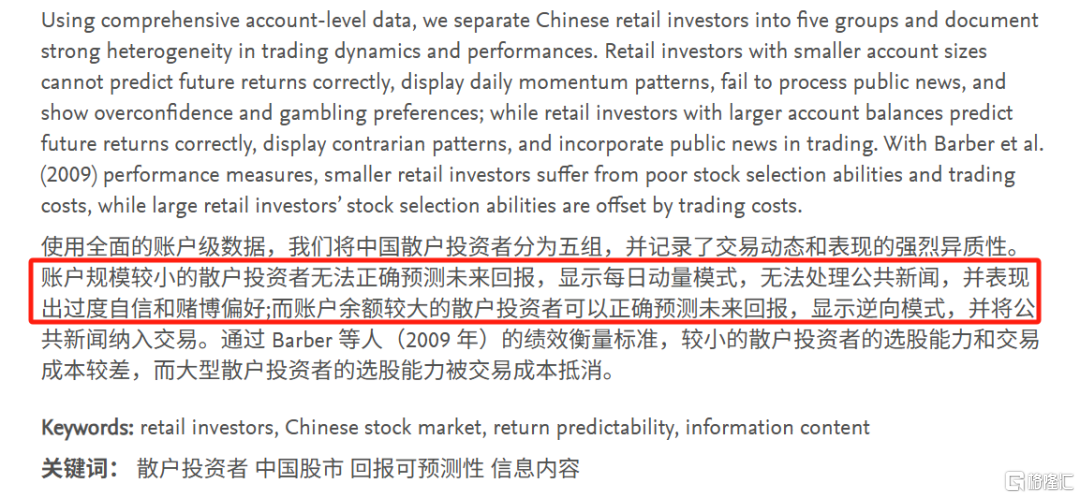
链博会“朋友圈”持续扩容 外资企业以“链”会友寻求合作新机遇
Yang Shi Wang· 2025-07-17 07:05
Core Insights - The Chain Expo is the world's first national-level exhibition focused on supply chains, showcasing a significant international presence with exhibitors from 75 countries and regions, and 35% of exhibitors being from overseas [1][3] - The event emphasizes industry collaboration rather than mere product sales, with a notable increase in U.S. exhibitors, which grew by 15% compared to the previous year, making them the largest group of overseas exhibitors [3][5] - The establishment of a Sino-foreign exhibitor alliance during the expo aims to promote resource sharing and industrial collaboration, creating a "never-ending Chain Expo" [8] Group 1 - The Chain Expo reflects global confidence in China's economic development, with a growing network of international participants [1][3] - Major companies like Apple, PwC, and NVIDIA are showcasing advancements in smart manufacturing, low-altitude economy, and AI technologies, indicating strong international collaboration [3][5] - The Chinese market is highlighted as vital for U.S. companies, with significant opportunities in AI and clean energy sectors, as noted by executives from NVIDIA and U.S. energy firms [5][7] Group 2 - The Chinese government expresses commitment to maintaining a stable global supply chain and fostering an open world economy, emphasizing the importance of resource sharing and technological integration among countries [7][8] - The Chain Expo serves as a platform for enhancing resource sharing and technology alignment among global enterprises, reinforcing China's high-level openness to the world [7][8]


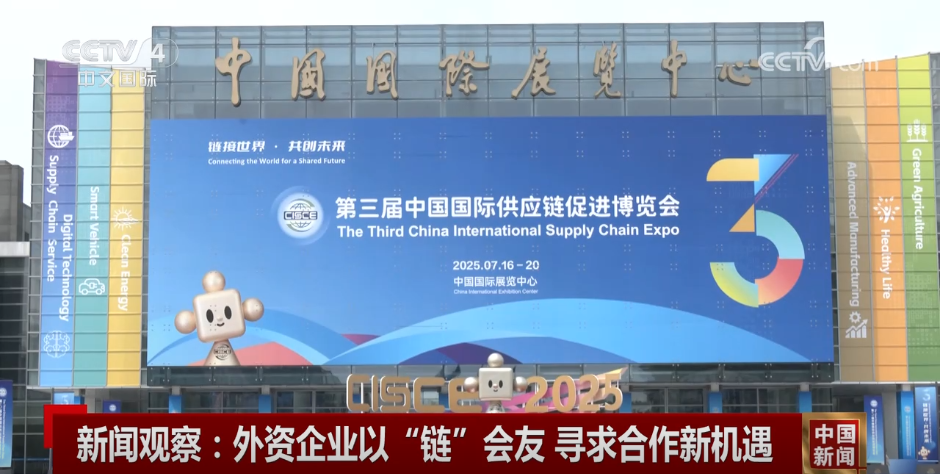
“顶流”云集、“组链”亮相 众多中外企业为何加速涌向链博会?
Yang Shi Wang· 2025-07-17 02:15
Core Insights - The third China International Supply Chain Promotion Expo opened on July 16, attracting over 650 enterprises and institutions, with more than 65% of exhibitors being Fortune 500 companies and industry leaders [1][3] - The number of American exhibitors increased by 15% compared to the previous year, despite the new tariff policy set to take effect on August 1 [1][6] Group 1: Participation and Engagement - This year's expo saw a significant increase in participation, with a 35% rise in foreign exhibitors, including major multinational companies like Nvidia, Schneider, L'Oreal, and Medtronic making their debut [3][5] - High-level executives, referred to as "first leaders," attended the expo, indicating a shift from previous years where lower-level representatives participated [3] Group 2: Strategic Importance of China - American companies view the Chinese market as large and dynamic, with Nvidia's CEO highlighting the importance of the market for AI applications and the presence of 50% of the world's AI researchers [6][11] - The CEO of Yosemite Energy noted China's leadership in clean energy and the significant opportunities presented by its renewable energy scale [8] Group 3: Business Logic Behind Participation - American multinational companies are optimizing their operations in China to ensure investment safety and efficiency, using the expo as a key channel to access local suppliers and technology solutions [11] - The expo serves as a platform for these companies to build brand recognition, understand local demands, and adapt to the new tariff environment [11] Group 4: Presence of Leading Companies - Notable companies such as Nvidia, which recently became the first company to surpass a market value of $4 trillion, and other prominent firms like Schneider, Lenovo, and Alibaba participated in the expo [13][14] - The expo is seen as a critical venue for global top-tier companies to deepen local cooperation and understand market trends amid increasing supply chain risks [14]
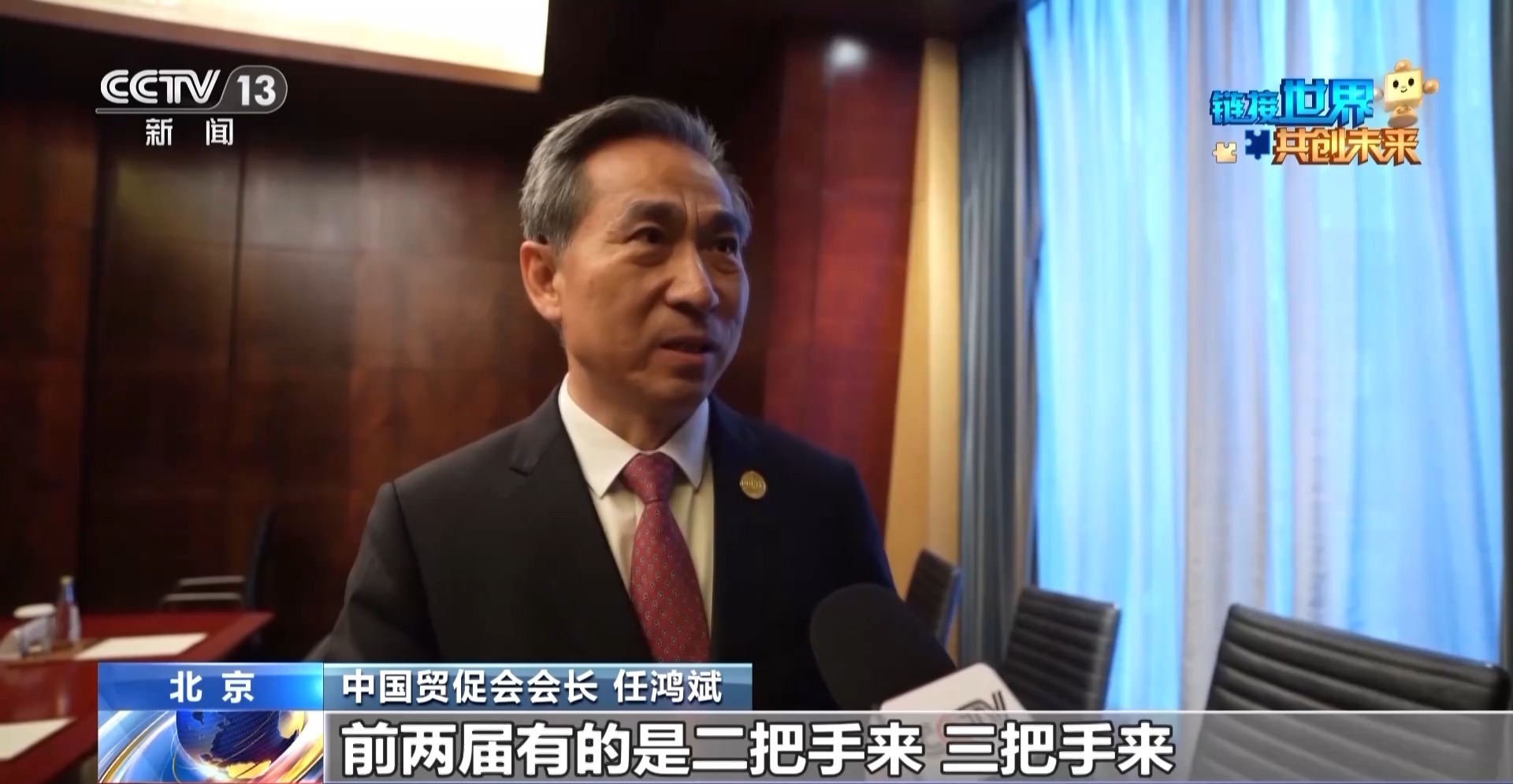
财经老王丨新伙伴新商机 链博会上找朋友
Yang Shi Xin Wen Ke Hu Duan· 2025-07-16 14:05
Core Insights - The Chain Expo is witnessing significant growth, with over 800 participants, including global Fortune 500 companies and newly established firms, indicating a diverse and expanding network [1] - High-level attendance has increased, with top executives participating, reflecting the event's importance in enhancing global supply chain cooperation, particularly with China [3] Group 1: Participation and Expectations - The event has attracted a mix of first-time and returning participants, all eager to explore partnerships and opportunities across various supply chains [1][15] - Notable attendees include executives from various sectors, highlighting the event's broad appeal and the potential for cross-industry collaboration [1][9] Group 2: Industry Perspectives - HP's CEO emphasized the company's extensive collaboration in China, having produced over 450 million products, showcasing the need for strong partnerships [5] - The UNCTAD's trade facilitation head expressed concerns over declining global logistics cooperation and hopes for improved collaboration with China [7] Group 3: Educational and Consulting Contributions - Educational institutions, such as the University of New South Wales, are contributing to the industry by training Chinese students who are now leaders in major photovoltaic companies, promoting Sino-Australian cooperation [13] - Consulting firms are also present, offering strategic advice rather than products, indicating a shift towards service-oriented contributions in the supply chain [11]
索尼20250514
2025-07-16 06:13
Summary of Sony Group Corporation's Earnings Call Company Overview - **Company**: Sony Group Corporation - **Focus**: Entertainment business, including games, music, film, and TV programs - **Key Strategy**: Shift towards entertainment, leveraging IP expansion and innovative technologies Core Points and Arguments Strategic Direction - Sony has shifted its business direction significantly towards entertainment, which now accounts for approximately 61% of consolidated sales [1][2] - The long-term creative entertainment vision aims to deliver content through creativity and technology, fostering synergies among various businesses [2] Financial Performance - **FY24 Results**: - Consolidated sales (excluding financial services): ¥12,043.9 billion - Operating income: ¥1,276.6 billion - Record highs in both sales and operating income [9] - **FY25 Forecast**: - Projected sales: ¥11,700 billion - Operating income: ¥1,380 billion, with a potential impact of ¥100 billion from U.S. tariffs [11] Segment Performance - **Game and Network Services**: - Continued growth in PlayStation 5 user base and revenue from services like PlayStation Plus [2][12] - FY24 sales increased by 9% year-on-year to ¥4,670 billion [12] - **Music Segment**: - FY24 sales increased by 14% to ¥1,842.6 billion, with a focus on global market expansion [13] - **Film Segment**: - Anticipated recovery with new titles and a strong IP lineup, including upcoming Spider-Man films [4] - **Anime Growth**: - Crunchyroll's subscriber base has grown to over 17 million, with expectations for continued growth in the anime market [5][6] Technological Innovations - Investment in content creation technologies, including imaging solutions and real-time VFX, to enhance entertainment experiences [7][8] - Focus on mobile image sensors and their evolving capabilities to meet market demands [8] Challenges and Risks - Anticipated impact of U.S. tariffs on profitability, with proactive measures being taken to mitigate risks [11][19] - Ongoing monitoring of economic conditions, particularly employment trends in the U.S. as indicators of potential growth deceleration [25] Future Outlook - Continued emphasis on cross-business collaborations to enhance content creation and distribution [4][5] - Plans for strategic investments and acquisitions in high-growth markets, particularly in music and anime [3][5] Shareholder Returns - A share buyback facility of ¥250 billion and an increase in dividends planned for FY25 [17][18] Other Important Content - The financial services segment is undergoing a spin-off, with implications for future financial reporting [10][15] - The company is exploring location-based entertainment (LBE) as a means to enhance consumer engagement [21][22] - The potential for further business segment spin-offs is acknowledged but not currently planned [26] This summary encapsulates the key points from Sony Group Corporation's earnings call, highlighting the company's strategic focus, financial performance, segment insights, technological advancements, challenges, and future outlook.
太诡异,退市高危股,6天暴涨超250%,两个大户刚被处罚!充电宝新国标要来了,受益股曝光
Zheng Quan Shi Bao Wang· 2025-07-16 04:39
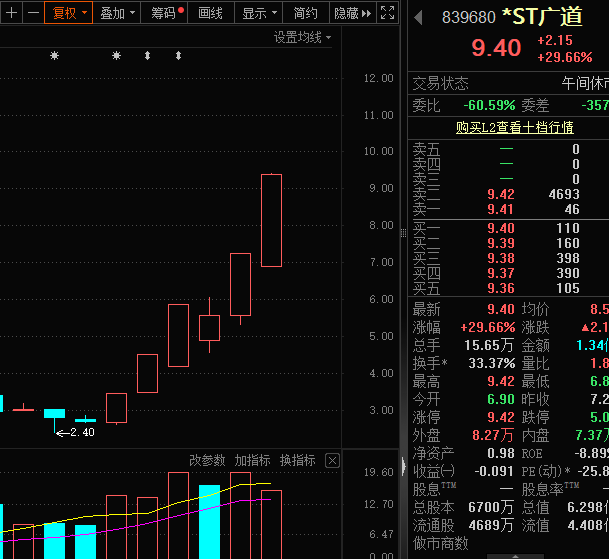
Group 1: Stock Performance and Risks - *ST Guandao (839680) experienced a significant price increase, with a cumulative rise of over 250% in six days, reaching a peak price of 9.42 yuan and a daily increase of 29.66% on July 16 [1][3] - The stock is classified as a high-risk delisting stock due to previous financial fraud revelations, with warnings issued about the potential for mandatory delisting [3] Group 2: Regulatory Actions - On July 15, the Beijing Stock Exchange imposed self-regulatory measures on two accounts involved in trading *ST Guandao, restricting their trading activities for one month due to abnormal trading behaviors that misled other investors [3] Group 3: Charging Industry Developments - The Ministry of Industry and Information Technology is soliciting opinions on the revision of the "Mobile Power Safety Technical Specifications," which will establish stricter technical standards for mobile power sources, including power banks [8][9] - The domestic power bank market is projected to reach approximately 10.46 billion USD (about 74.7 billion yuan) by July 2025, accounting for over 30% of the global market [9] Group 4: Company Performance in Charging Sector - Anker Innovations (300866) is expected to achieve revenue of 12.667 billion yuan in its charging and energy storage business in 2024, representing a year-on-year growth of 47.23% [10] - Ugreen Technology (301606) reported that charging-related products accounted for 38.08% of its total revenue in 2024 [10] - Companies like Anker Innovations and Ugreen Technology have shown strong stock performance, with year-to-date increases exceeding 26% [11]

8点1氪:山姆客服回应上架“好丽友派”引争议;向佐被爆欠赌债超百万,澳门美高梅赌场提告追讨;英伟达将恢复H20在中国的销售
3 6 Ke· 2025-07-16 00:07
Group 1 - Sam's Club has introduced a new low-sugar product in collaboration with Haoliyou, which has led to member dissatisfaction regarding product selection [1] - The product features an 80% reduction in sugar and a 30% increase in cocoa content, but members feel that Sam's Club is becoming more homogenized compared to regular supermarkets [1] - Popular products like egg yolk pastry and caramel layered cakes have been removed from shelves, raising concerns about Sam's Club's product selection strategy [1] Group 2 - Actor Xiang Zuo is being sued by MGM Macau for failing to repay a gambling debt of 1.4 million HKD (approximately 1.28 million RMB) [2] - The debt originated from a loan of 2 million HKD taken on December 1, 2024, with an agreement to repay on the same day [2] Group 3 - Nvidia has received approval from the U.S. government to sell its H20 chip in China and will launch a new GPU named RTX Pro [3][4] - The H20 chip is designed specifically for the Chinese market and is an AI accelerator based on Nvidia's Hopper architecture [3] - AMD has also confirmed the resumption of MI308 chip exports to China following Nvidia's announcement [3][4] Group 4 - China's GDP grew by 5.3% year-on-year in the first half of the year, with a total GDP of 66,053.6 billion RMB [5] - Hubei province has extended marriage leave to 15 days, joining 28 other provinces in this initiative [5] Group 5 - Sony has halted sales of the Xperia 1 VII smartphone in multiple markets due to issues such as random reboots and inability to power on [7] - The company has removed the Xperia 1 VII from its official channels in Finland and other European regions [7] Group 6 - Geely Auto has signed a merger agreement with Zeekr, with Geely acquiring all outstanding shares of Zeekr [8] - Shareholders of Zeekr can choose between cash or shares of Geely Auto as compensation [8] Group 7 - Amazon has launched a preview version of its AI programming tool Kiro, which collaborates with developers to define requirements before coding [13] - Kiro aims to compete with existing tools like GitHub's Copilot and Google's Gemini Code Assist [13] Group 8 - Bubble Mart expects a revenue increase of no less than 200% and a profit increase of no less than 350% for the six months ending June 30, 2025 [14] - Yonghui Supermarket anticipates a net loss of 240 million RMB for the first half of 2025 [14] Group 9 - Apple has decided to adopt Samsung's solution for its first foldable iPhone instead of pursuing its own development [15] - This decision will enhance collaboration between Apple and Samsung in the supply chain [15] Group 10 - Google plans to invest $25 billion in the U.S. over the next two years for data centers and AI infrastructure [17] - Xiaopeng Huitian has completed a $250 million Series B financing round to support the development and commercialization of flying cars [18]

苹果5亿美元押注美国唯一稀土商,强化本土供应链布局
Hua Er Jie Jian Wen· 2025-07-15 11:19
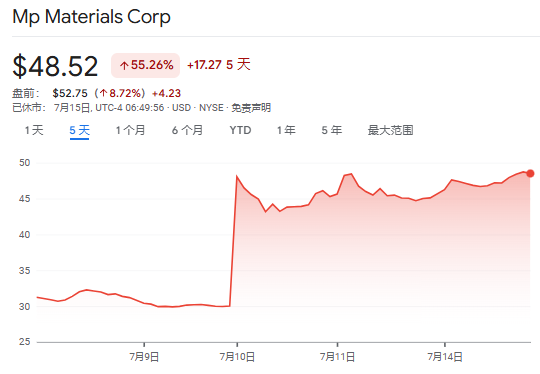
Group 1 - Apple plans to invest $500 million in MP Materials, the only operating rare earth mining company in the U.S., marking a strong support for the domestic critical mineral supply chain [1] - The agreement includes Apple's procurement of U.S.-made rare earth magnets from MP Materials' Texas facility, seen as a significant outcome of the current administration's strategy to strengthen domestic supply chains [1][2] - Following the announcement, MP Materials' stock surged by 12% in pre-market trading, building on a previous 48% increase, reaching a three-year high [1] Group 2 - The collaboration between Apple and MP Materials will involve constructing a new recycling facility in Mountain Pass, California, to process materials from old electronics for future Apple products [2] - Plans also include building a new factory in Fort Worth, Texas, to produce magnets for Apple products and other global electronic devices, aiming to reduce reliance on overseas suppliers [2] - A senior White House official stated that this investment is a significant victory for the administration, benefiting the nation and American workers while being a sound business move for Apple [2] Group 3 - Just days before Apple's investment announcement, the U.S. Department of Defense revealed a $400 million investment in MP Materials, acquiring a 15% stake and committing to purchase products at double the current market price for a 10-year period [2] - MP Materials described the government investment as a "transformative public-private partnership," initiating efforts to accelerate the construction of a domestic rare earth magnet supply chain and reduce foreign dependency [2] - Rare earth elements are crucial for manufacturing strong magnets used in defense technologies, electric vehicles, wind turbines, and smartphones [2]

一图看懂中报预告:近43%个股上半年“预喜” 化工、电子、机械板块业绩爆发
news flash· 2025-07-15 09:45
Core Viewpoint - The report highlights a significant number of companies across various sectors, particularly in non-bank financials, metals, and steel, that are expected to show strong profit growth in the upcoming earnings announcements, with many companies projecting substantial increases in net profit [2][3][19]. Group 1: Earnings Forecasts - Nearly 1,500 companies have disclosed their earnings forecasts for the first half of 2025, with an overall disclosure rate of 27.54% [3]. - Among these, sectors such as real estate, coal, building materials, and steel have a disclosure rate exceeding 50% [3]. - Approximately 650 companies are expected to report positive earnings (including increases, slight increases, continued profitability, and turnaround), accounting for 43% of the total [3]. Group 2: Performance Expectations by Sector - Non-bank financials, metals, home appliances, and electronics sectors show a high proportion of companies expected to be profitable in the first half of the year [5]. - The sectors with the highest number of companies projecting significant earnings growth include basic chemicals, electronics, machinery, agriculture, power equipment, and pharmaceuticals, with over 20 companies expected to double their earnings [6]. Group 3: Notable Companies - South China Precision Engineering is leading with an extraordinary projected earnings growth rate of 286 times, while 27 other companies are expected to see growth rates exceeding 10 times [19]. - The report lists several companies with significant projected earnings, including China Shenhua and Tuhai Mining, with lower bounds of net profit forecasted at 236 billion and 232 billion respectively [20]. Group 4: Sector-Specific Insights - The report provides detailed insights into various sectors, indicating that the white goods, seasoning and fermentation products, precious metals, and marine equipment sectors have 100% of their companies forecasting positive earnings [12]. - Conversely, sectors such as kitchen and bathroom appliances, aerospace equipment, and cosmetics show no companies expecting profitability [13].


2025年上半年经济数据点评:5.3%的预期与现实
Minsheng Securities· 2025-07-15 09:15
Economic Growth - China's GDP for the first half of the year reached 66,053.6 billion yuan, with a year-on-year growth of 5.3%[3] - The GDP growth rate for the second quarter was 5.2%, slightly lower than the first quarter's 5.4%[3] - A projected growth rate of 4.7% in the second half would still allow for achieving the annual target of around 5%[4] Trade and International Relations - China's GDP share relative to the US is expected to recover, which is crucial amid current international trade tensions[4] - The resilience shown in China's economy may provide leverage in trade negotiations, especially with the US increasing tariffs on other economies[4] Consumption Trends - Retail sales showed a decline in June, influenced by the end of the "618" shopping festival and high base effects from last year[5] - Restaurant income saw a significant drop in June, with a year-on-year decrease attributed to high base effects and competitive pressures from platforms like JD and Meituan[5] Industrial Performance - Industrial production exceeded expectations, with June's industrial value-added growth recorded at 6.8%, driven by a surge in exports[5] - However, the industrial capacity utilization rate fell to 74.0% in the second quarter, indicating potential pressures on future production[7] Investment Insights - Manufacturing investment growth slowed to 5.1% in June, reflecting weakened private sector confidence and investment activity[7] - Infrastructure investment growth decreased to 5.3% in June, primarily due to declines in public utilities and environmental sectors[8] Real Estate Market - The real estate market is under pressure compared to the previous year, with investment growth declining and sales in 30 cities dropping significantly[8] - Despite improvements in certain real estate indicators, the overall investment trend remains negative, indicating ongoing challenges in the sector[8]