
航空航天

Search documents
财联社1月22日早间新闻精选
Xin Lang Cai Jing· 2026-01-22 00:25
Group 1 - The Ministry of Finance and three other departments announced a tax policy for innovative enterprises, stating that from January 1, 2026, to December 31, 2027, individual investors will be temporarily exempt from personal income tax on capital gains from the transfer of innovative enterprise CDRs [2] - The Ministry of Finance issued a notice regarding the establishment of duty-free shops at 41 ports, including Wuhan Tianhe International Airport, allowing residents from Macau to purchase duty-free goods up to 15,000 yuan [3] - The Ministry of Housing and Urban-Rural Development emphasized the need for policy support and reform innovation to ensure a smooth transition in the real estate sector, focusing on establishing foundational systems for development, financing, and sales [4] Group 2 - The Suzhou Municipal Committee released suggestions for the 15th Five-Year Plan, highlighting the promotion of digital development and the implementation of the "Artificial Intelligence +" initiative [5] - The Ministry of Finance issued a notice to address abnormal low-price issues in government procurement, urging procurement entities to set reasonable maximum prices and clear requirements [6] - Guangdong Province introduced policies to promote high-quality development in transportation through artificial intelligence, encouraging enterprises to innovate in core technologies and applications [7] Group 3 - Baiwei Storage indicated that storage product prices are expected to continue rising in the first and second quarters of 2026 [8] - Moore Threads announced projected revenues of 1.45 to 1.52 billion yuan for 2025, representing a year-on-year growth of 230.70% to 246.67%, despite a net loss of 950 million to 1.06 billion yuan [9] - Demingli expects a net profit of 650 million to 800 million yuan for 2025, an increase of 85.42% to 128.21% year-on-year [10] Group 4 - The stock of Tianfu Communication is projected to have a net profit of 1.881 to 2.15 billion yuan for 2025, reflecting a year-on-year growth of 40.00% to 60.00% [10] - Zhongchao Holdings stated that its subsidiary Jiangsu Precision Casting is focused on high-temperature alloy precision casting for aerospace and medical applications, recently receiving an order for 40 sets of thrust chamber tops [11] - Han Jian Heshan is planning to acquire a 52.51% stake in Liaoning Xingfu New Materials, with stock suspension in effect [12] Group 5 - JinkoSolar announced an expected net loss of 5.9 to 6.9 billion yuan for 2025 [13] - Xinda Real Estate anticipates a net loss of 7.6 to 8.2 billion yuan for 2025 [13] - The US stock market saw all three major indices rise, with the Dow Jones up 1.21%, Nasdaq up 1.18%, and S&P 500 up 1.16%, while the Nasdaq Golden Dragon China Index rose by 2.21% [14]
回眸二〇二五:解码中国制造的升级脉动
Jing Ji Ri Bao· 2026-01-22 00:02
Core Viewpoint - China's manufacturing sector is poised for high-quality development, focusing on high-end, intelligent, green, and integrated approaches to overcome challenges and enhance its global competitiveness [1][2][3][6][12]. High-End Development - High-end manufacturing is crucial for China's economic quality, addressing issues like reliance on foreign technology and enhancing the resilience of the supply chain [2][3]. - The transition to high-end manufacturing is necessary to optimize industrial structure and meet the growing demand for high-quality products [3]. - By 2025, China's automotive production and sales are expected to exceed 34 million units, maintaining its position as the world's largest market for 17 consecutive years [3]. Intelligent Development - The integration of artificial intelligence in manufacturing is transforming the sector, enhancing efficiency and driving innovation [6][7]. - By 2025, over 1 million industrial devices are expected to be connected through industrial internet platforms, significantly improving production efficiency and reducing costs [7][8]. - The digital transformation is not limited to large enterprises; small and medium-sized enterprises are also rapidly adopting digital technologies [8]. Green Development - The shift towards green manufacturing is essential for sustainability and economic growth, with a focus on reducing carbon emissions and enhancing resource efficiency [9][10]. - By 2025, nearly 60% of new energy vehicles are expected to be part of vehicle replacement programs, reflecting a strong consumer preference for green products [10][11]. - Innovative green technologies are being adopted across industries, contributing to significant reductions in carbon emissions [10]. Integrated Development - The integration of manufacturing with services and digital technologies is reshaping the industry, creating new growth opportunities and enhancing competitiveness [12][13]. - Policies are being implemented to promote service-oriented manufacturing, encouraging companies to shift from product sales to service-oriented business models [13][14]. - The collaboration between large and small enterprises is fostering a more integrated and efficient industrial ecosystem [14][15].
新闻发布厅丨从全年报感受河南经济质感和温度
He Nan Ri Bao· 2026-01-21 23:37
Core Viewpoint - The economic performance of Henan in 2025 demonstrates strong resilience and vitality, achieving a stable and improving trend amidst complex international conditions and economic challenges [1][2]. Economic Growth - The GDP of Henan reached 6.66 trillion yuan, with a year-on-year growth of 5.6%, surpassing the average growth rate of 1.2 percentage points from 2021 to 2024 [2]. - Key economic indicators showed growth rates above the national average throughout the year, indicating both qualitative and quantitative improvements [2]. Consumption and Retail - The total retail sales of consumer goods in Henan amounted to 2.9 trillion yuan, with a year-on-year increase of 5.6%, exceeding the national average by 1.9 percentage points [3]. - Emerging consumption trends, such as emotional and experiential consumption, have significantly boosted related industries like dining and tourism, with the film production industry seeing a revenue increase of 115.2% [3]. Industrial Development - Traditional industries are undergoing rapid transformation, while strategic emerging industries are optimizing, with high-tech manufacturing and strategic emerging industries growing by 16.6% and 13% respectively [4]. - The contribution rate of the "7+28+N" industrial chain to industrial growth reached 70.4%, with significant growth in sectors like optoelectronics and aerospace [4]. Policy Support - The economic performance is supported by macroeconomic policies aimed at integrating national development with local growth, enhancing connectivity and infrastructure [5]. - The contribution rate of Henan's foreign trade to the national total increased from 0.5% in 2024 to 7% in 2025, reflecting an expanding international trade network [6]. Future Outlook - The logistics industry index in December 2025 was 52.2, indicating a positive trend, while consumer prices rose by 1.1% year-on-year [7]. - The government plans to implement more proactive fiscal policies in 2026, focusing on enhancing public welfare and supporting investment in human capital [8].
2026 凝心聚力绘新卷 砥砺奋进开新局
Xin Lang Cai Jing· 2026-01-21 22:36
Core Viewpoint - Harbin aims to achieve a balanced economic growth with a GDP increase of 5% and a focus on enhancing production capacity and quality across various sectors, while ensuring social stability and environmental sustainability [11]. Economic Development Goals - The expected economic growth targets for Harbin include: - GDP growth of 5% - Agricultural output growth of 3.5% - Industrial value-added growth of 5.5% - Fixed asset investment growth of 7% - Retail sales growth of approximately 4.5% - Public budget revenue growth of 6% - Synchronization of urban and rural residents' income growth with economic growth - A reduction of carbon emissions per unit GDP by about 3.8% [11]. Consumer and Investment Expansion - Strategies to boost consumption include: - Developing new consumption formats and enhancing service supply - Implementing policies for replacing old consumer goods to stimulate urban and rural consumption - Expanding service consumption and promoting traditional brands [12]. - Investment strategies focus on: - Targeting key sectors for long-term investment support - Attracting foreign strategic investors and expanding industrial investments with over 700 projects and investments exceeding 60 billion yuan [12]. Industry Development - Emphasis on fostering new and future industries such as: - Digital economy and biotechnology - High-end equipment, aerospace, and renewable energy sectors - Upgrading traditional industries like manufacturing and food production through technological improvements [13]. - The goal is to create competitive advantages by strengthening supply chains in emerging sectors [13]. Tourism and Cultural Development - Plans to enhance tourism include: - Upgrading key scenic areas and promoting winter sports tourism - Integrating cultural, sports, and commercial activities to boost tourism appeal [14]. - Development of high-quality tourist attractions and services to improve visitor experience [14]. Agricultural and Rural Development - Agricultural initiatives aim to: - Enhance production capacity and quality through technology and sustainable practices - Maintain grain planting areas above 30 million mu and grain production above 25 billion jin [15]. - Focus on rural revitalization and improving living conditions through infrastructure development [16]. Reform and Open Economy - Efforts to improve the business environment include: - Streamlining administrative processes and enhancing digital government services - Strengthening legal protections for market participants [17]. - Expansion of high-level open cooperation, particularly in cross-border trade and logistics [17]. Urban Development and Infrastructure - Urban planning will focus on: - High-standard implementation of urban construction projects, including heating and transportation infrastructure [18]. - Initiatives for urban renewal and environmental improvements, including waste management and pollution control [19]. Social Welfare and Employment - Employment strategies include: - Expanding job opportunities for youth and vulnerable groups, targeting over 87,000 new urban jobs [20]. - Enhancements in social security and healthcare services to improve overall community well-being [20].


GE Aerospace Earnings Are Coming. Why It's All About the Outlook.
Barrons· 2026-01-21 21:15
Group 1 - The core point of the article is that GE has consistently outperformed Wall Street's earnings estimates for 12 consecutive quarters [1]


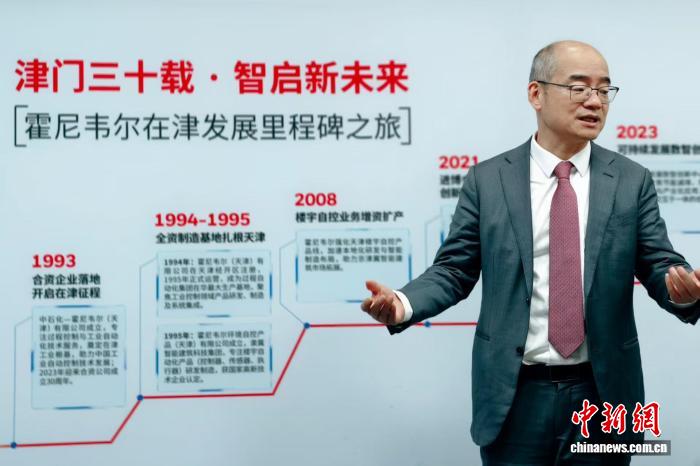
(投资中国)霍尼韦尔大中华区总裁:以本土创新深耕中国
Zhong Guo Xin Wen Wang· 2026-01-21 14:01
Group 1 - The core viewpoint of the article emphasizes Honeywell's commitment to local innovation and adaptation to the fast-evolving Chinese market, highlighting the importance of high standards in service and quality demanded by Chinese customers [1][3]. - Honeywell has established a localized value chain in China that encompasses innovation, research and development, manufacturing, and sales, implementing the "Eastern service for the East" strategy to drive business growth [3]. - The company is optimizing its global business structure, with the high-performance materials segment already spun off and plans to separate its aerospace business in the second half of the year, allowing for a more focused approach on automation and energy transition [3][5]. Group 2 - Despite geopolitical tensions and a complex trade environment, Honeywell remains committed to strengthening its capabilities in China, focusing on innovation and manufacturing that meet local market demands [5]. - The Chinese market is seen as a fertile ground for new industry opportunities, particularly in shipbuilding, where Honeywell aims to provide solutions for control, measurement, and fire safety, especially for LNG vessels [5]. - Future growth areas identified by Honeywell include life sciences, healthcare, renewable energy, and high-end manufacturing, with a strategy to follow market and customer needs while enhancing collaboration with local partners [5].

广联航空:暂未开展人工智能相关技术的开发业务
Ge Long Hui· 2026-01-21 13:13
Core Viewpoint - Guanglian Aviation (300900.SZ) has stated that the company has not yet engaged in the development of artificial intelligence-related technologies [1] Group 1 - The company is currently not involved in any artificial intelligence technology development [1]

波音有望实现7年来首次年度盈利
Jin Rong Jie· 2026-01-21 12:25
Core Viewpoint - Boeing's stock price increased by 0.5% to $249, indicating growing investor confidence in the company's recovery, with expectations of achieving its first annual profit in seven years by 2026 [1] Group 1: Stock Performance - Boeing's stock experienced a "V" shaped recovery after a significant drop of 45% over 15 months following the January 2024 incident involving a part falling off [1] - The recent stock price increase reflects a positive sentiment among investors regarding Boeing's future prospects [1] Group 2: Operational Performance - In 2025, Boeing secured 1,173 commercial aircraft orders, surpassing European competitor Airbus for the first time since 2018 [1] - Boeing delivered a total of 600 commercial aircraft in the same year, showing signs of recovery despite still lagging behind Airbus in total deliveries [1] Group 3: Financial Outlook - Boeing's CFO, Jay Malave, indicated that improvements in factory production rates, reduced inventory of undelivered aircraft, and enhanced profitability in the defense sector will contribute to the company's ongoing recovery [1] - Analysts predict that Boeing could generate $2.46 billion in free cash flow by 2026, marking a return to cash flow generation capabilities [1]

消息称马斯克希望在7月前完成SpaceX上市 要建太空数据中心
Feng Huang Wang· 2026-01-21 12:17
Core Viewpoint - Elon Musk is pushing for SpaceX's IPO to secure funding for building data centers in space, amidst a competitive landscape for AI computing infrastructure [1][2] Group 1: SpaceX IPO - Musk has resisted taking SpaceX public for years but is now advancing the IPO process to raise billions for ambitious projects [1] - The IPO is seen as crucial for SpaceX to become the first company to establish data centers in space, powered by solar energy [1] - SpaceX is expected to select an investment bank to lead the IPO soon, with Musk aiming to complete the process by July this year [2] Group 2: Competition in AI - The push for SpaceX's IPO is partly driven by the need to keep pace with competitors in the AI sector, particularly OpenAI and Anthropic, who are also considering their own IPOs this year [2] - Musk's rivalry with OpenAI CEO Sam Altman is highlighted, as Altman has explored deploying AI-capable satellites in space [1]

智联招聘新报告:哪些行业就业好、工资高?
Xin Lang Cai Jing· 2026-01-21 11:18
Core Insights - The job market is experiencing structural changes driven by the development of new productive forces, with significant increases in demand for high-end equipment and modern service industries in Q4 2025 [1][2][4][6][7] Group 1: Job Market Trends - In Q4 2025, the average monthly salary for algorithm engineers is approximately 25,236 yuan, with job demand surging by 110% [2][4] - The demand for drone engineers has increased by nearly 60% year-on-year, with an average monthly salary of about 16,600 yuan [7] - The robotics industry has seen a 60% increase in demand for engineers, with specific roles like robot debugging engineers growing by 64.1% [4][5] Group 2: Sector-Specific Insights - The new generation of information technology is expanding rapidly, with job postings in artificial intelligence increasing by 19% and smart hardware by 11.5% [2][3] - The modern service industry, particularly online life services (O2O), has shown a remarkable growth rate of 62.7% in job postings [1] - The new materials sector has experienced a 28.1% increase in recruitment demand, with high polymer materials engineers earning an average salary of around 16,600 yuan [6] Group 3: Regional Demand - Beijing, Shenzhen, and Hangzhou are the top three cities for talent demand in the new generation of information technology, collectively accounting for over 20% of job postings [3] - Suzhou has emerged as the city with the highest demand for high-end equipment talent, followed by Shenzhen, Shanghai, Tianjin, and Wuxi [5] Group 4: Salary and Skill Requirements - The average monthly salary for robot algorithm positions is 24,426 yuan, with a year-on-year demand increase of 30.7% [2] - Positions in the aerospace sector, such as navigation algorithm engineers, have an average salary of approximately 26,000 yuan, reflecting high demand for skilled professionals [6][7] - The average salary for mechanical engineers and mechanical structure engineers is around 12,784 yuan and 13,729 yuan, respectively, indicating a trend of increasing quality in talent demand [5]